Can You Eat at the Empire State Building in New York?
A direct, sourced answer on whether you can eat at the Empire State Building, what food is inside, what the rules are, and where to eat nearby in Midtown Manhattan.
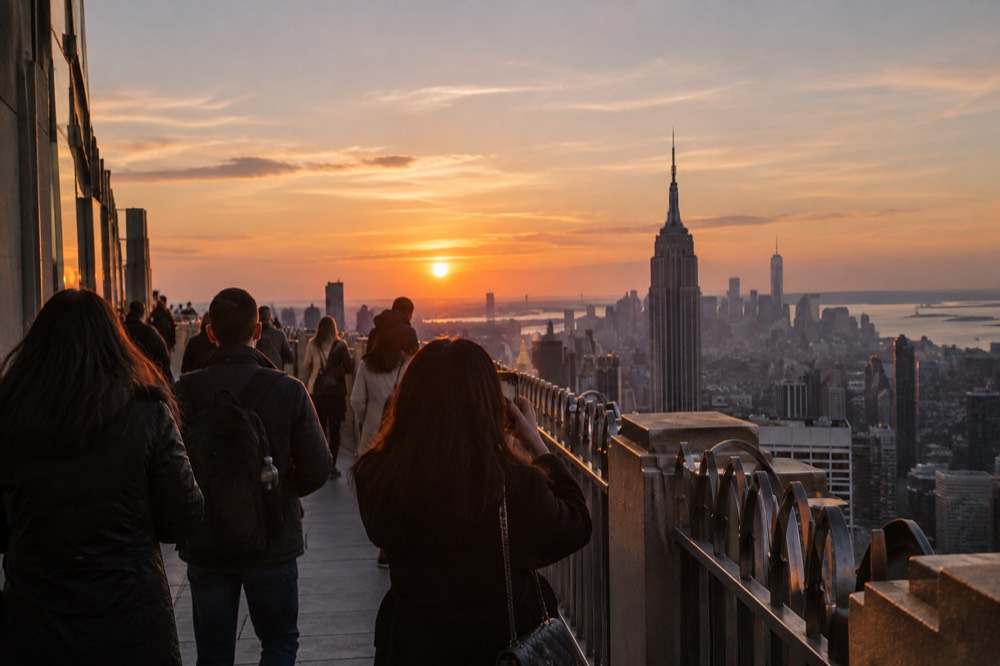
The Empire State Building sits at the corner of 5th Avenue and West 34th Street, in a part of Midtown where the food options within a ten-minute walk outnumber most small towns. Yet the question people keep asking is not about the neighborhood. It is about the building itself: can you eat at the Empire State Building? The short answer is yes, but with limits that catch visitors off guard. The observatory runs a café, a bar-restaurant operates on the 80th floor, and the decks themselves are for looking, not picnicking. This page lays out exactly what is inside, what the rules are, and where the genuinely good eating happens within walking distance.
Can You Eat at the Empire State Building?
Yes, you can eat inside the Empire State Building, but only at the limited outlets the observatory operates: a café at the observation level and a bar-restaurant on the 80th floor. There is no full-service restaurant, no sit-down dining with a view on the 86th floor deck, and no outside food allowed on the decks. Treat the in-building options as a convenience, not a destination, and plan your real meal for before or after your visit.
That is the honest shape of it. The observatory experience is built around movement: entry on the 2nd floor, elevators up, time on the 86th floor open-air deck, and for some tickets the 102nd floor. Food inside serves that flow. You grab a coffee, a snack, a drink at the bar, and you keep moving. Nobody should book a ticket expecting dinner with a skyline view, because that product does not exist inside this building.
What does exist is worth knowing about anyway. The café at the observatory level covers the basics: coffee, pastries, sandwiches, the kind of grab-and-go items that keep a family of four from melting down before the elevator ride down. The 80th floor bar-restaurant is the more pleasant of the two, an indoor space where you can sit with a drink and look out over the city through the windows. Menus, hours and availability change, so check the observatory's own dining information on esbnyc.com before you count on either one for your visit.
The practical takeaway for planning: eat before you go up, or eat after you come down. The building's location makes that easy in a way few attractions can match. Koreatown starts a block east. The NoMad restaurant corridor runs south along Broadway. Herald Square's food options sit two blocks away. You are never more than a five-minute walk from a serious meal, which is exactly why the limited food inside the building has never needed to be more than it is.
If the observatory visit is the anchor of your day, the timed ticket that bundles the deck with the museum exhibits below is the one to look at first.
What Food Is Actually Inside the Empire State Building?
Inside the Empire State Building you will find a café at the observatory level and a bar-restaurant on the 80th floor, plus the standard café and coffee options around the 2nd floor entrance and exhibit area. There is no restaurant on the 86th floor deck itself, and the 102nd floor has no dining at all. Everything inside is operated for the observatory's visitor flow, which means quick service, fixed hours and prices set for a captive audience.
Start at the bottom and work up. The 2nd floor is where your visit begins, with the building's redesigned entry and museum-style exhibits covering the construction of the tower and its place in the skyline. This is also where you will find the most conventional food options, the coffee counters and quick-bite outlets that serve the lobby traffic. If you arrive hungry and your timed entry is still an hour away, this is the level that saves you.
The 80th floor is the surprise for most visitors. Between the 2nd floor exhibits and the 86th floor deck, there is a bar-restaurant space with actual seats and actual windows. It is indoor seating, so it is not the open-air experience of the deck, but it is the only place in the building where eating feels like an event rather than a refueling stop. A drink here, with the city spread out below, is a genuinely pleasant way to break up the visit. Availability depends on the day and the season, and the observatory's site lists current hours.
The 86th floor has the café, and that is the full extent of it. The open-air deck wraps the building's spire, and the enclosed portion holds the snack counter. You can take a coffee or a packaged snack out onto the deck, which is a small pleasure that should not be underrated: a hot drink on the open-air deck in December is a memory. What you cannot do is bring a bag of food up and settle in. The deck is for the view, and the staff keep it that way.
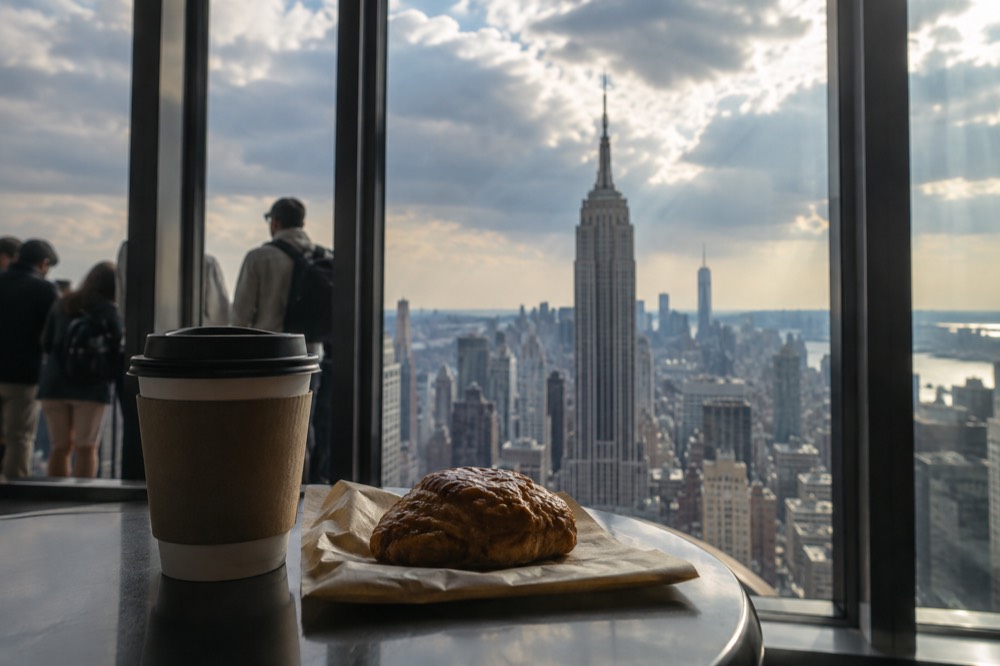
For budgeting, treat the in-building prices as tourist prices. A coffee and a snack at the observatory café will cost more than the same items at the deli on the corner, and the bar-restaurant's drink list is priced accordingly. That is normal for attractions anywhere in the world and not a reason to skip it, but it is a reason to not make the café your lunch plan. Here is how the options stack up:
| Option | Where | What it is | Best for |
|---|---|---|---|
| Café | 86th floor observatory level | Coffee, pastries, grab-and-go snacks | A hot drink to take on the deck |
| Bar-restaurant | 80th floor | Seated indoor space with drinks and light plates | Breaking up the visit with a view |
| Entry-level outlets | 2nd floor area | Coffee and quick bites near the exhibits | Killing time before a timed slot |
If a timed ticket that skips the box office line fits your plans, the deck-plus-museum bundle is the listing to check for current slots.
Can You Bring Your Own Food Up to the Observation Decks?
No, outside food and drink are not permitted on the Empire State Building's observation decks, with the exception of items purchased inside the building. Security screening at entry enforces this, and the rule applies to both the 86th and 102nd floors. If you are carrying food for medical reasons or traveling with an infant, flag it at security, but do not plan a picnic at the top. Eat before entry or after you come back down.
The security checkpoint is the reason. Every visitor to the observatory passes through screening on the way in, and bags are checked the way they are at any major landmark. A sandwich in your daypack is not going to get you turned away from the building, but it is going to stay in the bag, and the bag is going to stay with you through the whole visit. There is no bag check service that lets you stash food downstairs and retrieve it later, so whatever you carry up, you carry the entire time.
This trips up families more than anyone else. The instinct to pack snacks for children is correct everywhere in New York except here. The workaround is timing: the full visit, entry to deck and back down, takes most people between an hour and two hours, and the 2nd floor food outlets exist precisely for the gap before your timed slot. Feed the kids at the bottom, go up light, and the deck becomes what it is supposed to be.
There is one more angle worth knowing. The observatory's timed-entry system means you pick a slot when you book, and entry door times close before the deck closes. During the September-to-early-October 2026 window the building's published hours ran 10:00 to 23:00 with the entry door closing at 22:00, and hours vary by date, so a late-evening visit is possible but needs a slot booked for it. A 9pm deck visit followed by a 10:30pm dinner in Koreatown, one subway stop or a short walk east, is one of the better evenings Midtown can produce.
Where to Eat Near the Empire State Building
The best eating near the Empire State Building is a five-minute walk in any direction: Koreatown on 32nd Street between 5th and 6th Avenues for Korean barbecue and noodle soups, the NoMad corridor along Broadway for sit-down restaurants, Herald Square for quick options, and Curry Hill up Lexington Avenue for South Indian vegetarian food.
The building's Midtown location puts it in one of the densest restaurant zones in Manhattan, so the honest advice is to skip the café and walk.
Koreatown is the closest thing to a sure bet. The block of East 32nd Street between 5th Avenue and Broadway, stretching toward Madison, holds dozens of Korean restaurants stacked on multiple floors of the same buildings: barbecue joints with grills in the tables, late-night noodle shops, bakeries, and karaoke upstairs for after. It is a two-minute walk from the Empire State Building's entrance, and it is open late, which pairs perfectly with an evening observatory visit. A group can eat seriously well here for less than the price of a tourist café lunch. More of these guides are collected on New York City Travel Guide.
Head south and you are in NoMad, the neighborhood north of Madison Square Park that collected a remarkable concentration of restaurants along Broadway and the side streets. The park itself, with the Flatiron Building at its southern tip, is a ten-minute walk down 5th Avenue and one of the better places in Midtown to eat something portable on a bench. The Shake Shack location that started the chain sits in the park, and the lines there are a genuine New York experience, though the surrounding blocks hold quieter options if a burger queue is not your idea of a vacation.
East on Lexington Avenue, roughly from East 28th Street into the low 30s, sits the stretch known as Curry Hill, a row of South Indian restaurants famous for vegetarian thalis and dosas at prices that will make the observatory café look like the tourist trap it is. It is a fifteen-minute walk or one quick subway ride, and it is the answer for anyone who wants a real meal rather than a snack.
For the fuller picture of where to eat across the city, our best restaurants in NYC guide covers the neighborhoods worth traveling for, and the Empire State Building tickets guide handles the entry side of your visit in detail.
| Direction | Neighborhood | Walk from ESB | Known for |
|---|---|---|---|
| East, one block | Koreatown | 2-3 minutes | Korean barbecue, noodle shops, late hours |
| South along Broadway | NoMad | 5-10 minutes | Sit-down restaurants, hotel dining |
| South on 5th Avenue | Madison Square Park | 10 minutes | The original Shake Shack, park benches, the Flatiron |
| Northeast on Lexington | Curry Hill | 15 minutes | South Indian vegetarian, dosas, thalis |
How Much Should You Budget for the Visit and the Meal?
An adult Empire State Building observatory ticket starts from $44 online plus a $5 booking charge per transaction, while the box office AM/PM Experience that includes the 86th floor deck, the 2nd floor museum and a same-night re-entry runs $75.12 with tax. Add roughly $10-$20 per person for the observatory café, or $30-$60 per person for a restaurant meal in Koreatown or NoMad afterward, and the full evening adds up quickly.
The ticket side deserves a moment because the pricing structure is not obvious. The observatory uses dynamic timed pricing, which means the "from" figure is the lowest published starting price and the actual number depends on your date and slot. The $75.12 box office figure is not a markup scam; it is the price of the AM/PM Experience, a bundled product that includes a bonus same-night re-entry so you can see the view in daylight and again after dark. That re-entry clause is the hidden value: buy it, visit at 4pm, eat dinner in Koreatown, and come back up at 9pm for the lit skyline, all on one ticket.
The 102nd floor adds a second tier on top of the 86th floor price, and the honest editorial view is that the 86th floor open-air deck is the experience most visitors come for. The 102nd floor is fully enclosed behind glass, which trades the wind and the direct view for protection from both. Photographers almost always prefer the open deck. Families with small children in winter sometimes prefer the enclosed one.
Here is the budget picture in one table:
| Item | Cost | Notes |
|---|---|---|
| 86th floor ticket, online from price | from $44 + $5 booking charge | Dynamic pricing by date and slot |
| AM/PM Experience at the box office | $75.12 incl. tax | Includes museum and same-night re-entry |
| 86th + 102nd floor combo | from $79 + $5 booking charge | Enclosed upper deck |
| Observatory café snack | roughly $10-$20 per person | Coffee, pastries, grab-and-go |
| 80th floor bar drink | priced as a tourist bar | Check current menu on esbnyc.com |
| Koreatown or NoMad dinner | $30-$60 per person | The meal worth planning |
One planning note that most guides miss: the subway station you will likely use, 34 St-Herald Sq on the B D F M N Q R W lines, sits directly across 34th Street from the building's 5th Avenue corner. But the busiest station in the entire system is one stop north. In 2025, Times Sq-42 St recorded 61,203,303 riders against 35,764,931 at Grand Central-42 St, 71% more, and Penn Station does not even make the top five because the MTA counts it as two separate complexes. What that means for you: the trains around the Empire State Building are busy, but the Herald Square crush is nothing like Times Square, and the walk from Penn Station up 7th Avenue to the building takes about ten minutes.
Food Tours That Pair Well with the Empire State Building
The two food tours that pair best with an Empire State Building visit are the Chinatown and Little Italy food tour, a three-hour walk with six tastings rated 4.9 from 3,358 reviews at $99 per person, and the Greenwich Village food tour, also three hours with six tastings, rated 5.0 from 1,902 reviews at $97 per person.
Both run downtown, both add up to a full meal, and both fit a different day from your observatory visit.
The pairing logic matters more than the specific tour. The observatory visit is a Midtown activity, vertical and time-boxed. The food tours are downtown walks, horizontal and social. Trying to do both in one day means rushing one of them, and the Chinatown walk in particular deserves an unhurried appetite. Six tastings across three hours is not a snack crawl; operators design these routes so the stops add up to lunch, and arriving half-full is the classic mistake.
The Chinatown and Little Italy tour covers the two neighborhoods that sit shoulder to shoulder below Canal Street, from dumpling counters to cannoli shops, with the stories of the families who shaped both districts between the stops. The Greenwich Village tour works a different register: slices, old bakeries, small plates, and a route that doubles as a primer on the neighborhood's music and bohemian past. If your trip has room for only one, pick the neighborhood you are more curious about, because the food in both is excellent.
A sample structure for a first visit: day one, the Empire State Building at sunset with the AM/PM re-entry, dinner in Koreatown between the two deck visits. Day two or three, a downtown morning at your own pace, then the Chinatown and Little Italy walk as your lunch, then the subway back uptown. The things to do in NYC page holds the full framework for sequencing a trip like this.
For the observatory itself, the deck-plus-museum ticket remains the straightforward pick: timed entry, the 86th floor deck, and the exhibits that explain what you are standing on top of.
Common Questions About Eating at the Empire State Building
The questions below cover the practical details visitors ask most: whether there is a restaurant at the top, whether outside food is allowed, what the café sells, where the nearest good meal is, and how the timed ticket affects meal planning. The consistent thread is that the building handles snacks and drinks well but real meals poorly, and the surrounding blocks handle real meals exceptionally well, so the best plan eats light inside and heavy outside.
Can you eat at the Empire State Building?
Yes, but only at the limited outlets inside: a café at the observatory level on the 86th floor and a bar-restaurant on the 80th floor, plus quick-bite options around the 2nd floor entry area. There is no full-service restaurant on the decks and no dining on the 102nd floor. Plan a proper meal before or after your visit.
Is there a restaurant at the top of the Empire State Building?
No. The 86th floor has a café with coffee, pastries and grab-and-go snacks, and the 80th floor has a seated bar-restaurant with windows, but neither is a destination restaurant. The 102nd floor, the enclosed upper deck, has no food service at all.
Can I bring my own food into the Empire State Building?
No, outside food and drink are not permitted on the observation decks, and security screening at entry enforces the rule. Items bought inside the building, like a coffee from the observatory café, can be taken onto the 86th floor deck. If you have a medical need or an infant with you, mention it at security.
Where should I eat before or after visiting the Empire State Building?
Koreatown, a two to three minute walk east on East 32nd Street, is the closest cluster of serious restaurants, with Korean barbecue and noodle shops open late. NoMad along Broadway and Madison Square Park are a short walk south, and Curry Hill's South Indian restaurants sit fifteen minutes northeast on Lexington Avenue.
How long does a visit to the Empire State Building take?
Most visitors spend between one and two hours from entry to exit, including the 2nd floor exhibits and time on the 86th floor deck. The AM/PM Experience ticket includes same-night re-entry, which lets you split the visit around a dinner and return for the nighttime skyline.
Do I need to book the observatory in advance?
Yes, timed entry is the standard system, and slots are picked at booking. Online tickets start from $44 plus a $5 booking charge per transaction, with dynamic pricing by date and time. The box office AM/PM Experience runs $75.12 including tax and adds the museum plus same-night re-entry.
The last word goes to the shape of the day. The Empire State Building gives you the vertical New York, the one you look at the city from. The neighborhoods around its base, and the food tours downtown, give you the horizontal New York, the one you eat your way through. A trip that does both, with the café coffee carried onto the deck at golden hour and a real dinner in Koreatown afterward, is a trip that used the building the way the building is meant to be used.