Can You Eat Inside the Empire State Building? What Visitors Need to Know
A direct, sourced answer on whether you can eat inside the Empire State Building, what the observation deck experience includes, and where to eat near the tower in Midtown Manhattan.
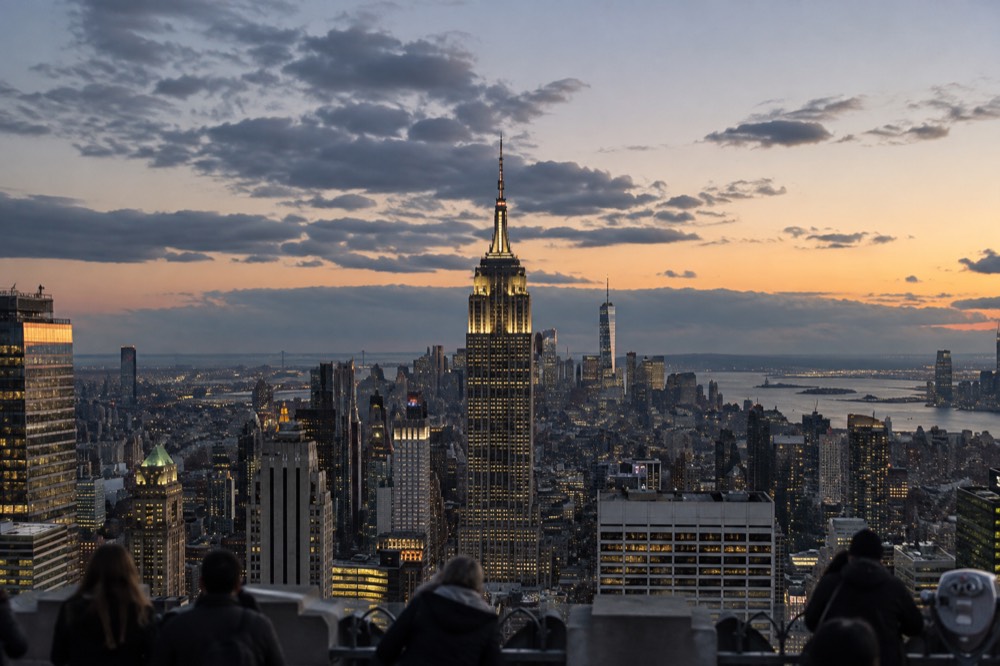
The Empire State Building anchors the corner of 5th Avenue and West 34th Street, and millions of people a year ride its elevators toward the 86th floor. Almost none of them are here for dinner. The tower is an office building first and an observation attraction second, and that shape decides the food question before you even reach the lobby. If you are planning a visit and wondering where lunch fits in, the short version is this: the building will not feed you a meal, but the blocks around it absolutely will.
This page is part of the food-and-attraction coverage at New York City Travel Guide, where every answer is checked against operator listings and official sources rather than repeated from whatever the top results happen to say.
Can You Eat Inside the Empire State Building?
No, there is no full-service restaurant inside the Empire State Building that visitors can book for a meal. The public experience consists of the observation decks, the second-floor museum galleries and retail space, and none of those function as a dining venue. The decks are built for views, not tables: you stand, you photograph, you walk the open-air promenade, and you head back down.
Plan any real meal for before or after the visit, in the surrounding neighborhoods.
That is the honest answer, and it is worth being blunt about it because plenty of visitors arrive assuming the opposite. The Empire State Building is one of the most famous office buildings on earth, and office towers run on cafeterias and grab-and-go counters serving the people who work there, not destination restaurants serving the people who photograph it. The visitor experience, run as a timed-entry attraction, is engineered to move you from the street-level security line, through the museum exhibits on the second floor, up to the 86th floor deck, and optionally to the 102nd floor, within your entry window.
The practical consequence is that you should not build a plan around eating at the top. There is no sunset dinner reservation with the skyline behind your chair. What the decks offer is air, railings and the best open-air view in Midtown, and the whole visit moves at walking pace for as long as you care to linger within the attraction's hours. Treat food as a before-and-after problem, not a during problem.
If you are still deciding how the visit itself works, the Empire State Building tickets and hours guide covers timed entry, the deck options and how the museum portion fits into a visit. The short version: adult deck admission starts from $44 with a $5 booking charge per transaction, prices are dynamic by date and time slot, and the attraction typically runs from morning until late evening, so check esbnyc.com for the hours on your date.
What the Observation Deck Experience Actually Includes
A standard visitor ticket covers timed entry to the 86th floor observation deck, with its open-air promenade and glass-screened views, and many ticket options bundle the second-floor museum experience covering the building's construction and history. No admission tier includes a meal. There is no dining component at the top, no café table service folded into the visit, and no restaurant in the public spaces.
The experience is views plus exhibits, full stop, and it rewards visitors who eat beforehand.
The 86th floor deck is the heart of the visit. It wraps the spire on all four sides, with an outdoor promenade guarded by high security fencing, and from it you can trace Central Park to the north, the harbor to the south, and the long grid of Manhattan in between. On a clear evening the deck is one of the best places in the city to watch the lights come on, which is exactly why so many visitors book the late slots and why the queues stretch longest between early evening and closing.
The museum portion, on the second floor, is the part people skip and shouldn't. It covers the tower's construction during the Great Depression, its early life as a mooring mast for airships, and the decades of upgrades since. If your ticket includes it, budget twenty to thirty minutes on the way up rather than treating it as corridor space between the elevators. For visitors who want the full story rather than just the ride to the top, the Empire State Building Observation Deck & Museum ticket bundles both under one timed entry, and the listing shows current dates and slot availability.
One planning note that matters for the food question: the visit involves standing, walking and queueing, mostly indoors but with an open-air deck at the top. That is not the setting for a heavy meal immediately beforehand, and it is also not the place to carry a bag of takeout. Eat properly, then come hungry only for the view.
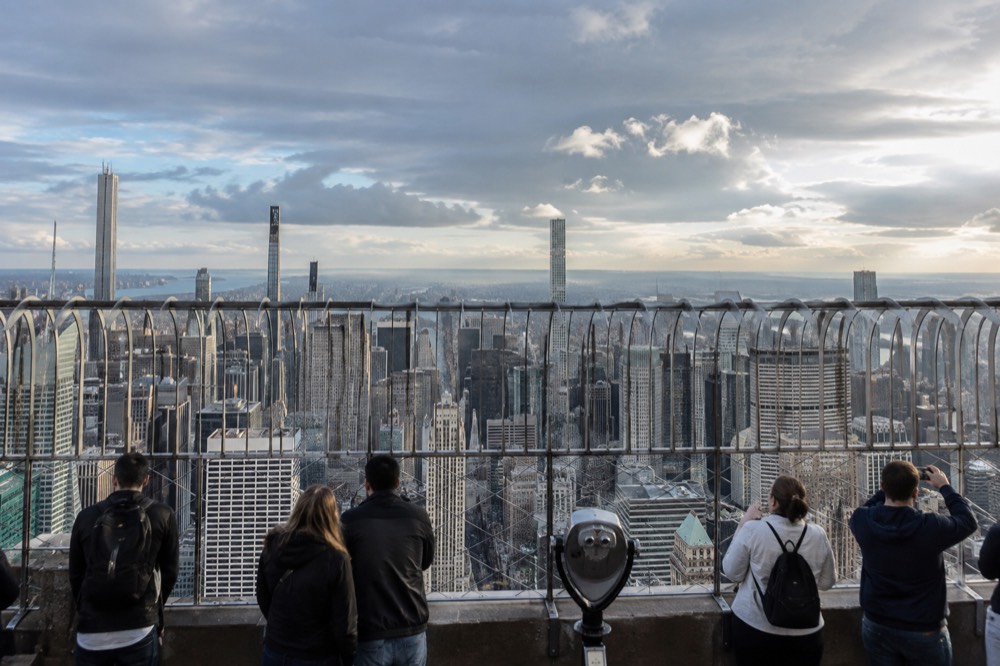
Here is how the pieces of a visit actually fit together:
| Part of the visit | What it is | Food involved? |
|---|---|---|
| Second-floor museum | Construction and history exhibits, included in most ticket bundles | No |
| 86th floor deck | Open-air promenade, the main event, included in every ticket | No |
| 102nd floor deck | Enclosed, higher deck, sold as a more expensive combo | No |
| Retail and lobby | Gift shop and building displays at street level | No |
| Nearby blocks | Restaurants, cafés and food halls within a short walk | Yes, plenty |
Where to Eat Near the Empire State Building
The blocks around the Empire State Building are some of the most food-dense in Manhattan, so the fix for the no-restaurant problem is simply to walk a few minutes in almost any direction. Koreatown sits one block north along West 32nd Street, NoMad and Flatiron restaurant rows spread to the southwest, Murray Hill holds everything from diners to izakaya, and Herald Square's fast-casual options sit directly across 34th Street.
A visitor can eat well within a five-minute walk of the tower entrance.
Koreatown is the closest thing the neighborhood has to a food district. It runs along West 32nd Street between 5th and 6th Avenues, one block north of the Empire State Building's entrance, and it packs barbecue spots, noodle houses, bakeries and late-night dining into a couple of dense blocks. It is the single best answer to "where do we eat after the deck closes," because it stays lively into the night and it is genuinely one minute from the building. The barbecue restaurants here work on a shared logic: you order meat by the plate, it arrives raw with tongs and scissors, and you cook it yourself over the table's gas grill. That makes it slow, social and surprisingly good with children old enough to help, though it is not the pick if you need to be somewhere in forty minutes.
South and west of the tower, the NoMad and Flatiron districts carry the neighborhood's more polished dining, including the kind of places you would want to book ahead for a birthday dinner attached to a skyline visit. Herald Square, directly west on 34th Street, skews fast and casual, which suits families with tired children who need food in the next half hour rather than a reservation. And if your plan is a full Midtown day, the Midtown Manhattan area guide maps out how the Empire State Building fits alongside Rockefeller Center, Bryant Park and the Museum Mile approach in one walkable district.
A rough orientation for the blocks around the tower:
| Direction from the tower | Neighborhood | Character of the food | Good for |
|---|---|---|---|
| One block north | Koreatown (W 32nd St) | Korean barbecue, noodles, bakeries, late hours | After an evening deck visit |
| West along 34th St | Herald Square | Fast casual, chains, food courts | Quick family meals |
| Southwest | NoMad and Flatiron | Polished restaurants, hotel dining | A booked celebration dinner |
| East | Murray Hill | Diners, Indian row on Lexington Ave, pubs | Low-key breakfasts and lunches |
| Underground | Direct subway lines at 34th St | Anywhere the B, D, F, M, N, Q, R, W can take you | Eating anywhere in the city |
That last row is the real trick. The 34th Street subway complex puts most of Manhattan within twenty minutes of the tower's front door, so "where to eat near the Empire State Building" can honestly be answered with "anywhere." A single $3.00 subway fare, tapped with OMNY, carries you downtown to Chinatown or the Lower East Side in about the time a restaurant waitlist would have quoted you in Midtown.
Better Ways to Combine the View with a Real Meal
If eating is a priority for your New York trip, the strongest play is to pair the Empire State Building visit with a guided food tour in another neighborhood rather than hunting for a meal inside the tower. The city's established food walks in Chinatown, Little Italy and Greenwich Village run about three hours each, include roughly six tastings that add up to a genuine meal, and cost from $83 to $99 per person.
Doing the deck in the late afternoon and a food walk the following day gives you both experiences at their best.
The logic is simple. The observation deck is a compressed, high-intensity hour: queue, ride, look, descend. A food tour is the opposite: a slow, three-hour walk through streets with a local steering you toward the places worth stopping. They do not compete for the same slot in a day, and travelers who try to merge them, eating a rushed slice before sprinting to a timed deck entry, end up enjoying neither.
For a downtown pairing, the Chinatown and Little Italy food tour runs six tastings across two old immigrant neighborhoods, from dumplings to cannoli, with the family stories behind the stops woven in. It runs about three hours, and the six tastings are a real meal, so the standard advice is to skip lunch beforehand. Check availability if a downtown food walk fits your dates.
The Village option skews more local-history. The Greenwich Village food tour strings together six neighborhood institutions, mixing pizza slices, sweets and small plates with the lanes and squares that made the area famous, and it doubles as a primer on the neighborhood's music and bohemian past. Both walks sit within an easy subway ride of the Empire State Building, roughly twenty minutes downtown on the B, D, F or M from 34th Street.
There is a third shape worth considering: the self-guided food crawl. Take the B or D train from 34th Street-Herald Square straight down to Grand Street, eat your way through Chinatown on your own schedule, and walk north into Little Italy for dessert. You lose the guide's stories and the guaranteed seats, but you gain total control of the pace, and the whole loop costs nothing beyond the food and one fare each way. Families with picky eaters often prefer this to a fixed-tasting tour, since nobody is obliged to finish anything.
For visitors structuring a whole trip around food and views, the site's restaurant coverage goes deeper on where to spend a serious dinner budget, and the wider things to do in NYC page places the tower inside the full sightseeing circuit, from the harbor to the museums uptown.
Planning the Visit Around Meal Times
The cleanest schedule puts a proper meal in the hour before entry or the hour after descent, never during. Timed entry means you pick a slot when booking, the whole visit runs comfortably within two hours, and evening slots, which sell the best light, land you back at street level exactly when Koreatown and NoMad are at their liveliest.
A late afternoon slot with a late lunch beforehand and dinner after fits the attraction's rhythm better than any attempt to dine inside it.
Morning slots suit families with young children and anyone who wants thinner crowds on the deck. Late slots, roughly the last two hours before closing, deliver the sunset and the skyline switching on, and they are the most competitive. Whichever you choose, the honest scheduling advice is to treat the deck like a show: arrive fed, keep your hands free, and save the meal for the curtain call.
One more practical note. Security screening is part of entry, so whatever you carry goes through it, and a bag of snacks destined for the deck is more burden than benefit. The open-air promenade is not a picnic setting, and the wind on the 86th floor takes care of any loose napkins on its own. Eat on the street level, where New York's food density is the actual attraction.
For the ticket itself, the Empire State Building Observation Deck & Museum experience is the natural pick for visitors who want the views and the history in one organized visit, and the live listing shows the current price, dates and entry windows before you commit.
Common Questions About Eating Inside the Empire State Building
The recurring questions all share one root answer: the Empire State Building is a viewing attraction, not a dining venue, and every food plan should happen on the streets around it. Visitors ask about restaurants at the top, bringing food onto the deck, eating before a timed slot and where the closest good meal is.
The answers below cover each one directly, and none of them change the headline: no meal inside the tower, excellent meals within a short walk, and a subway system that puts the rest of the city's food within twenty minutes.
Can you eat inside the Empire State Building?
No. The visitor experience consists of the observation decks, the second-floor museum and retail space, with no restaurant or table-service dining available to visitors. Plan meals for before or after your timed entry, in the surrounding neighborhoods.
Is there a restaurant at the top of the Empire State Building?
No. The 86th and 102nd floors are observation decks built for standing views, not seated dining. There is no dinner reservation with a skyline table in the tower's public experience.
Can I bring food or drinks onto the observation deck?
The deck is not set up for eating, and anything you carry passes through security screening on the way in. Treat the visit as hands-free: eat beforehand and keep snacks for street level.
Where should I eat before visiting the Empire State Building?
Koreatown on West 32nd Street is one block north and works for almost any budget or schedule. Herald Square offers fast casual options directly west on 34th Street, and NoMad and Murray Hill hold quieter sit-down spots within a ten-minute walk.
How long should I plan for the whole visit?
Most visitors spend about two hours from security line to street level, including the second-floor museum and time on the 86th floor deck. Book a slot, eat an hour before or after, and the day stays comfortable.
What if I want a food experience as part of my NYC trip?
Pair the deck visit with a guided food tour in Chinatown, Little Italy or Greenwich Village. Each runs about three hours with roughly six tastings that amount to a full meal, and all sit within a twenty-minute subway ride of the tower.
The view from the 86th floor is the best table in Midtown anyway, even without a plate on it. Eat well on 32nd Street, ride up with an empty bag and a full stomach, and let the city do the serving.