Is It Safe to Carry a Purse in New York?
A direct, sourced answer to whether it is safe to carry a purse in New York, with practical advice on bag choice, subway habits, and what to do if something goes wrong.
Is It Safe to Carry a Purse in New York?
Around 65 million people visited New York in 2025, and the overwhelming majority of the women among them carried a bag of some kind through the city without anything happening to it. New York is not a place where purses get snatched off shoulders as a matter of course. It is a dense city of 8 million residents who carry bags to work every single day. The realistic risk is not dramatic theft, it is the quiet loss of a phone or a wallet in a crowded place, and that risk is manageable with a few habits that cost nothing.
This page answers the question directly, then gets into the parts that actually matter: which neighborhoods and situations deserve more care, what kind of bag works best here, how to handle the subway, and what to do if the worst happens. The short version, per this site's editorial approach, is that you should read the New York City Travel Guide safety material and the money page on things to do in NYC with the same frame: the city is safer than its reputation, and your bag habits matter more than your destination.
Is It Safe to Carry a Purse in New York?
Yes, it is safe to carry a purse in New York for everyday sightseeing, and millions of residents and visitors do it daily. The risk of a purse being taken is low and concentrated in specific situations: crowded subway cars at rush hour, packed tourist areas like Times Square, and late-night settings where a phone or wallet is left in an open pocket of a bag.
A closed bag carried in front of the body removes most of the exposure.
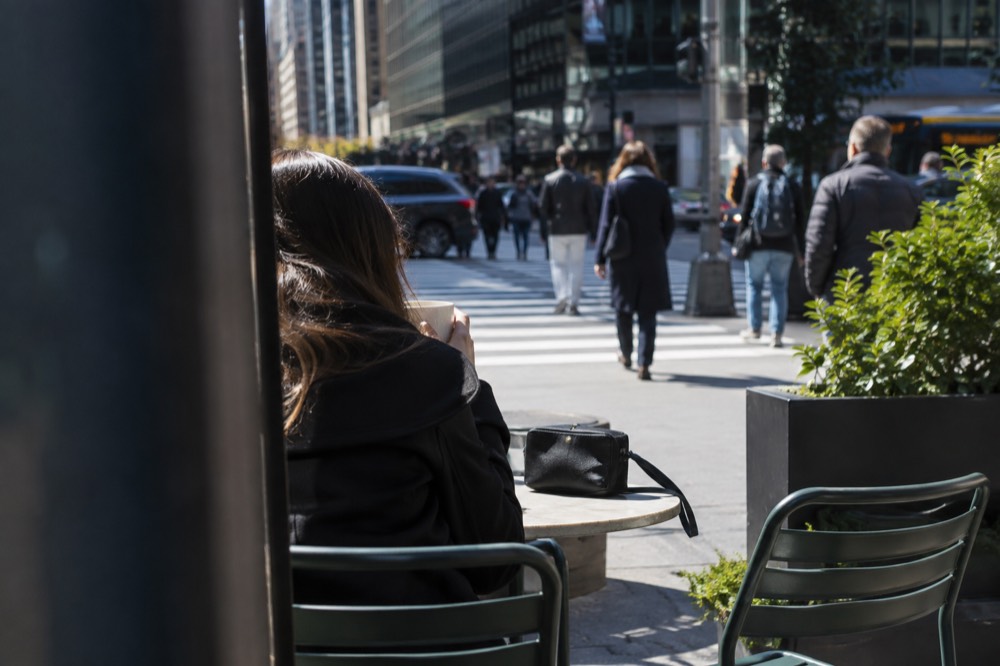
The fear usually comes from the city's old reputation, which dates from an era of much higher crime that ended decades ago. Present-day New York is one of the large American cities where walking around with a normal bag is unremarkable. What does happen, and what you should plan around, is opportunistic theft: an unattended purse on the back of a chair, an open tote on a crowded train, a phone balanced on a table at an outdoor cafe. Thieves here look for the easy target, not the brave one.
There is also a useful trend worth knowing. MTA data shows subway fare evasion fell from 12.7% to 10.2% between 2024 and 2025, one of several signals that the system's overall order has been improving. That is not a purse-theft statistic, and this site will not invent one. It is simply the direction of travel for the transit environment where most visitors spend most of their time.
The practical takeaway: bring the purse, skip the anxiety, and change three or four small habits. The rest of this page covers exactly which ones.
Where Does Purse Theft Actually Happen in New York?
Most purse-related loss in New York happens in three settings: crowded subway cars where an open bag is out of your sightline, high-traffic tourist zones such as Times Square and the areas around major attractions, and restaurants or cafes where a bag is hung on a chair back or left on a seat beside you. Quiet residential streets, museum galleries, and daytime park paths account for very little of it. Location matters less than crowding and attention.
Crowding is the common thread. Times Sq-42 St is the busiest subway station complex in the entire system, and it is not close: it carried 61,203,303 riders in 2025 against 35,764,931 at Grand Central, roughly 71% more. Where that many bodies press together, a zipper left open is an invitation. The same logic applies at the front of a packed train when everyone is facing the same direction and nobody can see behind them.
Restaurants deserve their own mention because they are where visitors relax. A purse on the back of a chair in a busy Midtown dining room is the classic setup, and it is entirely avoidable: keep the bag on your lap, loop the strap around a chair leg, or use one of the growing number of spots with hooks under the table.
What you should not do is write off whole neighborhoods. Blanket statements about "bad areas" are both inaccurate and useless for a visitor, as our guide to is NYC safe explains in more depth. The honest geographic advice is situational: care more in crowds, care more late at night, and care more anywhere you have stopped paying attention.
| Situation | Realistic risk | What to change |
|---|---|---|
| Packed subway car at rush hour | Phone or wallet lifted from an open pocket | Close the zipper, hold the bag in front of you |
| Times Square and busy attraction plazas | Distraction theft in dense crowds | Nothing valuable in outer pockets |
| Restaurant or cafe seating | Bag taken from a chair back | Bag on your lap or strapped to the chair |
| Quiet side streets, daytime | Very low | Normal awareness is enough |
| Late-night transit platforms | Elevated versus daytime | Stand near other people, keep the bag closed |
| Outdoor cafe tables | Phone snatched from an open table | Keep the phone off the table edge |
What Kind of Purse Is Safest to Carry in NYC?
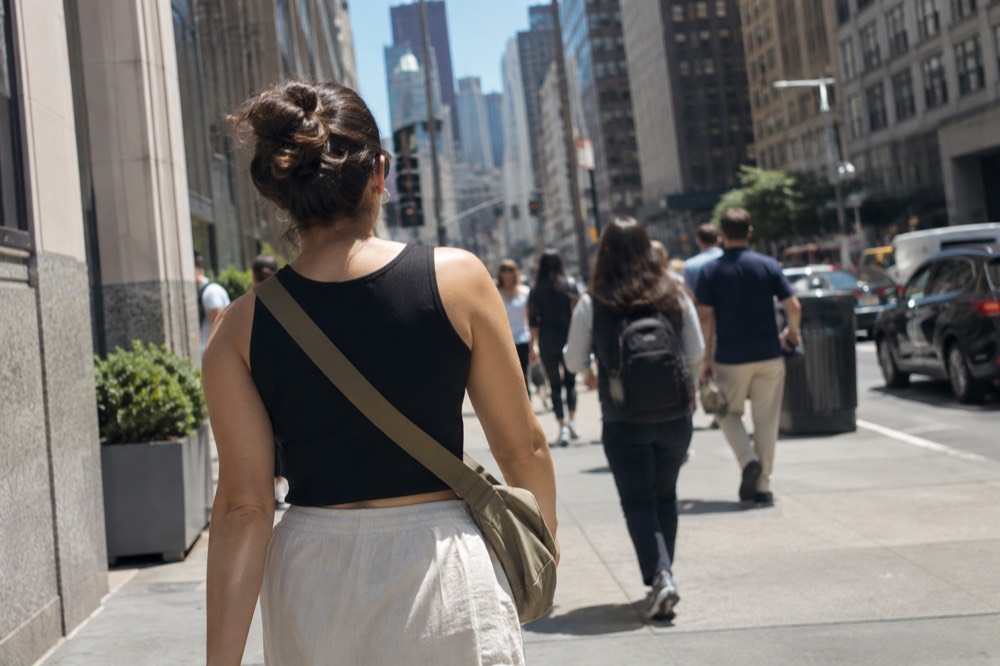
A crossbody bag with a full-length zipper, worn with the bag in front of your hip, is the safest purse design for New York. It cannot be pulled off your shoulder in a crowd, it cannot be opened behind your back, and it keeps both hands free. A tote or open-top shoulder bag is the weakest option, and a backpack on a packed train is nearly as exposed.
The crossbody recommendation is not a fashion opinion, it is mechanics. A shoulder strap slides off in a crowded car; a crossbody strap does not. A flap that faces outward invites a hand you cannot see; a flap against your ribs does not. Zipper closure beats magnetic closure, and a bag that sits at your front hip is inside your natural sightline all day, which matters more than any lock.
Size matters too, in the opposite direction most people expect. A smaller bag is safer because you notice it moving, because it holds less to lose, and because it forces you to leave the laptop or the extra camera lens at the hotel. Most visitors to New York need dramatically less than they pack: a phone, a card, some cash, a portable battery, and whatever the day's tickets require.
One more design point that saves real money: pick a bag with a zippered interior pocket, and put the phone and cards there rather than in the main compartment. The main compartment gets opened at every coffee shop and gift store, and the interior pocket rarely does. Loss in New York is overwhelmingly opportunistic, and every extra second of friction matters to someone looking for an easy grab.
If you are planning a heavy sightseeing day, it also helps to carry less because your tickets can live on your phone. Bundled products like the pass below put several attraction admissions in one digital purchase, so your purse holds nothing but the day's essentials.
How Should You Carry a Purse on the New York Subway?
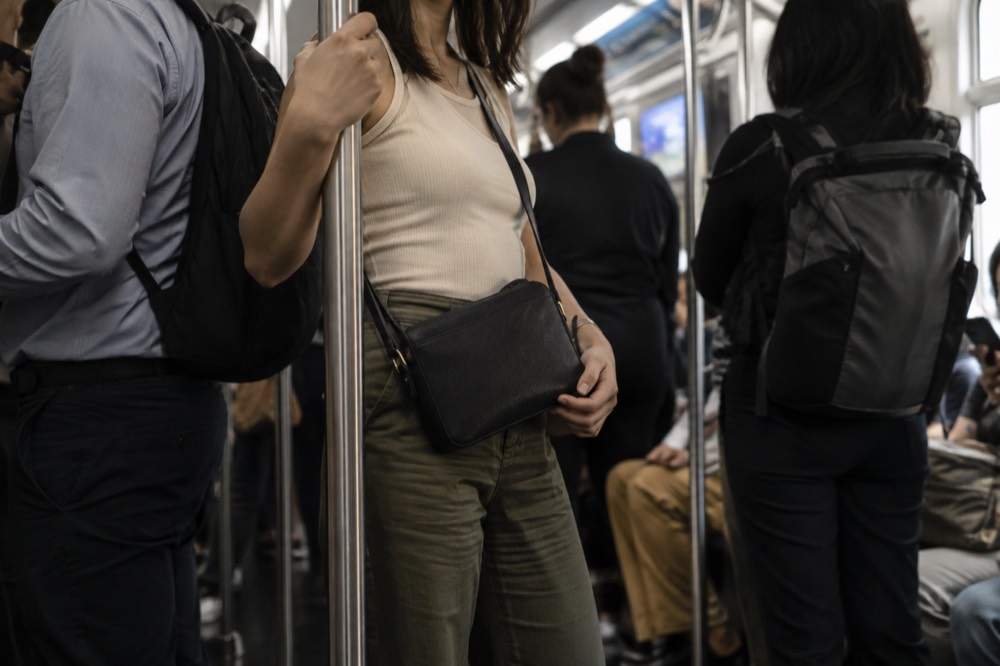
Carry it crossbody with the bag held in front of your body, zipper closed, ideally with one hand resting on it during the busiest stretches. On a packed train, stand or sit with the bag between your arm and your torso rather than at your side. Never set a purse on an empty seat, on the floor, or on the gap beside you, and keep it off your back even when you are standing still on a platform.
The subway is where most visitors spend the most crowded minutes of their trip, and it rewards a simple routine. Board, position the bag in front, and leave it there until you exit. That is the whole discipline. The 2025 ridership numbers show why crowding is the variable to respect: the system ran 1,281,883,362 rides across the year, with an average of 4,001,735 riders every weekday. Rush hours compress a lot of that into short windows.
A note on timing that runs against the usual advice: weekend trains are now comparatively fuller relative to normal than weekday ones. Weekend subway ridership in 2025 recovered to 88% of 2019 levels while weekday ridership sat at only 73%, because hybrid work emptied out the commuter hours. The practical read is that a Saturday afternoon train near Times Square can be just as packed as a Monday at 6pm, so apply the same front-carry habit on both.
Also worth knowing: the fare system no longer requires you to dig for a MetroCard at the turnstile. Tap a contactless card or phone directly with OMNY, and the fare is $3.00 a ride with an automatic $35 weekly cap if you keep tapping the same card or device. That means your purse can stay closed at every turnstile, which is exactly where many people habitually open it and then forget to close it again.
What Should You Keep in Your Purse, and What Should Stay at the Hotel?
Keep in your purse: one payment card, a small amount of cash, your phone, an ID, and the day's tickets. Leave at the hotel: your passport, every spare card, expensive jewelry, and anything whose loss would end your trip rather than inconvenience it. The single most effective purse-safety decision is not how you carry the bag, it is limiting what the bag contains, so that even a worst case costs you an afternoon rather than the whole vacation.
Think of it as insurance by subtraction. A lost card is a phone call. A lost passport at the start of a trip is a consulate visit and a rebooked flight. Most visitors never need their passport after check-in, and a photo of it stored securely covers most identification requests. If your hotel has a room safe, use it for the things you will not need until departure.
Split your essentials between your person and your bag. Cards and some cash in a zippered interior pocket or a front pants pocket, the bag carrying the rest. That way a single incident cannot take everything at once, and you are never standing at a register with no way to pay.
What Should You Do If Your Purse Is Stolen in New York?
Report it quickly and in the right order: cancel your cards first by phone, then file a police report, which you can do online through the NYPD's reporting system or in person at any precinct. You do not need to speak perfect English or know the neighborhood, and the report is what your travel insurance and your embassy will ask for. If your passport was in the bag, contact your consulate the same day. Speed matters more than thoroughness.
The card cancellation is the urgent part because it costs you nothing and stops the real financial damage. Most banks reverse fraudulent charges, but only on transactions made after you report the loss, so the first ten minutes are the ones that count. Then the police report: New York makes this genuinely easy, and an online report is acceptable for most insurance claims. Ask your hotel front desk for help if the form is confusing; they do this routinely.
For a lost passport, your consulate or embassy is the stop, and it helps to have that phone number saved somewhere other than the stolen bag, which is a good argument for keeping a photocograph of your passport in your phone's photo library. Travel insurance claims for a stolen bag generally want the police report number and a list of what was inside, so write that list while your memory is fresh.
One thing not to do: chase the thief. Property is replaceable and a pursuit in an unfamiliar city is not worth it, and New York's police are used to handling these reports efficiently. The realistic outcome of a purse theft in New York is annoyance and paperwork, not catastrophe, provided you followed the subtraction rule above.
Are There Better Options Than a Purse for a Day in New York?
Yes, for many visitors: a small crossbody worn under a jacket, a phone-and-card combination with everything else left at the hotel, or a money belt for the irreplaceable documents all reduce what you have to think about. But a normal purse is a perfectly reasonable choice for New York, and switching to something you find awkward or unflattering usually backfires, because a bag you resent carrying is a bag you stop watching carefully.
The honest hierarchy is about attention, not gear. The best setup is whatever you will actually keep closed and in front of you for a full day of walking. Some people manage that with a designer tote and perfect discipline. Most people find a mid-sized zippered crossbody easier, because good habits are easier to keep when the bag cooperates.
Weather plays a role too. In summer, a smaller bag means less to carry in the heat, and July is actually the city's wettest month at 4.60 inches of average precipitation, so a bag with some water resistance protects your phone better than an umbrella protects you. In winter, a bag worn under a coat is nearly theft-proof by construction, and February out-snows January at 10.1 inches versus 8.8, which surprises visitors who booked the "milder" month.
If your day involves attractions, keep in mind that some venues have bag policies: large bags and backpacks can be refused or require checking at certain museums and observatories. A compact purse sidesteps that entirely, one more small argument for carrying less. Whatever you book for the day, the listings below let you check availability without carrying paper tickets at all.
One more thought on the observatory option in that set: a timed deck ticket is exactly the kind of purchase that rewards planning ahead, since slots at popular sunset windows fill first and a reserved entry means one less queue to stand in with your bag pressed against strangers.
Common Questions About Carrying a Purse in New York
These are the questions visitors ask most often about purses and bags in New York, answered directly. The pattern across all of them is the same: the city is safe for normal bag-carrying, the risks that exist are opportunistic rather than violent, and every one of them shrinks dramatically with a closed bag, front-carry in crowds, and less in the bag to lose.
None of this requires special equipment or anxiety, just a few habits repeated until they are automatic.
Is it safe to carry a purse in new york?
Yes. Millions of residents carry bags daily and the vast majority of visitors do the same without incident. Keep it zipped, keep it in front of you in crowds, and keep the irreplaceable things out of it, and the practical risk is very low.
Should I carry a crossbody bag instead of a shoulder bag in NYC?
A crossbody with a full zipper is the safer design because the strap cannot slide off in a crowd and the opening sits against your body. A shoulder tote can be fine with discipline, but it asks more of you on every packed train.
Is it safe to carry a purse on the New York subway at night?
Late-night transit deserves a bit more care than midday, mainly by staying near other people and keeping the bag closed and in front. It is not dangerous by default, and the same habits that protect you at rush hour cover the evening too.
Do I need an anti-theft bag for New York?
No. Slash-resistant straps and locking zippers exist and do no harm, but New York's realistic threat is an open bag in a crowd, not a cut strap. A well-designed ordinary bag with a good zipper handles it.
Should I leave my passport in my hotel room or carry it?
Leave it in the hotel safe and carry a photo of it on your phone. A lost card is a phone call, a lost passport is a consulate visit, and most visitors never need the physical document after check-in.
What do I do if someone grabs my purse in New York?
Do not chase. Cancel your cards immediately, file a police report online or at any precinct, and contact your consulate the same day if your passport was inside. Speed on the card cancellations matters most.
The last word is the one to keep: carry the purse, close the purse, and put less in it. That trio of habits covers nearly every realistic scenario in New York, costs nothing, and lets you spend your attention on the city instead of your bag.