Is It Worth Visiting New York in Winter?
A direct, sourced answer on whether New York is worth visiting in winter: real weather data, what stays open, what gets cheaper, and what the season actually costs you.
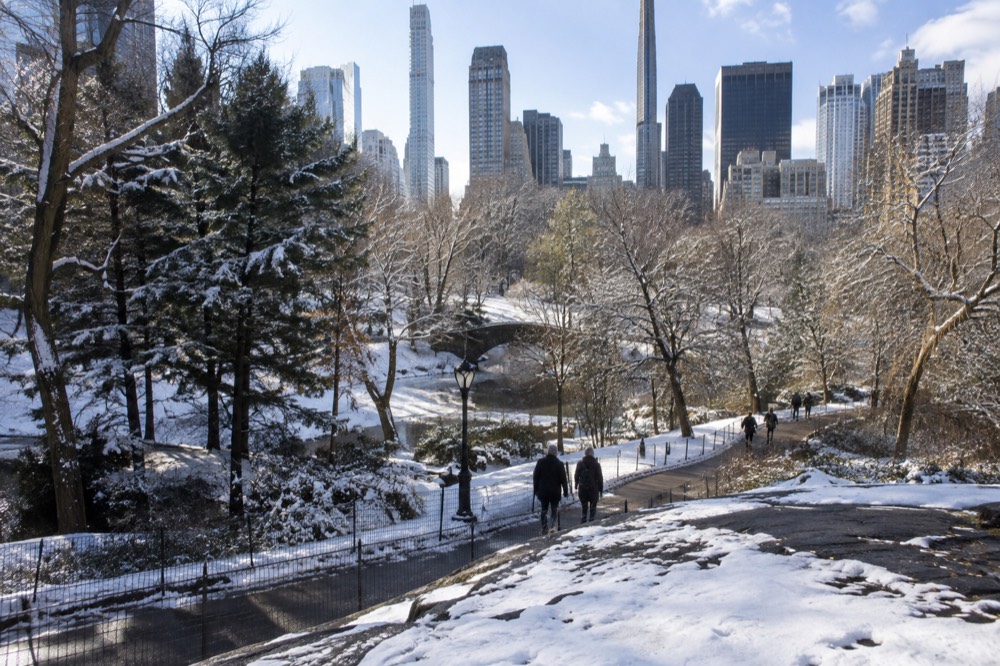
Most people plan New York around two instincts: summer for the weather and December for the atmosphere. The official climate record quietly undermines the first instinct. NOAA's 1991-2020 normals for Central Park put July as the wettest month of the year at 4.60 inches of precipitation, while February, the month everyone fears, is the driest at 3.19 inches. February does carry the most snow, 10.1 inches on average against January's 8.8, but snow in New York is an event, not a condition. It falls, the city scrambles, and within a day or two it is mostly gone.
So the honest answer to the winter question is not a shrug. It is a set of tradeoffs with real numbers attached, and this page works through them: what the weather actually does, what stays open, what gets cheaper, and where the season genuinely hurts.
Is It Worth Visiting New York in Winter?
Yes, for most travelers, winter is worth it in New York, with two conditions: pack for average highs in the high 30s to mid 40s rather than a fantasy of constant blizzards, and time your visit around what you actually came for. The city does not close in winter. Museums keep their hours, Broadway runs its full schedule, and the observation decks stay open into the evening.
The strongest winter argument is December, and it is not subtle. The Rockefeller Center Christmas tree, the holiday markets, the store windows on Fifth Avenue and the Dyker Heights lights in Brooklyn concentrate an enormous amount of atmosphere into a few weeks. That peak comes with peak crowds and peak prices, so December splits into two different trips: the expensive, magical run-up to Christmas, and the quiet, cheap weeks after New Year's Day.
January and February are the value months. They are also the months when you will want indoor anchors in your day, which New York has more of than almost any city on earth. The tradeoff is real: shorter daylight, a biting wind funneling down the avenues, and the possibility of a storm that scrambles a day's plans. None of that is a reason to stay home. It is a reason to plan differently.
A third condition deserves a sentence of its own: winter rewards travelers who book timed entry. The observation decks, several museums and the popular holiday attractions all run reservation systems, and the quiet weeks after New Year's are the easiest of the year to get the slots you want. If your winter trip includes a sunset deck visit or a specific Broadway show, book it before you fly rather than gambling on the day.
How Cold Does New York Actually Get in Winter?
New York winters average daytime highs of 44.3°F in December, 39.5°F in January and 42.2°F in February, with overnight lows in the high 20s to low 30s, per NOAA's 1991-2020 Central Park normals. Snow averages 4.9 inches in December, 8.8 in January and 10.1 in February. February is both the snowiest and the driest month of the entire year.
The numbers surprise people who expect either Chicago-level cold or a mild joke of a winter. New York sits between the two. The averages hide the wind chill, though, and the wind is the part that matters. The avenue grid in Midtown channels gusts between buildings, and a January day on a 6th Avenue corner can feel dramatically colder than the same temperature in the park. Locals plan around it: layers, a real coat, and hats that actually cover ears.
| Month | Avg high °F | Avg low °F | Precipitation (in) | Snowfall (in) |
|---|---|---|---|---|
| December | 44.3 | 33.8 | 4.38 | 4.9 |
| January | 39.5 | 27.9 | 3.64 | 8.8 |
| February | 42.2 | 29.5 | 3.19 | 10.1 |
Two practical readings of that table. First, the snow numbers are averages spread across the month, not a promise of a white city. Many February visits see no snow at all. Second, precipitation overall is modest and steady, and there is no dry season in New York; the spread between the driest and wettest months is only about 1.4 inches. Winter rain is more likely to ruin a day than winter snow, and an umbrella belongs in your bag in every season.
Daylight is the constraint nobody prices in. In late December the sun sets before 17:00, which compresses any plan that depends on outdoor light. Flip it into an advantage: the early dusk means a 16:30 observation deck slot delivers sunset and the lit skyline in a single visit, and the city's evening layer, Broadway, comedy rooms, jazz clubs and bars, starts earlier and lasts longer relative to your waking hours.
If a cold evening on an open-air deck is part of your plan, the Empire State Building is a strong fit: its hours in the autumn stretch to 23:00 with the entry door closing at 22:00, and the indoor museum portion of the ticket gives you a warm hour between ascents.
What Is There to Do in New York in Winter That You Cannot Do in Summer?
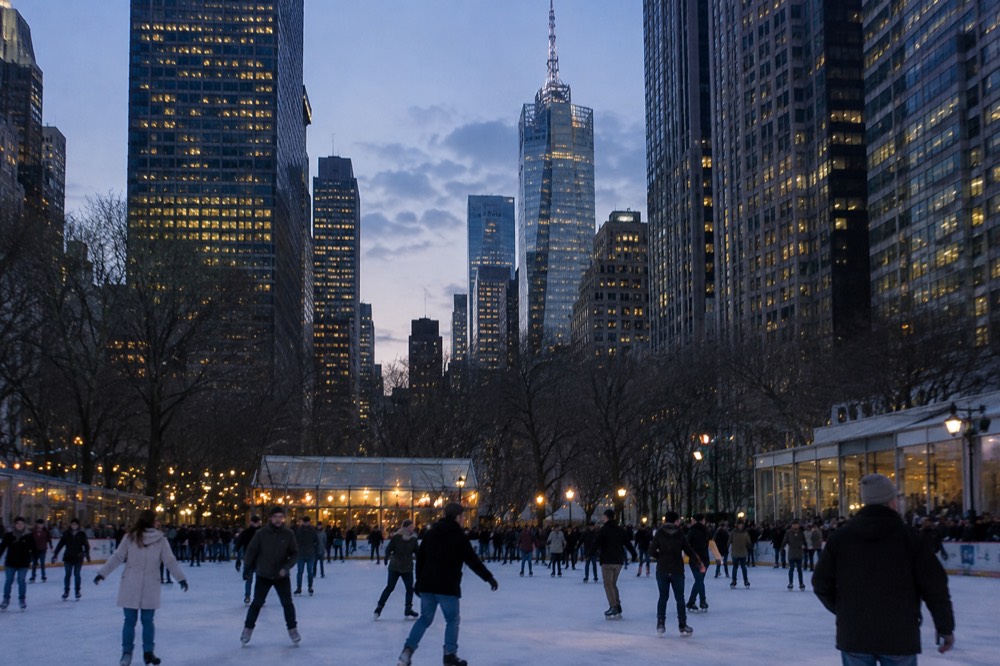
Winter New York has a seasonal layer summer cannot offer: the Rockefeller Center Christmas tree, the holiday markets, ice rinks in and around the parks, and the Dyker Heights Christmas lights in Brooklyn, which run through December. Below that sits the permanent city, unchanged: museums, Broadway, the observation decks and the food halls all operate through the coldest weeks.
The Dyker Heights display deserves its reputation. Every December, a residential corner of Brooklyn converts itself into a dense sprawl of lights and inflatables, and it draws families from across the city. It is a long way from Manhattan, in a neighborhood most visitors never otherwise reach, which is exactly why the guided bus option exists: it handles the subway ride and the route so you spend the evening looking up rather than at a map.
Beyond the seasonal layer, winter simply changes how you sequence the permanent city. The High Line is better in May than February. The Metropolitan Museum of Art is arguably better in February than May, because the crowds are thinner and the galleries are warm. The same logic applies to MoMA, the American Museum of Natural History and the Tenement Museum. Winter rewards the indoor-heavy itinerary, and New York has the deepest bench of indoor attractions of any American city.
The 9/11 Memorial plaza stays free and open daily from 08:00 to 20:00, and the memorial pools in falling snow are among the most subdued sights in the city. Describe it plainly: it is a place of remembrance, and winter's quiet suits it. The museum beneath the plaza keeps its own hours and its own ticket.
Food deserves a word too. The walking food tours of Chinatown, Little Italy, Greenwich Village and Chelsea Market all run through winter, and the Chelsea Market route in particular doubles as a rainy-day pick because the market half of the walk is indoors. A three-hour tasting tour is also, quietly, a way to stay warm: you move between heated rooms and eat as you go, which is a better cold-weather structure than a two-hour outdoor march.
Do the Observation Decks and Museums Stay Open in Winter?
Yes, all of them. The observation decks run year-round with evening hours, and the museums hold their normal schedules through winter, with only Thanksgiving and Christmas as the common closures. The Met is open Sunday to Tuesday and Thursday 10:00-17:00 and Friday and Saturday 10:00-21:00, closed Wednesdays. MoMA is open daily 10:30-17:30 and until 20:30 on Fridays.
The Met deserves its own paragraph because it is the most-got-wrong fact in New York travel writing. Admission is $30 for adults, $22 for seniors, $17 for students, free for children 12 and under. Pay-what-you-wish applies only to New York State residents and to students from New York, New Jersey and Connecticut, and even then you must pay something, with a one-cent minimum per ticket. Out-of-state and international visitors pay the fixed $30. One genuine bonus most guides miss: every ticket includes same-day entry to both Met Fifth Avenue and The Met Cloisters, so a cold day can legitimately hold two museums for one price.
A second honest note for winter visitors: the Met is currently running a long list of partial gallery closures, including sections of the American Wing, Asian Art, the Costume Institute, the Cantor Roof Garden and Modern and Contemporary Art. Check the museum's gallery-closures page before you build a day around a specific wing.
The observation deck question in winter is really a view question. Cold, clear winter air often gives the sharpest visibility of the year, and the sun sets early enough that a 17:00 slot gets you daylight, sunset and the lit skyline in a single visit. One World Observatory, worth noting, opens at 12:00 rather than 09:00 on September 11.
Is Winter Cheaper for Broadway and Museums?
Partly, and the discounts are real but specific. TKTS sells same-day Broadway tickets at 20-50% off face value with an $8 per-ticket service fee, from two booths: Times Square and Lincoln Center. Several museums run free or pay-what-you-wish windows that do not pause in winter, and some are open to everyone, including the 9/11 Memorial & Museum's free Mondays and the Whitney's free Friday nights.
The TKTS mechanics matter more in winter than summer. Inventory is same-day performances plus next-day matinees, every ticket is discounted, and the live queue is shorter in January than in July. The booth list is worth double-checking, because older guides still send people to a downtown booth that no longer operates. Only the Times Square booth at Duffy Square and the Lincoln Center booth in the David Rubenstein Atrium currently run. Check tdf.org for hours rather than a printed timetable.
| Discount window | Who qualifies | When | Conditions |
|---|---|---|---|
| TKTS booth | Everyone | Daily, same-day and next-day matinees | 20-50% off, $8 fee per ticket |
| Met pay-what-you-wish | NY State residents; NY/NJ/CT students | Any open day | Must pay something; proof required |
| MoMA free Friday nights | NY State residents only | Fridays 17:30-20:30 | Reserve ahead, proof of residency |
| 9/11 Museum free Mondays | Everyone | Mondays, released 07:00 ET online | First come first served, last entry 17:30 |
| Whitney free under 25 | Anyone 25 and under | Every day | Timed ticket |
| Whitney free Friday nights | Everyone | Fridays 17:00-22:00 | Advance tickets recommended |
| Guggenheim pay-what-you-wish | Everyone | Tuesdays and Sundays 16:00-17:30 | $1 minimum, sells out |
| Intrepid 50% off | NYC residents | Every day | Proof of residency |
Read that table with the fine print attached. The free windows that are open to everyone, the 9/11 Museum's Monday release, the Whitney's Friday nights and the Guggenheim's late Tuesday and Sunday hour, are genuinely useful for a winter budget. The residency-restricted ones, MoMA's Friday nights and the Met's pay-what-you-wish, are not tourist discounts no matter how many guides imply otherwise. And note the Guggenheim's headline price itself shifts: $30 standard, but $16 during exhibition changeover periods, so check which state is in force on your dates.
Digital lotteries add a second layer of Broadway savings that runs year-round. Broadway Direct and Lucky Seat run entry draws for many shows, with winning prices typically in the $30-$50 range, varying by show. Winter helps here too: fewer tourists in the draw means better odds, and a snowy evening is exactly when a cheap ticket feels like a win rather than a compromise.
How Do You Get Around New York in Winter?
Tap a card, not a pass. The subway and local buses cost $3.00 per ride with contactless payment, and OMNY caps your spending automatically at $35 across a rolling seven-day period, after which further rides are free. There is no 7-day unlimited pass to buy any more: the MTA stopped selling and refilling MetroCards on 1 January 2026, and the $35 cap replaced the old unlimited product.
That last detail trips up families. If two travelers alternate tapping one phone, neither earns the cap, and the free-ride threshold never arrives. Give everyone their own card or device and the arithmetic works itself out. Children up to 44 inches tall ride free with a fare-paying adult, up to three per adult.
Winter adds one real consideration to transit: platform distance. Some station walks are short; others involve long corridors and street-level exposure. The subway itself is warm, the buses are warm, and the moments of cold are the walks on either end. The Staten Island Ferry is free and runs year-round, and a winter harbor crossing with the skyline behind you costs nothing, though dress for the deck wind if you want the photos.
For a fuller treatment of fares, transfers and the airport runs, the New York subway guide covers the system in depth, and the best time to visit New York page puts winter against the other three seasons month by month.
Common Questions About Visiting New York in Winter
The short answers: winter is worth it for most visitors, February is snowier but drier than January, the city stays fully open, Broadway discounts are real, and the subway handles snow better than the headlines suggest. The five questions below cover the details travelers ask most, with the sources behind each answer folded into the responses rather than bolted on.
Is it worth visiting new york in winter?
Yes, for most travelers. The city keeps full museum, Broadway and observation deck hours through winter, crowds drop sharply after the first week of January, and the official climate record shows modest precipitation. December offers the seasonal attractions, the tree, the markets and the lights, at peak prices. January and February trade atmosphere for value. Pack for highs in the high 30s to mid 40s and overnight lows below freezing, and build your days around indoor anchors.
What is the coldest month in New York?
January, with an average high of 39.5°F and an average low of 27.9°F per the NOAA 1991-2020 Central Park normals. February is close behind at 42.2°F and 29.5°F. February is the snowiest month at 10.1 inches on average, but it is also the driest month of the year overall at 3.19 inches of total precipitation.
Does it snow a lot in New York in winter?
On average, 4.9 inches fall in December, 8.8 in January and 10.1 in February. Those are monthly totals spread across the month, not constant cover. Many winter visits see little or no snow on the ground, and the city clears major streets quickly. Snow is more likely to change your photos than your plans.
Is New York cheaper in winter?
January and February generally are, outside the holiday period. Broadway discounts through TKTS run 20-50% off with an $8 fee, several museums hold free windows open to everyone, and demand across the city softens after New Year's. December is the exception: the Christmas peak is one of the most expensive stretches of the year. This site does not quote hotel rates, which are date-specific, but the demand pattern is well established.
What should I pack for a New York winter trip?
A real coat, not a fashion one; layers you can shed indoors, because museums and subway cars run warm; a hat and gloves for the wind on the avenues; and comfortable waterproof shoes. An umbrella belongs in the bag in every month, since there is no dry season in New York. The full packing breakdown lives on the [what to pack for New York](/guides/what-to-pack-for-nyc/) page.
The verdict, stated once more without hedging: winter is a good time to visit New York if you match your expectations to the data rather than the folklore. July, not February, is the city's wettest month. The museums do not close, the decks stay open late, and the $35 OMNY cap means your transit spending tops out no matter how cold it gets. Bring the coat. The city will handle the rest, and the New York City Travel Guide covers every corner of it if winter turns out to be only the beginning.