The NYC Subway: Fares, Lines, OMNY and How to Ride Like a Local
The subway fare is $3.00 a ride, the MetroCard is retired, and the $35 OMNY weekly cap now replaces every unlimited pass a guide might still tell you to buy. Here is how the system actually works in 2026.
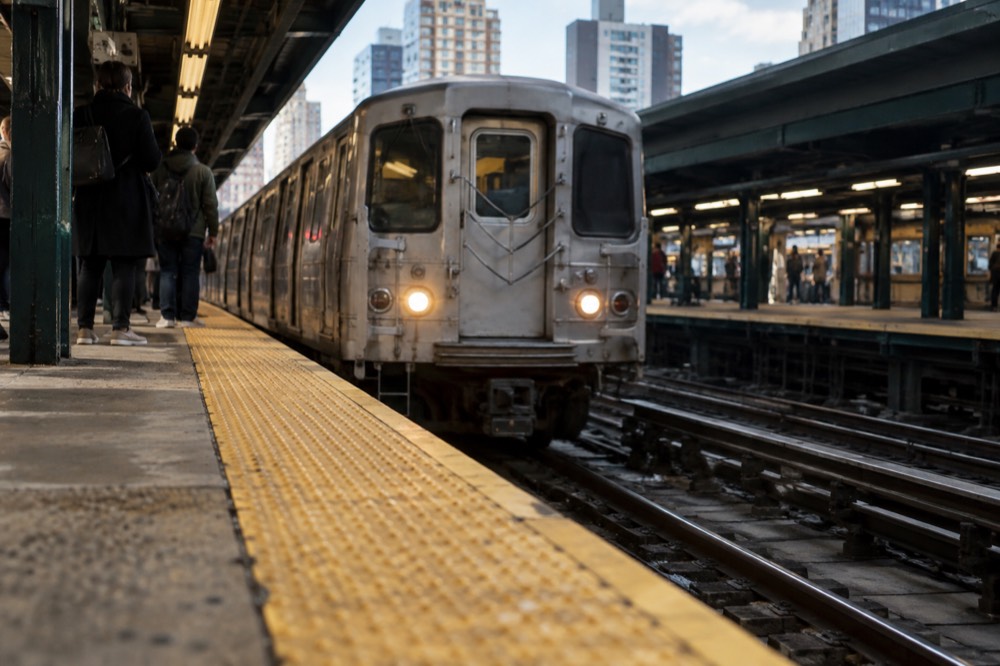
Short answer
A single NYC subway ride costs $3.00, paid by tapping a contactless card or phone with OMNY. After $35 of taps in a 7-day rolling window on the same card or device, rides become free for the rest of the period. There is no unlimited pass to buy any more: the MTA stopped selling MetroCards on 1 January 2026.
The single ride on the New York subway costs $3.00, and the way you pay for it changed more in the last year than in the previous two decades. The MTA stopped selling and refilling MetroCards on 1 January 2026. There is no 7-day unlimited pass any more, and any guide that quotes you one is describing a product that no longer exists. What replaced it is automatic fare capping: tap the same card or phone at every turnstile, and once you have spent $35 inside a rolling seven-day window, the rest of that period is free.
That is the headline, but a visitor needs more than a headline to ride the system well. This guide covers the fare rules exactly as the MTA publishes them, how the lines and boroughs fit together, what OMNY capping does and does not do, safety in plain terms, and the mistakes that cost first-time visitors time and money. Everything here comes from the MTA's own fare and ridership pages, which this site's research read directly.
How Much Does the NYC Subway Cost?
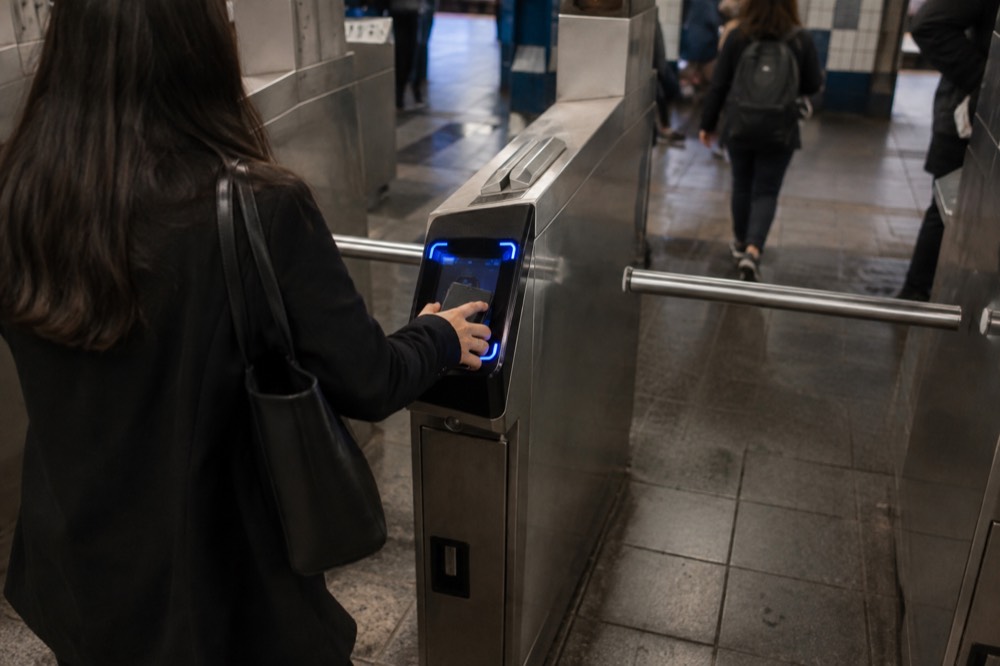
A single subway or local bus ride costs $3.00 for an adult paying with OMNY, the MTA's contactless payment system. Express buses cost $7.25. Eligible seniors and riders with disabilities pay a reduced fare of $1.50 on the subway and local buses, and children under 44 inches tall ride free, up to three per fare-paying adult. A paper Single-Ride OMNY ticket from a machine costs $3.50 and is valid for two hours.
The $3.00 fare buys more than most visitors realize. It includes one free transfer within two hours: subway to bus, bus to subway, or bus to bus. If you board a local service and then transfer to an express bus, you are charged only the fare difference, not a second full fare. Two pairs of stations also count as free out-of-system transfers, Lexington Av/59 St and Lexington Av/63 St, and Junius St and Livonia Av, where you tap again at the turnstile and are not charged.
The Single-Ride paper ticket carries restrictions worth knowing before you buy one from a machine. It includes no transfer between the subway and a bus, only bus to bus, and it is valid for two hours. If you have any contactless card or phone with you, tap that instead and keep the transfer rights.
| Fare type | Price | Notes |
|---|---|---|
| Subway or local bus, single ride | $3.00 | Paid by OMNY tap |
| Express bus, single ride | $7.25 | Higher fare tier |
| Reduced fare (seniors 65+, eligible riders with disabilities) | $1.50 | Subway and local bus, any time |
| Reduced fare, express bus | $3.60 | Excludes weekday peaks 06:00-10:00 and 15:00-19:00 |
| Single-Ride OMNY ticket (paper) | $3.50 | Valid 2 hours, bus-to-bus transfer only, no subway-to-bus transfer |
| Children | Free | Up to three under 44 inches tall per paying adult |
One detail worth knowing before you tap: the reduced fare is a real program, not a courtesy, and it requires enrollment. Visitors who qualify should look at the MTA's reduced-fare pages before travelling rather than expecting a discount at the turnstile.
How Does the $35 OMNY Weekly Cap Work?
The OMNY weekly cap is $35 for subway and local bus rides. Once you have spent $35 on taps within a rolling seven-day period, every further subway or local bus ride in that period is free, with no pass to buy and nothing to activate. The seven days start with your first tap, not on a calendar Monday, and the cap resets every seven days. You must tap the same card or device every single time.
The MTA's own wording is plain: tap and ride, and you only pay for the rides you take up to the cap. There is also a $67 cap if you ride express buses as well as the subway and local buses, and a reduced-fare cap of $17.50. A separate rule kicks in earlier for heavy users: after 12 paid rides on the same card or device inside seven days, the rest of the period is free even if you have not yet hit $35.
| Cap | Amount | Applies to |
|---|---|---|
| Weekly cap | $35 | Subway + local bus |
| Weekly cap with express buses | $67 | Subway + local + express bus |
| Reduced-fare weekly cap | $17.50 | Enrolled reduced-fare riders |
| Ride-count trigger | 12 paid rides | Same card or device in 7 days, then free |
Two traps catch visitors constantly. The first is mixing payment methods: if you tap your phone on Monday and the plastic card in your wallet on Tuesday, the system sees two separate riders and neither earns the cap. Pick one method and stick to it for the whole trip. The second trap is groups: the cap is per card or device, so a family of four sharing one card will never cap, and each traveller needs their own card or phone to earn their own free rides. Transfers do not count toward the cap either, they are simply free.
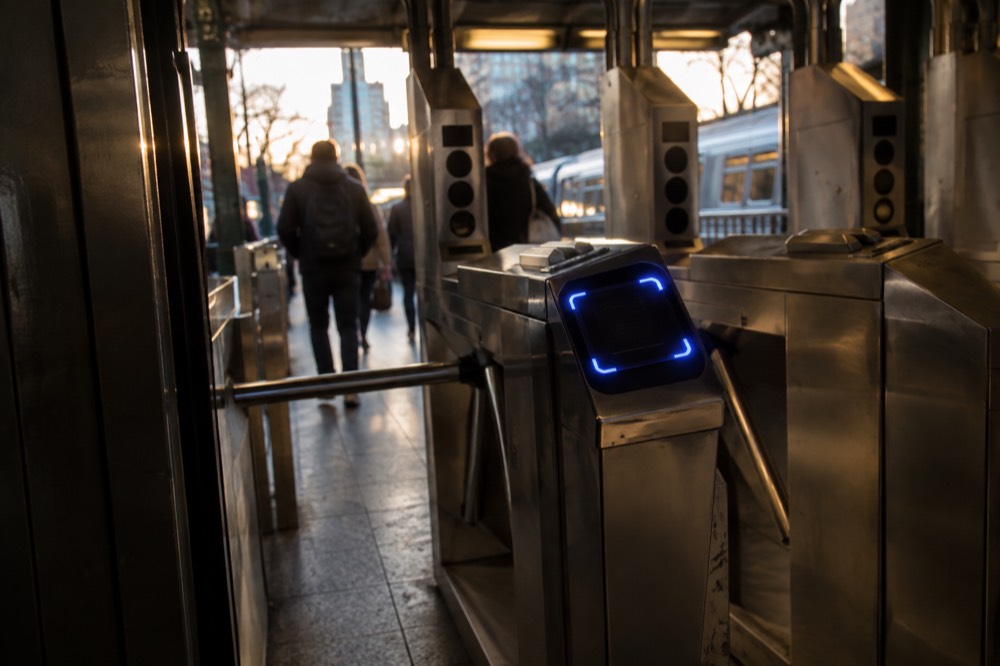
For most visitors the honest arithmetic is simple. At $3.00 a ride, you need about twelve rides in a week to reach the cap, which is roughly two to three rides a day. A relaxed four-day trip of six rides total costs $18, less than any pass would have. A packed week of nonstop sightseeing benefits from the cap automatically. There is no decision to make at a machine, which is the entire design.
If your week includes a food-and-neighborhood day, a guided walk through Chinatown and Little Italy pairs well with the subway's reach into downtown, and the Chinatown and Little Italy food tour starts a short walk from several downtown lines.
Can You Still Buy a MetroCard?
No. As of 1 January 2026 the MTA no longer sells or refills MetroCards at all, and any 7-day or 30-day unlimited pass had to be started by 31 March 2026 to get its full value. The correct answer to "what does a 7-day unlimited cost?" is that there is no such product any more. The $35 OMNY weekly cap replaced it, and it applies automatically with no pass to buy.
The MTA stated the retirement in its own words: MetroCard is retiring, and as of 1 January 2026 you can no longer buy or refill one. Existing cards are still being accepted during a transition whose exact cut-off the MTA has not fixed, and remaining balances can be transferred to an OMNY Card at a Customer Service Center or refunded. A visitor arriving today should plan to tap a contactless credit card, debit card, phone or watch, or buy a reloadable OMNY Card, which the MTA introduced at $1 as a limited-time offer.
Why does this matter so much? Because almost every New York guide on the web still opens its transport section with "buy a 7-day unlimited when you land." That advice now sends readers to a product that does not exist. If you see a price quoted for a 7-day unlimited MetroCard anywhere, that page is out of date, and it is worth doubting everything else on it.
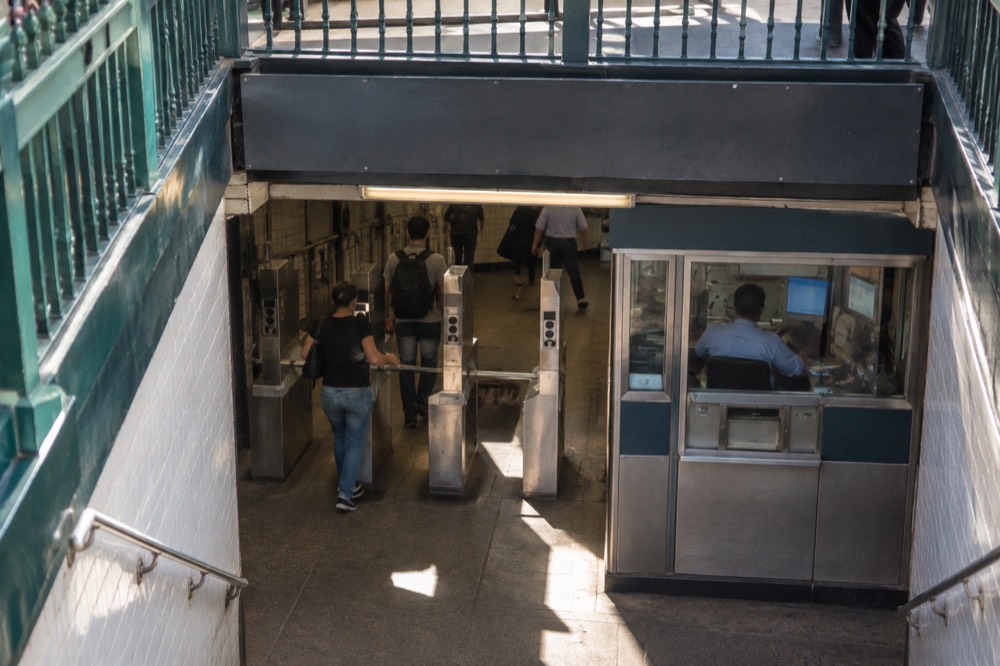
For the full picture on the contactless system, see our OMNY guide, and for the retired card's remaining uses, the MetroCard page covers the transition and refunds.
How Do You Get from the Airport on the Subway?
From JFK, the subway plus AirTrain costs $11.75 end to end, because the AirTrain adds $8.75 on top of the $3.00 subway fare. From LaGuardia, the trip costs $3.00 total, because the Q70 LaGuardia Link bus is free. From Newark, the NJ Transit train plus AirTrain from Penn Station costs $16.80. LaGuardia is the cheapest airport to reach by transit, not the airport people assume is the easy one.
The route details matter as much as the prices. From JFK you ride the E, J or Z to Jamaica, or the A to Howard Beach-JFK, then the AirTrain to your terminal. Unlimited passes cannot be used on the AirTrain, and children under 5 ride it free. The Long Island Rail Road plus AirTrain is faster to Midtown or Downtown Brooklyn at a higher rail fare.
| Airport | Transit cost to Manhattan | Route |
|---|---|---|
| JFK | $11.75 | $3.00 subway + $8.75 AirTrain, via E/J/Z to Jamaica or A to Howard Beach |
| LaGuardia | $3.00 | Free Q70 LaGuardia Link bus plus one subway fare; M60-SBS also $3.00 from uptown |
| Newark EWR | $16.80 | NJ Transit train plus AirTrain from Penn Station, ticket includes the AirTrain |
Newark carries a live service change worth checking before you fly: AirTrain service between the terminals and the NJ Transit rail station is being replaced by shuttle buses on weekdays from 05:00 to 15:00, while the inter-terminal AirTrain still runs. Allow extra time on a weekday morning.
If you are landing at JFK with a group, luggage, or a late-night arrival, the subway's stairs and transfers are the part of the trip that hurts. A private JFK transfer covers a group of up to six door to door, with the driver tracking your flight. Check availability
Which Lines Go Where?
The subway runs 24 hours a day and numbers its services, not its tracks: numbered lines like the 1, 6 and 7 and lettered lines like the A, L and F each follow their own route. Uptown and downtown, not north and south, are the direction words on every sign. Express trains skip stations to run faster, local trains stop everywhere, and pairing an express with a local on the same avenue is how residents shave minutes off a trip.
A few services matter disproportionately to visitors. The 6 train runs up Lexington Avenue on the Upper East Side. The A train runs long, from Lower Manhattan toward the far reaches of Queens and Brooklyn. The L runs straight across 14th Street between Manhattan and Williamsburg. The 7 crosses to Queens with a stop at Times Square-42 St, and the E and J/Z are your JFK connectors.
Direction is the first thing that confuses newcomers. Nearly everything in Manhattan is described as uptown or downtown, and station entrances are signed that way, sometimes with separate entrances on opposite sides of the street. Check the sign before you go down the stairs, because exiting and re-entering a wrong-direction entrance costs nothing on OMNY within the transfer rules, but costs you the walk.
Express versus local is the second. On Lexington Avenue, for instance, the 4 and 5 run express while the 6 makes the local stops. On Eighth Avenue the A runs express and the C runs local. An express train that skips your stop is worse than the local you almost took, so confirm the stop list on the platform's route diagram or in any transit app before boarding.
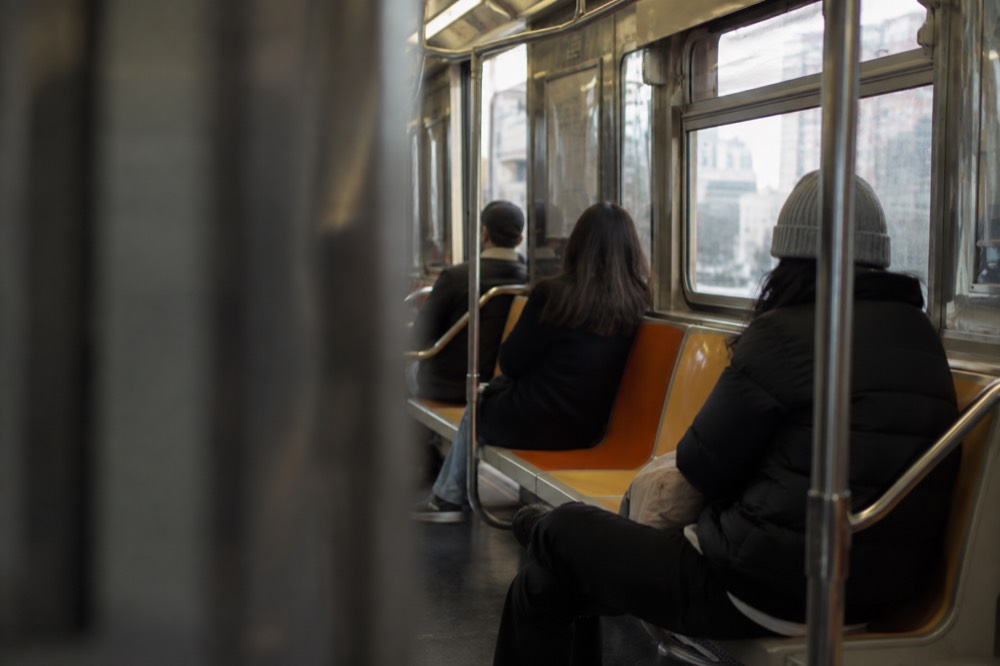
The system's scale is easy to underestimate. In 2025 the subway carried 1,281,883,362 rides, about 75% of its 2019 total. Times Sq-42 St was the busiest station complex in the city at 61,203,303 riders, 71% more than Grand Central-42 St at 35,764,931. Penn Station does not even make the top five, because the MTA counts it as two separate complexes. If you want the full station-by-station picture, our subway map guide breaks it down.
Is the NYC Subway Safe?
The subway is a normal big-city system used by millions daily, and the right posture is ordinary urban caution, not fear. Fare evasion, a rough proxy for disorder at the fare line, fell from 12.7% to 10.2% between 2024 and 2025. Keep your phone secure at doors, stay near other riders late at night, and choose well-trafficked cars over empty ones.
Honest safety talk avoids both extremes. The system runs 24 hours, which means late-night service exists but platforms are quieter and waits are longer. The practical habits are unglamorous: stand back from the platform edge behind the yellow stripes, keep bags closed and in front of you, and if a car looks wrong when the doors open, walk to the next one. Train crews and station staff are present across the system, and every station has intercoms and help points on the platforms.
The ridership data also says something reassuring about crowds. Weekend subway ridership in 2025 averaged 4,831,140, which is 88% of 2019 levels, while weekday ridership recovered only to 73%. On buses the numbers actually flip: weekend bus ridership, 1,598,000 on average, now exceeds weekday bus ridership at 1,396,000. The weekend train a visitor rides is, relative to normal, the fuller one. You will not be alone on a Saturday afternoon platform in Midtown.
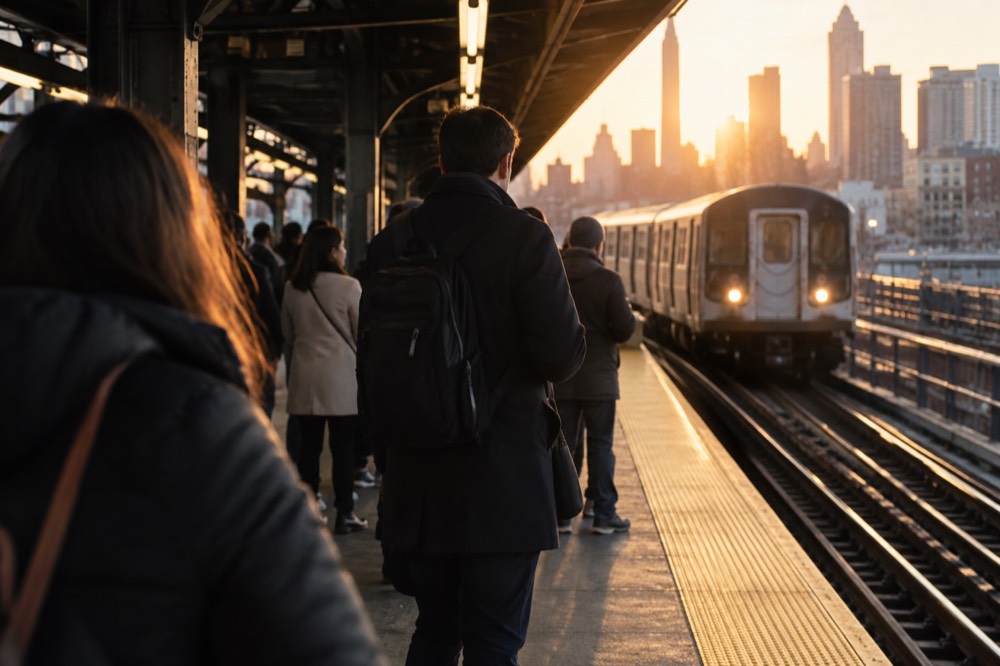
For neighbourhood-level context rather than transit advice, our is NYC safe page covers the city overall, with the honest caveat that no neighbourhood should be described as dangerous as a blanket statement.
Is the Subway Accessible?
Accessibility varies sharply by station. A growing share of the system's stations have elevators or ramps, but many older stations still have stairs only, and elevator outages happen, so check the MTA's accessibility tools before planning a step-free trip. The MTA publishes station-by-station elevator and ramp status, and OMNY works at every turnstile without a machine, which removes one barrier the MetroCard era created.
Plan step-free routes the way you plan anything else: check before you commit. The MTA's own trip planner and the elevator-status feeds show which stations currently have working elevators, and accessible stations are marked on the official map. Transfer points are the weak link, because a route can be accessible at both ends and still fail in the middle. Our wheelchair-accessible NYC guide covers the whole city, including which attractions pair well with step-free stations.
Beyond elevators, the fare system itself improved. Tapping a phone or card at waist-height OMNY readers is easier for many riders than a MetroCard swipe ever was, and the free-transfer rules apply identically regardless of how you pay.
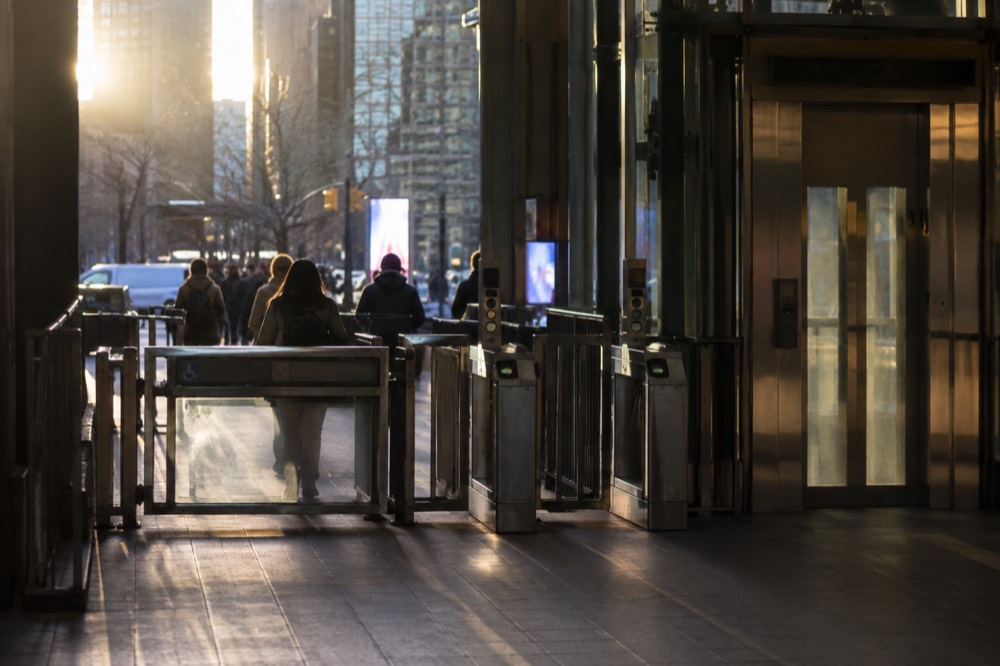
What Mistakes Should First-Time Riders Avoid?
The five mistakes that cost visitors the most are mixing payment methods so the $35 cap never triggers, boarding an uptown train when they meant to go downtown, taking an express train that skips their stop, standing on the left of an escalator or blocking the doors at rush hour, and paying for airport transfers they could have made for $3.00. Every one of these is avoidable with a minute of checking before you travel.
The payment mistake is the expensive one, because the cap is silent. Nothing warns you that your phone taps and your card taps are being counted separately. Decide before your first ride which card or device you will use for the whole trip, and use only that.
The direction mistake wastes the most time. Read the entrance sign for uptown or downtown before descending, and inside the station confirm again from the platform signs, which list the service and its direction. Local versus express is the same discipline: glance at the stopping pattern before the doors close, not after.
| Mistake | What it costs | The fix |
|---|---|---|
| Mixing phone and card taps | The $35 cap never triggers | One payment method for the whole trip |
| Wrong direction train | A stop or more of backtracking | Check uptown/downtown before the stairs |
| Express train past your stop | Extra stations and a return ride | Check the stop pattern before boarding |
| Blocking doors at rush hour | Glares, delays, missed stops | Step in, bags down, off the door line |
| Overpaying from LaGuardia | $3.00 trip bought for far more | Free Q70 bus plus one subway fare |
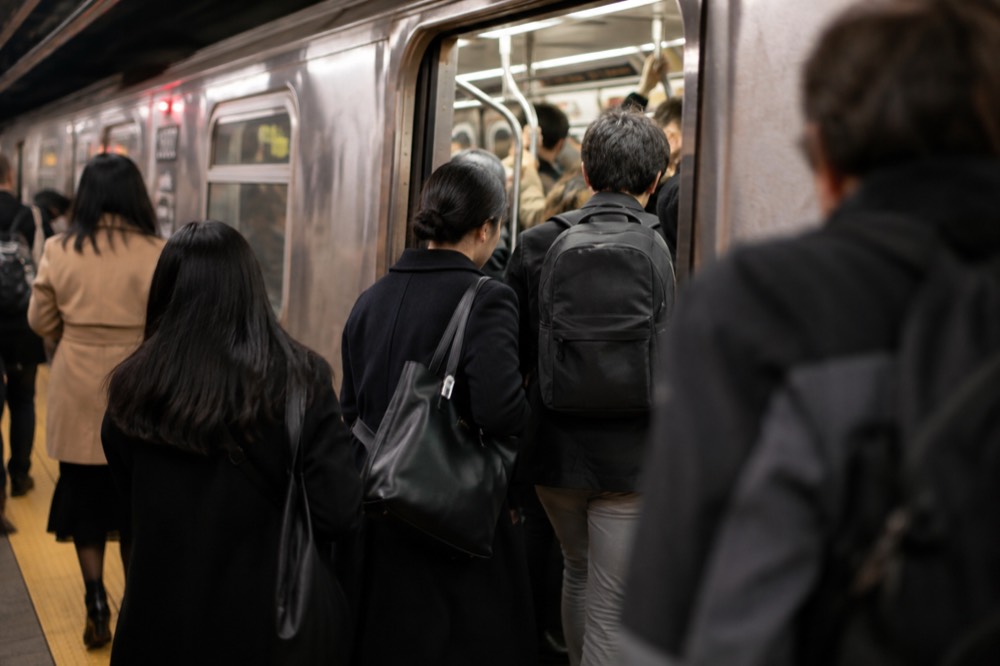
Rush hour etiquette is not snobbery, it is physics. Trains between roughly 07:30-09:00 and 17:00-19:00 on weekdays run packed, and a backpack left on a shoulder takes a second rider's space. Take it off, move into the car, and let people off before you get on. None of this is unique to New York, but the volume here punishes hesitation.
For a day of exploring that starts above ground, a free, tip-based walk through the Financial District, Wall Street and the 9/11 Memorial on GuruWalk is an easy pairing with the subway's downtown lines, and it ends within sight of the harbor ferries.
Common Questions About the NYC Subway
The questions visitors ask most cluster around fare mechanics, payment methods and airport connections, and all of them have short, sourced answers. The fare is $3.00, the weekly cap is $35 and automatic, the MetroCard is retired, and the cheapest airport run in the city is LaGuardia's $3.00 route. The details below expand each answer with the MTA's own published rules.
How much is a single NYC subway ride?
A single subway or local bus ride costs $3.00. An express bus costs $7.25. Eligible seniors and riders with disabilities pay $1.50 on the subway and local buses. Children under 44 inches tall ride free, up to three per paying adult.
Does the NYC subway still use MetroCards?
Not for new purchases. The MTA stopped selling and refilling MetroCards on 1 January 2026. Existing unlimited passes had to be started by 31 March 2026. Remaining balances can be transferred to an OMNY Card or refunded at a Customer Service Center.
What is the $35 OMNY cap?
It is an automatic weekly fare cap for subway and local bus rides. Once you have spent $35 on taps within a rolling seven-day period on the same card or device, further rides in that period are free. The seven days start with your first tap, and the cap resets every seven days.
Does the subway run all night?
Yes, the subway runs 24 hours a day, every day. Late-night service is less frequent and some express trains run as locals, so check the service signs and allow extra time between roughly midnight and 06:00.
Can I use one card for my whole family?
You can, but it is a bad idea for fare capping. The OMNY cap counts per card or device, so each traveller needs their own payment method to earn their own free rides. A shared card never caps and pays full fare for every ride.
What is the cheapest way to get from LaGuardia to Manhattan?
The free Q70 LaGuardia Link bus plus one subway fare, $3.00 total. The M60-SBS bus from uptown Manhattan also costs $3.00 and stops at every airport terminal. It is the cheapest airport transfer in the city.
Where the Subway Fits in a New York Trip
The subway is the honest answer to almost every getting-around question in New York, and the current fare system rewards visitors who do almost nothing: tap the same card, ride, and let the $35 cap handle a busy week. Renting a car for the city itself is the one move this site will never recommend, because parking costs more than the rides and the train beats the traffic at every hour.
Car hire makes sense only for day trips beyond the transit net, and even then the bus and rail options out of Manhattan cover most of the region. For a week that mixes museums, observation decks and neighborhoods, the arithmetic in our how much does a trip to NYC cost guide shows where transit fits in a full budget, and the things to do in NYC page is the natural next stop for planning what the trains will take you to. For everything else about riding, this New York City Travel Guide keeps its transport pages, from OMNY to the ferry system, checked against the MTA's own published rules.