OMNY NYC: How New York's Tap-to-Pay Fare System Works
OMNY is the tap-to-pay system that replaced the MetroCard across the New York subway and buses. Here is what it costs, how the weekly cap works and what changed when the MetroCard retired.
Short answer
OMNY lets you tap a contactless credit card, debit card, phone or watch to pay $3.00 per subway or local bus ride in New York City. Taps count toward an automatic $35 weekly cap, so after 12 paid rides in seven days the rest are free. The MetroCard stopped being sold on 1 January 2026.
OMNY NYC: How New York's Tap-to-Pay Fare System Works
On 1 January 2026 the MTA stopped selling and refilling MetroCards entirely. The plastic card that defined New York transit for three decades is gone from the vending machines, and the system that replaced it, OMNY, does not require you to buy anything at all. You tap the same contactless card or phone you use for coffee.
That single change rewrites most of the transit advice published about this city. Guides that tell you to buy a 7-day unlimited MetroCard on arrival are sending you to a product that no longer exists. This page covers what OMNY is, what it costs, how the weekly cap works and what it means at the airports, all from the MTA's own published fares. For the wider picture of riding the trains, start with the NYC subway guide, and the MetroCard retirement page covers the old card's remaining wind-down in detail.
What Is OMNY and How Does It Work in NYC?
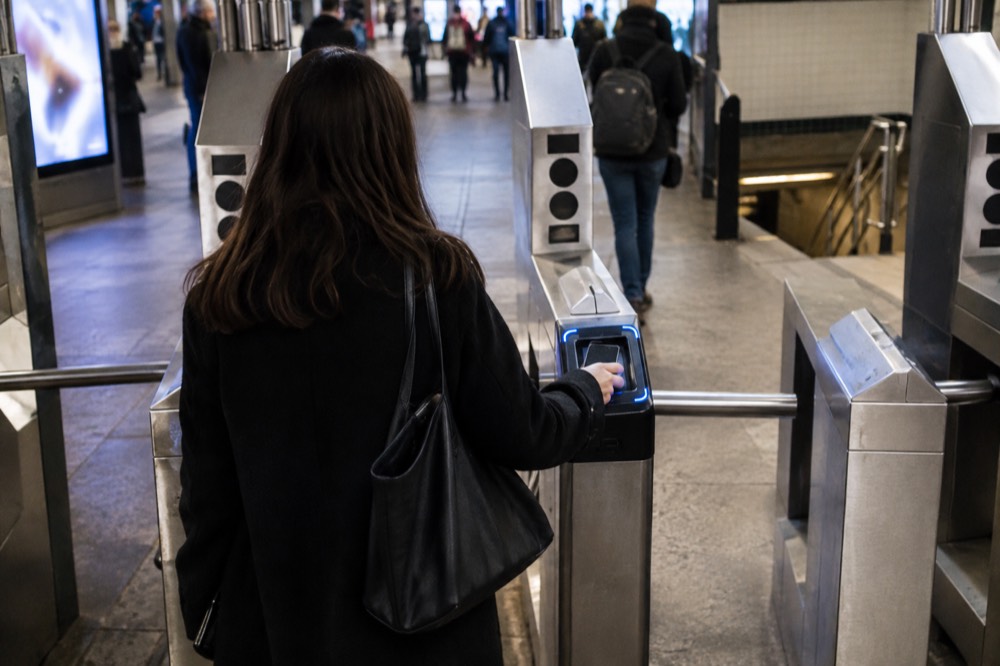
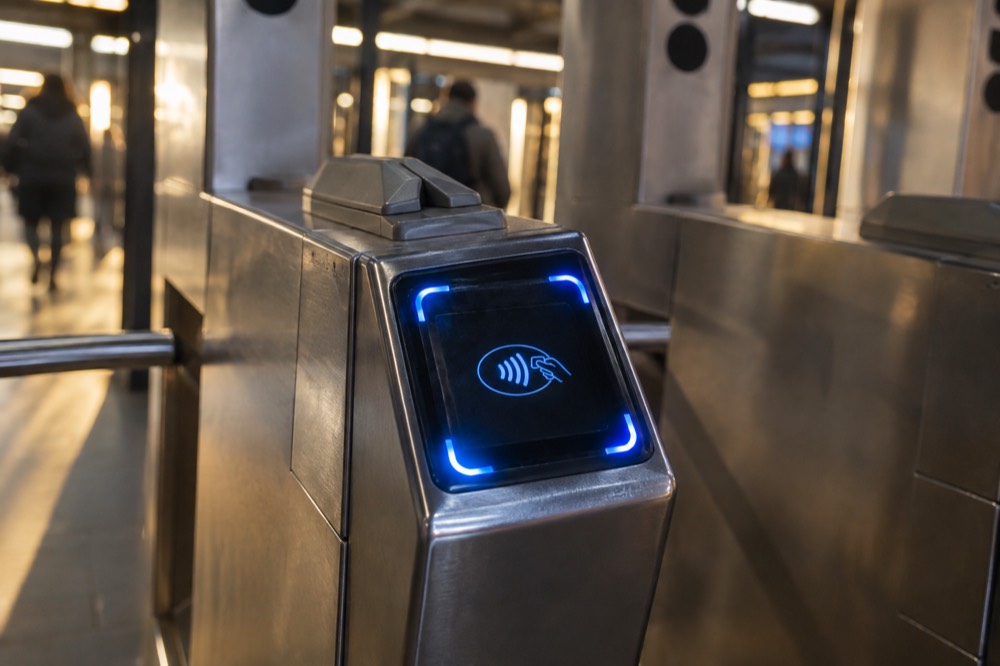
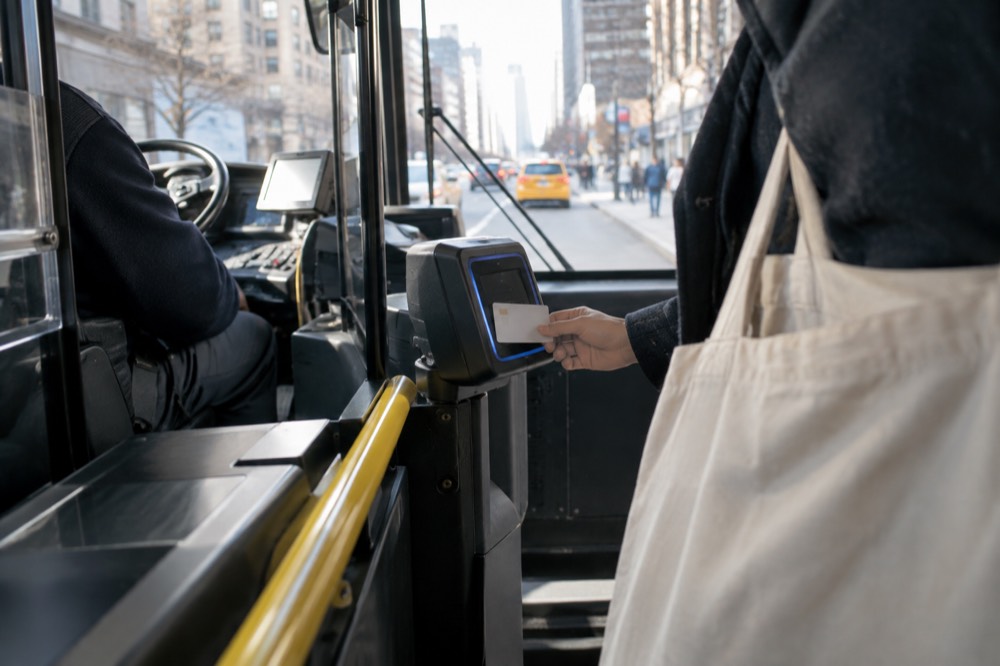
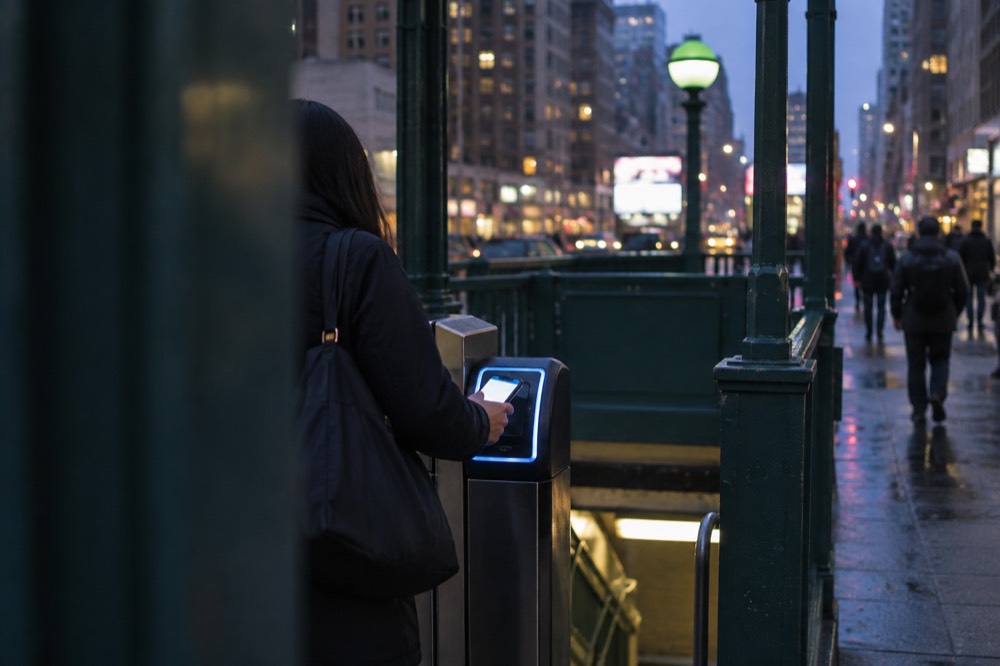
OMNY is the MTA's contactless fare payment system, working on every subway turnstile and city bus in New York. Instead of buying a card, you tap a contactless credit card, debit card, phone or smartwatch on the blue reader at the turnstile or bus door, and the $3.00 fare is charged to that card. Nothing to buy in advance, no machine to visit at the airport, no ticket to keep.
The name stands for One Metro New York, and the system finished rolling out across the whole network years before the MetroCard was retired. Every turnstile and bus in the system accepts the tap. The reader faces you at chest height on the turnstile, marked with a blue wave symbol, and it responds in about a second.
What you tap matters for the fare cap, which is the part most visitors get wrong. The system counts your taps per physical card or device. Your phone and the plastic card in your wallet are two different payment methods to OMNY even if they draw on the same bank account, and mixing them silently breaks your weekly cap. Pick one, and tap that one every time.
There is also a physical OMNY Card, a reloadable card sold for $1 as a limited-time introductory offer, aimed at riders who pay cash or do not have a bank card. Tourists almost never need it. If your contactless card or phone works at home, it works here.
How Much Does the Subway Cost with OMNY in NYC?
A single subway or local bus ride in New York City costs $3.00 with OMNY, charged to the card or device you tap. Express buses cost $7.25. Children up to 44 inches tall ride free with a fare-paying adult, up to three per adult. Every tap includes one free transfer within two hours between the subway and buses, so a journey with one connection is a single $3.00 charge.
The fare is identical to what the old MetroCard charged for a pay-per-ride, so switching to OMNY costs nothing extra. What changed is the mechanics and the discount structure, not the base price.
| Fare type | Price | Notes |
|---|---|---|
| Subway or local bus, single ride | $3.00 | Charged per tap |
| Express bus, single ride | $7.25 | Longer premium routes, mainly in Queens and Staten Island |
| Single-Ride OMNY ticket (paper) | $3.50 | Sold at machines, valid 2 hours, bus-to-bus transfer only, no subway-to-bus transfer |
| Reduced fare (seniors 65+, eligible disabled riders) | $1.50 subway and local bus | Applies at all times of day |
| Reduced fare, express bus | $3.60 | Any time except weekday peaks, 06:00-10:00 and 15:00-19:00 |
| Children under 44 inches | Free | Up to three per fare-paying adult |
The free transfer rule is worth reading twice, because it saves real money. Tap into the subway, exit, and board a local bus within two hours, and the bus is free. The same works bus to subway and bus to bus. Two out-of-system transfers also exist where stations sit a short walk apart: between Lexington Av/59 St and Lexington Av/63 St, and between Junius St and Livonia Av. At those pairs you tap again at the turnstile and are not charged.
The paper Single-Ride ticket is the one trap in the list. It costs fifty cents more than a tap, expires after two hours, and does not include the subway-to-bus transfer. It exists for riders with no contactless option. If you have one, skip it.
How Does the $35 OMNY Weekly Cap Work?
OMNY automatically caps your subway and local bus spending at $35 in any rolling seven-day period, as long as you tap the same card or device every time. Once you have paid $35, every further ride in that window is free, with no pass to buy. The MTA's own figure is 12 paid rides inside seven days, after which the rest of the period costs nothing. The seven days start from your first tap, not from a calendar week.
This cap is the direct replacement for the 7-day unlimited MetroCard, and it is strictly better for a visitor: nothing to buy, nothing to activate, nothing to lose in a taxi. You just ride, and the discount applies itself.
| Cap type | Amount | What it covers |
|---|---|---|
| Standard weekly cap | $35 | Subway and local buses |
| Cap including express buses | $67 | Subway, local buses and express buses |
| Reduced-fare weekly cap | $17.50 | Subway and local buses for eligible seniors and disabled riders |
The rolling window is the detail to hold onto. Your cap does not run Monday to Sunday. It starts the moment you take your first ride of the trip and resets every seven days from that point, restarting with your next tap after a period ends. For a five-day visit this barely matters, but for a ten-day stay it means two clean cap periods rather than one awkward straddle.
Two rules protect the cap. First, tap the same physical thing every time: one card, or one phone, never both. Second, group travel does not pool. Each person in your party needs their own card or device to build their own cap, because a second tap on the same card within a short window at the same station is treated as a duplicate, not a second rider. A family of four should not share one card and expect four caps.
If you are weighing whether heavy sightseeing justifies a pass at all, the arithmetic is simple: 12 rides at $3.00 is $36, and the cap stops you at $35. A packed itinerary of four or five rides a day hits the cap by day three. A relaxed trip of two rides a day never gets close, and pays per ride. For a fuller list of what to do with the rides themselves, see things to do in NYC.
Is the MetroCard Really Retired in New York?
Yes. As of 1 January 2026 the MTA no longer sells or refills MetroCards at all, in machines or booths, and visitors arriving today cannot buy one at any price. Riders who held 7-day or 30-day unlimited passes had to start using them by 31 March 2026 to get their full value. Remaining balances can be transferred to an OMNY Card at a Customer Service Center or refunded. The 7-day unlimited price no longer exists.
This is the fact that separates current guides from stale ones, and it comes verbatim from the MTA's own fare pages: "MetroCard is retiring. As of January 1, 2026, you can no longer buy or refill a MetroCard."
The retirement also killed a piece of folk advice that circulates widely: buying a 7-day unlimited "at the airport machine." There is no such machine sale any more. The vending machines still exist, but they dispense OMNY Cards and paper Single-Ride tickets, not unlimited passes.
If you are riding the subway heavily and want the transit picture beyond fares, the JFK to Manhattan guide covers the airport end of the same system, including where the AirTrain fare fits into an OMNY day.
How Does OMNY Work at New York's Airports?
OMNY covers the subway and buses, but the airport rail links charge separately. The AirTrain at JFK costs $8.75 on top of your subway fare, making a subway-plus-AirTrain trip to JFK $11.75 total. LaGuardia is the cheap one: the Q70 LaGuardia Link bus is free, so the whole run from Midtown costs a single $3.00 subway fare. Newark is $16.80 by NJ Transit train from Penn Station, AirTrain access included.
The contrast between the airports surprises people. JFK, the airport with the dedicated rail link, is the expensive rail trip. LaGuardia, long the awkward one, now has the cheapest airport transfer in the city because its feeder bus charges nothing at all. The wider set of guides lives on New York City Travel Guide.
| Airport | Route | Cost | Notes |
|---|---|---|---|
| JFK | Subway (E, J, Z to Jamaica, or A to Howard Beach) + AirTrain | $11.75 | AirTrain is $8.75 on top of the $3.00 fare; LIRR plus AirTrain is faster and pricier |
| LaGuardia | Subway + free Q70 LaGuardia Link bus | $3.00 | Cheapest airport run in the city; M60-SBS from uptown Manhattan also $3.00 |
| Newark EWR | NJ Transit train from Penn Station + AirTrain Newark | $16.80 | Ticket includes the AirTrain; children under 5 ride the AirTrain free at JFK |
Two service notes worth checking before you fly. At Newark, AirTrain service between the terminals and the NJ Transit rail station is currently replaced by shuttle buses on weekdays from 5am to 3pm, so a weekday morning arrival needs extra time. And if you buy a NJ Transit ticket on board the train rather than before boarding, there is a surcharge, the AirTrain must then be paid separately, and conductors only take cash.
For groups of three or more, or anyone landing with serious luggage, the subway arithmetic changes. A private transfer covers a whole vehicle for one fare, which is why larger parties often come out ahead of the train. Check availability if that fits your arrival, and see the private JFK transfer page for what is included.
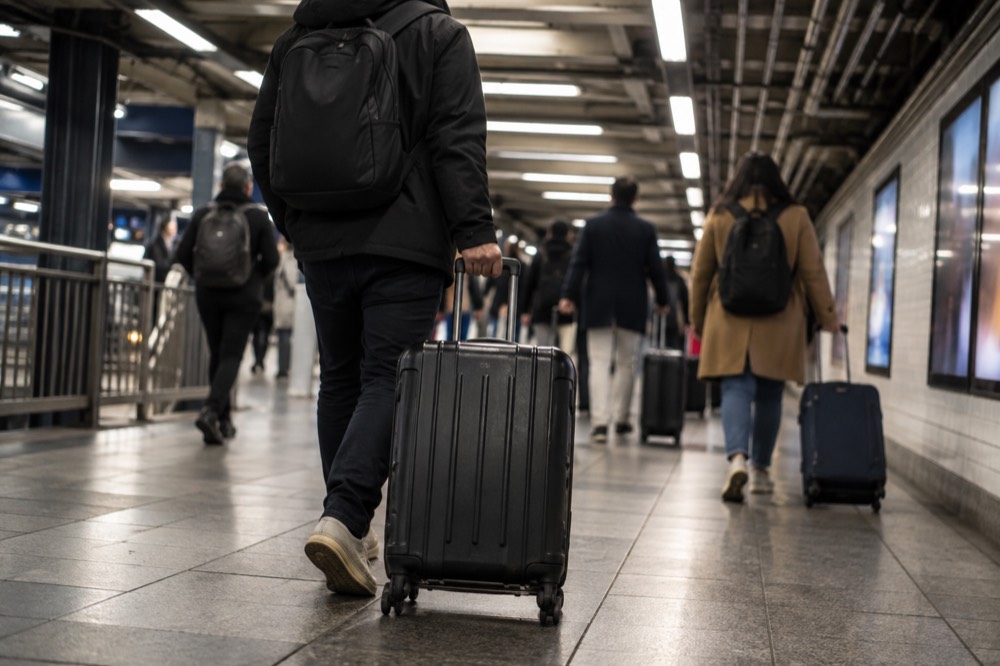
The transfer question is really a question about your first hour in the city. Two people with backpacks should take the train. A family with four suitcases and a stroller should not, and the difference in comfort is worth more than the difference in dollars on arrival day.
Do Children and Groups Need Separate Cards for OMNY?
Children up to 44 inches tall ride the subway and local buses free with a fare-paying adult, up to three per adult, so most young kids need no tap at all. Everyone who does pay needs their own card or device, because OMNY's weekly cap and free transfers are tracked per payment method, and a shared card cannot build two caps or pay for two simultaneous riders. Treat one card per paying person as the rule.
The height rule is literal. Station staff measure against the height marker at the turnstile, not against age. A tall five-year-old pays; a short nine-year-old does not. On express buses only infants under two ride free on a lap.
For groups of adults, the same logic applies with money attached. Two friends sharing one bank card will hit a single $35 cap between them at best, and may instead trigger duplicate-tap rejections when they try to pass through the same turnstile in quick succession. Each person taps their own card, their own phone or their own watch. If someone in your party has no contactless card, that is the one situation where buying a $1 OMNY Card makes sense.
Reduced-fare riders, seniors 65 and over and riders with qualifying disabilities, pay $1.50 per ride with a $17.50 weekly cap. Enrollment is required through the MTA's reduced-fare program, so a visiting senior traveling on an ordinary contactless card pays the standard $3.00. That is a real difference over a week, worth sorting before the trip if you qualify.
What If Your Card Will Not Tap at an OMNY Reader?
If a tap fails, the reader shows a red signal and the turnstile stays locked; you are not charged for a declined tap. The common fixes are confirming your card is contactless, holding it flat against the reader for a full second rather than waving it, and moving it away from other contactless cards in the same wallet, which confuse the reader. For phones, check the wallet app is awake and the right card is selected.
The wallet-collision problem is the most frequent cause at tourist stations. Two contactless cards in the same wallet produce an ambiguous read, and the reader refuses rather than guessing. Take the one card out, or use the phone with a single card selected.
A tap can also be declined by your own bank. Foreign cards work fine with OMNY, but some banks block unexpected foreign transit charges as fraud, and the first New York tap is exactly the kind of transaction that can trip that filter. If your card stops working mid-trip, a quick message to your bank usually clears it. Carrying a backup card, physically separate, is cheap insurance.
One failure to avoid: tapping twice in quick succession at the same station. OMNY treats a repeat tap at the same reader within a short window as an accidental double charge and rejects it rather than billing you again. That is protective for a solo rider, but it is also why a couple cannot share one card through the same turnstile back to back. Use different readers a few feet apart, or better, different cards.
Is OMNY Worth It Compared with a City Pass or Tour Bundle?
OMNY and the attraction passes answer different questions, so they are not in competition. OMNY's $35 weekly cap is the cheapest heavy-use transit option that exists in New York, and no transit pass beats it because no transit pass is sold any more. Attraction bundles like CityPASS cover sightseeing entry, not rides, and only pay off if you visit all the included attractions. Budget the two separately.
The honest framing is that transit in New York is cheap relative to everything else. Five days of aggressive subway use costs less than a single observation deck ticket. The New York CityPASS guide works through whether the attraction layer pays off for your itinerary, and the cheap things to do in NYC page covers the low-cost layer that needs no pass at all.
If the transit budget is set and the question is what to do with the rides, a free orientation walk costs nothing but the tip. The Financial District walk on GuruWalk covers Wall Street and the 9/11 Memorial, and it is a good first-day use of a $3.00 ride downtown.
For a day built around downtown food rather than finance, a guided tasting walk through Chinatown and Little Italy turns the same subway trip into a meal.

Common Questions About OMNY in NYC
These are the questions riders ask most about OMNY in New York: whether a foreign card works, what happens after 12 rides, whether children need to tap, whether the MetroCard still exists in any form, and how the cap differs from the old unlimited pass. Each answer below is short and sourced from the MTA's published fare rules, so you can check the one that matches your situation and move on.
Do foreign bank cards work with OMNY in NYC?
Yes. OMNY accepts any contactless credit or debit card, including cards issued outside the United States, plus phones and watches linked to them. Some banks flag the first foreign transit charge as suspicious, so if a tap is declined early in your trip, a quick message to your bank usually resolves it. Cards without the contactless symbol cannot tap; those riders need a $1 OMNY Card or a $3.50 paper Single-Ride ticket.
What happens after 12 rides with OMNY?
After 12 paid subway or local bus rides within a seven-day period, all using the same card or device, you have reached the $35 weekly cap and every further ride in that window is free. The cap applies automatically, with nothing to activate. The seven-day window is rolling, starting from your first tap, and resets with your next tap after it expires.
Can two people share one OMNY card?
No, not for simultaneous travel. Each paying rider needs their own card, phone or watch, because the fare cap and the duplicate-tap protection are tracked per payment method. A second tap on the same card at the same station within a short window is rejected as an accidental double charge. Families should carry one payment method per adult.
Do children need to tap with OMNY?
Children up to 44 inches tall ride free on the subway and local buses with a fare-paying adult, up to three children per adult, so most young kids never tap at all. The limit is height, not age, and stations have height markers at the turnstiles. On express buses, only infants under two ride free on a lap.
Can I still buy a MetroCard in New York?
No. The MTA stopped selling and refilling MetroCards on 1 January 2026, and no unlimited passes are available at any price. Existing passes had to be started by 31 March 2026. Remaining balances can be transferred to an OMNY Card at an MTA Customer Service Center or refunded. The $35 OMNY weekly cap is the replacement for the 7-day unlimited.
Does OMNY include the free transfer between subway and bus?
Yes. Every tap includes one free transfer within two hours, covering subway to bus, bus to subway and bus to bus. Express buses charge only the fare difference when transferring from a subway or local bus. Two specific station pairs also allow free out-of-system transfers when you tap again at the connecting station.
The Short Version for Your First Day
Tap one card, tap it every time, and stop thinking about fares. The $3.00 charge and the $35 weekly cap take care of themselves, and the only ways to lose money are sharing a card, mixing your phone with your plastic, or buying a paper ticket you do not need. If your bank balks at the first charge, message it once and the rest of the week runs clean.
That is the whole system, and it is easier than anything the MetroCard ever asked of you. Arrive, tap, ride. The reader does the accounting, the cap does the discounting, and the only decision left is where to go first, which is a better problem than any fare table.