JFK to Manhattan: Every Way to Make the Trip, with Real Fares
The cheapest rail trip from JFK to Manhattan costs $11.75, and it is not the option most visitors assume. Here is every route, with fares read off the MTA's own pages.
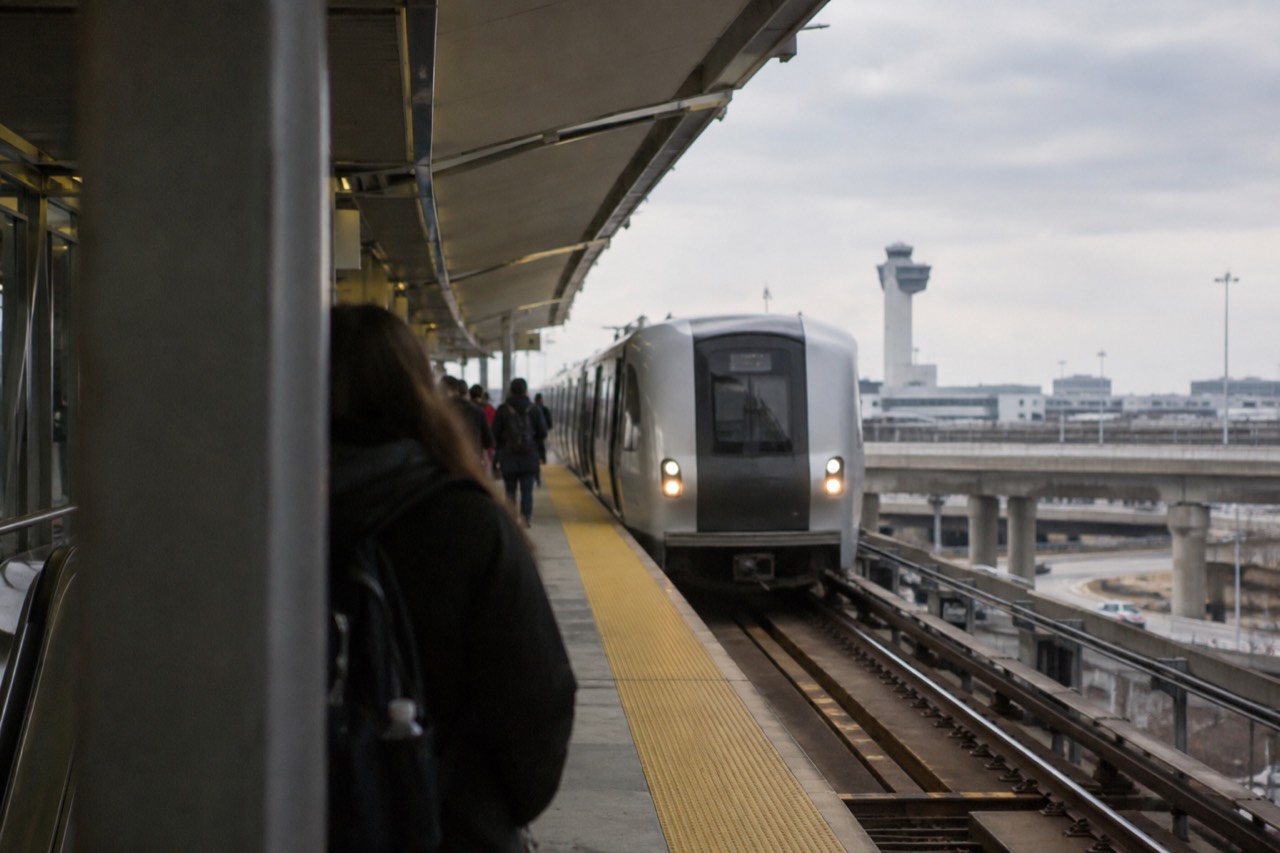
Short answer
The cheapest way from JFK to Manhattan is the subway plus AirTrain at $11.75 total: $3.00 for the subway and $8.75 for the AirTrain. The seven-day unlimited MetroCard no longer exists; tap the same card or phone with OMNY and the $35 weekly cap applies automatically.
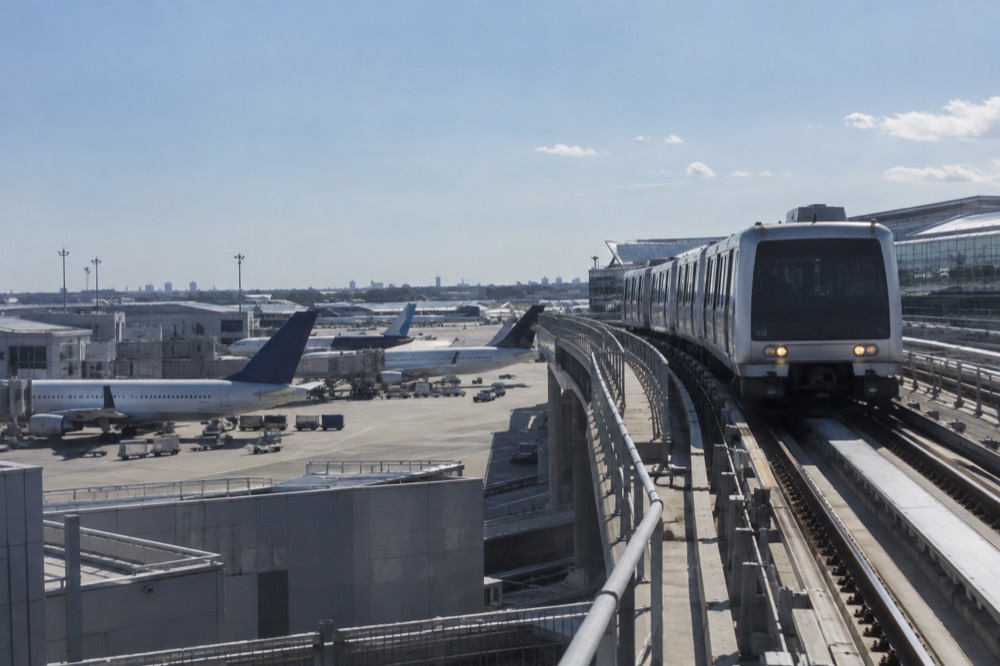
The cheapest full rail journey from JFK to Manhattan costs $11.75. Not the fare you may remember, and not a 7-day unlimited, because that product no longer exists: the MTA stopped selling and refilling MetroCards on 1 January 2026. What remains is a tap-and-go system called OMNY, a free-on-the-outside-to-look-at airport rail link that charges $8.75 on top of your subway ride, and a set of choices that depend almost entirely on where in Manhattan you are sleeping, how many bags you are dragging, and what time your flight lands.
This page walks through every option with the fares the MTA itself publishes. The numbers here come from the transit agency's own airport guides and fare pages, not from third-party booking sites. Where something varies, like the length of the taxi queue at 8pm on a Sunday, it says so instead of inventing a figure.
One decision up front: if this is your first visit and you want the whole attraction picture, start with our things to do in NYC overview once you have dropped your bags. Getting from the airport is the boring part. The rest of the city is why you came.
What Is the Cheapest Way to Get from JFK to Manhattan?
The cheapest way from JFK to Manhattan is the subway plus the AirTrain, which together cost $11.75: $3.00 for the subway ride and $8.75 for the AirTrain. You tap the same card or phone twice, once at the AirTrain exit gate and once at the subway turnstile. There is no cheaper rail option, and no ticket to buy in advance. The journey takes roughly 60 to 75 minutes to most of Midtown.
The route works through two transfer points. Take the AirTrain from any terminal to Jamaica station, then the E, J or Z train into Manhattan. Or take the AirTrain to Howard Beach-JFK, then the A train, which is the better fit for downtown and the West Side. The AirTrain loop serves every terminal, so it does not matter which airline you flew; you just follow the signs to the nearest AirTrain platform and board in either direction, checking the destination on the screen.
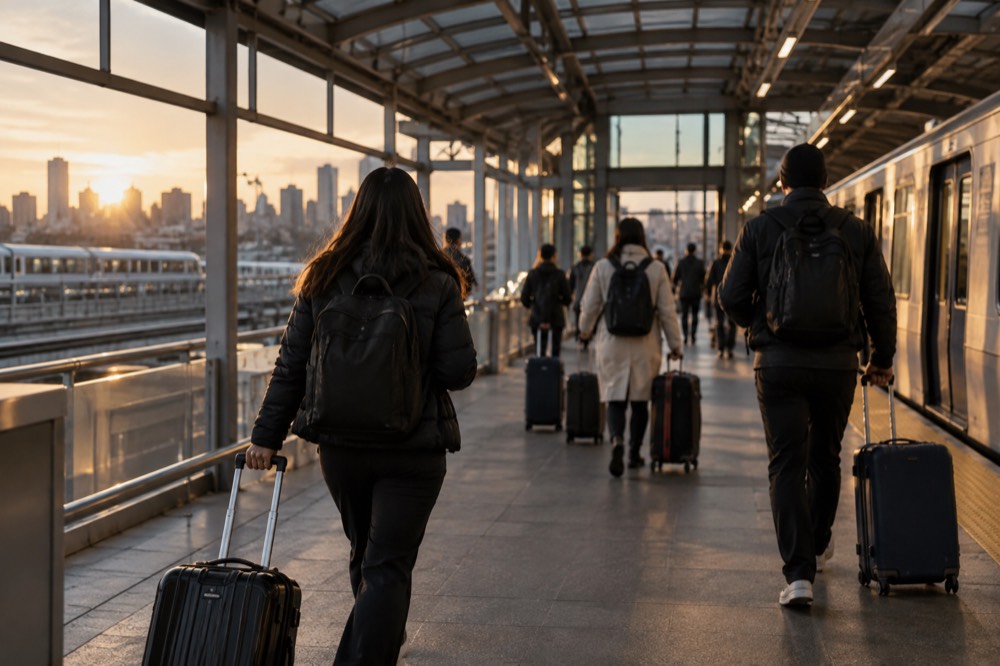
Two things trip people up. First, the AirTrain fare is charged on exit, not entry, so you tap when you leave at Jamaica or Howard Beach, and the $8.75 lands on your card at that moment. Second, unlimited passes cannot be used on the AirTrain at all, so even if you have hit your OMNY weekly cap, the $8.75 still applies. The subway leg after it is what counts toward your cap, the airport rail link does not.
Children under 5 ride the AirTrain free. Reduced-fare riders, meaning eligible seniors 65 and over and riders with disabilities, pay $1.50 on the subway leg. The full fare mechanics, including the cap that replaces every old pass, are covered further down this page.
How Much Does the AirTrain Cost, and Why Does Everyone Get It Wrong?
The AirTrain at JFK costs $8.75 per ride, and that fare is separate from and on top of whatever you pay for the subway or commuter rail you connect to. The combined subway and AirTrain price from a Manhattan address to a JFK terminal is $11.75. Children under 5 ride the AirTrain free, and no unlimited pass, old or new, can be applied to it. The charge is collected at the exit gate, not at boarding.
The reason people get this wrong is that the AirTrain looks like part of the subway. It is not. It is a separate fare system, run under contract with the Port Authority, and it bills independently. A traveler who assumes the $3.00 subway fare covers the whole journey gets an unwelcome surprise at the Jamaica exit gate when the turnstile refuses to open until $8.75 is tapped.
| Fare item | Price | Notes |
|---|---|---|
| AirTrain JFK, per ride | $8.75 | Charged at the exit gate at Jamaica or Howard Beach |
| Subway single ride | $3.00 | OMNY tap, or paper Single-Ride ticket at $3.50 |
| Subway + AirTrain, JFK to Manhattan | $11.75 | The standard cheapest rail route |
| Children under 5 on AirTrain | Free | |
| Reduced-fare subway leg | $1.50 | Eligible seniors 65+ and riders with disabilities |
The commuter rail option changes the maths a little. The Long Island Rail Road from Jamaica to Midtown or Downtown Brooklyn is faster than the subway, at a higher rail fare, and the AirTrain charge still applies on top. If you are staying near Grand Central or Penn Station, the LIRR leg can be worth the difference after a long flight; if you are staying anywhere else, the subway is the simpler answer. Times of day affect the LIRR fare, so check the current rate before you commit.
If your budget is tight, or you simply want to spend the money on something better than airport rail, the transfer options below include a car service that earns its price for groups, and two Manhattan experiences that cost less than the AirTrain itself.
Is a Private Transfer from JFK to Manhattan Worth It?
A private transfer from JFK to Manhattan is worth it for groups of three or more, families with luggage, and anyone landing after a long overnight flight who wants door-to-door service with no transfers. Solo travelers on a budget do better with the AirTrain and subway at $11.75. The fare covers the whole vehicle rather than a seat, so a party of four or five often pays less per person than the train.
The honest arithmetic works like this. The private vehicle costs more than the train for one person, always. But the price is for the car, up to six passengers, not per head. Divide it across a family and the gap to four individual $11.75 rail fares narrows sharply, and what you buy with the difference is a driver who meets you in the arrivals hall, tracks your flight so a delay does not strand you, and puts your bags in the boot instead of on your lap.
It also removes the last-mile problem. The subway gets you to a station, not to your door. If your hotel sits several blocks from the nearest subway entrance and you are traveling with suitcases, that final walk is the part of the journey nobody plans for and everybody remembers. A transfer ends at the address you typed in.
Read more in our detailed JFK private transfer rundown, including when the numbers stop making sense.
How Long Does Each JFK-to-Manhattan Option Take?
Plan on 60 to 75 minutes from a JFK terminal to most of Midtown using the AirTrain and subway, door to door, not including time spent collecting bags or waiting at the AirTrain platform. The LIRR from Jamaica cuts the rail portion of that down for Midtown and Downtown Brooklyn destinations. A car or taxi takes roughly 45 to 90 minutes depending on traffic, which varies enormously by hour and day, so treat any single figure with suspicion.
The rail times are the honest ones because they barely move. An E train from Jamaica to Midtown runs on its own schedule and traffic does not touch it. A car in the Midtown Tunnel queue at 5pm on a weekday is a different story entirely, and nobody can promise you a number for that.
| Option | Typical time to Midtown | Fares involved | Best for |
|---|---|---|---|
| AirTrain + E, J or Z subway | 60-75 min | $8.75 + $3.00 | Budget, light luggage, Midtown and east side |
| AirTrain + A subway via Howard Beach | 60-80 min | $8.75 + $3.00 | Lower Manhattan, West Side hotels |
| AirTrain + LIRR from Jamaica | 45-60 min rail time | $8.75 + LIRR fare | Fastest to Penn Station area and Downtown Brooklyn |
| Private transfer or taxi | 45-90 min | Vehicle fare | Groups, families, heavy bags, late arrivals |
One structural note that matters for planning: the AirTrain to Jamaica and the E train is the pairing most hotel concierges will describe, and it is the right default for Midtown. But the A train from Howard Beach is the sleeping giant of JFK routes. It runs a long way downtown, stopping near the Financial District and along the West Side, and it is often emptier than the E. If your hotel is below Canal Street or west of 8th Avenue, check the A before defaulting to Jamaica.
What Happened to the MetroCard, and What Is OMNY?
The MetroCard was retired: since 1 January 2026 the MTA no longer sells or refills it, and the 7-day unlimited pass it carried no longer exists in any form. Its replacement is OMNY, the tap-to-ride system that takes any credit card, debit card, phone or watch at the turnstile. The weekly value now comes from an automatic $35 fare cap, applied with no pass to buy and nothing to activate.
This is the single most outdated piece of advice still circulating about New York. Guides that tell you to buy a 7-day unlimited when you land are sending you to a product that stopped being sold. Returning visitors who kept an old card in a drawer will find nothing to refill it with.
The cap mechanics, straight from the MTA: $35 per rolling seven-day period for subway and local bus rides, $67 if you also ride express buses, and $17.50 at the reduced-fare rate. The seven days start with your first tap and reset from there, so it is not a calendar week. Tap twelve paid rides in seven days and everything after is free. Two rules catch travelers out. You must tap the same physical card or the same device every single time; mixing your phone one day and the plastic card in your pocket the next breaks the cap silently. And group travel does not pool: each person needs their own card or device to earn their own free rides.
| Fare item | Price | Who it applies to |
|---|---|---|
| Single subway or local bus ride | $3.00 | Everyone, tap with OMNY |
| OMNY weekly cap, subway + local bus | $35 | Automatic after 12 paid rides in 7 days |
| OMNY weekly cap including express bus | $67 | Automatic, same rolling window |
| Reduced-fare ride | $1.50 | Eligible seniors 65+ and riders with disabilities |
| Reduced-fare weekly cap | $17.50 | Same rolling seven-day window |
| Paper Single-Ride ticket from a machine | $3.50 | Valid 2 hours, no subway-to-bus transfer |
For a week-long stay, the cap matters more than the airport fare. A visitor doing four subway rides a day hits $35 partway through day three and rides free for the rest of the week. Our OMNY explained page covers every edge case, and the wider NYC subway guide covers the system itself. The short version: arrive, tap, forget about it.
Which AirTrain and Subway Combination Should You Actually Take?
Take the AirTrain to Jamaica and the E train if your destination is in Midtown, on the East Side, or near Times Square, Grand Central or Penn Station. Take the AirTrain to Howard Beach and the A train if you are staying downtown, on the West Side, or anywhere along 8th Avenue. Both cost the same $11.75, both run frequently, and the choice is purely geographic: Jamaica routes you east and north, Howard Beach routes you west and south.
Practical detail: the AirTrain runs in a loop with two branch directions, Jamaica Station and Howard Beach, plus the All-Rental-Car and Federal Circle stops. Check the destination display before boarding. If you board the wrong branch you simply ride the loop around, which costs time but nothing extra, since the fare is taken at your exit.
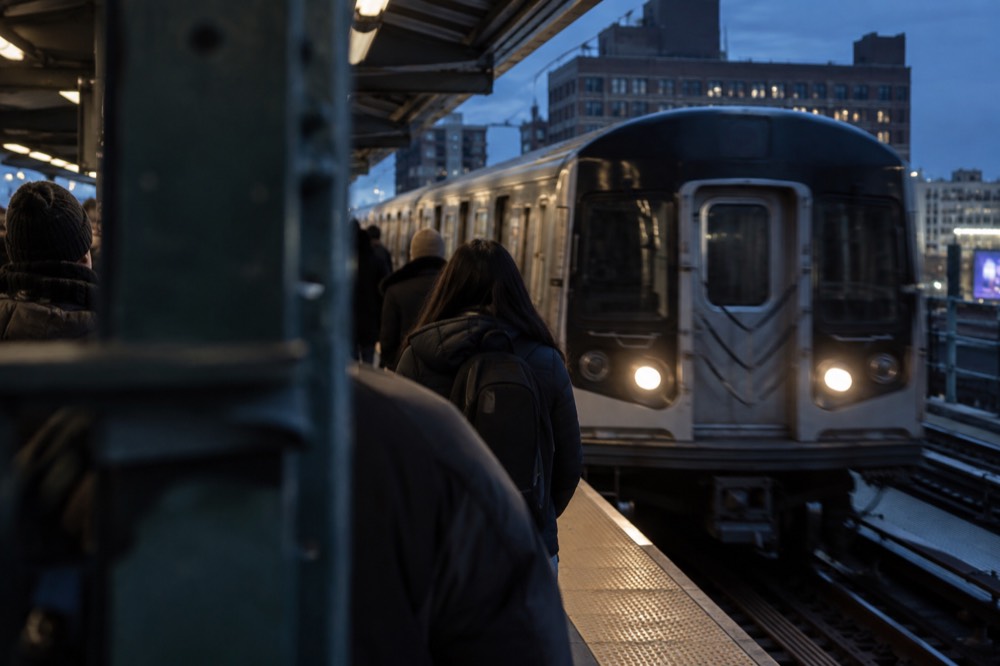
Luggage is the honest variable. The E train from Jamaica is a commuter line, and during the morning or evening rush a large suitcase is an imposition on everyone around you. If you land at 8am on a Tuesday with two checked bags, the calculus tilts toward a car, whatever the fare table says. If you land at 2pm on a Saturday with a carry-on, the train is easy. Nobody's first New York memory should be apologizing to a strap-hanging commuter over a wheelie bag.
Also worth knowing: the E train's Manhattan stops include 50th Street, 42nd Street-Port Authority, 34th Street-Penn Station and 23rd Street. That is a remarkable coverage of Midtown hotel territory. The A's downtown stops include Chambers Street and West 4th Street, with a transfer web that reaches nearly everywhere below Midtown.
What If Your Flight Lands Late at Night?
The subway runs 24 hours, so the AirTrain-plus-subway route from JFK works at 1am, 3am and 5am, but service thins out: trains run less often, some lines shift to local operation, and a few stations close for overnight maintenance. The AirTrain itself runs around the clock. A private transfer becomes the stronger choice very late at night, when the subway leg may involve a longer wait than the ride.
The 24-hour subway is a genuine New York distinction and it keeps the $11.75 route on the table at any hour. But honesty requires the caveat: an E train at 3am might come every twenty minutes rather than every six, and if your hotel is not walking distance from your exit station you may find yourself completing the journey on foot through streets you do not yet know.
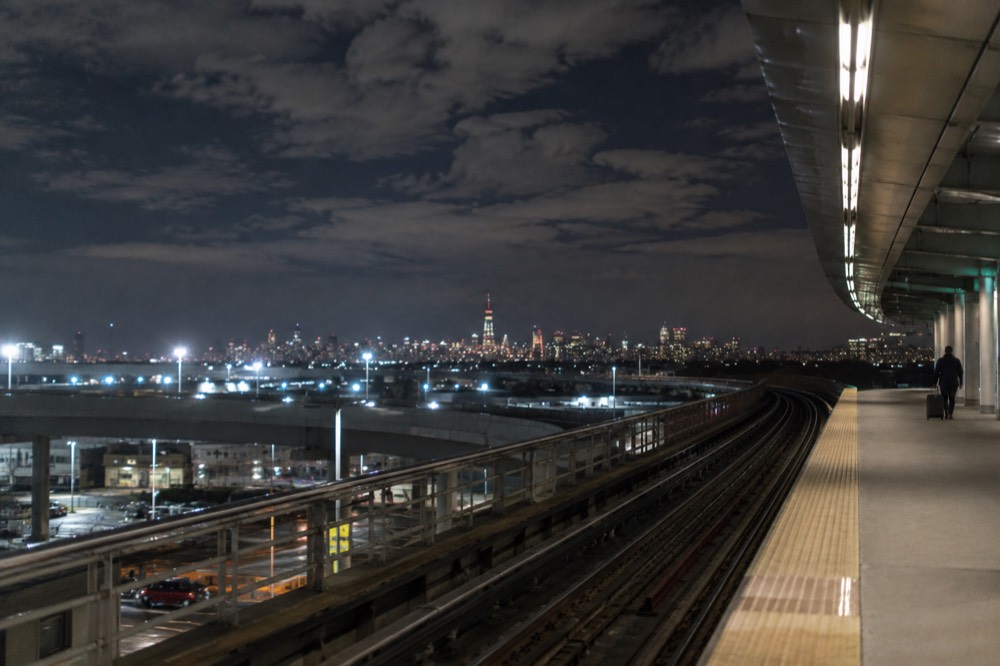
Taxis and cars are also scarcer, not absent, at odd hours, and the roads are emptier, so the driving time is often at its best exactly when the train is at its slowest-feeling. For a red-eye with children, or a landing after midnight with a 7am meeting, the private option stops being a splurge and becomes simple arithmetic about sleep.
Safety questions deserve a straight answer rather than a shrug. Late-night transit in New York is used by millions of people every year, and our is NYC safe page treats the question with actual figures rather than vibes. The practical late-night advice is unglamorous: keep your phone charged, stand in the well-lit part of the platform, and know your exit station before you board.
How Does JFK Compare with LaGuardia and Newark for Getting Into Manhattan?
JFK is the most expensive airport to reach by rail: $11.75, because the $8.75 AirTrain charge rides on top of the subway fare. LaGuardia is the cheapest, $3.00 total, because its Q70 LaGuardia Link bus is free and you pay only the subway fare that connects to it. Newark sits in between at $16.80 for the NJ Transit train plus AirTrain from Penn Station, and its AirTrain is currently replaced by shuttle buses on weekday mornings.
The inversion surprises people. The airport with the famous dedicated rail link is the costly one, and the airport everyone grumbles about has the bargain route.
| Airport | Cheapest rail route to Manhattan | Total cost | The catch |
|---|---|---|---|
| JFK | AirTrain + subway via Jamaica or Howard Beach | $11.75 | AirTrain fare cannot be covered by any pass or cap |
| LaGuardia | Free Q70 bus + subway | $3.00 | Bus-to-subway transfer, allow extra time |
| Newark | NJ Transit train + AirTrain from Penn Station | $16.80 | Weekday shuttle buses replace the station AirTrain, 05:00-15:00 |
The Newark detail deserves its own warning, because it is current and operational: AirTrain service between the terminals and the NJ Transit rail station is being replaced by shuttle buses on weekdays from 5am to 3pm. The inter-terminal AirTrain still runs. If your Newark itinerary assumed a seamless train-to-plane connection on a weekday morning, add buffer time. Our Newark to Manhattan guide and LaGuardia to Manhattan guide cover both airports in full, and the airport comparison page helps if you have not booked flights yet.
Also current: at Newark, the NJ Transit ticket to and from the airport includes the AirTrain fare, but buying on board costs a surcharge, the AirTrain must then be paid separately, and conductors only accept cash. Buy at the machine or in the app.
What Should You Do in the First Hours After You Land?
Drop your bags, then walk. The single best first move after landing at JFK is a low-effort, high-context activity that gets you outside and oriented: a walk across the Brooklyn Bridge, a loop of Central Park, or a guided neighborhood stroll that explains the city while you shake off the flight. Save the timed-ticket attractions, observation decks and big museums for day two, when jet lag is not voting on your itinerary.
The reasoning is chronological rather than sentimental. Your first afternoon is the one where energy is lowest and flexibility matters most. A walk with a guide costs nothing to reschedule and everything about it teaches you the geography you will use for the rest of the trip. The Financial District, Wall Street and 9/11 Memorial walk above fits neatly here: it starts downtown, near the A train you may already be riding in from Howard Beach, and a tip-based walk has no fixed fee to lose if you cut it short.
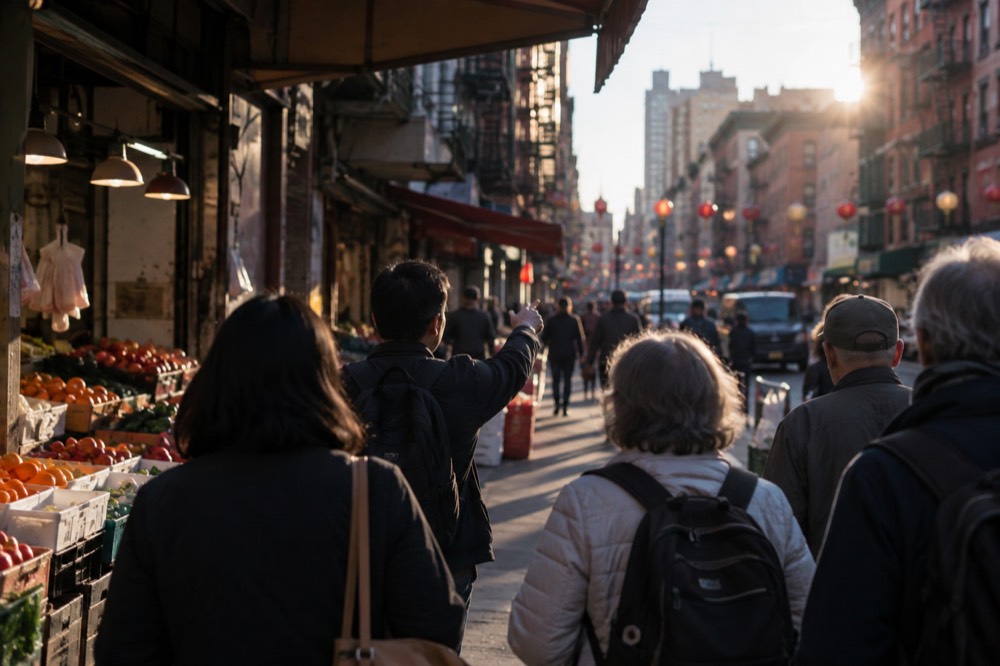
Food tours earn their place on the first evening. The Chinatown and Little Italy walk below covers six tastings that add up to a real meal, which solves dinner and sightseeing in one booking, and the stops sit close together, which helps when your legs have been in a plane seat for seven hours.
For travelers with plans rather than appetites, the structure of the whole trip is easier to see in one place: our NYC for first-timers guide sequences the city sensibly, and the 3 days in NYC itinerary is the most-read starting point on this site.
Luggage, Tipping and the Small Print Nobody Tells You
Plan for the AirTrain's exit gates and subway turnstiles, which are narrow: one large suitcase and one carry-on per person is comfortable, more is a wrestling match. Tip taxi and transfer drivers 15-20% of the fare, and have some cash for baggage handlers if you use them. Do not check anything valuable in a hold bag, and photograph your luggage before you fly, because the claim process at JFK runs on descriptions.
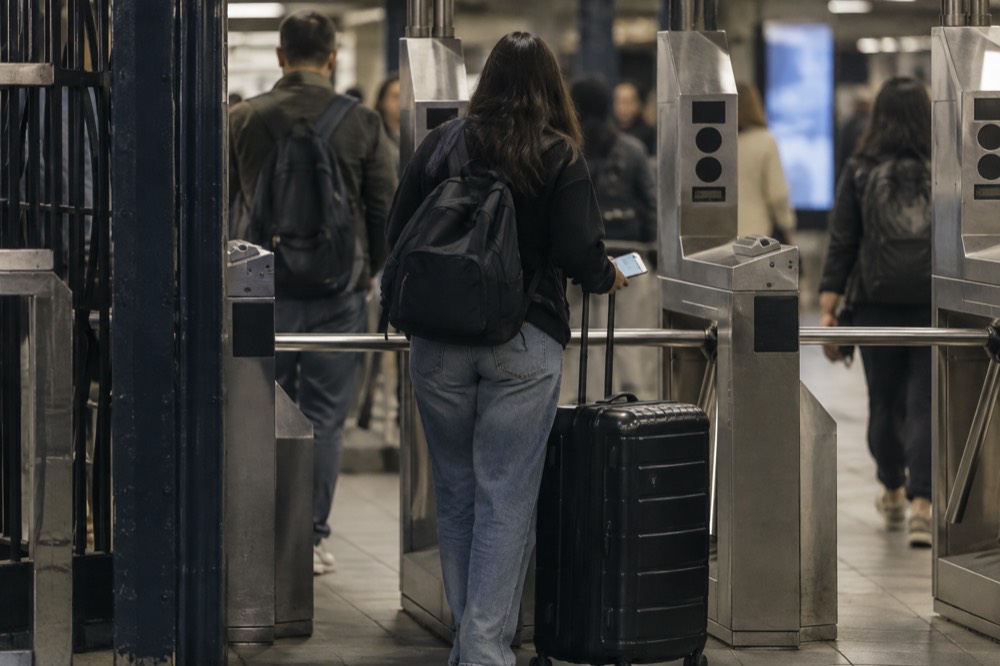
The physical reality of the transit route is under-discussed. The AirTrain itself is luggage-friendly, with racks near the doors. The pinch points are the fare gates and the subway stairs, of which some Manhattan stations still have plenty without escalators. If your suitcase is genuinely heavy, the transfer to a car service stops being a luxury question and becomes a joints question.
Tipping culture in New York is assertive, and the airport is where you first meet it. Our tipping in NYC guide gives the full picture, including the situations where a tip is genuinely expected versus merely solicited. For a private transfer, 15-20% of the fare is the standard range. For a skycap or baggage handler, a few dollars per bag.
Two smaller notes worth the space. First, luggage storage services exist across Manhattan if you land hours before your hotel check-in; they are covered where relevant on our neighborhood pages. Second, the OMNY system means you never need to queue at a MetroCard machine, which was formerly a ritual of arrival. Your phone is your ticket from the first tap.
Common Questions About Getting from JFK to Manhattan
The five questions below cover the decisions travelers actually face on the day: the total fare, whether the AirTrain accepts the weekly cap, how long the journey takes, what happens late at night, and when a private transfer justifies its price. Each answer gives the operating rule in a sentence, with the detail underneath. Nothing here requires buying anything in advance except, if you choose it, a car.
How much does it cost to get from JFK to Manhattan?
The cheapest rail route costs $11.75: $8.75 for the AirTrain and $3.00 for the subway ride it connects to. A private transfer or taxi costs a vehicle fare that varies by destination and demand, and the LIRR from Jamaica adds a commuter rail fare on top of the $8.75 AirTrain charge. No pass covers the AirTrain portion.
Can I use my OMNY weekly cap on the AirTrain?
No. Unlimited-style value, including the automatic $35 weekly OMNY cap, cannot be applied to the AirTrain, which charges its own $8.75 fare at the exit gate. Your subway ride after the AirTrain counts toward the cap as normal, but the airport rail link never does.
How long does the AirTrain and subway take from JFK?
Roughly 60 to 75 minutes from terminal to most of Midtown, not counting baggage claim or platform waits. The E, J or Z from Jamaica serves Midtown; the A from Howard Beach serves downtown and the West Side. The LIRR from Jamaica is faster to the Penn Station area and Downtown Brooklyn.
Does the subway from JFK run all night?
Yes, the subway runs 24 hours and the AirTrain runs around the clock, so the $11.75 route is available at any landing time. Overnight trains run less frequently and some stations close for maintenance, so late arrivals involve longer waits and possibly a longer walk at the far end. Very late landings are when a transfer or taxi earns its price.
Is a private transfer from JFK worth it for one person?
Usually not. The fare covers the whole vehicle, so solo travelers pay the full car price against an $11.75 rail alternative. Groups of three or more, families with luggage, and anyone landing off a red-eye into a hotel far from a subway station are the cases where the numbers and the comfort both point the same way.
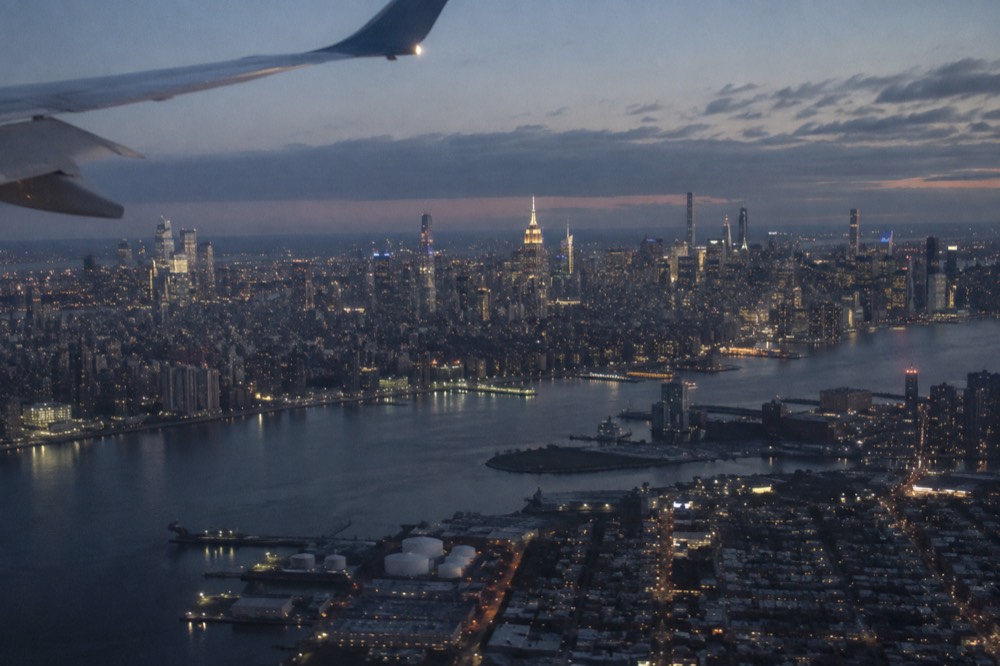
The last thing to know is the order of operations on arrival day itself. Passport control, baggage claim, then the AirTrain, with your card or phone ready at the Jamaica or Howard Beach gate. From there the city assembles itself quickly: an E train puts you under Times Square in about an hour, an A train delivers you to the harbor, and either way you arrive knowing something most visitors do not, that the unlimited pass in your guidebook stopped existing in January 2026 and nobody told the guidebook. More of that kind of correction, on every corner of the city, is what New York City Travel Guide exists to publish.