MetroCard NYC: What Still Works in 2026 and What Replaced It
The MetroCard stopped being sold on 1 January 2026. Every piece of advice that tells you to buy one on arrival is out of date.
Short answer
You can no longer buy or refill a MetroCard in New York City. As of 1 January 2026 the MTA sells none, and the $35 OMNY weekly fare cap has replaced the old 7-day unlimited pass. Tap a contactless card or phone at the turnstile and the cap applies automatically.
The machine that ate more tourist dollars than any other object in New York is gone. As of 1 January 2026, the MTA no longer sells or refills the MetroCard, the yellow-orange swipe card that defined three decades of New York travel. The words come from the transit authority itself: "MetroCard is retiring. As of January 1, 2026, you can no longer buy or refill a MetroCard." Any guide, app or well-meaning friend that tells you to buy a 7-day unlimited on arrival is sending you to a product that no longer exists.
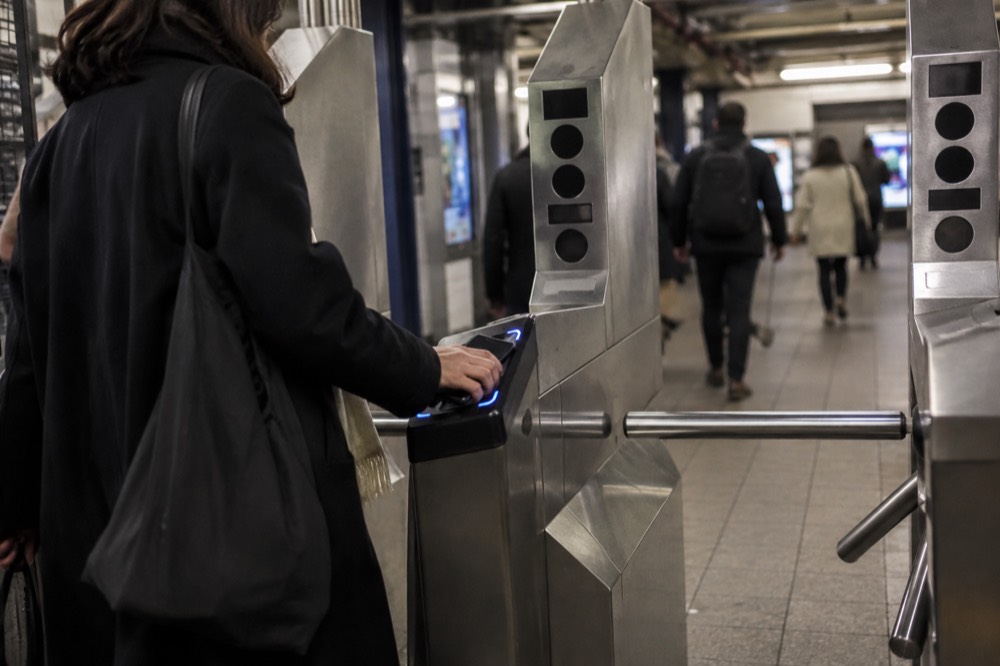
What replaced it is simpler and, for most visitors, cheaper to understand. You tap. A contactless credit card, a debit card, a phone or a watch works at every subway turnstile and on every local bus, and the fare system caps itself at $35 per rolling seven days without you buying anything in advance. This page, part of the New York City Travel Guide transport coverage, lays out exactly what the MTA sells now, what a ride costs, what happens to any old card still in your drawer, and where the airport fares fit, with every figure drawn from the MTA's own published fare pages.
Can You Still Buy a MetroCard in NYC?
No. The MTA stopped selling and refilling MetroCards on 1 January 2026, so no vending machine, booth or retailer in New York City can sell you one. Riders who already held a 7-day or 30-day unlimited pass had to start using it by 31 March 2026 to get its full value. The card is still accepted at turnstiles during a transition period, but the exact final acceptance date had not been announced.
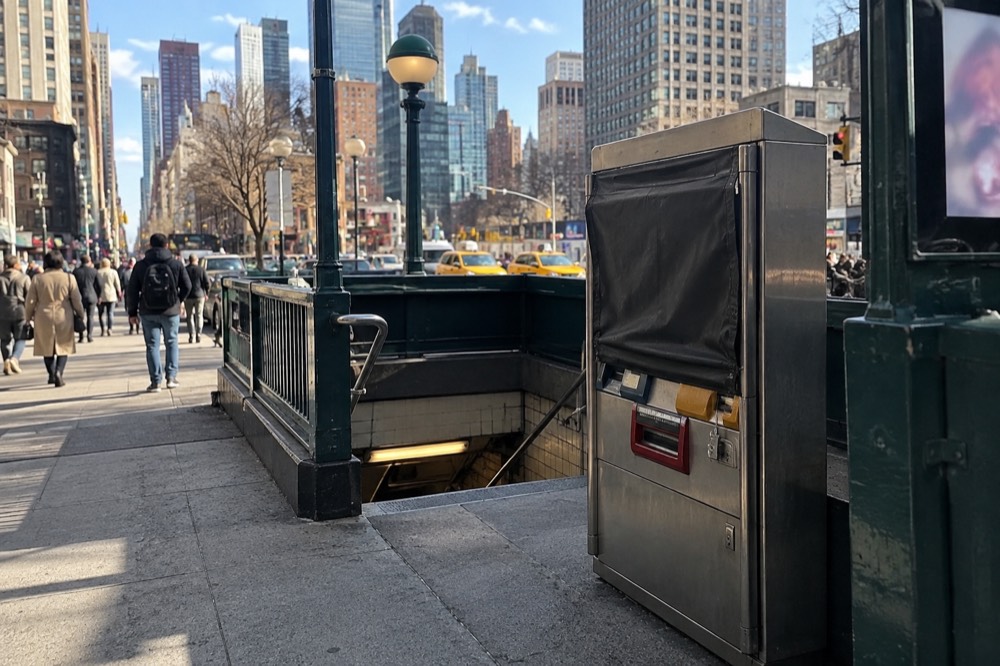
The retirement is not a rumour or a phased pilot. The MTA's own fare page carries the retirement notice verbatim, with the 31 March 2026 deadline for starting existing unlimited passes printed alongside it. That deadline has now passed, which means every unlimited pass in circulation has either been used or has lapsed. If a website quotes you a "7-day unlimited price" for New York, that number describes a product nobody can buy.
What remains is the OMNY system, the MTA's contactless fare payment, which has been running across the whole subway and bus network for years and now carries the full load. There is also a physical OMNY Card, a reloadable tap card sold for $1 as a limited-time introductory offer, aimed at riders without a bank card: cash buyers, children, anyone who wants a dedicated travel card. For visitors with a contactless card in their wallet, even that purchase is unnecessary.
A few practical notes follow from the retirement. Any remaining balance on an old MetroCard can be transferred to an OMNY Card at an MTA Customer Service Center, or refunded. And if you are planning the rest of your trip around the transit network, our NYC subway guide covers lines, express versus local trains and how the system is laid out, while the broader things to do in NYC page handles everything you will tap your way to.
What Replaced the MetroCard? OMNY, Explained
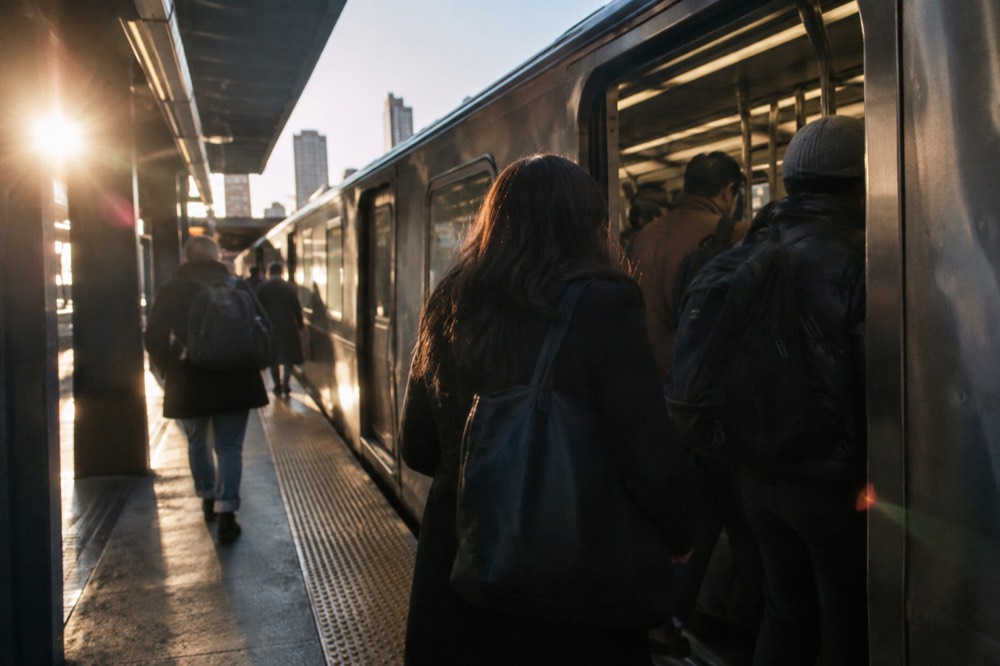
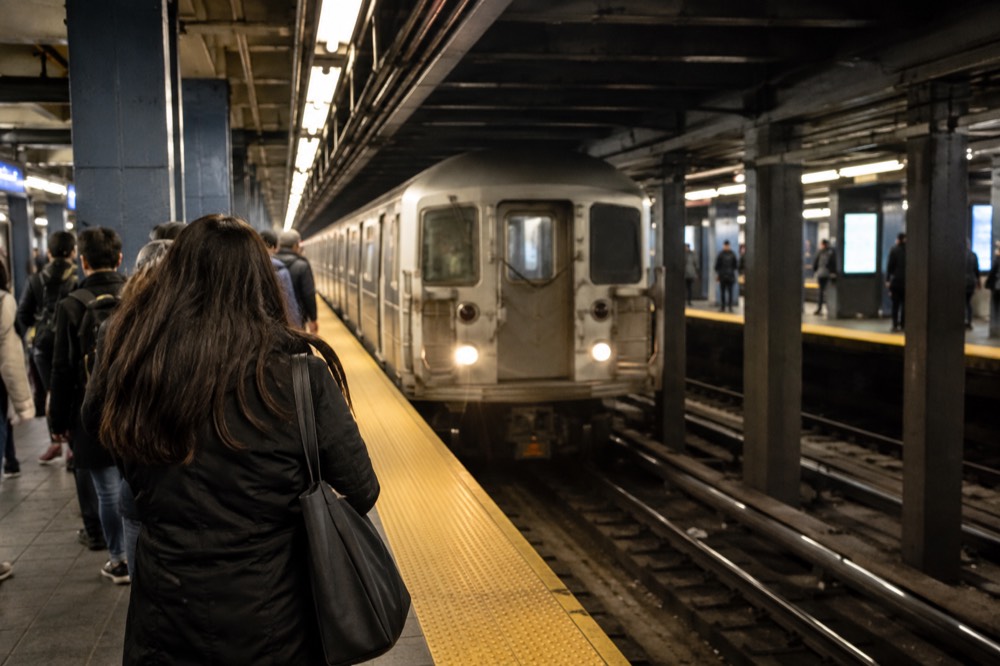
OMNY is the MTA's tap-to-pay system, and it replaced the MetroCard as the way every rider pays. You tap a contactless credit or debit card, a phone or a smartwatch on the reader at the turnstile or bus front door, and the full $3.00 fare is charged. There is nothing to buy in advance, no machine to visit, and the weekly discount applies automatically once your taps add up.
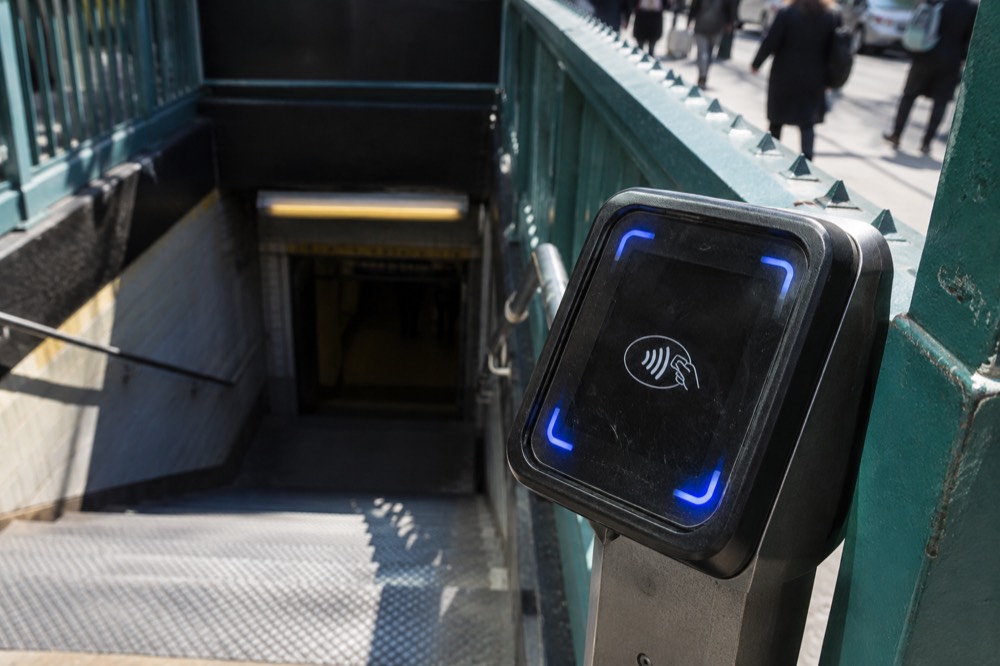
The mechanics are deliberately invisible. The reader takes one tap, the turnstile opens, and the charge lands on your card as a transit fare. If you want to see what you have been charged, the OMNY website and app let you look up your tap history by entering your card number, which is also where you can spot mistakes, such as a tap that charged you twice for the same ride.
Two details matter more than they sound. First, the free transfer rule survived the transition: one free transfer within two hours, subway to bus, bus to subway, or bus to bus, applied automatically when you tap the same card. Second, the system reads your card, not your identity, which means each person in a group needs their own card or device. You cannot tap one phone four times for four people at the turnstile.
For riders without a bank card, the physical OMNY Card fills the gap. It costs $1 under the introductory offer, reloads with cash at retailers and vending machines, and behaves exactly like a bank card at the reader. The MTA also still sells a paper Single-Ride OMNY ticket from machines at $3.50, valid for two hours, but it includes only a free bus-to-bus transfer, no subway-to-bus transfer, so it is a poor substitute for a normal tap. The full OMNY mechanics, including the cap rules in detail, are on our OMNY NYC page.
How Does the $35 OMNY Weekly Cap Work?
The cap is $35 for subway and local bus rides in a rolling seven-day period, and once you reach it every further ride that week is free. The seven days start with your first tap, not on a calendar Monday, and the cap resets every seven days from that first tap. You must tap the same card or the same device every time. The counting works out to roughly 12 paid rides before the free rides begin.
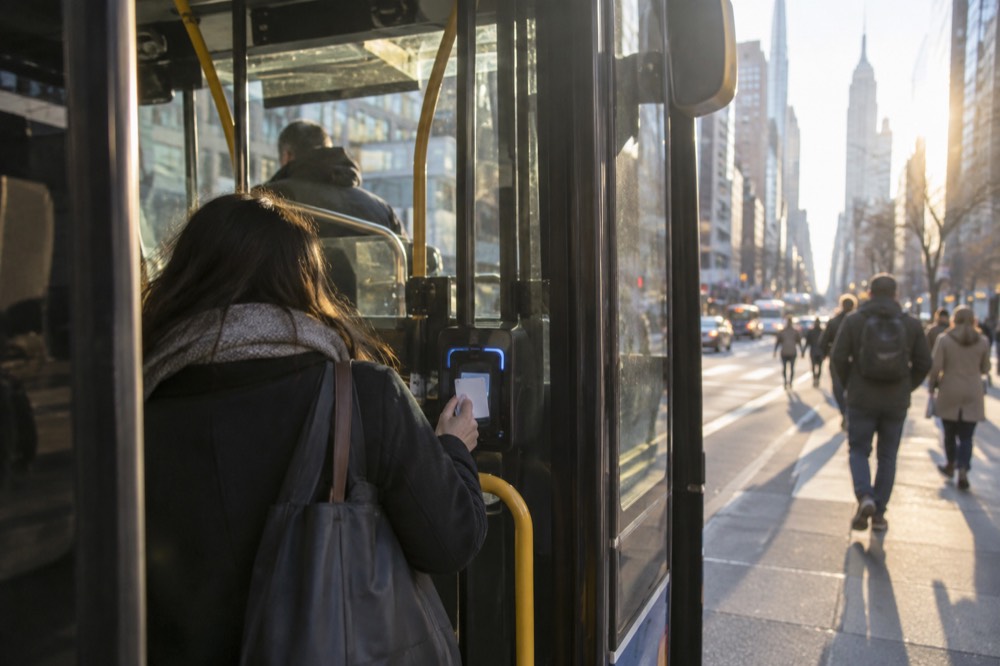
The MTA's own wording: "Tap and ride and you'll only pay for the subway and local bus rides you take up to a cap of $35 in a 7-day period, as long as you use the same OMNY Card, credit or debit card, or mobile device." The rolling window is the part that confuses people. Your week runs from your first tap, whenever that was, so a Wednesday arrival starts a Wednesday-to-Tuesday week. After the seventh day, the cap resets and restarts with your next tap.
The failure mode is real and worth repeating because nothing warns you at the turnstile. If you tap your phone on Monday and your physical card on Tuesday, the system sees two separate payment methods and runs two separate counts toward two separate caps. Pick one card or one device at the airport and never switch for the rest of the trip. Groups have the same constraint in reverse: each traveller needs their own card or device, because group trips and transfers do not pool toward anyone's cap.
| Fare-capping rule | Value | Who it applies to |
|---|---|---|
| Weekly cap, subway + local bus | $35 | Every rider using one card or device |
| Weekly cap including express buses | $67 | Riders who also use express buses |
| Reduced-fare weekly cap | $17.50 | Eligible seniors 65+ and riders with disabilities |
| Cap window | Rolling 7 days from first tap | All riders |
| Paid rides before free rides | About 12 | All riders |
Reduced-fare riders, meaning eligible seniors 65 and older and riders with disabilities, get their own cap at $17.50, alongside the discounted $1.50 single fare on subway and local bus at all times of day. The reduced-fare program requires enrollment with the MTA, so short-term visitors who qualify should look into it before arrival rather than at the turnstile.
What Does a Subway or Bus Ride Cost in NYC Now?
A single ride on the subway or on any local, limited, rush or Select Bus Service route costs $3.00, charged per tap. Express buses cost $7.25. Reduced-fare riders pay $1.50 on the subway and local buses at any time of day, and $3.60 on express buses outside weekday peaks. Up to three children under 44 inches tall ride free with a fare-paying adult on the subway and local buses.
| Fare type | Price | Notes |
|---|---|---|
| Subway / local bus single ride | $3.00 | Per tap, includes free transfer within 2 hours |
| Express bus single ride | $7.25 | Longer suburban routes |
| Reduced fare, subway and local bus | $1.50 | Eligible seniors 65+ and disabled riders, all times |
| Reduced fare, express bus | $3.60 | Not valid weekday peaks, 06:00-10:00 and 15:00-19:00 |
| Paper Single-Ride OMNY ticket | $3.50 | Valid 2 hours, bus-to-bus transfer only |
| OMNY Card purchase | $1 | Limited-time introductory price |
| Children | Free | Up to three under 44 inches tall with a paying adult |
The transfer rule deserves a second look because it changes how you plan a day. One free transfer within two hours covers subway to bus, bus to subway, and bus to bus. There are even two out-of-system free transfers where you walk between stations: between Lexington Av/59 St and Lexington Av/63 St, and between Junius St and Livonia Av, you tap again at the turnstile and are not charged. Those two exist because of walking-distance station pairs that the map does not show as connected.
The express bus fare is the one place the numbers jump, and for visitors it rarely matters. Express buses serve the outer boroughs on long commuter routes, and the $67 cap only makes sense if you are genuinely riding them all week. Everyone touring Manhattan, Brooklyn and Queens on the subway and local buses should simply think in terms of the $3.00 tap and the $35 cap.
What Should You Do with an Old MetroCard?
Any remaining balance on a MetroCard can be transferred to an OMNY Card at an MTA Customer Service Center, or refunded, so an old card with money on it is not lost. Unlimited passes are the exception: 7-day and 30-day unlimited passes had to be started by 31 March 2026 to deliver their full value, so any unused pass from before that date is spent.
MetroCards were still accepted at turnstiles during a transition period, but the MTA had not announced the final acceptance date.
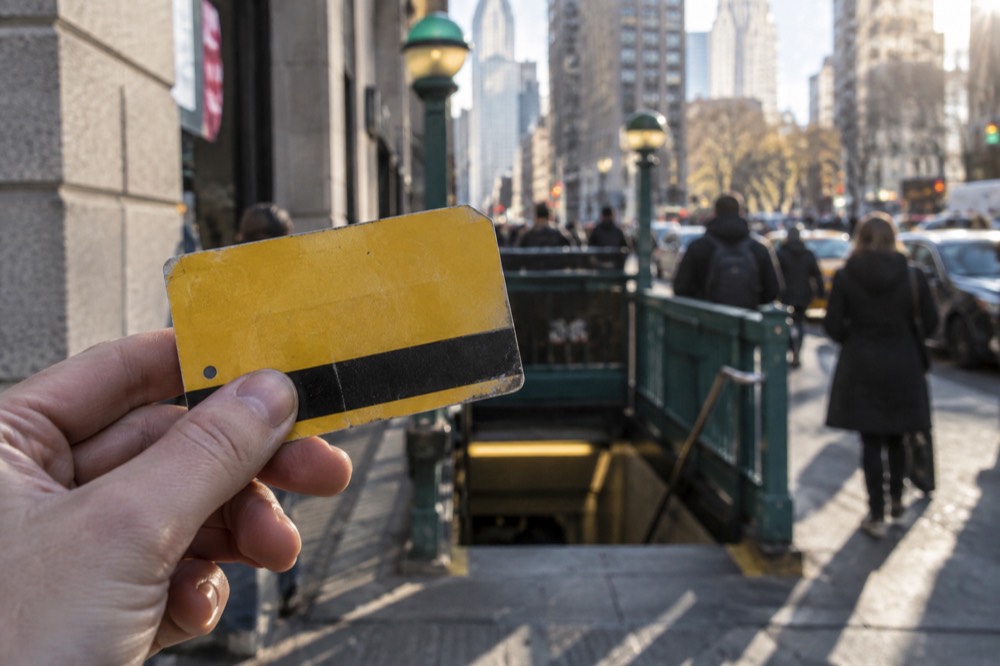
For a visitor holding a souvenir card from a past trip, the practical answer is usually to stop worrying about it. A card with a dollar or two of leftover balance can be exchanged, but the errand costs more time than the money is worth unless the balance is meaningful. The Customer Service Center route exists mainly for residents and for riders with substantial stored value.
The collectible angle is the only remaining live market. Full-artwork MetroCards, particularly unused ones from limited print runs, have a second life on collector sites, and the final retirement has only increased interest. That is a hobby observation, not a price claim: the MTA publishes no figures on secondary-market card values, so treat any number a reseller quotes as their opinion.
The one thing not to do is plan around the card's continued acceptance. The transition window is exactly the kind of operational detail that closes without a press release reaching tourists. If you arrive with a working MetroCard, spend its balance early in your trip rather than counting on it for the flight home.
What Do Airport Transfers Cost with the New Fare System?
From JFK, subway plus AirTrain costs $11.75 per person, because the AirTrain adds $8.75 on top of the $3.00 subway fare. From LaGuardia, the total is $3.00, because the Q70 LaGuardia Link bus is free and you pay only the subway fare. From Newark, NJ Transit train plus AirTrain from Penn Station costs $16.80, with the AirTrain fare included in the airport ticket. The cheapest airport run in the city is LaGuardia's, not JFK's.
| Airport | Cheapest transit route | Cost per person | Notes |
|---|---|---|---|
| JFK | Subway (E, J, Z to Jamaica, or A to Howard Beach) + AirTrain | $11.75 | AirTrain $8.75 charged on top; unlimited passes never applied to it |
| LaGuardia | Subway + free Q70 LaGuardia Link bus | $3.00 | Q70 is free; M60-SBS from uptown Manhattan also $3.00, stops at every terminal |
| Newark EWR | NJ Transit train from Penn Station + AirTrain | $16.80 | AirTrain fare included in the airport ticket; free within the airport itself |
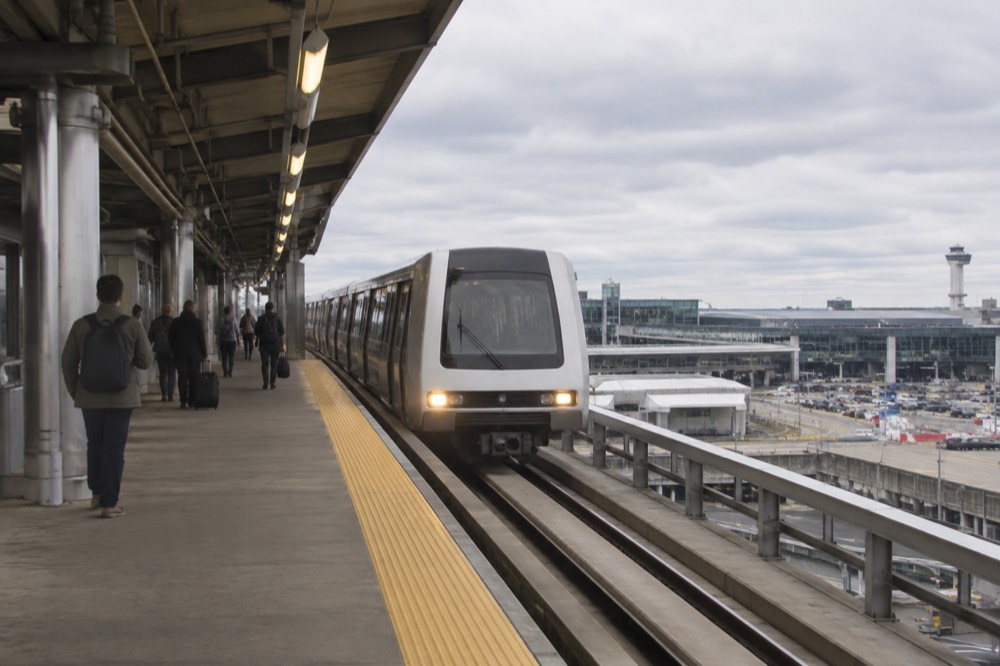
The JFK arithmetic catches people off guard every day. The airport with the famous rail link is the expensive one, because the AirTrain is a separate fare on top of the subway, and the MTA states plainly that unlimited passes could never be used on it. The LIRR plus AirTrain combination is faster to Midtown and Downtown Brooklyn, at a higher rail fare. Children under 5 ride the AirTrain free.
Newark has a live service change worth checking before you fly: AirTrain service between the terminals and the NJ Transit rail station is replaced by shuttle buses on weekdays from 05:00 to 15:00, while the inter-terminal AirTrain keeps running. Allow extra time on a weekday morning. One more Newark quirk: buying the NJ Transit ticket on board carries a surcharge, conductors only accept cash, and the AirTrain must then be paid separately at $8.50.
LaGuardia is the quiet winner. The Q70 LaGuardia Link bus is free, end to end, and connects the terminals to the subway at Jackson Heights and to the LIRR at Woodside. A subway-to-bus transfer within two hours is free anyway, but on the Q70 there is nothing to transfer from, so the whole run from Midtown costs one $3.00 tap. Our JFK to Manhattan page covers that airport's options, including the LIRR, in full.
For groups, the fare math can flip. A private transfer from JFK covers the whole vehicle for up to six passengers, bags ride with you, and the driver tracks your flight, which matters when a delay lands you at 1am with a stroller and three suitcases. Solo budget travelers do better on the AirTrain. Three or more people with luggage should price both before committing.
Do You Need Any Pass at All in NYC?
Most visitors need no pass of any kind. The $35 OMNY weekly cap applies automatically to anyone tapping the same card or device, so a week of heavy subway use discounts itself without a purchase. The only riders who benefit from buying something in advance are those without a contactless bank card, who should get the $1 OMNY Card, and reduced-fare riders, who should enroll with the MTA.
Attraction passes are a separate product entirely and do not cover transit.
The disappearance of the upfront pass decision is a genuine simplification for travelers. Under the MetroCard system, the 7-day unlimited was a bet: pay a fixed price, then ride enough to beat it. Under OMNY the bet is gone. You pay per ride, and if your week turns out heavy, the cap delivers the same unlimited value on day five or six without you having predicted anything.
The one planning rule that replaces all the old pass advice is the single-device rule. Choose one payment method, keep it in the same pocket all week, and the system does the rest. The riders who get charged full fare for a heavy week are almost always the ones who tapped a phone on Monday and a card on Thursday without noticing.
Attraction bundles like CityPASS are worth a separate look, and our NYC CityPASS page compares them, but they buy museum and deck entry, never subway rides. The transit decision and the sightseeing decision have nothing to do with each other, whatever a reseller's checkout page implies.
Once you are moving, the city rewards the tap. A food tour through Chinatown and Little Italy costs one fare to reach and turns a downtown afternoon into a meal, and the free Financial District walks on GuruWalk cover Wall Street and the 9/11 Memorial on tips alone, which pairs well with a day built almost entirely on capped subway rides.
The food walk pairs naturally with the free-walk option, since both sit in the same downtown pocket. Six tastings across Chinatown and Little Italy make a full meal on their own, and the route ends within a short ride of the Financial District, where the tip-based walks begin. Doing both in one day is a realistic plan, not an ambitious one.
Common Questions About the MetroCard in NYC
The MetroCard is retired as a purchasable product, OMNY handles every fare by tap, and the $35 weekly cap has replaced the 7-day unlimited pass. Old cards can still be spent during a transition window and their balances transferred or refunded. The questions below cover the specifics travelers ask most, with each answer drawn from the MTA's published fare rules.
Can you still buy a MetroCard in NYC?
No. The MTA stopped selling and refilling MetroCards on 1 January 2026. No vending machine, booth or retailer in the city can sell you one. Existing unlimited passes had to be started by 31 March 2026 to deliver full value.
What replaced the MetroCard?
OMNY, the MTA's contactless tap-to-pay system. You tap a contactless credit or debit card, phone or smartwatch at the turnstile or bus door, and the fare is charged automatically. A physical OMNY Card costs $1 as a limited-time introductory offer for riders without a bank card.
How much is a 7-day unlimited MetroCard now?
There is no such product. The 7-day unlimited stopped being sold with the MetroCard retirement. Its replacement is the $35 OMNY weekly cap, which applies automatically after roughly 12 paid taps on the same card or device in a rolling seven-day period.
How much does a single subway ride cost?
$3.00 per tap on the subway and on local, limited, rush and Select Bus Service routes. Express buses cost $7.25. One free transfer between subway and bus applies within two hours of your first tap.
Can I still use a MetroCard I have at home?
Probably, for now. MetroCards were still accepted at turnstiles during a transition period, but the MTA had not announced the final acceptance date. Any remaining balance can be transferred to an OMNY Card at a Customer Service Center or refunded. Spend it early in your trip.
Does the OMNY cap work if my group shares one card?
No. Each person needs their own card or device. The cap counts taps on one payment method, and group trips do not pool toward anyone's cap. Tapping one phone repeatedly for several people charges full fare every time.
The clean summary of New York transit in 2026 is short enough to fit on the card that replaced the card: tap one device, pay $3.00 a ride, stop paying after $35 in a week, and never buy anything at a machine. The MTA retired its most famous object and made the replacement one you already carry.