Is Pre-K 3 Free in New York? What Families Need to Know
A direct answer to whether Pre-K 3 is free in New York City, who qualifies, how the 3-K application works, and what a free seat actually includes.
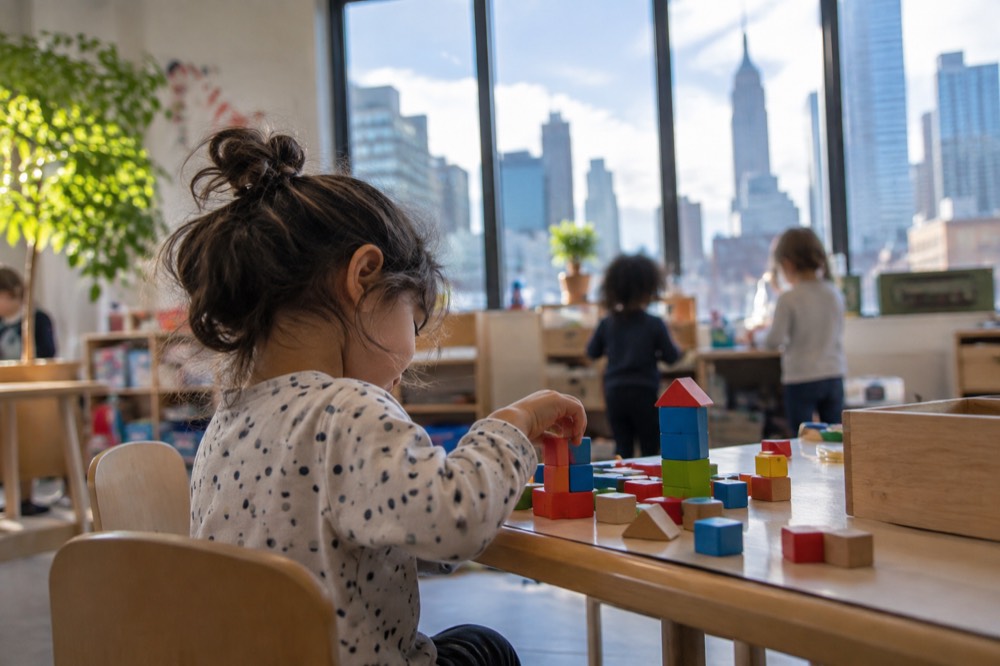
New York City's public school system does something most large American districts still do not: it offers free, full-day pre-kindergarten seats to three-year-olds, not only to four-year-olds. The program is called 3-K, and for families with a child who turns three within the enrollment year, the short answer to the money question is yes, the seat itself costs nothing. The longer answer involves eligibility windows, an application system with real deadlines, and a seat supply that is universal in ambition but not always equal in every neighborhood.
This page answers the question directly, then covers the parts a plain yes leaves out: who actually qualifies, how the application works, what a free seat includes, and how 3-K differs from the fully universal Pre-K program for four-year-olds. Families visiting New York with young children, or relocating here, will also find a short section on how this connects to planning family time in the city. The New York City Travel Guide covers the visitor side of that equation elsewhere.
Is Pre-K 3 Free in New York?
Yes. New York City's 3-K program provides free, full-day pre-kindergarten seats for three-year-olds, with no tuition, no income test, and no fee for instruction. The Department of Education runs it, and any child living in the five boroughs who turns three by the school-year cutoff can apply. Free means the program itself: families may still pay for extras like extended-day care, and a seat at the nearest preferred site is not guaranteed.
The program's formal name is 3-K for All, and it is the three-year-old tier of the city's early-childhood system. The four-year-old tier, Pre-K for All, is the older and larger of the two and has been fully universal across the city for longer. 3-K expanded district by district over several years until the city offered it citywide, which is why older forum threads and articles sometimes describe it as available only in certain boroughs. That is out of date. Today a family in any district can apply.
A few distinctions matter before you plan around the word free. The school day itself, the teachers, the curriculum, and the meals served during the program day are covered at no charge to the family. What is not covered: before-care and after-care, which some sites offer at a fee or through separate subsidized programs, and any private preschool you choose instead of a public 3-K seat. The free option is the public one, delivered through district schools, pre-K centers, and community-based organizations contracted by the Department of Education.
For families who are moving to New York rather than already here, the timing question comes first. Enrollment follows the school-year calendar, with application windows opening in the winter before the September start, and children are placed by birth year. A child who turns three after the cutoff applies the following year. The Department of Education's enrollment portal, schools.nyc.gov, carries the current year's dates, and those are the only dates worth trusting on this, since they shift annually.
Who Qualifies for Free 3-K in New York City?
Any child residing in New York City who turns three within the eligible birth-year window qualifies to apply for a free 3-K seat, regardless of family income, parents' immigration status, or prior childcare arrangements. There is no means test, no fee, and no requirement that both parents work. Residence in one of the five boroughs is the core requirement, and the application runs through the city's MySchools system.
Qualifying and getting your first-choice seat are two different things.
Residency is the gate. The child needs to live in New York City, meaning Manhattan, Brooklyn, Queens, the Bronx, or Staten Island, and the family needs to be able to document that address when asked. A family living in New Jersey or Westchester and commuting in does not qualify, and the city does check addresses at enrollment. Documentation is straightforward: a lease, a utility bill, or similar proof of the New York City address.
Income is deliberately not a factor. This trips people up, because many state and federal early-childhood programs, including Head Start, are income-targeted, and families arriving from those systems assume New York's will ask about earnings. The city's 3-K and Pre-K seats are universal by design: a family earning well into six figures has the same claim to a seat as a family with no income at all. The subsidized childcare system still exists separately for families who need extended hours or wraparound care, and eligibility for those programs is a different process with different rules.
Immigration status of the child or parents is not a screening question for a 3-K seat. The Department of Education enrolls resident children regardless of status, and the application does not require proof of citizenship. Families sometimes delay applying over this concern unnecessarily, which costs them nothing but a seat in a popular site.
The birth-year window is the one eligibility detail that changes every year and is worth checking directly. Children apply in the winter and spring before the September they will start, and the city groups applicants by birth year. If your child's birthday falls near the cutoff, the current year's published window on schools.nyc.gov is the deciding document, not a general rule of thumb.
How Do You Apply for a 3-K Seat in New York?
Families apply through the city's MySchools online portal, ranking up to twelve program sites in order of preference during the application window, which typically opens in the winter before the September start. You create an account, add your child's birth date and your New York City address, browse the 3-K sites in your district, submit the ranked list, and receive an offer in spring. No fee is charged at any step.
The MySchools portal is the single application route for 3-K, Pre-K, kindergarten, and middle and high school admissions, so the account you create now will follow your family through the system. The directory inside MySchools lists every 3-K site in your district: district schools, pre-K centers run directly by the Department of Education, and community-based organizations, which include daycare centers and early-childhood programs that contract with the city to deliver 3-K. The seat is free at all three types of site.
Ranking strategy matters more than families expect. You can list up to twelve sites, and the matching system tries to give as many applicants as possible one of their higher-ranked choices. Popular sites, especially those with convenient hours or strong word of mouth in dense neighborhoods, fill first. Listing only one or two choices is the most common way families end up with a placement they did not want, or with none in the first round. Walk the neighborhood, look at more than one site, and rank broadly.
| Step | What You Do | When It Typically Happens |
|---|---|---|
| Create MySchools account | Register online, add child's birth date and NYC address | Any time before applying |
| Browse and rank sites | List up to twelve 3-K programs in order of preference | During the application window |
| Submit application | Confirm ranked list in MySchools | Before the window closes, usually late winter |
| Receive offer | City sends placement offer to your MySchools account | Spring |
| Accept and register | Accept the offer, then register at the site with proof of residence | By the deadline in the offer |
Late applicants are not shut out. Families who move to the city mid-year, or who miss the main round, apply through the same portal and are placed where seats remain. This is where the universal-in-name versus universal-in-practice gap shows up: a seat exists somewhere in the district, but in high-demand neighborhoods the remaining seats in late summer are more likely to be at sites farther from home, or at hours that fit less conveniently around a work schedule.
What Does a Free 3-K Program Actually Include?
A free 3-K seat includes a full instructional day with a certified teacher, a city early-childhood curriculum, meals served during the program day, and any related educational services the child is entitled to, all at no cost to the family. It does not automatically include care before or after the program day, transportation for general-education students, or paid enrichment extras. The school-day hours vary by site, and extended-day options are billed separately.
The instructional day is the core of what the city funds. Sites run a full-day schedule, not the two-and-a-half-hour session some private preschools offer, and the day is built around the Department of Education's early-childhood framework: play-based learning, language development, early math and literacy, and social skills. Teachers in district and pre-K center settings hold early-childhood certification, and community-based organizations meet the city's contracted standards for the same age group.
Meals are part of the seat. Children in full-day programs receive breakfast and lunch, and the city's school food system accommodates allergies and dietary restrictions when families flag them at registration. This surprises families coming from private preschool, where meals are often billed as a line item or sent from home. Nothing in the 3-K day is invoiced to the family.
What is not in the seat is the part to plan for. Before-care and after-care, where a site offers them at all, are separate programs with separate fees, and eligibility for childcare subsidies that cover them runs through a different application with income rules. There is no yellow-bus service for general-education three-year-olds in most circumstances; transportation is the family's responsibility. And a site's optional extras, from language classes to weekend programs, sit outside the funded day.
How Does 3-K Compare with Pre-K for Four-Year-Olds?
Pre-K for four-year-olds is the older, larger, fully universal tier: every four-year-old resident is entitled to a seat, while 3-K, though now offered citywide, can have thinner supply and more competition for popular sites. Both are free, both run full-day programs, and both use the same application system.
The practical difference is confidence of placement: a four-year-old is essentially guaranteed a seat somewhere; a three-year-old is very likely but not certain to get a convenient one.
The four-year-old program, Pre-K for All, was the city's first universal early-childhood commitment and reached full citywide coverage first. It is the program people usually mean when they say free pre-K in New York, and it is the one with the deepest bench of sites: every district school with pre-K classrooms, the dedicated pre-K centers, and a large network of community-based organizations. A family can be confident of a seat for a four-year-old even when applying late.
3-K is the same model extended a year younger. The curriculum, the certification requirements, and the free-tuition structure carry over. What differs is density. Fewer sites offer 3-K than Pre-K, because three-year-olds require different staffing ratios and facilities, and in neighborhoods where demand outstrips the nearest sites, families see longer placements or waitlists than they would a year later. The city has kept expanding the program, but the honest planning assumption is: apply on time, rank broadly, and expect the four-year-old year to be easier.
For a family weighing a private preschool against waiting a year, the economics are stark. A private full-day preschool seat in Manhattan or brownstone Brooklyn is among the most expensive childcare line items a family can face, and the public alternative costs nothing for the instructional day. Families who want a specific pedagogy, a specific language immersion, or a specific private school's pre-K as an admissions on-ramp may still choose to pay. Families who want a good, free, full-day program for a three-year-old have a real public option in every borough.
Do Families New to New York, or Visiting, Face Different Rules?
Residency in one of the five boroughs is the only eligibility gate, so a family that has just moved to New York City applies the same way as anyone else, and a family that does not live in the city cannot use a 3-K seat at all. There is no waiting period after moving in and no citizenship question.
Visitors have no claim on a seat, but families relocating mid-year can apply immediately and are placed where capacity remains.
For relocating families the sequence is: establish the address, create the MySchools account with that address, and apply. The city does not ask how long you have lived there. Proof of residence at registration is the only documentation of that kind, and a lease or utility bill in the family's name satisfies it. Families arriving over the summer should apply as soon as they have the address, because the main round will have closed and they enter the later placement process, where seats at the most requested sites are scarcer.
For visiting families the question is different: New York with a three-year-old is a sightseeing planning problem, not a school-enrollment problem. The city is unusually workable with small children. The subway charges nothing for up to three children under 44 inches tall riding with a fare-paying adult, which makes a family day trip across the city cheap, and the major family attractions cluster in walkable corridors. Planning around a toddler's attention span rather than an adult's checklist is the difference between a good day and a hard one.
If the visit includes the classic sights, the New York family itinerary and the broader things to do in NYC pages cover attractions by age and neighborhood, and a pass that bundles several big-ticket sights can cut the per-attraction cost substantially for a family doing the full circuit.
Common Questions About Free Pre-K 3 in New York
The questions families ask most concentrate on four points: whether the seat is truly free with no hidden fees, whether income or immigration status affects eligibility, what happens if they miss the application window, and whether the free program is genuinely full-day.
The consistent answers: the instructional seat is free for all resident three-year-olds, eligibility turns only on age and New York City residence, late applicants are placed where seats remain, and the program day is full-length with meals included. Extended hours are the one common extra that can carry a cost.
Is Pre-K 3 free in New York?
Yes. New York City's 3-K program provides free, full-day pre-kindergarten seats for resident three-year-olds, with no tuition and no income test. The seat covers the instructional day, certified teaching, and meals during the program day. Before-care and after-care, where offered, are separate and may carry a fee or require a subsidy.
Who is eligible for free 3-K in New York City?
Any child who lives in one of the five boroughs and turns three within the eligible birth-year window for the school year. There is no income requirement, no work requirement for parents, and no citizenship or immigration-status screen for the child. Proof of New York City residence is required at registration.
How do you apply for 3-K in New York?
Through the MySchools online portal during the application window, which typically opens in the winter before the September start. Families create an account, add the child's birth date and address, rank up to twelve program sites in order of preference, and receive a placement offer in the spring. There is no application fee.
What if you miss the 3-K application deadline?
You are not shut out. Families who move to the city mid-year or apply after the main round are placed through the same portal wherever seats remain. The trade-off is convenience: later placements are more likely to be at sites farther from home or with less flexible hours, so applying on time and ranking broadly is worth the effort.
Is 3-K full-day or part-time?
3-K seats are full-day programs, not the short morning sessions some private preschools run. The exact hours vary by site, and meals during the program day are included at no cost. Care outside the program day is separate.
Can a family visiting New York use a 3-K seat?
No. Residency in New York City is the eligibility requirement, so a child living outside the five boroughs cannot hold a seat. A family that relocates to the city, however, can apply immediately with no waiting period.
The short version, then: yes, Pre-K 3 is free in New York, for every resident three-year-old, in every borough, with no income test and no fee for the seat. The work is in the application, and the one variable a family controls is how broadly they rank. Get the MySchools account open early, list twelve sites, and treat the four-year-old year, when the program becomes fully universal with the deepest network, as the easier enrollment of the two.
For families whose New York plans are about the visit rather than the move, the harbor ferry to Liberty and Ellis Islands is the single most reliable big sightseeing day with a small child: boats run on a schedule, the decks give a toddler room to move, and the islands themselves are car-free and stroller-friendly.