What Is the Coldest Month to Visit New York?
January is the coldest month to visit New York by average temperature, with lows near 27.9°F in Central Park. February is snowier and often feels harsher. A sourced guide to winter in NYC.
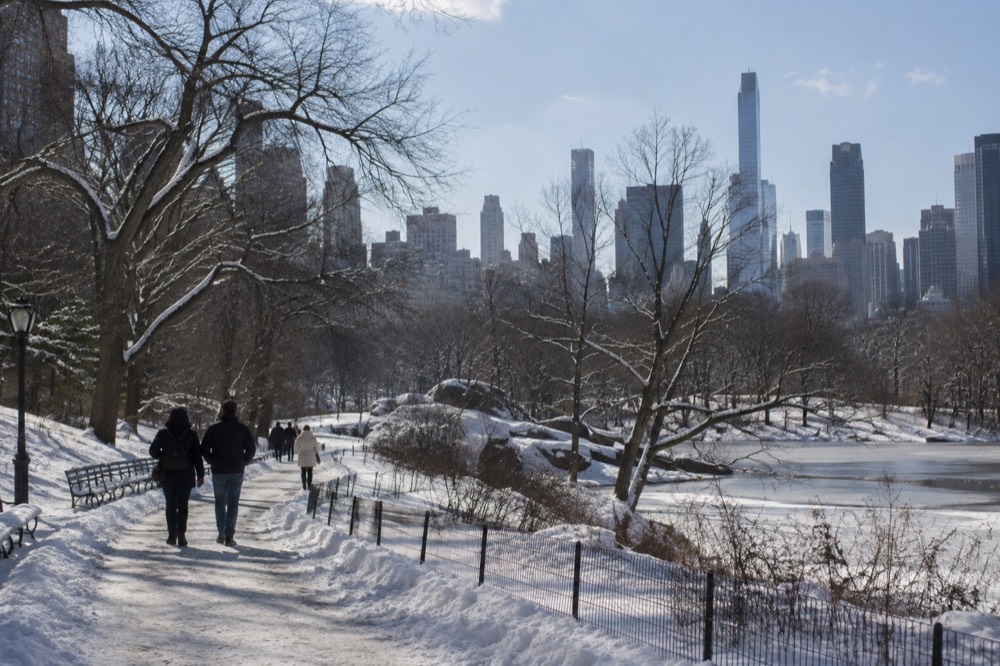
January is the coldest month to visit New York, and the margin over February is thin. The official record matters here because most people guess wrong: they remember February as the brutal one, and by snowfall they are right, but by temperature January wins. The National Oceanic and Atmospheric Administration's 1991-2020 climate normals for Central Park, the standard reference every New York weather claim should be checked against, put January's average low at 27.9°F and its average high of 39.5°F. February averages a low of 29.5°F and a high of 42.2°F, so February is genuinely milder on average, even though it dumps more snow.
What Is the Coldest Month to Visit New York?
January is the coldest month to visit New York City. The official Central Park climate record puts January's average low at 27.9°F, the lowest of the year, with an average high of 39.5°F. February is slightly milder on average, at 29.5°F low and 42.2°F high, but it is snowier, averaging 10.1 inches of snow against January's 8.8.
So the answer depends on what you mean by cold: raw temperature says January, snow on the ground says February.
Those numbers come from the NOAA 1991-2020 monthly normals for station USW00094728, the Central Park weather station, cross-checked against the National Weather Service's own published normals for the park. The two sources agree to the decimal. That makes this the most solid weather data you will find for New York anywhere, and it is worth being precise about it, because the folk memory of "brutal February" is really a memory of snow, not cold.
The distinction matters for planning. A visitor coming in late January will usually face the year's lowest overnight temperatures, but the city is often dry and clear between fronts. A visitor coming in mid-February faces slightly warmer air and a meaningfully higher chance of standing snow, which changes what the parks look like and how slushy the crosswalks get. Neither month is pleasant in shorts-weather terms, but they fail differently.
The practical takeaway: pack for both. New York winter is not a single condition. It oscillates between damp, windy days in the 30s and bright, still days in the 40s, sometimes inside the same week. Layers beat a single heavy coat, and waterproof footwear beats fashion on the day it snows.
| Month | Avg high °F | Avg low °F | Precipitation (in) | Snowfall (in) |
|---|---|---|---|---|
| December | 44.3 | 33.8 | 4.38 | 4.9 |
| January | 39.5 | 27.9 | 3.64 | 8.8 |
| February | 42.2 | 29.5 | 3.19 | 10.1 |
| March | 49.9 | 35.8 | 4.29 | 5.0 |
For a fuller month-by-month picture, the New York weather by month guide breaks down every month of the year with the same sourced normals, and the best time to visit New York weighs weather against crowds and prices.
Winter in New York also concentrates the indoor attractions, which is exactly when a pass that bundles several of them earns its keep. If your cold-weather itinerary stacks museums and observation decks, that math is worth doing before you buy anything at a box office.
Is February Colder Than January in New York?
No, February is not colder than January in New York by average temperature, but it is snowier, which is why the confusion persists. February averages 29.5°F lows and 42.2°F highs against January's 27.9°F and 39.5°F. February averages 10.1 inches of snow, the most of any month, versus January's 8.8. February is also the driest month by total precipitation, at 3.19 inches, so its reputation rests almost entirely on snowfall.
That combination, snowiest and driest at once, sounds contradictory until you think about how snow works. Cold months hold less moisture in the air, so total precipitation drops, but when a storm does arrive in February the cold air turns more of it to snow instead of rain. The result is a month with fewer precipitation events than almost any other, but the ones that hit leave the deepest white layer.
Visitors planning around this should know what snow in New York actually looks like on the ground. It rarely stays pristine for long. City snow compresses into grey slush at the corners within a day, and the crosswalk puddles that form are deeper than they appear. The parks keep their snow longest, which is why Central Park after a storm is the one place the postcard version of winter New York survives.
The averages also hide the extremes. A January cold snap can push overnight lows into the teens, and wind chill on an avenue with a funnelling wind can make 30°F feel far worse than the number suggests. The city's grid was not designed to shelter pedestrians from a northwest wind. That is a real planning factor, not a detail.
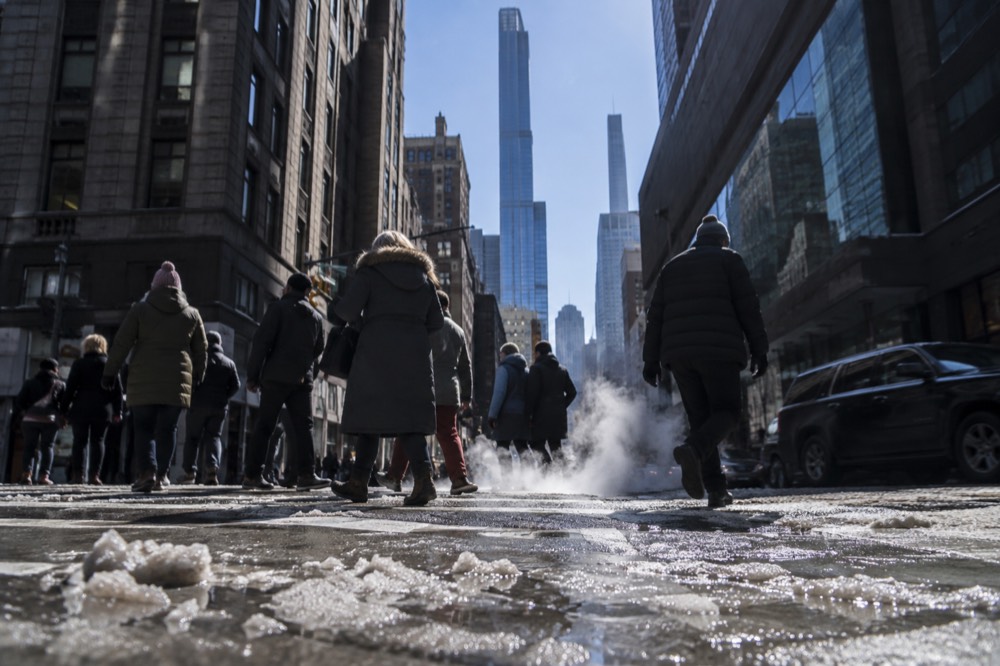
There is also a scheduling angle worth knowing: the coldest weeks are not the busiest. Late January and February sit in the softest demand window of the New York travel year, after the holiday rush and before the spring thaw brings the crowds back. That shows up in hotel rates, in restaurant reservations and in the length of the line at the observation decks. The cold months are the quiet months, and the quiet months are the cheap ones.
If you are weighing a February trip against a January one, the honest comparison is this: January gives you the lowest temperatures and the post-holiday lull, February gives you the best chance of a snowy Central Park and slightly warmer afternoons. Both give you the same short daylight and the same indoor-heavy rhythm. Neither is a wrong answer, and travelers who pick February for the snow photographs are not being irrational.
How Cold Does New York Actually Get in Winter?
New York's winter lows average in the high 20s to low 30s Fahrenheit from December through February, but the city regularly dips well below that on individual nights. January's average low of 27.9°F is the floor of the year. Snowfall averages 4.9 inches in December, 8.8 in January and 10.1 in February, so the deepest snow risk sits in the back half of the season. Single-digit lows happen, but they are not the norm.
The honest framing is that New York is a cold winter city, not an extreme one. It sits on the coast, and the ocean moderates the worst Arctic outbreaks somewhat. Boston gets colder snaps more often; Minneapolis is another category entirely. What New York adds is wind between the towers, which does not show up in the temperature record but dominates the lived experience of standing at a crosswalk in January.
Daylight is the other quiet constraint. In late December the sun sets before 4:30pm, and by mid-January it is dark by 5pm. A winter visitor gets roughly nine hours of usable daylight, which compresses outdoor sightseeing more than the cold does. Observation decks after dark, museums, theatre and long dinners are how the city compensates, and the winter calendar leans on all four.
One counterintuitive fact from the same NOAA dataset: July, not a winter month, is New York's wettest, at 4.60 inches of precipitation. February, the month everyone braces against, is the driest of the entire year at 3.19 inches. Winter visitors are more likely to be cold than wet, which is the opposite of what the packing instinct suggests.
Does the Cold Make Winter a Bad Time to Visit?
No, the cold does not make winter a bad time to visit New York, and in some ways it makes it a better one. Hotel rates typically drop after the January holiday lull, museum lines shrink, and the city's indoor culture, Broadway, galleries, food halls, is at full throttle. The tradeoffs are short daylight, cold waits at outdoor attractions and slush after snow. Travelers who dress for it get a cheaper, emptier city.
The economics are the real argument. Late January and February sit in the year's softest demand window for New York hotels, which is the single biggest line in a New York trip budget. The same room that costs a premium in October can be meaningfully cheaper in February, and that saving can fund a Broadway ticket or a museum pass. The tradeoff is honest: you will be cold on the walk to dinner. The rest of the planning pages sit on New York City Travel Guide.
The crowds argument is just as real. The observation decks, the Museum of Modern Art and the ferry to Liberty Island all run shorter queues in deep winter than in June. The Statue of Liberty's official ferry runs year-round, and a cold, clear February day on the harbor often delivers better visibility than a hazy summer one. The islands are windier than Manhattan, which is the one warning worth repeating.
Winter also carries the city's biggest seasonal draws. The Rockefeller Center Christmas tree runs through early January, the holiday windows stay up into the new year, and if snow arrives, Central Park turns into the best free attraction in the city within hours. The winter in New York guide covers the full seasonal calendar, and the broader things to do in NYC roundup holds up in every month.
For indoor-heavy itineraries, the pass question is worth a look before you commit. The New York CityPASS bundles five attractions over nine consecutive days, which fits a long winter week, and its menu leans indoor: the American Museum of Natural History, the 9/11 Memorial & Museum, the Intrepid Museum and the Guggenheim all sit on it alongside the outdoor heavyweights.
What Should You Pack for the Coldest Months?
Pack for New York's coldest months around layers, waterproof footwear and wind protection rather than a single heavy coat. Average lows sit near 28°F in January, but wind between the towers makes the felt temperature lower, and snow turns to slush within a day. A waterproof shell, insulated mid-layer, hat, gloves and boots with real tread cover the full winter range. An umbrella is optional; February is the driest month of the year.
Footwear is the item most visitors get wrong. The failure mode is not deep snow, which is rare, it is the grey slush pool at every corner, which is constant after any storm. Leather-soled dress shoes fail immediately. Boots with a lug sole and some water resistance keep a full sightseeing day intact, and they matter more than the coat.
The coat question comes down to how you plan to move. New York's winter sightseeing involves long stretches indoors, on subways, in museums, in restaurants, punctuated by ten-minute walks. A single enormous parka that you cannot take off comfortably inside is worse than a three-layer system you can strip to. The subway is heated, sometimes aggressively, and a heavy coat becomes a burden you carry rather than wear.
A few specifics that earn their place: a hat that covers the ears, because the wind finds them first; gloves you can use a phone through, because you will be checking the map constantly; and a scarf you can pull over the mouth on avenue crossings. None of this is exotic equipment. It is the same kit any New Yorker keeps by the door from December to March.
| Item | Why it earns its place in January or February |
|---|---|
| Waterproof boots with tread | Corner slush after snow; the city's most reliable winter hazard |
| Three-layer system (base, mid, shell) | Subway and museums run hot; you strip layers constantly |
| Hat and gloves | Wind between towers makes 30°F feel colder at crossings |
| Scarf or neck gaiter | Protects the face on wide avenues with funnelling wind |
| Sunglasses | Low winter sun off glass towers is genuinely blinding |
| Daypack | Carries the stripped layers indoors |
How Do You Plan Days Around Winter Daylight?
A winter visitor to New York gets roughly nine hours of usable daylight, with the sun setting before 4:30pm in late December and around 5pm in mid-January, so the planning rule is simple: put outdoor attractions in the middle of the day and save mornings and evenings for indoor ones. Museums open around 10am, observation decks run late, and Broadway starts at 8pm. The cold compresses the outdoor window more than the temperature alone suggests.
The rhythm that works is a morning museum, a midday walk between neighborhoods while the sun is at its highest, and an evening indoors. Central Park, the Brooklyn Bridge promenade and the High Line are all best used between 11am and 3pm in deep winter, when the light is strongest and the temperature has climbed off the overnight low. Trying to do the outdoor blocks at 9am means doing them at the coldest hour of the day.
The subway makes this easy to execute, and the fare system rewards a winter visitor automatically. Since 1 January 2026 the MTA no longer sells or refills MetroCards, and the old 7-day unlimited pass is gone with it. Instead, tapping the same credit card, debit card or phone at every ride triggers an automatic $35 weekly cap: once you hit it, the rest of that seven-day period is free, with no pass to buy in advance. A week of hopping between museums and decks in the cold costs at most $35 per person in fares.
Evening options are where winter New York quietly outperforms summer. Theatre seats are easier to come by in February, comedy rooms and jazz clubs run their normal calendars, and the observation decks after dark, with the city lit below, are arguably better than the daytime versions. The things to do in NYC at night guide covers the full evening map, and the cheap Broadway tickets page explains how the winter lull works in a ticket buyer's favor.
One deck deserves a specific mention for winter. SUMMIT One Vanderbilt sits next to Grand Central and is largely an indoor experience, with mirrored rooms and glass ledges that work in any weather, which makes it a strong pick for a day when the forecast turns. It is also steps from the Metro-North and subway platforms, so a cold walk to it is nearly zero.
What If You Would Rather Eat Through the Cold?
Food is the single best cold-weather activity in New York, and the city's densest eating neighborhoods, Chinatown, Little Italy, Koreatown, the East Village, are built for it. A guided food walk solves two winter problems at once: it keeps you moving between warm stops, and it puts a local in charge of choosing them. Three-hour tours with six tastings add up to a full meal, so a cold afternoon becomes the meal rather than a break from sightseeing.
The logic is straightforward. Winter shrinks the appeal of standing still outdoors, but walking ten minutes between a dumpling counter and a cannoli shop keeps the blood moving and the interest high. Chinatown and Little Italy sit next to each other below Houston Street, so a single walk covers two neighborhoods, dozens of cuisines and a century of immigration history, with a warm stop every few hundred meters.
A guided version of that walk also protects you from the winter visitor's worst enemy, which is decision fatigue in the cold. Standing on a corner arguing about where to eat is tolerable in June and miserable in January. A tour with a fixed route and a guide who knows which counters are worth the wait removes that friction entirely, and the stops sit close enough together that exposure between them stays short.
The same logic applies across the city's indoor food halls and markets. Chelsea Market, the Time Out Market in DUMBO and the stalls of Grand Central's dining concourse all let you eat well without ever standing outside. Pair one with a museum morning and a deck at dusk and you have a full winter day with maybe forty minutes of total outdoor walking, none of it optional suffering.
Common Questions About the Coldest Month in New York
The most common questions about New York's coldest month all trace back to the same confusion between temperature and snow. January is the coldest by average temperature, with lows near 27.9°F, while February is milder on average but snowier at 10.1 inches, and it is also the driest month of the year by total precipitation. Winter visits are still very workable, with cheaper hotels and shorter lines as compensation for the cold.
What is the coldest month to visit new york?
January. The official Central Park climate normals put January's average low at 27.9°F, the lowest of the year, with an average high of 39.5°F. February is slightly warmer on average but snowier, so many visitors remember it as colder.
Is February colder than January in New York?
By temperature, no. February averages a low of 29.5°F against January's 27.9°F. But February averages 10.1 inches of snow, the most of any month, so it often looks and feels more wintry even though the air is slightly milder.
Does it snow a lot in New York in winter?
New York averages 4.9 inches of snow in December, 8.8 in January and 10.1 in February, with 5.0 more in March. Big single storms happen, but the more common winter experience is a few inches that turn to city slush within a day.
Is winter a bad time to visit New York?
No. Hotel rates typically fall after the holidays, lines at museums and observation decks shrink, and the city's indoor attractions run at full strength. The costs are cold walks, short daylight and slush, all manageable with the right clothing.
What is the warmest month in New York?
July, with an average high of 84.9°F. It is also the wettest month of the year at 4.60 inches of precipitation, so summer visitors trade cold for heat and the year's heaviest rain.
How should I dress for New York in January or February?
Layers, waterproof boots, a hat and gloves. The wind between buildings makes the felt temperature lower than the forecast, and corner slush after snow ruins thin-soled shoes. A three-layer system beats one heavy coat because subways and museums run hot.
The coldest month is a fact with a clean answer, January, but the useful answer is that both deep-winter months reward the same preparation. Dress for wind and slush, plan the outdoor blocks around the middle of the day, and let the evenings do what New York evenings do best, which is happen indoors.