Where Is the Best Place to Stay in New York to See Everything?
A direct, sourced answer on where is the best place to stay in New York to see everything: why Midtown Manhattan wins on access, which neighborhoods are the honest alternatives, and what each base costs you in time and subway fares.

New York's 2025 subway numbers contain a fact that should shape every hotel decision in the city: Times Sq-42 St was the busiest station complex in the entire system, with 61,203,303 riders, against 35,764,931 at Grand Central. The station tourists assume is a footnote out-drew the great commuter terminal by 71 percent. That is what a hotel near the center of the visitor map buys you, and it is the number behind the answer below.
Where Is the Best Place to Stay in New York to See Everything?
The best place to stay in New York to see everything is Midtown Manhattan, in the blocks between Bryant Park, Times Square and Grand Central Terminal, roughly 34th to 59th Street. From there, Central Park, the Empire State Building, Top of the Rock, MoMA, the Theater District, the High Line and the ferry to the Statue of Liberty all sit within a 15-minute subway ride or a walk. No other neighborhood matches that coverage.
The reason is geometry more than glamour. Manhattan's visitor attractions form a long north-south strip: the Met and Central Park at the top, the museums and Rockefeller Center in the middle, the Financial District, the Statue of Liberty ferries and the 9/11 Memorial at the bottom. Midtown sits on the middle of that strip, close to the trunk lines that run its full length. Staying at either end, in Harlem or the Financial District, means crossing the whole city every time you visit the other end.
The subway fare is $3.00 per ride, and the automatic OMNY weekly cap is $35, so the cost of being based badly is not money. It is time. A hotel ten extra minutes from a trunk-line station costs a family of four an hour or more of standing on platforms over a four-day trip, and that hour comes straight out of museum or park time.
There is a second, quieter argument for Midtown: the observation decks. The Empire State Building, Top of the Rock and SUMMIT One Vanderbilt form a triangle of roughly ten blocks in the middle of the neighborhood, and the sunset harbor cruises depart from Pier 83 on the Hudson at 42nd Street. If seeing the city from above and from the water is on your list, a Midtown base puts you within walking distance of all four.
Why Midtown Manhattan Beats Every Other Base for Sightseeing
Midtown wins because it is the only part of New York where the east-west and north-south trunk subway lines cross in density. Times Sq-42 St and Grand Central between them host more than a dozen lines, including the lettered trunk routes and the numbered services that run the length of the island.
From those two stations you can reach the Met, the American Museum of Natural History, the Financial District, Brooklyn, Queens and the Statue of Liberty ferries with at most one transfer, usually none.
Compare the alternatives honestly. The Upper West Side and Upper East Side are lovely and sit beside Central Park, but they hang off single trunk corridors, and every trip downtown is a 25 to 35 minute ride before you have seen anything. The Financial District is dramatic and historic, but it is the far end of the island: a trip to the Met is a 40-minute ride each way, and evening dining options thin out after the office crowd leaves.
Lower Manhattan's real advantage is the water. The official Statue City Cruises ferry to Liberty and Ellis Island departs from Battery Park, and the Staten Island Ferry terminal sits next to it, so a FiDi base saves you a morning commute on the one day you visit the harbor. If the statue is the centerpiece of your trip rather than one item among many, that is a real argument. For a see-everything itinerary, it is outweighed.
Midtown's weakness is character. The blocks around Times Square are loud, corporate and short on good food, and the streets around Penn Station are among the least charming in Manhattan. The compromise most experienced visitors land on is Midtown South or the Bryant Park side: close enough to the trunk lines to keep the access, far enough west or south to eat well and sleep quietly.
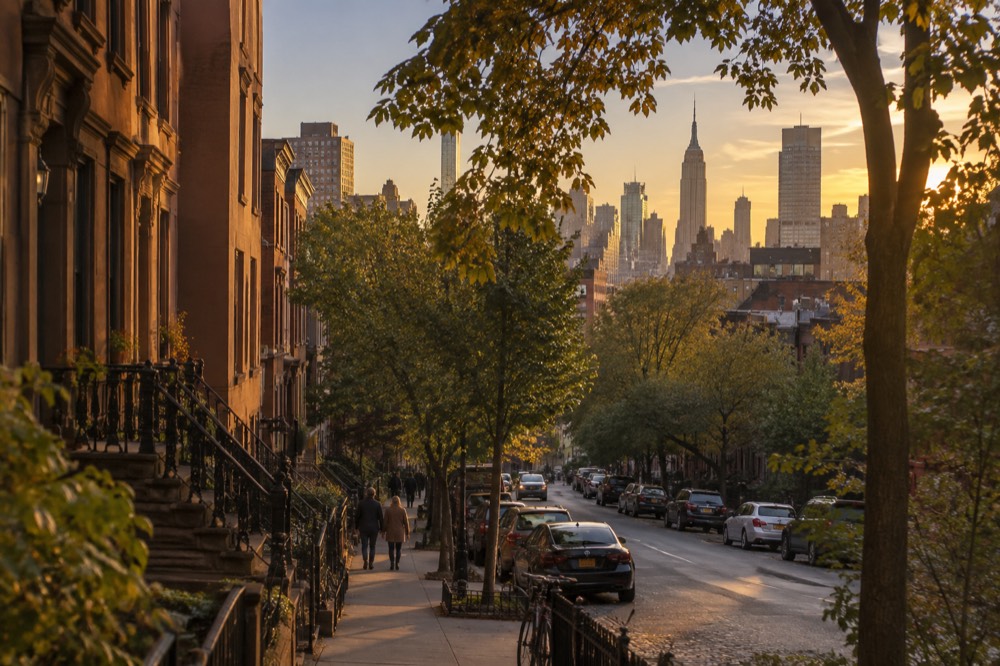
One planning note that saves real money: if you are staying in Midtown and doing the classic circuit, the bundled attraction passes deserve a look before you buy individual tickets. The New York CityPASS covers five attractions over nine consecutive days, including the Empire State Building, Top of the Rock and the official Liberty and Ellis Island ferry, and it is built around exactly the sights that cluster around a Midtown base. Check the live listing for the current lineup and price before committing.
What Are the Best Alternatives to Midtown for a New York Base?
The three alternatives that genuinely work are the Lower East Side and East Village, the Flatiron and NoMad strip around 23rd Street, and Long Island City in Queens. Each trades some subway connectivity for lower room rates, better food or more space, and each still reaches the main attractions with one transfer at most. Greenwich Village and Williamsburg are better for atmosphere than coverage, and both add 10 to 20 minutes to almost every sightseeing trip.
The Flatiron and NoMad strip is the sleeper pick. It sits between the Union Square and Herald Square station complexes, both of them major multi-line hubs, so the trunk access is nearly Midtown-grade, the restaurants are better, and the rooms cost less than ten blocks north. The walk to the Empire State Building is under fifteen minutes. The wider set of guides lives on New York City Travel Guide.
The Lower East Side and East Village win on evenings. You will eat better here than anywhere in Midtown, and the F, J, M, Z and 6 trains cover the basics. The trade is distance from Central Park and the museum mile, which become 30-minute rides. For a second or third trip to the city, when the checklist is done and the restaurants are the point, this is the right base. For a first trip aiming at everything, it is a compromise.
Long Island City is the honest budget answer. One subway stop from Midtown on the 7 train, with hotel rooms that run well below Manhattan rates for the same view class, and the waterfront looks directly at the Midtown skyline. The catch is the last subway home: the 7 runs frequently, but a 1am return from downtown means two trains, and families with small children tend to regret the commute by day three.
| Base neighborhood | Subway access at the door | Ride to Central Park | Ride to Financial District | Best for |
|---|---|---|---|---|
| Midtown (Bryant Park / Times Square) | Two major multi-line hubs, lettered and numbered trunk routes | 10-15 min | 15-20 min | First trips, see-everything itineraries |
| Flatiron / NoMad | Union Square and Herald Square hubs | 15 min | 15 min | Connectivity plus better food and rates |
| Lower East Side / East Village | F, J, M, Z and 6 trains | 25-30 min | 15 min | Food-first second trips |
| Upper West Side | West-side numbered trunk corridor | 5 min | 30 min | Central Park and AMNH focus |
| Financial District | Multiple trunk lines at the island's foot | 35-40 min | 0 min | Harbor and downtown history focus |
| Long Island City, Queens | 7 train, one stop from Midtown | 12 min | 25-30 min | Budget with a skyline view |
How Much Does Your Hotel Location Cost You in Time and Fares?
In fares, almost nothing: a subway ride is $3.00 wherever you board, and the $35 OMNY weekly cap applies automatically after twelve paid rides on the same card or device, with no pass to buy. In time, the differences are large: a Midtown base averages roughly 12 to 15 minutes of subway travel to the major attractions, while a Financial District or Upper West Side base averages 25 to 35 minutes to the far end of the list.
Location is a time purchase, not a fare purchase.
The fare mechanics deserve one correction, because most guides still get it wrong. The 7-day unlimited MetroCard no longer exists: the MTA stopped selling and refilling MetroCards on 1 January 2026, and the weekly value now comes from automatic OMNY capping at $35. Tap the same card or phone every time, and after twelve paid rides in a rolling seven-day window the rest are free. Mixing your phone and a plastic card breaks the cap silently, which catches groups and families out constantly.
Families get a further break: up to three children under 44 inches tall ride free with a fare-paying adult on the subway and local buses. A family of four with two small children can therefore base themselves anywhere in the city for the same $70-ish weekly fare total that two adults pay, which makes the time argument, not the fare argument, the one that matters.
Airport access is the one place where base location changes the fare. From Midtown, the trip to JFK by subway plus AirTrain costs $11.75 per person, because the AirTrain adds $8.75 on top of the $3.00 subway fare. LaGuardia is the opposite: the Q70 LaGuardia Link bus is free, so the whole run from a Midtown hotel is a single $3.00 fare, the cheapest airport transfer in the city. Newark runs $16.80 by NJ Transit plus AirTrain from Penn Station, which is a short walk from most Midtown hotels.
| Trip from your hotel | From Midtown | From Financial District | From Upper West Side |
|---|---|---|---|
| Central Park south end | 10-15 min walk or ride | 30-35 min | 5-10 min |
| Metropolitan Museum of Art | 15 min | 35-40 min | 10 min |
| Statue of Liberty ferry, Battery Park | 15-20 min | 5-10 min walk | 30 min |
| 9/11 Memorial and One World Observatory | 15-20 min | 5-10 min | 30 min |
| Brooklyn Bridge walk, Brooklyn side start | 20-25 min | 10 min | 30-35 min |
| Empire State Building | 0-10 min walk | 20 min | 15 min |
One rider-behavior fact worth knowing when you plan your days from a Midtown base: the subway's weekend service now carries more riders relative to pre-2020 levels than weekdays do, with weekend subway ridership at 88 percent of 2019 levels against 73 percent on weekdays. Weekend trains are the fuller ones, and weekend service changes are more common, so build slack into Saturday and Sunday plans regardless of where you sleep.
Which New York Neighborhood Should You Actually Book for Your Trip?
Match the base to the trip, not to a single ranking. A first-time, see-everything trip belongs in Midtown or Flatiron. A food-focused return trip belongs downtown, in the Lower East Side or Greenwich Village. A park-and-museums week belongs on the Upper West or Upper East Side. A budget trip belongs in Long Island City. A trip built around the harbor and lower Manhattan's history belongs in the Financial District, accepting the long rides uptown.
The wrong base costs you hours, not dollars.
For a first trip of four days or fewer, the arithmetic is decisive. The classic list, the Empire State Building, Top of the Rock, Central Park, the Met or MoMA, the Statue of Liberty ferry, the 9/11 Memorial, the Brooklyn Bridge and one Broadway show, clusters around Midtown and the trunk lines through it. Staying anywhere else means adding a commute to at least half of those items. Book Midtown, accept that the food is mediocre near Times Square, and eat your meals one subway stop away in Hell's Kitchen, Koreatown or Chelsea.
For a longer stay, a week or more, the calculus shifts. With seven days you can afford a base with character, because you are no longer racing a checklist, and a downtown or Village base repays you every evening. The same logic applies to a second or third visit: you have seen the Midtown circuit, and your days will be built around neighborhoods, which is exactly what downtown bases are for.
If you are pairing the hotel decision with an attraction pass, do the math before booking either. A pass built around five major sights rewards the base that minimizes travel between them, which is Midtown again. Read the where to stay in New York overview for the full neighborhood-by-neighborhood breakdown, and the things to do in NYC guide for the sight list your base needs to reach.
For travelers who plan to move fast and stack sights, the CityPASS-style bundles are worth checking against your intended base: the five-attraction version covers the Empire State Building, Top of the Rock and the Liberty and Ellis Island ferry among its choices, all reachable from Midtown without a transfer. The live booking page shows the current inclusions and price.
Common Questions About Where to Stay in New York
Most questions about a New York base come down to three worries: safety, price and walkability. The honest answers are that no visitor neighborhood in Manhattan needs to be treated as a no-go zone, that hotel rates vary enormously by neighborhood and season and should be checked live rather than quoted from a guide, and that nowhere in Manhattan lets you walk to everything, because the attractions span eight miles of island.
The subway, not your feet, is how you see the city.
Where is the best place to stay in new york to see everything?
Midtown Manhattan, in the blocks between Bryant Park, Times Square and Grand Central, is the best base for seeing everything. It sits on the densest crossing of trunk subway lines in the city, putting Central Park, the major museums, the observation decks, the Theater District, the Statue of Liberty ferry and the Financial District all within a 15 to 20 minute ride or a walk. The Flatiron district at 23rd Street is a close second with better food and usually lower rates.
Is it better to stay in Times Square or somewhere quieter nearby?
Stay near Times Square, not in it. The blocks immediately around the square are loud late into the night and short on good food, but two to five blocks away, toward Bryant Park, Hell's Kitchen or the Garment District, you keep the same subway access with quieter rooms and better restaurants. The major multi-line station at Times Sq-42 St remains within a short walk.
Is it cheaper to stay in Brooklyn or Queens and commute?
Often yes, and Long Island City is the best version of that trade: one stop from Midtown on the 7 train, with lower rates and a skyline view. Williamsburg and other Brooklyn neighborhoods add more commute time. The fare is the same $3.00 wherever you board, capped automatically at $35 a week per rider on OMNY, so the cost of the commute is time, not money. Budget an extra 20 to 30 minutes per sightseeing day.
Can you walk to all the major sights from a Midtown hotel?
No, and no neighborhood can. Manhattan's attractions run roughly eight miles from the Met at the top to the Statue of Liberty ferry at the bottom. From Midtown you can walk to the Empire State Building, Bryant Park, Times Square, Rockefeller Center, MoMA and the southern end of Central Park, but the ferry terminals, the 9/11 Memorial and the Brooklyn Bridge all need the subway. Plan on riding daily regardless of your base.
Which side of Midtown is better, east or west?
The east side, near Grand Central, gives faster access to the lines serving the Upper East Side museums, while the west side, near Times Square, serves the western attractions, the High Line, Hudson Yards and the Hudson piers. Both reach everything with one transfer. Choose on hotel price and character rather than connectivity, because the difference in access is small.
How many days do you need to see everything in New York?
Nobody sees everything, but a focused first visit runs four to five days: two for the Midtown circuit of decks, parks and museums, one for downtown and the harbor, one for Brooklyn, and evenings for Broadway. A seven-day trip lets you add Harlem, Queens or a day trip. Base yourself in Midtown for the shorter trips and consider a downtown base only once the checklist is done.
The final word belongs to the map rather than any hotel lobby. New York rewards the visitor who rides the trains confidently and punishes the one who treats every cross-town trip as an ordeal, so pick the base with the best lines at the door, tap the same card every ride, and let the $35 weekly cap do the rest. Midtown is the answer to the question asked, but the honest version is: the best place to stay is wherever the subway is fastest, and that is a fact you can check on a map before you book anything.
Whichever base you settle on, one evening on the water is the simplest way to see the whole skyline in a single sweep, and the harbor cruises depart from piers that a Midtown hotel reaches on foot.