Brooklyn Bridge: How to Walk It, What It Costs and the Best Time to Go
The Brooklyn Bridge promenade is free, open to walkers every day of the year, and reachable by a $3.00 subway ride from almost anywhere in the city. The decisions that actually shape your visit are smaller: which end you start from, what time you go, and whether you cross at all or see it from the water instead.
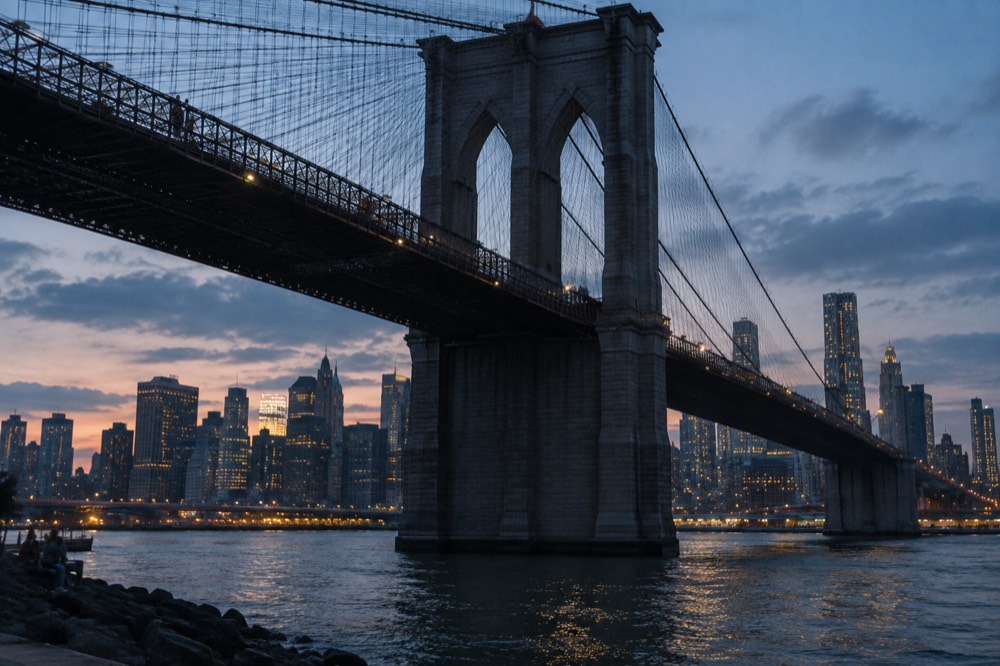
Short answer
Walking the Brooklyn Bridge is free and requires no ticket. Take the 4, 5 or 6 train to Brooklyn Bridge-City Hall for the Manhattan entrance, or the A or C to High Street for the Brooklyn side. Most visitors prefer walking from Manhattan toward Brooklyn, arriving at the Dumbo waterfront view. Go early or near sunset to avoid the thickest crowds.
The Brooklyn Bridge is one of the few world-famous landmarks that costs nothing to experience. No ticket, no timed entry, no queue at a desk. You walk up a ramp from City Hall Park in Manhattan or from Cadman Plaza in Brooklyn, and you are on the elevated wooden promenade that has carried pedestrians above the traffic since the bridge opened to the public.
That lack of a gate cuts both ways. Nothing filters the crowds, so the experience you get depends entirely on when you show up and which direction you walk. This guide covers the practical decisions: getting there by subway, choosing a direction, timing your crossing, and what to do once you reach the far side. There are also guided options, including a free tip-based walk on GuruWalk, for travelers who would rather have the bridge's story told to them than read it off a phone.
Is Walking the Brooklyn Bridge Free?
Yes, walking the Brooklyn Bridge is completely free, with no ticket, no reservation and no opening fee, every day of the year. The elevated pedestrian promenade is a public walkway maintained by the city, and you can enter from either end at any hour the walkway is open. The only costs involved in a typical visit are the subway fare to get there and anything you spend on food or coffee at either end.
Free does not mean effortless. The promenade is shared by thousands of walkers a day in peak season, and there are no benches to speak of on the crossing itself, so it is a walk you commit to rather than a place you linger. There are also no restrooms on the bridge. Both ends, however, sit inside public parks with facilities nearby, and the Brooklyn side deposits you into one of the most walkable corners of the borough.
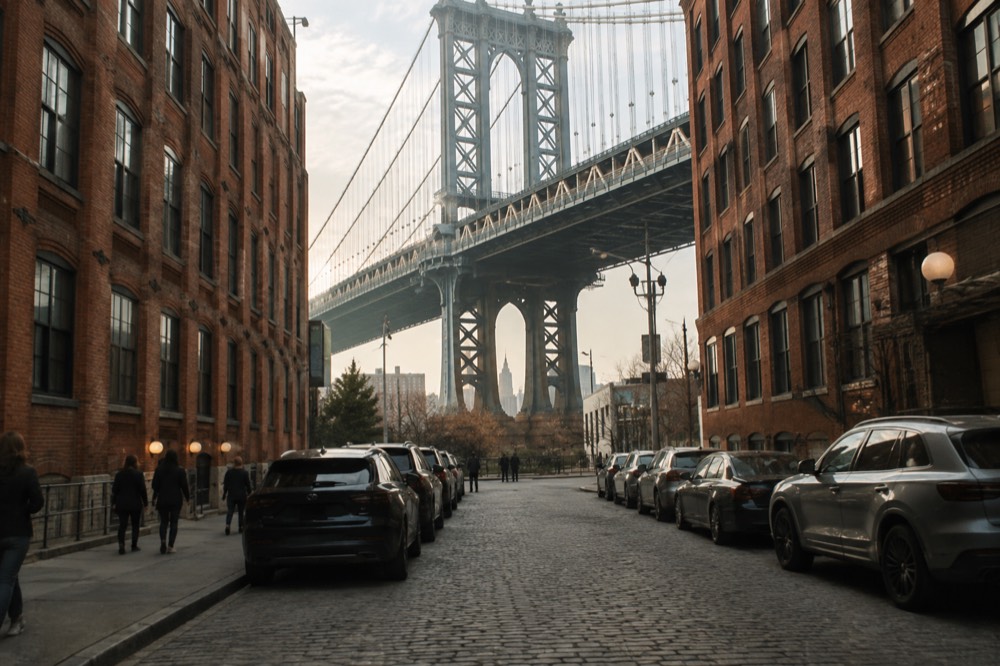
The other thing worth knowing in advance: the view that most people picture, the one with the Manhattan Bridge framed down a cobblestone street, is not on the bridge at all. That is Washington Street in Dumbo, on the Brooklyn side. The bridge gets you there; the neighborhood delivers the photograph.
For travelers assembling a fuller itinerary, our things to do in NYC page places the bridge alongside the city's other headline sights, and the free things to do in NYC guide collects the other no-cost landmarks worth building a day around.
How Do You Get to the Brooklyn Bridge?
The Manhattan entrance is closest to the Brooklyn Bridge-City Hall subway station, served by the 4, 5 and 6 trains, a short walk from the promenade ramp at City Hall Park. From Brooklyn, take the A or C train to High Street, which sits beside Cadman Plaza and the Brooklyn-side approach. Either way the fare is $3.00 per ride, tapped with OMNY or a credit card at the turnstile.
Both entrances have their advocates, and the choice between them is really a choice about the shape of your day. Starting in Manhattan puts the skyline behind you as you cross, which is the postcard direction. Starting in Brooklyn gives you the skyline in front of you the whole way, then leaves you in lower Manhattan with the rest of your sightseeing ahead of you.
| Starting point | Subway stations | Lines | Where you surface |
|---|---|---|---|
| Manhattan (Brooklyn-bound walk) | Brooklyn Bridge-City Hall | 4, 5, 6 | City Hall Park, by the ramp entrance |
| Manhattan (alternate) | Fulton Street | 2, 3, 4, 5, A, C, J, Z | A few blocks south, walk up to City Hall Park |
| Brooklyn (Manhattan-bound walk) | High Street | A, C | Cadman Plaza, near the Brooklyn approach |
| Brooklyn (alternate) | Clark Street | 2, 3 | Brooklyn Heights, a short walk to the promenade |
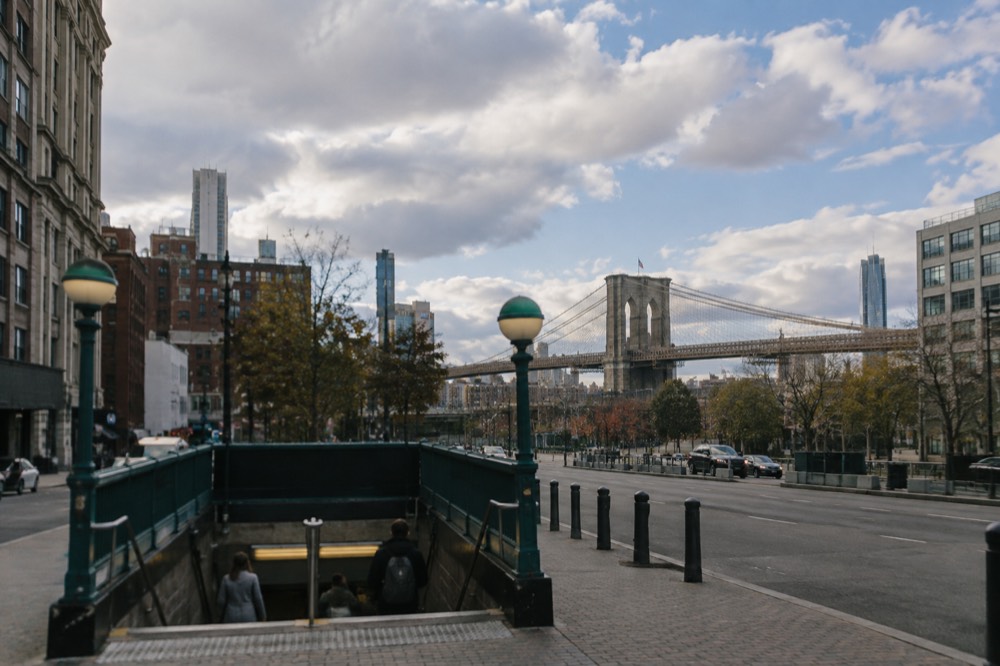
One transit fact trips up returning visitors, and it matters for your budget across a whole trip. The MetroCard you may remember buying no longer exists as a purchasable product: as of 1 January 2026 the MTA stopped selling and refilling them. The fare system now runs on OMNY, which means you tap the same contactless card or phone at every turnstile. The upside is that you never need to buy anything in advance, and if you tap the same card or device for every ride, a weekly cap of $35 applies automatically, after which your subway and local bus rides for that seven-day period are free. For a family, note that each person needs their own card or device for the cap to count.
The bridge is also a natural pairing with a harbor cruise: the sightseeing boats that loop the harbor from Midtown and the Seaport pass under or near it, and the NYC harbor cruise guide covers those options in detail.
Which Direction Should You Walk the Brooklyn Bridge?
Most visitors should walk from Manhattan to Brooklyn, starting at City Hall Park and finishing in Dumbo or Brooklyn Heights. That direction keeps the Manhattan skyline in front of you for the entire crossing, ends at the famous Washington Street view, and leaves you in a neighborhood full of places to eat. Walking Brooklyn to Manhattan trades that for a shorter exit, since you arrive directly in lower Manhattan beside City Hall and the Financial District.
The case for starting in Brooklyn is real, though. If your hotel is in lower Manhattan and your afternoon belongs to the Financial District and the 9/11 Memorial, crossing from Brooklyn drops you exactly where you want to be, with the skyline growing in front of you the whole way. It also front-loads the best view rather than saving it, which some photographers prefer, because the light on the skyline is the reason they came.
| Manhattan to Brooklyn | Brooklyn to Manhattan | |
|---|---|---|
| Skyline position | In front of you the whole way | Behind you after the first tower |
| Finish point | Dumbo and Brooklyn Heights | City Hall Park, lower Manhattan |
| Best for | First-time visitors, photographers | Days anchored in lower Manhattan |
| Food afterward | Plenty, in Dumbo and the Heights | Plenty, in the Financial District |
| Return trip | Subway back, or walk back over | You are already in Manhattan |
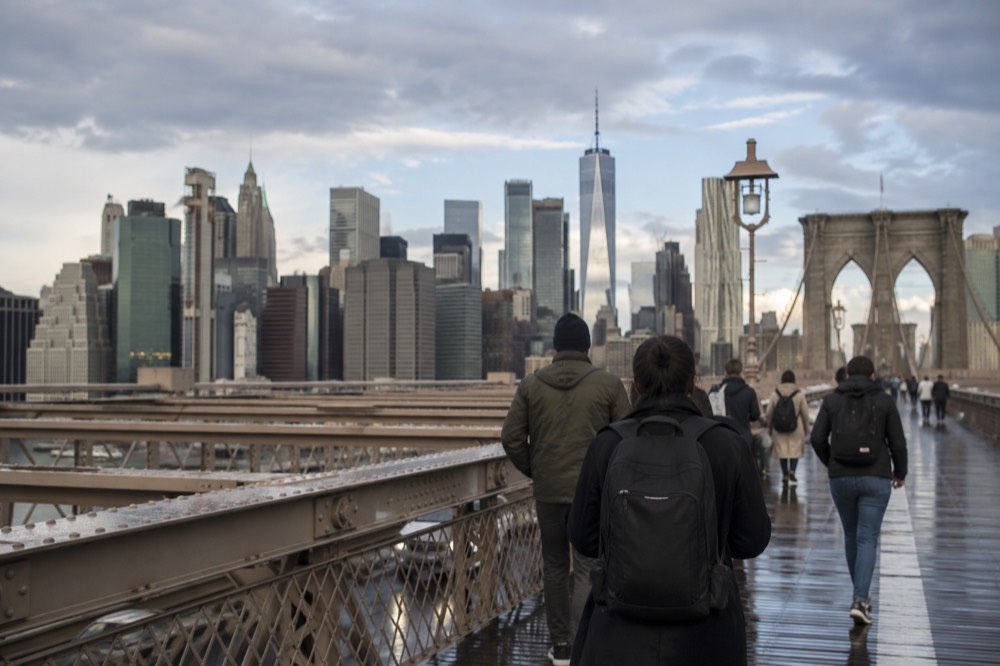
There is a third answer worth considering: do not cross at all, and see the bridge from somewhere else. The Brooklyn Heights promenade, one flat block from the Brooklyn-side approach, frames the bridge against lower Manhattan from a viewing platform that many locals argue beats the bridge's own views. The Brooklyn Heights and Dumbo guide covers that stretch of waterfront, and the wider things to do in Brooklyn page places both within a bigger borough itinerary.
If you would rather have a guide walk you across and explain the bridge's troubled construction, its engineering and the story of the family that built it, a guided crossing is one of the better-value tour purchases in the city. The GuruWalk option below is free upfront, with the guide paid by tip at the end.
For travelers who want the same route with a fixed itinerary and a reserved group, a paid guided walk covers the bridge and Dumbo together, ending at the famous Washington Street view with the skyline in front of you. It suits anyone who prefers a set schedule over deciding the route on the fly.
How Long Does It Take to Walk the Brooklyn Bridge?
Plan on roughly an hour for the crossing itself at a comfortable, photo-stopping pace, though a determined walker moving straight through finishes far sooner. Most people spend longer than they expect, because the promenade invites pauses at each tower and the viewing areas near the Brooklyn end. Budget two to three hours total once you include the walk to the entrance, time on the far side, and the return subway ride.
The promenade is a shared space, and its width shrinks in the middle sections near the towers, where the pedestrian path narrows and crowds bunch up. In the middle of a summer day, moving through those sections becomes a shuffle rather than a stroll, which is the real reason experienced visitors push their crossings to the edges of the day rather than the middle.
There are no benches, restrooms or vendors on the walkway itself, so treat it as a point-to-point walk rather than a place to settle. Water and sunscreen matter in summer, since the wooden boards hold heat and the path is fully exposed. In winter the wind off the East River is the issue, and the exposed crossing is noticeably colder than either end.
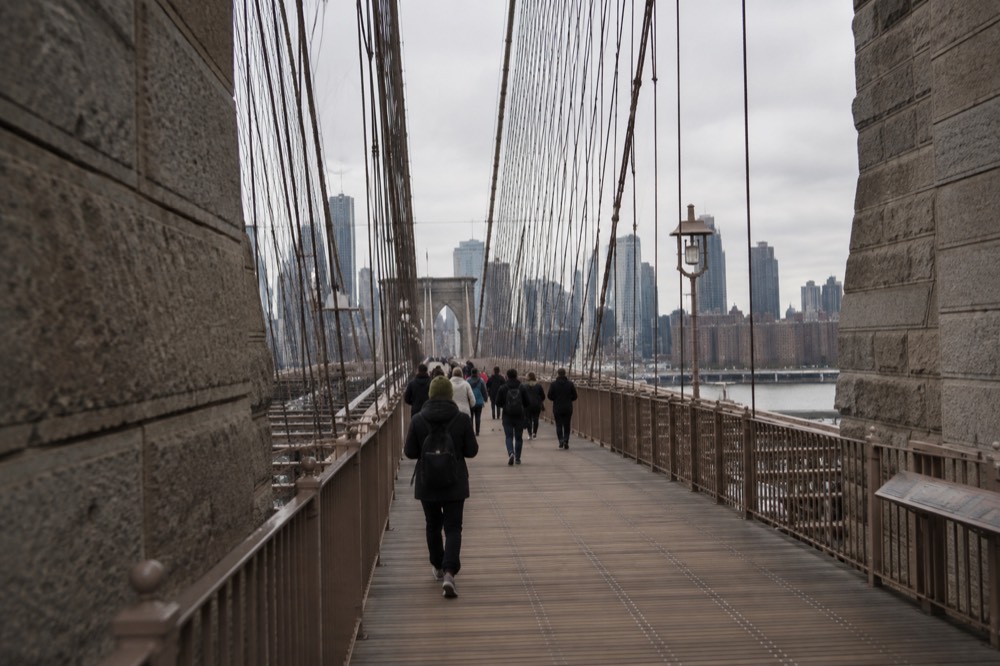
Cyclists are routed separately from pedestrians, and bike traffic does not share the elevated walkway. The promenade belongs to walkers, which keeps the crossing calmer than it would otherwise be, but do keep to the walking lane where the path is marked, and expect congestion wherever someone stops mid-stride to frame a shot.
When Is the Best Time of Day to Walk the Brooklyn Bridge?
Sunrise is the quietest window by a wide margin, and the first two hours after dawn are when locals run and photographers work without crowds. Early evening, roughly the two hours before sunset, is the most atmospheric crossing, because the skyline catches the low light and the city's lights come on as you reach the Brooklyn side. Midday, especially between late morning and mid-afternoon, is the most crowded period and the least rewarding.
The tradeoff between dawn and dusk is straightforward. Dawn buys you emptiness and flat gray light. Dusk buys you the golden hour and the skyline switching on, at the cost of sharing the promenade with everyone else who had the same idea. If the photograph matters more than the solitude, go in the evening. If the walk itself is the point, go early. The full index of guides sits on New York City Travel Guide.
| Time window | Crowds | Light | Best for |
|---|---|---|---|
| Sunrise to mid-morning | Quietest | Soft, low | A peaceful walk, jogging, working photographers |
| Late morning to mid-afternoon | Heaviest | Harsh overhead | Only if it is your sole option |
| Late afternoon to sunset | Busy | Golden hour | Photographers, first-timers, couples |
| After dark | Moderate | City lights, illuminated bridge | A different mood, easier in summer |
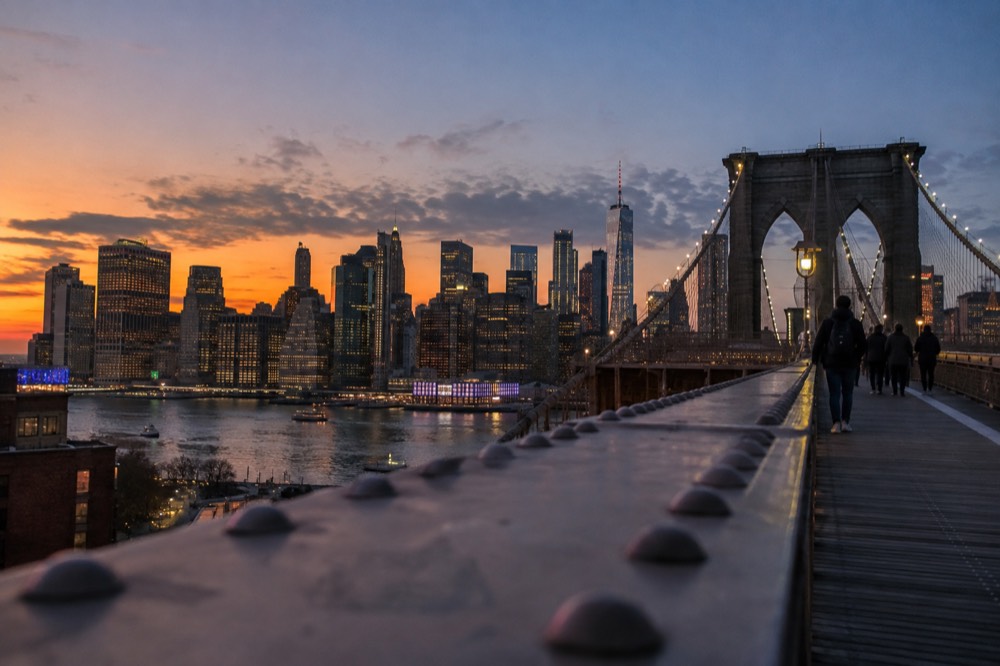
The sunset crossing is popular enough that guided walks are built around it, including a free evening tour on GuruWalk timed so walkers reach the Brooklyn side as the skyline lights come on. For travelers who prefer a planned evening over a self-timed one, it is worth a look.
Season shifts the calculation too. Winter sunrise crossings can be near-solitary, if you can take the wind. Summer evenings are glorious and busy. And anyone visiting between Thanksgiving and New Year should remember that the Brooklyn-side neighborhoods, and the whole harbor, sit inside the city's holiday season, which our Christmas in NYC guide covers in full.
What Is There to Do on the Brooklyn Side of the Bridge?
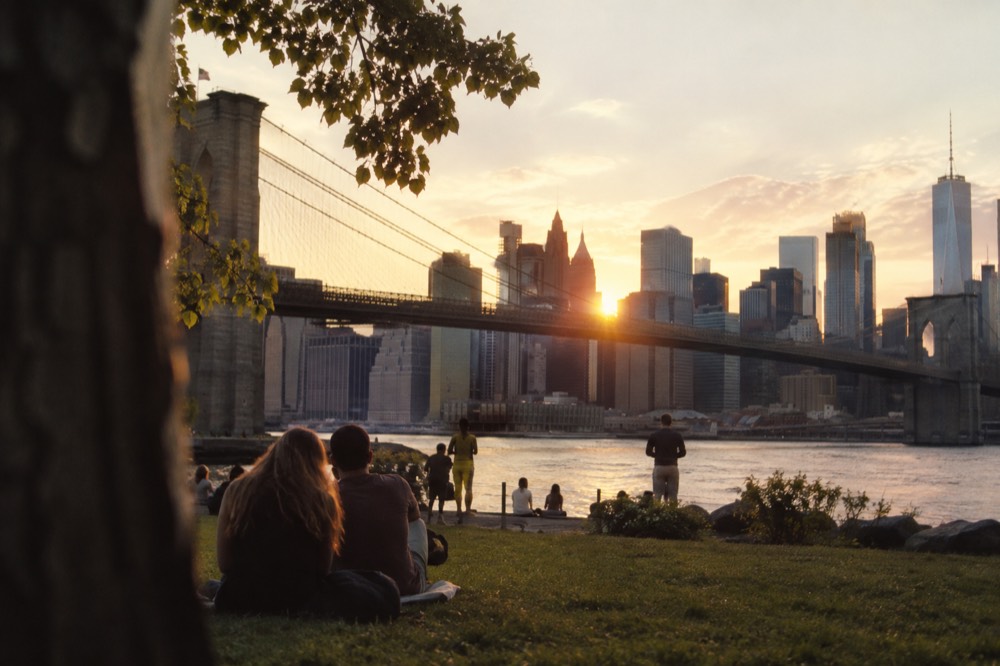
The Brooklyn exit drops you into Dumbo and Brooklyn Heights, two of the most walkable neighborhoods in the borough, and most visitors spend as long on that side as on the bridge itself. The two headline stops are the Washington Street view of the Manhattan Bridge and the Brooklyn Heights promenade's skyline terrace. Around them sit waterfront parks, independent shops, pizza institutions and a ferry terminal with service back toward Manhattan.
Washington Street in Dumbo is the photograph. From a specific patch of cobblestone, the Manhattan Bridge frames the Empire State Building dead center down the street, and the queue of people waiting to stand in that exact spot is part of the experience now. It is a five-minute walk downhill from the bridge exit. The Brooklyn Heights promenade is the opposite: quiet, residential, and the finest free viewing platform on the East River, one flat block from the bridge approach.
| Stop | What it is | Distance from bridge exit |
|---|---|---|
| Washington Street | The framed Manhattan Bridge and Empire State Building photo spot | About 5 minutes downhill into Dumbo |
| Brooklyn Heights promenade | Elevated waterfront terrace with the full lower Manhattan skyline | About 5 minutes, one block up from the approach |
| Brooklyn Bridge Park | Waterfront park with lawns, piers and bridge views below you | Downhill from either stop |
| Dumbo ferry terminal | NYC Ferry service across and along the East River | Inside Brooklyn Bridge Park |
Practical advice for the far side: eat in Dumbo, walk in Brooklyn Heights. Dumbo holds the pizzerias and bakeries people cross the bridge specifically to reach, while Brooklyn Heights is a landmarked residential district of brownstone blocks that rewards slow wandering and rewards nothing else. Give the Heights twenty minutes even on a tight schedule. The streets between the promenade and the bridge are among the quietest handsome blocks in New York.
The NYC Ferry terminal inside Brooklyn Bridge Park offers a water-level return toward Manhattan or a shortcut to Williamsburg and other stops along the river, and the NYC ferry guide explains routes and fares. For the full picture of the borough beyond these two neighborhoods, see things to do in Brooklyn, which stretches from Greenpoint down to Coney Island.
Should You Take a Guided Tour of the Brooklyn Bridge?
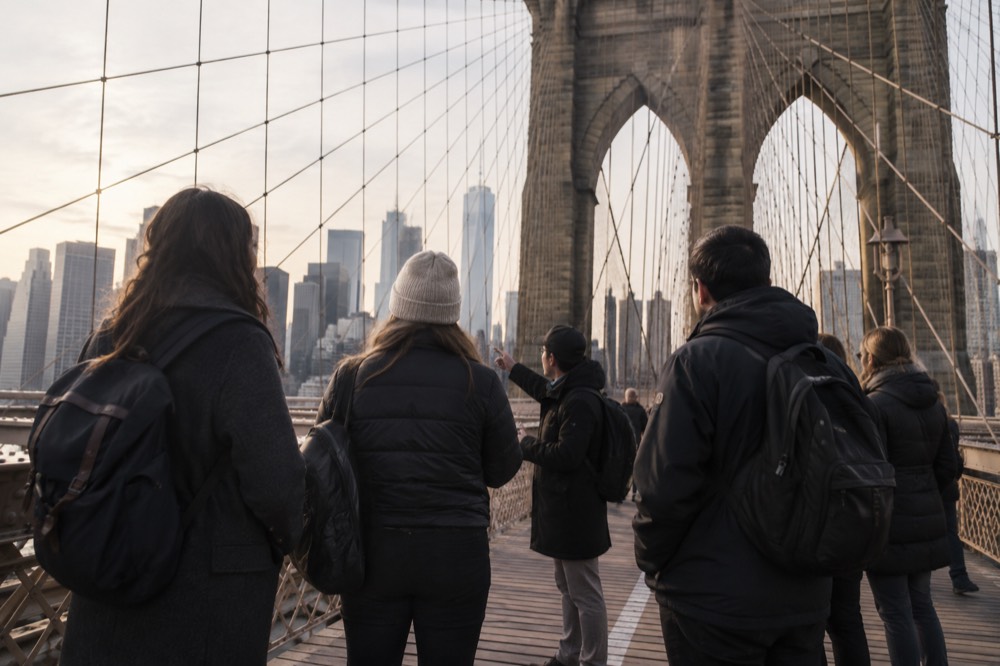
A guided walk is worth it if you want the bridge's story told well, since the promenade itself explains nothing and the engineering history is genuinely remarkable. Free tip-based walks on GuruWalk cover the bridge, Brooklyn Heights and Dumbo, while paid guided tours add Dumbo and photo stops with a fixed itinerary and reserved group size. If you already know the history and just want the walk, skip the tour and spend the money on lunch in Dumbo instead.
The honest case against a tour is that the bridge is free, self-explanatory as an experience, and impossible to get lost on. The honest case for one is that the walkway is silent about its own past, and the story of how it was built, and what it cost the family that built it, is one of the better tales in American engineering. A good guide turns a pleasant stroll into something you remember.
One transparency note on the free walks: six of the ten New York GuruWalk tours are run by a single operator, CityShuffles, so the apparent variety of free-walk options on that platform is narrower than it looks. The bridge walks themselves are well reviewed, but do not expect a wide open market of independent operators. If your interests extend across the East River into Williamsburg's Hasidic quarter and surrounding streets, there is also a free GuruWalk covering that neighborhood.
Is the Brooklyn Bridge Worth the Trip?
For almost every visitor, yes. The crossing is free, it takes under an hour, it connects two of the city's most rewarding neighborhoods, and the skyline views from the promenade are among the best pedestrian views in New York. The only travelers who should deprioritize it are those with a single day in the city and specific must-see list items elsewhere, or anyone who cannot tolerate crowds and is unwilling to go early or late to beat them.
The bridge earns its place because it does double duty. It is a landmark and a view in itself, and it is also the best possible walking route between lower Manhattan and the Brooklyn waterfront, delivering you into Dumbo and Brooklyn Heights rather than at a dead end. Very few famous bridges in the world reward the walker on both sides like this.
If you are building a first visit around the classics, pair the morning crossing with the Financial District and the Statue of Liberty ferry from Battery Park, both of which sit within a short subway hop of the Manhattan entrance. The NYC for first-timers guide assembles exactly that kind of day, and the 1 day in NYC itinerary threads the bridge into a single packed schedule.
However you cross it, go at an edge of the day rather than the middle, walk toward Brooklyn if it is your first time, and leave room on the far side. The bridge is the reason you come. The neighborhood at the end is often the part you remember.
Common Questions About the Brooklyn Bridge
These are the questions visitors ask most often about walking the Brooklyn Bridge: whether it costs anything, which direction to walk, when the crowds thin out, and what to do on the far side. Each answer below is short and practical, and the rest of this guide expands on all of them. If you read nothing else, remember three things: it is free, the Manhattan-to-Brooklyn direction suits most people, and the best light comes early or near sunset.
Is it free to walk the Brooklyn Bridge?
Yes. The pedestrian promenade is a public walkway with no ticket, no reservation and no fee, open every day of the year. The only cost is your subway fare to reach either entrance.
Which subway stop is the Brooklyn Bridge?
From Manhattan, take the 4, 5 or 6 train to Brooklyn Bridge-City Hall, which surfaces beside City Hall Park and the promenade ramp. From Brooklyn, take the A or C to High Street, next to the Brooklyn approach.
Which direction is better, Manhattan to Brooklyn or Brooklyn to Manhattan?
Manhattan to Brooklyn suits most visitors: the skyline stays in front of you the whole way and you finish in Dumbo and Brooklyn Heights, full of food and photo spots. Brooklyn to Manhattan works well if your day is anchored in lower Manhattan.
How long does the walk take?
Roughly an hour at a relaxed pace with photo stops, and longer if the promenade is crowded near the towers. Budget two to three hours for the full outing including the far side and the ride back.
When is the Brooklyn Bridge least crowded?
Early morning, in the first hours after sunrise. Late afternoon into sunset is busier but has the best light, with the skyline catching golden hour and the city lights coming on as you arrive in Brooklyn.
Can you see the Statue of Liberty from the Brooklyn Bridge?
Barely, and only from parts of the promenade on a clear day: the statue sits far down the harbor beyond the Brooklyn Bridge. For a proper view of the Statue of Liberty you need the ferry to Liberty Island or a harbor cruise.