Ellis Island: Tickets, Ferries, Timing and What a Visit Is Really Like
Ellis Island is only reachable by the official National Park Service ferry, adult admission is bundled at $26 with the Statue of Liberty crossing, and the museum inside the former immigration hall is one of the most quietly affecting hours in New York. Here is what the visit actually involves.
Short answer
Ellis Island is reached only by the Statue City Cruises ferry from Battery Park or Liberty State Park. An adult ticket costs $26.00 and includes the Statue of Liberty grounds, both island museums and audio tours. Allow at least half a day, and book the Hard Hat tour of the hospital complex early if you want it.
Roughly twelve million people passed through the Ellis Island immigration station between its opening and its closure, and every one of them arrived by boat. So does everyone who visits now. There is no bridge, no road, no subway connection: the only way onto the island is the official National Park Service ferry operated by Statue City Cruises, and that single fact shapes everything about planning a visit, from the $26.00 adult ticket to the half-day you should set aside.
This page covers what a trip actually involves. Ferry options and costs, what the National Museum of Immigration holds, the Hard Hat Tour of the abandoned hospital complex on the island's south side, honest timing advice, and whether the stop is worth your limited hours in a city with no shortage of things competing for them.
What Is Ellis Island and Why Does It Matter?
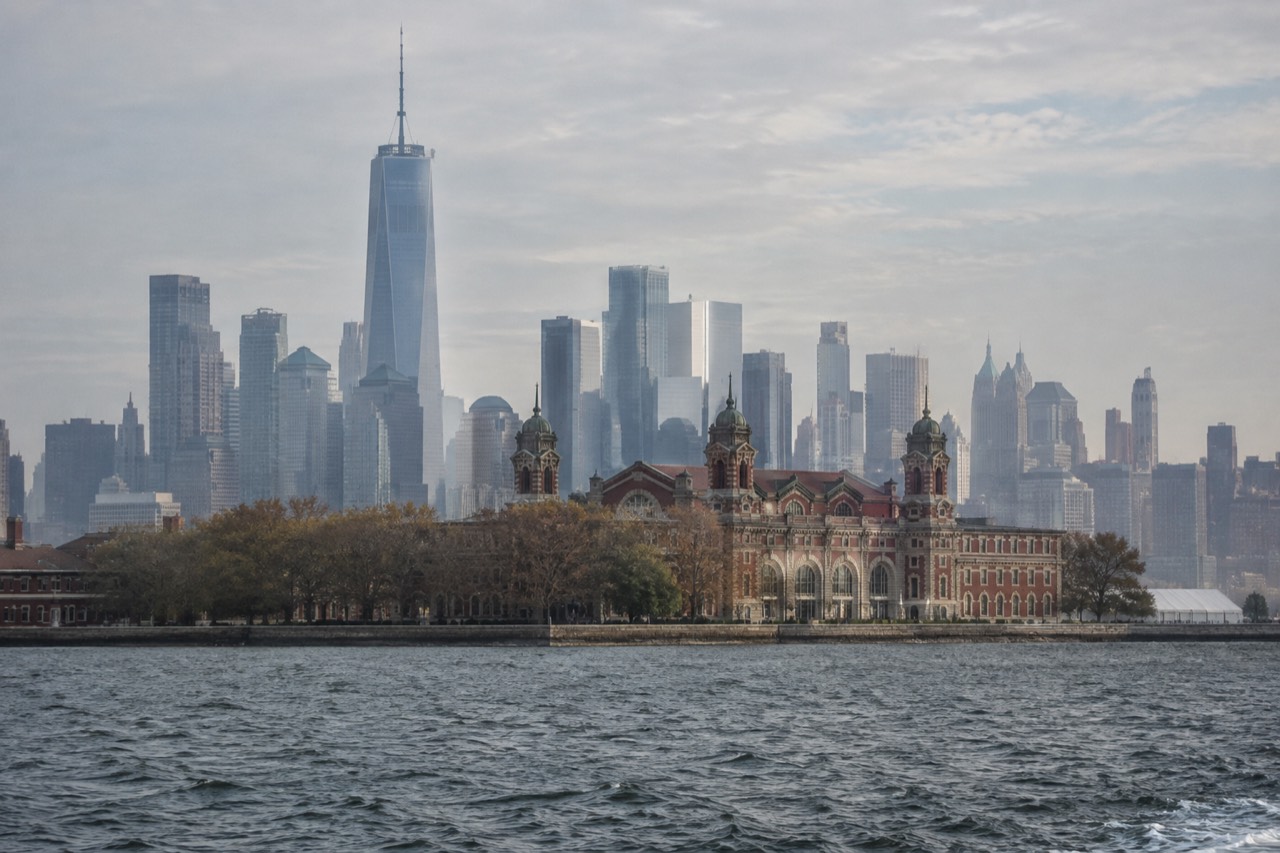
Ellis Island was the federal immigration station that processed arrivals to New York Harbor, and today the whole island is a national monument whose main building houses the National Museum of Immigration. It sits in the harbor between Lower Manhattan and Jersey City, next to the Statue of Liberty, and the two are visited on the same ferry ticket. The site is migration history, not entertainment: it records the entry point for millions of families.
The island operates under the National Park Service. What most visitors think of as "Ellis Island" is the Main Building, the grand red-brick structure with its ferry-slip porches and its tiled Great Hall, where arrivals were processed, briefly detained or admitted. The building was restored and reopened as a museum.
One point of confusion worth clearing up before you go: jurisdiction is split. The natural island plus most of the landfill areas belong to the federal government, while a court decision placed parts of the added land in New Jersey. For a visitor this changes nothing, you will not notice a border, but it explains why the island is administered jointly with the Statue of Liberty and why ferry service runs from two states.
For many travelers this is the most personal stop in the city. A large share of Americans can trace at least one ancestor to the registry room, and the museum's database of ship manifests lets you look up names. People arrive expecting a quick photo stop and leave having spent two hours. Plan for that.
The practical companion piece is the Statue of Liberty itself, which sits a few hundred yards away on the same ferry loop. If you are building a day in the harbor, our Statue of Liberty ticket guide covers the crown, the pedestal and the booking windows for those tiers in detail.
| The island at a glance | |
|---|---|
| What it is | National monument and immigration museum, run with the Statue of Liberty |
| Main attraction | National Museum of Immigration in the restored Main Building |
| Access | Official Statue City Cruises ferry only, from New York or New Jersey |
| Adult ticket | $26.00, including both islands, both museums and audio tours |
| Time needed | 90 minutes to 2 hours for the museum; half a day for the full loop |
| Special option | Hard Hat Tour of the south-side hospital complex, ages 13+ |
How Do You Get to Ellis Island?
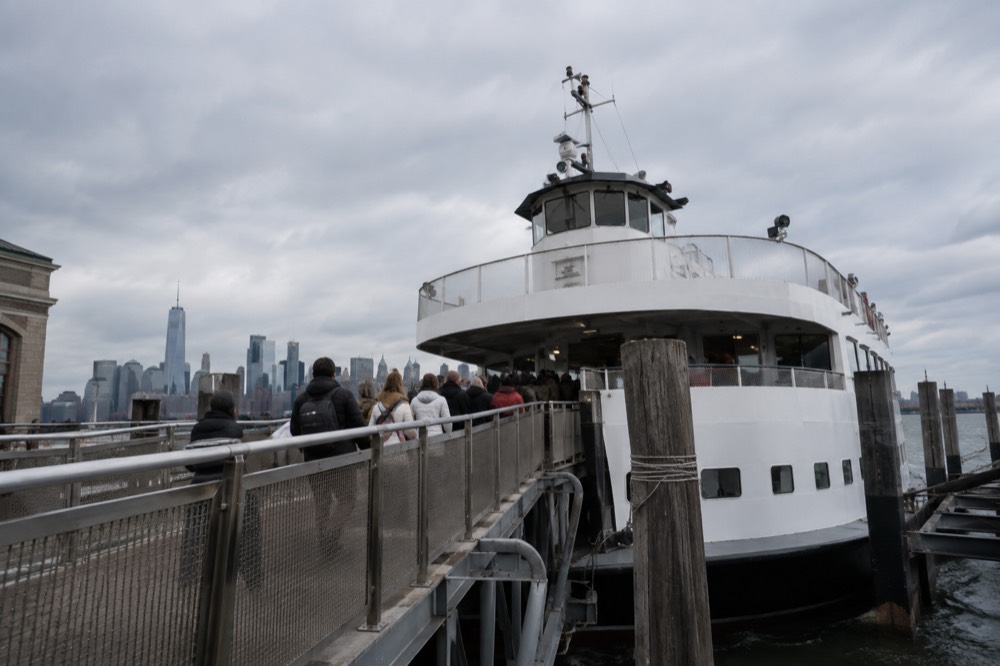
Ellis Island is reachable only by the Statue City Cruises ferry, the sole operator authorized by the National Park Service to dock there. Boats leave from Battery Park in Lower Manhattan and from Liberty State Park in Jersey City, and the same round trip serves both Liberty Island and Ellis Island with hop-off freedom at each stop. You cannot drive, walk or take any other boat to the island itself.
There are two departure points and they are not interchangeable if you care about your morning. The New York side departs from inside Battery Park, next to Castle Clinton, where an official ticket booth operates. The New Jersey side leaves from the historic Central Railroad of New Jersey terminal at Liberty State Park, which has plentiful parking and is the better choice if you are driving in from the west.
A warning the National Park Service itself makes: plenty of lookalike harbor cruises circle the islands and never land. Some charge more than the real ferry. A ticket on one of those boats gets you a photo of the statue from the water and no footing on either island, so check that what you are buying is the official ferry before you pay. The genuine operator sells through its own site and the official booths, and a legitimate ticket includes both islands.
From Midtown Manhattan, the trip to the Battery Park terminal takes about half an hour on the subway. Several lines stop within a short walk of the park. Build in buffer time: security screening, modeled on airport screening, applies at both departure points, and lines build from mid-morning onward.
If you would rather have a guide with you than navigate the islands alone, a guided option exists that pairs reserved ferry boarding with a walking tour of both islands, and the round trip, both museums and the audio tours are all in the ticket.
For readers planning a wider downtown day, the ferry terminal sits at the southern tip of Manhattan, an easy walk from the Financial District and its own list of sights, which we cover in the Financial District guide.
How Much Does Ellis Island Cost?
An adult general ticket costs $26.00 with taxes and fees included, and it bundles the round-trip ferry, the grounds of both Ellis Island and Liberty Island, both island museums and self-guided audio tours. Children aged 4 to 12 pay $17.00, seniors 62 and over pay $23.00, and children under 4 ride free. There is no cheaper Ellis Island-only ticket, because the ferry crossing is the product being sold.
The full tier structure, straight from the National Park Service fee schedule:
| Ticket tier | Adult (13+) | Child (4-12) | Senior (62+) |
|---|---|---|---|
| General / Reserve (both islands, both museums) | $26.00 | $17.00 | $23.00 |
| Pedestal Reserve (adds Statue of Liberty pedestal) | $26.30 | $17.30 | $23.30 |
| Crown Reserve (adds statue crown access) | $26.30 | $17.30 | $23.30 |
| Ellis Island Hard Hat Tour (hospital complex, 13+ only) | +$55.00 | n/a | n/a |
Two things about that table deserve comment. The first is the odd flatness of the ferry pricing: the crown of the Statue of Liberty costs thirty cents more than the basic grounds ticket. The barrier to the crown is not money, it is availability, and crown tickets are name-bearing, capped at four per order and checked against photo ID. The second is that the Hard Hat Tour is priced as an add-on on top of a ferry ticket, and it is adults only.
If you are doing the arithmetic on a whole harbor day, the pass question is worth a moment. The CityPASS bundle counts the ferry's general tier among its five included attractions and prices the whole package against combined box-office rates, so if the ferry is one of several big-ticket sights on your list, our comparison of New York CityPASS options does the sums.
The official ferry listing is the cheapest legitimate route onto the island, and it shows current sailing times before you commit. Booking ahead locks your departure window and spares you the walk-up line at Castle Clinton, which on a summer weekend can eat an hour of your morning before you are even on the water.
Once your ferry slot is settled, the rest of the planning is easy: the islands themselves need no further reservations unless you are chasing the pedestal, the crown or the Hard Hat Tour, each of which has its own limited inventory.
What Is Inside the National Museum of Immigration?
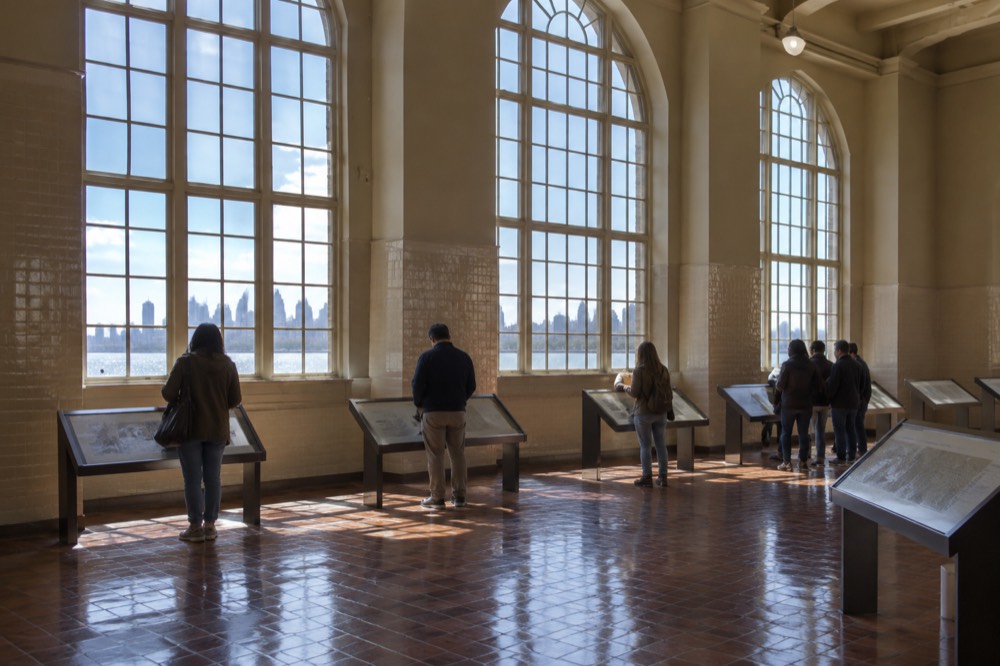
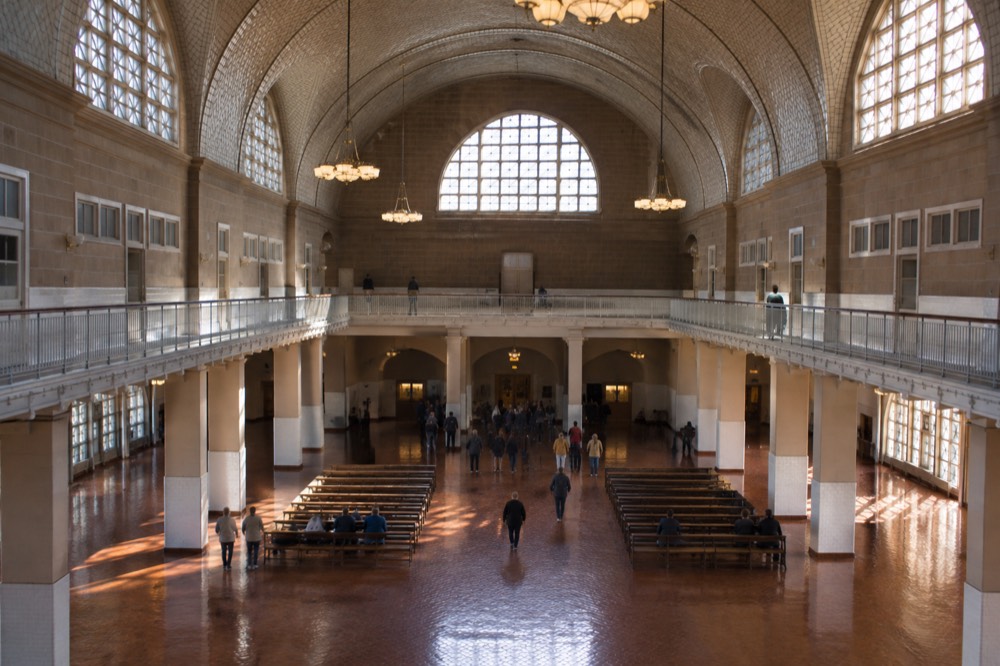
The National Museum of Immigration occupies the restored Main Building and walks visitors through the arrival process room by room, from the baggage room on the ground floor up to the Great Hall where registry decisions were made. Exhibits include original artifacts, ship manifests, oral history recordings and the American Immigrant Wall of Honor outside. Audio tours are included in every ferry ticket.
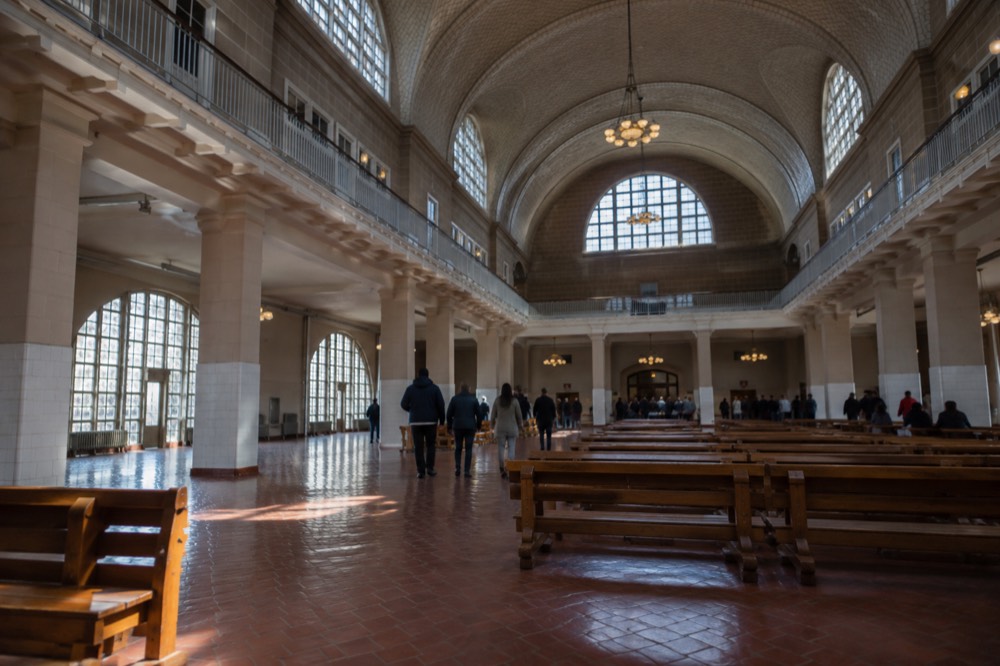
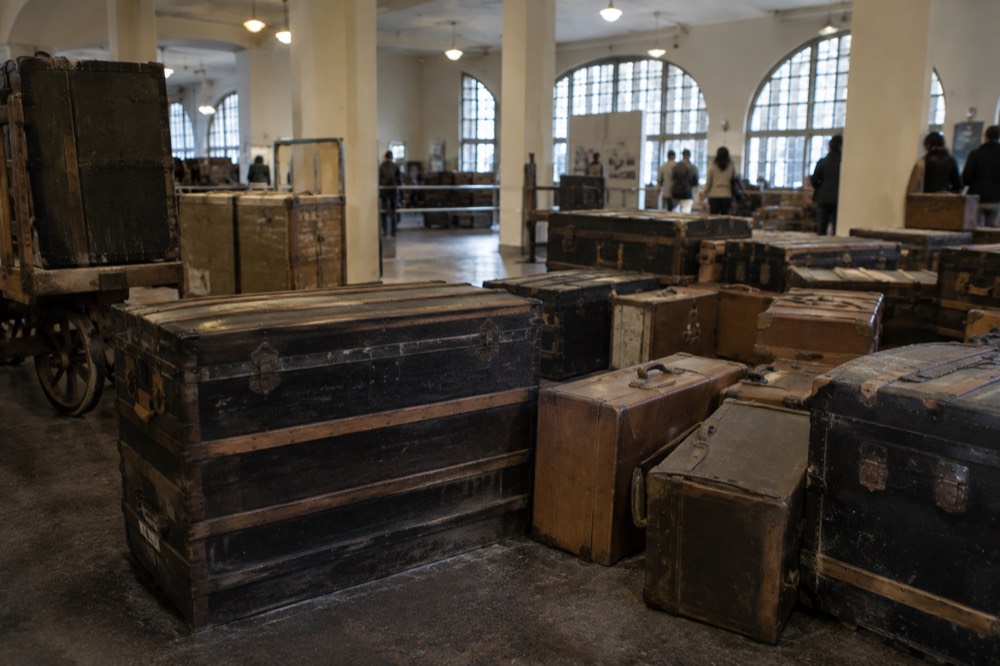
The route follows the path an arrival would have taken. You enter through the baggage room, where wooden trunks and period suitcases are staged as they would have been, then climb the same stairs arrivals climbed to the registry room, the Great Hall itself, with its encaustic-tile ceiling restored to its early pattern and light pouring through tall arched windows on both sides.
The exhibits are strongest where they stay specific. Ship manifests, the ledger books in which every arrival's name, age, occupation and last address were recorded, are displayed in cases and searchable in the museum's genealogy database, which holds records for the port of New York well beyond the Ellis Island years. The oral history station is where most people slow down: recorded interviews with former child arrivals, in their own accents, describing the crossing and the hall.
Outside, the American Immigrant Wall of Honor curves along the promenade with hundreds of thousands of names engraved on metal panels, families paying to inscribe ancestors. It is the island's quietest and, for many, most affecting feature, and it is free to walk once you are on the island.
Allow 90 minutes to two hours for the museum if you listen to the audio tour properly. Racing it in forty minutes is possible but wasteful, given what the ferry crossing cost you in time. For a fuller picture of the immigrant city that grew from arrivals like these, the Tenement Museum on the Lower East Side picks up the story where Ellis Island leaves off, inside actual apartments immigrant families lived in.
What Is the Hard Hat Tour of the Ellis Island Hospital?
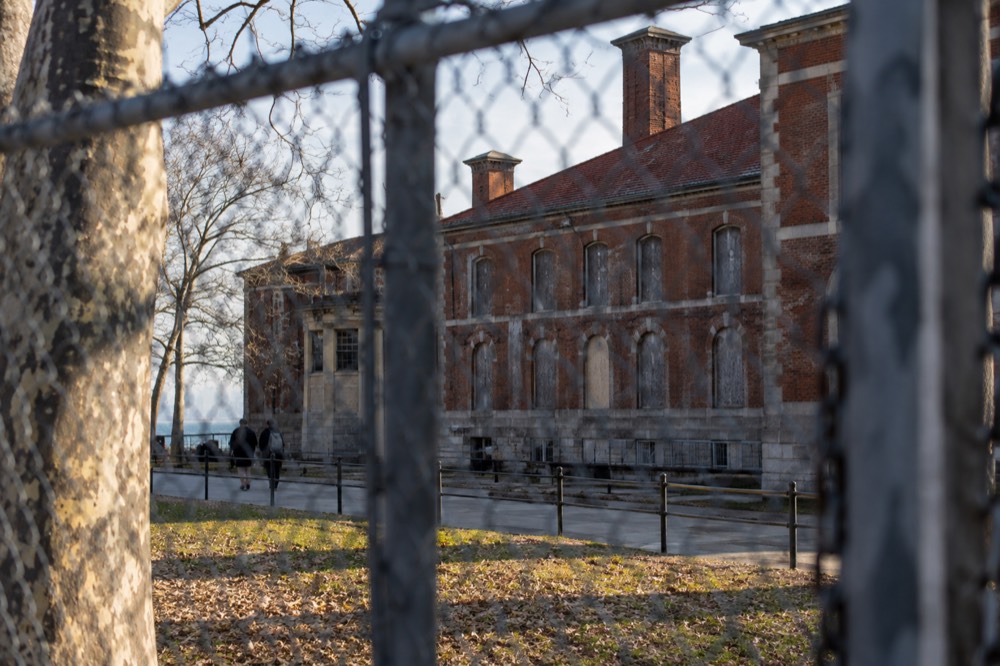
The Hard Hat Tour is a guided visit to the abandoned hospital complex on the island's south side, a decayed set of wards, laundry buildings and corridors that has been left unrestored since the immigration station closed. It runs only on selected days, lasts about 90 minutes, is restricted to visitors 13 and over, and costs $55.00 on top of a ferry ticket. Capacity is small and advance booking is necessary.
The hospital complex is the part of Ellis Island most visitors never see. Sick arrivals were detained here for treatment or observation, sometimes for weeks, and the buildings, a spread of weathered brick and empty window frames, have been deliberately left in their derelict state rather than rebuilt. The tour is run with hard hats for a reason: the buildings are stabilized, not restored.
What makes it memorable is the art. A French artist installed ghostly life-sized photographs of former patients and staff, pasted onto the walls of the wards and laundry, and they remain in place. Seeing a translucent image of a nurse standing in an empty ward, with the Manhattan skyline through a broken window behind her, is unlike anything else on the standard New York itinerary.
Practicalities matter here. The tour does not run daily, it is capped at small group sizes, and the 13-and-over rule is enforced. You buy it as an add-on to a standard ferry ticket, so the total cost of ferry plus hard hat comes to $81.00 for an adult. Check the schedule on the operator's listing before promising the family, and book it the day you book your flights if it is a priority, because the small groups fill first.

How Long Should You Spend, and What Is the Best Time to Go?
A combined Liberty and Ellis Islands visit takes three to five hours door to door from Manhattan, and most of that window belongs to Ellis Island, where the museum rewards 90 minutes to two hours. The best timing is a first ferry of the morning, which puts you through security before the crowds and on the islands before the tour buses arrive. Avoid the last boats of the day.
The time budget breaks down roughly like this:
| Segment | Typical time | Notes |
|---|---|---|
| Subway to Battery Park plus security screening | 45-60 min | Screening is airport-style; lines build from 10am |
| Ferry to Liberty Island | 15 min | First stop on the route from New York |
| Liberty Island stop | 45-90 min | Longer if you have pedestal or crown tickets |
| Ferry to Ellis Island | 10 min | Runs every 20-30 minutes in season |
| Ellis Island museum | 90-120 min | Add 90 min for the Hard Hat Tour |
| Ferry back to Manhattan | 15-20 min | Last departure is late afternoon |
That table is why "we'll pop over to the Statue of Liberty" is a phrase that wrecks itineraries. The visit is a half-day commitment minimum, and if you add the Hard Hat Tour it becomes most of a day. Treat it as such and it is one of the better-spent half-days in the city.
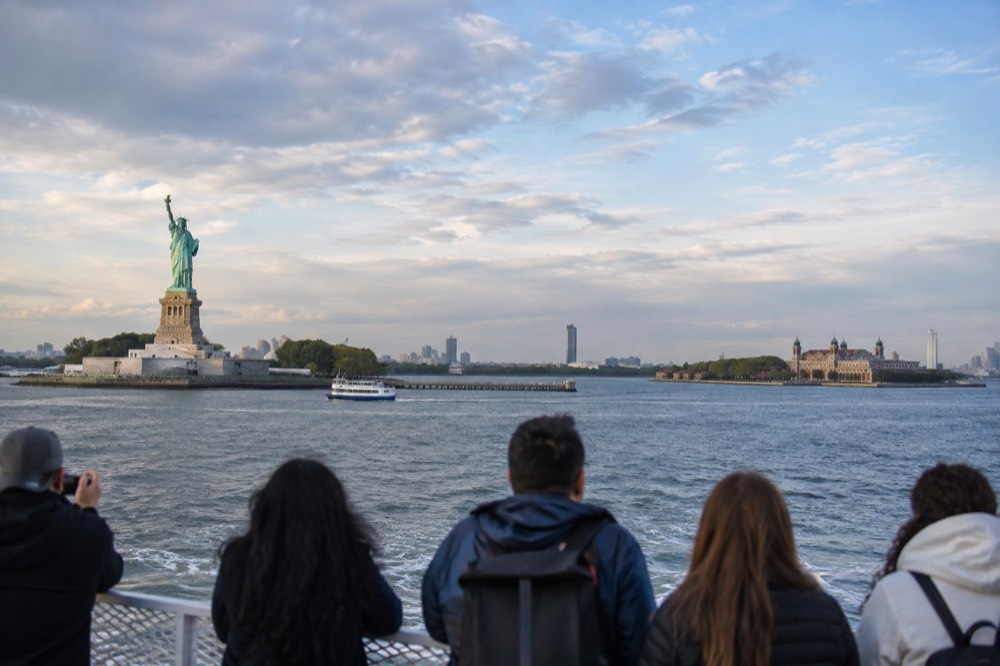
Season matters less here than at outdoor attractions, since the museum and most of the queue are indoors or covered, but summer weekends bring the thickest security lines and the fullest boats. Winter weekdays are the calm extreme, with the trade-off of a cold wait on exposed docks. Whatever the season, the ferry itself is a genuine harbor cruise, and the skyline view from the deck is not a consolation prize.
If a daytime half-day is more than your schedule allows, the harbor can be sampled from the water instead, and an evening sailing that pauses near the statue and loops the lit-up skyline captures a good share of the atmosphere for a fraction of the time commitment.
Is Ellis Island Worth the Trip?
For most visitors, yes, and specifically for the museum rather than the island itself, which is small and mostly occupied by that one building. If your family has any immigration history through New York, the manifest searches and oral histories make it one of the most personal hours in the city.
Travelers with no such connection still rate the Great Hall and the views, but tight itineraries of two days or less often do better skipping the stop than rushing it.
The honest case against is about opportunity cost. In a two-day trip, a half-day ferry loop competes directly against neighborhoods, museums and food you will not otherwise reach, and a rushed Ellis visit, forty minutes pushed through a crowded hall before the last boat, delivers the memory of a queue more than the memory of the place. The island earns its time or nothing.
The case for is that almost no other site explains the city. New York is a city of arrivals, and the registry room is where a large fraction of them began, on benches you can sit on, under a ceiling they stared at while waiting for a name to be called. Few historic sites preserve both the physical space and the paperwork, and the museum does both without dressing either up as entertainment.
Families should know the museum works for children roughly ten and up, with the audio tour pitched accessibly, but that younger kids tire of it. Visitors with mobility needs should check current access information with the operator: the ferry and the Main Building's ground floor are accessible, while older parts of the island are less so.
For fitting the islands into a bigger plan, the money page of this New York City Travel Guide, our full rundown of things to do across all five boroughs, places the ferry loop in context against everything else competing for your days.
Common Questions About Ellis Island
Visitors ask the same short set of practical questions about Ellis Island, and most of the answers come back to a single rule: everything runs through the official ferry ticket, so the fare, the timing and even the audio tour are decided before you ever leave Manhattan. The questions below cover the ones that come up most, from walk-up options to how the island pairs with the Statue of Liberty on the same day.
Can you visit Ellis Island without the Statue of Liberty?
You ride the same ferry either way, but you do not have to get off at Liberty Island. The boat stops there first on the New York route, and you can simply stay aboard through to Ellis Island. There is no separate, cheaper ticket for Ellis Island alone; the $26.00 general fare is the product and it includes both stops.
How much does Ellis Island cost?
An adult general ticket is $26.00, children 4-12 pay $17.00, seniors pay $23.00, and under-4s are free, all taxes and fees included. That covers the round-trip ferry, both islands, both museums and the audio tours. The Hard Hat Tour of the hospital complex adds $55.00 and is limited to visitors 13 and over.
How long does the Ellis Island visit take?
The museum itself deserves 90 minutes to two hours with the audio tour. The full outing, including travel to the terminal, security screening, the ferry and a Liberty Island stop, runs three to five hours door to door from Manhattan.
Is there a way to buy tickets at the island?
There is no ticket office on Ellis Island itself, since the ferry is the only access. Official booths operate inside Castle Clinton in Battery Park and at the Liberty State Park terminal, but on busy days those lines can cost you an hour or more, and popular ferry times can fill. Booking the ferry in advance through the operator's listing is the safer route.
Which departure point is better, New York or New Jersey?
From Manhattan or Brooklyn, Battery Park is the obvious choice. If you are driving in from New Jersey or points west, Liberty State Park offers easy parking and shorter lines, and the ticket price is identical from both sides.
Can you look up family records at Ellis Island?
Yes. The museum's genealogy database lets you search ship manifests for the port of New York, well beyond the Ellis Island processing years, and volunteer assistants are usually on hand. Arrivals' names, ages, occupations and destinations are recorded in the manifests displayed throughout the museum.
One last planning note: check the National Park Service conditions page for the islands a day or two before you travel. Ferries run in most weather, but the calendar, not the forecast, decides the last boat of the afternoon, and missing it is the one mistake on this trip that cannot be fixed with money.