Rockefeller Center: What to See, What It Costs and How to Time It
Rockefeller Center is a working complex of buildings, shops, offices and observation decks in Midtown Manhattan, and most of it costs nothing to walk through. The money goes to what you do once you are inside.
Short answer
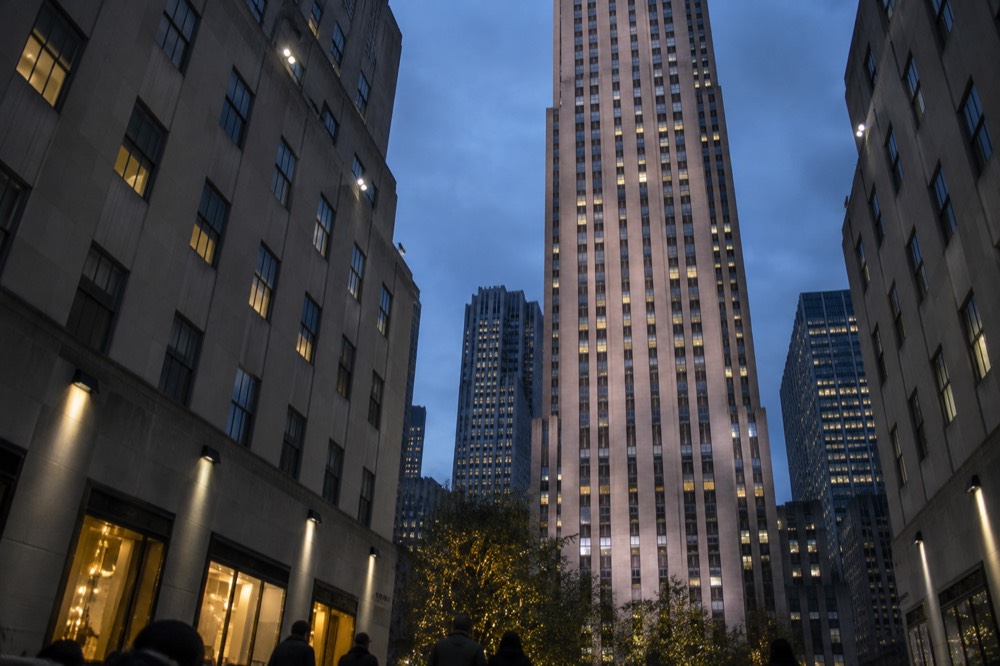
Rockefeller Center is free to enter and walk around, spanning the blocks between 5th and 6th Avenues in Midtown. The paid draws are Top of the Rock (adult tickets from $42, timed entry, 08:00-24:00) and tours of Radio City Music Hall. Plan around the crowd: weekday mornings are quiet, sunset slots sell out first.
Rockefeller Center covers eleven acres of Midtown Manhattan, straddling the blocks between 5th and 6th Avenues, and the striking thing first-time visitors miss is how much of it is simply public space. The plazas, the Channel Gardens running down toward 5th Avenue, the underground concourse of shops and the Promenade are all open to anyone, no ticket, no queue. What you pay for is the vertical stuff: the observation decks, the tours, the skating rink in season.
Most people arrive with one plan, ride to the top, look, leave. That is a fine plan, but it skips the parts that make the complex worth an hour of ground-level wandering. This guide, part of the wider New York City Travel Guide, covers what a visit actually involves: how the layout works, what the ticket options cost, when to go, and how Top of the Rock compares against the other decks you might be weighing instead.

What Is Rockefeller Center, Exactly?
Rockefeller Center is a complex of Art Deco buildings, plazas and underground passages straddling the blocks between 5th and 6th Avenues in Midtown Manhattan. It is not a single attraction but a neighborhood-scale destination: offices, shops, restaurants, NBC studios, Radio City Music Hall and the Top of the Rock observation decks all sit inside it. Entry to the outdoor spaces is free, and most visitors spend between one and three hours depending on what they book.
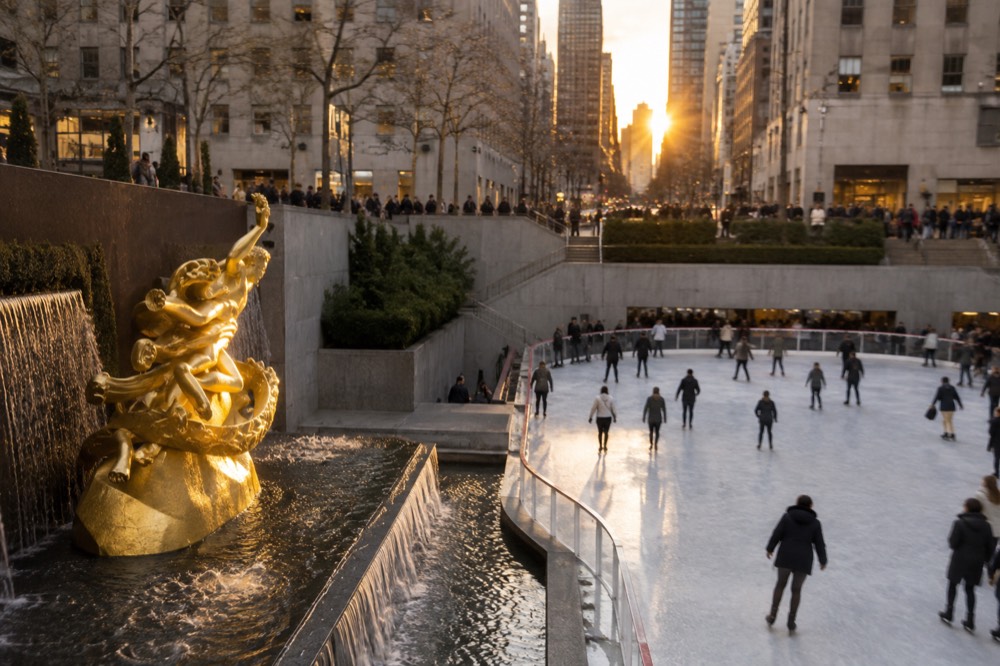
The layout confuses people because the complex is built on two levels. At street level you get the plazas, the famous Prometheus statue overlooking the rink, the Channel Gardens and the entrances to the buildings. Below street level, a concourse runs between buildings with shops and food, which matters in winter and in rain. Many first-timers never find it.
The three things people actually book here are Top of the Rock, the tour of Radio City Music Hall, and, from late fall through winter, the ice rink and the Christmas tree. Everything else, the promenade, the gardens, the public art, the window shopping, costs nothing. If you are building a wider Midtown plan, our things to do in NYC guide places Rockefeller Center in context with the rest of the city.
One practical note: "Rockefeller Center" is also a subway stop name, and the station sits under the complex itself. More on transit below, but the short version is that you can arrive, visit and leave without ever being rained on, if you plan it that way.
How Much Does It Cost to Visit Rockefeller Center?
Walking through Rockefeller Center costs nothing: the plazas, gardens and underground concourse are public. The paid experiences are Top of the Rock, with adult timed tickets from $42, tours of Radio City Music Hall, and the seasonal ice rink with its skate rental. A realistic budget for the full experience, one deck visit plus a tour, runs roughly $80-$120 per adult, while a ground-level visit with no bookings costs nothing beyond lunch.
The deck is the big line item, and its pricing is dynamic: the "from" figure is the lowest published starting price and the actual cost moves with date and time slot. Sunset windows command the top of the range, and they sell out first. Booking in advance locks your slot, which matters because entry is timed.
| Item | Typical adult cost | Notes |
|---|---|---|
| Plazas, Channel Gardens, concourse | Free | Open to the public year-round |
| Top of the Rock | From $42 | Dynamic timed pricing; sunset slots cost most and sell out first |
| Radio City Music Hall tour | Ticketed separately | See the venue's tour listing for current times and prices |
| Ice rink (in season) | Fee plus skate rental | Wristband or reservation; book ahead in December |
| Food on the concourse | Varies | Quick options underground, table service at street level |
This is where a pass can change the math. New York CityPASS includes Top of the Rock among its choices, alongside the Empire State Building, the Statue of Liberty ferry, the 9/11 Memorial & Museum and others. If your itinerary already includes three or four of those heavy hitters, the pass arithmetic can work strongly in your favor. It is worth doing the sum against your actual list, not against a hypothetical one.
If your plan is deck-heavy, the comparison belongs in this section too. Top of the Rock's advantage is the one no other deck can copy: it is the deck that puts the Empire State Building in the frame. Every other observation point in Manhattan photographs the skyline with a Rockefeller Center tower in it. This one photographs the skyline with the Empire State Building instead.
For the deck ticket itself, the decision is really about timing rather than price tiers: same deck, same three levels, different windows.
What Are the Best Times to Visit Rockefeller Center?
The quietest hours at Rockefeller Center are weekday mornings before 10:00, when the plaza belongs to office workers and the deck lines are short. The most crowded are weekend afternoons, holiday periods and the whole stretch from early December through New Year, when the tree draws huge numbers. For the best photographs from Top of the Rock, book the window around sunset: you get daylight, the transition and the lit skyline in one visit.
The deck is open daily from 08:00 to 24:00 with last entry at 23:10, which makes it one of the latest decks in the city. A late slot has real advantages: after 21:00 the crowds thin out dramatically, the city is fully lit, and you can see the skyline in its evening mode without fighting for rail space.
| Time window | Crowd level | What you get |
|---|---|---|
| 08:00-10:00 | Lowest | Clear morning light, empty plaza, easy rail access |
| 10:00-13:00 | Building | Standard daytime views |
| 13:00-16:00 | Busy | Haze risk in summer; sharpest for detail in fall |
| Sunset window | Sells out first | Day-to-night transition, the classic shot |
| 21:00-24:00 | Thins again | Full skyline lighting, short lines |
Season matters as much as hour. Summer brings heat haze that softens long-distance shots across the Hudson. Fall and winter deliver the crispest air, and winter adds the tree and the rink at the cost of serious crowds. If you are going in December, treat Rockefeller Center as a morning visit or a very late one, and expect the plaza itself to be shoulder-to-shoulder between the afternoon tree viewings.
Weather planning is worth a sentence of its own. The National Weather Service's Central Park climate normals show July as the wettest month of the year in New York, ahead of both August and June, which surprises most visitors who book summer expecting dry sightseeing. There is no genuinely dry season here, so build a deck slot and an underground-concourse backup into the same afternoon rather than gambling on the forecast.
What Is There to Do at Rockefeller Center Besides Top of the Rock?
Beyond the observation decks, Rockefeller Center offers the Radio City Music Hall tour, NBC studio tours, the seasonal ice rink, the Channel Gardens, a large underground shopping and dining concourse, and one of the densest concentrations of public art in Manhattan. The plaza-level experience is entirely free and takes about an hour at a relaxed pace, which makes the complex one of the better no-cost blocks of Midtown to wander.
Radio City Music Hall sits on 6th Avenue at the complex's western edge, and its interior tour is the second most-booked experience here. The venue is an Art Deco landmark, and the tour takes you into the auditorium and backstage spaces that regular showgoers never see. Our Radio City Music Hall tour guide covers it in detail.
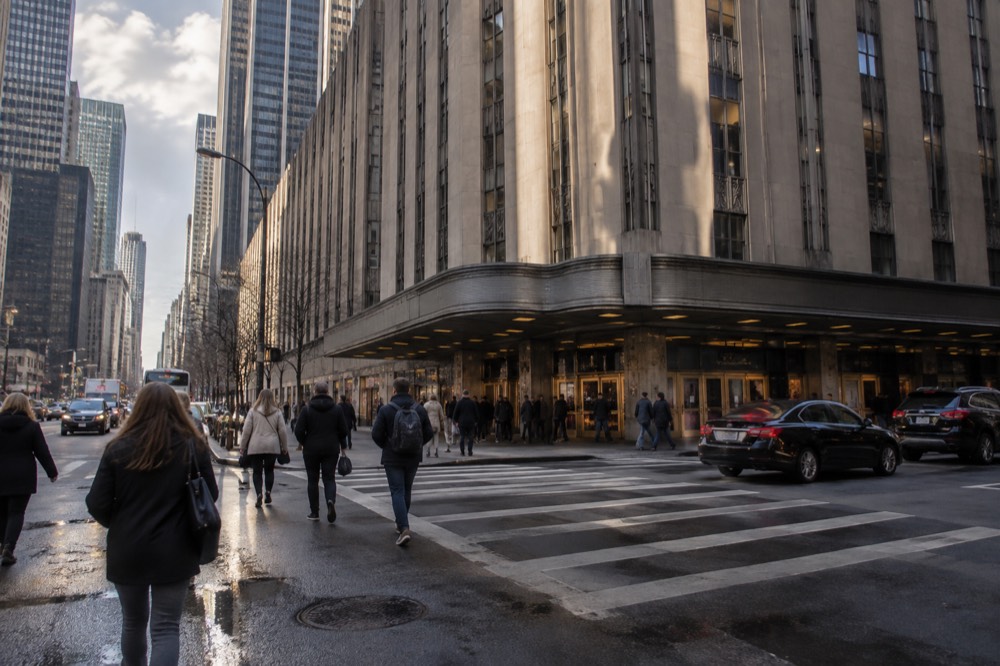
The Channel Gardens, the planted walkway sloping from 5th Avenue down toward the plaza, is the approach most guidebooks photograph and most visitors rush through. It is replanted seasonally and, in December, it frames the tree walk everyone posts. Give it five unhurried minutes rather than treating it as a corridor.
The underground concourse is the locals' secret, though it is not a secret at all to the tens of thousands of office workers who use it daily. It connects much of the complex and reaches the subway without going outside, which is worth knowing in February or during a downpour. The food down there is ordinary but fast, and the shops range from chain retail to a few genuinely useful stops.
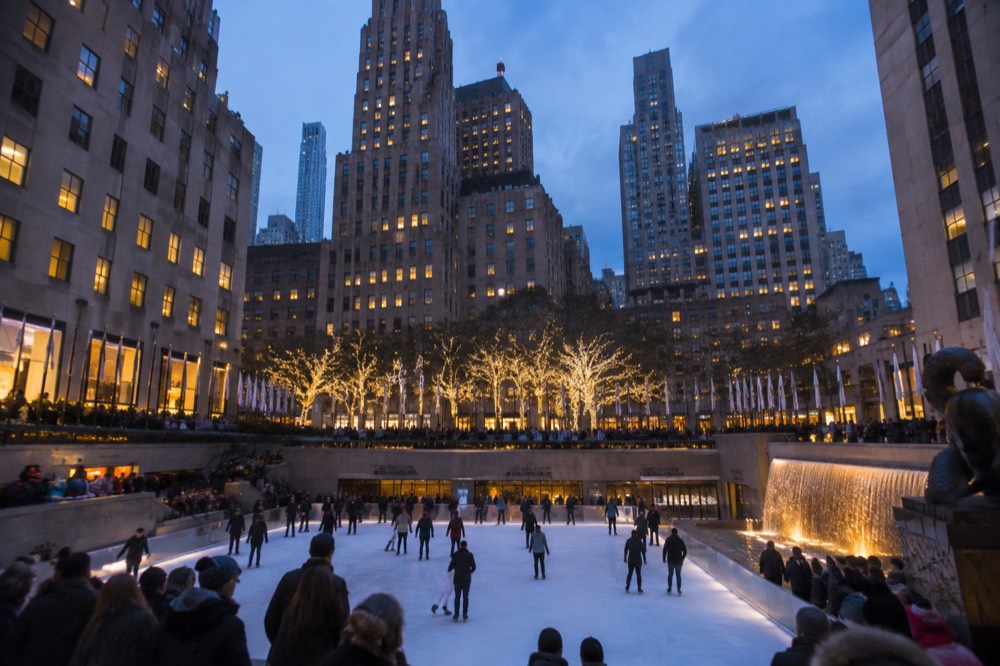
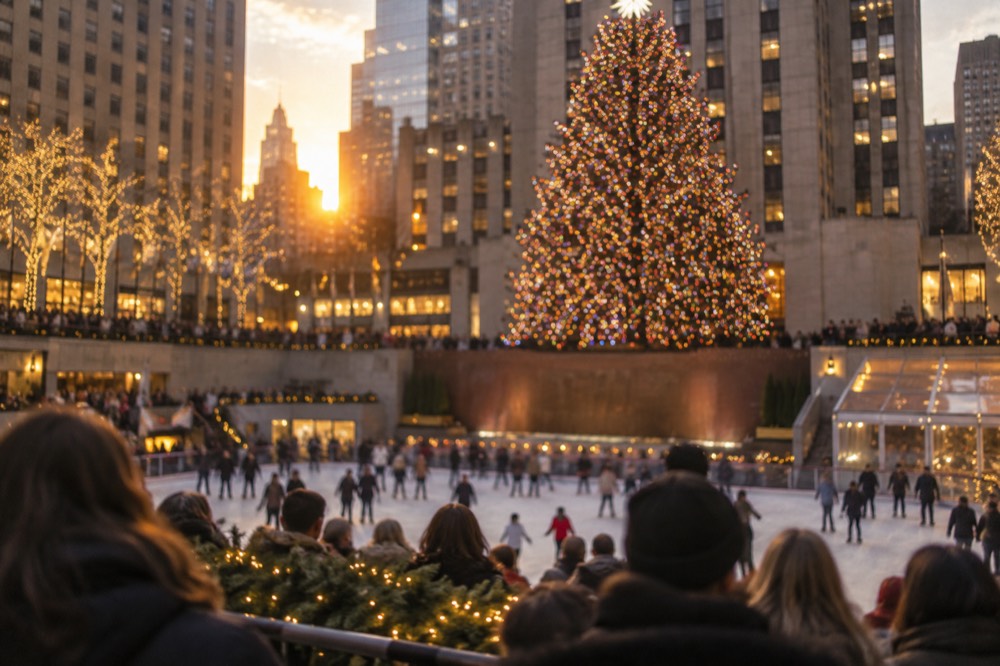
In winter the Lower Plaza converts to the rink, and the Christmas tree above it turns the complex into the city's de facto seasonal centerpiece. Both are free to look at and neither is free to use: skating carries a fee plus rental, and the tree's lighting period concentrates enormous crowds. If Christmas New York is your reason for coming, plan Rockefeller Center around those realities rather than fighting them.
Public art deserves a slower look than most visitors give it. The complex was planned with sculpture and murals woven through it, and pieces like the Prometheus statue and the limestone relief work on the building facades reward a guide or a good printed walking map. Spend twenty minutes actually looking and the blocks stop feeling like a corridor between the subway and the elevator bank, and start feeling like an open-air museum with a food court underneath it.
How Does Top of the Rock Compare with the Other Observation Decks?
Top of the Rock's edge over the other Manhattan decks is its view composition: from 70 floors up, you get the Empire State Building in the frame with Central Park behind it, a shot no competing deck can take. Its adult tickets start from $42, it is open daily 08:00-24:00, and its three observation levels include open-air terraces. SUMMIT One Vanderbilt and Edge sit within a mile, so choosing one is about geometry, not quality.
The honest framing: all five major decks are good, and the differences are about what you want in the photograph. SUMMIT One Vanderbilt, next to Grand Central, is the playful one, with mirrored rooms and glass ledges that turn the visit into an art installation. Edge at Hudson Yards has the glass floor and the cantilevered outdoor skywalk. Our comparison of New York's observation decks walks the full decision.
| Deck | Neighborhood | What makes it different | Adult tickets from |
|---|---|---|---|
| Top of the Rock | Rockefeller Center, Midtown | Empire State Building and Central Park in one frame | From $42 |
| SUMMIT One Vanderbilt | Grand Central, Midtown | Mirror rooms, glass ledges, immersive art | From $44 (13+) |
| Edge | Hudson Yards | Glass floor, cantilevered outdoor skywalk | From $34-$45 |
| One World Observatory | World Trade Center | Tallest deck in the Western Hemisphere, harbor views | From $39-$44 |
| Empire State Building | Midtown South | The classic, open late, from the building itself | From $44 |
If you only have time or budget for one deck, the geographic tiebreakers do most of the work. Already spending your day in Midtown near Central Park? Top of the Rock. Coming from Grand Central or heading to the East Side? SUMMIT. Pairing with the High Line or Chelsea Market? Edge makes that a single outing. Downtown, near the harbor and the 9/11 Memorial? One World.

And if the mirror rooms appeal, here is the SUMMIT option directly.
How Do You Get to Rockefeller Center?
The simplest way to reach Rockefeller Center is the subway: the B, D, F and M trains stop at 47th-50th St Rockefeller Center, a station directly beneath the complex, and dozens of other lines stop within a ten-minute walk. Arriving by car is the one option to avoid: Midtown traffic, parking costs and street closures make driving here slower and more expensive than the train in almost every case.
The station under the complex is the whole answer for most visitors. The B, D, F and M stop there directly, and you can ride from the West Side, from Brooklyn or from Queens without a transfer if your line feeds the right trunk. Within a short walk you also have the E and M station a few blocks north on 5th Avenue, the N, R and W at 49th Street, and the 6 at Lexington, though that last one is a longer hike west.
Practical arrival notes:
- The underground concourse connects the station to much of the complex, so in bad weather you can arrive, eat and reach most entrances without going outside.
- If you are already in Midtown, walking is faster than the subway: from Times Square it is roughly ten minutes along 47th or 48th Street.
- Cabs and rideshares drop at the edges on 5th or 6th Avenue; there is no central drop-off, and the cross streets through the complex can be closed to traffic at busy times.
- For fare payment, tap the same card or phone every ride: OMNY caps your weekly spending automatically, but only if every tap uses the same device.
- Travelers with mobility needs should check the deck's accessibility details on the listing before booking, since elevator routing through the complex adds a few minutes and is worth knowing in advance.
Is Rockefeller Center Worth the Trip?
Yes, with one qualification: Rockefeller Center rewards visitors who book something specific and shortchanges those who treat it as a destination in itself. A timed Top of the Rock slot plus an hour of plaza wandering is a half-day well spent, and in December the tree and rink make it essential. But arriving with no bookings, seeing a plaza and leaving is the most common way to be disappointed here.
The value case rests on stacking. The plaza is free, the Channel Gardens are free, the concourse is free, and the paid items are individually modest compared with, say, a Broadway ticket. A visitor who books the deck for the sunset window, walks the gardens before it, and eats underground afterward gets a complete Midtown evening for the price of one timed ticket.
Common Questions About Rockefeller Center
These are the questions visitors ask most about Rockefeller Center, answered directly: entry to the complex is free, Top of the Rock runs from 08:00 to 24:00 daily, the sunset slot is the one that sells out, and the whole visit fits comfortably into half a day unless December crowds or a full slate of bookings stretch it.
Is Rockefeller Center free to visit?
The plazas, Channel Gardens, underground concourse and public art are free and open to everyone. You pay only for the booked experiences: Top of the Rock, the Radio City Music Hall tour, and skating in season.
How long should I spend at Rockefeller Center?
Plan on one to three hours. A deck visit runs about an hour including security and elevators, and a relaxed walk of the plaza and gardens adds another hour. In December, budget more, because the tree crowds slow everything down.
What time does Top of the Rock open and close?
Top of the Rock is open daily from 08:00 to 24:00, with last entry at 23:10. Hours can vary on special dates, so confirm your slot when booking.
Which is better, Top of the Rock or the Empire State Building?
They are different shots. Top of the Rock puts the Empire State Building in your photograph alongside Central Park; the Empire State Building puts you inside the icon but cannot photograph itself. If you want Central Park and the classic skyline composition, choose Top of the Rock. Our Empire State Building vs Top of the Rock guide works through the full comparison.
When can you see the Rockefeller Center Christmas tree?
The tree is lit from late fall through the holiday season and is free to view at any time the plaza is open. The lighting period draws the year's biggest crowds, especially evenings and weekends, so go early morning or very late if you want space for photos.

A final planning thought: the visitors who enjoy Rockefeller Center most are the ones who treat it as a base for an evening, one booked ascent timed to the light, then food, then a slow exit through the concourse to the train home. That version costs one ticket and delivers a full Midtown night. The rushed version, a queue, a photo, a dash to the next landmark, is the one worth avoiding.