Boston from NYC: The Route, the Stops and How Much of the Day It Really Takes
Boston sits close enough to New York City for a day trip and far enough that the day trip eats nearly every waking hour. Here is the route, the realistic itinerary and the honest arithmetic on whether it is worth it.

Short answer
Boston is doable from NYC in one day, but only barely. A round trip by train, bus or car consumes most of the daylight, leaving roughly four to six usable hours in the city itself. Go if there is something specific you want in Boston; stay overnight if you want Boston itself.
Boston is the one major American city a New York visitor can reach, tour and return from inside a single, very long day. It is also the day trip most often underestimated. People see the two cities on a map of the Northeast corridor, mentally file them as neighbors and then discover that a Boston day from Manhattan is a before-dawn to past-dark commitment that leaves four to six hours of actual Boston in the middle.
This guide does the honest arithmetic. It covers the route options from NYC, what a realistic one-day Boston itinerary looks like, what the trip costs, and when the answer to "should I do this?" is a firm no.
 Amtrak train waiting at a platform in a Northeast corridor station" width="1000" height="667" loading="lazy">
How Long Does a Boston Day Trip from NYC Really Take?
A Boston day trip from NYC consumes twelve to sixteen hours door to door, and the travel is more than half of it. The rail journey between the two cities takes roughly four hours each way on the standard Northeast Regional service, and longer on a bus in traffic. That means a 6am departure gets you to Boston mid-morning, and an evening return puts you back in Manhattan close to midnight.
Four to six hours of sightseeing is what remains.
Every Boston day-trip plan should start from that arithmetic, because it dictates everything else. If you leave Manhattan at seven in the morning you will not be standing on the Freedom Trail before ten or eleven, depending on the service and the walk from the station. If you want dinner in the North End, you are looking at a late train home and a hotel-arrival-quality exhaustion level without the hotel.
The second arithmetic is frequency. Northeast corridor services run all day, which is the saving grace of this route: you are not hostage to one departure. But the services that leave late morning arrive too late to sightsee, so the workable window is narrow. An early start is not a suggestion here, it is the whole plan.
The third arithmetic is what you give up. A Boston day is a day not spent in New York, and for a visitor on a short NYC itinerary that is a real cost. Our 3 days in NYC itinerary gives a sense of how much a single day can hold in the city you are already standing in, and Boston will not give you more per hour than that.
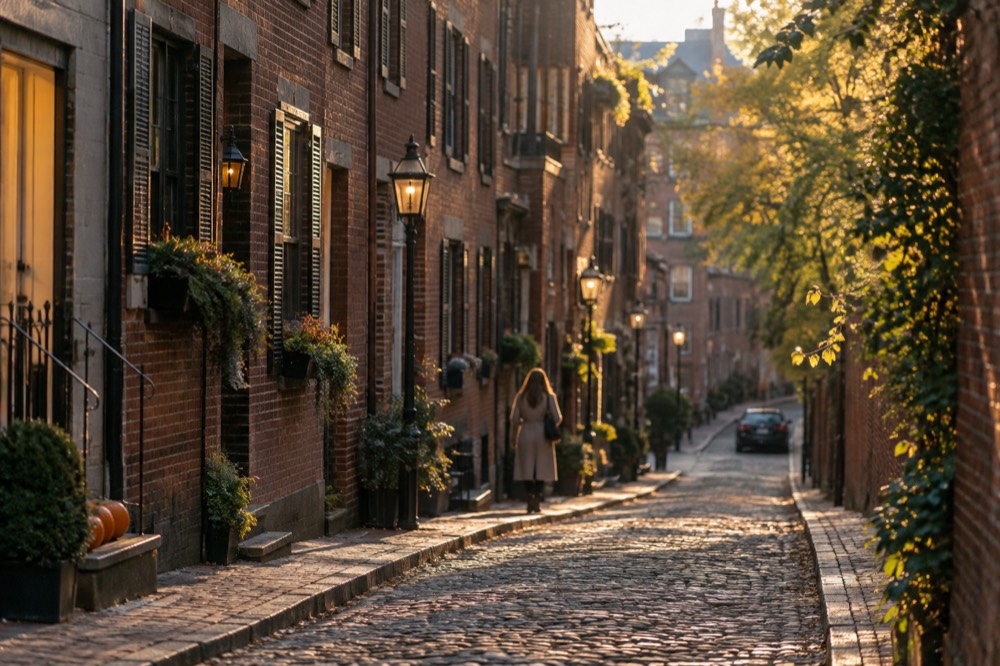
Train, Bus, Car or Plane: Which Route from NYC to Boston Makes Sense?
For almost every visitor the train is the right route from NYC to Boston: it runs between the two city centers, avoids traffic entirely and lets you walk off the service straight into downtown Boston. The bus is the budget fallback, usually slower and hostage to highway congestion. A rental car is the worst choice for a day trip, since you pay for it, park it twice and drive it tired.
The case for the train is structural. You board in Manhattan, you arrive in Boston near the heart of the city, and the time in between is usable: reading, sleeping, planning. Check Amtrak's own site for current schedules and fares, because corridor pricing moves by demand and by service, and neither number belongs in a guide that will sit online for a year. The premium Acela service shaves meaningful time off the run; whether that time is worth the fare premium is a question only your budget can answer.
The bus competes on price and nothing else. Corridor coaches run frequently from Manhattan, and the fare is usually the cheapest of any mode, but the schedule is a promise the traffic on the approach to Boston does not have to keep. For a day trip, where every late arrival directly deletes sightseeing hours, that variance is the problem.
| Route | Where you leave from and arrive | Best for | Main drawback |
|---|---|---|---|
| Train (Northeast Regional) | Manhattan station to central Boston | Almost everyone: city-center to city-center, no traffic risk | Fares rise with demand; book early |
| Train (Acela) | Same corridor, faster service | Travelers who value the saved time over the fare premium | Costs noticeably more |
| Intercity bus | Midtown curbside to Boston bus terminal | Tight budgets | Highway congestion can eat an hour or more |
| Rental car | Your pick-up point to Boston parking garage | Only if you are adding stops between the cities | Two parkings, tolls, and a tired driver at midnight |
| Flight | JFK or LGA to Boston Logan | Points redemptions and rare bargain fares | Airport time on both ends erases the flight-time advantage |
One note for the New York end of the journey: getting to your departure point in Manhattan is its own subway ride, and the fare system has changed recently. Tap the same card or device every ride and the weekly fare cap does the rest, a point worth checking on the MTA's own OMNY page before you ride.
What You Can Realistically See in Boston in One Day?
A realistic one-day Boston itinerary covers the Freedom Trail's core, Quincy Market, the North End and Boston Common, walked as a single loop from the station, with maybe Beacon Hill or the waterfront if your feet hold out. It does not cover Cambridge, the museums, Fenway Park or a Red Sox game. One day gives you colonial Boston; the other Bostons need an overnight.
The good news is that colonial Boston is compact in a way Manhattan visitors will find startling. The Freedom Trail, the red-brick walking route linking sixteen revolutionary-era sites, strings together most of what a first-time visitor wants, and its central stretch is comfortably walkable. You can walk it with a guide or follow the bricks yourself; either way, the loop from Boston Common through the trail's highlights and back is the shape of a one-day visit.
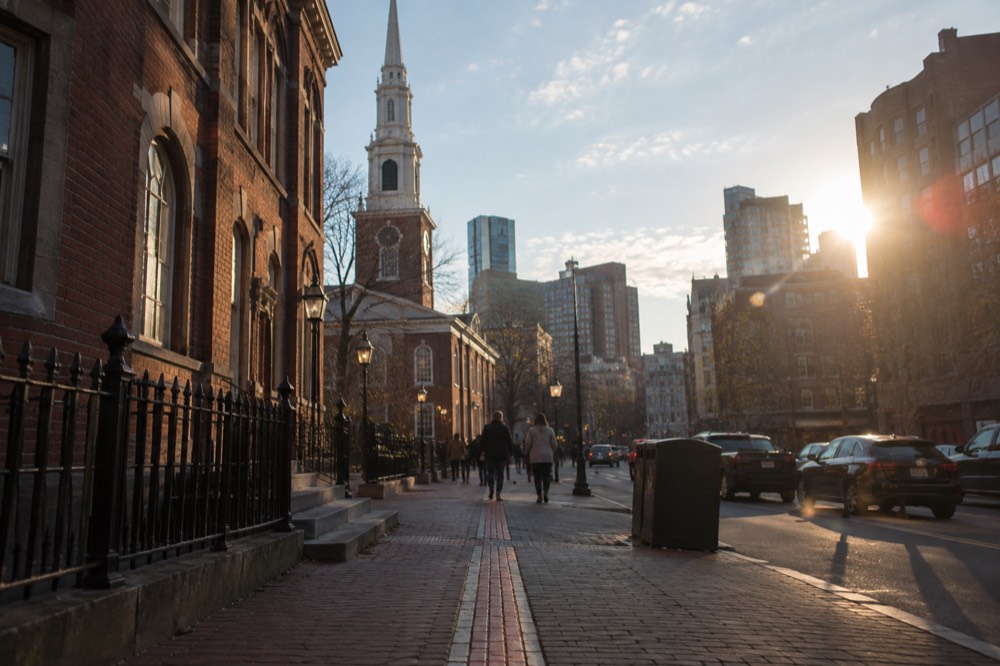
Here is what a workable day looks like, sequenced around a mid-morning arrival:
| Time block | Where | What you are doing |
|---|---|---|
| Early morning | NYC departure point | Board the first sensible service; eat beforehand |
| Late morning | Arrival to Boston Common | Coffee, then start the Freedom Trail at its beginning |
| Midday | Downtown and Quincy Market | Trail highlights, then lunch in the market or nearby |
| Early afternoon | North End | Paul Revere House, Old North Church, a cannoli stop |
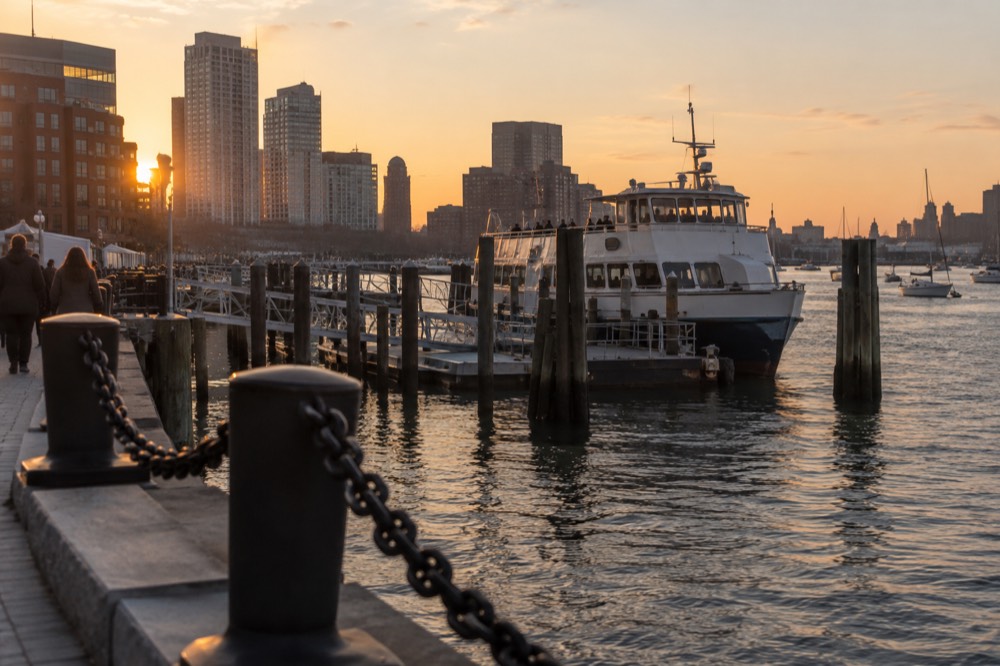
| Late afternoon | Beacon Hill or the waterfront | Golden-hour photos, or harbor-side recovery time |
| Evening | Back to the station | Return service to Manhattan, arriving late |
Two honest limits. First, Quincy Market at midday is a crush of exactly the people who had your idea; grab food and keep moving rather than lingering. Second, Cambridge, Harvard and the Charles River basin are a separate trip across the river, and attempting them turns a full day into a rushed one. If Harvard Yard is the thing you actually want, overnight in Boston and do the city properly.
If comparing big single-day commitments, the day trips from NYC hub breaks down every option by distance, cost and time consumed.
Is a Boston Day Trip Worth It, or Should You Stay Overnight?
Boston is worth a day trip only when there is one specific thing drawing you: a game, a food crawl, a reunion, one neighborhood you love. If you want the city itself, its museums, Cambridge and an unhurried dinner, the overnight wins decisively, because the day trip spends more hours in transit than in Boston. Split an overnight across two days and the usable Boston time roughly triples for one extra night's hotel.
The decision rule is time-in-destination. A day trip buys you four to six Boston hours; an overnight buys you a day and a half. That is the difference between walking the Freedom Trail and also seeing Harvard Yard, a museum and a proper dinner in the North End rather than a sandwich at Quincy Market.
There is a middle option worth naming: travel up the evening before, sleep in Boston, spend the full next day in the city and return that night. You buy the entire second day for the price of one hotel night, and you avoid the dawn-departure misery that makes day trippers grumpy.
And there is a group of travelers for whom the honest answer is no: anyone on a NYC trip of four days or fewer. For a first visit of that length, the city you are standing in wins every time, and the money page of things to do in NYC will out-earn Boston by the hour. Boston earns its slot on trips of five days or more, or on repeat visits.
What Does a Trip from NYC to Boston Cost?
The cost of a Boston day trip splits into three parts: the round-trip fare, which varies sharply by mode and by how early you book; food, which you control; and attraction entry, which for the Freedom Trail's outdoor sites is mostly zero. Rail fares move with demand, so the honest planning range is wide, and the only way to know your date's price is to check the operator directly.
Start with the fare. Rail and coach pricing on this corridor is dynamic: the same service can price very differently a week apart, and early booking is reliably cheaper. We do not print a number here because any number would be stale by the time you read this; the operators' own booking pages are the source of truth for your date.

The Boston side can be nearly free if you let it. The Freedom Trail is a public walking route; Boston Common and the Public Garden are free parks; the North End's streets cost nothing to wander. The fee-charging sites along the trail, like the Paul Revere House, are individually modest, and the major museums are where a budget actually bends.
| Cost element | Planning range | Notes |
|---|---|---|
| Round-trip rail fare | Varies by service, date and booking window | Dynamic pricing; check the operator for your date |
| Round-trip coach fare | Usually the cheapest mode | Slower and traffic-dependent |
| Walking the Freedom Trail core | Free | The trail is a public route |
| Quincy Market food stalls | Mid-range per person | Tourist pricing; a North End bakery is the better value stop |
| Fee-charging trail sites | Modest per site | Pick two or three, not all sixteen |
| One Boston hotel night (overnight option) | Seasonal and event-driven | Red Sox home games and graduation weekends spike rates |
For context on what an organized, all-inclusive day out of Manhattan costs, the guided market gives a useful benchmark. A coach day trip covering two cities, Washington DC and Philadelphia, lists from $189 per person, and a single-city Washington DC highlights day lists from $120 per person, with the Woodbury Common shopping transfer from $55. Boston sits at a similar remove, so expect guided options in that band rather than anything approaching the price of a subway ride.
If that comparison makes you think twice about building a Boston day yourself, it is worth seeing what a fully organized coach day actually costs before you commit to either plan.
Best Time of Year for the NYC to Boston Run
Late spring through early fall is the best window for a Boston day trip, when the Freedom Trail and the North End can be walked comfortably and the harbor is at its best. October adds foliage to the approach scenery but crowds to the city. Winter trips are workable, since the core sites are compact and partly indoors, but the arithmetic gets harsher: a weather delay on either corridor end can delete the day.
New England weather follows a rhythm worth knowing. Summer in Boston is warm and humid, but the walking loop is short enough that it stays manageable with water and shade stops. Fall is the postcard season, and the corridor approach through Connecticut and Massachusetts turns color, but that is also when the city is at its most crowded.

A data point from New York's own climate record that transfers roughly north: July is the wettest month in Central Park, with 4.60 inches of average precipitation against June's 4.54, and February out-snows January, 10.1 inches to 8.8. Boston tracks the same pattern with colder edges. The practical read: pack for rain in summer regardless of forecast confidence, and treat a February day trip as a plan with a backup.
Guided Day Trips from NYC When You Want Someone Else to Handle the Logistics
If the appeal of a Boston day trip is the destination but not the planning, the guided coach market out of Manhattan covers the Northeast's other big draws with every transfer, ticket and timetable handled. The strongest option for a maximal single day is the Washington DC and Philadelphia full-day tour, roughly fifteen hours from $189 per person, packing the National Mall and Independence Hall into one outing.
Guided day trips trade freedom for certainty. Nobody in your party navigates, nobody misses a departure because a museum ran long, and the day's structure is decided by people who run it weekly. The trade is pace: coach tours move on a schedule, and you see what the itinerary allows.
For shoppers rather than sightseers, the same logic applies to a pure retail day. The Woodbury Common transfer from $55 per person runs a coach to one of the region's largest outlet centers and back, with a solid block of shopping time and zero driving on your side.
And if one capital is enough, the Washington DC highlights day trip, 11 to 13 hours from $120 per person, keeps the focus on the monuments with guided walks and free time before the ride home.
Taken together, those three options cover the most common reasons people leave Manhattan for a full day: two capitals in one outing, a shopping pilgrimage, or a single-city monument sweep. Each one handles the driving, the parking and the timetable, which is precisely the part of a Boston day trip that wears people down.
Common Questions About a Boston Day Trip from NYC
Yes, Boston works as a day trip from New York City, and the questions below are the ones travelers ask most: how fast the route is, whether the Freedom Trail fits in one day, how Boston compares with Washington DC as a single-day destination, and how early you need to leave Manhattan. Each answer is short and practical, because on a twelve-to-sixteen-hour day there is no time to waste on vague advice.
Can you do Boston as a day trip from New York City?
Yes. The corridor is well served, the Boston core is compact and walkable, and the arithmetic gives you a workable half-day in the city. The cost is a very long day and a very early start, so go with a plan, not a hope.
What is the fastest way to get from NYC to Boston?
Door to door the train is the best balance: city center to city center with no traffic exposure. Flying is quicker in the air but airport time at both ends, including JFK or LGA access from Manhattan, usually erases the advantage for a day trip.
Can you walk the Freedom Trail in one day?
The trail's central stretch, from Boston Common through downtown to the North End, is very doable in a few hours at a relaxed pace. The full sixteen-site route including Charlestown takes longer; a day tripper should walk the core and skip the river crossings.
Is Boston or Washington DC the better day trip from NYC?
They serve different interests. Boston is walkable colonial history in a compact core; Washington is monumental scale spread along the National Mall. Both are long days. If you want the comparison, our Washington DC from NYC guide covers that route in detail.
How early do I need to leave NYC for a Boston day trip?
Early enough to arrive by late morning, which on this corridor generally means a departure in the first hours of the morning. Arriving after noon costs you the afternoon's walking time and pushes dinner against your return service.

The Honest Verdict on Boston from NYC
Boston from NYC is a real trip, not a side errand, and the deciding factor is not distance but what you want from the day. A day trip buys you colonial Boston: the Freedom Trail, Quincy Market, the North End and a harbor view, delivered as one planned loop with an early train on each end. An overnight buys you the rest of the city, Cambridge included, for the price of one hotel night.
Before booking anything, check the current schedules and fares for your exact date, because corridor pricing is dynamic and the difference between booking early and booking late is real. And if your NYC stay is short, remember that the city you are already standing in does not run out of things to do; for a broader view of what is possible without leaving the five boroughs, start with the complete things-to-do-in-NYC guide and this site's day-trip options to Washington, Philadelphia and the Hudson Valley. For the planning frame, our New York City Travel Guide homepage is the orientation hub, and the best-time-to-visit breakdown helps you pick the week that suits the trip you actually want.