Halloween in NYC: Where to Go, What to Book, and What It Costs
Halloween in New York City is a citywide costume party with one famous parade at its center, and the difference between a good night and a wasted one is almost always planning.
Short answer
Halloween in NYC centers on the Village Halloween Parade, which runs up Sixth Avenue through Greenwich Village on the evening of October 31. The holiday is free to enjoy on the streets, but Broadway shows, observation decks and museum nights around the date benefit from booking ahead. October weather averages a high of 64.5°F and a low of 51.4°F, and a single subway fare is $3.00 with an automatic $35 weekly OMNY cap.
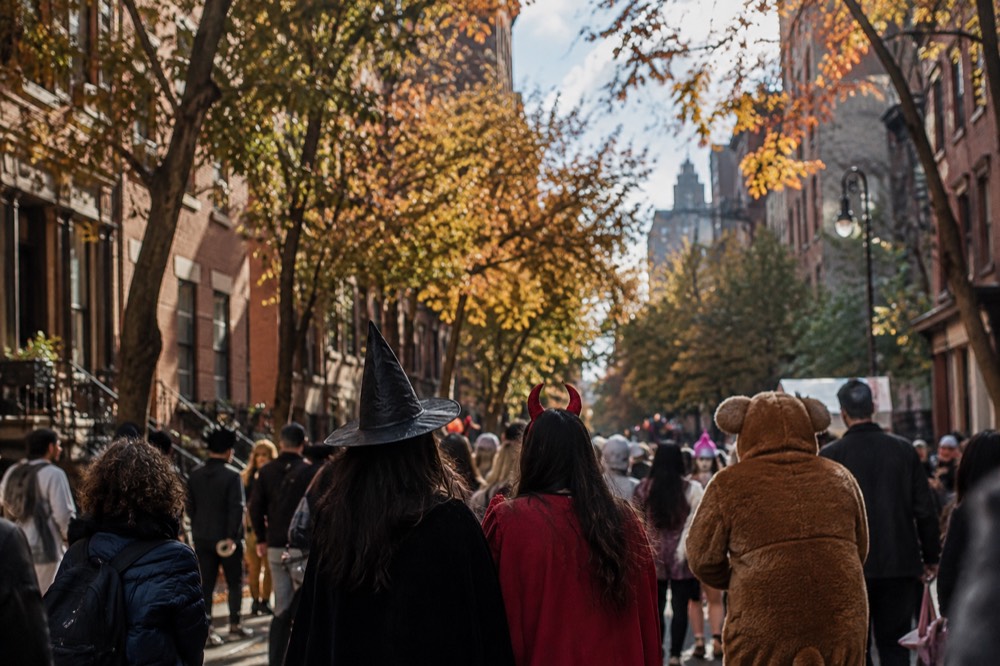
New York City takes Halloween more seriously than almost any city in America, and it does so in public. The center of gravity is the Village Halloween Parade, the annual costumed march up Sixth Avenue, which is also Avenue of the Americas, through Greenwich Village on the night of October 31. Around it, the whole city leans spooky: Broadway houses run at full tilt, bars and rooftops throw costume nights, museums schedule evening hours, and the neighborhoods that do street life best, from the East Village to the Upper West Side, fill with people who spent weeks on their outfits.
This guide covers the practical side. Where the parade runs and how to watch it well, what Broadway and observation decks cost around the holiday, what October weather actually does (the official numbers are less obvious than you would expect), how to get around on what is one of the busiest subway nights of the autumn, and which free and cheap options fall on or near the date. Every price and figure here is sourced, and where a number is dynamic, it says so.
What Is Halloween in NYC Actually Like?
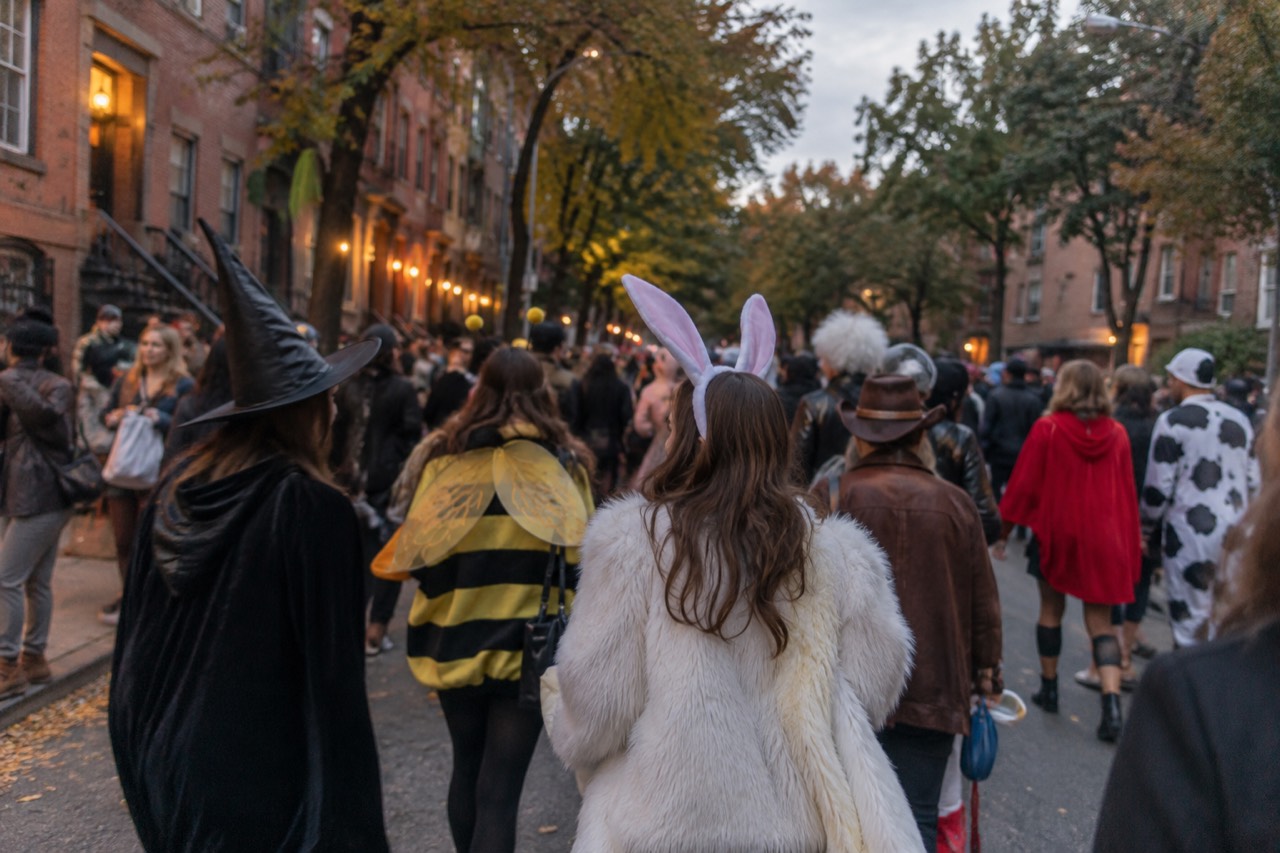
Halloween in NYC is a large, free, public street event anchored by one famous parade in Greenwich Village, with the rest of the city layered around it. The Village Halloween Parade marches up Sixth Avenue on the evening of October 31, and spectators line the route for free. No attraction closes for the holiday; museums, decks and Broadway all run, several with themed programming.
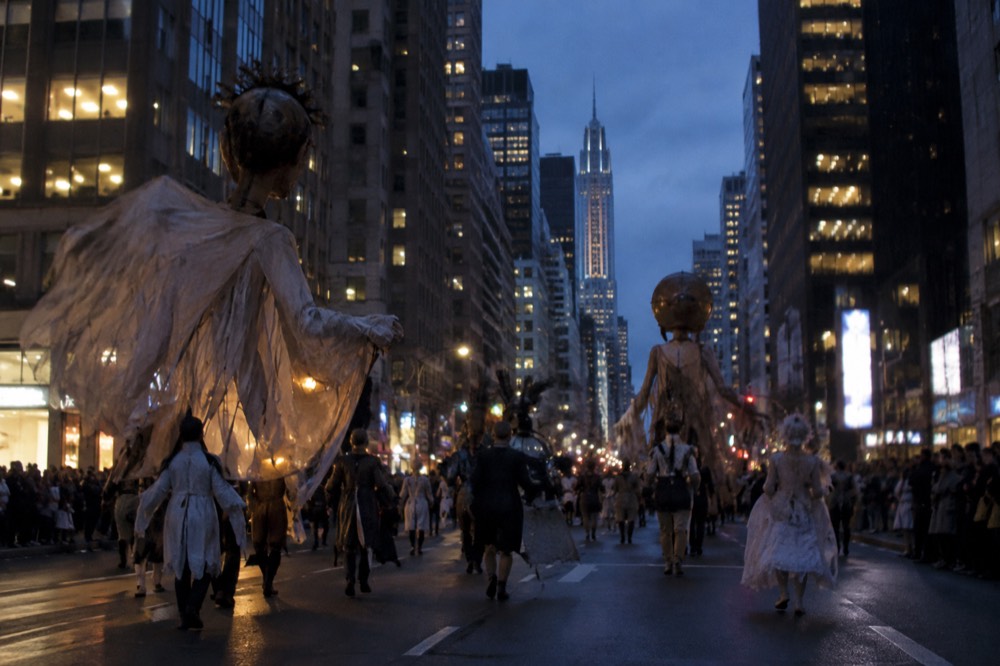
The parade is the reason the date has a center. Costumed marchers, giant puppets and bands move up the avenue through the Village, and the sidewalks on both sides fill hours before the first group passes. Watching costs nothing. Marching in it is also open to the public, though the parade's own organizers handle registration, so check the official parade channels for the current year's rules before you assume anything.
What surprises first-time visitors is how distributed the rest of the evening is. There is no single official festival site beyond the parade. Instead, the East Village and Lower East Side fill with bar crawls and costume crowds, SoHo and NoHo storefronts dress their windows, and residential blocks in Brooklyn and Queens do the trick-or-treating. If your plan is "go where the people in costume are going," you will have a fine night. If your plan is to see a show first and join the street afterward, you need to think about timing, because the parade and an 8pm curtain are in direct competition.
One planning note worth making early: Halloween falls on a weekday roughly three years out of four, and New Yorkers do not move the party to the nearest Saturday. The parade happens on the 31st whenever it falls. The weekend before is when most bars and venues schedule their own events, so a well-built trip often covers both.
Where Should You Watch the Village Halloween Parade?
The best viewing strategy is to arrive early, pick a spot on the eastern side of Sixth Avenue north of the densest Village blocks, and commit to it, because moving along the route once the march starts is nearly impossible. The parade runs uptown through Greenwich Village, and the crowds are thickest near the Houston Street end. Spectating is free.
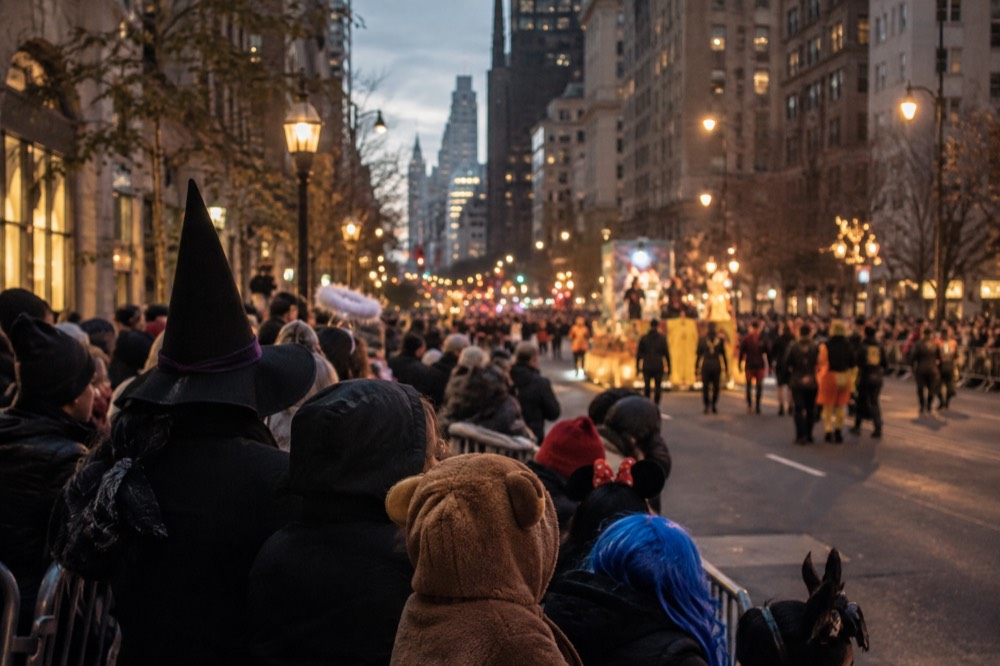
The parade's route and start time are set each year by its organizers, so confirm both on the official parade site before you plan a night around them. What does not change is the geometry: the route follows Sixth Avenue, which runs downtown in one direction, and the sidewalks fill from the south end upward. Arriving an hour or more before the step-off is the difference between a front-row curb spot and watching over shoulders three rows back.
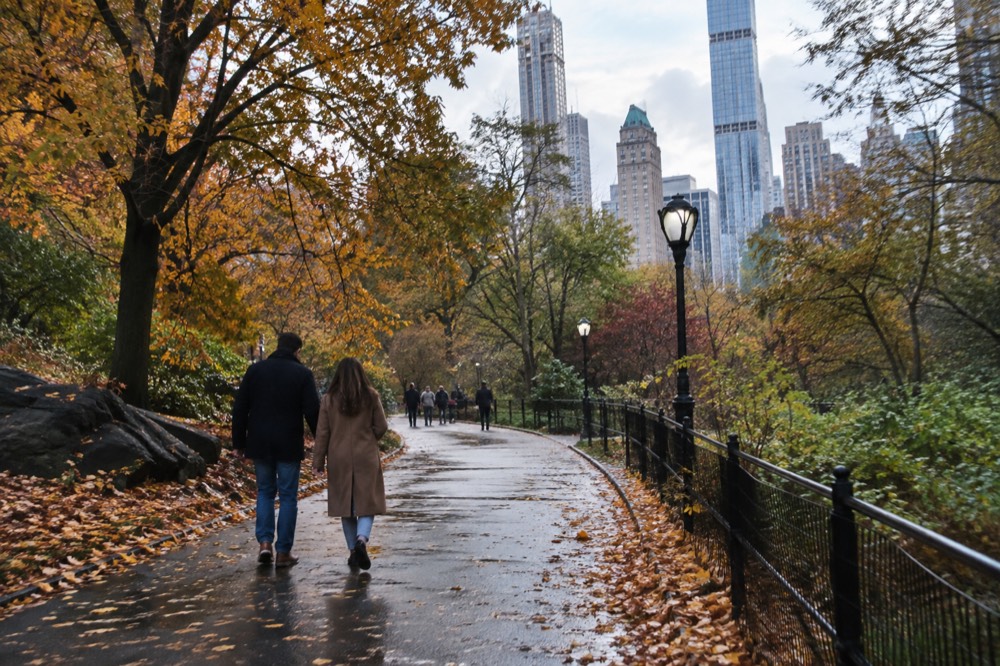
Wear your costume or do not, nobody at the parade will judge either choice, but dress for standing outside in late-October evening temperatures. The average October low in Central Park is 51.4°F, and after dark it will feel like that number or lower. Layers under a costume beat a costume that cannot take a coat underneath.
For eating before or after, the neighborhoods on either side of the route, Greenwich Village and the East Village, are two of the best cheap-eating districts in the city, and our Greenwich Village neighborhood guide covers the blocks worth wandering once the parade thins out. If you would rather eat your way through the Village with a local steering the route, a guided food tour is a reliable way to spend the afternoon before the evening crowds build, and the Chinatown and Little Italy food walks sit a short ride east of the parade route.
What Are the Best Halloween Events in NYC Beyond the Parade?
Beyond the parade, the strongest Halloween events are Broadway shows running on and around October 31, the observation decks open late with the city lit below, and the free and low-cost museum evenings that cluster around the holiday. TKTS sells same-day Broadway tickets at up to 50% off face value with an $8 per-ticket service fee, and the decks all use timed entry.
The honest framing is that New York does not need Halloween to make its marquee attractions special, but the holiday gives them a backdrop. A Broadway musical on Halloween weekend is the same production as any other night, only with more of the audience in costume at the evening shows, which is its own kind of fun. The observation decks are the sharper Halloween-specific play: the city looks its spookiest from above after dark, and several decks run until late, with Top of the Rock open daily until midnight and last entry at 23:10, and SUMMIT One Vanderbilt running daily until midnight with last entry at 22:30.
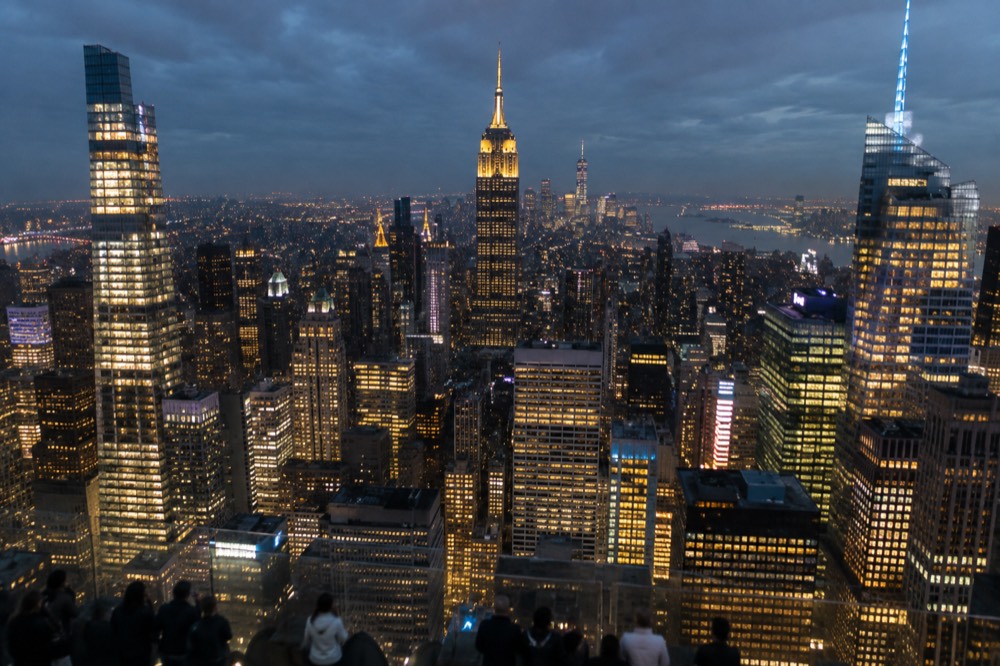
Here is what the five Manhattan decks cost from, using the lowest published adult starting prices. All five use dynamic timed pricing, so the number you actually pay depends on the date and slot:
| Deck | Adult price from | Notes |
|---|---|---|
| Empire State Building (86th floor) | $44 plus a $5 booking charge per transaction | Open until 23:00 in the autumn window, entry door closes 22:00 |
| Top of the Rock | $42 | Daily 08:00-24:00, last entry 23:10 |
| SUMMIT One Vanderbilt | $44 (ages 13+), plus $3 processing per order | Daily 08:00-24:00, last entry 22:30 |
| Edge at Hudson Yards | $34-$45 plus $2 per ticket | Hours vary, check edgenyc.com for the day |
| One World Observatory | $39-$44 plus $3.50 processing and tax | Daily 09:00-21:00; opens at 12:00 on September 11 |
For a fuller comparison of the decks, including which one frames Central Park and which frames the harbor, see our NYC observation decks guide. If you want the playful, mirror-room deck experience on Halloween night, SUMMIT One Vanderbilt can be booked for a timed slot, and the reflective rooms in costume are a genuinely memorable photo setup.
Is Halloween a Good Night to See a Broadway Show?
Yes, Halloween is a strong Broadway night, especially the evening performances, where costumes in the audience are common and the walk to and from the Theater District passes through some of the most decorated blocks in the city. Seats are not discounted for the holiday, so the usual tools apply: TKTS offers same-day tickets at up to 50% off with an $8 per-ticket fee.
Digital lotteries typically award seats at roughly $30-$50, and weekend performances around Halloween sell early.
The Theater District sits a few blocks north of the parade route's energy, so the two are compatible in one night only if you choose carefully. An evening curtain around 8pm overlaps the parade's running time almost exactly. A matinee, or an evening show on the 30th or the weekend before, leaves your Halloween night free for the streets.
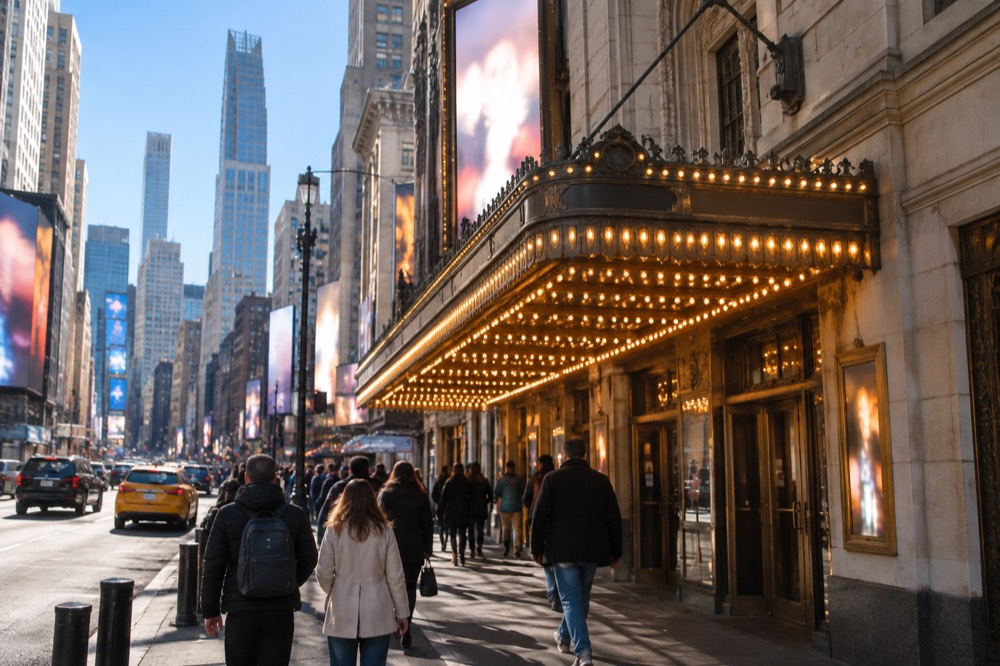
The ticket options, honestly summarized:
| Method | Typical price | How it works |
|---|---|---|
| TKTS booth | 20-50% off face value, plus $8 per ticket | Same-day performances plus next-day matinees; booths at Times Square/Duffy Square and Lincoln Center only |
| Digital lotteries | Roughly $30-$50 | Enter online via Broadway Direct or Lucky Seat; winners notified shortly before the show |
| Rush and standing room | Commonly $30-$50, set per show | Check the individual show's policy; standing room appears mainly at sold-out hits |
| Full-price advance booking | Face value | Best seat choice for weekend performances around the holiday |
One detail that matters: older guides still send people to a TKTS booth at South Street Seaport. There is no such booth currently listed. The operating booths are Times Square/Duffy Square and Lincoln Center, and hours vary by day, so check tdf.org rather than trusting a printed timetable. Our TKTS booth guide covers the mechanics in full.
For a big, polished musical night that lands with almost every audience, MJ the Musical is a strong Halloween-weekend pick: a jukebox book, serious choreography, and a Theater District location that keeps you close to the action.
If your Halloween plans stretch across the whole weekend, it is worth pairing the show with a deck visit on the other night, since both use timed entry and both are at their best after dark.
What Is the Weather Like in NYC at Halloween?
Late October in New York averages a daytime high around 64.5°F falling to an overnight low of 51.4°F, with October averaging 4.38 inches of precipitation, so Halloween night typically calls for a warm layer under or over any costume. October is not the city's wettest month, that is July at 4.60 inches, but rain is a real possibility on any given evening.
The official Central Park normals show the monthly picture:
| Month | Avg high | Avg low | Precipitation |
|---|---|---|---|
| September | 76.2°F | 62.3°F | 4.31 in |
| October | 64.5°F | 51.4°F | 4.38 in |
| November | 54.0°F | 42.0°F | 3.58 in |
| December | 44.3°F | 33.8°F | 4.38 in |
Two facts in that table run against expectation. July, the month people book to dodge rain, is actually New York's wettest at 4.60 inches. And February, not January, is the snowiest month. For Halloween specifically the takeaway is simpler: plan for a dry, crisp evening, pack for a damp one, and check the forecast two days out rather than trusting the averages.
Practical costume advice follows from the numbers. Anything with heavy face makeup and a short walk between venues works fine at 50-something degrees. Anything that traps heat, a full foam suit, a thick mascot head, means you will spend the night stepping out of it, and coat check lines at venues are long on Halloween. Layers you can shed beat one committed piece every time.
How Do You Get Around NYC on Halloween Night?
A single subway or local bus ride costs $3.00, and the automatic OMNY weekly cap at $35 replaces the old 7-day unlimited pass, which no longer exists: as of 1 January 2026 the MTA no longer sells or refills MetroCards at all. Tap the same card or device every time, and after twelve paid rides inside seven days the rest of the period is free.
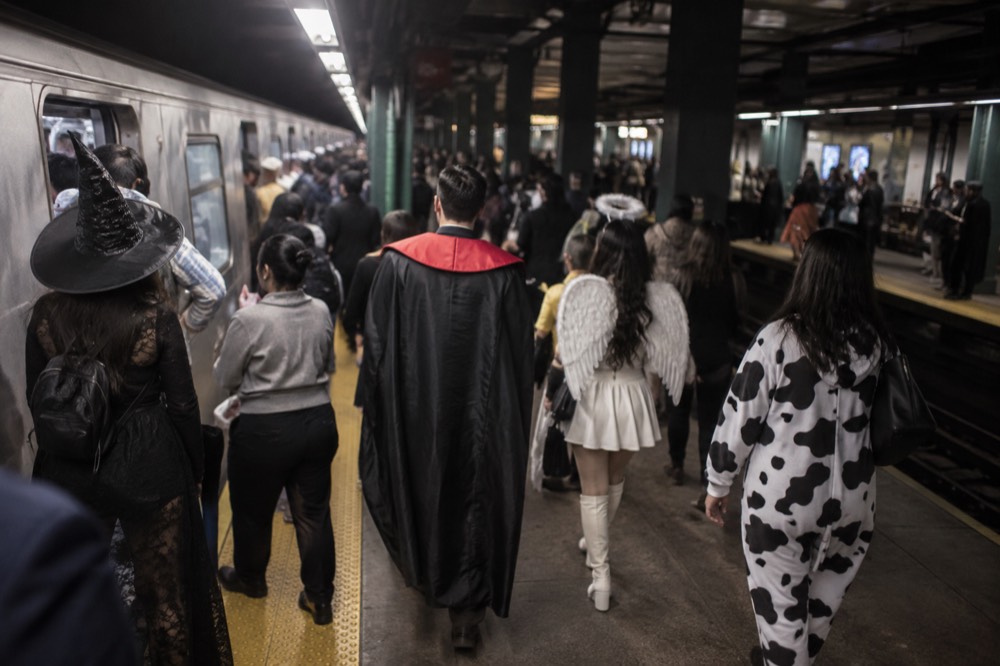
Halloween night is one of the busiest subway evenings of the autumn, so expect crowds at the stations nearest the parade route.
The MetroCard retirement is the single most useful piece of transit information on this site, and most competing guides still get it wrong. There is no 7-day unlimited to buy at a machine when you land. The value comes automatically: tap a contactless card, phone or OMNY card at every ride, and the system caps your charges at $35 across subway and local bus within a rolling seven-day window that starts with your first tap. The cap only works if you tap the same physical card or the same device every single time, and each person in a group needs their own card to earn their own cap.
On the night itself, the stations closest to the parade route are the ones to board away from. Walking ten minutes east or west to a different line beats queuing at a packed downtown platform with a crowd in costume. Our NYC subway guide covers the details, including the free transfer rules and the reduced-fare caps.
What Can You Do in NYC on Halloween for Free?
Plenty of Halloween in NYC is free: watching the parade costs nothing, the 9/11 Memorial plaza is always free and open daily 08:00-20:00, and several major museums run free or pay-what-you-wish windows that can land near the holiday, including free Friday nights at the Whitney from 17:00-22:00 and free Monday admission at the 9/11 Memorial & Museum.
The Staten Island Ferry is also free and gives a harbor view after dark. The free windows worth knowing, with their conditions:
| What | When it is free | Conditions |
|---|---|---|
| 9/11 Memorial plaza | Daily 08:00-20:00 | No ticket, always free |
| 9/11 Memorial & Museum | Free Mondays, tickets released 07:00 ET | First come first served, released on the website each Monday |
| Whitney Museum | Free Friday nights 17:00-22:00, open to everyone | Advance tickets recommended, capacity limited |
| MoMA | Friday nights 17:30-20:30 | New York State residents only, proof required, reserve ahead |
| Guggenheim | Pay-what-you-wish Tuesdays and Sundays 16:00-17:30 | Minimum $1, sells out, book ahead |
| Staten Island Ferry | Always | Free crossing with harbor and skyline views |
Note the MoMA line carefully, because guides get it wrong constantly: the free Friday nights at MoMA are for New York State residents only, with proof of residency required. Visitors from out of state pay the standard $30 adult admission. The Whitney's Friday window, by contrast, is open to everyone, which makes it the better free-museum play for a visitor, and its Meatpacking District location sits right at the southern end of the High Line, a strong pairing for the afternoon before a Halloween evening.
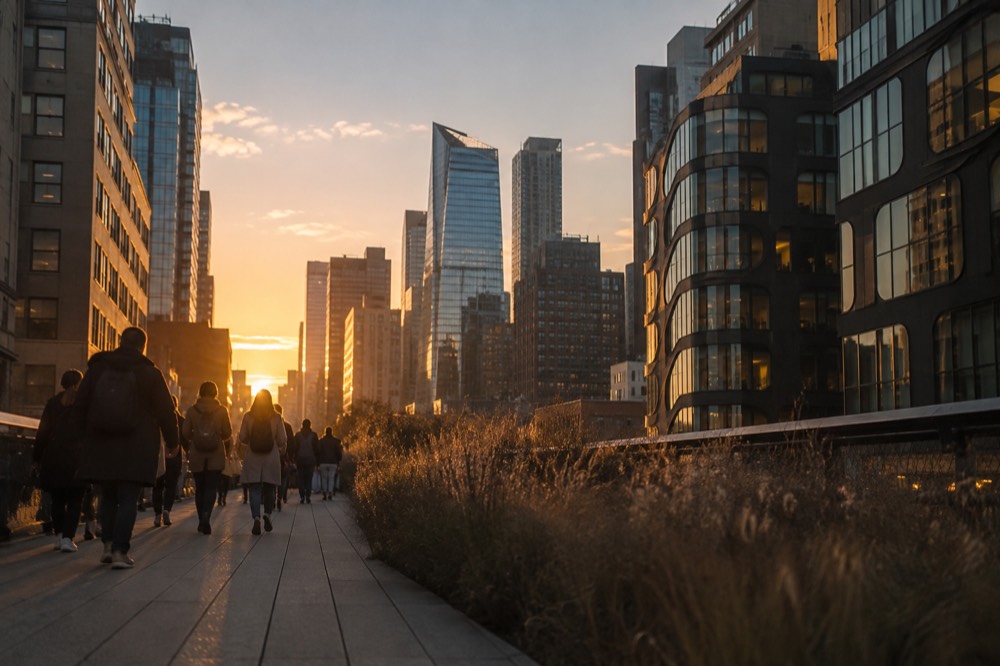
For a broader list that runs all year, see free things to do in NYC, and for the full range of things to do in NYC, organized by cost, borough and type, start with the money page on New York City Travel Guide.
Should You Book Anything in Advance for a Halloween Trip?
Yes, book the timed and dated things in advance: Broadway seats for the weekend around October 31, observation deck slots for Halloween night itself, and any guided tour with limited spots. The parade and street events need no booking, and museum free windows need a same-week reservation rather than a month-out one.
The one seasonal product worth booking absurdly early is not a Halloween one at all: December's Dyker Heights Christmas lights tours, which sell on dates, and the same early-booking logic applies to any seasonal New York tour.
The pattern across everything in this guide is that New York's Halloween is free to watch and cheap to reach, but the paid layer around it is timed, dated and finite. Deck slots on the night itself go first. Broadway weekend seats go second. Guided tours with small groups go third. If you are the kind of traveler who decides on the day, the free layer, the parade, the streets, the free museum windows, will still deliver a full Halloween without a single advance purchase.
And if your trip stretches from Halloween toward the holidays, the seasonal torch passes directly from the Village parade to Brooklyn's Dyker Heights, where the Christmas lights season draws the same kind of crowds in December. The guided tour handles the subway ride and the route through a residential corner most visitors never reach, and its dates are exactly the kind that sell out first.
Common Questions About Halloween in NYC
The most common Halloween questions about New York are about the parade's route and cost, what to wear given late-October temperatures, whether Broadway and attractions run on the night, and how transit works when the crowds peak. The short answers: the parade is free and runs up Sixth Avenue through Greenwich Village on October 31, the average evening low is 51.4°F so layer your costume, everything commercial stays open, and a $3.00 subway fare with an automatic $35 weekly OMNY cap covers getting around.
Is the Village Halloween Parade free to watch?
Yes. Spectating along the Sixth Avenue route in Greenwich Village costs nothing, and no ticket exists for the sidewalks. The parade runs on the evening of October 31 each year, and the route and timing are published by the parade's own organizers, so confirm the current year's details on their official channels before you go.
What should I wear for Halloween in NYC?
Plan for an evening low around 51.4°F, which is the October average in Central Park. Layers under or over a costume beat a single committed piece, especially anything that traps heat like a foam suit or mascot head. Check the forecast two days out, because October averages 4.38 inches of precipitation across the month and a damp evening is a real possibility.
Is Halloween a good night to see a Broadway show?
It can be, but an 8pm curtain overlaps the parade almost exactly. A matinee, or an evening show on October 30 or the weekend before, leaves your Halloween night free for the streets. TKTS sells same-day seats at up to 50% off with an $8 per-ticket fee, and digital lotteries typically award seats at roughly $30-$50.
Are New York attractions open on Halloween?
Yes. Museums, observation decks and Broadway all run on October 31, several with late hours. Top of the Rock is open daily until midnight with last entry at 23:10, and SUMMIT One Vanderbilt runs until midnight with last entry at 22:30. All the decks use timed entry, so a Halloween-night slot can and should be booked in advance.
How do I get around on Halloween night?
The subway is the answer. A single ride is $3.00, and the automatic OMNY weekly cap at $35 applies with no pass to buy, since MetroCard sales ended on 1 January 2026. Tap the same card or device every time or the cap breaks silently. The stations nearest the parade route are the most crowded, so walking a few blocks to a different line is often faster.
What is free to do in NYC around Halloween?
Watching the parade, the 9/11 Memorial plaza, and the Staten Island Ferry all cost nothing. Among museums, the Whitney's free Friday nights from 17:00-22:00 are open to everyone, and the 9/11 Memorial & Museum releases free Monday tickets online each Monday at 07:00 ET. MoMA's free Friday nights are for New York State residents only, so visitors should not plan around them.
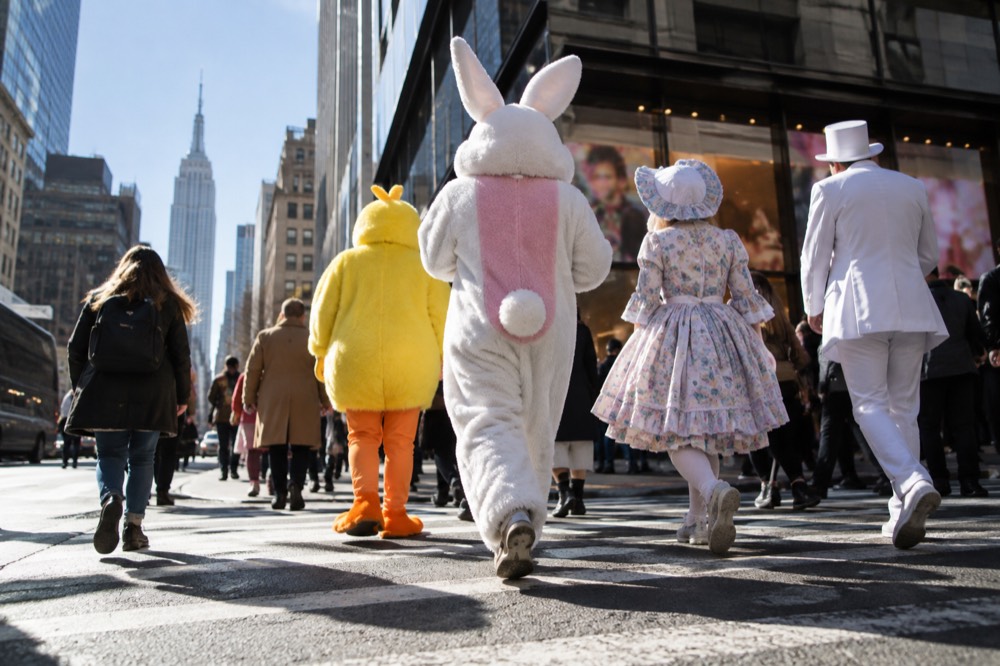
The last useful thing to know is about the day after. November 1 in New York is one of the city's quietest mornings, the costumes go back in the closet, and the parks hit peak fall color a few weeks later. If your dates flex, the stretch from Halloween through mid-November gives you the parade, the foliage and thinner crowds at the decks in one trip, which is about the best trade a fall visit to this city can offer.