NYC Marathon: A Runner and Spectator Guide to Race Day in New York
The NYC Marathon shuts down whole stretches of all five boroughs for a single morning, which makes it one of the best free spectacles in New York and one of the hardest days to plan around. This guide covers the route, the viewing spots that actually work, and how to move around the city while it happens.
Short answer
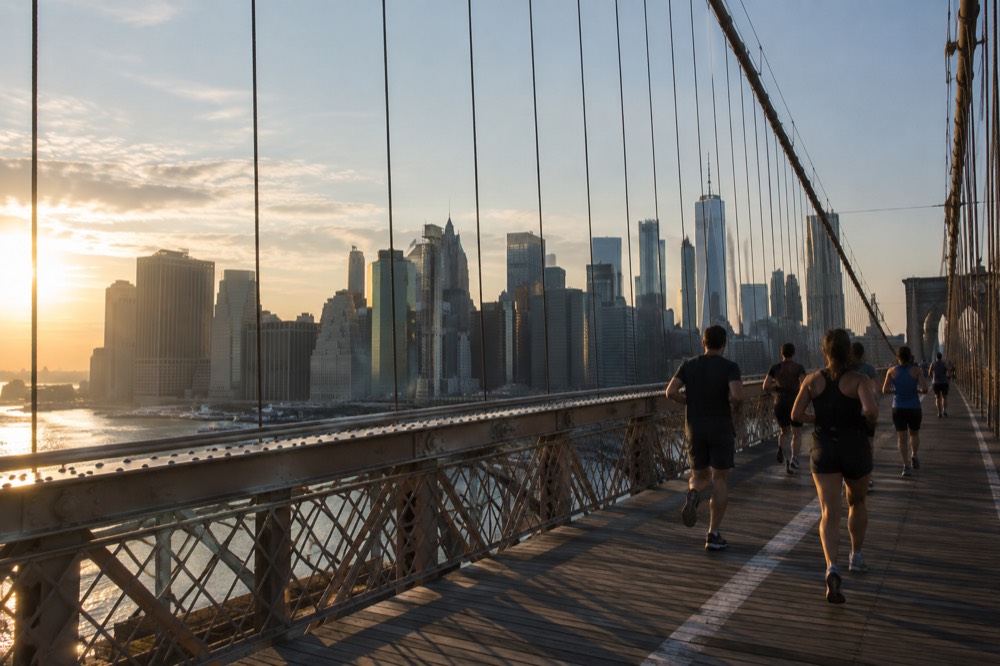
The NYC Marathon runs in early November and crosses all five boroughs, starting on Staten Island and finishing in Central Park. Spectators watch for free from the streets and bridges along the route, but subway service is the only realistic way to follow a runner, and the $35 weekly OMNY fare cap makes a full day of chasing the race cheap. Runners generally need to enter a lottery, qualify by time, or run for a charity to get a bib.
The NYC Marathon is the one morning a year when New York hands its streets, and several of its bridges, entirely to runners. The race starts on Staten Island, crosses through Brooklyn, Queens, the Bronx and Manhattan, and finishes inside Central Park, which means tens of thousands of people moving through all five boroughs while the rest of the city tries to carry on around them. For a visitor, race day is either the reason you came or a very large complication, and this guide treats it as both.
The planning problems are specific. Streets close, subway stations near the route get crowded in waves, and the weather in early November sits in that awkward band where a light jacket is wrong by noon. The good news is that watching the race is free, the subway is genuinely the best tool for following it, and the fare system now caps itself automatically. This page walks through the route borough by borough, the viewing spots worth committing to, how runners get in, and what to do with the rest of a race-weekend trip. For the wider sightseeing picture, start with the full things to do in NYC page.
What Is the NYC Marathon?
The NYC Marathon is a full-distance road race through all five boroughs of New York City, held in early November and finishing in Central Park. It is one of the largest marathons in the world and part of the Abbott World Marathon Majors series. For spectators it is a free, citywide event that closes bridges and avenues for a morning; for runners it is one of the hardest bibs in distance running to secure.
The scale is the thing that separates it from other city marathons. The field is enormous, the course crosses an entire city rather than a loop of it, and the logistics involve ferrying runners to a start line on an island most tourists never set foot on. The race is a New York institution in the same register as the Macy's parade or the Times Square ball drop, except this one spreads its spectacle across miles of public street instead of one intersection.
What that means practically is that race day belongs to everyone, not just the runners. You do not need a ticket to watch. You need a plan for where to stand, an idea of when your runner will reach that point, and a way to move between spots, which is where the subway and the OMNY fare cap come in later in this guide.
Where Does the NYC Marathon Route Go Through the Five Boroughs?
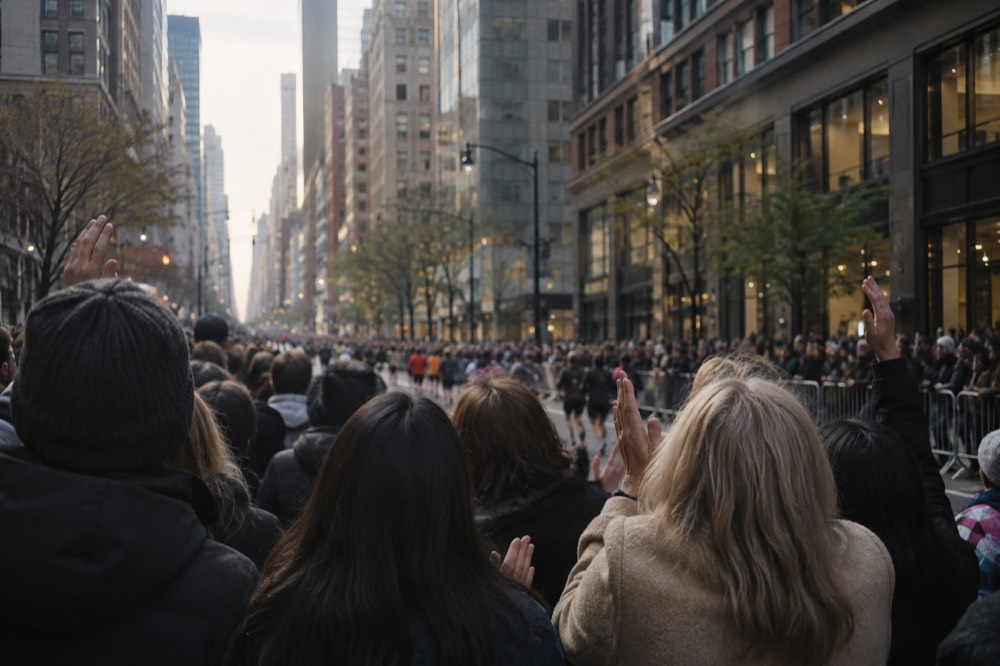
The route starts on Staten Island, crosses the Verrazzano-Narrows Bridge into Brooklyn, works north through Brooklyn and briefly into Queens, crosses into Manhattan over the Queensboro Bridge, loops up into the Bronx, returns to Manhattan up Fifth Avenue, and finishes inside Central Park. Runners pass through neighborhoods as different as Bay Ridge and the Upper East Side, and the character of the crowds changes with each borough.
The five-borough structure is not decoration. It is the whole design of the race, and it shapes everything about spectating, because the course does not double back. A runner you are following moves steadily north and then west, and you cannot simply stand in one place and see them twice unless you commit to the finish area.
| Segment | Borough | What it feels like for spectators |
|---|---|---|
| Start, Verrazzano-Narrows Bridge | Staten Island | Closed to spectators; the bridge is runner-only |
| Bay Ridge, Sunset Park, Park Slope, Williamsburg | Brooklyn | The loudest, deepest crowds of the day |
| Pulaski Bridge, Long Island City | Queens | Quieter, easier to get a front-row spot |
| Queensboro Bridge, First Avenue | Manhattan | The bridge is closed to spectators; First Avenue is a wall of noise |
| The Bronx, Fifth Avenue | Bronx, then Manhattan | Thinning crowds, runners digging deep |
| Central Park finish | Manhattan | Packed near the finish; the park fills from mid-morning |
Brooklyn is where the party is. The course spends more miles in Brooklyn than anywhere else, and the neighborhoods it passes through, from Bay Ridge in the south up through Park Slope and Williamsburg, treat the race as a street festival. If you want atmosphere and do not care about seeing a specific runner at a precise moment, pick a Brooklyn avenue and stay put.
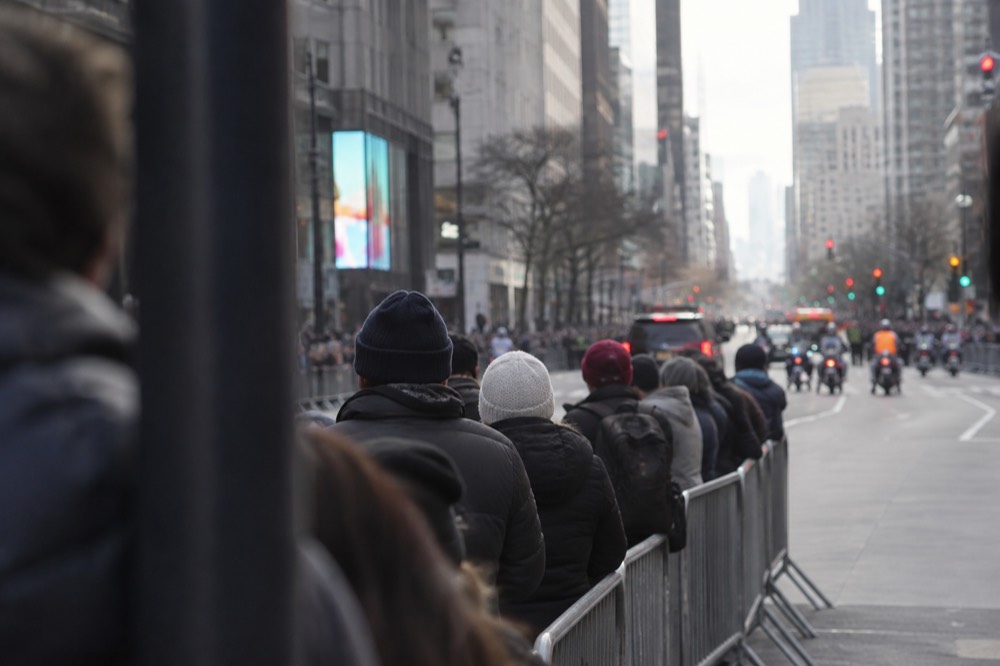
First Avenue in Manhattan is the other legendary stretch. The avenue is wide, the crowd is several rows deep, and the sound rolls up the street. The trade-off is density: this is where watching is most crowded, and the subway stations feeding it, on the Lexington Avenue lines, are the busiest of the day.
How Do You Watch the NYC Marathon Without Getting Stuck?
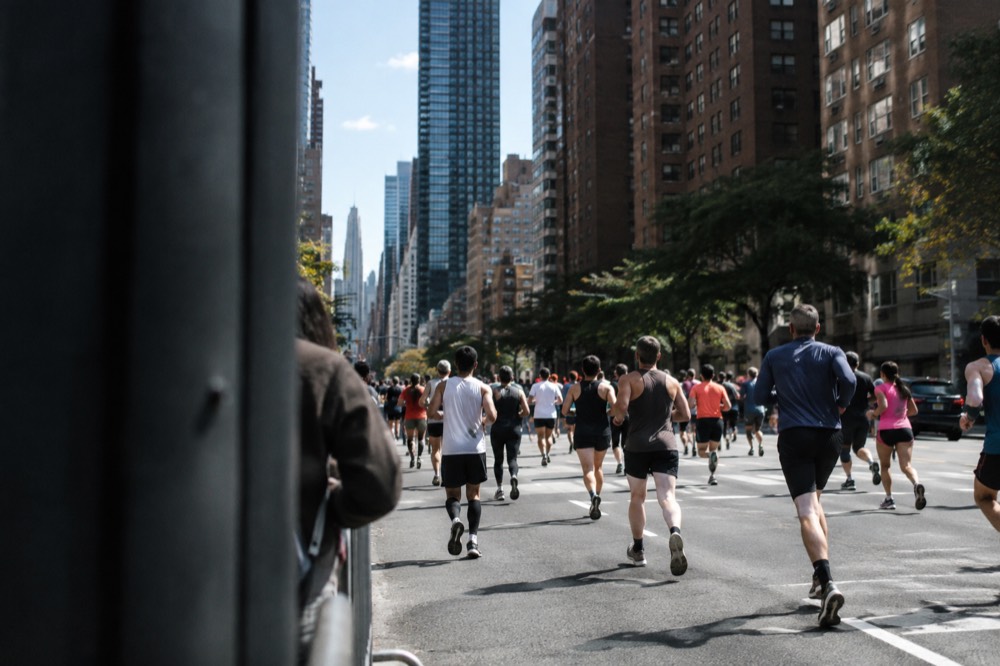
Pick one or two viewing spots, not five, and plan them around subway lines rather than around the course map, because the route closes streets faster than you can walk alongside it. Brooklyn offers the best atmosphere, the Queensboro Bridge into Manhattan is closed to spectators entirely, and the Central Park finish is the most crowded place on the course. Free transfers and the automatic $35 weekly OMNY cap make multiple subway hops on race day cheap and simple.
The single biggest mistake spectators make is over-ambition. The race lasts hours, the field is spread across those hours, and a runner you care about passes any given point exactly once. Trying to see them in Brooklyn, then Manhattan, then the Bronx, then the finish usually ends with you seeing them zero times, stuck on a platform.
A better plan is two stops. Watch early in Brooklyn, where the crowds are festive and the runners still look fresh, then jump on the subway to Manhattan for the late race or the finish. The subway is the only realistic way to leapfrog the course, and it is worth understanding the fare mechanics before race morning, which the next section covers in full.
One warning worth stating plainly: the bridges are not viewing platforms. The Verrazzano-Narrows and Queensboro crossings are runner-only, and no spectator access exists on them. If your plan involves seeing someone mid-bridge, that plan is wrong.
If you are in the city for the whole weekend rather than just race morning, the marathon is only one item on the list. The race lands in early November, a shoulder season when the big attractions are busy but not at summer peak, and a sightseeing pass can make sense if your itinerary is stacked. The New York CityPASS guide breaks down what the five-attraction bundle covers and who it suits.
How Do Runners Get Into the NYC Marathon?
Entry comes through three main doors: a lottery that draws a small share of applicants, time qualification at other certified marathons, and guaranteed charity or running-club entries that require fundraising commitments. There is no general first-come signup. Most runners who reach the start line got there through a charity team or by qualifying, and many plan their attempt a year or more ahead.
The lottery is the door most people try and most people miss. The application window typically opens months before the race, well before summer, and the odds are long simply because the field is capped by the start area and the course itself. If you are set on running, applying the moment the window opens is the only lever you control.
Charity entries are the most reliable route for a non-elite runner, and they come with a fundraising commitment that varies by team. Runners who already have a fast marathon time can qualify outright, and the qualifying standards are published by the race organizer, but they tighten as demand grows. The honest summary: this is a race you plan for, not one you decide to do in October.
For everyone who does not get a bib, the city itself is the consolation. Race weekend is one of the most energetic weekends of the New York calendar, and watching from the barricades in Brooklyn costs nothing.
How Do You Get Around New York on Marathon Day?
The subway is the only sensible way to move on race day, and the fare system now works in your favor automatically: a single tap costs $3.00, and once you rack up $35 in subway and local bus rides within a rolling seven-day window, every further ride is free. There is no pass to buy and no math to do at a machine. The MetroCard, including the old 7-day unlimited, no longer exists as a purchasable product.
This is the part of the guide where most older sources will steer you wrong, so it is worth being exact. As of 1 January 2026 the MTA no longer sells or refills MetroCards at all. The 7-day unlimited pass that every legacy NYC guide still quotes is gone, and the correct answer to "what does a week of subway riding cost?" is: $35 maximum, applied automatically through OMNY, the tap-to-pay system that takes any contactless credit card, debit card or phone. Everything else covered here is indexed on New York City Travel Guide.
The mechanics matter on race day because you will tap often. The seven-day cap starts with your first tap, not with a calendar week, and it only works if you tap the same card or the same device every single time. Mixing your phone on one ride and the plastic card in your pocket on the next silently breaks the cap. Pick one payment method in the morning and leave it alone.
| Fare item | Cost | Notes for race day |
|---|---|---|
| Single subway or local bus ride | $3.00 | Tap any contactless card or phone with OMNY |
| 7-day OMNY cap | $35 | Automatic, rolling window, same card or device required |
| Express bus | $7.25 | Not useful for the marathon course |
| Children under 44 inches | Free | Up to three with a fare-paying adult |
| Free transfer | Within 2 hours | Subway to bus, bus to subway, bus to bus |
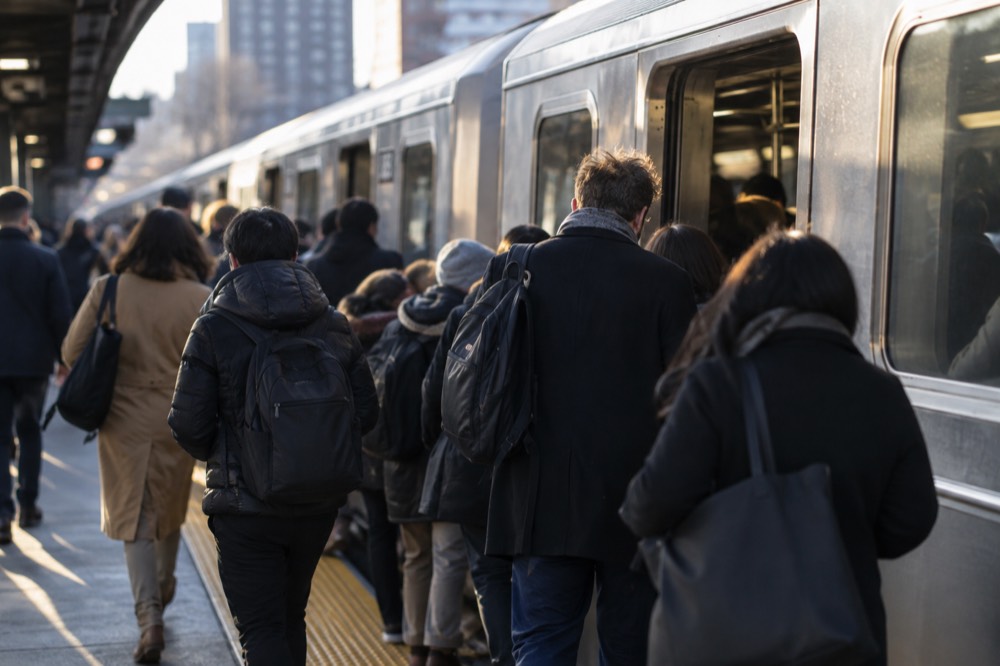
On the day itself, expect stations near the course to run hot in waves rather than all morning. Platforms in Brooklyn fill in the hour before the lead runners pass their neighborhood and empty again after the bulk of the field is through. The Lexington Avenue line stations feeding First Avenue are the exception: they stay busy for hours because the Manhattan stretch of the course is where spectators converge.
The weekend recovery point is genuinely useful for race planning. The marathon falls on a Sunday, and Sunday trains are running nearer to their pre-2020 crowd levels than weekday trains are. Build in a little platform patience accordingly.
What Is the Weather Like for the NYC Marathon?
Early November in New York averages a high of 54°F and a low of 42°F, with about 3.58 inches of precipitation across the month, so race day usually lands somewhere between crisp and raw rather than genuinely cold. Snow is rare but not impossible, with the month averaging half an inch. Spectators should plan to stand outside for hours in the low 50s, which feels colder than it sounds on a windy avenue.
Those figures come from the official NOAA 1991-2020 climate normals for Central Park, which is the dataset every New York weather claim on this site is checked against. The averages are only averages: race mornings have historically ranged from near-freezing wind to mild sunshine, and the only honest advice is to check the forecast a few days out and dress in layers you can tie around your waist.
For runners this is close to ideal marathon weather, which is part of why the race sits in November. For spectators it is a standing-around-in-the-cold problem. A coffee, a hat and something windproof matter more than a heavy coat, because the wind funnels down the wide avenues the course uses.
| November in Central Park (1991-2020 normals) | Value |
|---|---|
| Average daily high | 54.0°F |
| Average daily low | 42.0°F |
| Average precipitation | 3.58 in |
| Average snowfall | 0.5 in |
| Wettest month of the year, for comparison | July, at 4.60 in |
One counterintuitive note from the same dataset: February, not January, is New York's snowiest month, at 10.1 inches against January's 8.8. That has nothing to do with the marathon, but it tells you how far off the folk wisdom about New York weather can run, and why this guide quotes the normals rather than repeating what people assume. If you are weighing a return trip in winter, the NYC in winter guide works through the whole season.
Where Should You Eat Before and After Watching the Race?
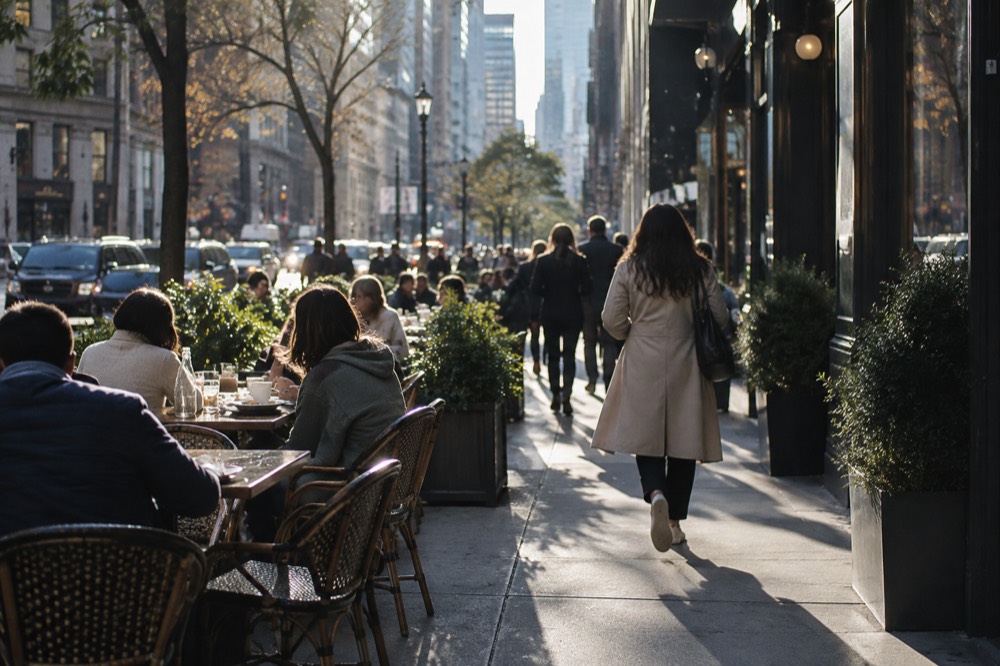
Eat before you go to the course, not after, because the neighborhoods around the finish fill up fast and the restaurants nearest Central Park carry the longest waits of the day. A breakfast in Brooklyn before the runners come through sets you up better than a late brunch scramble in Midtown, and the neighborhoods the course passes through, from Chinatown-adjacent blocks to the Upper East Side, all have better options a few blocks off the barricades.
The geography works in your favor if you let it. A morning in Brooklyn doubles as breakfast and a viewing spot: pick a cafe near the course in Park Slope or Williamsburg, walk to the barricades when the crowd noise builds, and you have eaten before the Manhattan crush begins. The course's Brooklyn miles pass through some of the best eating streets in the city, and on race morning they are all open early.
Afterward, walk away from the park before you sit down. The blocks around the Central Park finish are choked with finishers, families and spectators for hours, and every restaurant within sight of an exit is queueing. Ten minutes of walking in almost any direction changes the picture completely.
If you want the eating to be the event rather than the fuel, a guided food walk turns the same neighborhoods into the main course. The Chinatown and Little Italy food tour below is the natural fit for a post-race afternoon, and the NYC food tours guide covers the full menu of options across the city.
For sightseeing the next day, when the barricades are gone and the streets belong to traffic again, the observation decks are the classic New York payoff. SUMMIT One Vanderbilt sits next to Grand Central, close to several race-weekend hotels, and its mirrored rooms make it the most theatrical of the decks. The NYC observation decks guide compares all five.
What Should Visitors Know About Race Weekend Beyond the Race?
The marathon turns the whole first weekend of November into one of the city's biggest visitor events, with hotel demand peaking around the race, attractions running near fall-weekend levels, and the Christmas season not yet begun. Treating the race as the anchor of a three or four day trip, rather than a single morning, is the move that makes the travel costs pay off. Stack museums, a deck, a food walk and a show around it.
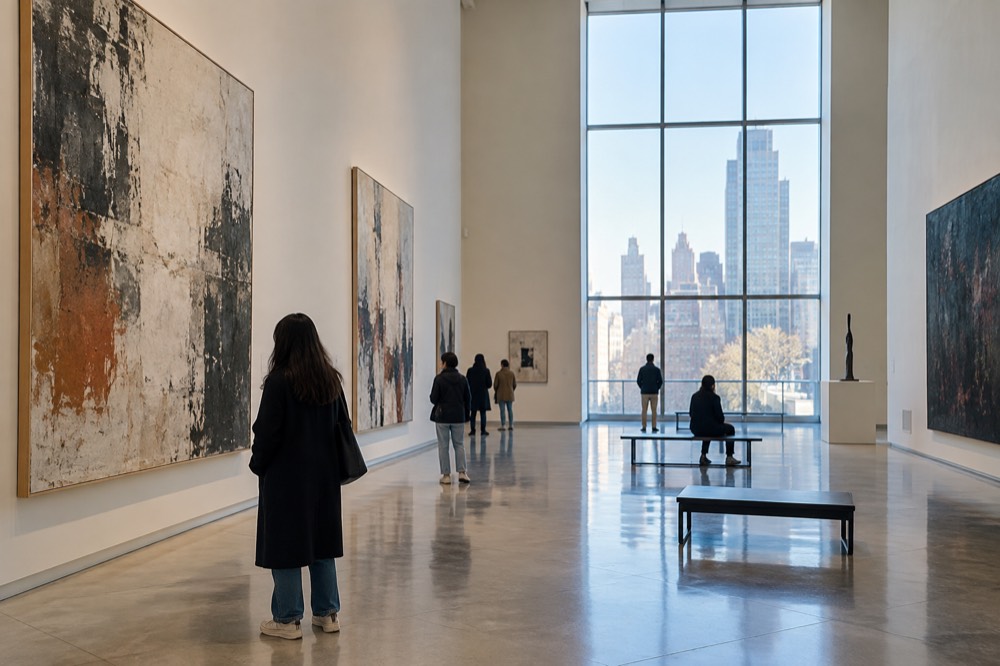
The practical framing is simple. You have flown in for one morning of running. The city around that morning holds the Metropolitan Museum of Art, which sits at the top of Fifth Avenue, the same avenue the runners climb late in the race, the observation decks, the harbor, and a theater district running at full November schedule. A weekend built around the marathon can absorb all of it.
If you are stacking several paid attractions, do the arithmetic on a pass before buying individual tickets. CityPASS bundles five choices from a list that includes the Empire State Building, Top of the Rock, the official Statue of Liberty ferry and several museums, valid across nine consecutive days, which spans a race weekend comfortably. The New York CityPASS guide shows the full list and the math.
What About the Rest of the Trip: Where to Stay and What to Book?
Book lodging early, because race weekend is one of the tightest hotel weekends of the New York year, and pick your neighborhood by subway access to the course rather than proximity to the finish line. Midtown and the Upper East Side put you near the end of the race, Brooklyn puts you in the middle of the party, and anywhere on a direct subway line to Brooklyn or Midtown works fine. Do not plan to drive on race morning.
That last point deserves emphasis. Car hire is a day-trip tool on this site, never a city tool, and on marathon Sunday it is actively the wrong answer: streets along the course are closed for hours, parking near the route disappears, and the race's whole footprint is served by the subway anyway. A car on race morning buys you a spot in traffic watching runners pass you on foot.
The booking order that works: lodging first, months out if possible, then any timed-entry attractions, then Broadway if you want a show, since weekend seats for the biggest titles move early. The where to stay in NYC guide breaks the neighborhoods down, and the cheap Broadway tickets guide covers the discount routes, including the TKTS booth.
Common Questions About the NYC Marathon
The questions below cover the practical gaps runners and spectators ask most: whether watching is free, when the race happens, how to follow a specific runner, what the bridges allow, and what the finish area is like. Each answer is short and standalone, so you can check just the one you need. The through-line is that the race is free to watch, hard to enter as a runner, and entirely dependent on the subway for moving around.
Is the NYC Marathon free to watch?
Yes. Spectating is free from public streets along the entire route, and no ticket exists for roadside viewing. The only parts of the race a member of the public cannot access are the runner-only bridge crossings and the start area on Staten Island. Near the Central Park finish, crowds are dense, but entry still costs nothing.
When does the NYC Marathon take place?
In early November, on a Sunday. The exact date shifts year to year, and the race organizer publishes it well in advance, so check the official marathon site for the current date before booking anything around it.
Can spectators walk across the bridges on the NYC Marathon route?
No. The Verrazzano-Narrows Bridge at the start and the Queensboro Bridge into Manhattan are closed to spectators during the race. Both crossings are runner-only. Plan your viewing around street-level points in Brooklyn, Queens, Manhattan or the Bronx instead.
How do I follow a specific runner during the race?
Use the race's official runner-tracking tools, which estimate when your runner will reach points along the course, and pair that with one or two viewing spots connected by the subway. Trying to see a runner at more than two places rarely works, because the course moves steadily north and street closures slow everything except the trains.
What is the best borough to watch the NYC Marathon from?
Brooklyn, for pure atmosphere. The course spends more miles there than anywhere else, and the neighborhoods along it treat the morning as a festival. First Avenue in Manhattan is the loudest single stretch but also the most crowded. Queens and the Bronx offer easier front-row positions if you want breathing room.
Do I need a subway pass for race day?
No. The MetroCard and its 7-day unlimited pass no longer exist as purchasable products. Tap a contactless card or phone with OMNY, pay $3.00 per ride, and the $35 weekly cap applies automatically once your taps in a rolling seven-day window reach it, as long as you always tap the same card or device.
One last planning note: the finish in Central Park is worth seeing even without a runner to meet, but the park's road closures linger into the afternoon, so check which entrances are open before you walk in. If the marathon has hooked you on the city rather than the distance, the NYC bucket list is the natural next page.