Off Broadway Shows in NYC: What to See, What Tickets Cost, and How to Book
New York's smaller stages carry the city's most adventurous theater, and they do it at prices the big houses cannot match. Here is how the Off Broadway world works, what a ticket actually costs, and how to build a night around it.
Short answer
Off Broadway shows are New York productions staged in mid-sized houses, separate from the large Broadway theaters. Tickets are generally cheaper than Broadway, the work is more experimental, and discount channels like TKTS, lotteries and rush make a night at a smaller theater one of the better values in the city.
The cheapest serious theater ticket in New York is rarely on Broadway. The city's smaller stages, the ones the industry files under Off Broadway, run the plays, musicals and comedy bills that either graduate uptown or stay deliberately small, and they sell many of their seats for less than a Broadway ticket's service fee. This guide explains what the label actually means, what tickets cost, where the discounts come from, and how to plan a night around a smaller house without guessing.
The distinction is practical, not artistic. A production's category depends on the size of the house it plays, not on how famous it is or how good it is. Some of the most celebrated works in American theater history spent years in mid-sized venues before anyone thought of them as commercial properties. The reverse is also true: plenty of Off Broadway shows are strictly local curiosities, and part of the fun is finding out which is which before the reviews decide for you.
What Are Off Broadway Shows in New York?
Off Broadway shows are professional New York theater productions staged in mid-sized houses, a tier between the large Broadway theaters and the tiny Off-Off-Broadway spaces. The label describes the venue's capacity, not the address or the ambition. Many productions that later become Broadway hits open Off Broadway first, where the running costs are lower and the creative risks are cheaper to take.
The three-tier structure exists because New York theater unions and industry agreements scale their contracts to house size. A production in a small mid-sized house operates under different economics than one in a large Broadway theater, which is why a risky two-hander play can survive downtown for a year when it would fold on 45th Street in a fortnight. That economic reality is the reason the scene exists at all, and it is why ticket prices can be dramatically lower.
Geography matters less than visitors expect. Off Broadway venues are scattered across Manhattan, with real clusters in Greenwich Village, the East Village, Midtown and the Theater District fringes, plus a handful in Brooklyn. The name should not send you hunting for one specific street. A show playing ten minutes' walk from Times Square can still be Off Broadway if the house is the right size.
What you actually see spans the full range of live performance: new plays, musical workshops, revivals too intimate for Broadway, solo shows, immersive pieces, stand-up showcases and long-running downtown institutions. The through-line is proximity. In a small house you are close enough to see an actor decide something in real time, which is the experience people who prefer smaller stages keep coming back for.
| Tier | Typical house size | What it usually means for a visitor |
|---|---|---|
| Broadway | The largest houses | Large commercial venues, mostly around Times Square, big musicals and star-driven plays |
| Off Broadway | Mid-sized houses | The professional middle tier: new plays, musicals, comedy, long-running favorites |
| Off-Off-Broadway | The smallest spaces | Small independent venues, experimental work, festival programs, very low prices |
How Much Do Off Broadway Tickets Cost Compared to Broadway?
Off Broadway tickets generally cost less than Broadway seats, and the gap is widest at the top: where a premium Broadway musical seat can run well past $200, smaller-house productions commonly sell in the $30 to $80 range, with discount channels pushing some seats lower. Exact pricing varies by production, house and day, so treat any figure as a range rather than a rule, and check the production's own box office or listing before you commit.
The honest answer is that there is no single Off Broadway price. A long-running downtown hit with a devoted following prices confidently, sometimes within reach of Broadway levels. A new play in its third week of previews may discount heavily to fill the house. Weekends cost more than weeknights almost everywhere, and small theaters often sell general admission or unreserved seating, which rewards arriving early rather than paying more.
Discount channels matter more here than most visitors realize. The TKTS booths run by TDF sell same-day tickets at discounts of up to 50 percent off face value, with a service fee of $8 per ticket, and their inventory covers qualifying productions beyond the biggest Broadway titles. Digital lotteries typically award seats in the $30 to $50 range when you win, and rush tickets, where a show sells them, also tend to sit in the $30 to $50 band. Those figures are typical ranges, not fixed prices, and each show sets its own policy.
For comparison, the big musicals on this site's roster list from prices in the $71 to $144 per person range, which is the tier a smaller-house production usually undercuts. The trade-off is never quality, it is spectacle. If you want a full orchestra, a 40-person company and a hydraulic set, Broadway is the only place that sells it. If you want a play or a musical that leans on writing and performance rather than machinery, the smaller stages deliver it for less.
Budget around the whole evening, not just the seat. A $45 ticket plus a drink at intermission plus a casual dinner nearby is still likely to come in under the face value of a single premium Broadway seat, and the restaurants around the smaller venues tend to be cheaper than the Theater District's tourist corridor. For a fuller picture of what a whole trip costs, see the wider things to do in NYC money page, which places theater within the city's full range of attractions.
Where Do You Find Cheap Tickets for New York Theater?
The three main discount channels are the TKTS booths, which sell same-day tickets at up to 50 percent off face value plus an $8 per ticket fee, digital lotteries that typically award $30 to $50 seats, and rush tickets sold at the box office on the day of the performance. Each show sets its own discount policy, so no channel is guaranteed for any given production.
TKTS is the best-known channel, and its mechanics are simple. Two booths currently operate, one at Times Square on Duffy Square, at West 47th Street between Broadway and 7th Avenue, and one at Lincoln Center, in the David Rubenstein Atrium at 61 West 62nd Street. Every ticket sold there is discounted, typically 20 to 50 percent off face value, with each show setting its own percentage each day. Inventory covers same-day performances plus next-day matinees. Older guides still send people to a downtown booth near South Street Seaport; no such booth is currently listed, so do not plan around it. Hours vary by booth and by day, and the Lincoln Center booth is the more limited one, so check tdf.org rather than trusting a printed timetable.
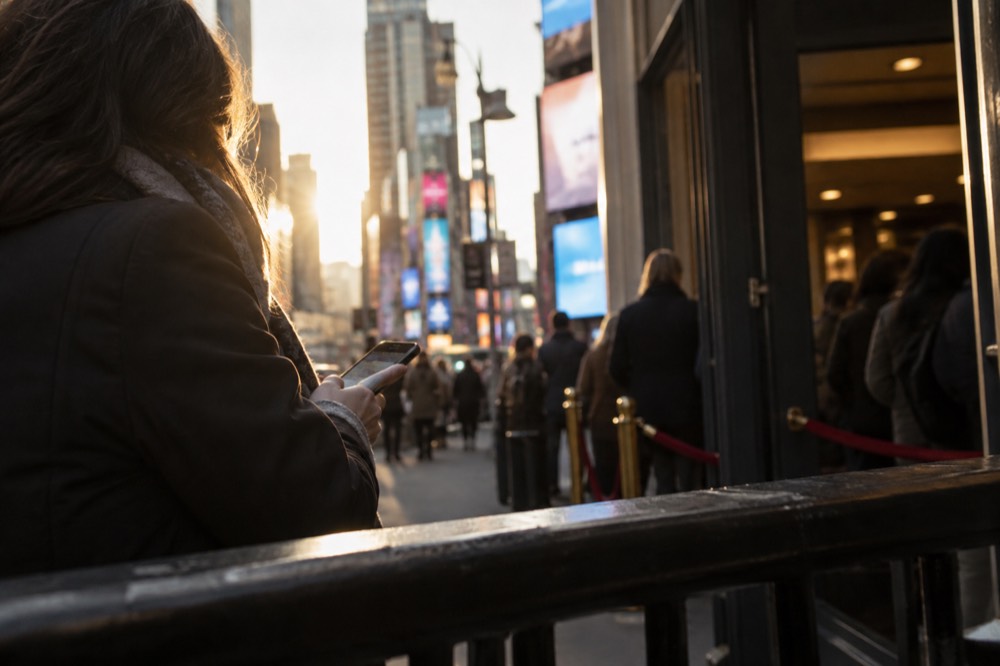
Lotteries and rush reward flexibility. The main lottery platforms are Broadway Direct and Lucky Seat, plus lotteries run by individual shows on their own sites, and winners are notified by email or text shortly before the performance. Winning prices typically land in the $30 to $50 range but vary widely by show. Rush and standing room are set per production rather than standardized across the industry, so check the specific show's policy rather than assuming a fixed price. For the big titles specifically, the site's cheap Broadway tickets guide walks through these channels in more depth.
One more channel deserves a mention because it is the least advertised: the venues' own box offices. Small theaters often hold back seats for direct sale, waive the per-ticket fees that online aggregators add, and run their own rush and under-35 or student schemes. Walking up to the actual box office during the day is an old habit that still works, particularly on weeknights when a small house has seats to fill.
| Channel | Typical discount or price | What to know |
|---|---|---|
| TKTS booth | Up to 50% off face value, plus $8 per ticket fee | Same-day performances plus next-day matinees; Times Square and Lincoln Center booths only |
| Digital lottery | Roughly $30-$50 when you win | Enter online, often a day or more ahead; winners notified shortly before curtain |
| Rush tickets | Commonly $30-$50 where offered | Set per show, sold day-of at the box office; not standardized |
| Venue box office | Face value, sometimes with fee-free sales | Small houses may hold seats and run their own discount schemes |
| Standing room | Set per show | Appears mainly at sold-out hits; check the individual production |
Which Smaller-Stage and Live-Performance Options Are Easiest to Book?
If you want a guaranteed seat rather than a lottery gamble, the bookable live-performance options in New York include stand-up showcases, gospel concerts, jazz evenings and museum experiences devoted to theater history, several of which list from $20 to $44 per person. These are ticketed products with fixed availability rather than open-ended productions, so they suit visitors who prefer to lock a confirmed evening into an itinerary instead of building a night around same-day discount hunting.
Comedy is the most accessible corner of the smaller-stage world. A stand-up showcase in a Midtown club, with a rotating bill of working New York comics doing short sets, lists from $20 per person, and the room is small, loose and closer in spirit to Off Broadway than to an arena show. Two-drink minimums are common at clubs like this, so budget for that on top of the ticket. Age restrictions apply, and the current lineup shows on the live booking page. The wider set of guides lives on New York City Travel Guide.
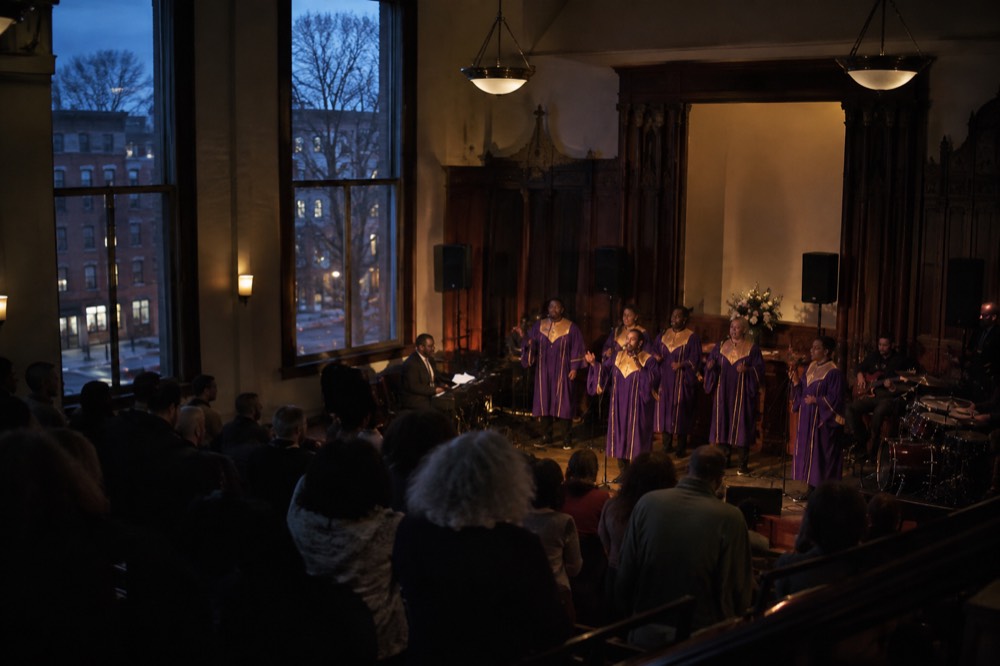
Harlem offers two strong live-performance evenings. A midweek gospel concert built around the neighborhood's choir tradition lists from $25 per person, runs about an hour, and works as a warm, low-hassle introduction to a musical tradition most visitors otherwise only reach through a Sunday church visit. A guided Harlem jazz and blues evening, about four hours including the walk between venues, lists from $139 per person and pairs the music with the history of the blocks that produced it.
For theater history rather than live theater, a self-paced museum in Times Square devoted to Broadway's story, from the street's rough beginnings to the modern hit-making machine, lists from $44 per person and mixes costumes, playbills and set pieces across a one to two hour visit. It is an easy fit for a spare hour between a matinee and an evening show, and it rewards anyone who loves the machinery of theater rather than just its output.
The point of this category is reliability. A lottery win is a thrill, but a confirmed ticket for a comedy showcase or a gospel concert is a plan, and on a short trip a plan is worth paying a little more for. Mix the two: book one guaranteed evening early, then leave another night open for TKTS or a lottery attempt.
When Is the Best Time to See Off Broadway Shows in NYC?
The New York theater calendar runs year-round, but the best value windows are weekday evenings in late winter and late summer, when smaller houses discount hardest to fill seats outside peak tourism. The busiest stretches are the December holidays and the spring months around the Tony Awards season, when both Broadway and Off Broadway houses run fuller and discounts thin out.
If your dates are flexible, a weeknight outside those peaks gives you the widest choice at the lowest prices.
The seasonal logic follows tourism. Late December draws huge crowds and premium pricing across the whole entertainment economy, so a smaller-theater night costs more and sells out faster then. January and February are the opposite: tourist volume drops, productions that opened in the autumn are still running, and box offices work harder for every seat. Late August and early September behave similarly, between the summer family travel wave and the autumn opening season.
One weather fact worth folding into your planning, because it contradicts what most visitors assume: official climate normals for Central Park show July as New York's wettest month, averaging 4.60 inches of precipitation, ahead of August at 4.56 and June at 4.54. Summer visitors who book indoor evenings as a hedge against rain are making a sounder decision than they may realize. February, at 3.19 inches of precipitation, is actually the driest month of the year, though it also averages more snow than January, 10.1 inches against 8.8.
Review timing matters too. A production in previews has the cheapest seats and the least-crowded houses, but it is a bet: the show may still be changing. A production that has just opened to strong reviews will tighten its pricing within days. Regulars watch the review outlets early in the week and buy before the weekend audience catches up.
How Do You Plan a Full Off Broadway Night in New York?
A well-planned smaller-theater evening runs in three blocks: an early dinner near the venue, the performance itself, and a late drink or dessert afterward, all of which work best when you pick the neighborhood before the show rather than after.
Choose a venue cluster like Greenwich Village, the East Village or Midtown, book or discount-hunt for the seat, and reserve dinner within a ten-minute walk, since most smaller houses have short or no intermission bars and late curtains push everything later than visitors expect.
Start with the neighborhood, because it decides everything downstream. A Greenwich Village venue puts you in one of the densest cheap-eats zones in the city, so dinner before an 8pm curtain means eating by 6pm at the latest. Midtown and Theater District fringe venues sit inside the tourist corridor, where dinner costs more and needs a reservation more. Brooklyn venues flip the calculation: the food around them is often better and cheaper, but you are committing to a subway ride home after the show, and the trains run late but not instantly.
Getting there is straightforward. A single subway ride is $3.00, and the fare system now works by tapping a contactless card or phone with OMNY, which caps your weekly subway and local bus spending at $35 automatically, with no pass to buy. One caution that most guides still get wrong: the 7-day unlimited MetroCard no longer exists. The MTA stopped selling and refilling MetroCards as of 1 January 2026, so any advice telling you to buy one on arrival is out of date. Tap the same card or device every ride and the cap applies itself.
After the show, plan for the late hour. Curtains at smaller houses fall between 9:45pm and 10:30pm, and the bars near venues in the Village and East Village stay open for the post-theater crowd, while Midtown's tourist restaurants thin out earlier. A nightcap plan matters more than a dinner plan, in other words, and the neighborhoods around the smaller stages handle it better than the Theater District does.
If your appetite for live performance runs to the biggest stages as well, the site's best Broadway shows guide covers the major titles, and this page's own booking links above show live availability for the biggest musicals. But do not treat Off Broadway as the consolation option. Plenty of New York's most memorable theater nights happen in houses where you can hear the actors breathe, and the price of admission leaves room for dinner.
| Planning block | What to decide | Practical notes |
|---|---|---|
| Neighborhood | Village, East Village, Midtown fringe or Brooklyn | Determines dinner cost, transit time and the after-show options |
| The seat | Box office, TKTS, lottery, rush or a booked showcase | Weeknights discount hardest; previews are cheapest but unsettled |
| Dinner | Within a ten-minute walk, reserved for Midtown | Eat by 6pm for an 8pm curtain; the Village has the cheapest options |
| Transit | Subway at $3.00 per ride, OMNY capped at $35 weekly | Tap the same card or device every time or the cap breaks silently |
| After the show | Bar or dessert near the venue | Village and East Village venues serve the post-theater crowd latest |
Common Questions About Off Broadway Shows in NYC
Off Broadway is a size category, not a quality tier or an address, and the practical differences that matter to a visitor are price, proximity and risk: smaller houses charge less, seat you closer, and stage work that may be brilliant or forgettable. The questions below cover the ones visitors ask most, including how the label is defined, whether the shows are cheaper, and how to combine a smaller-theater night with the rest of a New York trip.
What does Off Broadway actually mean?
It refers to the size of the theater, not its location. Off Broadway productions play mid-sized houses, between the large Broadway theaters and the tiny Off-Off-Broadway spaces. A venue ten minutes from Times Square can still be Off Broadway if the house is the right size.
Are Off Broadway shows cheaper than Broadway shows?
Generally yes, often substantially. Smaller-house productions commonly sell in the $30 to $80 range, while the big musicals on this site's roster list from $71 to $144 per person, and premium Broadway seats run far higher. Discount channels including TKTS, lotteries and rush can push smaller-theater seats lower still, though each show sets its own pricing and policy.
Can you buy Off Broadway tickets at the TKTS booth?
TKTS sells same-day tickets at discounts of up to 50 percent off face value plus an $8 per ticket service fee, and its inventory covers qualifying productions beyond the biggest Broadway titles. Two booths currently operate, at Times Square on Duffy Square and at Lincoln Center. Hours vary by day, so check tdf.org rather than a printed timetable.
Is Off Broadway worth it for a first-time visitor?
For many visitors, yes, especially on a second or third theater night. A smaller house seats you close enough to see the actors work in detail, the tickets cost less, and the surrounding neighborhoods, particularly Greenwich Village and the East Village, are more pleasant for dinner than the Times Square corridor. If you want spectacle on a first trip, start with a Broadway musical and save the smaller stages for night two.
How do you get last-minute tickets for a New York show?
Three realistic channels: walk to the TKTS booth for same-day discounted seats, enter the digital lotteries on Broadway Direct or Lucky Seat where winning prices typically run $30 to $50, or go to the venue's own box office, since smaller theaters often hold seats and run their own day-of schemes. Rush tickets, where a show offers them, commonly cost $30 to $50 as well.
Where do you eat before an Off Broadway show?
Pick the neighborhood before the show and reserve within a ten-minute walk of the venue. Greenwich Village and the East Village offer the densest, cheapest pre-theater eating in the city, with dinner by 6pm for an 8pm curtain. Midtown venues sit in the tourist corridor, where prices are higher and reservations matter more. The site's guide to [where to eat before a Broadway show](/blog/where-to-eat-before-going-to-a-broadway-show/) covers the Midtown side of the question.
The smaller stages are where New York theater does its thinking out loud, and the price of a ticket buys you a seat close enough to hear it. Choose the neighborhood, pick your discount channel, and leave one evening loose enough to take a chance on something nobody has reviewed yet. That is the whole method, and it has worked for decades.