Can You Visit the New York Public Library for Free?
A direct, sourced answer to whether you can visit the New York Public Library for free, what you can see inside without paying, and which other New York museums have free admission windows.
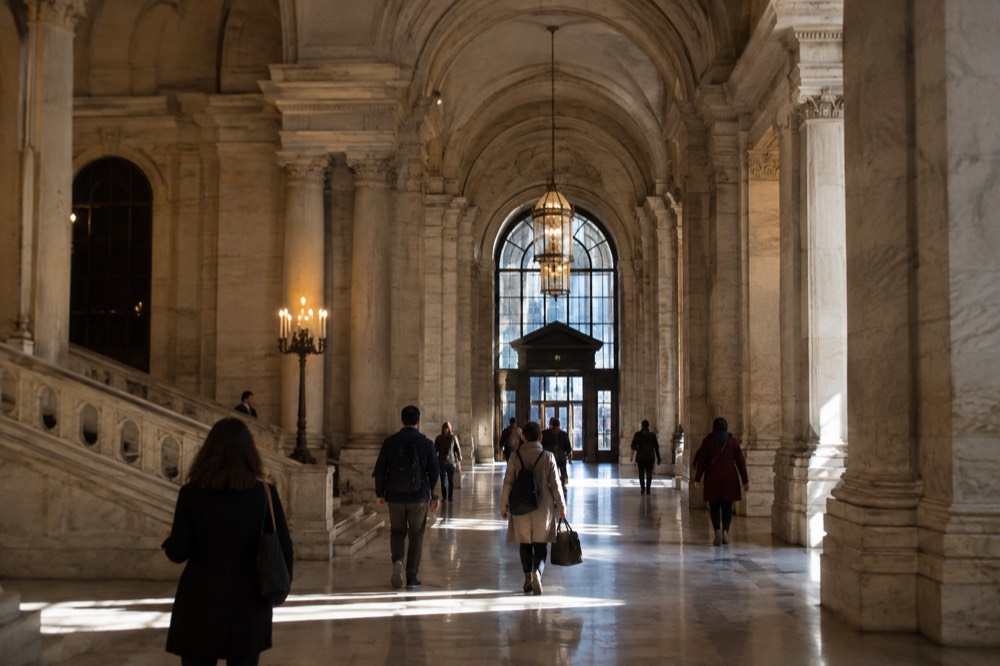
Yes, you can visit the New York Public Library for free. The Stephen A. Schwarzman Building, the marble landmark facing 5th Avenue between 40th and 42nd Streets, is open to the public and charges no admission. You do not need a ticket, a library card or a reservation to walk in, look up at the famous reading room or see the free exhibitions. That makes it one of the few world-famous buildings in Midtown Manhattan where the answer to "how much?" is simply nothing.
The building sits directly behind Bryant Park, one stop of scenery that pairs naturally with it, and a short walk from both Times Square and Grand Central. Most visitors spend under an hour inside. Some stay half a day, because the exhibitions rotate and the architecture rewards slow looking. This page answers the question directly, then covers what you can actually see, when to go, and how the library fits into a wider free day in Midtown.
Can You Visit the New York Public Library for Free?
Yes, entry to the New York Public Library's main building is completely free, with no ticket, no reservation and no library card required for general visiting. The Schwarzman Building on 5th Avenue at 42nd Street is a working research library, but its halls, exhibitions and famous reading room are open to anyone who walks in during opening hours. Free does not mean unrestricted: it is a quiet, working building, not a photo studio.
Photography for personal use is generally welcome, and there is no bag check fee or suggested donation at the door. That last point matters more than most guides admit. The building is a genuine research library, and the people at the long tables are working. Visitors are welcome, and the library has invested real money in making the ground floor and exhibition spaces visitor-friendly, but the atmosphere is closer to a cathedral than a tourist attraction. If you arrive expecting a museum experience with rope lines and audio guides, you will be surprised in both directions: there is less signage than a museum, and more beauty than most of them.
The free access covers more than the lobby. The library runs free exhibitions in dedicated gallery spaces, and these change through the year, drawn from its enormous collections of manuscripts, maps, photographs and rare books. There is no separate ticket for the exhibitions. Whatever is on when you visit is included in the price of walking through the door, which is zero.
One practical note: hours and exhibition schedules are published on nypl.org, and they change around holidays and private events. Check the library's own site the day before you go rather than relying on a printed timetable from any guide, including this one. The building occasionally closes early for special programmes, and a closed reading room on a Tuesday afternoon is a bad surprise after a twenty-minute walk.
What Can You See Inside the NYPL's Main Building Without Paying?
The free visit covers the entrance hall, the staircases, the Rose Main Reading Room when it is open to viewing, the free exhibition galleries, and the period rooms and public corridors throughout the Schwarzman Building. There is no paid tier inside: everything a casual visitor can access is free, and the only things that cost money are the gift shop and the café.
Visitors commonly come for the reading room's arched windows and ceiling, then discover the exhibitions, which rotate through the year and are drawn from the library's collections of manuscripts, maps and photography. The reading room is the headline. It is one of the great interior spaces in New York: a vast hall with long wooden tables, brass lamps and a painted ceiling that people photograph constantly. It is a working room, so the deal is that you look quietly and do not interrupt the people reading. On a normal day you can walk in, stand at the edges and take it in. Access to the room itself can vary with library operations, which is another reason to glance at nypl.org before visiting.
The exhibitions are the part most first-time visitors underuse. Because the library is a research institution rather than a museum, its galleries show items that rarely travel: original documents, historic maps, literary manuscripts and photographic prints. The shows change, so there is no permanent list to print here, and any guide that tells you exactly what is on display this month is guessing. What is safe to say is that the exhibitions are free, indoors and air-conditioned, which makes them one of the best rainy-day stops in Midtown alongside the options in our rainy day activities guide.
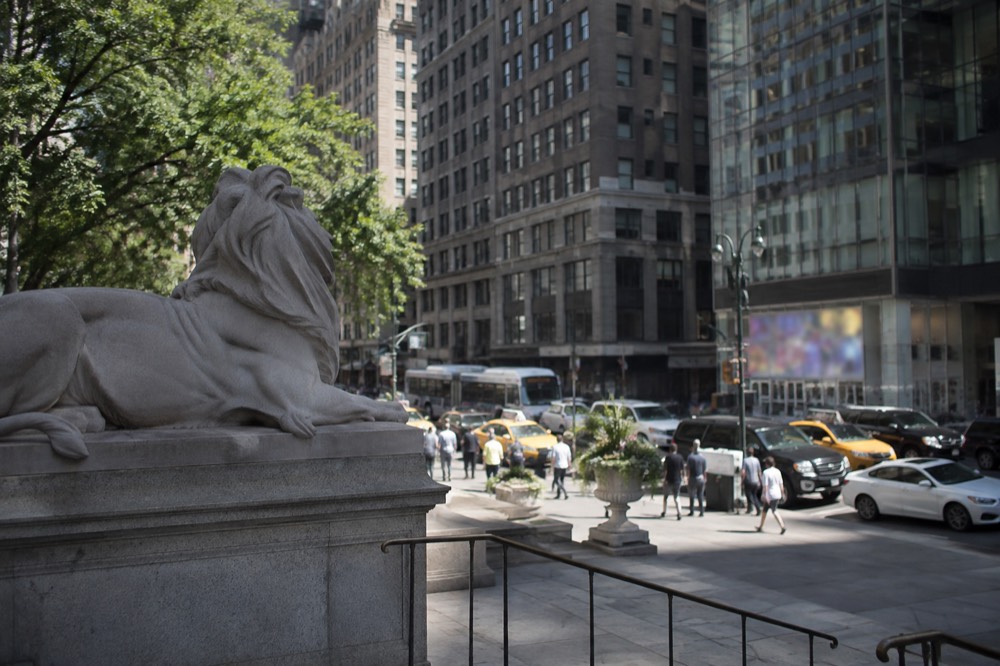
The architecture itself is the third attraction. The marble entry hall, the wide staircases and the stone lions outside, Patience and Fortitude, are the parts of the building that appear in half the movies set in New York. The lions are outside and free around the clock, which makes them a genuine midnight sightseeing option if your day runs late. Photographing the exterior costs nothing and needs no permission, and the steps facing 5th Avenue are a classic place to sit and watch Midtown go past.
If the free sights fill your morning but you also want the paid heavy hitters, a pass can make sense for the afternoons.
When Is the Best Time to Visit the New York Public Library?
Midweek mornings are the calmest time to visit the New York Public Library's main building, when the reading rooms are quiet, the exhibitions are nearly empty and the light through the reading room windows is at its best. Weekends bring the biggest crowds, since the building sits on the tourist path between Bryant Park and Times Square. The library's exact hours change around holidays and events, so confirm the day's opening times on nypl.org before you set out.
Weekend afternoons can feel busy in the entrance hall even when the galleries stay manageable. The building's position is the crowd problem. It sits at the corner of the busiest sightseeing corridor in Midtown, a few minutes on foot from Times Square, which carried 61,203,303 subway riders in 2025, more than any other station complex in the city and 71% more than Grand Central. All of that foot traffic passes the lions. Most of it does not come inside, but enough does that the entrance hall fills by early afternoon.
The smart pattern is to combine the library with the quieter hours of its neighbours. Come in the morning, see the reading room and the exhibitions while they are calm, then step out into Bryant Park for a coffee while the Midtown crowds build. After lunch, the building is still free and still open, but you will share the staircases with more people, and the reading room viewing area gets congested with photographers.
Weather matters less here than almost anywhere else in New York, because the whole visit is indoors and the walk from the subway is short. That makes it a reliable fixture of a winter day or a wet afternoon. It is worth knowing that July is actually New York's wettest month, averaging 4.60 inches of precipitation against February's 3.19, so summer visitors have as much reason to keep an indoor stop in their plans as February ones.
Which Other New York Museums Can You Get Into for Free?
Several major New York museums have real free-admission windows, and knowing them changes a budget itinerary completely: the Whitney Museum is free on Friday evenings and for anyone 25 and under, the 9/11 Memorial & Museum releases free Monday tickets each week, MoMA's Friday-evening free hours are reserved for New York State residents, and the Guggenheim runs pay-what-you-wish on Tuesday and Sunday late afternoons. Read the conditions before you queue.
The conditions are the story, because the eligibility rules catch people out. MoMA's free Friday night, 17:30 to 20:30, is generously funded but restricted to New York State residents with proof, so a tourist turning up at 18:00 will be paying the standard $30. The Whitney's Friday window, 17:00 to 22:00, is open to everyone, and its under-25 free policy applies every day. The 9/11 Memorial & Museum's free Mondays release tickets on its website at 07:00 ET each Monday, first come first served, and they go fast. The Guggenheim's pay-what-you-wish runs Tuesdays and Sundays 16:00 to 17:30, with a $1 minimum and advance reservation strongly recommended.
| Museum | Free window | Who qualifies | Catch |
|---|---|---|---|
| Whitney Museum of American Art | Friday nights 17:00-22:00; second Sunday of each month, all day | Everyone (Friday); everyone (Second Sundays, timed ticket needed) | Advance tickets recommended, capacity limited |
| Whitney, daily policy | Every day | Anyone 25 and under | Timed ticket required |
| 9/11 Memorial & Museum | Free Mondays | Everyone | Tickets released each Monday at 07:00 ET, first come first served |
| MoMA | Friday nights 17:30-20:30 | New York State residents only, proof required | Tourists pay the standard $30 |
| Guggenheim | Tuesdays and Sundays 16:00-17:30 | Everyone, pay-what-you-wish, $1 minimum | Sells out; reservation strongly recommended |
| Intrepid Museum | 50% off, every day | NYC residents | Not free, but the deepest resident discount among the big museums |
| 9/11 Memorial plaza | Daily 08:00-20:00 | Everyone | The outdoor pools are always free; only the museum below charges |
The 9/11 Memorial plaza deserves its own line, and it should be described plainly: the outdoor memorial at the World Trade Center is free and requires no ticket, and the museum beneath it is a separate, paid visit. The memorial is a place of remembrance, not an attraction to rush, and the free plaza access means anyone can pay their respects at any time during opening hours.
If you would rather have a guide walk you through the free side of Lower Manhattan, there is a genuinely free option.
How Does the New York Public Library Fit Into a Free Day in Midtown?
The library anchors one of the best zero-dollar walks in New York: start at Grand Central Terminal, which is free to enter and full of sights, walk two blocks down to the library and its lions, then finish in Bryant Park directly behind it. All three are free, all three are within a ten-minute walk of each other, and the whole loop takes about two hours at a relaxed pace.
Add Times Square, five minutes further north, and you have a full free afternoon in the heart of Midtown without buying a single ticket. Grand Central is the natural starting point, and it is more than a station. The main concourse, the celestial ceiling and the whispering gallery are all free to see, and the building rewards the same slow looking the library does. From there, 42nd Street runs straight to the library's 5th Avenue facade. The lions sit at the top of the steps, and the entrance hall is behind them.
Bryant Park behind the library is the place to end. It is one of the most programmed public spaces in the city, with the lawn, the carousel and the seasonal installations, and in winter it hosts a popular market. Sitting on the library's back steps with a coffee, looking out over the park's lawn toward the backs of the Sixth Avenue towers, is one of the better free seats in Manhattan. Sixth Avenue is also officially Avenue of the Americas, though almost nobody calls it that.
For visitors building a wider plan, this walk slots neatly into the bigger itineraries on this site. The things to do in NYC page covers the paid headliners, and the free things to do in NYC guide collects the zero-cost options across all five boroughs, not just Midtown. The library walk is the Midtown spine of that free list.
What Do First-time Visitors Get Wrong About the NYPL?
The most common mistake is treating the New York Public Library like a tourist attraction rather than a working research library: talking at reading-room volume, setting up photo shoots at the tables, or expecting museum-style signage and guided commentary at every corner. The second mistake is assuming "free" means "small," when the Schwarzman Building is enormous, with multiple floors of public corridors and exhibition spaces that most visitors never reach.
The third mistake is confusing this building with the library's dozens of neighborhood branches across the Bronx, Manhattan and Staten Island, which are separate, smaller and equally free. The etiquette point is worth spelling out because it protects everyone's visit. The reading room is a place where people are genuinely working, sometimes on research that took months to arrange. Look, photograph discreetly from the public areas, keep your voice low and let the room do its job. The library welcomes visitors and depends on public goodwill, which is exactly why the doors are free. A loud group in the reading room is the fastest way to sour the staff on tourists generally.
The size point catches people who budget twenty minutes and leave after forty-five, having only seen the entrance hall and one gallery. The building runs deep. Take the staircases past the ground floor, check what exhibition spaces are open that day, and give the corridors between them a chance. The quieter upper spaces are where the building feels most like itself, away from the 5th Avenue churn.
The branches point matters for planning. The New York Public Library system covers the Bronx, Manhattan and Staten Island, while Brooklyn and Queens each run their own separate library systems. The famous lions belong to the Midtown flagship. If your hotel is in Brooklyn and you see "New York Public Library" on a map near your street, that is a branch, pleasant and free, but not the marble landmark you saw in the movies.
Is the New York Public Library Worth Visiting with Kids?
Yes, the New York Public Library works well with children, mainly because the visit is short, free and indoors, and the building's scale impresses kids as much as adults. The lions outside, the giant staircases and the reading room's ceiling are the kid highlights, and the whole stop fits inside an hour before attention runs out. Bryant Park behind the building, with its carousel and lawn, is the natural release valve afterward.
The library's children's collections and programmes are free too, with schedules published on nypl.org. The practical advantage is the exit. A museum visit with children ends with a gift-shop gauntlet and a tired walk to the subway. The library visit ends at the steps, and the steps open straight onto Bryant Park, where children can run on the lawn while the adults finish their coffee. That combination, a grand indoor stop followed by an open-air one, is one of the easier free mornings to run in Midtown.
For families doing a longer New York trip, the library slot pairs well with the wider planning on our NYC with kids page, and the free-admission windows in the table above apply to children as well. The Whitney is free every day for anyone 25 and under, which covers every child, and the 9/11 Memorial plaza is free for the whole family, though families should decide for themselves whether the museum below suits their children.
Families who want the paid classics afterwards have a decision to make, and this is where the passes earn their keep.
Common Questions About Visiting the New York Public Library for Free
Yes, the New York Public Library is free to visit, and the questions below cover the practical details: no ticket is needed, photography is generally allowed for personal use, the building is a working research library rather than a museum, hours are published on nypl.org and change around holidays, and the best free pairing is Grand Central to the library to Bryant Park in a single walk. The library is one of the few landmark buildings in Midtown with no admission charge, no reservation and no catch, which is why it anchors so many budget itineraries.
Can you visit the New York Public Library for free?
Yes. Entry to the Stephen A. Schwarzman Building on 5th Avenue at 42nd Street is free, with no ticket, reservation or library card needed for general visiting. The exhibitions, the public halls and viewing access to the Rose Main Reading Room are all included at no charge. Only the gift shop and café cost money.
Do you need a New York library card to enter?
No. A library card is only needed to borrow materials or request items from the research collections. Walking in, seeing the exhibitions and viewing the reading room require nothing but passing through security, which is standard for the building and free.
How long does a visit take?
Most visitors spend between forty minutes and two hours. An hour covers the entrance hall, one or two exhibitions and the reading room. Visitors who take the upper floors and read the exhibition material properly can easily fill half a day, and the building's size surprises people who budget twenty minutes.
Can you take photos inside the New York Public Library?
Personal photography is generally welcome in the public halls and exhibition spaces, but the reading room is a working space, so shoot discreetly, avoid flash and never interrupt readers. Tripods, elaborate setups and commercial shoots require permission. If in doubt, ask staff, who deal with photographers constantly and will give a straight answer.
Is the New York Public Library the same as the Library of Congress?
No. The Library of Congress is the national library in Washington, DC. The New York Public Library is a separate institution serving the Bronx, Manhattan and Staten Island, and its Midtown flagship is the marble building with the lions. Brooklyn and Queens each run their own library systems as well.
What is the closest subway station to the New York Public Library?
The 7, B, D, F, M and N, Q, R, W trains all stop at Bryant Park-42nd Street, directly beside the building. Grand Central-42nd Street, a few minutes east, adds the 4, 5, 6 and the 42nd Street Shuttle. A single subway ride costs $3.00, and weekly OMNY fare capping at $35 applies automatically with no pass to buy.
One last planning note that saves real money: the MetroCard era is over. As of 1 January 2026 the MTA no longer sells or refills MetroCards, and the old 7-day unlimited pass no longer exists. Tap the same card or phone for every ride and the $35 weekly cap applies on its own, which is the closest thing the subway has to the library's own pricing: nothing to decide, and nothing extra to buy. For everything else worth doing around the lions, the New York City Travel Guide hub covers the paid side of the city this building anchors for free.