Is Beacon, New York Worth Visiting? An Honest Answer for NYC Travelers
A direct, honest answer on whether Beacon, New York is worth visiting, with how to get there, what to do, and when to go.
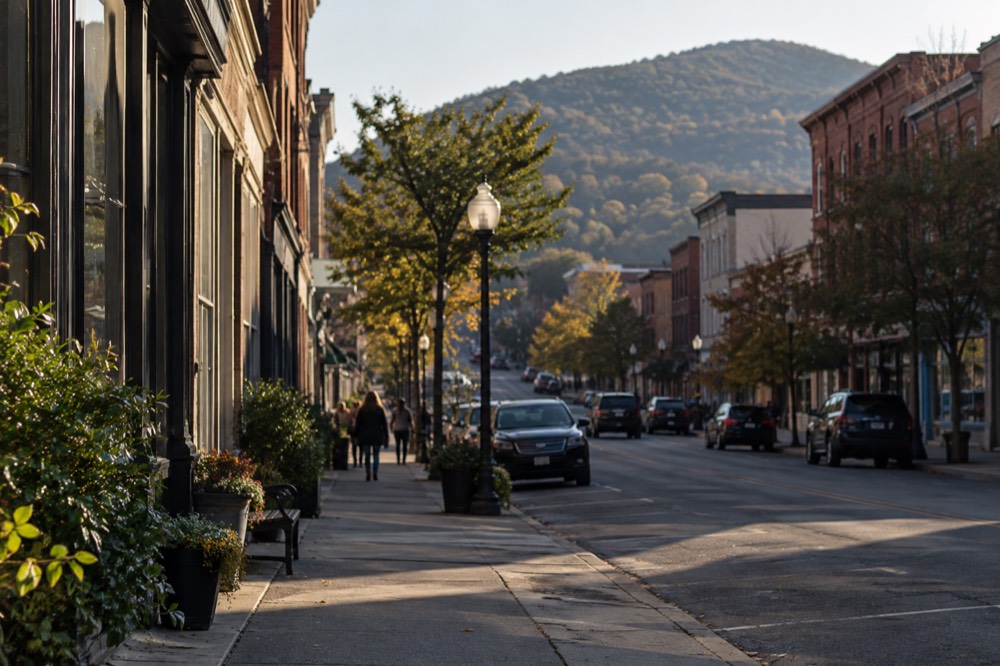
Beacon sits on the east bank of the Hudson River in Dutchess County, roughly 60 miles north of Manhattan, and it has spent the past two decades turning from a fading factory town into one of the Hudson Valley's most visited small cities. The anchor is a very large contemporary art museum inside a former Nabisco box-printing plant, and around it has grown a walkable Main Street of galleries, restaurants and independent shops. This page answers the question directly, then covers the logistics: how to get there without a car, what to actually do once you arrive, and whether the town works better as a day trip or an overnight.
One framing note before the verdict. Beacon is not a second New York City, and anyone expecting urban density will be disappointed within an hour. It is a small river town with one world-class museum, a pleasant commercial strip and hiking on the slopes of a nearby mountain. Judged on those terms, it holds up well. Judged as a marquee destination in its own right, it is a half-day to full-day experience, not a weekend unto itself unless you pair it with its neighbors.
Is Beacon, New York Worth Visiting?
Yes, Beacon is worth visiting for most travelers who have at least three days in New York and want one of them outside the city, with two honest caveats. First, the town is essentially one museum, one Main Street and one mountain, so travelers chasing variety or nightlife will run out of Beacon before the afternoon does.
Second, its appeal leans on contemporary art, small-town streets or a moderate hike, and if none of those three land, the trip will feel thin.
The case for Beacon is strongest for a specific kind of visitor: someone based in Manhattan, without a car, who wants a genuinely different day without complicated logistics. The town is one of the easiest Hudson Valley destinations to reach by rail, and once you step off the train everything of consequence sits within walking distance or a short ride. That combination is rarer than it sounds. Many Hudson Valley towns that photograph beautifully are miserable to reach without driving, and several that are easy to reach have little waiting when you arrive.
The case against is equally simple. If your New York trip is four days or fewer, the honest arithmetic favors staying in the city. The five boroughs contain more art, more food and more surprise per hour than any small town two hours upriver, and a day spent in Beacon is a day not spent at the Metropolitan Museum of Art, the High Line or a Brooklyn neighborhood. There is also the weather problem: Beacon is an outdoor-weighted day trip, and a cold rain can hollow it out quickly, since the museum and the restaurants are the only reliable indoor anchors.
A reasonable rule of thumb: visit Beacon if you have five or more days in New York, or if art is a primary reason you travel at all, or if you have already done the classic Manhattan circuit on a previous trip. Skip it on a first visit of three days or fewer. For a fuller menu of out-of-town options, see our guide to day trips from NYC, and for the wider region, our Hudson Valley from NYC guide places Beacon in context against Cold Spring, Storm King and Sleepy Hollow.
How Do You Get to Beacon from NYC Without a Car?
The practical answer is the Metro-North Railroad Hudson Line from Grand Central Terminal to the Beacon station, a ride of roughly 90 minutes along the east bank of the Hudson River, with the station sitting a short walk from the museum end of town. The line traces the river for most of its length, so the journey itself is part of the day: sit on the left side heading north for the water views.
Off-peak fares are cheaper than peak.
Beacon's accessibility is its superpower among Hudson Valley destinations. You do not need a car, a tour bus or a reservation, just a train ticket and a free day. Grand Central Terminal is the departure point, and the Hudson Line is the same line that serves Cold Spring, the town one stop closer to the city and a popular pairing with Beacon for travelers who want two river towns in one outing. Our Cold Spring, NY guide covers that alternative in detail.
A few logistics worth knowing. The Beacon station is on the river side of town, and the walk to Main Street and the museum is flat and short, well under fifteen minutes at a normal pace. Taxis and local rides exist but are thin on the ground, so plan around your feet. Trains run less frequently than the subway, so photograph or note your return times when you arrive; missing a train by ten minutes can mean an hour's wait on a weekend. Check current schedules and fares on the MTA's Metro-North pages before you travel, because this site does not print a fare it has not verified.
If you would rather not manage rail logistics at all, guided Hudson Valley coach tours exist, and our Hudson Valley from NYC guide lists the organized options, including a Sleepy Hollow and Walkway Over the Hudson itinerary that covers the region's western side. But for Beacon specifically, the train is genuinely the better instrument, and the ride up the river is worth the small effort of buying a ticket.
Should you book anything ahead? The museum is the one element where advance planning matters, since timed entry and capacity can bite on holiday weekends. Everything else, restaurants included, can mostly be improvised on a weekday or an ordinary Saturday. On a peak autumn Saturday, reserve lunch.
What Are the Best Things to Do in Beacon?
The core Beacon itinerary is three items: the museum for the art, Main Street for food and browsing, and Mount Beacon for the hike and the view, in an order that depends on season and your energy. A full day covers all three comfortably; a half day forces a choice between the museum and the mountain, and the honest recommendation is the museum, because it is the one thing you cannot replicate elsewhere.
Here is how the pieces compare for planning purposes.
| Beacon activity | What it is | Time needed | Best for | Skip it if |
|---|---|---|---|---|
| Dia:Beacon | Large contemporary art museum in a converted factory | 2-3 hours | Anyone who likes art, architecture or daylight-filled spaces | You find museums tedious |
| Main Street | Walkable strip of shops, galleries, restaurants | 1-2 hours | Browsing, lunch, coffee, people-watching | You want big-city retail density |
| Mount Beacon hike | Steep climb to river views behind the town | 2-4 hours round trip | Fit walkers, photographers, fall color | Heat, ice, or bad knees |
| Hudson waterfront | River walk near the station and museum | 30-60 minutes | A flat stroll, train-spotting, sunset | You came for action |
The order matters more than visitors expect. The museum is best early, before the tour groups and the afternoon fatigue arrive, and it is also the item most sensitive to a sold-out window. The hike is best either early morning or late afternoon depending on season, since the exposed sections punish a midday climb in July. Main Street is flexible and absorbs whatever slack your day has left, which is why it works as the connective tissue between the other two.
Food deserves a specific word. Beacon punches well above its size for a town this small, a side effect of the weekend visitors the museum pulls up from the city. Options cluster on and around Main Street, and the honest advice is to walk the strip and pick, rather than anchoring to a single name, since this site does not recommend specific restaurants in towns it has not verified dish by dish. Weekend brunch traffic is real; a party of four at noon on a Saturday will wait.
For travelers building Beacon into a longer New York stay, the day trip competes directly with city days, and the city has its own heavy hitters. The comparison below is the honest one: what a Beacon day buys you versus what the same day buys in Manhattan.
| Factor | A day in Beacon | A day in Manhattan |
|---|---|---|
| Pace | Slow, walkable, uncrowded | Fast, dense, stimulating |
| Signature experience | World-class museum in a factory hall | World-class museums, several of them |
| Cost shape | Train fare, museum admission, meals | Attractions add up fast at $30-$75 each |
| Weather sensitivity | High, most of the day is outdoors | Low, everything has an indoor version |
| Best fit | 5+ day trips, art-led travelers, repeat visitors | First visits of 3-4 days |
If your city days are the priority and you want them cheaper, the pass question is worth five minutes of arithmetic before you book anything. Our is the New York CityPASS worth it breakdown does the math against box-office prices, and the short version is that a fixed five-attraction bundle pays off only if you will genuinely use all five.
Is Beacon Better as a Day Trip or an Overnight?
For the large majority of travelers, Beacon is a day trip, and the honest reason is arithmetic: the town's core attractions total roughly five to six hours of engagement, which fits inside a single day with train time on either side.
An overnight starts to make sense for three specific cases: art slow-lookers who want the museum at opening with no commute, hikers pairing Mount Beacon with a second trail, and anyone adding a second Hudson Valley town the next morning.
The day-trip version looks like this: a morning train from Grand Central, the museum until early afternoon, lunch on Main Street, then either the hike or the waterfront stroll before an evening train back, in the city by nightfall. It is a full but not punishing day, and it costs you zero hotel nights in a region where lodging is thin and priced for weekenders.
The overnight version buys you two things. The first is the morning-after light: Beacon at 8am on a weekday belongs to locals, and the river from the trail is better before the crowds. The second is the pairing option. Beacon sits on the same rail line as Cold Spring, and an overnight lets you do Beacon's museum day and then Cold Spring's riverside village the next morning before riding home, which is the best two-town Hudson Valley itinerary available without a car. The trade is lodging cost and the reality that Beacon's evening dining and entertainment options, while pleasant, do not fill a long evening.
Families should read the day-trip answer with one adjustment: the museum holds children's attention far better than most, because the scale of the works is genuinely novel to kids, but the hike is a harder sell for anyone under ten. A family day is museum, lunch, waterfront, home, and it works.
When Is the Best Time to Visit Beacon?
Autumn is the best time to visit Beacon, when the Hudson Valley's fall foliage turns the river corridor and the Mount Beacon views into the region's signature scenery, with October the peak month and weekends correspondingly crowded. Late spring through early summer is the close second, when the hike is at its friendliest. Winter visits narrow down to the museum and Main Street, since the trail is better left alone in ice.
The foliage point deserves expansion, because it cuts both ways. October weekends in the Hudson Valley are spectacular and correspondingly the region's busiest, and Beacon's museum and Main Street both feel it. If autumn color is your reason for going, go midweek if you possibly can: a Tuesday in October gives you the same leaves with a fraction of the crowd. If you must go on a peak weekend, book the museum entry and your lunch table in advance.
Summer is the season to treat with the most caution. The valley heats up, the Mount Beacon climb has exposed sections with no shade relief, and the museum, while air conditioned, is the one indoor refuge in town. An early start fixes most of this: hike before the heat, museum after, lunch last.
Winter is honest and quiet. The museum is at its emptiest, Main Street is walkable in a cold-weather way, and the town has a stillness that some travelers prefer. What you give up is the view hike and most of the outdoor texture. If a winter Beacon day appeals, pair it with a longer museum visit and a serious lunch.
Common Questions About Beacon, New York
These are the questions travelers most often ask about Beacon, answered directly: whether it is worth the train ride, how long to give it, whether it works without a car, and how it compares to the neighboring Hudson Valley towns. Each answer below is the short version of a section above, so if one raises a follow-up, the fuller treatment sits further up the page.
Is Beacon, New York worth visiting?
Yes, for travelers with five or more days in New York, for art-led travelers on any length of trip, and for repeat visitors who have finished the classic Manhattan circuit. It is not worth sacrificing a scarce city day on a short first visit, and it disappoints anyone expecting urban density or nightlife.
How long should I spend in Beacon?
A full day covers the museum, Main Street and either the hike or the waterfront. A half day forces a choice, and the museum should win it. Two days only makes sense if you are pairing Beacon with a second Hudson Valley town or you want the mountain at an unhurried pace.
Can you visit Beacon without a car?
Yes, and the train is the recommended way. The Metro-North Hudson Line runs from Grand Central to Beacon, the station sits a short walk from town, and everything of consequence is reachable on foot once you arrive.
Is Beacon or Cold Spring the better day trip?
They are different products. Beacon has the major museum and more of a real town's density; Cold Spring is smaller, prettier in a village way and one stop closer to the city. Art travelers should pick Beacon; anyone else can flip a coin, or overnight and do both.
What is the best month to visit Beacon?
October, for the foliage, ideally midweek to dodge the peak-weekend crowds. Late spring is the second-best window, when the hike is at its friendliest and the town is green without summer's heat.
Is Beacon good for kids?
Partly. The museum's large-scale works hold children's attention unusually well, and Main Street is easy with a stroller. The Mount Beacon hike is steep and a hard sell for younger children, so plan a family day around the museum, lunch and the waterfront.
The closing thought is a practical one. Beacon's value depends almost entirely on what the rest of your trip looks like: as one art-led day inside a five-day New York stay, it is one of the best car-free escapes available from Manhattan, and the train ride up the Hudson is scenery you get for the price of a ticket. As a detour on a three-day first visit, it is a day you will wish you had spent in the city. Decide which trip you are actually taking, and the answer decides itself.
If the city-heavy version of your itinerary wins, the pass arithmetic in our New York CityPASS guide is the next useful read, and a Midtown deck visit pairs naturally with a museum day upstate. If the upstate version wins, start with train times rather than hotel rooms, because the schedule shapes everything else about a Beacon day. This article is part of New York City Travel Guide, where every destination answer is written against verified sources.