Is February a Good Time to Visit New York?
A direct, sourced answer on whether February is a good time to visit New York: weather, crowds, prices, what is open and how to plan for it.
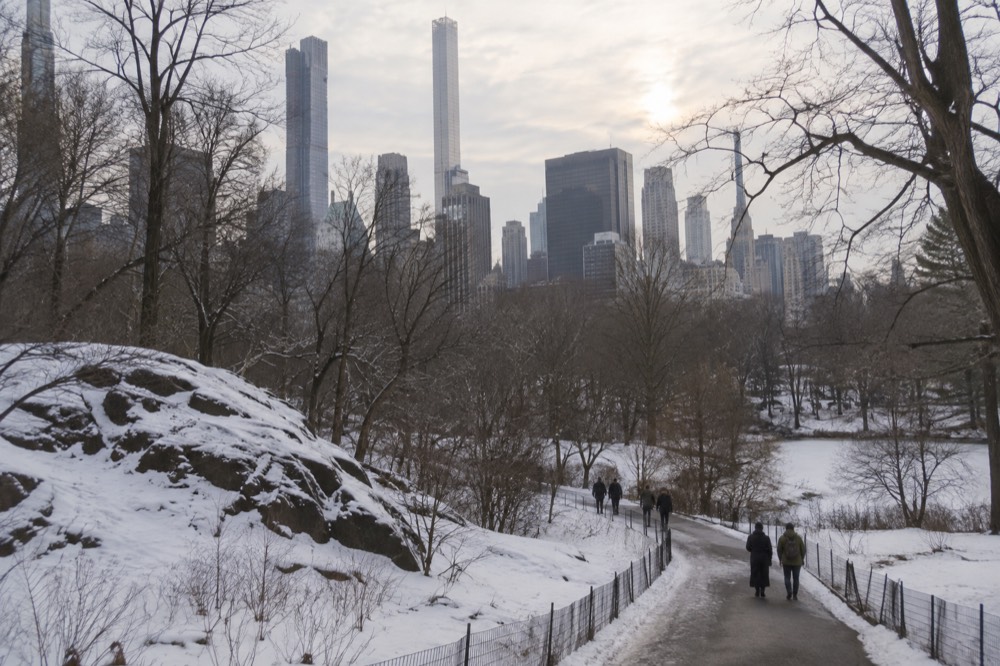
The official climate record for Central Park holds a fact that surprises most visitors planning a winter trip: February averages 10.1 inches of snow against January's 8.8, making it the snowiest month of the year in New York. At the same time, with 3.19 inches of total precipitation, it is also the driest. Snow, in other words, is a bigger part of the February picture than rain is, and the month rewards travelers who plan for cold, bright, quiet streets rather than a washed-out city. This page answers the question directly, with weather data from the NOAA 1991-2020 normals, current admission policies and the practical realities of touring New York at the coldest point of the calendar.
Is February a Good Time to Visit New York?
Yes, February is a good time to visit New York if you want lower crowds, the year's best hotel rates and a city built for indoor sightseeing, and a poor time if your heart is set on parks, ferry decks or long walks. Daytime highs average 42.2°F and lows 29.5°F, snow falls more than in any other month, and outdoor attractions lose much of their appeal.
What you get in exchange is a calmer city, shorter lines and honest winter light, and for many travelers that trade is worth making.
The honest framing is a trade. The observation decks, the museums and the Broadway houses all run at full schedule in February, and the queue at the Empire State Building is shorter than it is in July. The High Line, by contrast, is a windswept elevated walkway with dormant planting beds, and a harbor cruise in February means a cold deck and a stiff wind off the water. Neither fact makes February good or bad on its own. The question is what the trip is for.
Crowds are the strongest argument in the month's favor. New York welcomed 65 million visitors in 2025, and the overwhelming share of them arrive outside the winter trough. February sits in the quietest stretch of the year, between the holiday season and the spring thaw. The practical effect is visible at ticketed attractions: timed-entry decks are easier to book at short notice, popular museum galleries feel less packed, and restaurant reservations in normally busy neighborhoods are simpler to land.
The second argument is price. Room rates in New York swing hard with demand, and February sits at the bottom of the annual curve. The same logic does not apply to attraction tickets, which are fixed: the Metropolitan Museum of Art charges $30 for adults year-round, and the observation decks use dynamic pricing that moves with demand, so a February slot is often at the cheaper end of a deck's own range rather than a discounted version of a summer ticket. For a fuller rundown of what the city offers across the calendar, see things to do in NYC, and for the seasonal picture month by month, the site's best time to visit New York guide compares the whole year.
What Is the Weather Like in New York in February?
February in New York averages a high of 42.2°F and a low of 29.5°F in Central Park, with 3.19 inches of precipitation, the lowest monthly total of the year, and 10.1 inches of snow, the highest. The month is cold but not especially wet: most precipitation arrives as snow, and the wind is the element visitors underestimate. A normal February day calls for a real coat, hat and gloves.
The numbers come from the NOAA 1991-2020 climate normals for the Central Park station, the official long-run record for the city, cross-checked against the National Weather Service publication for the same station. The two sources agree to the decimal. The table below places February against its neighbors.
| Month | Avg high °F | Avg low °F | Precipitation (in) | Snowfall (in) |
|---|---|---|---|---|
| January | 39.5 | 27.9 | 3.64 | 8.8 |
| February | 42.2 | 29.5 | 3.19 | 10.1 |
| March | 49.9 | 35.8 | 4.29 | 5.0 |
| July | 84.9 | 70.1 | 4.60 | 0.0 |
Two readings of that table matter for planning. First, the snow total: February out-snows January despite being three days shorter, so a snowfall during a February trip is a realistic scenario, not a fluke. The city handles snow well, the subway keeps running through most storms, and a fresh snowfall over Central Park is one of the best photographic conditions New York offers. Second, the precipitation total: at 3.19 inches, February is the driest month of the year. Rain that would otherwise fall as a cold drizzle in November arrives as snow in February, which many travelers find preferable, provided the footwear is right.
The wind is the real variable. A 42°F afternoon in Midtown feels mild; the same afternoon on the Brooklyn Bridge promenade, on an open ferry deck or at the rail of an observation deck with open-air sections feels substantially colder. Wind chill between the towers on the bridge or along the Hudson is the single most common reason February visitors cut outdoor plans short. The countermeasure is layering and an outer shell that blocks wind, not just insulates.
One transit note belongs in any February planning conversation. The subway is the correct way around the city in winter, and the fare system is simpler than older guides suggest: tap a contactless card or phone at $3.00 a ride, and once the same device has racked up $35 in a rolling seven-day window, further subway and local bus rides are free. The 7-day unlimited MetroCard that most guides still recommend no longer exists, it was retired on 1 January 2026. The full mechanics are on the site's OMNY guide.
Is February Cheaper Than Other Months in New York?
On lodging, yes: February sits in the seasonal trough and room rates respond to demand, so the same property often costs meaningfully less than in May or October. On attractions, mostly no: museum admission and show tickets are fixed year-round, and observation decks price dynamically but do not run winter sales. The reliable February savings are rooms, restaurant availability and the pass arithmetic, not discounted entry at the door.
The distinction matters because a lot of winter-visit advice implies the whole city goes on sale. It does not. The Metropolitan Museum of Art charges $30 for adults regardless of the month, MoMA charges $30, and a Broadway ticket costs what the market for that show says it costs. What does move is hotel pricing, which tracks demand closely, and February demand is the weakest of the year outside of a few holiday weekends. The practical play is to spend the lodging savings on the fixed-price attractions rather than expecting the attractions themselves to discount. The wider set of guides lives on New York City Travel Guide.
That arithmetic is where a pass earns its keep on a February trip. The New York CityPASS bundles a choice of five attractions from an eleven-attraction menu, valid over nine consecutive days, at $149 for adults and $129 for children. The menu includes the Empire State Building's AM/PM experience, Top of the Rock, the Statue of Liberty and Ellis Island ferry, the 9/11 Memorial & Museum, the American Museum of Natural History, the Intrepid Museum, the Guggenheim, the Whitney, Edge and a Circle Line cruise. CityPASS's own published comparison prices those five choices at $307.04 bought individually for adults, a claimed saving of $158.04. A five-day February itinerary that naturally includes four or five of those sights makes the pass the cheapest route, and the nine-day validity means a February trip does not need to be frantic to use it.
Two cautions on the savings story. One of the three big New York passes no longer exists: The Sightseeing Pass ceased trading in 2025, and any guide still recommending it is out of date. And the "New York Pass" is no longer a separate product, it now sits inside Go City under the same parent. The comparison that matters today is between CityPASS and Go City, and the site's New York CityPASS guide works through it in full.
Free and reduced admission windows also do not pause for winter, and February's short daylight makes them easier to use. MoMA's free Friday evenings, 17:30 to 20:30, are reserved for New York State residents with proof, so most visitors cannot use them. The Whitney's Friday night free window, 17:00 to 22:00, is open to everyone, as is its free admission for anyone 25 and under. The Guggenheim runs pay-what-you-wish on Tuesdays and Sundays from 16:00 to 17:30, with a $1 minimum. The 9/11 Memorial & Museum releases free Monday-admission tickets on its website each Monday at 07:00 ET, first come first served, and the memorial plaza itself is always free, open 08:00 to 20:00. These are real, current, sourced policies, and a February trip can be built substantially around them.
What Should You Actually Do in New York in February?
February rewards indoor itineraries: the museums, Broadway, observation decks at sunset and food-focused walks through downtown neighborhoods all run at full schedule with thinner crowds. The outdoor classics, Central Park, the High Line, the Brooklyn Bridge, are still there and often beautiful in snow, but they work best as short, well-dressed segments between indoor anchors rather than as the spine of the day. Plan each day as one anchor, one indoor backup and one short outdoor hit.
The anchor attractions are the obvious starting point. SUMMIT One Vanderbilt is an indoor deck in the fullest sense: the mirror rooms, the glass ledges and the heated spaces mean the cold never interrupts the visit, and it sits directly next to Grand Central Terminal, so the subway ride there is a door-to-door trip. The deck is open daily from 08:00 to 24:00 with last entry at 22:30, and evening slots in February mean arriving after dark, when the city's lights do the work the daylight is too short to do. The Empire State Building's 86th floor has open-air sections, so it asks more of a winter visitor, but the queue is at its shortest of the year and the view through cold, clear air is sharper than a summer haze allows.
Museums are the second pillar. The Met is open Sunday through Tuesday and Thursday through Saturday, closed Wednesdays, and a February weekday means room to actually look at the Egyptian galleries and the European paintings rather than shuffle past them. Note that the museum currently has a long list of partial gallery closures, including sections of the American Wing, the Costume Institute and the modern and contemporary galleries, so check the Met's own closures page before planning a visit around a specific wing. One underused fact: every Met ticket includes same-day entry to both locations, Fifth Avenue and The Met Cloisters, which makes a cold day split between the two a legitimate single-ticket plan.
Food walks are the third pillar, and February is arguably their best season. A guided tasting tour through Chinatown and Little Italy turns three hours of walking into three hours of eating, with warm stops spaced close together, and the neighborhoods are at their least crowded of the year. The same logic applies to Chelsea Market, which is fully indoors and pairs naturally with a bundled visit to the High Line on a milder afternoon.
Broadway belongs in any February answer. The theaters run their full schedules, and the discount infrastructure works the same in February as any other month: the TKTS booths at Times Square and Lincoln Center sell same-day tickets at 20 to 50 percent off face value with an $8 per-ticket service fee, and digital lotteries on Broadway Direct and Lucky Seat typically land winners seats in the $30 to $50 range. A February trip with flexible evenings can see two or three shows for the price of one full-price summer night. The site's cheap Broadway tickets guide covers the full toolkit.
How Should You Dress and Plan for New York in February?
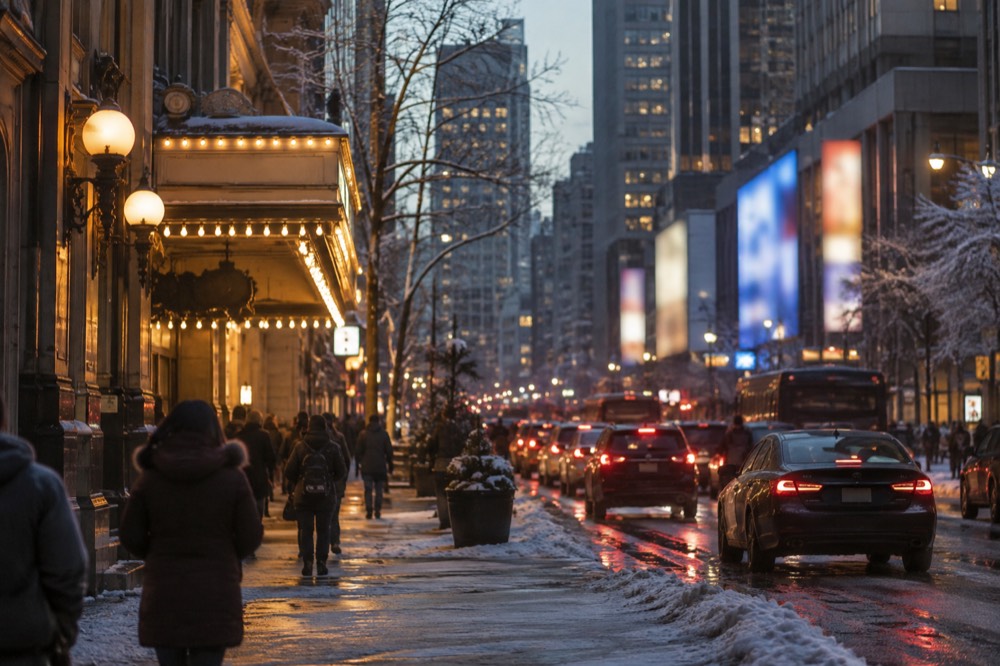
Dress for a high near 42°F, a low near 30°F and wind that makes both feel colder: a real insulated coat, hat, gloves, waterproof boots and layers under the shell. Plan days around one anchor attraction, keep outdoor segments under an hour, and book timed entries in advance, because popular slots still sell out on weekends. The subway is the connective tissue, at $3.00 a ride.
The footwear point deserves its own sentence. February snow means slush at curbs and crossings, and the puddles at Manhattan corners are deeper than they look. Waterproof boots with real soles are the difference between a comfortable trip and a miserable one, and they matter more than any single clothing item. Sneakers are a February mistake in New York.
Daylight is the other planning constraint. New York sits at roughly ten and a half hours of daylight in early February, stretching toward eleven by month's end, which means the sun is setting during the late-afternoon museum exit or the pre-theater dinner. That is not a problem, it is a scheduling tool: put the outdoor walk before 15:00, put the deck after dark, and let the short day work for the itinerary instead of against it. Sunset slots at the observation decks are the most photogenic hour of a February day.
Weekends still need advance booking. February thins the crowds, but the city does not empty, and the weekend surge is proportionally stronger now: MTA data shows weekend subway ridership has recovered to 88 percent of 2019 levels while weekday ridership sits at only 73 percent, so the Saturday at SUMMIT or the Met is busier relative to normal than a Tuesday. Timed-entry attractions manage this well, but only if the slot is booked. The general planning logic, one anchor per day with a bad-weather backup, is worked through in the site's weekend in NYC guide.
Common Questions About Visiting New York in February
The short answers: February is cold but dry, snowier than January and cheaper for rooms, with every major attraction open on full schedule. It is not the month for parks or long outdoor days, and it is an excellent month for museums, Broadway, decks at night and warm food walks. Snow is a realistic scenario, the subway handles it, and the right clothes make the whole month workable.
Is February a good time to visit New York?
Yes, for a city-focused trip. February brings the year's thinnest crowds and its lowest hotel rates, and every museum, deck, theater and restaurant runs at full schedule. The trade is the weather: highs average 42.2°F, lows 29.5°F, and February is the snowiest month of the year in Central Park. Travelers whose ideal trip is parks, ferry rides and long walks should pick another month; travelers who want the indoor city at its calmest should not.
Does it snow a lot in New York in February?
February averages 10.1 inches of snow in Central Park, the highest monthly total of the year and ahead of January's 8.8 inches. A snowfall during a February visit is a realistic expectation rather than bad luck. The subway keeps running through most storms, the city clears streets quickly, and a fresh snowfall over Central Park is one of the best photo conditions New York offers.
Is February the cheapest month to visit New York?
For lodging, February sits in the seasonal trough and room rates reflect the weakest demand of the year outside holiday weekends. For attractions, no: museum admission and show tickets are fixed year-round, and observation decks price dynamically rather than running winter sales. The reliable February savings are the hotel room and easier reservations, not discounted doors.
What should I wear in New York in February?
An insulated coat, hat, gloves and waterproof boots with real soles, plus layers underneath. Highs average 42.2°F and lows 29.5°F, and wind between the towers and along the water makes both feel colder. The slush at curbs after snow is the reason boots matter more than any other single item; sneakers are a February mistake.
Are the observation decks worth it in February?
Yes, and often more than in summer. Cold air is clearer than summer haze, evening slots show the city's lights during hours that are dark by 17:30, and queues are at their shortest of the year. Fully indoor decks like SUMMIT One Vanderbilt are unaffected by the cold entirely; open-air decks like the Empire State Building's 86th floor simply require the full coat and gloves.
Is anything closed in New York in February?
The major attractions keep full schedules. The Met is closed Wednesdays year-round, the Whitney is closed Tuesdays, and the Met currently has a published list of partial gallery closures, including sections of the American Wing and the modern galleries, so check the museum's own closures page if a specific wing is the reason for the visit. Seasonal outdoor programming, like the High Line's planting beds, is dormant rather than closed. Always check official conditions pages before locking an itinerary.
The bottom line for February is that the month asks a specific question of the traveler: do you want the New York of parks and promenades, or the New York of galleries, marquees and warm rooms? The first New York is a June proposition. The second is arguably at its best in February, when the snowiest and driest month of the year empties the queues, softens the rates and puts the city's indoor life, which is most of it, on full display.