Is It Free to Walk the High Line in New York?
Yes, the High Line is completely free to walk, with no ticket and no reservation. Here is what costs money nearby and what does not.
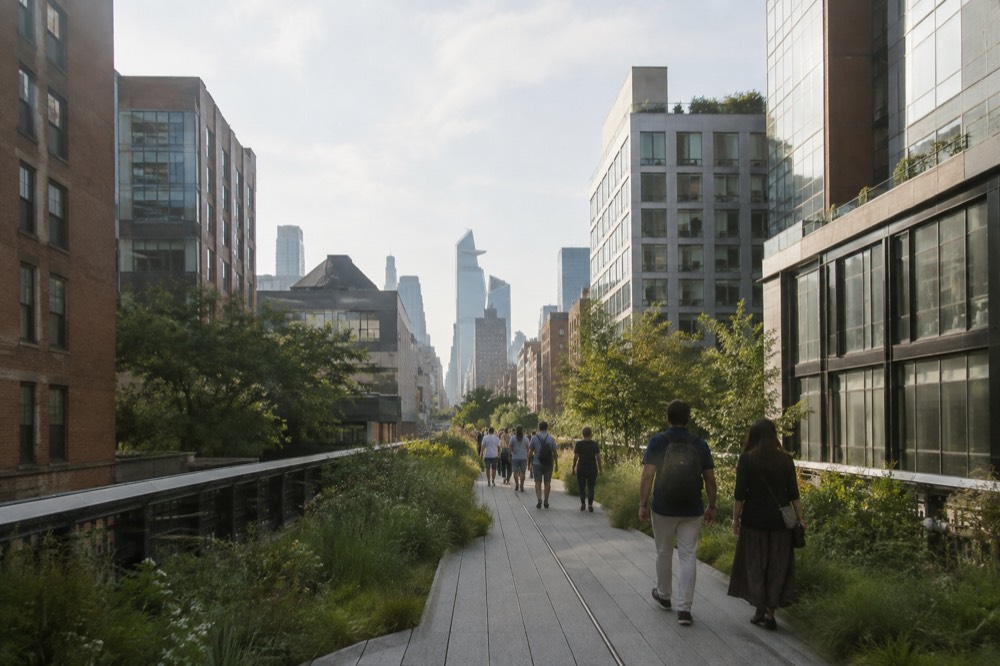
The High Line is a public park built on a former elevated rail line on Manhattan's West Side, and it charges nothing at the door because there is no door. You walk up a staircase or a ramp, you stroll a mile and a half of planted path between Gansevoort Street and the northern edge of Hudson Yards, and you walk back down. Nobody scans a ticket. Nobody asks for a donation. The costs that catch visitors out are all around the park: the food halls underneath it, the museums at either end, and the tours that bundle the walk with tastings. This page answers the free question directly, then covers what the surrounding blocks will and will not do to a budget.
Is It Free to Walk the High Line in New York?
Yes, walking the High Line is completely free. It is a New York City public park on a former elevated rail line, so entry costs nothing, requires no ticket and takes no reservation at any time it is open. There is no gate, no scanner and no suggested donation, and the same rule applies to every access point along the route. The only things that cost money are optional: food, museum entries and guided tours in the surrounding blocks.
That answer surprises people who have read about timed entry at the observation decks and reserved slots at the Statue of Liberty crown, because New York has trained visitors to expect a booking flow before every experience. The High Line has none of it. It behaves like the sidewalk it sits above. You arrive, you climb, you walk.
The park runs through West Chelsea and the Meatpacking District, roughly parallel to 10th and 11th Avenues, ending at Hudson Yards on the north side. Because it is elevated about 30 feet over the street, the walk delivers building-level views of the city without an admission desk anywhere in sight. For many visitors it delivers the best free views in Manhattan, framed by plantings, benches and the architecture that has grown up around the viaduct.
If you are assembling a full day around the walk, the practical planning happens on our things to do in NYC page, and the detailed guide to the park itself, including entrances and route notes, lives at the High Line guide.
Do You Need a Ticket or a Reservation for the High Line?
No ticket, reservation or timed slot is needed to walk the High Line, ever. Unlike the observation decks and several major museums nearby, the park has no booking system at all, and entry cannot be purchased or reserved in advance. Anyone selling you a High Line entry ticket is selling something the park gives away. The only legitimate paid products tied to the park are guided tours, which pay for the guide, not for access to the walkway.
This distinction matters because the marketplace around the park is crowded. The High Line appears in the descriptions of food tours, walking tours and sightseeing packages, and a reader skimming a listing could easily conclude that access is bundled with the product. It is not. The walkway is public space, open on the same terms to everyone, whether they arrived with a guide, a sandwich or nothing at all.
What a paid tour genuinely adds is routing and context. A guide knows which stretch has the best light at which hour, where the access ramps sit, and how the Meatpacking District, West Chelsea and Hudson Yards connect beneath the viaduct. The Chelsea Market and High Line food tour pairs the walk with tastings from the market's stalls, which suits visitors who want lunch and history in one block of time.
What Is Free Along the High Line and What Costs Money?
The walkway itself, every access point, the seating, the planting displays and the street-level public spaces beneath the viaduct are all free. What costs money is everything commercial: food and drink in Chelsea Market and the surrounding blocks, museum admission at the Whitney or Hudson Yards attractions, and any guided tour. A visitor can do the entire High Line experience for zero dollars, and most people spend only when they choose to eat, shop or enter a museum.
The honest budget picture looks like this:
| Item | Free or paid | What to know |
|---|---|---|
| The High Line walkway | Free | Public park, no ticket, no reservation |
| Access stairs and ramps | Free | Multiple entry points along the route |
| Chelsea Market food and drink | Paid | Market stalls set their own prices |
| Whitney Museum of American Art | Paid, with free windows | Free every day for anyone 25 and under, plus free Friday nights for everyone |
| Guided food and walking tours | Paid | You pay for the guide and tastings, not park access |
| Free walking tours | Tip-based | Pay what you choose at the end |
The Whitney row deserves its own sentence, because it is one of the better free deals in the neighborhood. The museum sits at the southern end of the park, and anyone 25 or under enters free every day. Beyond that, the Whitney runs free Friday nights open to everyone, with advance tickets recommended and capacity limited. A visitor walking the High Line on a Friday afternoon can end the day in a major American art museum without paying admission, provided they plan the timing and accept that free slots can fill.
Chelsea Market is the opposite case, and the most common budget leak. The market sits directly beneath the southern section of the park, and its food stalls are excellent and not cheap. Nothing about the market is compulsory. A visitor who eats before arriving, or who treats the market as a free place to wander and look, keeps the day at zero.
The other thing that costs nothing is simply continuing to walk. The park's northern end lands at Hudson Yards, where the public plaza space is open and free, and the surrounding blocks of West Chelsea reward aimless wandering as much as any ticketed attraction. Our Hudson Yards guide covers what is free and paid in that section if you are continuing north.
When Is the High Line Open, and Are There Closures to Know About?
The High Line is a public park and keeps long daily hours, opening early in the morning and staying open into the evening year round, with no announced closure affecting the walkway as of the latest research check. Entry remains free at every hour the park is open. Seasonal weather, occasional maintenance on individual sections, and crowded summer weekends are the only practical constraints, and none of them change the price, which is zero.
The verification pass that checked the High Line against official sources for this site found no announced closure, which is worth stating plainly because New York attractions do close, sometimes with little publicity. Treat that as "nothing found" rather than a guarantee, and check the park's official channels before a visit in unusual weather or on a holiday, when park rules can shift. The full index of guides sits on New York City Travel Guide.
Crowding is the real seasonal variable. On warm weekend afternoons the walkway carries a steady flow of visitors, strollers and photographers, and the rail-side spots go early. Early mornings are quieter, and the light through the surrounding buildings favors the middle of the day. None of this costs money to manage; it costs only timing.
Winter is the underrated season for this walk. February is statistically both the snowiest and the driest month in Central Park's long-term record, and the surrounding blocks look sharp under snow. The plantings change character rather than disappear, and the crowds thin dramatically. A cold-weather High Line walk is one of the better free hours in the city, provided you dress for the wind that funnels along the viaduct.
Can You See the High Line for Free with a Guide?
Yes, through tip-based free walking tours on GuruWalk, where you pay nothing up front and tip the guide whatever you choose at the end. These are pay-what-you-want walks run by independent guides, not city services. One caveat specific to New York: six of the ten free walks listed for the city belong to a single operator, CityShuffles, so the choice of operators is narrower than it looks.
The walk highlighted above covers the Financial District rather than the High Line itself, and that is a fair illustration of how the free-walk scene in New York is distributed: the tip-based inventory clusters on Lower Manhattan and the bridge neighborhoods, not on West Chelsea. If a free guided walk of the High Line specifically is what you want, check what is currently running on GuruWalk before counting on it, because the lineup changes and the High Line is not always served.
The paid alternative is more reliably attached to the park. The Chelsea Market and High Line food tour runs about three hours, covers the walk and the market with tastings woven in, and suits visitors who want the neighborhood decoded while eating. It is a genuine meal's worth of stops, so the practical advice is to arrive hungry and treat it as lunch rather than a stroll with snacks.
How Does the High Line Fit Into a Budget Day in New York?
A High Line-centered day can run from zero dollars to well over a hundred, and the walk itself never moves the needle. The free version pairs the park with the Whitney on a free Friday night, a tip-based walk if one is running, and self-guided wandering through Chelsea Market. The paid version adds a food tour, museum admission and Hudson Yards attractions, and a pass can make sense if your itinerary overlaps with what passes cover.
The pass question deserves a straight answer here because the High Line sits in the middle of pass territory. The walkway itself appears on no pass, because you cannot sell access to something free. But the surrounding attractions do. New York CityPASS bundles five attractions from a menu of eleven, costs $149 for adults, and runs for nine consecutive days from first use. It makes sense for a visitor whose itinerary stacks several of the covered sights, and no sense for someone whose day is built around free parks and walks.
| Way to do the High Line | Upfront cost | Best for |
|---|---|---|
| Walk it alone | $0 | Everyone; the default option |
| Self-guided with Chelsea Market lunch | Market prices | Food lovers who want to pick their own stops |
| Guided food tour | Paid, per person | Visitors who want tastings and history routed for them |
| Tip-based free walk | $0, tip what you choose | Budget travelers who find a High Line walk running |
| Pair with the Whitney | Free on Friday nights, paid otherwise | Art lovers, and anyone 25 or under, who enter free daily |
The transit side of a budget day is also close to zero, and worth one paragraph because the fare system changed recently. The subway fare is $3.00 per ride, and the MetroCard that older guides tell you to buy no longer exists: the MTA stopped selling and refilling MetroCards on 1 January 2026. The replacement is automatic fare capping through OMNY, the tap-to-pay system. After $35 of subway and local bus taps in a rolling seven-day period on the same card or device, the rest of that period is free, with no pass to buy in advance. A visitor riding to the High Line and around the city taps a card or phone and never thinks about a weekly pass.
Common Questions About Walking the High Line in New York
The questions visitors actually ask about the High Line cluster around cost, access and timing: whether it is free, whether a ticket is needed, when it opens, whether it works for kids and wheelchairs, and whether a tour is worth adding. The short answers are yes it is free, no ticket is needed, hours are long with no announced closure, the path is accessible with ramps and elevators at access points, and tours are optional extras that pay for guidance rather than entry.
Is it free to walk the high line in new york?
Yes, completely free. The High Line is a public park on a former elevated rail line, with no ticket, no reservation and no suggested donation at any access point. The only costs are optional food, museum entries and guided tours in the surrounding blocks.
Do you need tickets for the High Line?
No. There is no booking system, no timed entry and no gate. Anyone selling High Line entry is selling something the park gives away. Guided tours of the park are paid products, but they cover the guide's time and any tastings, not access to the walkway.
Is the High Line open in winter?
Yes, it is a year-round park. Winter visits are quieter, and February is both the snowiest and the driest month in the long-term Central Park climate record, so the surrounding blocks can look striking under snow. Dress for wind along the viaduct.
Can you combine the High Line with Chelsea Market?
Easily. Chelsea Market sits directly beneath the southern section of the park, and wandering the market is free. Food and drink are the paid part, and a guided food tour bundles the walk with tastings if you would rather have the route and the history handled for you.
Is the Whitney Museum free if you walk the High Line?
Not automatically, but the Whitney at the park's southern end has real free windows: anyone 25 or under enters free every day, and free Friday nights are open to everyone, with advance tickets recommended because capacity is limited.
How long does the High Line take to walk?
Most visitors spend between one and two hours walking the full length with pauses, depending on how often they stop at the seating, overlooks and street-level access points. Add time for Chelsea Market, the Whitney or Hudson Yards if you are building a day around it.
Is the High Line accessible for wheelchairs and strollers?
Yes. The park has elevators and ramps at its access points, and the walkway itself is level, paved and step-free for its full length. Check the park's official channels for the current status of any individual elevator, since maintenance can take one out of service temporarily.
Is the High Line good for kids?
It is a flat, stroller-friendly walk with plenty to look at, and it connects to free public spaces at both ends. There is no playground on the viaduct itself, so families usually treat it as a scenic stroll rather than a destination for children, and pair it with food stops in Chelsea Market to keep younger walkers engaged.
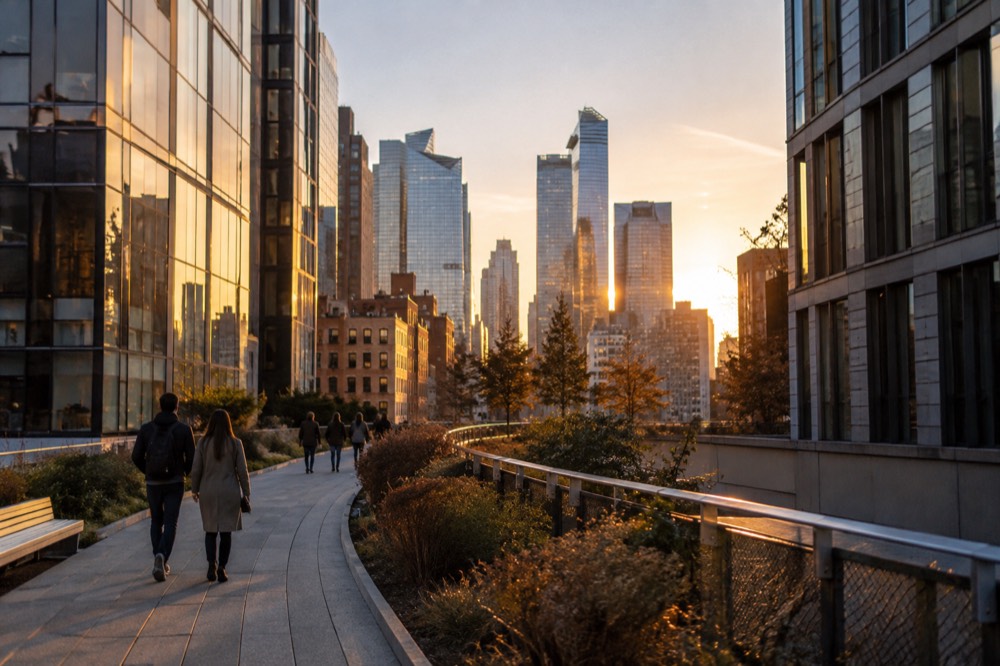
The last practical note is about what the High Line does to the rest of a New York plan. It is one of the few headline experiences in the city that costs nothing, sits in a neighborhood dense with paid attractions, and connects cleanly to both the Meatpacking District and Hudson Yards on foot. That makes it the natural anchor of a mixed-budget day: free walking, free public spaces, one splurge meal or one museum, and the subway, at $3.00 a ride with an automatic $35 weekly cap, tying it together.
A few closing details make the free version of the day work better. Enter at the Gansevoort Street end if you want the classic south-to-north walk and finish at Hudson Yards, or start at 34th Street if you would rather walk toward the Meatpacking District and end within reach of the Whitney. Bring water in summer, since the viaduct offers little shade in the middle of the day, and pick a weekday morning if you want the path closer to empty. None of these choices cost a dollar. Plan the paid parts deliberately, and let the park itself stay what it is, the best free mile and a half in Manhattan.