The High Line NYC: What a Walk Up the Elevated Park Actually Costs, Takes and Rewards
The High Line lifts you above the streets of Chelsea on a planted walkway built on a former elevated freight rail line. This guide covers what a visit involves: how to get on it, when to go, what it costs, and what to pair it with.
Short answer
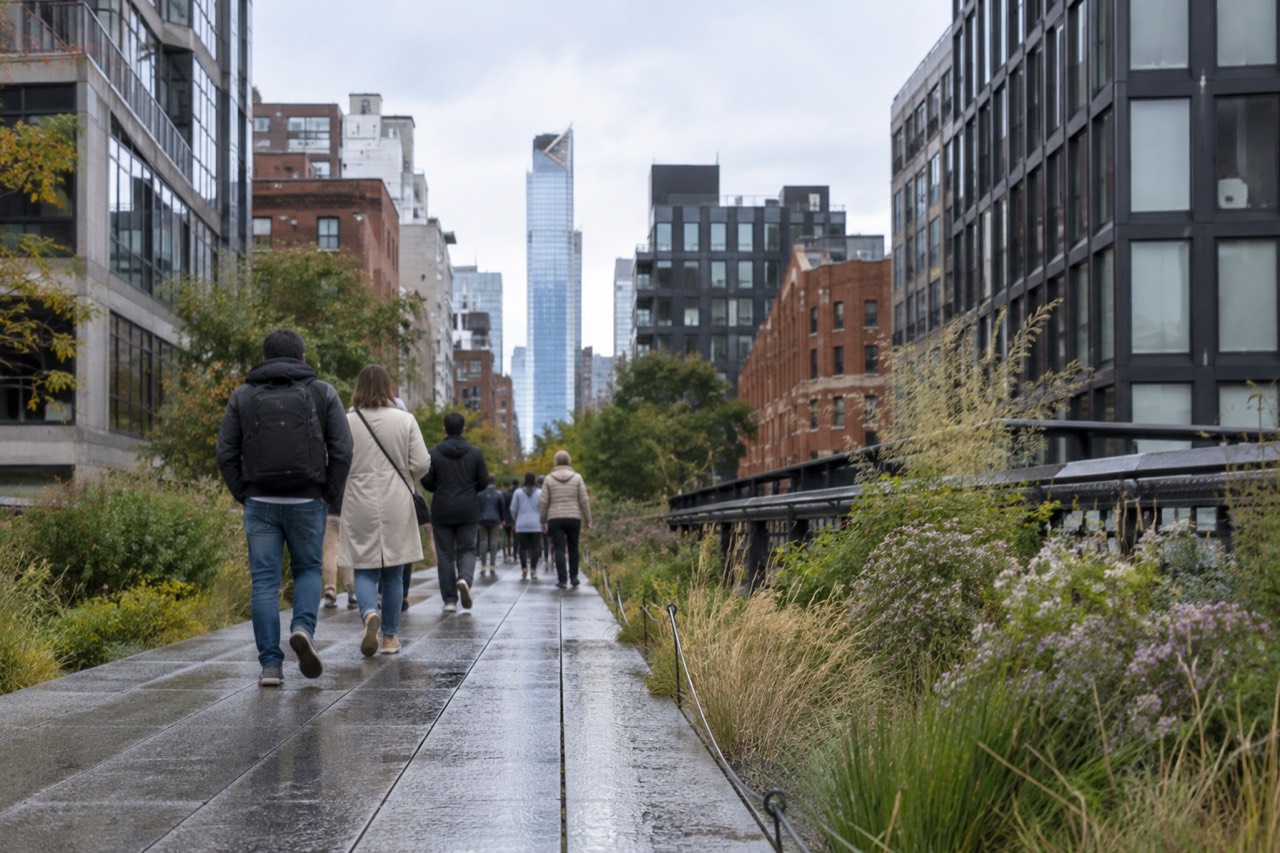
The High Line is free to walk, needs no ticket, and runs above the west side of Manhattan from the Meatpacking District through Chelsea to Hudson Yards. Allow 1 to 2 hours at an easy pace, go early or at dusk to dodge crowds, and pair it with Chelsea Market and the Whitney, which sit directly at its southern end.
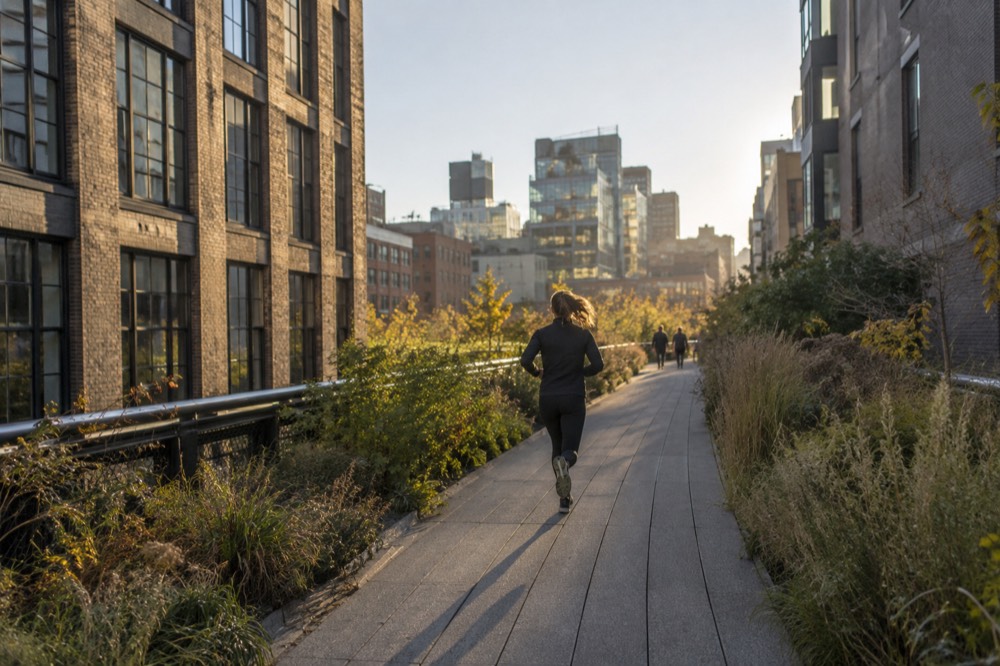
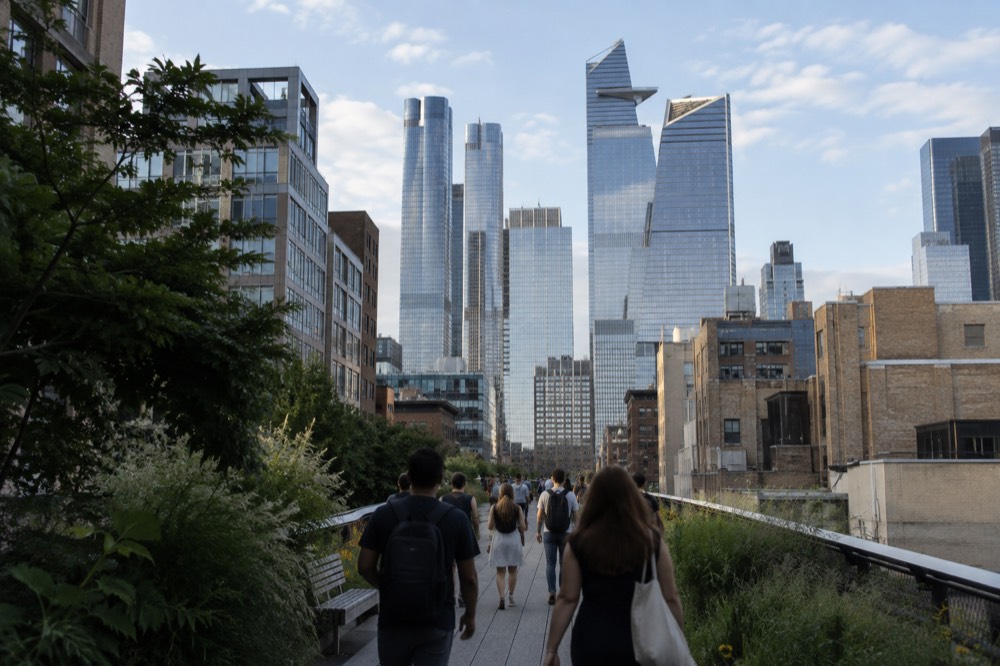
Most of New York's famous walks happen at street level, dodging cyclists and crossing lights. The High Line is the exception: a public park lifted about two stories above the west side of Manhattan, running along the route of a former elevated freight rail line through the Meatpacking District, Chelsea and Hudson Yards. No ticket, no gate, no queue at a booth. You climb a staircase, and the traffic noise drops away.
That simplicity is exactly why the park confuses so many first-time visitors. People arrive expecting an entrance kiosk, a fee, a fixed opening ritual. There is none of that. There are instead practical questions that decide whether your walk is a highlight or a shuffle behind a slow crowd in midday heat: which end do you start from, what time of day do you go, what does the surrounding neighborhood cost you once you're off the walkway, and what do you pair with it so the trip west of Midtown earns its half day. This guide answers all of it, with current prices for everything around the park, from the Whitney at its southern end to the observation decks a few blocks north.
What Is the High Line Nyc?
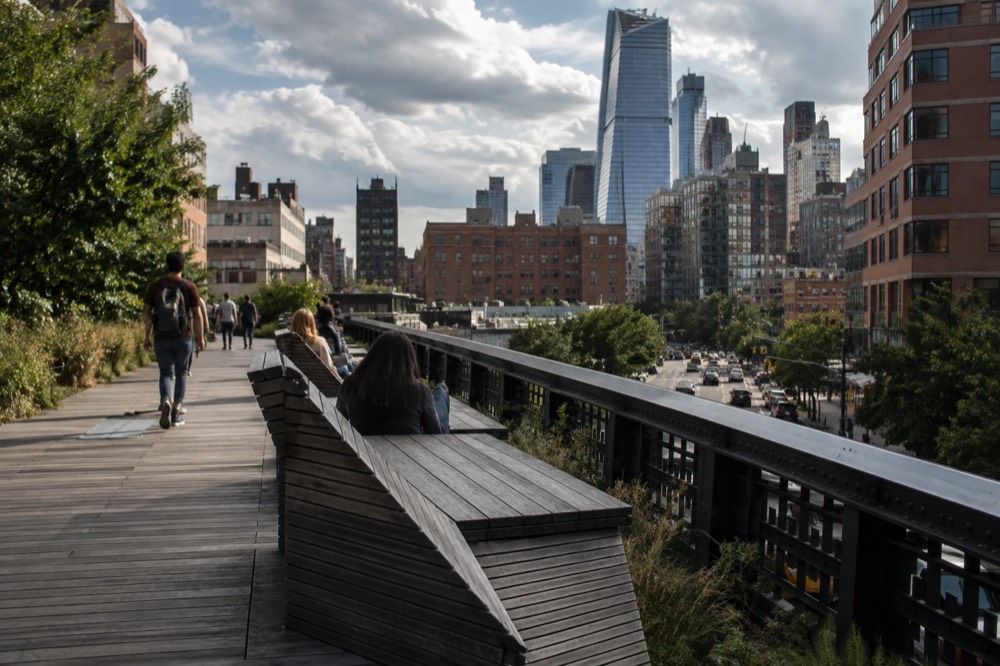
The High Line is a free elevated public park built on the bed of a former freight rail line on Manhattan's west side, running roughly from Gansevoort Street in the Meatpacking District north through Chelsea to the Hudson Yards development. It is a narrow planted walkway, roughly a mile and a half end to end, lifted above the streets on the old rail viaduct. There is no admission charge and no ticket of any kind. The park threads between converted warehouses and new residential towers, with benches, lawns and planted beds along the route, and it functions as both a garden and one of the best pedestrian sightseeing routes in the city.
The rail history explains the park's shape, and it is the part most visitors miss entirely. The structure was built to carry freight trains, and the line wove through blocks rather than along a straight avenue because it had to serve the warehouses and factories that backed onto it. When the trains stopped running, the viaduct survived demolition and was eventually converted into a park, which is why the walkway feels like a corridor cut through buildings rather than a promenade laid out above them. That corridor quality is the point: from the walkway you look straight into the industrial architecture of Chelsea from a height no sidewalk can offer.
For trip planning, treat the High Line as a linear connector rather than a destination you stand still in. Its southern end sits in the Meatpacking District, steps from Chelsea Market and the Whitney Museum. Its northern end lands you at Hudson Yards, the cluster of towers that includes the Edge observation deck and the Vessel structure. Walking it south to north, or north to south, naturally strings together half a day of some of the densest sightseeing on the west side. The park is wide enough for two people to walk abreast in most sections and narrower in others, which is why timing matters more than you would expect for a free park.
One more framing point. Manhattan is one borough of five, and the High Line is firmly a Manhattan experience, but it is not a Midtown one. It belongs to the west-side neighborhoods, and the honest way to visit it is as part of Chelsea, the Meatpacking District and Hudson Yards rather than as a detour bolted onto a Times Square day. Our overview of things to do across the city places it in that bigger context.
How Much Does It Cost to Walk the High Line?
Walking the High Line costs nothing at all: the park is free, open to the public, and requires no ticket, reservation or pass of any kind, which sets it apart from nearly every major attraction surrounding it on the west side. The real budget for a High Line visit is the stuff you add around it. The Whitney Museum at the park's southern end charges $30 adult admission, the Edge observation deck at the northern end starts from $34-$45 online with a $62.06 box-office price for the full immersive experience, and lunch in Chelsea Market varies from a few dollars a stall dish to a sit-down splurge. The walkway itself is the free spine connecting all of it.
That makes the High Line one of the few genuinely free headline attractions in a city where the paid layer stacks up fast. Consider what surrounds it: three of the five major observation decks, several of the biggest museums, and the harbor ferries all charge, and the costs compound quickly on a packed itinerary. A pass can change that arithmetic. The New York CityPASS costs $149 for adults and covers your choice of 5 attractions from an 11-attraction list over 9 consecutive days, a list that includes the Edge deck at Hudson Yards, the Top of the Rock and the ferry to the Statue of Liberty grounds. Whether a pass pays off depends on how many of those you would genuinely visit, and we break that down in our New York CityPASS guide.
| What | Cost | Notes |
|---|---|---|
| The High Line walkway | Free | No ticket, no reservation, no gate |
| Whitney Museum (adult) | $30 | Free Friday nights 17:00-22:00 for everyone; free daily for anyone 25 and under |
| Edge observation deck | From $34-$45 online | Box-office full experience $62.06; $2 processing fee per ticket |
| Chelsea Market | Pay as you eat | Stall prices vary; budget $15-$30 for a casual lunch |
| Subway ride to either end | $3.00 | Tap with OMNY; weekly cap of $35 applies automatically |
The surrounding free layer is stronger than most guides admit. The Whitney, which sits directly at the park's southern end, runs free Friday nights from 17:00 to 22:00 open to everyone, with advance tickets recommended because capacity is limited, and free admission every day for anyone 25 and under. The Vessel structure at Hudson Yards can be admired from the plaza without a ticket. And the walk itself, with its planting beds and views down the avenue canyons, is the kind of experience other cities charge for. For more free options across the five boroughs, our free things to do in NYC page builds on this layer.
Budget one more line item: transit to and from. The subway fare is $3.00 per ride, and if you are in the city for a week of sightseeing the OMNY system caps your subway and local bus spending at $35 over a rolling seven-day period automatically, as long as you tap the same card or device every time. There is no pass to buy and no decision to make at a machine. The old advice about buying a 7-day unlimited MetroCard is dead: the MTA stopped selling and refilling MetroCards entirely as of 1 January 2026, and the $35 cap replaced the product. Anyone telling you otherwise is quoting a retired fare system.
When Is the Best Time to Walk the High Line?
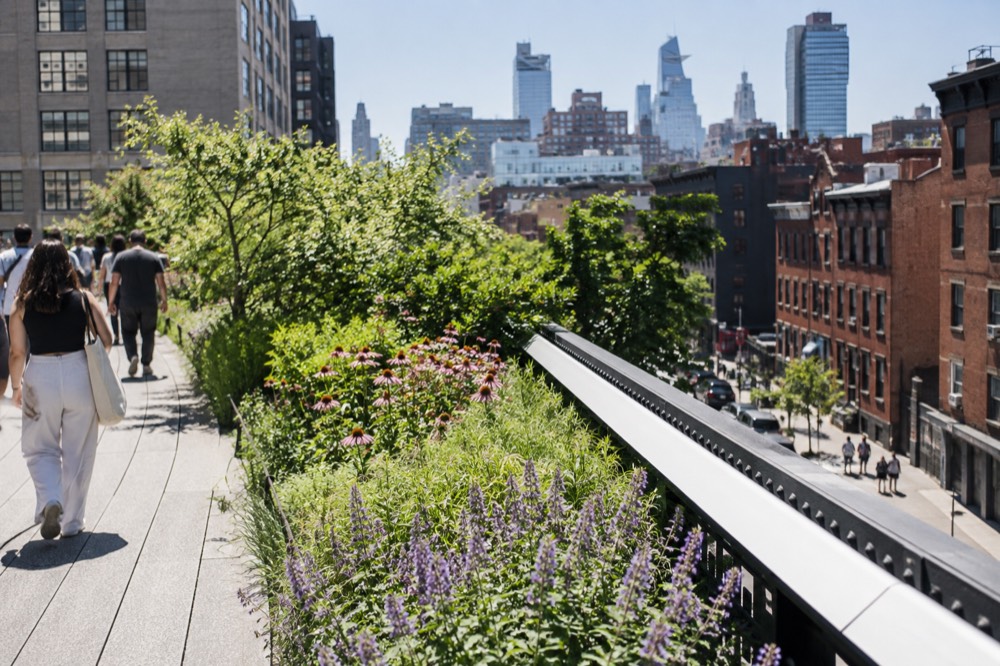
Early morning on a weekday is the best time to walk the High Line: you get shade-cooled air, thin crowds and clean light for photography, while weekend afternoons are the worst combination of heat, congestion and queue-forming at the stair entrances. Sunset is the other premium window, especially in summer, when the walkway faces west over the Hudson and the light goes gold across the planted beds. In December, aim for late afternoon so the dusk city lights switch on while you walk. Season-wise, late spring through early fall shows the planting at its peak, but July brings the year's heaviest rain.
The crowd logic follows a pattern you can plan around. The park is narrow, and narrow parks feel full fast. On a Saturday afternoon in July, the walkway between the popular seating areas can slow to a shuffle, and the experience changes character entirely: you are no longer strolling, you are processing. Go before 10am on a weekday and you will share the benches with joggers, locals walking dogs in the morning sections and only scattered tourists. The difference is not marginal, it is the difference between two different attractions.
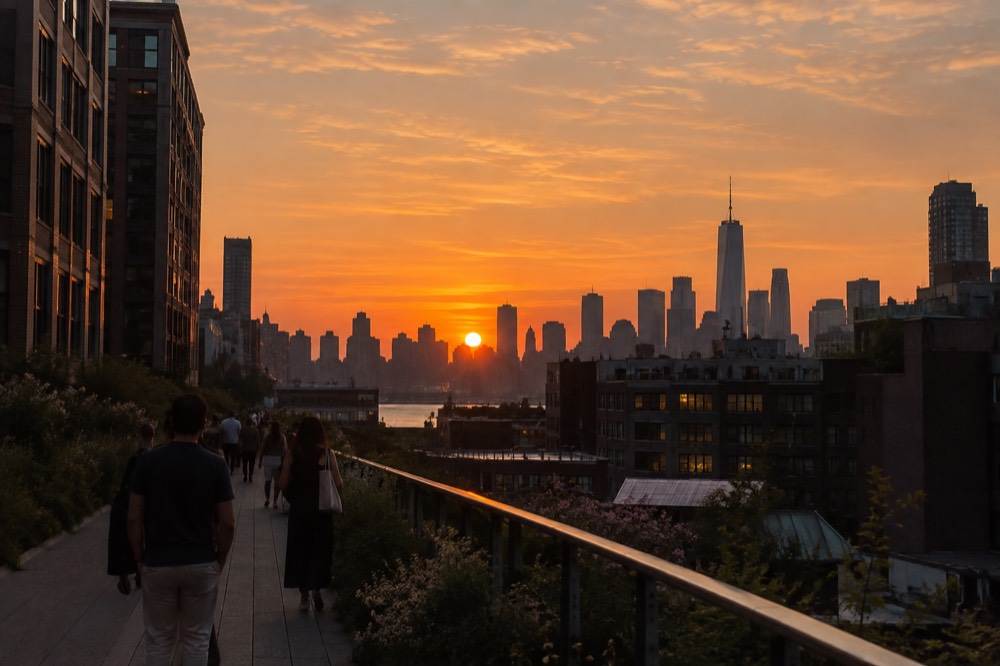
Weather matters more here than at street level, because the elevated walkway offers limited shelter. This is where the official climate record upends what most visitors assume. NOAA's 1991-2020 Central Park normals show July is the wettest month in New York, averaging 4.60 inches of precipitation, ahead of August at 4.56 and June at 4.54, per the National Weather Service climate publication. Summer visitors who book July expecting dry heat have it backwards. And on the winter side, February averages 10.1 inches of snow against January's 8.8, making February both the snowiest and, at 3.19 inches of total precipitation, the driest month of the year.
| Season | What to expect on the walkway | Best time of day |
|---|---|---|
| Spring (Mar-May) | Planting beds coming into flower, cool mornings | Mid-morning onward |
| Summer (Jun-Aug) | Peak greenery, heavy afternoon heat, sudden showers | Before 10am or sunset |
| Fall (Sep-Nov) | Golden foliage on the plantings, crisp air | Late afternoon |
| Winter (Dec-Feb) | Bare beds, low light, occasional snow cover | Late afternoon for dusk lights |
Rain plan matters, and the good news is that the High Line sits next to one of the best rainy-day fallbacks in Manhattan: Chelsea Market, which is indoors and directly connected to the park's southern section. If the sky opens while you are mid-walk, you can be under a roof within minutes. Our rainy day activities in NYC guide builds out that fallback list across the city.
Timing also interacts with what you pair the walk with. If you want the Whitney's free Friday night window, arrive in the late afternoon, walk the High Line as the light drops, and enter the museum after 17:00. If you are heading to Edge or a Hudson Yards dinner, start at the Meatpacking end in the early afternoon and finish north at dusk. The walkway rewards being treated as a route with a schedule, not a place you drift into.
Where Do You Get on the High Line?
The High Line can be entered at multiple stair and elevator access points along its route from the Meatpacking District to Hudson Yards, with elevator access available at the major entry points for step-free entry, and no single official front door. Most visitors enter at one of the two ends: the southern end at Gansevoort Street in the Meatpacking District, or the northern end at Hudson Yards. Elevators serve step-free access at key points along the route, and because the park is a public walkway rather than a gated attraction, you can join and leave it anywhere an entrance exists.
Choosing your end is the most consequential decision of the visit, because it sets your direction and your pairing. Starting south and walking north is the classic move: you begin at Gansevoort Street with Chelsea Market and the Whitney at your back, climb up through the Meatpacking District section, and finish at Hudson Yards with Edge, the Vessel plaza and a cluster of restaurants around you. The subway then carries you onward from there. Starting north and walking south works well for people staying in Midtown, since you can arrive at Hudson Yards first and end your walk at dinner in the Meatpacking District.
Getting there by subway is straightforward, and the fare is $3.00 per ride with the OMNY tap system, or nothing more once the $35 weekly cap kicks in on a heavy sightseeing week. Several lines serve the west side within a few blocks of an entrance, including the L at 14th Street and 8th Avenue for the central Chelsea section, and the 7 train at Hudson Yards for the northern end. The A, C and E trains run up 8th Avenue with stops within walking distance of the central sections. If you are new to the system, our NYC subway guide covers the practicalities, and the fare mechanics, including the cap rules, are explained in our OMNY guide.
| Entry strategy | Where you start | What it pairs with |
|---|---|---|
| South to north (classic) | Gansevoort Street, Meatpacking District | Chelsea Market and the Whitney first, ends at Hudson Yards |
| North to south | Hudson Yards | Edge or the Vessel plaza first, ends at dinner in the Meatpacking District |
| Mid-route entry | Chelsea section via 14th Street area | Best for a short walk when time is tight |
| Step-free entry | Elevator points at major entrances | Check the official park access details before visiting |
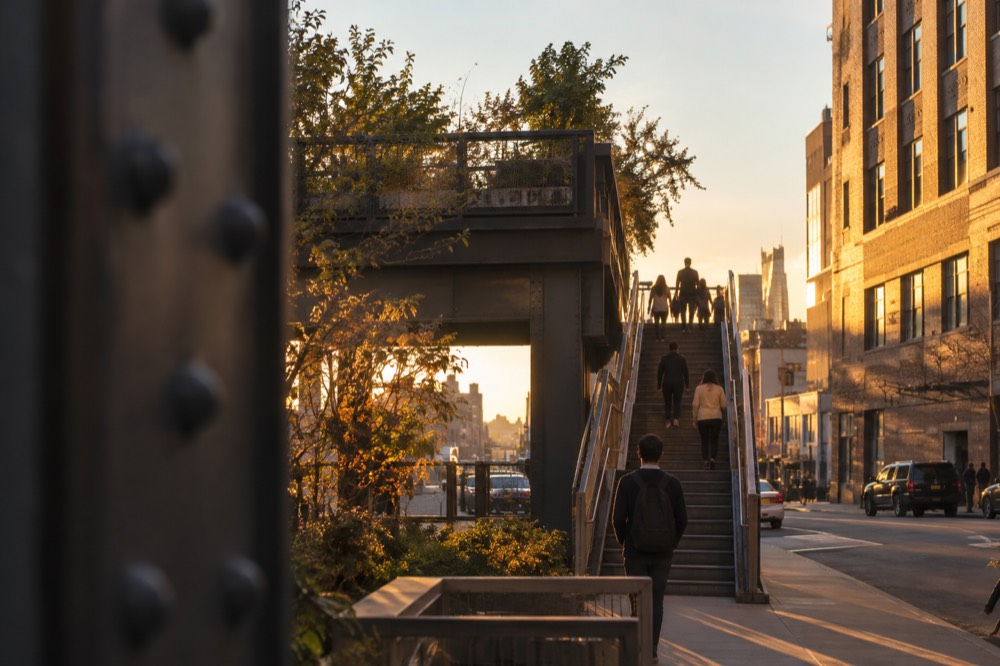
A note on the walk-out: the neighborhood is as much the attraction as the park. Chelsea's gallery blocks sit a few minutes east of the walkway, the Meatpacking District's restaurant rows surround the southern end, and Hudson Yards' retail and dining wrap the north. Give yourself permission to descend mid-route and re-climb later if something catches your eye, because there is no penalty for leaving and rejoining. It is a public park, and it behaves like one.
Is the High Line Accessible for Wheelchairs and Strollers?
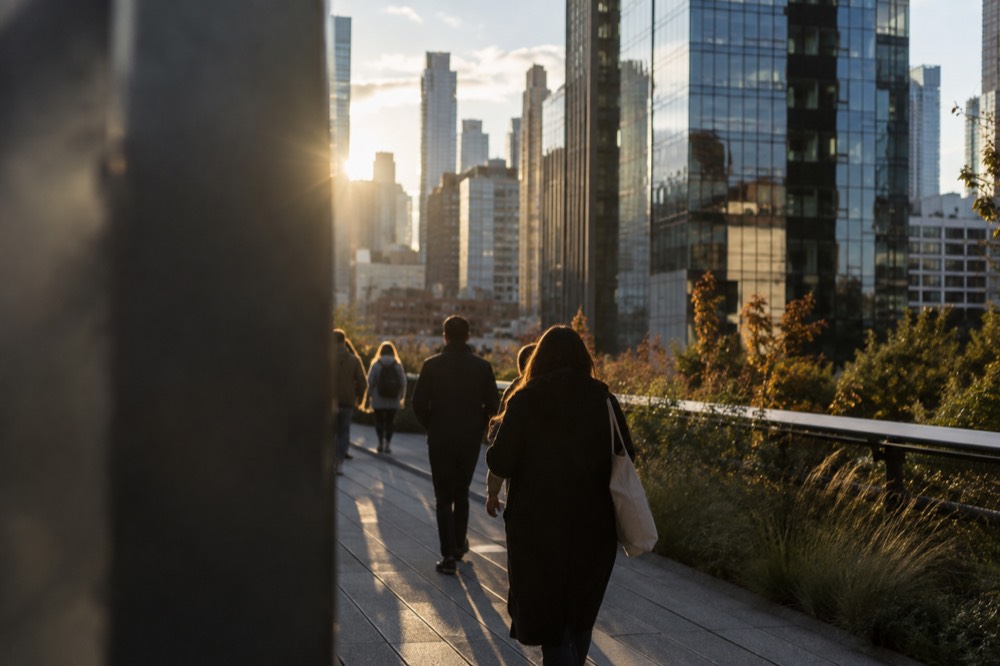
Yes, the High Line is accessible: the park provides elevator access at its major entrances for step-free entry along the route, the walkway surface is smooth and suitable for wheelchairs and strollers, and benches and seating areas are distributed along the full length. Because it is a public park rather than a ticketed venue, there are no accessible-ticket procedures to arrange in advance. Visitors who need step-free access should plan their entry and exit around the elevator points rather than the stair entrances, and our dedicated accessibility coverage lists the broader resources across the city.
The honest caveat is about the neighborhood, not the park. Reaching an elevator entrance means approaching through Chelsea and the Meatpacking District on standard city sidewalks, which include curbs, construction scaffolding and busy crossings in places. Once you are on the walkway itself, the experience is level and calm, with wide passing space in most sections. Stroller users have an easier time than in most of Manhattan's crowded attractions, and the elevators mean you are never committed to a staircase to get back down.
The surrounding sights split on accessibility in ways worth knowing in advance. Chelsea Market is indoors and step-free at its main entrances. The Whitney, directly at the southern end, is a modern building with elevator access throughout its galleries. At Hudson Yards, the Vessel plaza is level, though the structure's own stair-climb experience has its own rules. For the full picture, including transit access with a wheelchair, see our wheelchair-accessible NYC guide, which covers the subway's elevator inventory and the attractions that do accessibility well.
What Should You Pair with the High Line in Chelsea and Hudson Yards?
The strongest pairings are Chelsea Market at the southern end for food, the Whitney Museum for American art, and Hudson Yards at the northern end for the Edge observation deck and the Vessel plaza, all of which sit within a few minutes' walk of the park itself. A full west-side day strings all four together: lunch at the market, the walk north, Edge or a Hudson Yards dinner at the finish. Cutting it short, the Chelsea Market plus High Line combination alone justifies the trip west of Midtown, and it works in almost any weather because the market half is indoors.
Chelsea Market is the pairing that most visitors take, and deservedly. The former industrial building packs food vendors, shops and restaurants into a covered hall, and it connects directly to the High Line's southern stretch, so the transition from lunch to walkway takes minutes. The fixed-stop alternative is a guided food tour: the Chelsea Market and High Line guided food tour walks the elevated park with a guide who knows which vendors are worth the wait, then drops into the market for tastings from its best stalls, with the history of the rail line and the Meatpacking District woven through. At $83 per person and roughly 3 hours, it is a good fit for travelers who want tastings and context in one outing rather than self-guided browsing, though not for picky eaters, since the stops are fixed.
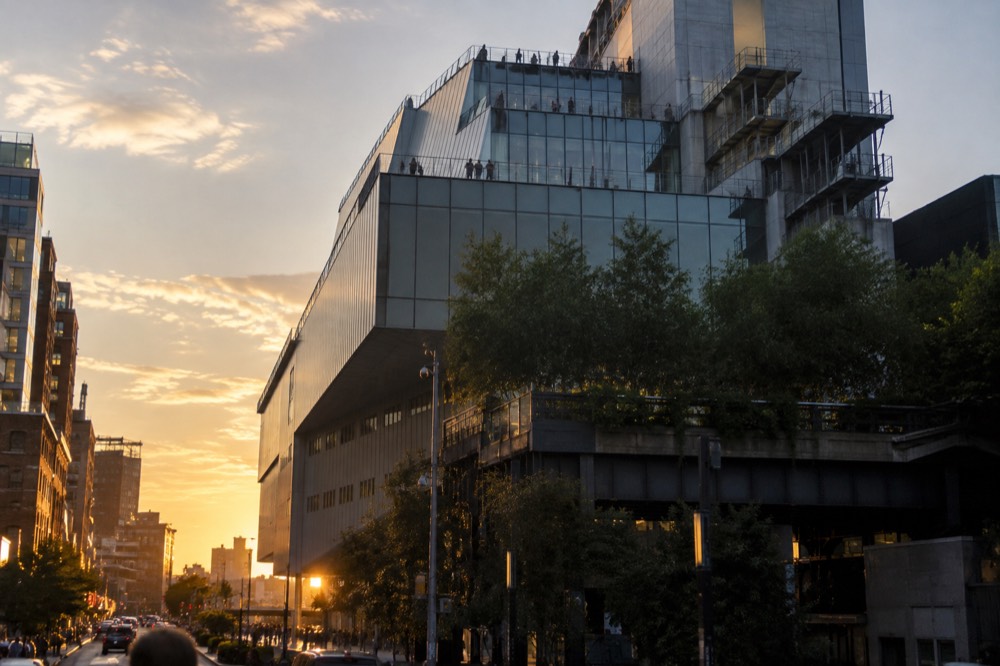
The Whitney deserves more attention than it gets from High Line walkers, largely because the museum sits directly at the park's southern end, and its terraces give Hudson views you cannot get from the walkway. Adult admission is $30, but the free windows are unusually generous: every Friday night from 17:00 to 22:00 the museum is free to everyone, with advance tickets recommended, and admission is free every day for anyone 25 and under. The museum is closed Tuesdays. Timed entry applies, so book the slot you want rather than walking up cold on a weekend.
| Pairing | What it is | Adult cost | Fit |
|---|---|---|---|
| Chelsea Market | Indoor food hall at the southern end | Pay as you eat | Any weather, any budget |
| Whitney Museum | American art with Hudson-side terraces | $30 (free Fri nights 17:00-22:00, free under 25) | Art lovers, sunset timing |
| Hudson Yards and the Vessel plaza | Retail, dining and public space at the north end | Free to wander | End of a south-to-north walk |
| Edge observation deck | Cantilevered deck with glass floor at Hudson Yards | From $34-$45 online; $62.06 box office full experience | View seekers, sunset slot |
| Little Island | Elevated park on piers over the Hudson | Free | A short walk south of the Meatpacking end |
At the northern end, Hudson Yards turns the finish line into a destination: the plaza around the Vessel, the Edge deck jutting off the tower's side, and enough dining to end the walk well. Edge starts from $34-$45 online with a $2 processing fee per ticket, and the box-office price for the full immersive experience is $62.06. The glass floor is the signature, and the deck pairs naturally with a High Line finish because the park deposits you within a few minutes' walk of it. Our Edge NYC guide compares it against the other four decks, and our best views in NYC page ranks the whole skyline-view landscape.
One pairing that first-time visitors miss: Little Island, the elevated park built on sculptural piers over the Hudson, sits a short walk south of the Meatpacking District end. Two elevated parks in one afternoon is a west-side signature, and it costs nothing.
How Does the High Line Compare to Other NYC Walks and Views?
The High Line's distinction is elevation plus intimacy: unlike the wide open plazas of observation decks or the flat expanse of Central Park, it is a narrow planted corridor threaded between buildings, offering close-up architecture views and street-canyon sightlines rather than panorama-from-above. For a skyline panorama you still want a deck, Edge at the park's northern end being the nearest. For a green escape at grade, Central Park is the heavyweight. The High Line occupies a middle position no other Manhattan walk matches: greenery, architecture and people-watching at once, at a height that puts you level with second-story windows.
The comparison with the decks comes down to what you want from height. Edge, SUMMIT One Vanderbilt, the Empire State Building, Top of the Rock and One World Observatory all sell timed tickets for open panorama. The High Line gives you no panorama, but it gives you sequence: the view changes every hundred steps, from industrial brick to glass towers to Hudson River horizon, and you experience it at walking pace with planting beds along the way. If budget forces a choice, the free walkway plus one deck is a strong combination, and which deck depends on your itinerary. SUMMIT One Vanderbilt starts from $44 for ages 13 and up and runs daily 08:00-24:00 with last entry at 22:30; One World Observatory starts from $39-$44 with a $3.50 processing fee and tax, and it opens at 12:00 rather than 09:00 on September 11.
For travelers who want the downtown panorama rather than the west-side one, One World Observatory is the deck that fits a Lower Manhattan day, and its skip-the-line ticket removes the single most annoying part of a deck visit: the ticket line itself.
Whichever deck you choose, the honest framing is that the High Line and the decks are complements, not competitors. The walkway gives you the city at eye level with the buildings; the deck gives you the whole grid at once. Doing both in one day is not redundant, it is the complete west-side experience, and the pass question above is where the arithmetic gets decided.
Against other free walks, the High Line's rival is the Brooklyn Bridge promenade, which trades planted intimacy for engineering drama and a skyline payoff at the far end. The bridge walk is grander; the High Line is longer, greener and easier to extend into a meal. There is also the free-walk layer on GuruWalk, where tip-based tours run in several Manhattan neighborhoods; note that among New York's GuruWalk offerings, a large share belong to a single operator, CityShuffles, so the choice of free-walk guides is narrower than the listings page suggests.
Is the High Line Worth It? An Honest Verdict
For most first-time visitors, yes: the High Line is worth the trip because it is free, genuinely unlike any other walk in the city, and it anchors a half-day of west-side sightseeing that includes Chelsea Market, the Whitney and Hudson Yards. The verdict softens only in two cases: on a packed weekend afternoon in summer heat, when the crowd turns the corridor into a slow procession, and for visitors with severe mobility limits who have not planned around the elevator entrances. On a weekday morning or at sunset, in almost any season, it is one of the best free hours in Manhattan.
The cost-benefit is almost absurdly favorable. The walkway itself costs nothing, the two anchors at its ends offer free windows (the Whitney on Friday evenings and for under-25s, the Hudson Yards plaza always), and the paid add-ons are optional and priced like the rest of the city. A traveler who walks the park, browses Chelsea Market for lunch and finishes at the Hudson Yards plaza has assembled a genuinely strong New York day for the price of a $3.00 subway ride each way, or nothing beyond the weekly OMNY cap on a busy week.
The honest weaknesses are worth stating plainly. The park is narrow and popular, so peak-time crowding is real, not a rumor. There is little shelter, so weather decides the experience more than at any indoor attraction. And it is a walk, not a museum: travelers who want curated content, seating and climate control will get more from the Whitney or the market than from the elevated stretch between them. Those are design constraints, not defects, but they shape when and how you should go.
For families, the walk works well with children old enough to enjoy an unhurried stroll, and our things to do in NYC with kids page places it among the city's family options. For photographers, the corridor's changing sightlines reward early and late light. For everyone else, it is a free, walkable spine through three neighborhoods worth knowing, and that is a rare thing in a city this expensive.
Common Questions About the High Line Nyc
The most common questions about the High Line concern cost, timing, access and what to combine it with, and the short answers are favorable: it is free, it is best early or at dusk, it has step-free entry points, and it pairs naturally with Chelsea Market, the Whitney and Hudson Yards. The details below cover the specific practical points visitors ask most often, including the Whitney's free windows, the best direction to walk, and how long to allow. Each answer reflects the current verified prices and access rules rather than inherited guidebook folklore.
Is the High Line free?
Yes, completely. The High Line is a public park with no admission charge, no ticket and no reservation system. The costs around it are optional: the Whitney Museum at the southern end charges $30 adult admission with free Friday nights from 17:00 to 22:00, and the Edge deck at the northern end starts from $34-$45 online.
How long does it take to walk the High Line?
Allow 1 to 2 hours for the full walk at an easy pace, longer if you stop to sit, eat or photograph. Walking it as a connector, with Chelsea Market at the start and Hudson Yards at the finish, turns it into a comfortable half-day outing.
Which end should I start from?
Most visitors start at the southern, Meatpacking District end and walk north to Hudson Yards, pairing the walk with Chelsea Market and the Whitney first and finishing at Edge and the Vessel plaza. Starting north works better if you are coming from Midtown and want to end at dinner downtown.
When is the High Line least crowded?
Weekday mornings before 10am are the quietest window. Weekend afternoons in summer are the most congested, and the narrow walkway slows to a shuffle at peak times. Sunset is busy but atmospheric, especially in the warmer months.
Is the High Line wheelchair accessible?
Yes. Elevator access is provided at the major entrance points for step-free entry, and the walkway surface is smooth and level, suitable for wheelchairs and strollers. Plan your entry and exit around the elevator points rather than stair entrances.
Can you eat on the High Line?
The walkway itself is a park, not a dining venue, and the reliable food sits at its ends: Chelsea Market indoors at the southern section and the Hudson Yards restaurants at the north. A guided food tour combines the walk with fixed tastings from the market's stalls for travelers who want both handled at once.
If the walk leaves you hungry for more elevated perspectives, the New York CityPASS guide covers how the pass bundles Edge and four other attractions for $149 over 9 days, and our things to do in NYC overview places the whole west side in context. For everything else on this site, start with New York City Travel Guide.