Is It Safe to Walk Around in New York City?
A direct, sourced answer to whether it is safe to walk around in New York City, covering neighborhoods, the subway at night, common-sense precautions, and what the actual data says.
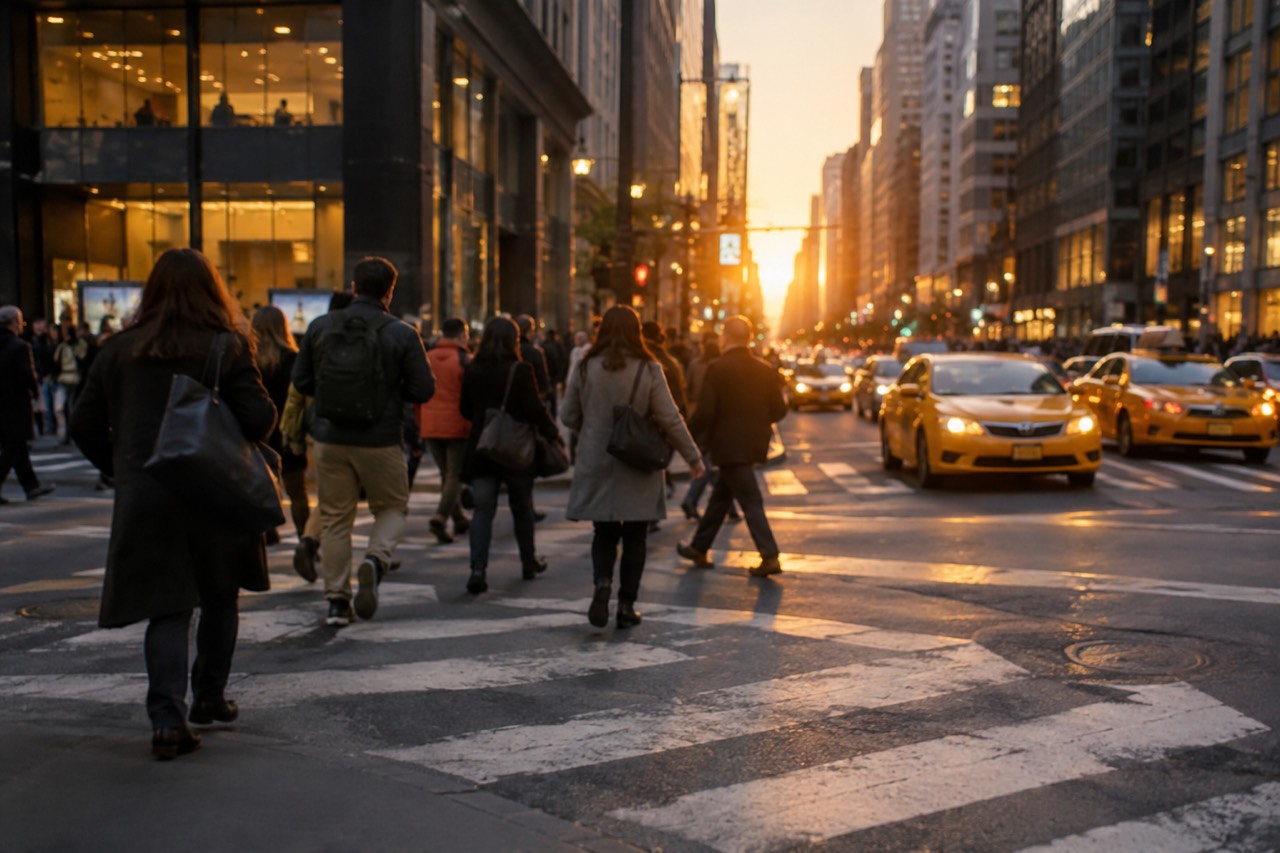
Roughly 65 million people visited New York City in 2025, and the overwhelming majority of them walked around it on foot, day and night, without incident. That single figure does more to answer the safety question than any anecdote could. The city is one of the most walked major cities on earth, and the practical question for a visitor is not whether walking is safe but where, when, and with what habits. This page answers that with sourced figures and specific advice, not reassurance by omission.
Is It Safe to Walk Around in New York City?
Yes, walking around New York City is safe for the overwhelming majority of visitors. Millions of people, residents and tourists together, walk the city's streets every day and night, and the visitor-facing districts of Manhattan, Brooklyn and Queens are heavily pedestrianized, well lit and continuously populated. The realistic risks are petty and preventable: phone snatching, pickpocketing in dense crowds, and traffic. Violent crime against tourists walking normal sightseeing routes is rare.
That answer deserves unpacking, because "safe" is doing a lot of work in it. New York is a city of 8 million residents across five boroughs, and safety is not uniform across a landmass larger than many small countries. The neighborhoods a visitor actually walks, Midtown, the Theater District, the Financial District, SoHo, Greenwich Village, Williamsburg, are among the most heavily trafficked, most policed and most camera-covered streets in the United States.
The pedestrian reality also works in your favor. New York has more people on foot per block than almost any American city, and crowds are the oldest safety mechanism there is. A street with continuous foot traffic at 11pm is a different environment from an empty street at the same hour, and Manhattan's core rarely empties. The 2025 MTA ridership data makes the point indirectly: Times Sq-42 St recorded 61,203,303 riders in a single year, 71% more than Grand Central. The tourist core of the city is, by raw volume, the busiest pedestrian ecosystem in the country.
What actually happens to visitors, when something does happen, is almost always petty theft. A phone held loosely at a subway door. A wallet in a back pocket on a crowded platform. A bag left on the back of a chair in a cafe. The precautions section below covers these in detail, but the short version is that the habits that protect you in any large city protect you here.
For a fuller statistical treatment of crime, neighborhoods and the questions first-timers actually ask, see the site's dedicated safety guide at Is NYC Safe?. The rest of this page stays on walking specifically: streets, hours, the subway, and the habits that matter.
Which Areas of New York City Are Safe to Walk?
The neighborhoods most visitors walk are safe by any big-city standard: Midtown, the Theater District, the Upper East and Upper West Sides, Greenwich Village, SoHo, the Financial District, Chelsea and the High Line, and the Brooklyn waterfront from Brooklyn Heights to Dumbo. None of these requires special caution beyond ordinary city sense. Less-visited outer-borough areas are not dangerous by default, but busier and better-lit beats quieter and dim.
A few specifics help. Manhattan's core sightseeing belt, roughly from the Financial District up through Midtown to Central Park's southern half, is continuous storefront-and-sidewalk territory. There is almost no point on that stretch where you are more than a short walk from other people, a doorman, a taxi, or a store that is open. Central Park itself is safe and heavily used during the day, but it is also a huge landscape with quiet corners, so the standard advice applies: use it in daylight and in the busier southern section if you are alone and unsure. After dark, stick to the well-lit main drives and entrances.
Brooklyn's visitor corridor, Brooklyn Heights, Dumbo, Brooklyn Bridge Park, Williamsburg, is genuinely pleasant to walk, with wide sidewalks and steady foot traffic well into the evening. Harlem is a normal, busy residential neighborhood where visitors walk to gospel services, restaurants and the Apollo without any special precaution. Chinatown and the Lower East Side are dense and active late.
The honest caveat is about time and emptiness rather than geography. The risk profile of any street changes when the crowd leaves it. An industrial block in far west Midtown at 2am, a quiet residential stretch in outer Queens at the same hour, these are not "dangerous neighborhoods," they are empty ones. The rule that serves visitors best is simple: prefer streets with people on them, and if a block feels deserted, walk the parallel avenue instead.
This table compares the main walking districts a visitor is likely to use:
| Area | Walking character | Late-evening foot traffic | Notes for a cautious visitor |
|---|---|---|---|
| Midtown / Theater District | Dense, storefronts, cameras | Very high, past midnight | Crowds are the safety; watch pockets near Times Square |
| Greenwich Village / SoHo | Narrow streets, busy | High to 11pm | Standard city sense |
| Financial District | Wide streets, office crowd thins on weekends | Moderate on weekdays, quieter on weekends | Quieter at night than midtown; busier routes are fine |
| Upper East / Upper West Side | Residential, museum-fronted | Moderate | Very low-key walking |
| Brooklyn Heights / Dumbo | Waterfront promenades | High near the bridges | Popular evening walk routes |
| Central Park | Landscaped, expansive | High on main drives by day | Daylight and main paths if alone |
| Chinatown / Lower East Side | Dense, active late | High | Ordinary precautions |
If your walking plans include the paid attractions, it is worth checking whether a pass beats individual tickets before you buy anything at a box office. The New York CityPASS bundles five major attractions at a discount, and Check availability shows the current lineup and price before you commit.
Is the New York City Subway Safe to Walk to and Ride at Night?
Yes, the subway is safe to ride at night for most visitors on most routes, and the data supports that more than most people expect. The system carried 1,281,883,362 rides in 2025, and weekend ridership has recovered to 88% of pre-pandemic levels, meaning the trains a tourist rides on a Saturday night are relatively fuller than the weekday ones. The realistic risks are the same petty ones as on the street.
Choose busy stations and cars with people in them.
The ridership detail matters more than it looks. Average weekend subway ridership in 2025 was 4,831,140, which is 88% of 2019, while weekday ridership sat at only 73%. The trains a visitor rides on a weekend evening are, relative to normal, busier than the ones commuters ride on a Tuesday morning. A fuller car is a safer car, and weekend nights in New York are when the system is at its most populated relative to capacity.
There is also a positive trend worth knowing: subway fare evasion fell from 12.7% to 10.2% between 2024 and 2025, per the MTA's own figures. That is a system getting more orderly, not less.
Practical subway-walking advice is unglamorous and effective. Ride in cars with other passengers, usually the middle of the train, and stand in the off-hours waiting area on platforms, marked and lit, rather than at the far end of the platform alone. Keep your phone in a pocket or bag rather than in your hand near the doors, since the classic theft is a snatching at a door chime. Know your route before you enter the station so you are not standing still studying a map with a phone out.
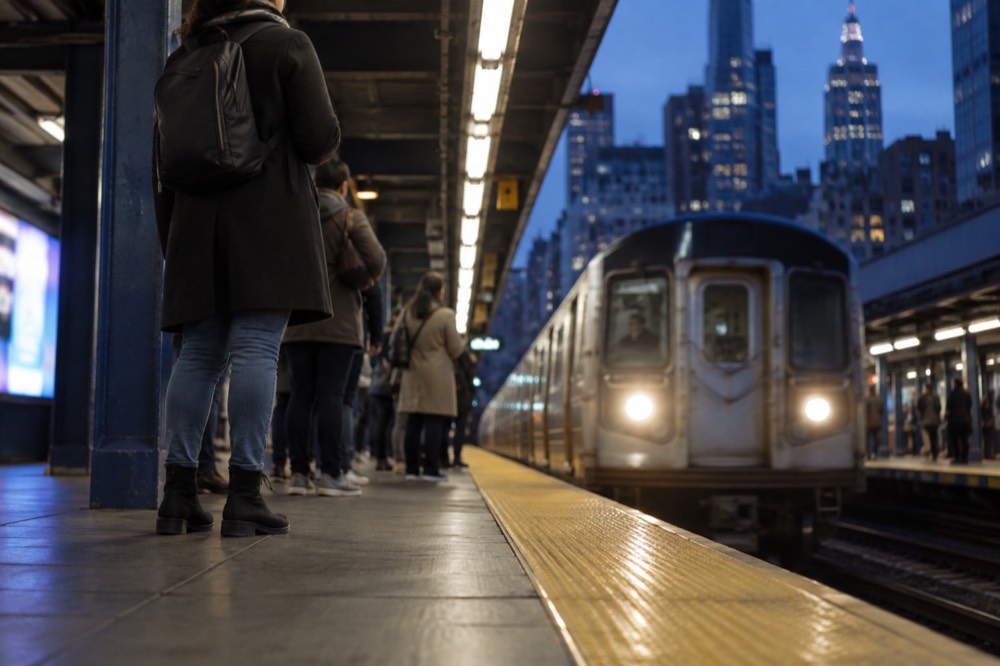
The fare system is simple and worth getting right, because fumbling at a turnstile is when you are most distracted. A subway ride costs $3.00, and tapping a contactless card or phone with OMNY caps your weekly spending automatically at $35, with no pass to buy, per the MTA's fare page. The old 7-day unlimited MetroCard no longer exists: the MTA stopped selling and refilling MetroCards as of 1 January 2026. Any guide telling you to "buy a 7-day unlimited when you land" is years out of date, and the full detail is on the site's NYC subway guide.
| Situation | Reasonable approach |
|---|---|
| Riding after 10pm | Middle cars with people in them; busy stations over quiet ones |
| Waiting on a platform | Off-hours waiting area, near other people, behind the yellow line |
| Phone use | Pocket or bag near doors; never hold it loose as a train departs |
| Choosing a station at night | Prefer large, multi-line stations with staff and foot traffic |
| Late night in an unfamiliar area | A taxi or rideshare door to door is a reasonable choice, not a defeat |
What Precautions Actually Matter When Walking in New York?
The precautions that matter in New York are the same small set that matter in any large city: keep your phone in a zipped pocket rather than in your hand at train doors, carry bags in front of your body in dense crowds, leave nothing on the back of a chair, and stay aware at crosswalks because traffic is the most likely way a visitor gets hurt. Nothing about New York requires unusual fear, only ordinary consistency.
The phone is the number-one target, and the pattern is predictable: a snatching at a subway door or from a table, then a sprint. A phone in a front pocket or a closed crossbody bag defeats nearly all of it. Bags with zips beat open totes in the densest crowds, which in practice means Times Square, the subway at rush hour, and the ferry terminals. Everything else covered here is indexed on New York City Travel Guide.
Traffic deserves more respect than most visitors give it. New York drivers, cyclists and e-bike riders move fast, and the pedestrian fatality risk from vehicles is real in a way that crime against tourists is not. Cross with the signal, look both ways even on one-way streets because bikes go both ways, and do not step off a curb while looking at a screen.
A few habits round it out. Split your cash and cards rather than carrying everything in one wallet. If someone approaches you with an aggressive pitch, a CD handoff, a bracelet, a "free" photo, a flat "no" and continued walking ends it. Ignore the costumed characters' demands for tips if you did not want a photo. None of this is fear, it is hygiene.
For solo travelers and families, the same rules apply with two additions. Solo walkers should tell someone their evening plan and prefer populated routes after midnight, which in Manhattan is easy because the core stays busy. Families should note that the things that worry parents, crowds and traffic, are manageable with hand-holding rules at crosswalks and a meeting point if separated. The site's family planning page at things to do in NYC with kids covers kid-specific logistics.
Is New York City Getting Safer or More Dangerous?
By the measures a visitor can check, New York's transit system is getting more orderly, not less: fare evasion fell from 12.7% to 10.2% between 2024 and 2025, and weekend subway ridership has climbed back to 88% of pre-pandemic levels, meaning the trains and platforms a tourist actually uses are fuller than the weekday ones. Citywide crime trends move by neighborhood, and this site does not publish unsourced statistics.
That last sentence is deliberately narrow. A travel site that quotes crime statistics it cannot source is worse than one that declines to. What can be said with direct sourcing is about the transit system, the thing every visitor uses: more riders, less evasion, and a fare system that has been simplified. The MTA's own 2025 ridership data, read directly from mta.info, is the basis for every figure in this paragraph.
The context that helps a visitor is scale. With 65 million visitors in 2025 and 1.28 billion subway rides, the base rates of anything bad happening to a walking tourist are vanishingly small, and the city's pedestrian core is designed, lit, policed and camera-covered around the clock. The practical conclusion is not "nowhere is risky," it is "the ordinary risks are petty and preventable, and the habits above cover them."
How Should You Plan Your Days Around Walking Safely?
Plan your walking around daylight and crowd density rather than around fear: put the big sightseeing walks in daytime, keep evening plans in the busy cores of Midtown, the Village or the Brooklyn waterfront, and use the subway or a taxi to cross long distances after midnight rather than walking through unfamiliar quiet blocks. Booking timed attractions in advance keeps you on populated routes at the hours you planned, instead of improvising at 9pm.
The single best safety decision is a good plan, because a well-planned day keeps you in the populated parts of the city at every hour. Timed-entry attractions do this for you automatically: a booked slot at an observation deck or a food tour puts you on a route with other people, at a known time, ending near transit. That is why this site recommends booking the paid anchors of a trip before you arrive rather than deciding on the sidewalk.
For the evening hours, the same logic applies. A booked sunset deck, a theater ticket, a food tour through busy neighborhoods, each of these structures your night around a crowd. SUMMIT One Vanderbilt sits directly beside Grand Central, which means an evening visit starts and ends at one of the busiest, best-staffed stations in the city; Check availability shows current time slots.
And for the broader question of what to actually fill your days with, the site's master list at things to do in NYC is built around exactly this: attractions grouped by neighborhood, so your walking days cluster naturally and you are never crossing the city alone at odd hours to reach the next stop.
Common Questions About Walking Around New York City
The questions below are the ones visitors most often ask before a trip, and each answer is short, direct and consistent with the sourced figures on this page: walking in New York is safe, the subway is safe at night on busy routes, the risks that exist are petty and preventable, and the habits that protect you are ordinary big-city habits rather than anything New York-specific. If one of these matches your situation, open it for the detail.
Is it safe to walk around in new york city?
Yes. Millions of residents and around 65 million annual visitors walk the city every year, and the visitor-facing districts are continuously populated, lit and camera-covered. The realistic risks are petty theft and traffic, both preventable with ordinary city habits.
Is it safe to walk in Times Square at night?
Yes, and Times Square is arguably at its most crowded at night. The area around Times Sq-42 St is the busiest station complex in the system, with 61,203,303 riders in 2025. The only real risk there is pickpocketing in dense crowds, so keep valuables in front of you.
Is Central Park safe to walk in?
During the day, yes, and it is heavily used. It is also a huge landscape with quiet sections, so if you are alone and unfamiliar with it, stay in the busy southern half and on main drives, and save the remote corners for daylight hours with company.
Is the subway safe at night for tourists?
On the whole, yes. Weekend ridership has recovered to 88% of pre-pandemic levels, so evening and weekend trains are relatively full. Ride in cars with passengers, wait in the lit off-hours waiting areas, and keep your phone pocketed at the doors.
Which areas should I avoid walking in New York?
No visitor neighborhood is off-limits by default. The rule that matters is emptiness, not geography: prefer streets with people on them, and after midnight, cross long distances by subway or taxi rather than walking through unfamiliar quiet blocks.
Is New York safe for solo female travelers?
Yes, with the same ordinary precautions: populated routes after dark, phone pocketed, someone knowing your evening plan. Manhattan's core stays busy well past midnight, which makes solo walking easier here than in most American cities.
The Short Version
The short version is that walking around New York City is safe, the subway is safe at night on busy routes, and the risks that exist are petty and preventable rather than dramatic. Keep your phone in a pocket, your bag in front, your eyes up at the curb, and your evening plans in the parts of town that never empty. That is the whole of it.
Walk the city. That is what it is for. New York is a pedestrian place by design, the busiest walking environment in the country by raw ridership numbers, and the honest risks, a snatched phone, a crowded pickpocket, a careless crosswalk, are the same ones you manage in any big city. Keep your phone in a pocket, your bag in front, your eyes up at the curb, and your evening plans in the parts of town that never empty. Then use the subway without a second thought, tap your card, let the $35 weekly cap do its work, and spend your attention on the city instead of your belongings.