What Is the Most Famous Subway Station in New York City?
The direct, sourced answer to which New York City subway station is the most famous, with 2025 MTA ridership figures, fare details, and what makes Times Sq-42 St and Grand Central different.
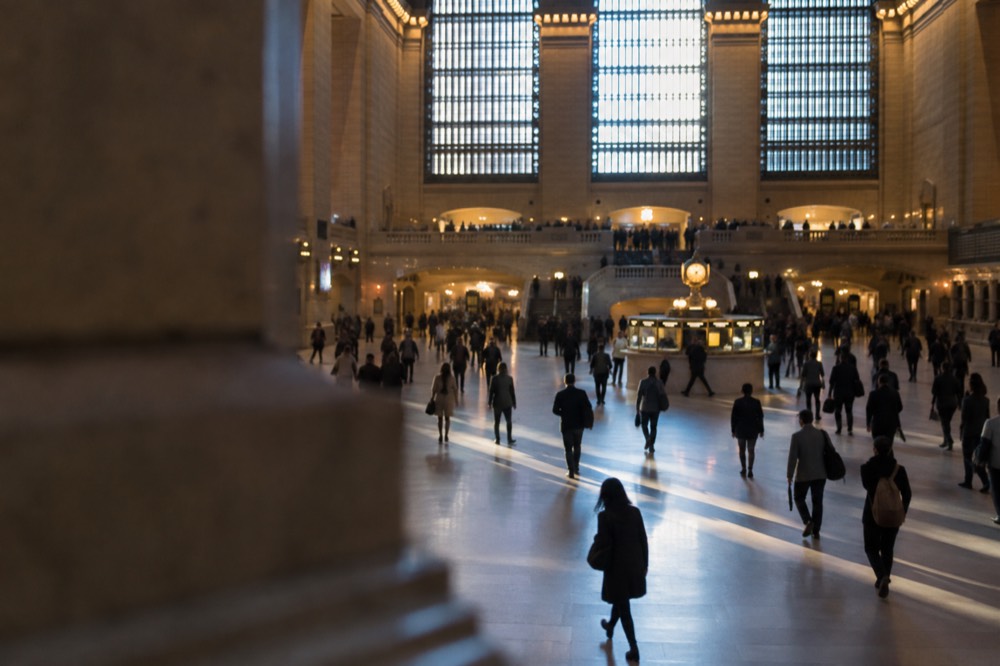
Two stations in Midtown Manhattan anchor almost every argument about subway fame in New York City. One of them, Times Sq-42 St, moved 61,203,303 riders in 2025, which the MTA counts as the busiest station complex in the entire system. The other, Grand Central-42 St, moved 35,764,931 riders in the same year and appears in more films, photographs and tourist itineraries than any other rail space in the country. The question of which is "the most famous" depends on whether fame means foot traffic or cultural footprint, and the honest answer names both.
That distinction is not a dodge. It is the actual shape of the facts, and the MTA's 2025 station-level ridership data, published by the transit agency itself, is the cleanest way to separate the two. This page works through the numbers, explains why the busiest station is not the one people photograph, covers what a ride to either one costs in the OMNY era, and closes with the practical details a visitor actually needs. The subway is the honest way to see New York, and these two stations are where most first trips begin.
What Is the Most Famous Subway Station in New York City?
Times Sq-42 St is the most famous subway station in New York City by ridership, carrying 61,203,303 riders in 2025, which is 71% more than Grand Central-42 St. But if fame means recognition rather than raw traffic, Grand Central Terminal is the station the world knows by sight, its main concourse and celestial ceiling being the most photographed rail interior in the United States.
The honest answer names Times Sq-42 St the busiest and Grand Central the most iconic.
The ridership gap is not close. The MTA's 2025 figures put Times Sq-42 St at 61,203,303 riders against Grand Central's 35,764,931, a difference of roughly 25 million annual trips. Times Square is the station where the 1, 2, 3, 7, N, Q, R, W, A, C and E trains all meet under the crossing of Broadway and 7th Avenue, which makes it the natural transfer point for the Theater District, and the tourist volume of Times Square itself feeds directly into the fare gates. A visitor staying in Midtown will pass through it whether they planned to or not.
Grand Central's claim to fame runs differently. The terminal's main concourse, with its sky ceiling and the four-sided clock at the center, has been a protected landmark for decades and a filming location for far longer. The whispering gallery near the Oyster Bar, where a murmur against the tile arch carries across the corridor, is a stop on nearly every architecture and secrets tour of the city. Grand Central is the station people visit on purpose, even when they have no train to catch.
There is a third name that belongs in the conversation, and it surprises people: Penn Station. Many visitors assume Penn must rank near the top, since it is the busiest rail terminal in North America by intercity and commuter traffic. The subway count tells a different story, because the MTA splits Penn into two complexes, one for the A, C and E and one for the 1, 2 and 3, and neither cracks the top five on its own. Even combined, at roughly 37.7 million, they only just edge Grand Central. The full ranking is worth a look before you plan your transfers.
| Rank (2025) | Station complex | Annual riders | Lines serving it | Why visitors know it |
|---|---|---|---|---|
| 1 | Times Sq-42 St | 61,203,303 | 1 2 3 7 A C E N Q R W | Theater District, transfer hub, billboards above ground |
| 2 | Grand Central-42 St | 35,764,931 | 4 5 6 7 and the shuttle | The terminal's concourse, the clock, the whispering gallery |
| 3 | 34 St-Herald Sq | Not in the top two | B D F M N Q R W | Empire State Building, Macy's, Koreatown |
| 4 | 14 St-Union Sq | Lower in the count | 4 5 6 L N Q R W | Union Square Greenmarket, NYU, park and plaza |
| 5 | Flushing-Main St | Lower in the count | 7 | Downtown Flushing, Queens, one of the system's busiest outside Manhattan |
The 2025 ridership report is published by the MTA at mta.info's 2025 ridership page, and every figure in the table above comes from it. If you are planning a first visit, the takeaway is simple: Times Sq-42 St is the station you will use, Grand Central is the station you should see, and both sit within a fifteen-minute walk of each other in Midtown. The Times Square guide and the Grand Central Terminal guide on this site cover what to do at street level once you surface.
For travelers who want the station-to-neighborhood experience handled by someone who knows the blocks, a guided walk beats a map. The picks below are the ones this site rates for exactly that kind of day.
Why Is Times Sq-42 St the Busiest Station in the System?
Times Sq-42 St is the busiest subway station in New York City because it is the system's largest transfer point, where eleven lines converge beneath the Theater District, and because the streets above it draw more visitors than any other corner of Manhattan. In 2025 it carried 61,203,303 riders, a figure no other station complex approached. Its fame among riders is functional: nearly every itinerary in Midtown passes through it at least once.
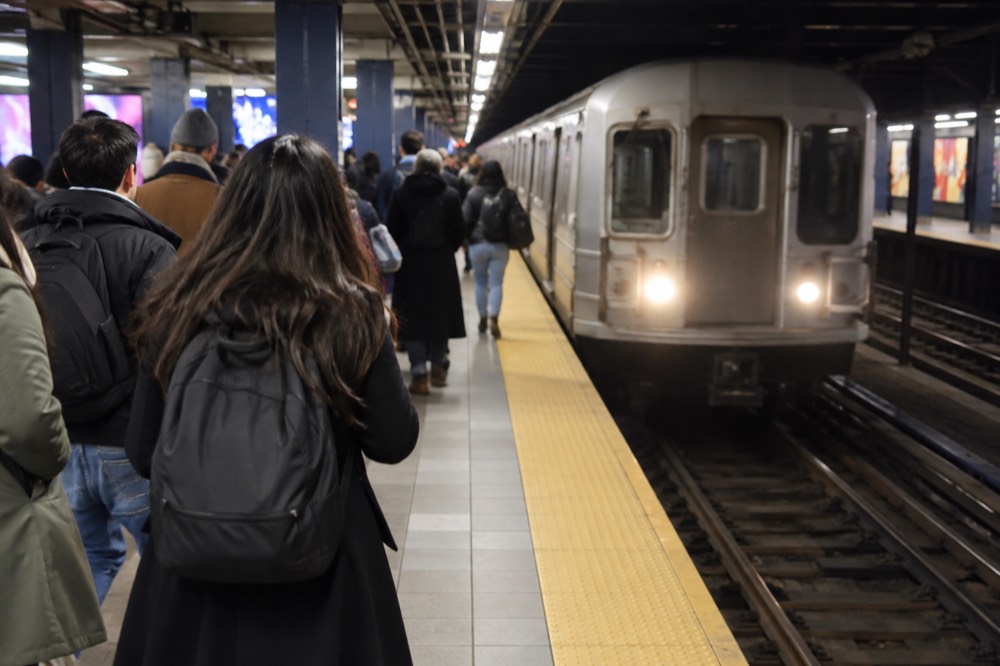
Eleven lines is the number that matters. The 1, 2 and 3 run up and down the West Side, the A, C and E provide express and local service along 8th Avenue, the N, Q, R and W connect to Astoria in Queens and Coney Island in Brooklyn, and the 7 runs across town to Hudson Yards in one direction and Flushing in the other. The shuttle to Grand Central adds a fourth track pair. That concentration means a rider traveling from almost anywhere to almost anywhere in Midtown will be routed through the complex by any trip planner, and the MTA's count reflects it.
The streets above do the rest. Times Square itself is the most-visited commercial intersection in the city, ringed by Broadway theaters, and the TKTS booth at Duffy Square draws ticket hunters daily. The station's corridors are long, and during peak hours they are dense enough that walking speed drops to a shuffle. Visitors with luggage should know that the complex has multiple entrances and exits, and the exit you want, whether 7th Avenue, Broadway or the shuttle mezzanine, is worth checking before you tap in rather than after.
For a first visit, two practical notes carry most of the weight. First, the uptown and downtown platforms for the numbered lines sit in separate areas, so a wrong turn costs a few minutes of corridor walking rather than a new fare. Second, the station connects underground to the Port Authority Bus Terminal complex at 42 St, which extends the walkable area considerably. The New York City Travel Guide homepage covers how these Midtown landmarks sit relative to each other if you are still sketching the map.
If your trip starts at JFK rather than in Midtown, the airport-to-hotel leg is the one part of a New York visit where a private transfer genuinely beats the train, especially for groups with luggage. This is a real decision point for many travelers.
Is Grand Central the Most Famous Station Instead?
Grand Central Terminal is the most famous station in New York City by cultural recognition, even though it ranks second by ridership at 35,764,931 trips in 2025. Its main concourse, the four-sided information clock and the celestial ceiling are known worldwide, and the terminal's survival as a landmark is a central story in American historic preservation. Fame and foot traffic are different measures, and Grand Central wins the first.
The concourse is the reason. Standing under a ceiling 44 meters above the floor, with light through the east windows and the clock at the center, is an experience no other station in the system offers, and the space appears in films, photographs and novels going back generations. The whispering gallery, outside the Oyster Bar in the archway near the Vanderbilt Avenue side, works because of the Guastavino tile arches: two people facing opposite corners can speak in a murmur and hear each other clearly across the corridor. It costs nothing and takes two minutes, which makes it one of the best free stops in Midtown.
The subway side of the complex is the Grand Central-42 St station, serving the 4, 5 and 6 on the Lexington Avenue line, the 7 across town, and the shuttle back to Times Square. The 4 and 5 are express trains, and the 6 is local, a distinction that matters when you are heading uptown to the Met or downtown to Wall Street. The station sits directly beneath the terminal, so a subway arrival puts you inside the landmark without a single outdoor step, which is a genuine advantage in February.
Grand Central also anchors the food and shopping level below the concourse, the dining concourse, which is a solid lunch stop that most tourists discover late. For visitors who want the hidden corners explained rather than found by accident, the Secrets of Grand Central Terminal tour on this site covers the ceiling's deliberate error and the demolition fight that saved the building. A free option exists too: a tip-based walk on GuruWalk that pairs Midtown's loudest square with its most elegant station.
That walk, the Times Square, Grand Central, Rockefeller tour on GuruWalk, links the two stations this article is about and adds Rockefeller Center between them. Guides work for tips, so the price is whatever you decide at the end, and it is a low-risk way to get the Midtown layout explained on day one, before you spend the rest of the trip riding the trains alone.
How Much Does It Cost to Ride the Subway to These Stations?
A single subway ride to Times Sq-42 St or Grand Central costs $3.00 with OMNY, the contactless tap-to-ride system that works with any credit card, debit card or mobile wallet, and there is no pass to buy. The MetroCard is retired: as of 1 January 2026 the MTA no longer sells or refills them.
The weekly value now comes from an automatic fare cap of $35 over a rolling seven-day period, applied on the same card or device.
The cap is the detail most guides get wrong, because most still quote a 7-day unlimited MetroCard price that no longer exists. The MTA's own wording is that once your taps reach $35 in a seven-day window on subway and local bus rides, everything after that is free for the rest of the period. The seven days start with your first tap, not on a Monday, and the whole thing happens silently on the card or phone you carry. The one rule that trips people up: you must tap the same physical card or the same device every time. Mixing a phone and the plastic card in your pocket breaks the cap without telling you.
| Fare item | Price | Notes |
|---|---|---|
| Single ride, subway or local bus | $3.00 | Tap with OMNY, no ticket needed |
| 7-day OMNY fare cap | $35 | Automatic, rolling window, same card or device required |
| Express bus single ride | $7.25 | Not covered by the $35 cap; a $67 cap applies if you ride express buses |
| Reduced fare (65+ or eligible disabled riders) | $1.50 | Subway and local bus, any time of day |
| Children under 44 inches | Free | Up to three children per fare-paying adult |
For a visitor, the arithmetic is straightforward. At $3.00 a ride, the $35 cap pays for itself at twelve taps, which a busy four-day itinerary can reach easily. A relaxed trip with four rides a day will not hit it, and should not try. The fare is the same whether you board at Times Sq-42 St, Grand Central or any other station in the system, so station fame costs nothing extra. The NYC subway guide on this site covers the full fare structure, transfers and the OMNY rules in more depth.
One airport note belongs here, because many travelers ride the subway on arrival day. From JFK, the subway plus AirTrain combination costs $11.75 end to end, since the AirTrain adds $8.75 on top of the $3.00 fare. From LaGuardia, the Q70 LaGuardia Link bus is free, so the whole run to Midtown costs one $3.00 subway fare, the cheapest airport transfer in the city. Travelers landing at JFK with a group, children or heavy luggage often weigh the private transfer instead, since the fare covers the whole vehicle rather than each person.
For groups of three or more, or families with bags, the private JFK transfer is the option worth checking before you commit to the train.
The transfer covers up to six passengers in one vehicle, door to door, with the driver tracking the flight so a delay does not strand you. Solo travelers on a budget do better with the AirTrain and subway, and the JFK to Manhattan guide compares every option, including the LIRR, in detail.
What Makes a Subway Station Famous in New York?
A New York subway station becomes famous through one of three routes: sheer volume, as with Times Sq-42 St and its 61,203,303 annual riders; architecture and preservation, as with Grand Central's protected concourse; or cultural presence, when a station appears in films and photographs until it stands for the city itself.
The most famous stations hold at least two of the three, which is why Times Sq-42 St and Grand Central dominate every version of this question.
Cultural presence is the quiet engine. Grand Central's concourse has opened films and closed arguments for generations, and the station's image reads instantly, no caption needed. Times Sq-42 St appears less as a space and more as an idea, the underground hum beneath the brightest commercial corner in America. City Hall station, the system's original crown jewel with its Guastavino tile vaults, holds a different kind of fame: it is closed to regular service and visible only on guided tours, which makes it better known to transit enthusiasts than to tourists.
The city's broader attraction list, covered in full on the things to do in NYC page, leans on these stations more than most visitors realize. The observation decks cluster around them: SUMMIT One Vanderbilt sits directly across 42nd Street from Grand Central, Top of the Rock is a short walk from the 47th Street exits of Times Sq-42 St, and the Empire State Building stands a few blocks from 34 St-Penn Station. A hotel anywhere in Midtown puts at least one of the two headline complexes within a ten-minute walk.
Fame also has a practical shadow. The busiest stations are where delays, crowding and confusion concentrate, and where a first-time rider is most likely to board a train in the wrong direction. The fixes are ordinary ones: check the direction of the train against the last stop shown on the platform sign, stand clear of the platform edge, and let riders off before boarding. Weekends bring service changes, so the MTA's own trip planner or the train-time displays on each platform are worth a glance before assuming your usual line runs its usual route.
Which Other Stations Should Visitors Know?
Beyond Times Sq-42 St and Grand Central, the stations most visitors will actually use are 34 St-Herald Sq for the Empire State Building, 14 St-Union Sq for the East Village and Chelsea, West 4 St for Greenwich Village, and the two Penn Station complexes for LIRR, Amtrak and NJ Transit connections.
Penn Station's split into two separate subway complexes confuses more travelers than any other fact on this page, so knowing which side you need saves real time.
Herald Sq is the Empire State Building's station, and the 34 St exit drops you a block from the entrance. The B, D, F, M, N, Q, R and W all serve it, which makes it a convenient fallback when Midtown transfers go wrong. Union Sq is the downtown crossroads, where the L meets the Lexington Avenue lines and the Broadway expresses, and its plaza hosts the Greenmarket several days a week. West 4 St, a maze of a station, is the Greenwich Village hub, close to Washington Square Park and the Village's music blocks.
Penn Station deserves its own warning. The subway station is counted as two complexes, one serving the A, C and E under 8th Avenue, the other serving the 1, 2 and 3 under 7th Avenue. They sit a block apart and connect through the LIRR and Amtrak levels above, but a rider who taps in at the wrong one for a crosstown errand can add ten minutes of walking. Moynihan Train Hall, across the street, is where the long-distance trains now board, and it is a calmer space than the old Penn concourse.
For visitors pairing the subway with a neighborhood day, the food tours on this site sit close to these stations. The Chinatown and Little Italy food tour starts a short walk from the Canal St station complex, and the picks below round out the options for a day built around trains, food and a guided walk.
Common Questions About New York City Subway Stations
The most common questions about New York City subway stations concern which is the busiest, which is the most beautiful, how much a ride costs, and whether the MetroCard still works. The answers are settled by MTA data: Times Sq-42 St leads ridership at 61,203,303 in 2025, Grand Central leads on landmark status, a ride costs $3.00 with an automatic $35 weekly cap, and MetroCards are no longer sold or refilled anywhere in the system.
What is the most famous subway station in New York City?
Times Sq-42 St is the most famous by ridership, carrying 61,203,303 riders in 2025, more than any other station complex in the system. Grand Central Terminal is the most famous by recognition, with its protected main concourse and celestial ceiling known worldwide. Most honest answers name both: Times Sq-42 St for traffic, Grand Central for the image people carry of the New York subway.
Is Grand Central the busiest station?
No. Grand Central-42 St carried 35,764,931 riders in 2025, placing it second behind Times Sq-42 St at 61,203,303. Grand Central is the more famous landmark, but Times Square carries 71% more subway riders.
Can you still buy a MetroCard?
No. As of 1 January 2026 the MTA no longer sells or refills MetroCards. Riders tap with OMNY using a credit card, debit card or mobile wallet, and a $35 weekly fare cap applies automatically over a rolling seven-day period on the same card or device.
Which subway station is closest to the Empire State Building?
34 St-Herald Sq, served by the B, D, F, M, N, Q, R and W, sits about a block from the building. The 34 St-Penn Station complexes, serving the 1, 2, 3, A, C and E, are also within walking distance a few blocks west.
Is the whispering gallery in Grand Central free to visit?
Yes. The whispering gallery sits in the archway near the Oyster Bar on the lower level of Grand Central, and it is accessible whenever the terminal is open. Two people facing opposite corners can hear each other speak in a murmur, and there is no ticket or tour required.
How many subway lines serve Times Sq-42 St?
Eleven: the 1, 2, 3, 7, A, C, E, N, Q, R and W, plus the 42nd Street shuttle to Grand Central. That concentration is the main reason it is the busiest station complex in the system.
The last practical word belongs to timing. The 2025 data shows weekend subway ridership at 88% of its pre-pandemic level while weekday ridership sits at 73%, so the Saturday train you ride into Times Sq-42 St is busier, relative to normal, than the weekday one. Plan the famous stations for the morning, tap the same card every time, and let the $35 cap do its quiet work while you look up at the ceiling in Grand Central instead of at a ticket machine that no longer exists.