9/11 Memorial and Museum: Tickets, Hours and What a Visit Is Really Like
The 9/11 Memorial and Museum sits at the World Trade Center site in Lower Manhattan. The memorial plaza is free and open to all. The museum below it requires a timed ticket, and the way you buy that ticket changes both the price and the wait.
Short answer
The 9/11 Memorial plaza is free and open daily from 8am to 8pm, no ticket needed. The museum beneath it charges $36 for an adult at the box office, with timed tickets from $25 through booking pages. Free admission Mondays are released online each Monday at 7am ET.
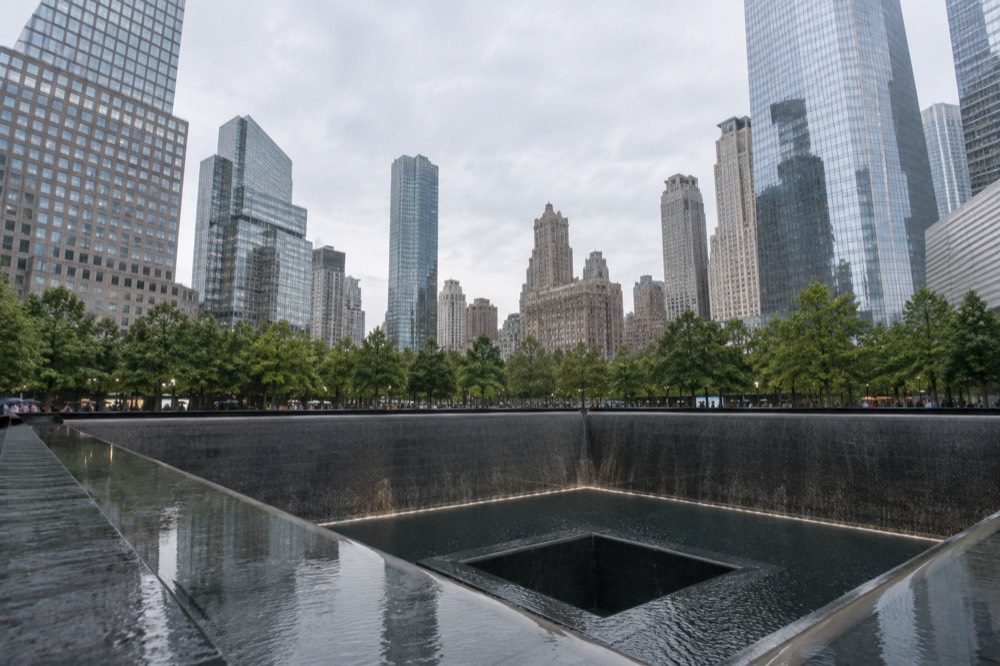
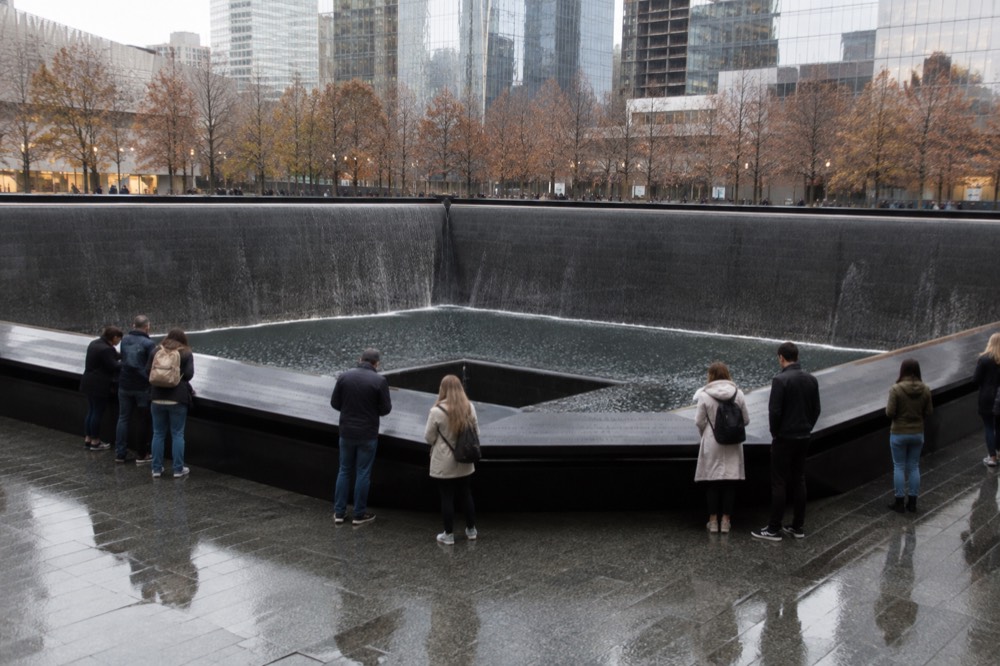
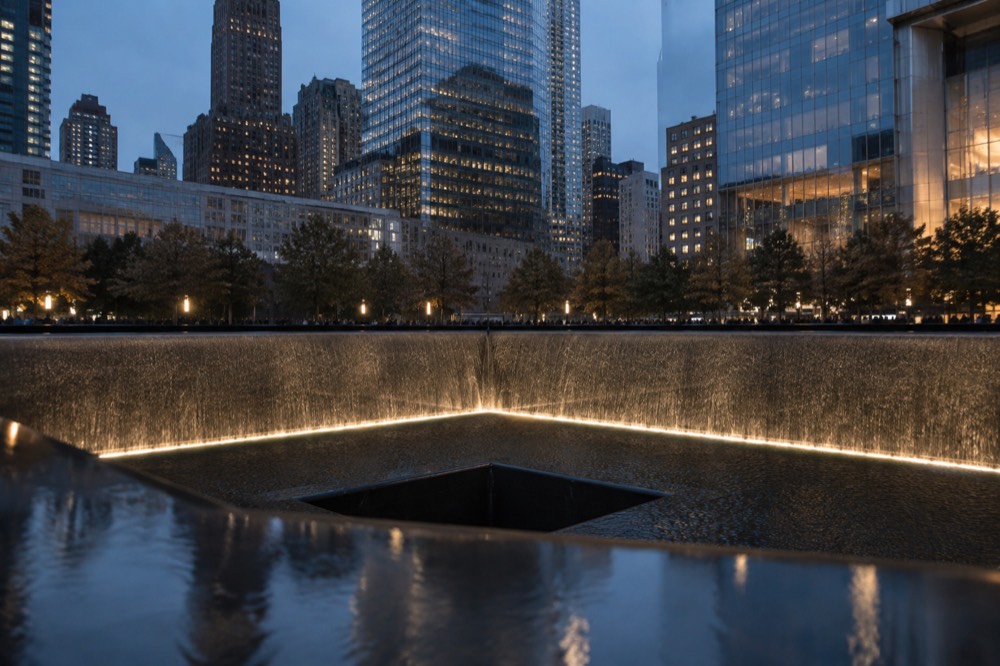
The two reflecting pools of the 9/11 Memorial sit in the footprints of the North and South Towers, each nearly an acre of granite-edged water, with the names of the people killed in the attacks and the earlier World Trade Center bombing cut into the bronze parapets around them. The plaza around them is open, free and quiet. Beneath it, between the footprints, the museum holds the damaged steel, the recovered belongings and the recorded voices of the day itself. This page covers the practical side of a visit: what the two parts of the site are, what tickets cost, when to go, and how the free-admission windows work.
What Is the 9/11 Memorial and Museum?
The 9/11 Memorial and Museum is two separate things on one site: an outdoor memorial plaza that is free and open to everyone daily, and an underground museum that requires a paid, timed ticket. The plaza holds the two reflecting pools set into the tower footprints. The museum, built beneath them between the foundations, holds the core artifacts from the attacks and the stories of the people killed. You can visit one without the other.
The memorial plaza is the work of the memorial's twin pools, each edged with the largest man-made waterfalls in North America, and the Survivor Tree, a callery pear tree pulled from the rubble and replanted here. There is no ticket, no queue and no time limit. People come at dawn, at lunch and late at night, and the pools are lit after dark.
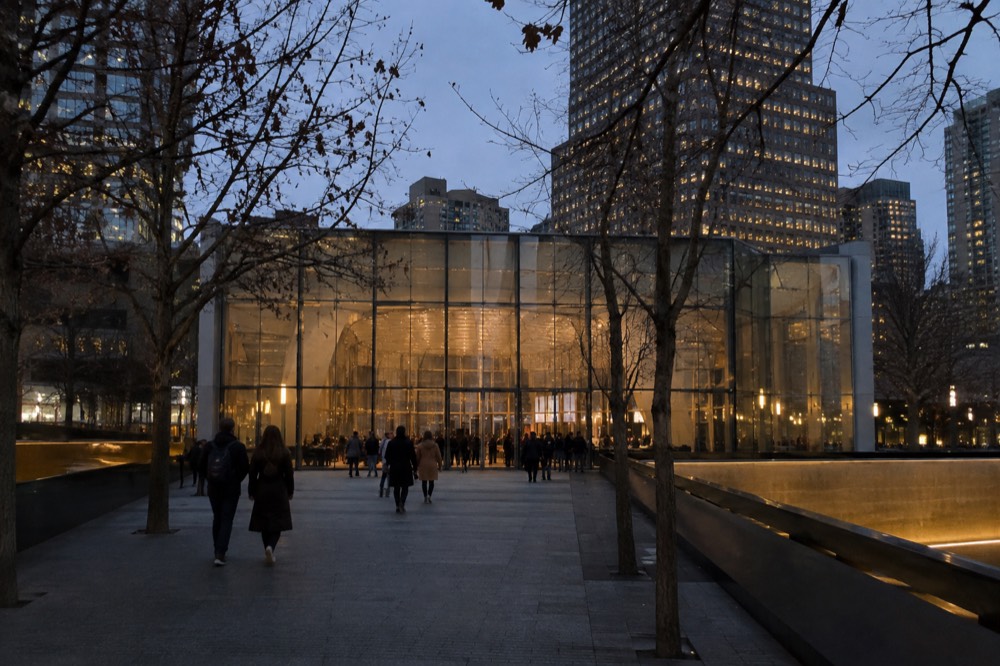
The museum is a different experience entirely. Its entrance pavilion sits between the pools, and the descent takes you down to the bedrock level where the towers' foundations still stand. The historical exhibition tells the timeline of the day itself and the earlier bombing of the towers' garage; the memorial exhibition, In Memoriam, is a quiet, circular room of portraits. A visit typically takes 90 minutes to two hours, and many people need longer.
The site is at the World Trade Center in the Financial District, a short walk from things to do in Lower Manhattan's historic core and within sight of the harbor. It is one of the most visited sites in the city; the museum draws millions of visitors a year.
How Much Do 9/11 Memorial and Museum Tickets Cost?
An adult ticket to the 9/11 Memorial Museum costs $36.00 at the box office, with timed-entry tickets available from $25 per person through booking pages. Youth tickets run $30 for ages 13 to 17 and $24 for ages 7 to 12, and children 6 and under enter free. The memorial plaza above costs nothing and never has. The gap between the box office price and the online timed price is the main thing to understand before buying.
The box office figures, published in the CityPASS comparison table and confirmed on the museum's own ticketing site, are the fixed reference: $36.00 adult, $30.00 for 13 to 17, $24.00 for 7 to 12, free for 6 and under. Timed tickets sold through booking platforms start lower, from $25, and the price moves with demand and time slot, so a midweek morning can cost less than a Saturday afternoon.
| Ticket type | Box office price | Notes |
|---|---|---|
| Adult | $36.00 | Timed entry, from $25 online |
| Youth 13-17 | $30.00 | ID may be requested |
| Child 7-12 | $24.00 | Must be accompanied |
| Child 6 and under | Free | No ticket needed |
| Memorial plaza | Free | No ticket, open daily |
| Free Admission Monday | Free | Released online Mondays, 7am ET |
If you are doing the classic sightseeing circuit, the museum is one of the attractions on the New York CityPASS list, which bundles five attractions for $149 adult against a combined box-office total of $307.04. Whether that pays off depends on the rest of your itinerary; the New York CityPASS guide works through the maths.
For visitors who want a fixed entry window rather than a walk-up gamble, a timed ticket is the straightforward option. Check availability on the operator's live listing before your date, since slots on busy days thin out.
The timed ticket suits most visitors: it costs less than the box office price, it fixes your entry hour, and it removes the ticket-line wait on Fulton Street, which can stretch long on peak days. The listing shows current slot availability before you commit.
When Is the Museum Open, and When Should You Go?
The 9/11 Memorial Museum is open Wednesday through Monday and many Tuesdays, generally 9am to 7pm, with last entrance at 5:30pm. The memorial plaza above is open daily from 8am to 8pm. The quietest museum visits are weekday mornings right at opening; the busiest are weekends, holiday weeks and the days around 11 September, when the site draws crowds and ceremonies.
The museum's hours shift with the season and the calendar, and the exact schedule is published on the museum's own site, so treat the general shape above as a planning frame rather than a timetable. Tuesdays are a partial-closure day: the museum is open on many but not all of them. Check the official calendar for your date.
The plaza keeps simpler hours. It opens at 8am and closes at 8pm, every day, and it is the free, unticketed half of the site. Early morning is the most still; the pools at that hour have the fewest visitors and the strongest light for photographs.
| Time of visit | Crowd level | Notes |
|---|---|---|
| Weekday, 9am opening | Lowest | Best choice for a quiet visit |
| Weekday afternoon | Moderate | School groups thin after lunch |
| Weekend | High | Book timed slots well ahead |
| Around 11 September | Highest | Anniversary events, ceremonies |
| Plaza after dark | Low | Pools lit, free to enter |
One date-specific detail worth knowing: nearby One World Observatory, which shares the World Trade Center complex, opens at noon rather than 9am on 11 September each year. If you are pairing the two on that date, plan the museum for the morning and the deck for the afternoon.
Those three options cover the main ways people visit the site: a timed museum ticket on its own, a guided package that adds One World Observatory, and a free, tip-based neighborhood walk that passes the memorial on GuruWalk. The right one depends on how much of the World Trade Center you want to build into a single block of your day.
What You See Inside the Museum
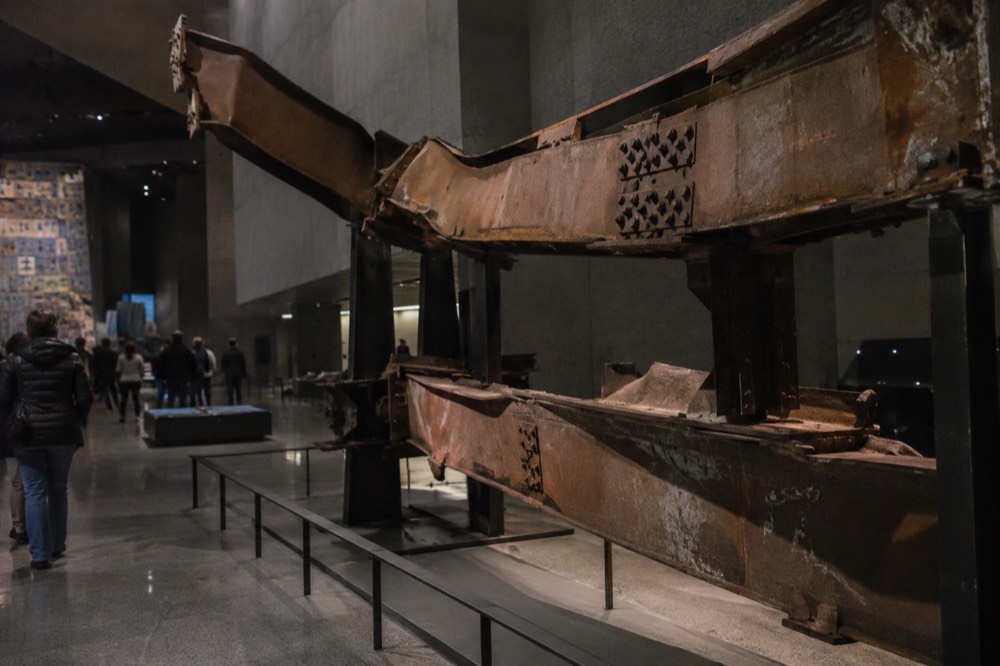
Inside the 9/11 Memorial Museum you descend to bedrock level and walk between the actual foundations of the towers, past the slurry wall that held back the Hudson, the last column removed from Ground Zero and the damaged fire engines and steel from the site. Two exhibitions anchor the space: a chronological account of the day itself, and In Memoriam, a portrait gallery of everyone killed in the attacks and the earlier bombing. Plan 90 minutes to two hours.
The descent is part of the design. A long ramp takes you down past the Survivor Stairs, the granite steps that carried people out of the towers, until you reach the level where the buildings once stood. The scale is the point: the museum does not shrink the site or the event to fit a gallery.
The historical exhibition follows the timeline of the day itself minute by minute, with recorded voices, phone calls, broadcast fragments and recovered objects. It is detailed and unflinching, and it is not recommended for young children. The memorial exhibition is the opposite in tone: a single quiet room of photographs, where each person killed is represented by an image and a recorded remembrance from their family.
A few practical notes for the visit itself. Photography is permitted in most of the museum, but the In Memoriam room asks for quiet and restraint. There is a cafe at the pavilion level. The museum is fully accessible, with elevators connecting the levels, and wheelchairs are available. Large bags are not admitted, and there is no bag storage on site, so travel light.
The museum recommends the visit for ages 10 and up, and that is a fair guide rather than a rule. Families with younger children usually stay on the plaza, where the pools can be explained at whatever level a child is ready for.
If a fixed entry window would take the guesswork out of your morning, it is worth settling before you travel rather than at the Fulton Street ticket line.
The Memorial Plaza: The Free Half of the Site
The memorial plaza is free, unticketed and open daily from 8am to 8pm, and it consists of the two reflecting pools in the tower footprints, the names cut into their bronze parapets, the Survivor Tree and the surrounding grove of swamp white oaks. You do not need a ticket, a reservation or even a plan: you walk in from any side of the World Trade Center complex. Many visitors see only the plaza and miss nothing essential.
The pools are the heart of it. Each one drops water from its edges into a void that seems to have no bottom, a design choice made deliberately, and the sound of the falling water fills the plaza and drowns out the traffic of Lower Manhattan. The names are arranged not alphabetically but by relationship: coworkers together, friends together, the crews of the same flights together, with the victims of the earlier garage bombing remembered on the North Pool's parapet.
The Survivor Tree stands at the plaza's western side, a callery pear tree found alive in the rubble, nursed back to health and replanted here. It leafs out each spring, and it is one of the few living things on the plaza older than the memorial itself.
There is no route, no queue and no time limit. People come to read a single name, to trace one into a rubbing, or to sit for an hour. The plaza is at its stillest before 9am and after dark, when the pools are lit from below.
Getting to the World Trade Center Site
The World Trade Center site is served directly by the Fulton Street subway station complex and the WTC Cortlandt station, with the E train reaching the site from Midtown in about 25 minutes and the R, W, 2, 3, 4 and 5 all stopping within a block or two. The PATH train from New Jersey arrives into the same complex. The site sits at Fulton Street and Greenwich Street in the Financial District.
The subway is the honest answer for getting here, as it is for nearly everything in New York. Fares are $3.00 a ride with OMNY, the tap-and-go system that replaced the MetroCard, and the $35 weekly cap applies automatically if you use the same card or device for every ride. The old 7-day unlimited MetroCard no longer exists; the MTA stopped selling and refilling MetroCards on 1 January 2026, so any guide telling you to buy one is out of date.
| Route | Station | Notes |
|---|---|---|
| E train | WTC Cortlandt | Direct from Midtown, ~25 min |
| R, W | Cortlandt St | One block east |
| 2, 3 | Park Pl | Two blocks north |
| 4, 5 | Fulton St | Complex with transfers |
| PATH | WTC | From New Jersey, same complex |
| Staten Island Ferry | Whitehall Terminal | Ten-minute walk |
The nearest airports are all in New Jersey or Queens, and the transfer question is covered in detail on the JFK to Manhattan guide for international arrivals. Once you are in Manhattan, though, the site could hardly be easier to reach; the Fulton Street complex puts eight train lines within a short walk.
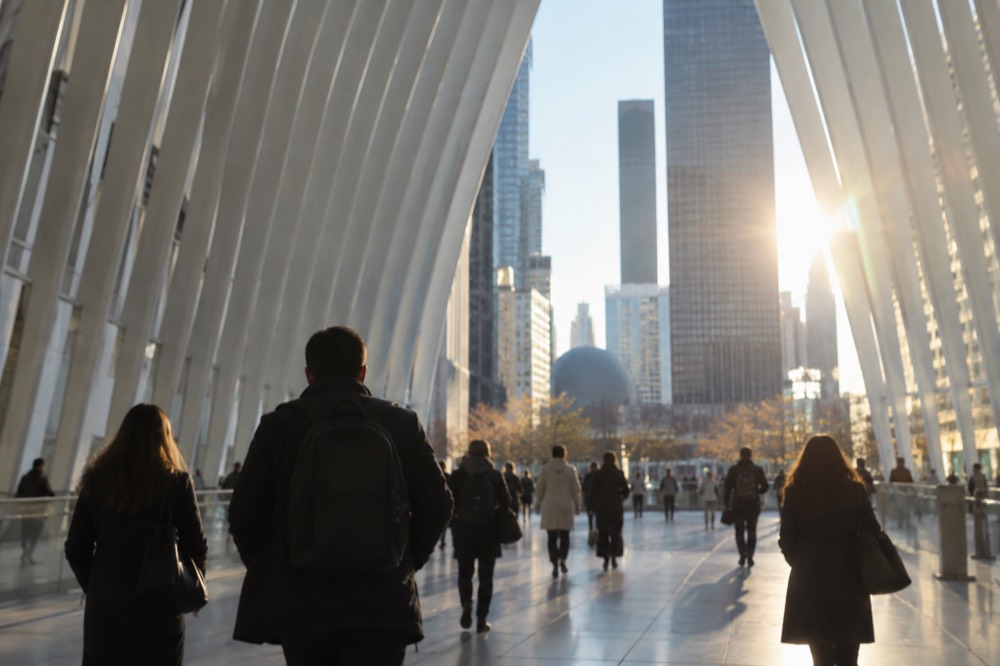
The surrounding blocks are worth knowing too. The Oculus, the white ribbed transit hub beside the memorial, is a destination in its own right, and the Brookfield Place food court sits one block west on the water. St. Paul's Chapel, the oldest surviving church building in Manhattan, faces the site from Broadway and served as a refuge for recovery workers; it is open to visitors.
Guided Tours, Free Walks and Combined Tickets
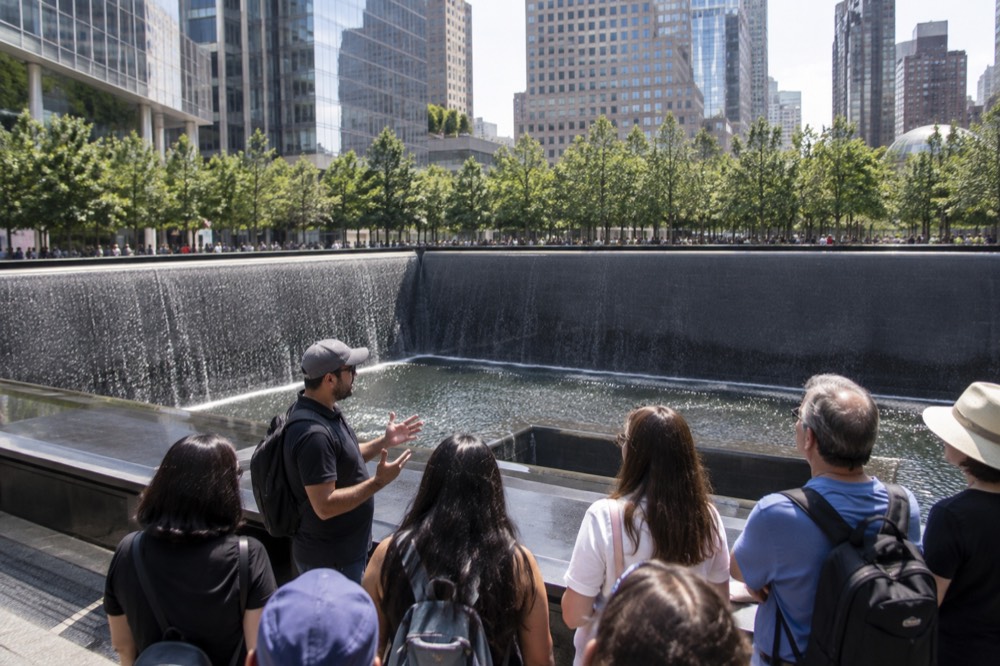
Three main formats cover the site: a timed museum ticket on its own, guided packages that combine the memorial, the museum and One World Observatory into one booked block, and free, tip-based walking tours of the Financial District that pass the memorial and Wall Street with a local guide on GuruWalk. The choice comes down to structure: the museum is self-guided by design, but the plaza's story lands differently with a guide.
The combined package suits visitors who want the whole World Trade Center experience, museum and observatory, handled in one organized block with the timing between them solved. It is a half-day commitment, and it is not the pick for anyone who would rather move at their own pace.
The free-walk option is the budget route, and it comes with an honesty note: the free-walk scene in New York is narrower than it looks, and six of the ten free walks listed on GuruWalk in the city belong to a single operator. The Financial District walk that covers Wall Street, the Stock Exchange and the memorial is run by TERRADVENTOURS, lasts about two and a half hours and works on tips, so the price is whatever you decide at the end.
For the museum itself, the official timed ticket remains the simplest route, and it is the one most first-time visitors should take. The tours overview on this site compares the full range of guided options across the city if you are building a bigger itinerary.
Planning a Full Day Around the Site
A realistic World Trade Center day runs three to five hours: an hour on the memorial plaza, 90 minutes to two hours in the museum, and optionally an hour at One World Observatory above it. Add lunch at Brookfield Place or the Oculus and you have a half-day in Lower Manhattan that also reaches Wall Street, the Staten Island Ferry and Battery Park on foot. The site rewards a slow pace more than a tight schedule.
The natural order is plaza first, museum second. The plaza orients you: standing at the pools, you understand the footprints, and the museum's underground layout makes sense once you have seen the surface. Then the museum gives the depth. Anyone adding the observatory should book an afternoon slot, after the museum, when the light over the harbor is better anyway.
Lower Manhattan stacks well around the site. The Staten Island Ferry terminal is a ten-minute walk south and the ride is free, with the Statue of Liberty in view the whole way. Wall Street is five minutes east. The Financial District guide on this site lays out the full walkable circuit.
| Itinerary block | Time | Cost |
|---|---|---|
| Memorial plaza | 45-60 min | Free |
| Museum visit | 90-120 min | From $25 timed |
| One World Observatory | ~60 min | From $39-$44, varies |
| Lunch, Brookfield Place | 60 min | Varies |
| Staten Island Ferry round trip | ~70 min | Free |
A note on tone, because it matters here. The 9/11 Memorial and Museum is a burial site and a place of mourning as much as a visitor attraction, and it is treated that way by the people who run it and by most of the people who come. Keep your voice down on the plaza, follow the museum's requests in the In Memoriam room, and give the visit the time it asks for rather than the time a schedule allows. Nobody rushes you out, and the site is at its best when you let it set the pace.
Common Questions About the 9/11 Memorial and Museum
The questions visitors ask most are about cost, time and the difference between the two halves of the site. The short answers: the plaza is free and open 8am to 8pm, the museum costs $36 at the box office or from $25 timed online, a visit needs 90 minutes to two hours, and free Mondays exist but tickets release at 7am ET and disappear quickly. Children under 7 enter the museum free, and the site is fully accessible.
Is the 9/11 Memorial free to visit?
Yes. The memorial plaza, the two reflecting pools and the Survivor Tree are free and open to everyone daily from 8am to 8pm, with no ticket of any kind. Only the underground museum charges admission.
How much does the 9/11 Museum cost?
An adult ticket is $36.00 at the box office. Timed-entry tickets sold through booking platforms start from $25 per person. Youth 13-17 pay $30, children 7-12 pay $24, and children 6 and under enter free.
Can you get into the 9/11 Museum for free?
Yes, on Free Admission Mondays. Tickets are released on the museum's website each Monday at 7am ET, first come first served, and they go quickly. The first Sunday of each month, 4pm to 7pm, is free for people who live, work or study in the New York area with ID, and Museums for All gives free entry with an EBT card at the box office.
How long does a visit take?
Plan 90 minutes to two hours for the museum, plus whatever time you spend on the plaza. Most visitors give the whole site two to three hours. The museum's historical exhibition is dense, and rushing it defeats the purpose.
Is the 9/11 Museum appropriate for children?
The museum recommends ages 10 and up. The historical exhibition includes recorded phone calls and distressing material, and it is not designed for young children. The plaza is suitable for all ages.
What is the closest subway station?
The Fulton Street complex and WTC Cortlandt station serve the site directly, with the E, R, W, 2, 3, 4 and 5 trains and the PATH from New Jersey all within a short walk. The fare is $3.00 with OMNY tap-and-go.
The site's practical demands are modest: a timed ticket bought ahead, a light bag, and a morning slot if you want quiet. What it asks beyond that is attention. The New York City Travel Guide covers the rest of the city when you are ready to plan beyond Lower Manhattan.