Little Island NYC: What a Visit Actually Involves
Little Island sits on sculpted concrete stilts in the Hudson River at the edge of the Meatpacking District, a small park with big views and a performance program. Here is what a visit actually involves, from subway access to timing.
Short answer
Little Island is a free elevated park built on concrete piles in the Hudson River at roughly 13th Street in Manhattan. It is small enough to see in under an hour, sits steps from the southern end of the High Line, and is best visited late in the day when the light hits the river. There is no gate price for the park itself, though performances are ticketed separately.
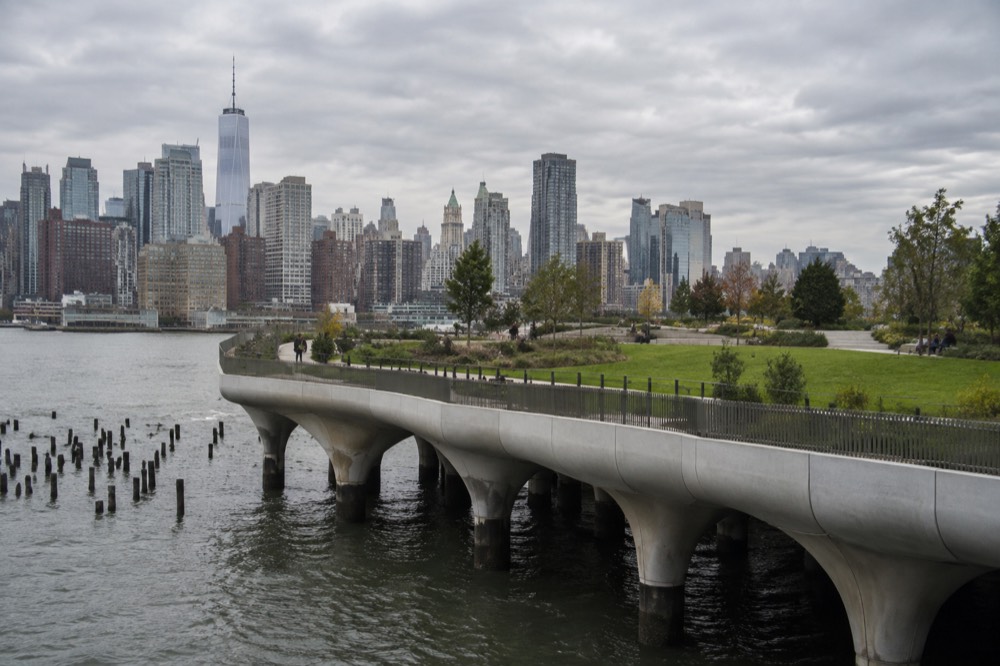
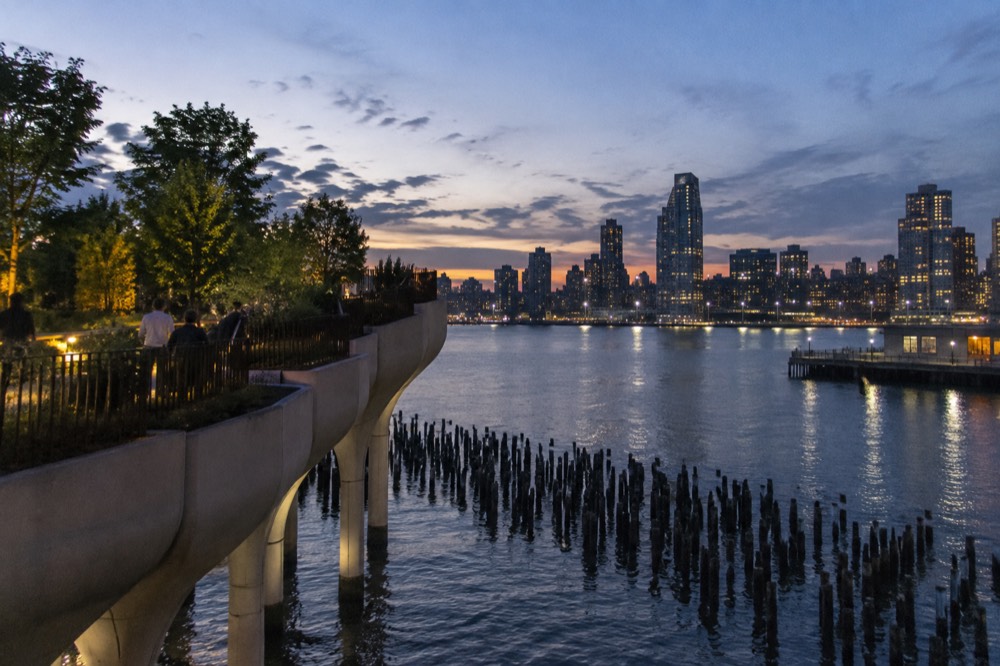
The pile field off 13th Street used to be the rotting remnant of Pier 54. Today it carries a 2.4-acre park that looks like a leaf floating on the Hudson, built on concrete columns that flare at the top like tulips and hold the landscape above the water. You can walk the whole thing in twenty minutes. Most people stay longer, because the views down the river toward the Statue of Liberty and back across to New Jersey do a lot of quiet work.
This guide covers the practical side: what Little Island is, what it costs, how to reach it by subway, when to go, what you can actually do there, and how it compares with the High Line it sits beside. Everything here reflects current MTA fare rules, which changed recently in ways most guides have not caught up with, and current park access practice. If you want the wider picture of the city, start with the money page overview of things to do in NYC and come back for the detail.
What Is Little Island and Where Exactly Is It?
Little Island is an elevated public park built on concrete piles in the Hudson River, connected to Manhattan by two bridge-like entrances at roughly 13th Street, at the southern edge of the Meatpacking District. It sits inside Hudson River Park, immediately south of the Chelsea Piers and steps from the southern end of the High Line. The park rises and falls across its footprint, with a central lawn, an amphitheater facing the water, a smaller stage in a glade of trees, and lookout corners engineered for the skyline. The scale is intimate. This is a pier-sized garden, not a destination you plan a whole day around.
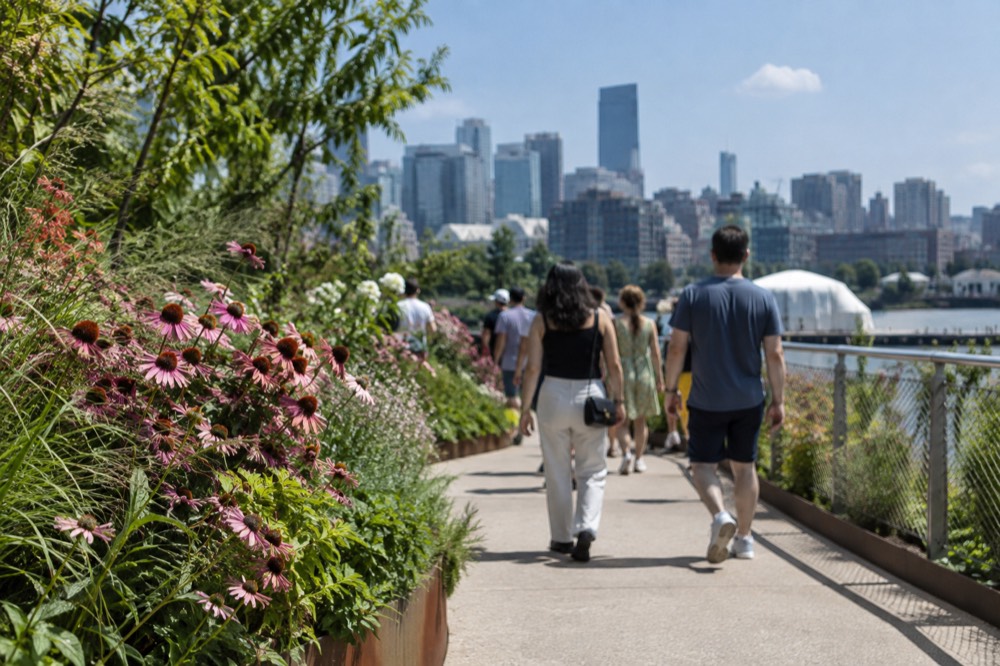
The design is the draw as much as the greenery. The piles support a deck that undulates, so the park has hills in a city mostly made of flat surfaces. From the high points you look over the rail and straight down at the river moving between the columns. From the low points, plantings frame the water like a garden window. It reads as landscape architecture doing theatrical work, which is fitting for a pier whose main programming is performance.
The location is the practical reason to care. Little Island sits at a junction several itineraries already pass through: the High Line ends a few blocks north at Gansevoort Street, Chelsea Market sits under that end of it, and the Whitney Museum of American Art stands right at the High Line's southern terminus, as covered in our Whitney Museum guide. The park is the waterfront punctuation mark on that whole walk.
How Much Does It Cost to Visit Little Island?
Entry to Little Island itself has no gate price; the park is a public space inside Hudson River Park and walking on costs nothing at all. What you pay for is optional: tickets to performances in the amphitheater and the glade stage are sold separately through the park's own channels, and prices vary by show. Food and drink on the pier run at normal Manhattan prices. The honest budget for a visit is therefore zero dollars plus whatever you choose to spend, which makes Little Island one of the genuinely cheap landmarks in a city where the observation decks cluster in the $40-$60 range before fees, and where a single museum ticket typically runs $30.
Two caveats belong here. First, timed-entry reservations have applied at busy periods in the park's history, particularly on peak summer weekend afternoons, so check the park's own website for the current access rule before you go rather than relying on any guide, including this one. Second, performances are the exception to free: the amphitheater program is a real ticketed season, and popular shows sell out. If a specific performance is the reason for your visit, book it in advance rather than walking up hopeful.
The comparison matters for itinerary math. Here is how a Little Island stop stacks up against nearby paid attractions:
| Attraction | Entry cost | Time needed | Booking needed |
|---|---|---|---|
| Little Island | Free | 30-60 minutes | No, except timed entry at peak periods |
| The High Line | Free | 60-90 minutes | No |
| Whitney Museum | $30 adult, free for visitors 25 and under | 2 hours | Recommended, especially free Friday nights |
| Chelsea Market | Free to enter, food costs extra | 45-60 minutes | No |
| Edge observation deck | From $47.91 online, $62.06 box office | 1 hour | Yes, timed entry |
That table is the practical case for the Meatpacking District as a half-day: you can walk the High Line, drop into Chelsea Market, and finish on Little Island at golden hour, and the only mandatory spend is lunch.
Since Little Island pairs naturally with the city's great free-to-enter green spaces, and since many visitors combine a pier walk with a park visit on the same day, here are guided options that fit an itinerary built around walking New York's landscapes:
How Do You Get to Little Island by Subway?
The closest subway stops to Little Island are 14 St/8 Av on the A, C, E and L lines and 14 St on the 1, 2, 3 lines, both a roughly ten-minute walk west to the Meatpacking waterfront. From 14 St/8 Av you walk west along 14th Street and turn south; from the L train's 8th Avenue end the route is equally direct. The fare is $3.00 per ride, and the MTA's OMNY system now caps your weekly spending automatically at $35 with no pass to buy, provided you tap the same card or device every time.
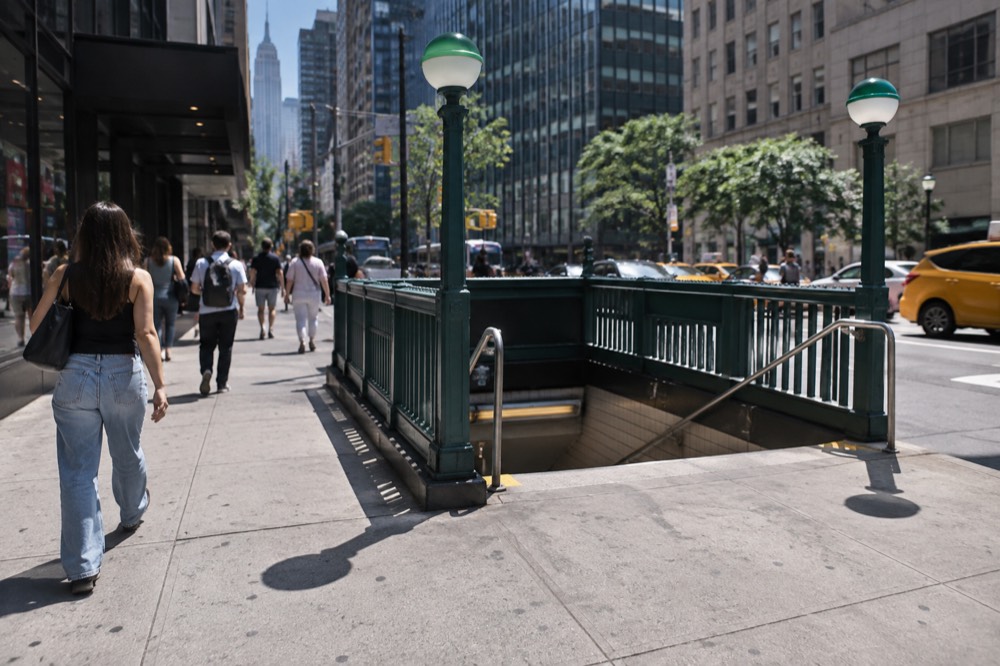
That fare rule deserves emphasis because almost every guide published before this year gets it wrong. The MetroCard is retired: as of 1 January 2026 the MTA no longer sells or refills them, and the old 7-day unlimited pass is gone. The replacement is automatic. Tap a contactless card, phone or OMNY card at the turnstile, and once you have spent $35 on subway and local bus rides inside a rolling seven-day window, every further ride in that window is free. You do not buy anything or activate anything. The one rule that trips groups up: each traveler needs their own card or device, because the cap is per person, not per purchase. The MTA's fare page carries the current details.
Walking is often the better answer anyway. If you are coming from the High Line, you simply stay at river level and keep walking south past Gansevoort Peninsula. From the West Village, the walk up the Hudson River Park esplanade is flat, waterside and pleasant in almost any weather. Citi Bike docks sit along the greenway, and the riverside path is one of the city's better bike corridors if you would rather ride.
| Route to Little Island | Subway lines | Walk at the end | Notes |
|---|---|---|---|
| 14 St/8 Av | A, C, E, L | About 10 minutes | Most direct from Midtown or Downtown |
| 14 St | 1, 2, 3 | About 10-12 minutes | Good from the West Side |
| 23 St | C, E | About 15 minutes | Alternative if coming from Hudson Yards |
| Along the Hudson River Park esplanade | None | Flat waterside walk or ride | Best approach from the north or south |
If you would rather have a local steer the route than navigate on your own, a guided walk covers the waterfront neighborhoods with the stories attached:
A Central Park guided walk is the natural pairing for visitors who want both of New York's landmark designed landscapes decoded rather than discovered by accident, and a guide who knows the loops saves you the wrong turns that the park map invites.
When Is the Best Time of Day and Year to Visit Little Island?
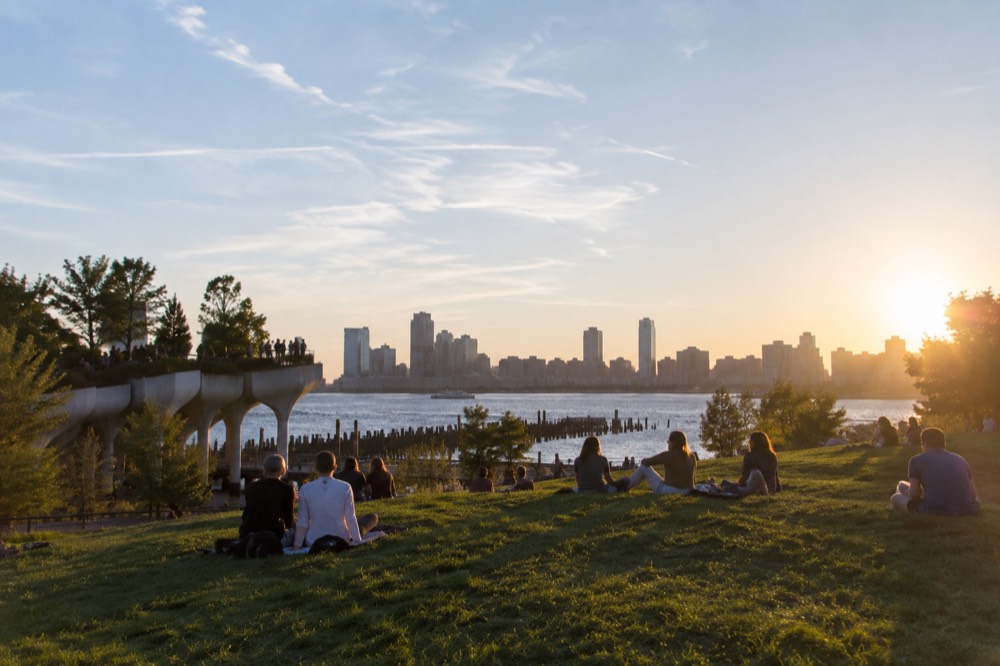
Late afternoon into sunset is the best time to visit Little Island, because the park faces west over the Hudson and the low sun lights up the river, the New Jersey shore and the Statue of Liberty in the distance. Midday works in spring and fall but bakes in summer, when the lawns and walkways hold heat and shade is scarce. Evenings bring the performance schedule alive. Season-wise, late spring through early fall is the full experience, with the plantings at their peak and the amphitheater program running; winter visits are quieter, colder and shorter on light, but the structure itself is still worth twenty minutes.
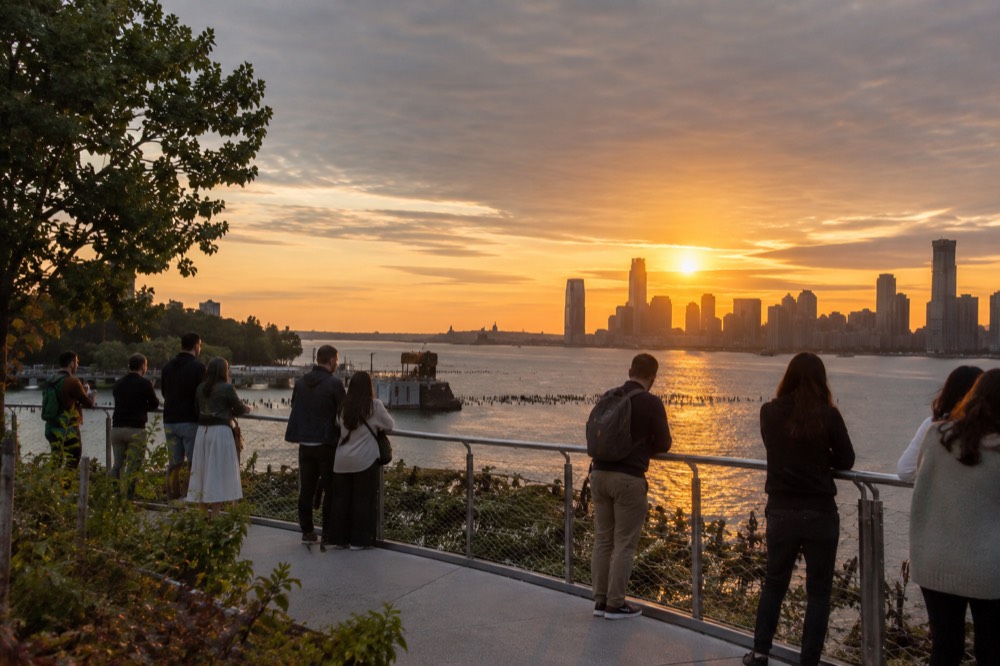
Crowd timing follows the neighborhood. The Meatpacking District and the High Line peak on weekend afternoons, and Little Island absorbs some of that flow. Weekday mornings are the quiet window, and they also happen to be when the plantings photograph best, with the light behind you over Manhattan rather than in your eyes. If sunset is your goal, arrive 45 minutes to an hour before it, claim a spot on the western rail, and let the amphitheater steps do the seating work. More of these guides are collected on New York City Travel Guide.
| Time of visit | Crowds | Light and weather | Best for |
|---|---|---|---|
| Weekday morning | Quietest | Clean light, cool in every season | Photos, a calm walk |
| Midday | Moderate | Hot and exposed in summer | A short stop between other plans |
| Late afternoon to sunset | Busiest | Golden hour over the Hudson, cooling breeze | The classic visit, the view |
| Evening, performance nights | Moderate | City lights on the water | A show in the amphitheater |
| Winter daytime | Very quiet | Cold, early dusk, possible snow | A brisk architectural stroll |
Weather planning for New York generally runs against intuition, and the official climate data proves it. July is the wettest month in Central Park in the NOAA 1991-2020 normals, averaging 4.60 inches of precipitation, ahead of both August and June, and February out-snows January, 10.1 inches against 8.8. The practical read for Little Island: a summer visit carries a real afternoon-thunderstorm risk, so keep the visit flexible, and a February visit is more likely to be snow-dusted than a January one. Our month-by-month NYC weather guide has the full table.
What Can You Actually Do on Little Island?
Little Island offers walking, lawns, gardens, lookout points, a small food and drink operation, and a summer performance season across two stages, all inside a footprint you can cross in about ten minutes. The main amphitheater faces the water and hosts music, dance and theater in the warmer months. The Glade, a second smaller stage tucked among trees, carries a more intimate program. Between shows, the park functions as a garden: a rolling landscape of plantings, a central lawn, and corners where the deck drops close to the water. There is no playground in the conventional sense, but the hills and the water-level views hold children's attention well.
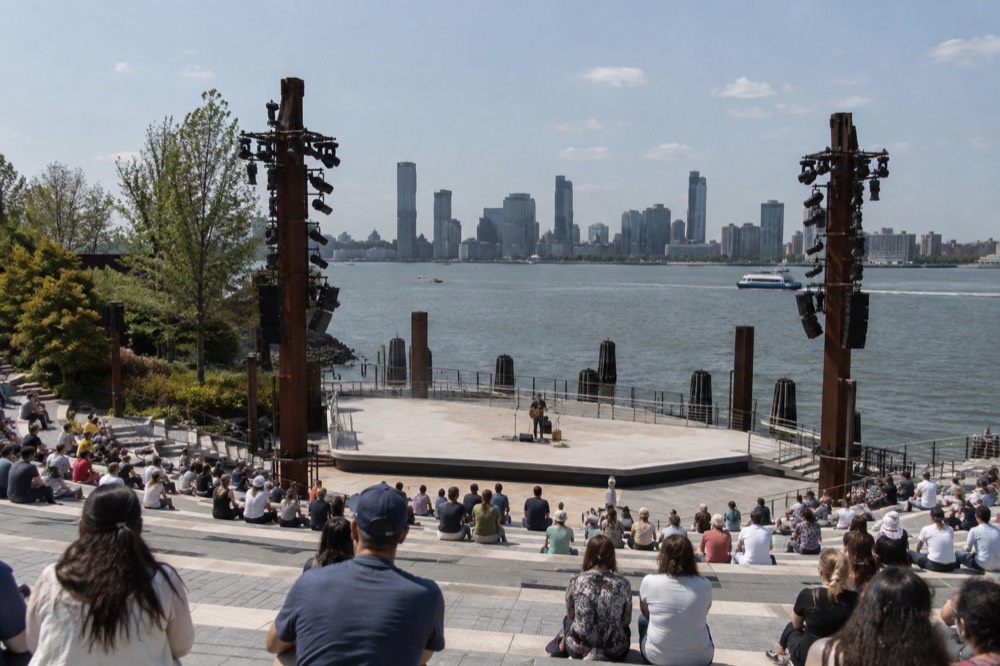
The performance program is the underused half of the park. Most visitors treat Little Island as a photo stop and miss that the amphitheater is a working venue with a published season. Checking the park's own calendar before your trip can turn a 20-minute stroll into an evening out, and the setting, an open stage with the Hudson behind it, is unusual even by New York standards. Ticketed shows sit alongside free programming, so there is often something to watch without spending anything.
For families, the practical appeal is the combination of small scale and water. The park is fully walkable for small children, the railings are designed for views rather than obstruction, and the ice cream and snack kiosks give the visit a natural endpoint. Our things to do in NYC with kids guide places Little Island in the wider family itinerary, usually alongside the Hudson River Park playgrounds a few blocks north.
Food-wise, you have two options: the on-pier kiosks, or the heavyweight down the road. Chelsea Market sits a short walk north at the High Line's northern edge, and a food tour that strings the market and the elevated park together is one of the better-value guided walks in the neighborhood:
That tour actually runs through Chinatown and Little Italy rather than Chelsea, so think of it as the same idea, six tastings with a local steering the route, applied to a different neighborhood, and a good candidate for another day of the same trip.
Little Island or the High Line: Which Deserves Your Time?
You should do both, because they are five minutes apart and do different jobs: the High Line is a 1.45-mile elevated rail corridor turned linear garden, best experienced as a slow north-to-south walk, while Little Island is a compact sculptural pier best experienced as a pause with a view. If you genuinely have time for only one, the High Line wins on variety, length and access to Chelsea Market and Hudson Yards at either end, but it is also the more crowded of the two by far. Little Island wins on the waterfront itself: it is the only one of the two that puts you over the river, on columns, looking down at the water.

The honest sequence is to walk the High Line south from Hudson Yards, exit at Gansevoort Street, and finish at Little Island. That direction puts the Whitney at your exit if you want the museum, and it ends the day at the pier with the sunset in front of you rather than behind you. Walking it the other way means the crowds thicken as you go, which is the worse order. Our High Line guide covers the entrances, the best stretches and the exits in detail.
If you want a guide for the bridge-and-waterfront side of the walk rather than the garden side, there is a strong free option:
This is a free, tip-based walk over the Brooklyn Bridge and through Brooklyn Heights and Dumbo, run on GuruWalk by an operator called CityShuffles. It is the same pay-what-you-want model, and one honest note on that platform: six of the ten New York walks on GuruWalk belong to this single operator, so the free-walk scene in this city is narrower than it looks. The bridge walk itself is well reviewed and covers ground Little Island visitors often add on a separate day.
Is Little Island Worth Visiting?
Little Island is worth visiting if you are already in the Meatpacking District or walking the High Line, and it is a modest detour from anywhere on Manhattan's West Side, but it is not worth crossing the city for on its own. It costs nothing, takes under an hour, and delivers one of the more distinctive pieces of landscape architecture in New York plus a genuinely good sunset vantage. As a standalone destination it is thin. As the final act of a Chelsea and Meatpacking afternoon, it lands perfectly, and the performance program can upgrade it into an evening if you plan ahead.
The verdict depends on what you trade for it. An hour on Little Island competes with an hour at the Whitney next door, or an extra loop of Central Park, or the Staten Island Ferry's free harbor run. On a first trip with limited days, it belongs in the "if it fits" tier rather than the "build around it" tier. On a second trip, or a trip with an evening to fill in the West Village's orbit, it earns its slot easily, especially with tickets to something on the amphitheater stage.
For travelers who enjoy this kind of compact, designed green space, the same instinct that pulls you toward Little Island will pull you toward the city's bigger landscape, and a guide turns that from a walk into a story. Before you commit to anything, here are the walks and tours that pair best with a Little Island afternoon:
Common Questions About Little Island NYC
The questions below are the ones visitors actually ask before a visit: whether it is free, whether you need tickets, how long it takes, when to go, and whether it works for children. Each answer is short and direct, and reflects the park's current access practice plus the MTA fare rules that took effect in 2026. Where a detail can change with the season or the day, the answer says so plainly and points you at the park's own website rather than promising a fixed rule that could be wrong by the time you travel.
Is Little Island in NYC free to visit?
Yes, the park itself has no entry price. It is a public space within Hudson River Park, and walking on costs nothing. Performances at the amphitheater and the Glade stage are ticketed separately, and food on the pier costs extra, but a visit without any of that is free.
Do you need a reservation or timed ticket for Little Island?
Not usually, but timed-entry reservations have applied at busy periods, particularly summer weekend afternoons, so check the park's own website for the rule in force on your date before you go. Evening and off-peak visits have generally required nothing but showing up.
How long should you spend at Little Island?
Plan on 30 to 60 minutes for a walk-through with photo stops. Add more time if you are eating on the pier, attending a performance, or settling in for sunset, which is the best use of the park's west-facing position.
What subway do you take to Little Island?
Take the A, C, E or L to 14 St/8 Av, or the 1, 2 or 3 to 14 St, and walk about ten minutes west to the Meatpacking waterfront. The fare is $3.00, and the OMNY system caps your weekly subway and local bus spending at $35 automatically when you tap the same card or device.
Is Little Island good for kids?
Yes, within its scale. The park is small, fully walkable and full of hills, water views and snack kiosks, which works well for children. It is not a playground destination, but as a pause on a High Line or Hudson River Park afternoon it holds attention well.
Can you see the Statue of Liberty from Little Island?
Yes, in the distance. The park faces southwest over the Hudson, and the statue is visible far down the harbor on a clear day, along with the New Jersey shore and the river traffic. It is a skyline-and-harbor view rather than a close-up, so do not treat it as a substitute for a ferry or cruise.
One last planning note: Little Island rewards low-effort spontaneity more than most New York attractions. Nothing about the visit needs booking, the walk from the subway is short, and the worst outcome of an unplanned stop is a nice half hour by the water. Build your Meatpacking afternoon around the walk, the market and the Whitney if you choose, but let the pier be the unscheduled finish, ideally with the sun going down behind New Jersey.