The Oculus NYC: What It Is, How to Visit, and Whether It's Worth the Trip
The Oculus is the transportation hub and shopping arcade at the World Trade Center, and its white steel ribs make it one of the most photographed buildings in Lower Manhattan. Here is what a visit actually involves.
Short answer
The Oculus is free to enter and open to anyone. It is primarily a PATH train station and shopping mall at the World Trade Center, reachable by roughly a dozen subway lines, and most visits last under an hour unless you shop or eat.
A single pair of steel ribs rises out of the World Trade Center site like the spine of some enormous sea creature, and every day thousands of commuters walk beneath them without looking up. The Oculus is that building: the transportation hub and shopping arcade that anchors the rebuilt World Trade Center, designed around the PATH trains that connect Lower Manhattan to New Jersey. For visitors, it is one of the few major New York sights that costs nothing and asks almost nothing of you. No ticket, no line, no time slot. You walk in, you look up, and you decide how long to stay.
This guide covers what The Oculus actually is, how to reach it, what it costs, when to go, and how it fits into a day in Lower Manhattan alongside the 9/11 Memorial and Museum and the rest of the World Trade Center campus. It is part of the wider New York City Travel Guide collection, and it pairs naturally with our master list of things to do in NYC.
What Is the Oculus in NYC?
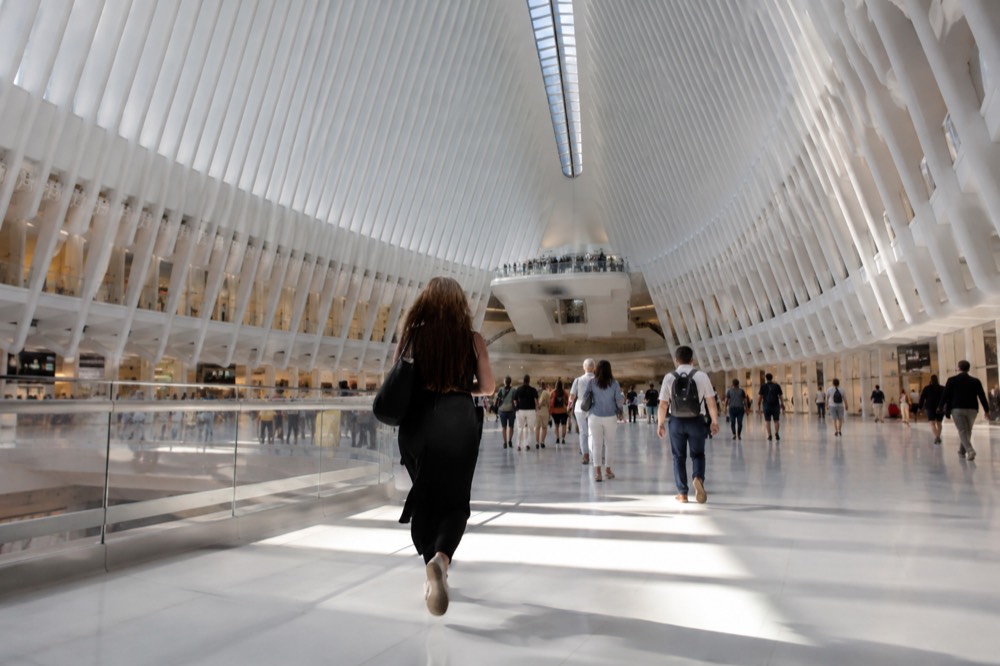
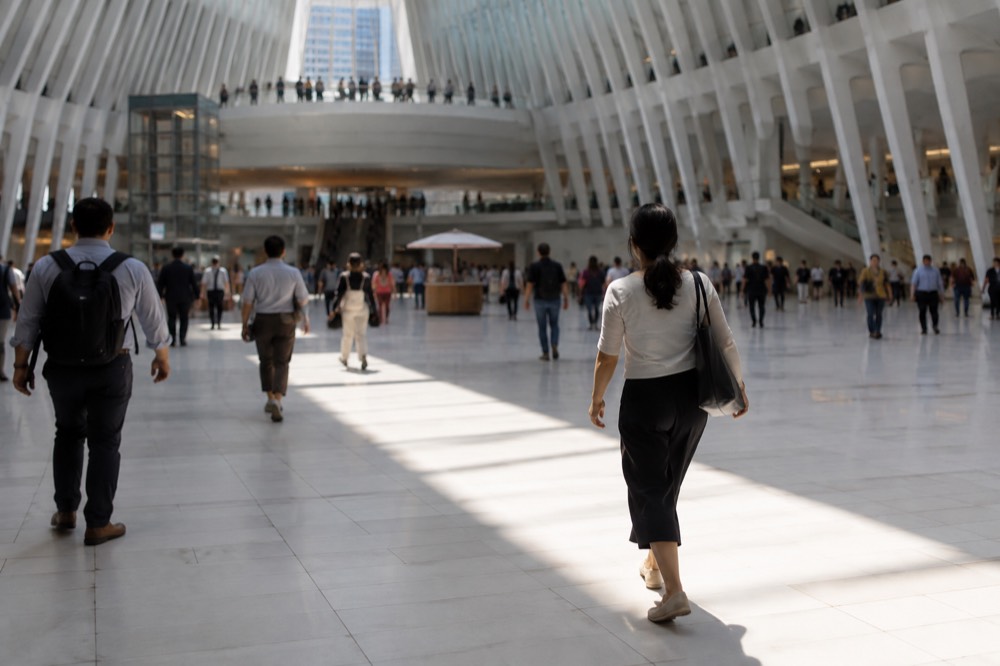
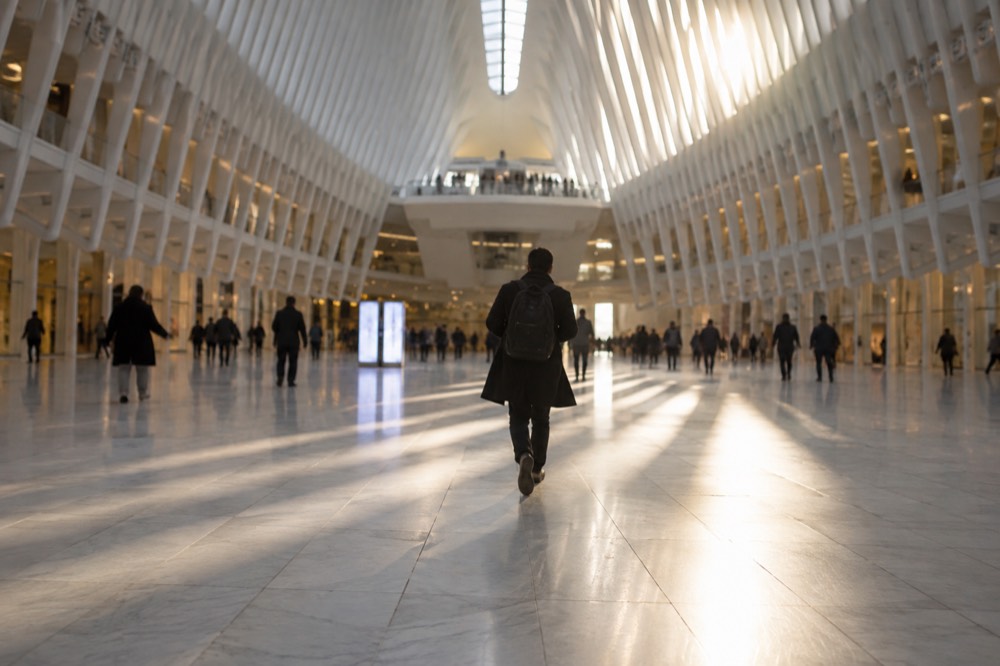
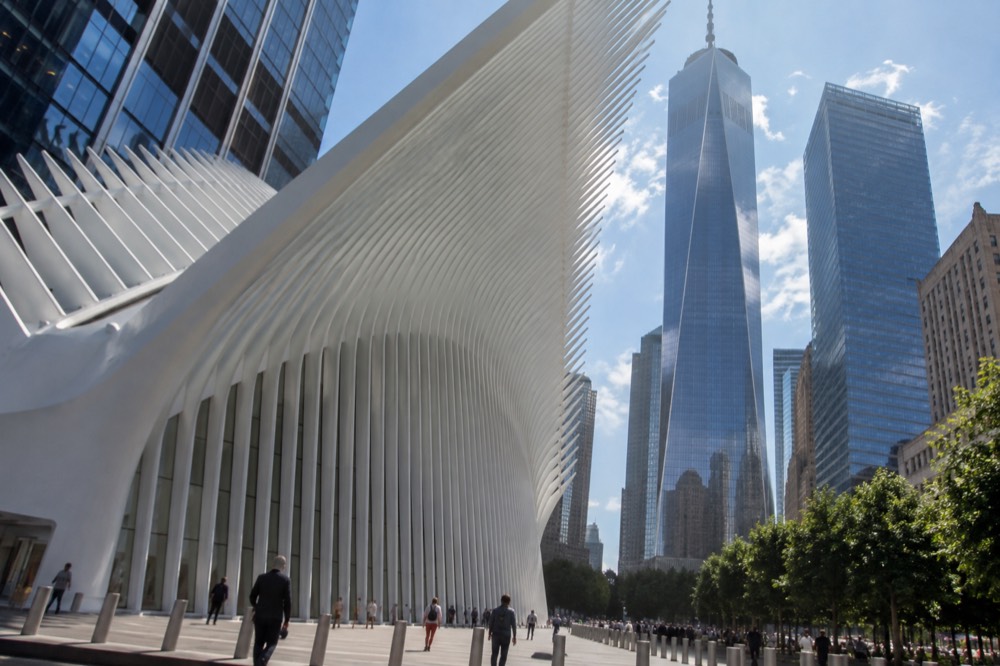
The Oculus is the World Trade Center Transportation Hub, a combined PATH rail station, subway connection point and shopping arcade at the rebuilt World Trade Center in Lower Manhattan. Its white, ribbed steel structure makes it one of the most recognizable pieces of contemporary architecture in the city. Entering costs nothing. The main concourse runs east to west beneath the ribs, lined with retail, and the marble floor alone makes it a favorite of photographers.
The building serves two very different publics at once. For New Jersey commuters it is a station: PATH trains arrive on the lower level and carry riders across the river, and the hub also connects into the New York subway system through passageways to the Fulton Center complex and the E train at WTC. For everyone else it is a destination, a mall and, honestly, a piece of sculpture you can walk through.
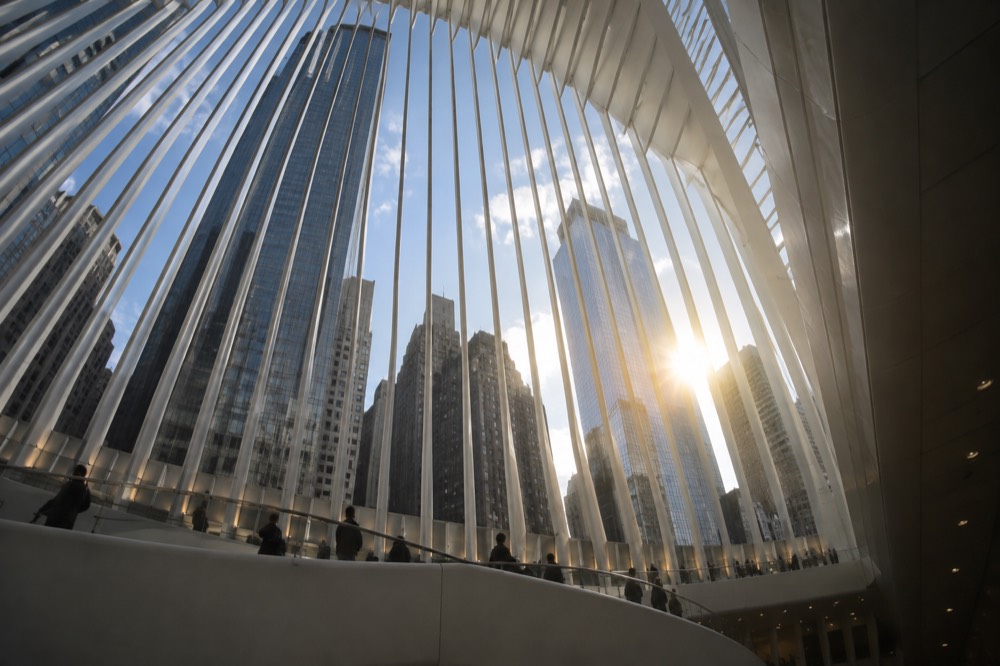
The interior is what people come for. The main hall runs the length of the building along its spine, and the ribs open directly to the sky through a long skylight. Once a year, on the morning of September 11, that skylight performs its designed function: it opens fully, and the beam of light it lets through aligns with the angle the sun sat at that morning. The mechanism is called the Wedge of Light, and the opening is one of the few times the building does something other than stand there looking expensive.
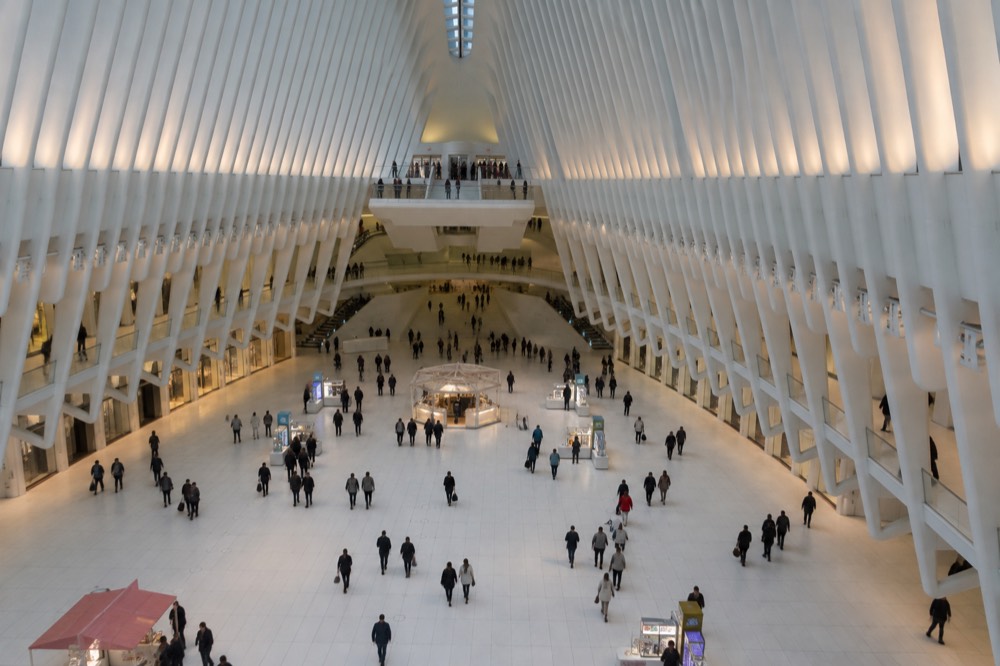
The scale is the other thing. The hall is deliberately tall, and the white marble and steel give it a brightness that almost nowhere else in Manhattan matches. It reads as a public plaza first and a mall second, which is why it fills with tourists taking photographs from the floor at the center of the spine, the spot where the ribs converge overhead.
How Do You Get to the Oculus?
The Oculus sits at the World Trade Center in Lower Manhattan, and it is one of the best-connected buildings in the city. The 2 and 3 trains stop at Park Place, the E at WTC, the 4 and 5 at Wall Street, the R and W at Cortlandt Street, the A and C at Chambers and Fulton, and PATH trains from New Jersey arrive directly inside the hub. Walking from the 9/11 Memorial takes about two minutes.
The subway is the honest answer for getting anywhere in New York, and the fare is $3.00 per ride, tapped with OMNY or a credit card at the turnstile. If you are riding a lot, the system caps you automatically at $35 in a seven-day period, with no pass to buy, as long as you tap the same card or device every time. The old 7-day unlimited MetroCard no longer exists: the MTA stopped selling and refilling MetroCards on 1 January 2026.
Here is how the main approaches compare:
| Approach | Lines | What to expect |
|---|---|---|
| E train to WTC | E | Arrives directly beneath the hub; elevator and stairs up into the concourse |
| Fulton Center | 2, 3, 4, 5, A, C, J, Z | Connected by underground passageway; about a four-minute walk indoors |
| Cortlandt Street | R, W | One block north of the hub, at the edge of the memorial area |
| PATH from New Jersey | PATH | Arrives inside The Oculus itself; the hub is the station |
| On foot from Battery Park | Any | Roughly a ten-minute walk up Greenwich Street past the ferry terminals |
If you are coming from the Statue of Liberty ferry terminals in Battery Park, the walk is short and flat, and it passes the entrance to the memorial plaza, so the sequence ferry, memorial, Oculus, One World Observatory is a natural Lower Manhattan loop. Visitors doing that loop often weigh a pass, since several of the stops are paid attractions:
The PATH side of the building is worth understanding even if you never ride it. PATH crossed 60 million passengers for the first time since 2019 in 2025, 60.7 million rides, though that is still only about 74% of its pre-pandemic volume. The trains run between the hub and stations in Hoboken, Jersey City and Newark, and the hub's design puts their arrival hall directly under the famous ribs.
Does It Cost Anything to Visit the Oculus?
No. Entering The Oculus is completely free, at any hour the building is open, with no ticket, reservation or security line for the main concourse. The building is public infrastructure, a train station and a mall, so walking in and photographing the hall costs exactly nothing. Money only leaves your wallet if you shop, eat, or continue to the paid attractions around it.
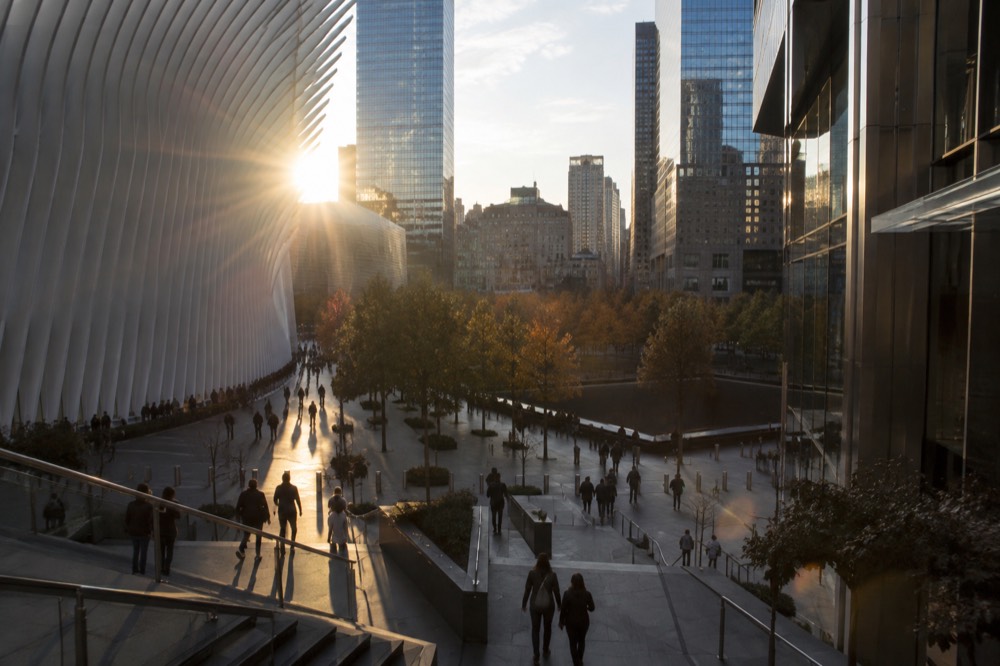
This is what makes The Oculus a useful anchor for a budget day. The memorial plaza, the outdoor pools with the names cut into their bronze parapets, is also free and open daily from 8:00 to 20:00. So you can build an entire morning around free architecture and remembrance: the plaza, the Oculus hall, the passageways of Fulton Center, and the Winter Garden at Brookfield Place across the street, all without spending a dollar on admission.
What you might pay for, once you are there:
| Item | Cost | Notes |
|---|---|---|
| Entering The Oculus | Free | No ticket, no line for the main hall |
| 9/11 Memorial plaza | Free | Outdoor pools, daily 08:00-20:00 |
| 9/11 Memorial Museum | $36 adult box office | Timed entry; free-admission Mondays exist, tickets released online each Monday at 07:00 ET |
| One World Observatory | From $30.49 | Timed entry, 102nd floor, skip-the-line tickets available |
| Statue of Liberty ferry | $26.00 adult | The only operator that lands on Liberty Island is the official Statue City Cruises ferry |
One caution that matters commercially: several lookalike harbor cruises circle the Statue of Liberty without ever landing, and some charge more than the $26.00 official ferry. That warning comes from the National Park Service, which authorizes only Statue City Cruises to dock at Liberty Island. If the statue is on your list after the Oculus, buy the real ferry through the official Statue of Liberty tickets options.
The museum next door deserves its own note. The 9/11 Memorial Museum sits beneath the pools, and it is a place of remembrance rather than an entertainment attraction. Describe it plainly, plan a fixed entry window, and do not sandwich it between photo stops. The timed ticket suits that: it locks your entry and skips the Fulton Street ticket line.
If you are planning to bundle the museum with the observatory, the ferry and a Midtown deck, the pass question is worth settling before you buy anything individually. The New York CityPASS covers five attractions from an eleven-attraction list for $149 adult and $129 child, valid over nine consecutive days, and it pays off only if you use all five.
What Are the Oculus Hours?
The Oculus is open daily, with the retail concourse generally running from around 10:00 to 19:00 or later on weekdays, and the transit hall staying accessible whenever trains run, which means effectively all day. The building never fully closes to commuters because PATH and subway connections run through it. Photographers get the best light in the morning, when the sun comes low through the eastern end of the skylight.
The distinction that trips people up is between the building and the mall. The hall itself is transit space, so it is open early and late. The shops inside keep conventional mall hours, which vary by day and season, so a 21:00 visit gives you the ribs and the marble without the retail. That is arguably the better version anyway: the concourse empties, the security of a weekday evening settles in, and the photographs improve because no one is walking through your frame.
Timing around the rest of the World Trade Center matters more than timing inside The Oculus:
| Time of day | The Oculus | Around it |
|---|---|---|
| Early morning | Quietest, best light through the skylight | Memorial plaza at its calmest |
| Midday | Busiest; shoppers and tour groups | Observatory lines longest |
| Late afternoon | Busy, golden light on the exterior ribs | Good moment for the observatory sunset slot |
| Evening | Mall closing, hall stays open | Memorial pools lit at night, worth seeing |
The one date to know is September 11. The skylight opens that morning for the Wedge of Light, the museum observes a different rhythm, and One World Observatory, directly next door, opens at 12:00 rather than its usual 09:00. If your trip includes that date, plan the morning around remembrance rather than sightseeing.
What Can You Actually Do Inside the Oculus?
Inside The Oculus you can photograph the main hall, walk the full length of the marble concourse beneath the ribs, shop in the mall that lines both levels, eat at the restaurants and food hall, and connect to trains, but there is no exhibit, tour or observation deck inside the building itself. It is architecture and retail, not a museum. Most visitors spend twenty to forty minutes.
The shopping is real but not the reason to come. The concourse runs the length of the spine with retail on the levels flanking it, and the brands are largely the ones you would find in any major American mall, with prices to match. The food options cluster toward the east end and toward the connected retail levels, and they range from quick coffee to sit-down dining. If you want a memorable meal, you are better served walking five minutes into the Financial District or taking the short trip up to Chinatown.
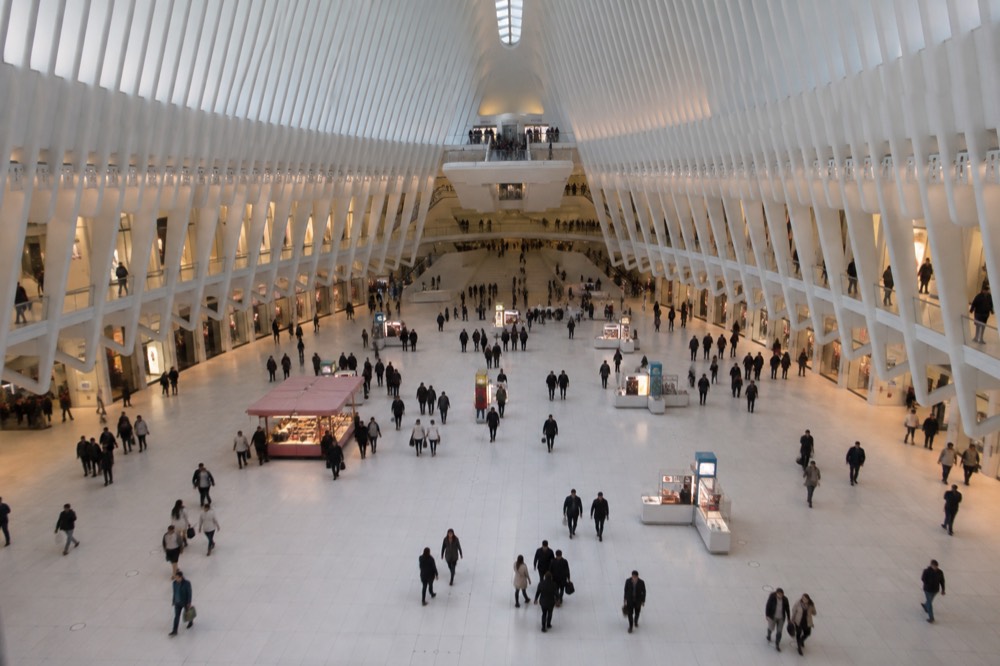
What the building offers that a mall does not is the architecture, and it rewards slow looking. Stand at the center of the spine where the ribs converge. Walk the full length once with your eyes up. Then step outside and walk around the exterior, because the building reads completely differently from Liberty Street, where the ribs rise from the ground, than it does from Church Street. The exterior view with One World Trade Center behind it is the postcard shot.
For the practical visitor, the sequence below works well:
| Stop | Time needed | Cost |
|---|---|---|
| The Oculus main hall, photos and walk-through | 20-40 minutes | Free |
| 9/11 Memorial plaza | 20-30 minutes | Free |
| 9/11 Memorial Museum | 1-2 hours | $36 adult box office |
| One World Observatory | 1-1.5 hours | From $30.49 |
| Brookfield Place and the Winter Garden, across the street | 20-30 minutes | Free |
That is a full Lower Manhattan half-day, and it is why the area rewards a pass if the rest of your itinerary is attraction-heavy. The New York CityPASS bundles five attractions from an eleven-attraction list, including the 9/11 Memorial Museum, the Empire State Building, Top of the Rock and the official Statue of Liberty ferry, for $149 adult and $129 child, valid over nine consecutive days. It pays for itself only if you genuinely use all five.
Is the Oculus Worth Visiting?
The Oculus is worth visiting if you are already at the World Trade Center, which most Lower Manhattan itineraries include, because it is free, adjacent to the memorial plaza, and one of the most striking interiors in the city. It is not worth a dedicated trip across Manhattan on its own. Treat it as a twenty-to-forty-minute architectural interlude between the memorial and the observatory.
The honest case against is that it is, at heart, a mall in a train station, and if monumental white architecture does nothing for you, the shops will not change your mind. The honest case for is that very few buildings in New York produce the involuntary look-up that this one does, and the price of finding out is zero. The building also functions as a piece of the World Trade Center story, connecting the transit infrastructure that was destroyed with what replaced it, and that context deepens a visit more than any shopping directory could.
Who it suits best:
- Photographers and architecture fans, who get one of the city's great interiors for free.
- Families, because it is stroller-friendly, has restrooms and food, and gives kids a place to run when the memorial plaza requires quiet.
- Rainy-day planners, since the hub connects underground to Fulton Center and Brookfield Place, letting you cross a chunk of Lower Manhattan without going outside.
- Anyone with a long PATH or subway transfer, since the building turns a connection into a sight.
If you are stacking the whole World Trade Center campus into one afternoon, the observatory next door is the natural paid companion. One World Observatory sits 102 floors up, and timed, skip-the-line entry from $30.49 lets you fix the slot and ride straight up.
What Is Near the Oculus?
Within a ten-minute walk of The Oculus you have the 9/11 Memorial plaza and museum, One World Observatory, Brookfield Place with its Winter Garden, the Staten Island Ferry terminal a little farther south, Battery Park and the official Statue of Liberty ferry, and the streets of the Financial District including Wall Street itself. Everything on that list except the museum, the observatory and the ferry is free.
This density is the real argument for basing a half-day here. The memorial plaza is two minutes away on foot. The observatory entrance is inside the same complex. Brookfield Place, with its tall palm court and food options, is directly across West Street via an above-ground crossing. Wall Street, Federal Hall and the canyons of the Financial District begin a few blocks east, and the free Staten Island Ferry, which passes the Statue of Liberty at a distance, sails from the terminal at the south tip.
If you have energy after the World Trade Center, two directions extend the day well:
- East into the Financial District and Seaport: the Wall Street Insider Tour pairs the landmarks with real explanations of how the markets work, in about 75 minutes.
- Northeast to Chinatown and Little Italy: about a 25-minute walk or a short subway ride, and a guided food tour through six tastings makes a strong late-afternoon follow-up to a morning of architecture.
For travelers planning several paid attractions across the whole city, not just this neighborhood, the pass question comes up again. Beyond CityPASS, the Explorer Pass lets you choose a number of visits from a large menu that includes the Edge observation deck, from $89 adult, and the All-Inclusive pass runs from $169. One caution from our research: The Sightseeing Pass ceased trading in 2025, and any guide still recommending it is out of date. If your plans are loose, the choose-as-you-go structure fits better than a fixed bundle.
Common Questions About the Oculus NYC
The questions visitors ask most about The Oculus concern cost, hours, photography and how the building relates to the rest of the World Trade Center, and the short answers are consistent: entry is free, the hall is open whenever trains run, photography is unrestricted in the public concourse, and the building sits between the memorial plaza and One World Observatory with the official Liberty ferry a short walk south.
Is The Oculus free to visit?
Yes. The main concourse is public space, part of a working transportation hub, so there is no ticket, no reservation and no admission charge. You pay only if you shop, eat or continue to paid attractions around it.
Can anyone walk into The Oculus?
Anyone can walk in during opening hours. The building doubles as a PATH station and mall, so the public concourse has no entry gate. Security presence exists, as at any major New York transit hub, but there is no screening to reach the main hall.
How long should I spend at The Oculus?
Twenty to forty minutes covers the main hall, photographs and a walk of the concourse. Add time only if you plan to shop or eat. Most visitors combine it with the memorial plaza and either the museum or the observatory in a single World Trade Center visit.
What is the best time of day to photograph The Oculus?
Morning, when the sun comes low through the eastern skylight and lights the marble floor. Weekday evenings are the quiet alternative: the mall closes but the hall stays open, and the crowds thin enough to shoot the ribs without people in the frame.
Is The Oculus the same as the World Trade Center Transportation Hub?
Yes, those are two names for the same building. The Oculus is the popular name for the hub, whose hall serves PATH trains, connects to the subway via Fulton Center, and houses the retail concourse.
Is The Oculus worth visiting with kids?
Yes, in short doses. The hall is stroller-friendly with restrooms and food on site, and kids tend to enjoy the space itself. It also makes a practical break between the quiet memorial plaza and a museum visit that demands more sustained attention.
The Oculus asks so little and gives a genuine piece of contemporary architecture in return. Walk in on a morning, look up from the center of the spine, then step out and finish the World Trade Center loop while your legs are still willing.