How Much Does a Trip to NYC Cost? A Sourced Breakdown
The honest answer starts with the fare box: a subway ride is $3.00, the Met is $30, the Statue of Liberty ferry is $26.00, and the 7-day unlimited MetroCard no longer exists. Here is what a New York trip actually costs, figure by figure.

Short answer
A trip to NYC costs roughly $50-$80 per person per day before hotels and flights: $3.00 per subway ride with an automatic $35 weekly cap, $26.00-$47.91 for the major attractions, $30 at the big museums, and Broadway from around $30-$50 if you use lotteries or TKTS. Hotels and airfare vary too much by date to quote honestly, so this guide prices everything you can control.
The single most quoted number in New York travel writing is also the least honest one: the nightly hotel rate. It changes by week, by event calendar and by how far ahead you book, and any figure printed today is wrong by the time you read it. So this guide does what most cost guides do not. It prices the parts of a New York trip that hold still: the fare box, the museum desks, the ferry terminals, the observation decks and the discount booths, every figure checked against the official source. The variable parts, hotels and flights, get honest treatment instead of invented numbers.
Start with what is certain. A subway ride costs $3.00. The Metropolitan Museum of Art charges $30 for adults. The official ferry to the Statue of Liberty and Ellis Island is $26.00. And the advice nearly every older guide opens with, buy a 7-day unlimited MetroCard, now describes a product you cannot buy at all, because the MTA stopped selling MetroCards on 1 January 2026. That last fact alone should make you suspicious of any cost guide published before this year.
How Much Does a Trip to NYC Cost per Day?
A realistic sightseeing day in New York runs about $50-$80 per person before your hotel and your flight: one or two paid attractions at $26.00-$47.91 each, $6.00-$9.00 in subway fares, and food, the most elastic line in any budget. Add a Broadway ticket and the day can double. The numbers that decide your total are the fixed ones, transit and admission, because those are published, verifiable and identical for every visitor.
The honest way to build a budget is to separate what is fixed from what is not. Transit, museum admission, ferry tickets and deck entry are all published prices, and they are the same whether you visit in March or July. Hotels and airfare are dynamic, which is why this guide refuses to print them: quoting a nightly rate that expired last week is worse than quoting nothing.
What you can control is the pattern. A visitor who stacks the free sights, the 9/11 Memorial plaza, the Staten Island Ferry crossing, Central Park, the Brooklyn Bridge promenade, and pays for two attractions a day, spends dramatically less than one who buys every timed ticket in sight. The things to do in NYC page on this site sorts the city's sights so you can see which ones cost nothing and which ones do not.

How Much Does Getting Around NYC Cost?
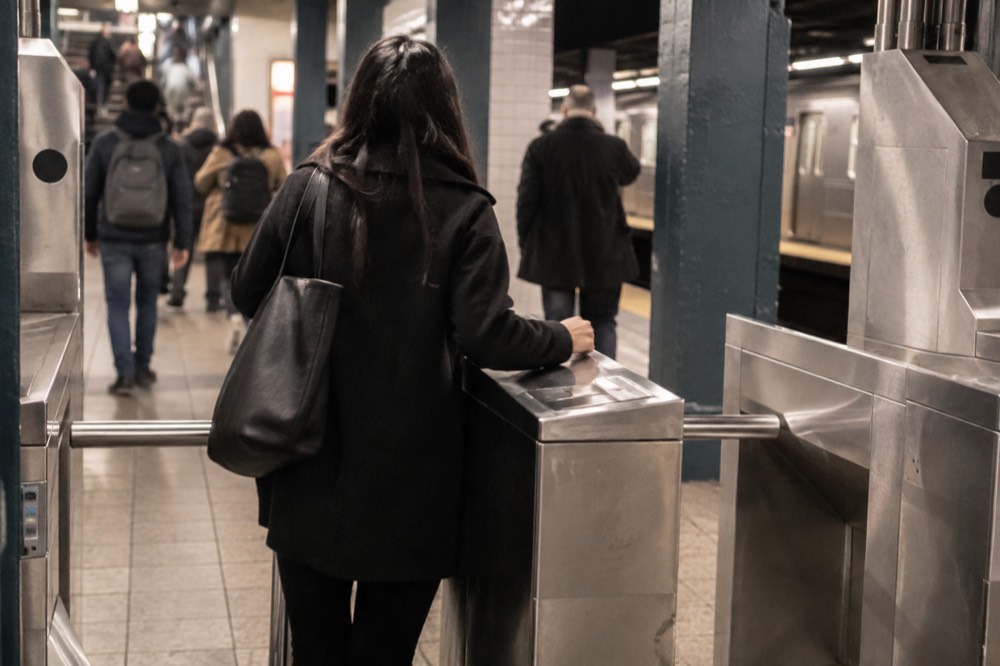
A subway or local bus ride costs $3.00, and there is no longer any pass to buy: OMNY fare capping stops charging you at $35 in a rolling seven-day period, automatically, as long as you tap the same card or device every time. The MetroCard was retired on 1 January 2026 and cannot be bought or refilled. A week of unlimited practical subway use therefore costs exactly $35, and a two-ride day costs $6.00.
This is the line where older guides fail hardest. The 7-day unlimited MetroCard they quote does not exist any more. The MTA retired MetroCard sales entirely on 1 January 2026, and anyone holding an old unlimited pass had to start using it by 31 March 2026. A visitor arriving today simply taps a contactless credit card, debit card, phone or watch at the OMNY reader, and the system does the math for them: after $35 of paid rides inside seven days, the rest of that period is free. There is nothing to buy in advance and no decision to make at the airport.
The trap is the word "same." The cap only works if you tap the same physical card or the same device every single time. Mixing your phone on Monday and the plastic card in your pocket on Tuesday breaks the cap silently, and you pay full fare for every ride. Each person in a group needs their own card or device, because transfers and group taps do not count toward any individual's cap.
| Transit item | Price | Notes |
|---|---|---|
| Subway or local bus, single ride | $3.00 | Tap with OMNY, same card every time |
| OMNY weekly cap | $35.00 | Automatic, rolling 7 days from first tap |
| OMNY cap with express buses | $67.00 | Covers subway, local and express buses |
| Reduced fare (seniors 65+, eligible disabled riders) | $1.50 | Subway and local bus, all times |
| Single-Ride OMNY paper ticket | $3.50 | From a machine, valid 2 hours, no subway-to-bus transfer |
| AirTrain JFK, on top of subway fare | $8.75 | Subway plus AirTrain total: $11.75 |
| LaGuardia Link Q70 bus | Free | Subway plus Q70 to Midtown: $3.00 total |
| NJ Transit plus AirTrain from Penn Station to EWR | $16.80 | Weekday shuttle buses replace the AirTrain 5am-3pm |
The airport rows deserve a second look, because they invert what most travelers assume. LaGuardia, the airport with no rail line, is the cheapest arrival in the city at $3.00 total, because the Q70 bus is free and the subway fare is all you pay. JFK, the airport with the dedicated AirTrain, costs $11.75, because the AirTrain adds $8.75 on top of the subway fare. Newark is $16.80 by train, and its station AirTrain is currently replaced by shuttle buses on weekday mornings, so budget time as well as money. The MTA fares page publishes all of these figures directly, and the how to get around NYC guide on this site walks through the routes in detail.
For a typical three-day visit with four to six rides a day, transit costs $35 at most, often less, since the cap only bites on heavy riding. Two people traveling together need two cards and earn two separate caps. Children under 44 inches tall ride free, up to three per fare-paying adult.
How Much Do NYC Attractions and Observation Decks Cost?
The five Manhattan observation decks start from $34-$44 at the lowest published adult tier, but the box-office reality runs higher: the Empire State Building's full AM/PM Experience lists at $75.12, Top of the Rock at $71.86 and Edge at $62.06. The Statue of Liberty ferry is $26.00 and includes both islands and both museums.
A visitor who does one deck, the ferry and one museum in a day spends roughly $100 on admission alone.
Deck pricing is dynamic, which means every deck sells timed tickets that cost more at sunset and on weekends than at 9am on a Tuesday. The "from" prices below are the lowest published adult starting figures; the box-office column is what each operator's own pricing math treats as the walk-up rate, and the gap between the two is the discount for booking an off-peak slot online.
| Observation deck | Adult "from" | Box-office reference price | What the top price adds |
|---|---|---|---|
| Empire State Building, 86th floor | from $44 plus $5 booking fee | $75.12 (AM/PM Experience) | Museum exhibits and same-night re-entry |
| Top of the Rock | from $42 | $71.86 | Three levels, Empire State Building in the frame |
| SUMMIT One Vanderbilt | from $44, plus $3 per order | not fixed | Mirror rooms and glass ledges |
| Edge at Hudson Yards | from $34-$45, plus $2 per ticket | $62.06 | Glass floor and outdoor skywalk |
| One World Observatory | from $39-$44, plus $3.50 fee | not fixed | 102nd floor, Lower Manhattan views |
The pattern worth knowing: three of the five decks cluster in the same price band, and the comparison between them is about the view, not the money. Top of the Rock is the deck that puts the Empire State Building in your photograph. Edge has the glass floor. SUMMIT has the mirrored rooms that have made it the most photographed interior in the city. One World Observatory is the downtown pick and sits within walking distance of the 9/11 Memorial. The dedicated NYC observation decks guide compares them view by view.

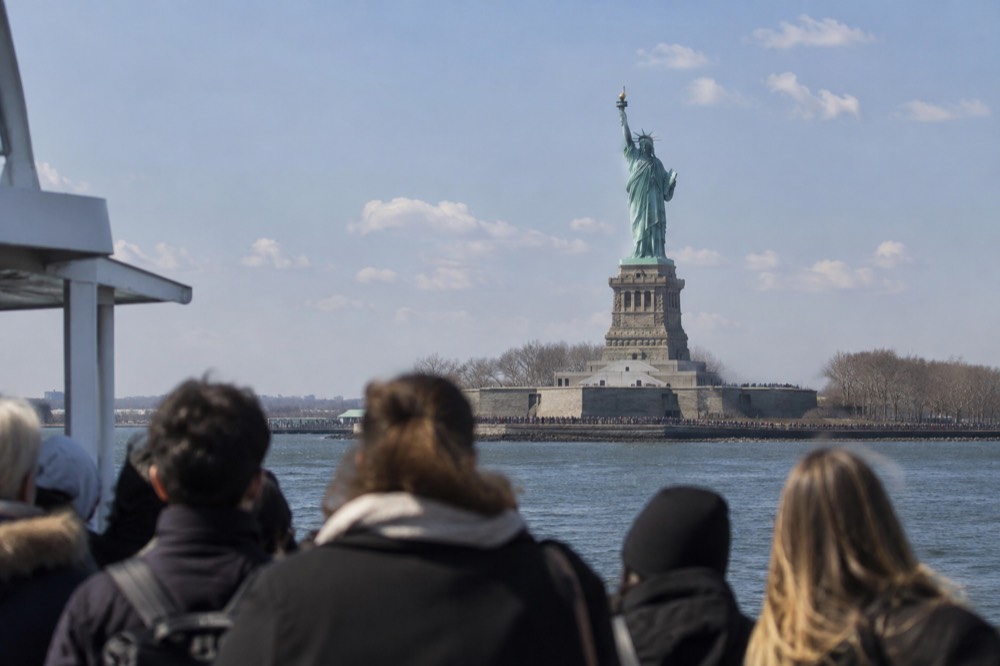
The Statue of Liberty deserves its own paragraph, because it is the attraction where visitors most often buy the wrong product. Statue City Cruises is the only ferry operator authorized by the National Park Service to land on Liberty Island and Ellis Island, and the adult general ticket is $26.00, fees included, covering the round-trip ferry, both islands, the Statue of Liberty Museum, the Ellis Island National Museum of Immigration and audio tours on both islands. Numerous lookalike harbor cruises circle the islands and never land, and some charge more than the real ferry. A visitor who buys one of those cannot set foot on Liberty Island.
The crown is the strangest pricing story in the city: it costs $26.30, thirty cents more than the grounds ticket. The barrier is not money, it is availability. Crown tickets are name-bearing, limited to four per household, checked against photo ID, and released on a rolling basis that reportedly sells out around 90 days or more ahead. If the crown is on your list, book it the day your dates are fixed, through Statue City Cruises only.
How Much Do Museums in NYC Cost?
The headline museums cluster at $30 for adults: the Met, MoMA, the Guggenheim and the Whitney all charge it. Children get real discounts, 12 and under free at the Met and MoMA, 25 and under free every day at the Whitney. Pay-what-you-wish at the Met applies only to New York State residents and NY, NJ and CT students, not to tourists.
The Met is the most misquoted number in New York travel writing, so here it is precisely. Adult general admission is $30, fixed and mandatory for everyone who is not a New York State resident and not a student in New York, New Jersey or Connecticut. Seniors pay $22, students $17, children 12 and under are free. Pay-what-you-wish exists, but only for those two groups, and it still means paying something, with a one-cent minimum. Out-of-state visitors pay the fixed $30, full stop. The ticket covers the Fifth Avenue building and The Met Cloisters on the same day, which most guides never mention.
One more thing the Met's own site does not shout about: a long list of galleries is currently closed for renovation, including parts of the American Wing, the Costume Institute, the Cantor Roof Garden and much of Modern and Contemporary Art. Check the museum's gallery closures page before you plan a visit around a specific wing.
| Museum | Adult admission | Free and discount windows |
|---|---|---|
| Metropolitan Museum of Art | $30 (seniors $22, students $17, 12 and under free) | Pay-what-you-wish for NY State residents and NY/NJ/CT students only |
| MoMA | $30 (seniors $22, students $17, 16 and under free) | Free Friday evenings 5:30-8:30, NY State residents only, reserve ahead |
| Guggenheim | $30 standard, $16 during exhibition changeover | Pay-what-you-wish Tuesdays and Sundays 4:00-5:30pm, $1 minimum |
| Whitney | $30 (seniors and students $24) | Free every day for anyone 25 and under; free Friday nights 5-10pm for everyone |
| 9/11 Memorial and Museum | $36 (13-17 $30, 7-12 $24, 6 and under free) | Free Mondays, tickets released online at 7:00am ET |
| 9/11 Memorial plaza | Free, no ticket | Open daily 8:00am-8:00pm |
| American Museum of Natural History | Fixed price for out-of-state visitors, tier varies by ticket | Pay-what-you-wish on general admission for NY State residents, with ID |
| Intrepid Museum | $38 (5-12 $28) | NYC residents get 50% off every day |
The free windows are real money. The Whitney's free Friday nights and free-under-25 policy, MoMA's UNIQLO Friday evenings for residents, and the 9/11 Museum's free Monday releases can strip $100 or more from a family's week. The catches matter: MoMA's Friday slots must be reserved in advance and sell out, the Whitney's free nights are capacity-limited, and the 9/11 Museum's Monday tickets go at 7:00am Eastern and are gone fast. The free museums in NYC guide lists every window with its conditions.
Is a City Pass Worth It on a New York Trip?
The New York CityPASS costs $149 for adults and $129 for children 6-17, covers your choice of 5 attractions from a list of 11, and is valid for 9 consecutive days. CityPASS's own math puts the combined box-office value of the five anchor attractions at $307.04, a saving of $158.04. The pass pays for itself only if you genuinely visit all five, so the decision is about your itinerary, not the discount percentage.
The pass works when your trip already contains the expensive anchors: the Empire State Building, Top of the Rock, the Statue of Liberty ferry, the 9/11 Museum, the American Museum of Natural History. Choose five from the list, use them within nine days, and the arithmetic is strongly in your favor. Choose two and leave the rest unused, and you have paid $149 for about $100 of admission. It suits first-time visitors on the classic circuit; it does not suit a loose, decide-as-you-go stay. Everything else covered here is indexed on New York City Travel Guide.
The alternative is the Explorer model: pay from $89 and choose a smaller number of visits from a larger menu, with 30 days from your first attraction to use them, on non-consecutive days. That fits travelers whose plans shift with the weather. The Go City All-Inclusive product, from $169, is the opposite bet, unlimited entry across a long attraction list on consecutive days, which only pays off if you are stacking three or more paid sights a day.
| Pass | Adult price | What you get | Best fit |
|---|---|---|---|
| New York CityPASS | $149 (child $129) | Choose 5 of 11 attractions, 9 consecutive days | First-timers doing the classic circuit |
| New York Explorer Pass | from $89 | Choose visits from a large menu, 30 days from first use, non-consecutive | Loose itineraries, day-by-day planners |
| Go City All-Inclusive | from $169 | Unlimited entry, consecutive calendar days | Packed itineraries stacking 3+ sights daily |
One warning that most competitor guides still get wrong: The Sightseeing Pass ceased trading in 2025 and no longer sells New York passes. Any article that lists it as a live option was written before the shutdown. If you are comparing passes, the New York CityPASS guide and the pass comparison page on this site break down the math per itinerary.

How Much Do Broadway Tickets Cost in NYC?
Broadway seats range from roughly $30-$50 for lottery and rush winners to well over $100 for premium weekend seats at the biggest hits, and the discount machinery is genuinely usable by visitors: TKTS sells same-day tickets at up to 50% off face value with an $8 per-ticket service fee, and the major digital lotteries release seats every day. A flexible theatergoer can see a top show for under $50; an inflexible one pays full price.
TKTS is the best-known route and it works exactly as advertised. The booth in Times Square, at Duffy Square on W 47th Street, and the one at Lincoln Center sell same-day performances plus next-day matinees, every ticket discounted, typically 20-50% off depending on what each show sets that day. The $8 fee funds TDF, the nonprofit that runs the program. Check the live inventory on the TKTS app or at tdf.org before you queue, because the app shows what is on the board without selling anything.
The lotteries are the cheapest seats in the theater district. Broadway Direct and Lucky Seat run digital lotteries for most shows: enter online a day or a few days ahead, winners get notified by email or text shortly before the performance, and winning prices typically land in the $30-$50 range. Rush and standing-room policies are set per show, not standardized, so check the individual production's site.
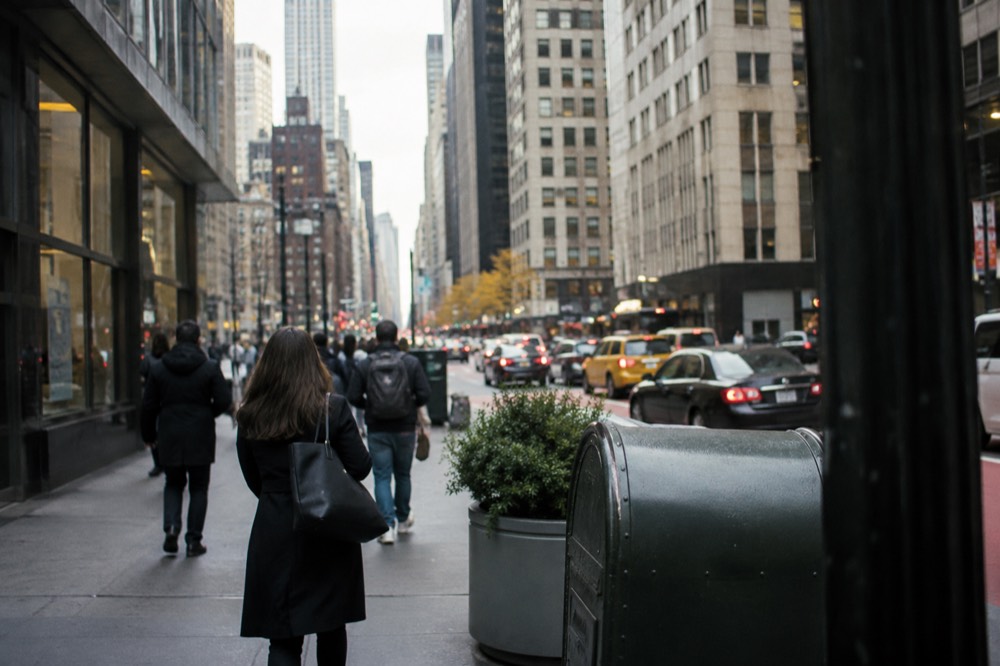
If you would rather not gamble, book ahead through a reseller for the fixed-price shows. The long-running family hits are the reliable full-price buys, and the cheap Broadway tickets guide on this site compares every discount route, booth by booth and app by app.
Where Does the Money Go: Sample NYC Budgets
A three-day New York sightseeing budget for one adult, excluding hotel and flights, is decided almost entirely by how many timed attractions you stack: the lean version uses the OMNY cap, free memorials and parks, one museum and the ferry, while the heavy version adds two observation decks, a second museum and a full-price Broadway seat. Food and transit barely move the total; the admission lines do.
These sample budgets use only the verified figures in this guide, so every number in the table below is one you can check against an official source. Food is left as a line you fill in yourself, because restaurant spending in New York runs from dollar-slice to tasting-menu with no meaningful average, and the cheap eats in NYC guide covers the low end properly. Hotel and airfare are excluded for the reason stated at the top: dynamic pricing makes any printed figure a lie within a week.
| Line item | Lean 3-day plan | Heavy 3-day plan |
|---|---|---|
| Subway, OMNY capped | up to $35.00 | up to $35.00 |
| Statue of Liberty and Ellis Island ferry | $26.00 | $26.00 |
| Observation decks | Free skyline views from the Staten Island Ferry | Two decks at box-office rates ($75.12 and $71.86) |
| Museums | One major museum at $30 | Two major museums at $30 each |
| Broadway | Lottery or TKTS attempt ($30-$50 if you win) | Fixed-price seat from $144 at a long-running hit |
| 9/11 Memorial plaza, Central Park, Brooklyn Bridge | Free | Free |
Add the rows that match your own list, because the arithmetic is now entirely yours: every figure in the table is a published price, not an estimate. The lean plan is not a diminished trip. The Staten Island Ferry is free and passes the Statue of Liberty; the 9/11 Memorial plaza is free and open daily; Central Park, the Brooklyn Bridge promenade and the High Line cost nothing. What the lean plan gives up is the paid skyline, and even that has a free near-substitute from the water. The heavy plan buys the postcard set in full, and the CityPASS math from the previous section can cut its attraction line sharply if the five choices match your list.
How to Spend Less in NYC Without Missing the City
The biggest savings in New York come from four moves: tap the same card for the $35 OMNY cap, book the Statue of Liberty ferry through the official operator instead of a lookalike cruise, target the museums' free windows, and let the Broadway lotteries do their work. Together they can remove $200 or more from a week's spending without cutting a single landmark.
The transit move is automatic once you know it. The museum move takes a calendar: MoMA's resident Friday evenings, the Whitney's free Friday nights and free-under-25 policy, the Guggenheim's pay-what-you-wish Tuesday and Sunday late hour, and the 9/11 Museum's 7am Monday release are all real, all capacity-limited, and all worth planning around. The free windows are listed with their conditions in the free things to do in NYC guide.
The ferry move is about honesty rather than effort. The official Statue City Cruises ticket is $26.00 and lands you on the island; the lookalike harbor cruises cost as much or more and never land. The same logic applies to walking: the guided walks below include a free, tip-based Financial District tour on GuruWalk that covers Wall Street, the Stock Exchange and the 9/11 Memorial at no fixed price, and the paid walks on this site are compared honestly in the NYC walking tours guide. Note that most of the free walks on GuruWalk in New York are run by a small number of operators, so treat the calendar, not the brand, as the choice.
If a guided walk is not your style, the same budget logic applies everywhere else in this guide: pay for the things that need a timed slot, take the free versions of everything else, and let the cap and the lotteries work quietly in the background. The three picks below are the ones this site would put on a shortlist for a cost-conscious first visit, one pass, one free walk and one official ferry.
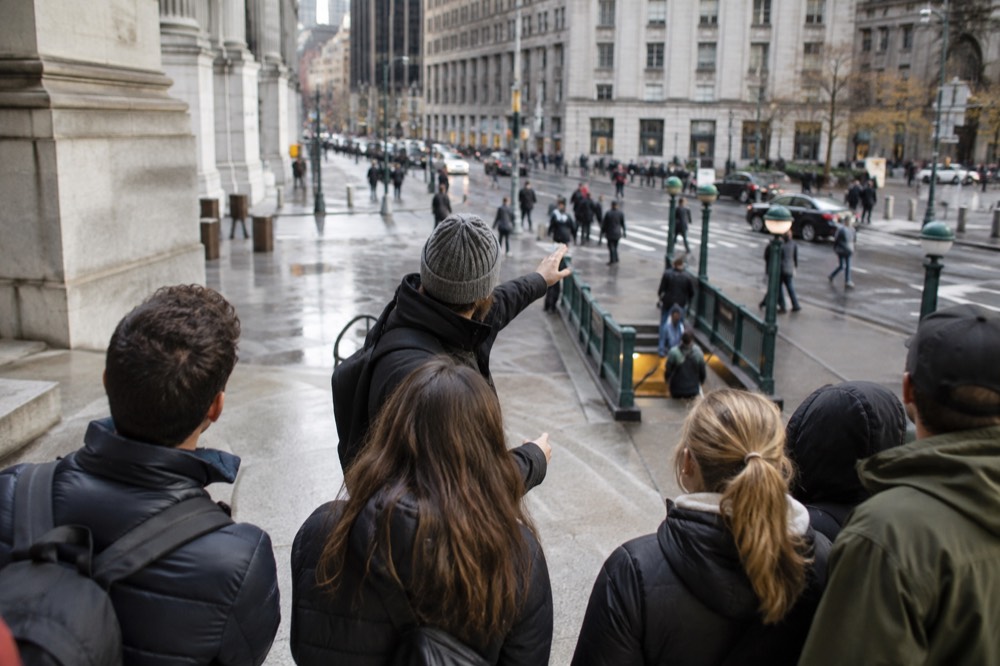
The last move is timing. New York's weather surprises visitors in both directions: July is actually the wettest month in Central Park at 4.60 inches of precipitation, and February out-snows January, 10.1 inches against 8.8. Neither fact argues against visiting, but both argue for checking the best time to visit NYC before you commit to dates, since off-peak weeks are where the dynamic prices, the ones this guide refuses to print, swing hardest in your favor.
Common Questions About What a Trip to NYC Costs
The questions below are the ones that decide most New York budgets: whether the subway pass exists, whether the Met is pay-what-you-wish, which pass to buy, and how much a day really runs. Each answer gives the verified figure first and the condition attached to it second, because in New York the conditions, residency, day of week, booking window, are usually where the money hides.
How much does a trip to NYC cost?
Excluding flights and hotels, a sightseeing trip to NYC costs roughly $50-$80 per person per day: $3.00 per subway ride capped automatically at $35 a week, $26.00-$47.91 for the major attractions, and $30 at the headline museums. The lean three-day plan in this guide adds up to little more than the ferry, one museum and the capped transit fare; the heavy plan, with two decks, two museums and a Broadway seat, multiplies that several times over.
Can you still buy a 7-day unlimited MetroCard in New York?
No. The MTA stopped selling and refilling MetroCards on 1 January 2026. The replacement is the automatic OMNY weekly cap: after $35 of paid subway and local bus rides in a rolling seven-day period, the rest of that period is free, provided you tap the same card or device every time.
Is the Met pay-what-you-wish for tourists?
No. The Metropolitan Museum of Art charges a fixed, mandatory $30 adult admission, $22 seniors, $17 students, free for children 12 and under. Pay-what-you-wish applies only to New York State residents and students from New York, New Jersey and Connecticut, and even then you must pay something, with proof of eligibility.
Which New York city pass is worth buying?
The New York CityPASS, $149 adult, is worth it if you will genuinely visit five of its eleven listed attractions within nine days, since the anchor set carries a combined box-office value of $307.04. If your plans are loose, the Explorer Pass from $89 with 30 days of flexibility fits better. The Sightseeing Pass ceased trading in 2025 and should not appear in any current comparison.
What is the cheapest way to see the Statue of Liberty?
The official Statue City Cruises ferry is $26.00 for adults and includes both islands, both museums and audio tours. Lookalike harbor cruises cost as much or more and never land on Liberty Island. The free alternative for a close water view is the Staten Island Ferry, which passes the statue but does not stop.
How much should I budget for Broadway in NYC?
Budget $30-$50 per ticket if you use the digital lotteries or win rush, up to 50% off face value at the TKTS booth plus an $8 per-ticket fee, or full price, well above $100, for premium seats at the biggest hits. The lotteries are free to enter, so a flexible traveler should always try them before paying full price.
The final number that matters is the one nobody can print: your hotel. Book it early, compare across dates, and treat every article that quotes a nightly rate, including the ones ranking this city's hotels, as data from a week that has already passed. Everything else in this guide, the fares, the ferries, the museums, the decks, the passes, is verified, current, and yours to plan against.