How to Get Around NYC: Subways, OMNY, Airports and Every Fare Explained
The single ride is $3.00, the weekly cap is $35, and the MetroCard you read about in older guides no longer exists. Here is every fare, transfer rule and airport option that matters, from the MTA's own pages.
Short answer
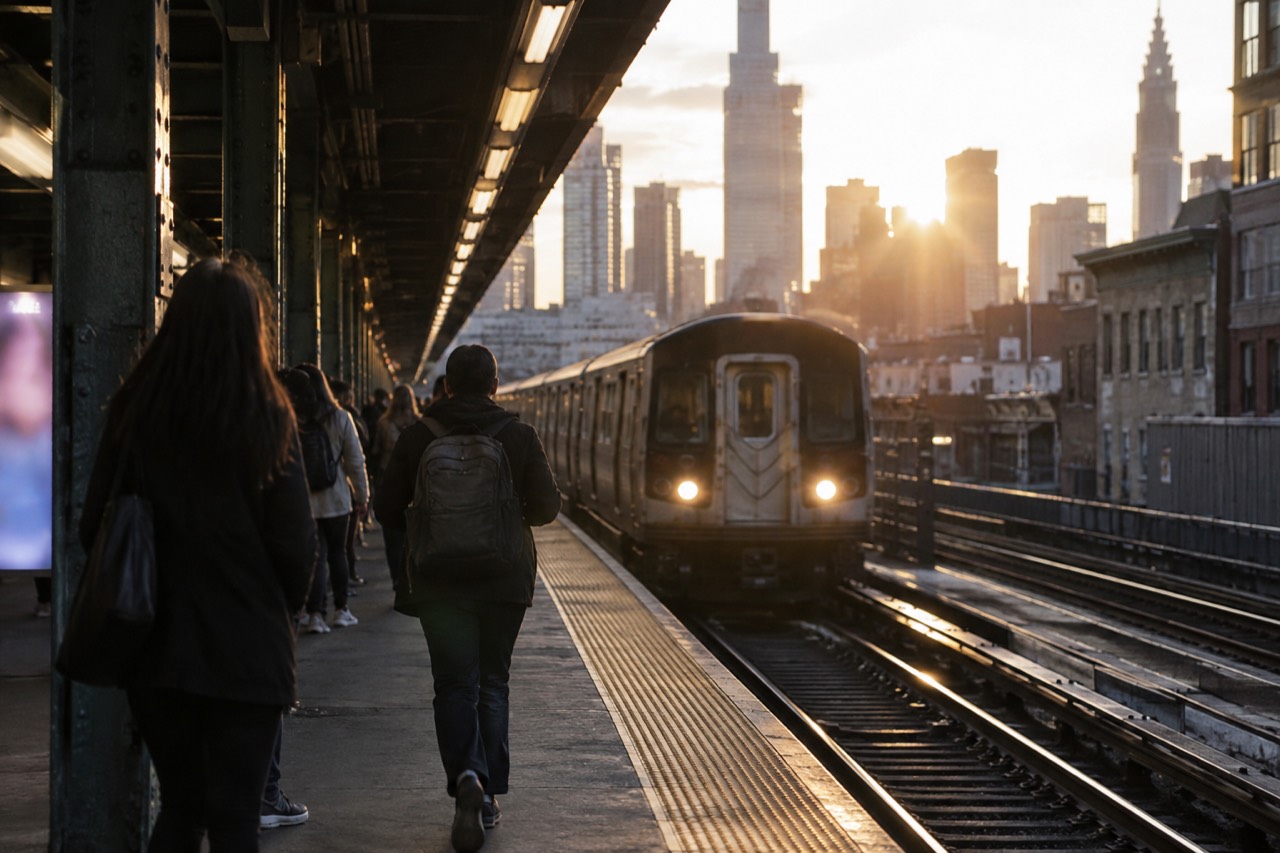
Getting around NYC costs $3.00 per subway or local bus ride, capped automatically at $35 per rolling 7-day period when you tap the same card or phone with OMNY. The subway is the fastest way across town; the free Q70 bus makes LaGuardia the cheapest airport run at $3.00 total.
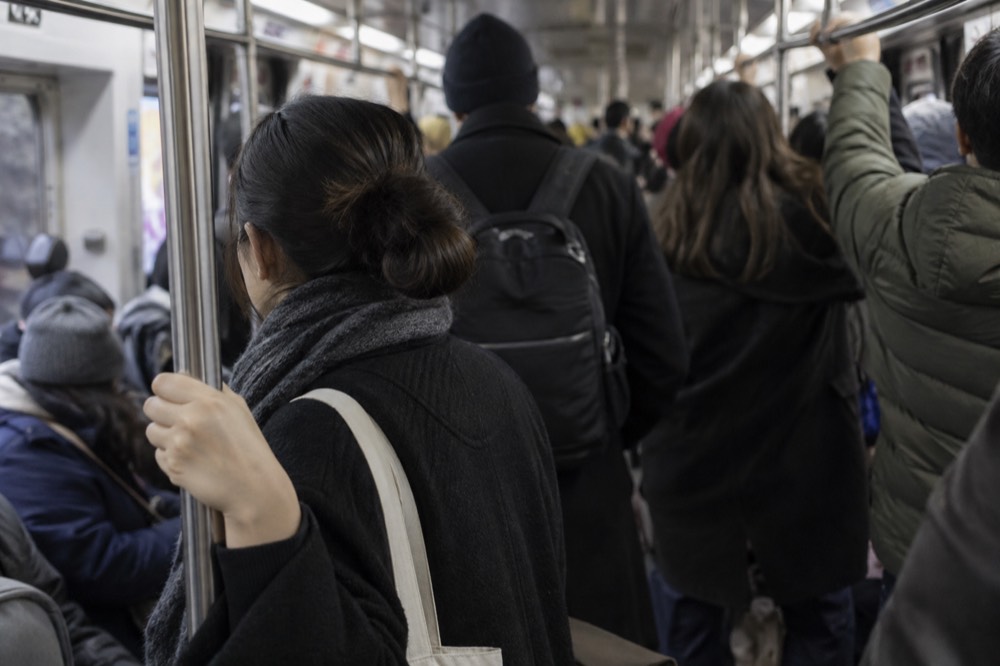
A subway ride in New York costs $3.00. Tap a credit card, a phone or an OMNY card at the turnstile and the system counts your rides, and once your taps add up to $35 inside a rolling seven-day window, every further subway and local bus ride that week is free. There is no pass to buy, no machine to find, no arithmetic to do at 2am in a station with no signal.
That is the whole system in two sentences, and it is newer than most of the guides on the first page of search results. The MetroCard, the orange-and-blue icon of every New York trip for decades, stopped being sold or refilled on 1 January 2026. If you read a page that tells you to buy a 7-day unlimited when you land, that page is describing a product that no longer exists.
This guide covers the fares as they stand now, all of them read from the MTA's own pages: the subway, the buses, the ferries, the three airports, the cabs and the passes, plus the transfer rules that quietly save visitors money every day. It is part of a wider set of planning pages at New York City Travel Guide, and it pairs with the full things to do in NYC rundown when you start building your actual days.
How Much Does It Cost to Get Around NYC?
A single subway or local bus ride costs $3.00, paid by tapping a contactless card, phone or OMNY card at the turnstile or bus door. Express buses cost $7.25. There is no paper pass any more: the weekly value comes from the automatic $35 OMNY cap, which applies to subway and local bus rides over a rolling seven-day window. Children under 44 inches tall ride free with a paying adult, up to three per adult.
The fare table is short because the system is short. What trips people up is the edges: the transfers, the caps and the airport surcharges.
| Ride | Fare | Notes |
|---|---|---|
| Subway or local/limited bus | $3.00 | Tap the same card or device every time |
| Express bus | $7.25 | Counts toward the higher $67 cap |
| Reduced fare (seniors 65+, eligible disabled riders) | $1.50 | Subway and local bus, all times |
| Single-Ride OMNY ticket (paper, from a machine) | $3.50 | Valid 2 hours, bus-to-bus transfer only |
| New OMNY card | $1.00 | Limited-time introductory price |
The $3.50 paper ticket deserves a warning. It is sold at machines for people without a contactless card, but it does not include the subway-to-bus transfer that a tapped card gets you. Buy it only if you have no other option, and expect to pay full fare again if you switch modes.
Transfers are where the savings hide. One free transfer within two hours is built into every tapped ride: subway to bus, bus to subway, bus to bus. If you board a local bus and then catch the subway, that second leg is $0.00, provided you tap the same card or device. There are even two out-of-system transfers in the network, at Lexington Av/59 St and Lexington Av/63 St, and between Junius St and Livonia Av, where you walk above ground between stations and tap again without being charged. Almost nobody knows about those two.
How Does the $35 OMNY Weekly Cap Work?
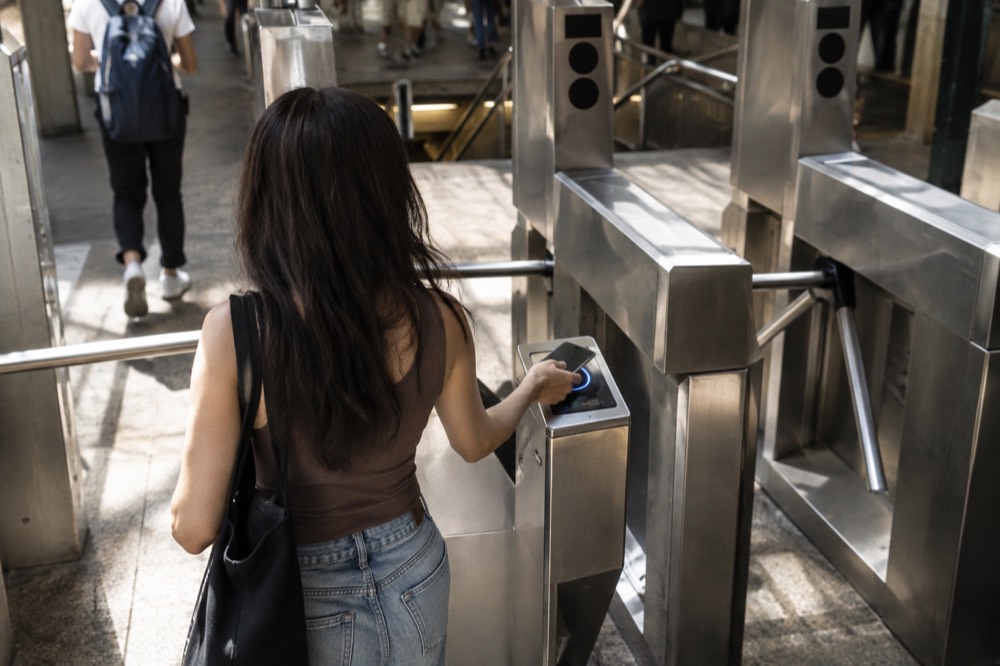
OMNY caps your fares automatically: once you have paid $35 for subway and local bus rides inside a rolling seven-day period, every additional ride in that period is free. The seven days start with your first tap, not on a calendar Monday. You must tap the same physical card or the same phone every single time, because mixing devices breaks the cap. Each traveller in a group needs their own card or device to earn their own cap.
The MTA's own wording is that you "only pay for the subway and local bus rides you take up to a cap of $35 in a 7-day period." Twelve paid rides at $3.00 hits the cap, so a visitor doing four or more transit rides a day will typically stop paying by day three or four of a busy stretch.
Three details decide whether the cap actually works for you:
- The window is rolling. Your first tap starts the clock. If you first tap on a Thursday afternoon, your cap period runs to the following Thursday. It is not a Monday-to-Sunday deal.
- Same card, every time. Tap your phone on Monday and the plastic card in your wallet on Tuesday and the system sees two separate travellers, neither of whom reaches a cap. Pick one device on day one and stick to it for the whole trip.
- Groups do not pool. A couple sharing one card for both fares gets no cap at all, because group trips and transfers do not count toward it. Two people tapping two cards each hit their own $35 caps independently.
There is a higher cap at $67 if you also ride express buses, and a reduced-fare cap at $17.50 for eligible seniors and disabled riders. For most visitors, $35 is the only number that matters: it replaced the old 7-day unlimited MetroCard, and unlike that product, it requires no purchase and no decision.
For a deeper treatment of the tap system itself, including the card and the account options, see OMNY in NYC: how tapping works.
Which Subway Lines and Stations Should You Know First?
The lines that matter for sightseeing are few: the 6 train up the East Side, the A and the 1 up the West Side, the L crosstown under 14th Street, and the 7 and the N, Q, R, W through Midtown and into Queens. Times Sq-42 St is the busiest station complex in the system by a wide margin, 61,203,303 riders in 2025 against Grand Central's 35,764,931, so expect crowds there at almost any hour.
Subway lines are letters and numbers, never "line 6". Uptown and downtown are the directions on the signage, not north and south, and express versus local is a real distinction: an express train skips stations, so a local train on the same route can be the slower but correct choice when your stop is one of the skipped ones.
A few pairings cover most first trips:
| Where you are going | Useful trains | Notes |
|---|---|---|
| Times Square and the Theater District | 1, 2, 3, 7, N, Q, R, W to Times Sq-42 St | The busiest complex in the system |
| Lower Manhattan and the Financial District | 4, 5 to Wall St; R, W to Rector St; 1 to South Ferry | Check weekend service changes |
| Brooklyn Bridge and DUMBO | 4, 5, 6 to Brooklyn Bridge-City Hall, then walk | Or A, C to High St from the Brooklyn side |
| Museum Mile and Central Park | 4, 5, 6 to 86th St | The Met, the Guggenheim and the park's east side |
| Brooklyn neighborhoods | L to Bedford Av for Williamsburg; F, G into deeper Brooklyn | The L is crosstown, under 14th St in Manhattan |
| Coney Island | D, F, N, Q to the Coney Island-Stillwell Av terminal | About an hour from Midtown |
Weekend service changes are the one thing a printed guide cannot keep up with. The MTA reroutes trains for track work on weekends constantly, and a line that ran express on Friday may not exist in its normal form on Saturday. Check the MTA's own alerts or a transit app before any weekend ride, and treat any timetable in a guide, including this one's, as the weekday shape.
The stations themselves are part of the experience, and one of them is worth a detour even if you are not riding. The most beautiful subway station in New York City is a question with a real answer, and the city's landmark stations page covers the ones worth seeing on purpose rather than by accident. City Hall's abandoned loop platform and the newer Fulton Center are both on the downtown list.
How Do You Get Between the Airports and Manhattan?
The cheapest airport run in New York is LaGuardia's: the Q70 LaGuardia Link bus is free, so a subway ride plus the bus costs $3.00 total from Midtown. JFK costs $11.75 each way, because the $8.75 AirTrain fare is charged on top of the $3.00 subway fare. Newark is the priciest rail option at $16.80, using a NJ Transit train from Penn Station with the AirTrain fare included in the ticket.
The numbers invert what people expect. JFK, the airport with the dedicated rail link, is the expensive one; LaGuardia, long the butt of jokes about its old terminals, is the cheapest to reach by transit in the entire city.
| Airport | Cheapest transit option | Total cost | Route |
|---|---|---|---|
| LaGuardia (LGA) | Subway + free Q70 bus | $3.00 | Any subway to Jackson Heights or Woodside, then the Q70 to the terminals |
| JFK | Subway + AirTrain | $11.75 | E, J or Z to Jamaica, or A to Howard Beach, then AirTrain |
| Newark (EWR) | NJ Transit train + AirTrain | $16.80 | From Penn Station New York; the AirTrain fare is included in the ticket |
Details that save real money and time:
- LaGuardia also has the M60-SBS from uptown Manhattan at $3.00, stopping at every terminal. The free two-hour transfer means a subway-to-bus connection costs nothing extra.
- JFK's AirTrain cannot be paid with a pass and children under 5 ride free. The LIRR from Jamaica is faster to Midtown than the subway, at a higher fare.
- Newark's AirTrain is free within the airport itself, terminals to parking and rental cars. But on weekdays between 5am and 3pm, service to the rail station is replaced by shuttle buses, so allow extra time on a morning departure. Buying your NJ Transit ticket on board costs extra, and conductors only take cash.
- A cab or rideshare from JFK to Manhattan runs on a flat metered rate plus tolls and tip, and in traffic it is rarely faster than the rail options to Midtown.
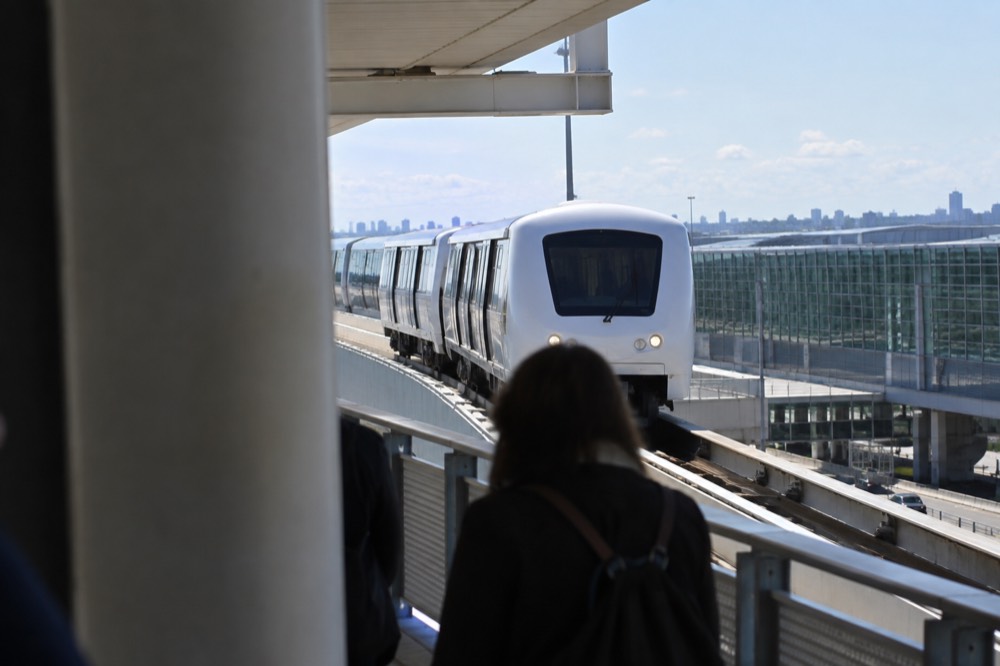
For a family of four with luggage, or anyone landing late after a long flight, a private transfer can be worth it because the fare covers the whole vehicle rather than a per-person ticket. The driver tracks your flight, the bags ride with you, and there are no transfers or subway stairs. Solo budget travelers do better on the AirTrain.
For line-by-line airport directions, including the LIRR variants and where each terminal's transit stop actually is, see the JFK to Manhattan and LaGuardia to Manhattan pages.
Should You Take the Bus, the Ferry, or a Cab?
The local bus costs the same $3.00 as the subway and earns the same free transfers, but it is slower across long distances, so it shines on short crosstown hops and in areas the subway does not reach. The Staten Island Ferry is free in both directions. Cabs and rideshares are door-to-door but slow in Midtown traffic, where buses and trains are genuinely faster at rush hour.
The crosstown bus is the underrated one. Manhattan's avenues are a mile apart at some points, and walking between them with shopping bags or small children is miserable. The M14, the M34 and the M50 all do short, useful east-west work that no subway line does, and a tapped bus ride transfers free to the subway afterward.
The ferries split into two products. The Staten Island Ferry is a free 25-minute ride past the Statue of Liberty, and it is a sightseeing trip disguised as a commute. The NYC Ferry system charges a flat fare, connects waterfront neighborhoods like Astoria, Williamsburg and DUMBO, and is covered in detail on the NYC Ferry guide.
Cabs fill the remaining gaps: late nights, luggage-heavy runs, and destinations awkward for the subway. They are metered, they take cards, and in Midtown gridlock they are often the slowest option on this list. The honest hierarchy for a visitor is subway first, bus for crosstown, ferry for pleasure or a waterfront destination, cab when the first three fail.
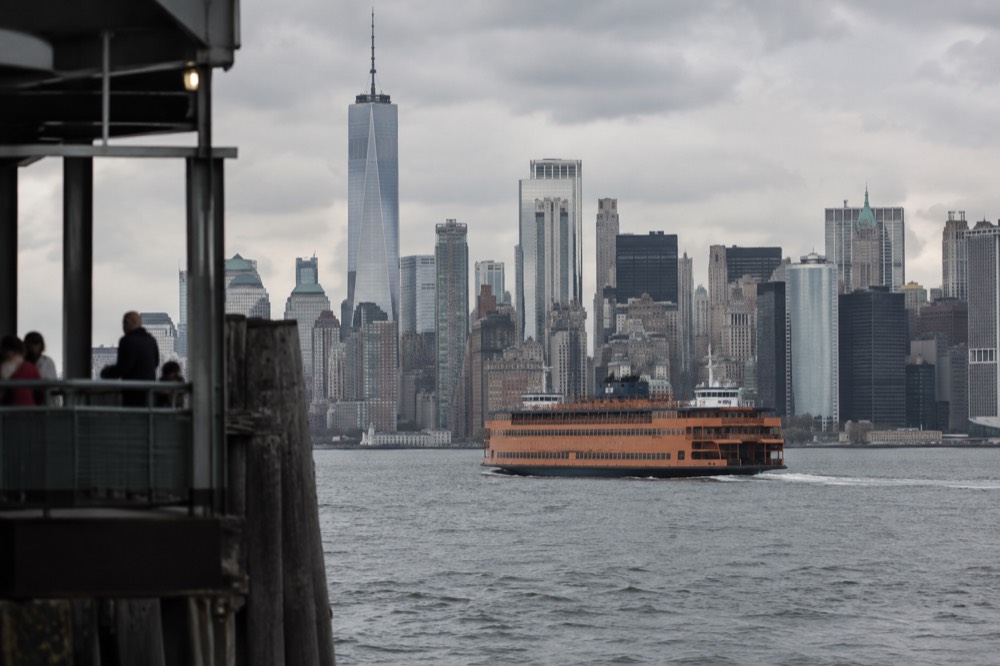
One water option is neither a ferry nor a commute: a sightseeing cruise. If your goal is the skyline and the Statue of Liberty from the water rather than transport, a fast loop does that without eating half a day. The 50-minute express statue cruise runs from South Street Seaport and pauses near the statue for photos. Compare it against the official ferry to Liberty Island if you actually want to land on the island.
Is the NYC Subway Safe and Accessible?
The subway is used by roughly four million people on an average weekday, and the MTA's own 2025 figures show fare evasion falling from 12.7% to 10.2% year over year. Stations and trains are policed and busy through most visitor hours, and the practical risks are pickpocketing and confusion rather than violence. Accessibility is improving but uneven: many stations still have stairs only, so wheelchair and stroller users must plan around the stations that do have elevators.
The honest safety answer is specific, not general. Ride in a car with other people, keep your phone in a front pocket at doors, and stand back from the platform edge, which is advice for every metro system on earth. Late at night, waiting near the station booth or riding in the first few cars with the conductor is a reasonable habit. Avoiding the rush is also a real option now, in a way it was not before 2020: weekend trains are the fuller ones relative to normal, while weekday ridership is still only 73% of what it was, so a mid-morning weekday train is often calmer than the equivalent Saturday ride.
Accessibility is the part that needs planning. The MTA publishes a list of accessible stations, and the gap between the map and the reality is closing, but a visitor with a mobility device cannot assume an elevator the way they can assume a turnstile. The site's wheelchair-accessible NYC page covers which stations, ferries and buses work without stairs, and it is worth reading before you commit to a hotel location.
Do Transit Fares and Attraction Passes Work Together?
No New York transit fare is included in any attraction pass, so budget the $35 OMNY cap separately from your sightseeing spending. The passes cover entry to attractions, not transport, with one useful overlap: the official Statue of Liberty ferry is an attraction in its own right at $26.00 adult, and it is one of the choices on the CityPASS. The Staten Island Ferry, by contrast, is free for everyone, pass or no pass.
The arithmetic for a five-attraction visitor is straightforward. The New York CityPASS costs $149.00 adult and covers a choice of five attractions from a list of eleven, including the Empire State Building, Top of the Rock, the official Liberty ferry, the 9/11 Memorial & Museum, the Intrepid and Circle Line cruises. Add $35 for a week of transit and you have the complete movement-and-entry budget for a classic first trip.
| Pass | Adult price | What it covers | Validity |
|---|---|---|---|
| New York CityPASS | $149.00 | Choice of 5 attractions from 11 | 9 consecutive days from first use |
| Go City Explorer | from $89 | Choose-your-count attraction menu | 30 days from first attraction, non-consecutive |
| Go City All-Inclusive | from $169 | Unlimited attractions over consecutive days | Consecutive calendar days from first scan |
One pass to avoid mentioning in the present tense: The Sightseeing Pass ceased trading in 2025, and any guide still recommending it is a guide that has not been checked. The New York Pass, meanwhile, is no longer a separate product; it now sits inside Go City's All-Inclusive tier under the same parent company.
If your days are stacked with the big-ticket sights, the pass question is worth settling early because reservations are required at some attractions. Check availability for the CityPASS, or read the full comparison on the New York CityPASS guide page before committing.
Common Questions About Getting Around NYC
The questions below are the ones visitors ask most: what a ride costs, whether the old MetroCard advice still works, how to reach each airport, and whether the subway suits kids and late nights. Each answer gives the current fare or rule, all drawn from the MTA's published figures, so you can plan a trip without wading through out-of-date forum threads.
How much is a subway ride in NYC?
A single subway or local bus ride costs $3.00, paid by tapping a contactless credit or debit card, a phone or an OMNY card. Express buses cost $7.25. Rides are capped automatically at $35 per rolling seven-day period for subway and local bus trips, provided you tap the same card or device every time.
Can you still buy a 7-day unlimited MetroCard?
No. The MTA stopped selling and refilling MetroCards on 1 January 2026, and the 7-day unlimited no longer exists as a product. Its replacement is the automatic $35 OMNY weekly cap, which needs no purchase: tap the same card or phone and the cap applies on its own.
What is the cheapest way to get from JFK to Manhattan?
The subway plus AirTrain costs $11.75 each way, via the E, J or Z to Jamaica or the A to Howard Beach. The LIRR from Jamaica is faster to Midtown at a higher fare. A cab or rideshare is metered plus tolls and tip and is rarely quicker than rail to Midtown in traffic.
Is the NYC subway safe at night?
The system runs 24 hours and is busy through most visitor hours. The practical precautions are the standard ones for any large city: ride in populated cars, keep valuations out of back pockets, and stand back from the platform edge. Late-night riders often wait near the booth or ride in the conductor's car. Fare evasion, a rough proxy for disorder, fell from 12.7% to 10.2% between 2024 and 2025 per MTA figures.
Do kids ride free on the NYC subway?
Up to three children under 44 inches tall ride free with a fare-paying adult on the subway and local buses. On express buses, infants under two ride free on a lap. Taller children pay the full $3.00 fare; there is no child OMNY discount.
Is the Staten Island Ferry really free?
Yes, the Staten Island Ferry charges no fare in either direction and runs around the clock between St. George Terminal and Whitehall Street in Lower Manhattan, passing the Statue of Liberty and the harbor skyline on the way. It is a working commuter ferry that doubles as one of the best free views in the city.
The last practical note is about timing rather than fares. New York's transit is at its calmest on weekday middays now, because the commute that used to pack the trains has only partly returned, while weekends run closer to their old fullness. Plan the big museum and observation-deck pushes for Tuesday mornings, save the crowded marquee blocks for when you do not mind the company, and let the $35 cap do the rest. The city is easier to move through than its reputation suggests, provided your guide is not still selling you a MetroCard.