LaGuardia to Manhattan: Every Way to Make the Trip, with Real Fares
LaGuardia is the closest of New York's three major airports to Midtown Manhattan, and the cheapest airport transfer in the entire city starts there: a free bus plus one subway fare, $3.00 total, no pass to buy.
Short answer
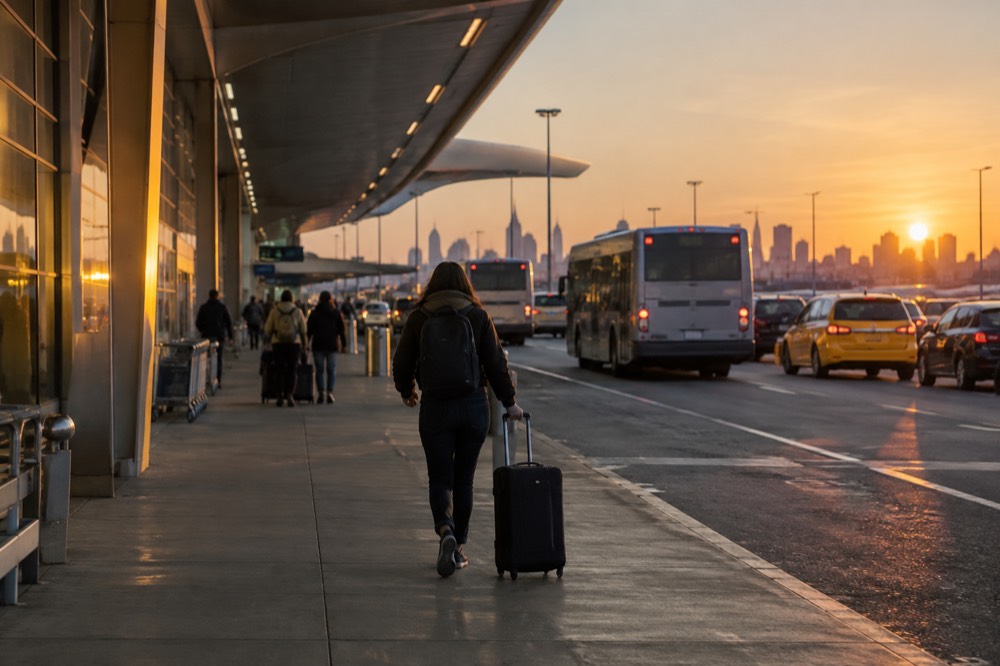
The cheapest way from LaGuardia to Manhattan is the free LaGuardia Link Q70 bus to the subway, then one $3.00 tap with OMNY, for a $3.00 total. A taxi or private transfer costs far more but takes you door to door. There is no AirTrain at LaGuardia.
LaGuardia sits closer to Midtown Manhattan than JFK or Newark, yet for years it was the airport with the awkward transfer: no rail link, a tangle of shuttle buses, and advice columns that contradicted each other. The current answer is cleaner than most guides admit. The LaGuardia Link Q70 bus is free, no fare at all, and it drops you at subway lines that run straight into Manhattan. One $3.00 tap later you are in Midtown, having spent less than any other airport arrival in the city costs.
That is the headline. The rest of this page covers every real option: the Q70 and the M60-SBS, the LIRR shortcut via Woodside, taxis and private transfers, and the honest trade-offs between them. Every fare below comes from the MTA's own published pages. This is the transport hub of New York City Travel Guide, and airport-to-hotel logistics is where a wrong sentence costs a reader real money.
What Is the Cheapest Way to Get from LaGuardia to Manhattan?
The cheapest way from LaGuardia to Manhattan is the free LaGuardia Link Q70 bus to the subway, followed by one $3.00 OMNY tap, for a $3.00 total. The MTA states plainly that the Q70 charges no fare, so the only cost is the subway ride at the far end. No other airport transfer in New York comes close: the same trip from JFK by rail costs $11.75.
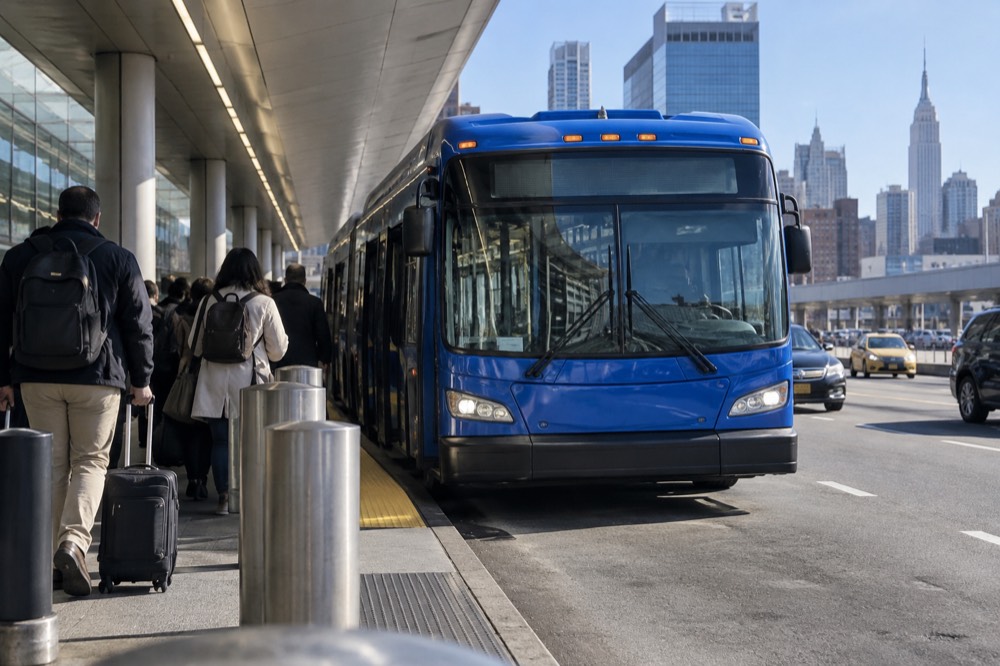
The Q70 LaGuardia Link is the MTA's dedicated airport bus, and its freeness is not a quirk or a promotion, it is the design. The bus serves the airport terminals and connects to subway lines on the Queens side, where the MTA's fare system takes over. You tap OMNY when you board the subway, not the bus. Your single $3.00 fare covers the subway ride into Manhattan, and it includes a free transfer to a bus or another subway line within two hours if your hotel is not sitting directly above a station.
The M60-SBS is the other bus option, and it runs all the way from the airport into uptown Manhattan, stopping at every terminal along the way. It costs $3.00, the standard Select Bus Service fare. If your hotel is on the Upper West Side, in Harlem, or anywhere along the Manhattan stretches the M60 serves, it can drop you closer than the Q70 plus subway combination, for the same three dollars.
| Option from LGA | Cost | Where it takes you | Best for |
|---|---|---|---|
| Q70 LaGuardia Link + subway | $3.00 | Subway connections in Queens, then anywhere in Manhattan | Budget travelers, anyone with light bags |
| M60-SBS direct | $3.00 | Uptown Manhattan, terminal by terminal | Upper Manhattan hotels |
| LIRR from Woodside + Q70 | $5.25 or $7.25 depending on time | Penn Station area, faster rail leg | Arrivals who want the quickest cheap option |
| Taxi | Metered, varies with traffic | Door to door | Groups, heavy luggage, late arrivals |
| Private transfer | Flat vehicle fare, see listing | Door to door, up to six passengers | Families and groups splitting the cost |
One warning worth writing plainly: the MTA's own LaGuardia page is the source for all of this, and the figures above are read straight from it. Advice columns that still quote a MetroCard price or an old shuttle fare are describing a New York that no longer exists.
How Does the Free Q70 LaGuardia Link Bus Actually Work?
The Q70 LaGuardia Link is a free bus that connects LaGuardia's terminals with subway and LIRR stations in Queens, and the MTA confirms it charges no fare at all. You board at the terminal curb, ride to the subway connection, and pay only when you enter the rail system with OMNY, at the standard $3.00 fare. It runs as a regular bus route with airport-branded vehicles, and luggage racks are part of the setup.
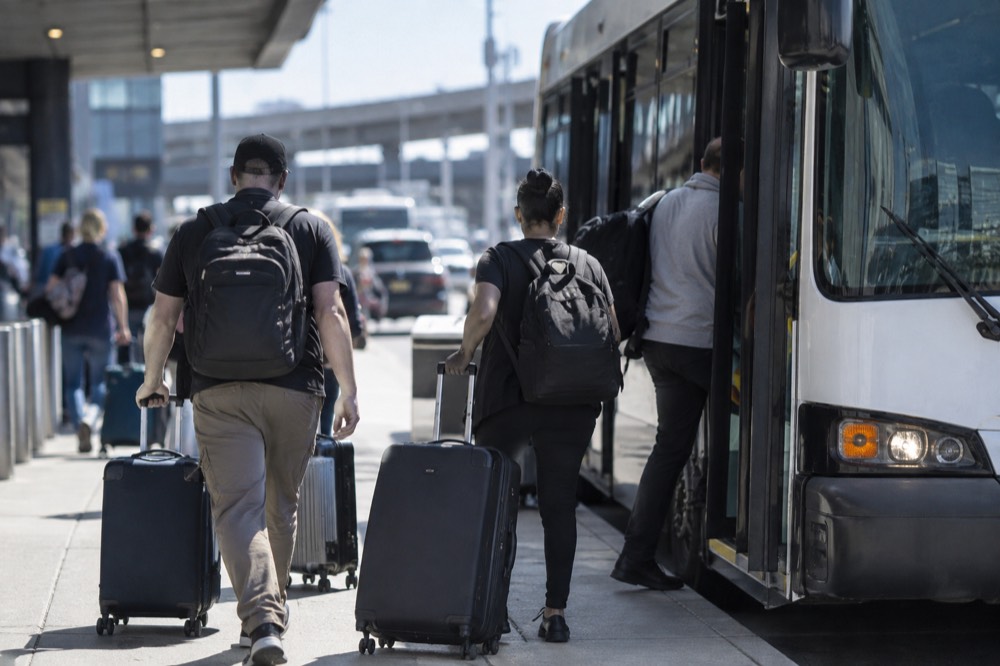
The practical mechanics are simple. The bus stops at the airport terminals on the departures-level curb system, and you do not tap, swipe, or pay anything to board. At the Queens end it connects with subway lines and with the Long Island Rail Road at Woodside, which is the option we cover further down. Because the bus is fare-free, there is no transfer math to worry about: your first and only payment of the journey happens at the subway turnstile.
The trade-off is honesty material, not marketing material. The Q70 is a public bus, not an airport shuttle with a host and leather seats. It can be full at peak commuting times, because Queens residents use it too, and it is subject to the same road traffic as everything else leaving the airport. If you land at rush hour with two large suitcases and a stroller, the free bus is still free, but the experience may test you. The right answer for a family of four with checked bags is probably not the right answer for a solo traveler with a backpack, and the rest of this page spells out both.
For travelers who land at LaGuardia but are already thinking about the return run or a different airport, our JFK to Manhattan guide covers the AirTrain option that LaGuardia lacks, and the which airport is closest to Manhattan comparison puts all three side by side.
What Does the Subway Fare from LaGuardia to Manhattan Include?
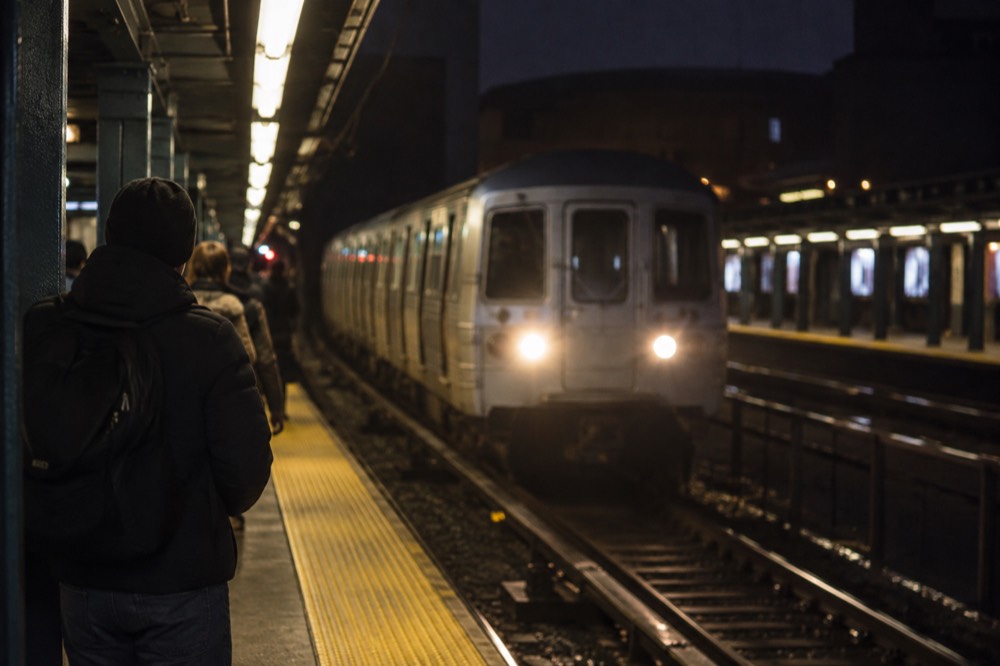
A single subway ride costs $3.00, paid by tapping OMNY with a contactless card, phone or the OMNY card itself, and it includes one free transfer within two hours between subway and bus in either direction. The old MetroCard can no longer be bought or refilled as of 1 January 2026, so the only decision a visitor makes now is which card or device to tap, and the $35 weekly fare cap applies automatically with no pass to purchase.
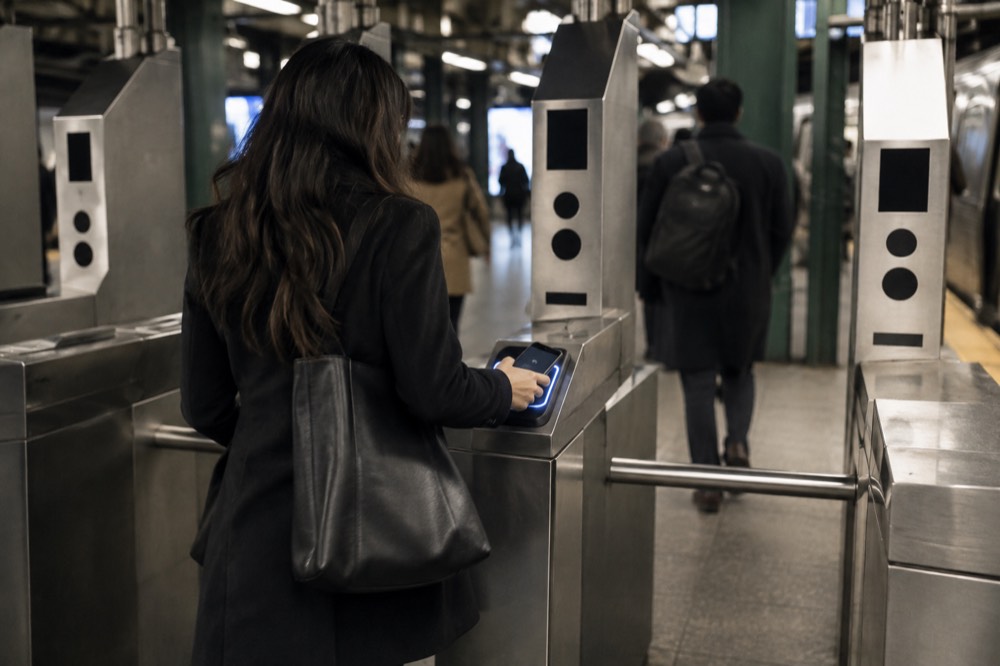
The MetroCard retirement is the single most important transport change in New York in years, and most competing guides have not caught up. The MTA's own words: "MetroCard is retiring. As of January 1, 2026, you can no longer buy or refill a MetroCard." Any page that tells you to buy a 7-day unlimited MetroCard when you land is sending you to a product that no longer exists. The weekly value now comes from OMNY's automatic fare capping: once you have spent $35 on subway and local bus rides within a rolling seven-day window using the same card or device, everything after that is free. No pass to buy, no decision to make at a machine.
Two details from the MTA's fare rules matter for airport arrivals. First, the seven-day window starts with your first tap, not on a calendar day, so your airport ride counts as day one. Second, you must tap the same physical card or the same device every time. Tapping your phone on the way in and the plastic card in your pocket on the way out breaks the cap silently, and the MTA does not merge them retroactively. Each person in a group needs their own card or device, since group trips do not pool toward one cap.
| Fare item | Price | Notes |
|---|---|---|
| Single subway or local bus ride | $3.00 | Paid by OMNY tap |
| Free transfer | Included, within 2 hours | Subway to bus, bus to subway, bus to bus |
| Express bus | $7.25 | Not relevant for LGA airport runs |
| OMNY weekly cap (subway + local bus) | $35 | Automatic, rolling 7 days, same card or device |
| OMNY cap including express buses | $67 | Only if you ride express buses |
| Reduced fare (seniors 65+, eligible disabled) | $1.50 subway and local bus | At all times of day |
| Children | Up to three under 44 inches ride free | With a fare-paying adult |
| Paper Single-Ride OMNY ticket | $3.50 | From machines, valid 2 hours, no subway-to-bus transfer |
Our full OMNY explainer covers the capping rules in detail, and the broader how to get around New York guide puts the subway in context with ferries, buses and everything else.
Is the LIRR from LaGuardia Worth the Extra Money?
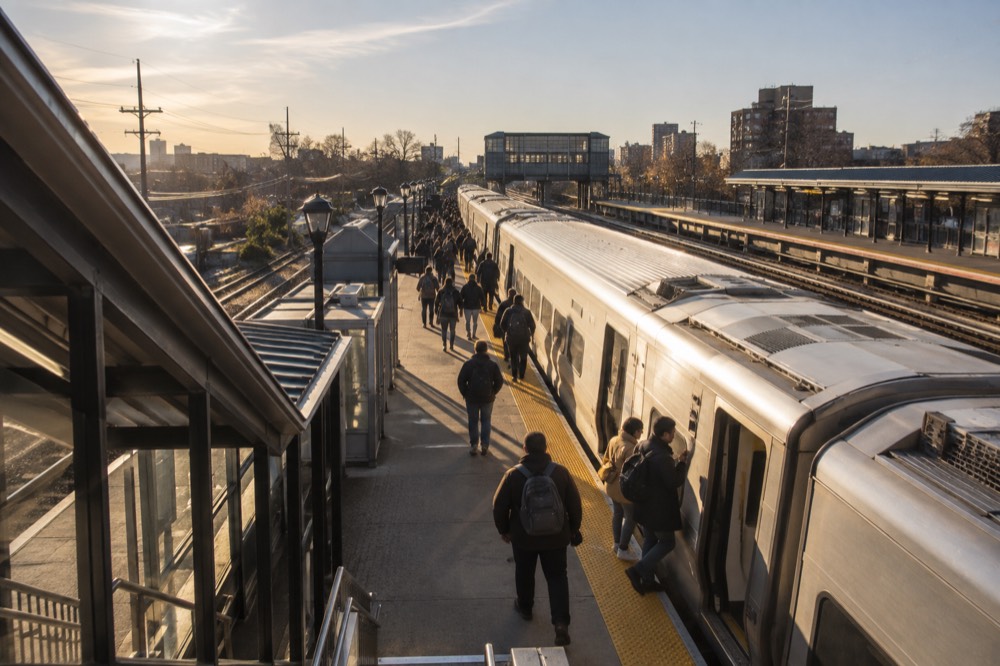
Yes, for some travelers: the Q70 bus connects with the Long Island Rail Road at Woodside, and an off-peak LIRR fare costs $5.25, or $7.25 at peak times, per the MTA's LaGuardia page. That buys a faster, more comfortable rail leg into Penn Station than the subway, for roughly two to four dollars more than the pure subway option. It is the best cheap choice if Penn Station or the west side of Midtown is your destination.
The LIRR is the option most visitors never hear about, because the airport's rail story is usually told as "there is no train at LaGuardia." That is technically true, no train serves the terminals, but the free Q70 bridges the gap to Woodside station in Queens, where the LIRR runs frequent trains into Manhattan. The rail leg is quicker than the subway equivalent and the trains have luggage space and actual seats, which after a flight is not nothing.
The decision is a straight time-versus-money call. If your hotel is near Penn Station, on the Far West Side, or anywhere the LIRR delivers you faster than the E train would, the extra two or three dollars is trivially good value. If you are heading to the East Village or Brooklyn, the subway from the Q70 connection is likely the simpler routing, and the LIRR's advantage evaporates once you add a second transfer at Penn.
Should You Take a Taxi, Rideshare, or Private Transfer from LaGuardia?
A taxi from LaGuardia runs on the meter, so the cost moves with traffic and route, and there is no single published flat fare we can honestly quote. A private transfer is different: a flat vehicle fare covers your whole group of up to six with door-to-door service, no transfers and no subway stairs, and the driver tracks your flight so delays do not strand you.
For a group of three or more splitting one fare, a private vehicle often beats the per-person math of anything metered.
The private transfer listed above is sold per vehicle, not per person, which is the entire reason larger groups come out ahead. The fare covers up to six passengers with their luggage, direct to a Manhattan address. A solo traveler on a budget does better with the free Q70 and a $3.00 subway tap, which is why we say so plainly on this page rather than pretending one option fits everyone.
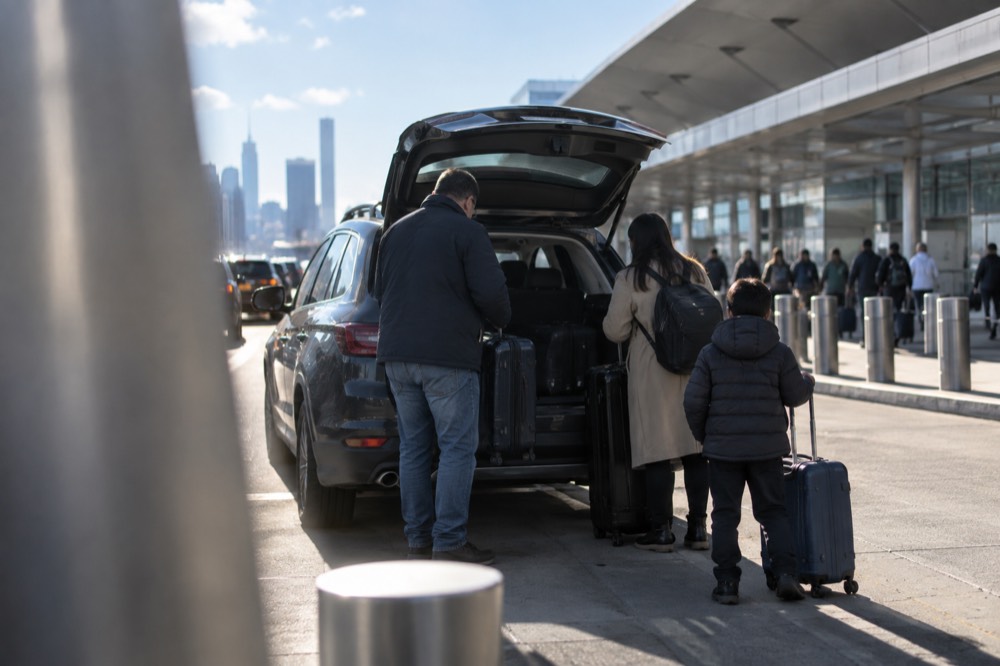
Taxis and rideshares fill the middle ground. The honest framing: a metered taxi is priced by time and distance, Manhattan traffic is unpredictable, and we do not print a number we cannot source. What we can say from the MTA's own data is what you are buying: a ride with no transfers, no stairs, and no schedule, which is worth real money if you are landing jet-lagged at 1am with two children and three suitcases. The subway does not get easier at that hour; it just gets emptier.
Which Option Fits Which Traveler?
The right choice depends on three things: how many people you are moving, how much luggage you carry, and where in Manhattan you are going. A solo traveler with a backpack should take the free Q70 and the subway almost every time. A family of four with checked bags, or anyone landing late at night, should price a private vehicle before assuming public transit is the frugal answer, because the vehicle fare splits across the whole group.
| Your situation | Best pick | Why |
|---|---|---|
| Solo, one bag, daylight arrival | Q70 + subway, $3.00 | Cheapest transfer in the city, frequent service |
| Two people, carry-ons only | Q70 + subway, $6.00 total | Still a fraction of any car option |
| Family with checked bags | Private transfer or taxi | No stairs, no transfers, one fare for the vehicle |
| Group of 4-6 | Private transfer | Flat vehicle fare split across everyone |
| Heading to Penn Station area | Q70 + LIRR from Woodside | Faster rail leg for a few dollars more |
| Uptown Manhattan hotel | M60-SBS direct, $3.00 | One vehicle, no transfer |
| Very late or very early arrival | Taxi or private transfer | Frequency and comfort both matter off-peak |
The table is advice, not a promise, and the border cases are real. Two adults with two large suitcases can manage the Q70, but the bus has no luggage assistance and a crowded run is miserable. Conversely, a solo business traveler who bills travel time may rationally take a taxi every trip. The point of laying out the trade-offs is that the $3.00 option exists and is excellent, and the door-to-door option exists and is sometimes worth ten times the price. Both are true at once.
How Does LaGuardia Compare with JFK and Newark for Getting to Manhattan?
LaGuardia is the cheapest of the three airports to reach Manhattan from: $3.00 total via the free Q70 and the subway. JFK costs $11.75 by rail because the AirTrain adds $8.75 on top of the $3.00 subway fare, and Newark costs $16.80 on the NJ Transit train plus AirTrain from Penn Station. LaGuardia has no rail link at all, yet its free bus bridge makes it the budget winner.
| Airport | Cheapest rail/bus option | Total cost | Notes |
|---|---|---|---|
| LaGuardia LGA | Free Q70 + subway | $3.00 | No AirTrain exists at LGA |
| JFK | AirTrain + subway (E, J, Z to Jamaica, or A to Howard Beach) | $11.75 | AirTrain is $8.75 on top of the $3.00 fare |
| Newark EWR | NJ Transit + AirTrain from Penn Station NY | $16.80 | AirTrain Newark is free within the airport |
The comparison inverts what most people assume. The airport without a train is the cheap one, because its connector bus is free, while the airport with the shiny dedicated rail link charges $8.75 for the privilege. The LIRR plus AirTrain combination from JFK is faster to Midtown, and the MTA says so, but faster is not cheaper, and visitors conflate the two constantly.
Newark carries one more caveat that matters to anyone landing there on a weekday morning: the AirTrain between the terminals and the NJ Transit rail station is currently replaced by shuttle buses on weekdays from 5am to 3pm, per the MTA's Newark page. Inter-terminal AirTrain still runs. Build in extra time. For the full picture on the JFK side, read our JFK to Manhattan guide.
What Should You Know About Timing, Traffic, and Landing Late?
LaGuardia to Midtown Manhattan is a short trip by New York standards, but its length is governed by road traffic on the highway approaches, not by distance, and no honest guide can promise a fixed number of minutes. The subway and LIRR legs are far more predictable than any car option, because rail does not sit in tunnel congestion. Late-night arrivals should check service frequency before committing to a plan.
The pattern worth internalizing: cars win on predictability of comfort, trains win on predictability of time. A taxi ride from LGA at 2pm can crawl; the E train from the Q70 connection runs the same route at the same speed regardless of what the highway is doing. If you have a dinner reservation or a tight check-in window, that reliability is worth more than the fare difference.
Early and late arrivals change the calculus in both directions. Overnight, the free Q70 runs less frequently and a crowded bus is less likely, which is genuinely pleasant, but waiting alone at a Queens bus stop at 1am is a different experience from the same wait at noon. The private transfer's flight-tracking becomes more valuable exactly then, because a delayed 11pm landing does not strand a booked driver the way it can complicate a bus plan made hours earlier.
Once You Are in Manhattan, What Next?
Arriving cheaply is only half the trip: the same fare structure that carried you from LaGuardia carries you around the city, with a free transfer within two hours and the automatic $35 weekly cap if you stay several days. Manhattan's attractions cluster around a handful of subway corridors, so a hotel near a major line turns every sightseeing day into a few taps. The money you saved on the airport run is better spent on the things you came for.
Once the bags are dropped, the planning shifts from transport to the city itself, and our things to do in NYC hub is the page built for exactly that moment. If you landed with an appetite, the food walk below is a good first evening in the city, and the free Financial District walk is a zero-cost way to see Lower Manhattan with someone explaining it.
The trio above spans three budgets and three moods: a private vehicle for the ride itself, a food tour for the first evening out, and a free, tip-based walk for the day you want to spend nothing at all. The food tour deserves a closer look, because it is the one most travelers book first.
The Chinatown and Little Italy food tour is a natural first-night pick for travelers who want the neighborhoods a short walk from many Midtown subway lines, with six tastings that add up to a real meal. It is a three-hour commitment, so it suits the evening after an arrival day better than the arrival day itself.
Common Questions About Getting from LaGuardia to Manhattan
The questions below are the ones travelers actually ask before landing, and the answers compress everything above: the Q70 is free, the subway is $3.00, the MetroCard is gone, the LIRR is a worthwhile upgrade to Penn Station, and a private transfer makes sense for groups. Each answer stands alone, so skim the ones that match your trip.
What is the cheapest way from LaGuardia to Manhattan?
The free LaGuardia Link Q70 bus to the subway, then one $3.00 OMNY tap. Total cost: $3.00 per person, the cheapest airport transfer in New York. The M60-SBS direct to uptown Manhattan is the same $3.00 if your hotel is uptown.
Is there a train from LaGuardia to Manhattan?
No train serves the terminals directly. The free Q70 bus bridges to subway lines and to the LIRR at Woodside, where a $5.25 off-peak or $7.25 peak LIRR fare takes you to Penn Station. There is no AirTrain at LaGuardia.
Can I still buy a MetroCard at LaGuardia?
No. As of 1 January 2026 the MTA no longer sells or refills MetroCards anywhere. Pay by tapping a contactless credit or debit card, your phone, or an OMNY card. The $35 weekly cap applies automatically when you use the same card or device every ride.
How much is the subway from LaGuardia?
$3.00, the standard single ride, paid when you enter the subway after the free Q70 bus. It includes one free transfer within two hours, and up to three children under 44 inches tall ride free with a fare-paying adult.
Is a taxi from LaGuardia worth it?
For groups, families with luggage, or late-night arrivals, often yes: a car is the only option with no transfers and no stairs. Taxi fares are metered and vary with traffic, so we do not quote a number. A private transfer charges a flat vehicle fare for up to six passengers, which groups can split.
Which is better from LaGuardia, the Q70 or the M60?
The Q70 is free and connects to the subway and LIRR in Queens, best for most Manhattan destinations. The M60-SBS costs $3.00 but runs directly into uptown Manhattan, stopping at every terminal, so it wins if your hotel is on the Upper West Side or in Harlem.
One last practical note. The free bus and the $3.00 fare are not a secret, but they do require you to know they exist before you are standing at the curb with your bags. Save this page, or at least the fare table, before you fly. The travelers who overspend on airport transfers in New York are almost never the ones who chose a car deliberately, they are the ones who never knew the free bus was waiting at the curb.