Which Airport Is Closest to Manhattan? JFK, LaGuardia or Newark Compared
LaGuardia sits closest to Manhattan, in the northern corner of Queens, but the answer that actually matters for your trip is about transit cost and time, not miles. Here is how JFK, LaGuardia and Newark compare.
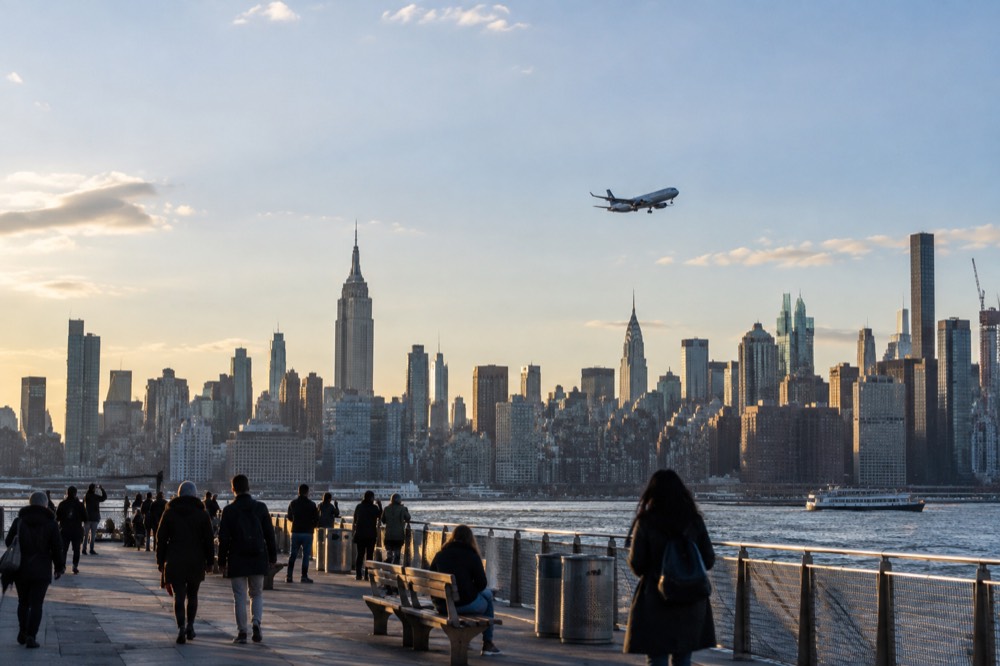
Short answer
LaGuardia (LGA) is the airport closest to Manhattan. It sits in Queens, across the East River from the Upper East Side. But the cheapest transfer into the city is also LaGuardia's, at $3.00 by subway and the free Q70 bus, while JFK costs $11.75 by subway plus AirTrain and Newark costs $16.80 by NJ Transit train.
LaGuardia sits in Queens, hard against the East River, closer to Midtown Manhattan than any other New York airport. That is the literal answer to the question, and it takes about ten seconds. The useful answer takes longer, because closeness is the least interesting property an airport has. What you actually pay, and how long the last leg of your journey takes, depends on which of the three airports your flight lands at, and the cheapest ride into the city belongs to the airport people assume is the awkward one.
New York is served by three commercial airports: JFK and LaGuardia in Queens, and Newark Liberty across the Hudson in New Jersey. In 2025 JFK handled 62.6 million passengers, Newark 47 million and LaGuardia 32.8 million, according to the Port Authority. All three carried fewer passengers than the year before, a down year across the board, yet the holiday stretch between 22 December 2025 and 4 January 2026 was the busiest ever recorded at 5.8 million. What that means for you: the airports are busy at exactly the times you are likely to be in them.
This guide compares the three on distance, transit cost and transfer practicality, with fares taken from the MTA's own published pages. The short version: the closest airport is LaGuardia, the cheapest transfer is LaGuardia's, and the airport with the dedicated rail link, JFK, is the expensive one.
Which Airport Is Closest to Manhattan?
LaGuardia Airport is the closest airport to Manhattan. It sits in the East Elmhurst section of Queens, directly across the East River from the Upper East Side and Harlem, and it is the only one of New York's three major airports inside city limits that lies that close to the island. JFK sits further east in Queens, and Newark Liberty is in New Jersey, on the far side of the Hudson River from Manhattan entirely.
Closeness, though, is a straight-line property. LaGuardia has no rail link of its own, so the distance from your gate to your hotel gets covered by bus, taxi or car, and the approach roads through Queens can crawl at rush hour. JFK is further out, but the AirTrain connects it to the subway and to the Long Island Rail Road, which changes the arithmetic. Newark is in another state, but a direct NJ Transit train runs from Penn Station in Manhattan to the airport's rail stop.
The practical ranking depends on what you value. If your hotel is in Midtown and you land at LaGuardia at 2pm on a Tuesday, you will likely be at the front desk within half an hour. Land at JFK at the same hour and the AirTrain plus the E train is a longer ride but a predictable one. Land at Newark on a weekday morning and you should read the service-change section further down this page before you plan anything.
For most visitors the choice is not made at the booking stage anyway. Flights route you where they route you. What you control is what happens after the seatbelt sign goes off, and that is where the real differences between the three airports live.
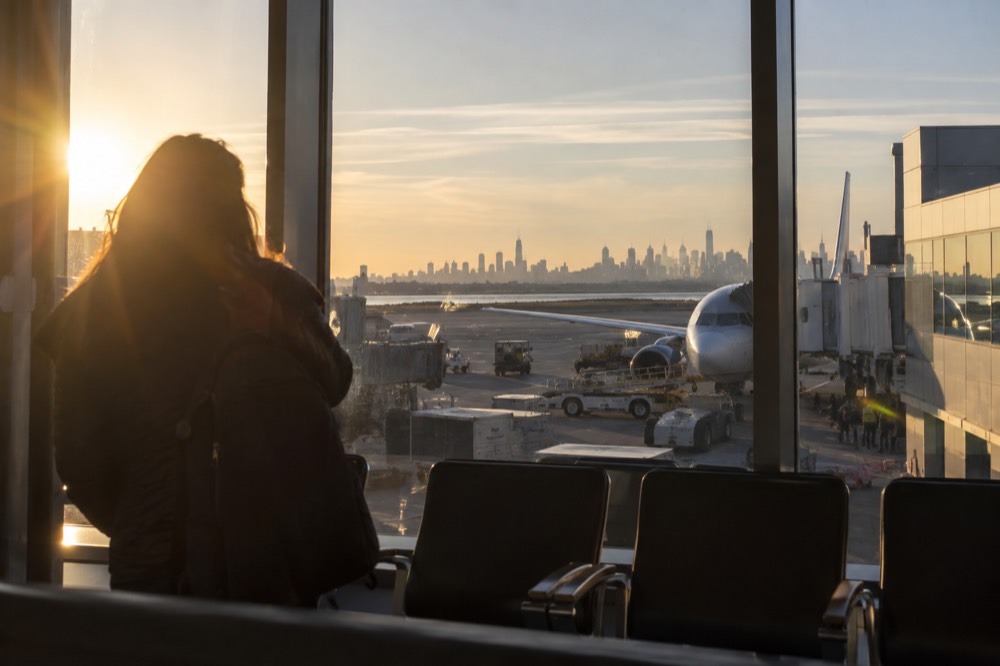
How Much Does Each Airport Transfer Cost from Manhattan?
The cheapest airport transfer in New York is LaGuardia's: $3.00 total, one subway fare, because the LaGuardia Link Q70 bus is free and connects the terminals to the subway. JFK costs $11.75 by subway and AirTrain, since the AirTrain adds $8.75 on top of the $3.00 subway fare. Newark costs $16.80 by NJ Transit train from Penn Station, with the AirTrain access included in the ticket when bought at the station.
Those are the MTA's own published figures, and they invert what most visitors expect. JFK, the airport with the famous dedicated rail link, is the expensive transit option, because the AirTrain fare is charged on top of your subway or railroad fare, not bundled into it. LaGuardia, long the butt of jokes for its lack of a train, is now the cheapest airport in the region to reach by public transit, thanks to a free bus.
The fare table, as published by the MTA:
| Airport | Transit route | Cost per person | Notes |
|---|---|---|---|
| LaGuardia (LGA) | Subway + free Q70 LaGuardia Link bus | $3.00 | Q70 is free; subway-to-bus transfer free within 2 hours |
| LaGuardia (LGA) | M60-SBS bus from uptown Manhattan | $3.00 | Stops at every airport terminal |
| JFK | Subway + AirTrain (E, J or Z to Jamaica, or A to Howard Beach) | $11.75 | $3.00 subway + $8.75 AirTrain |
| JFK | LIRR + AirTrain | Higher rail fare | Faster to Midtown or Downtown Brooklyn |
| Newark (EWR) | NJ Transit train + AirTrain from Penn Station | $16.80 | AirTrain fare included in the airport ticket |
Two details worth knowing. Unlimited passes, in the era when they existed, never worked on the AirTrain, and the same is true of fare capping: the AirTrain is a separate charge outside the OMNY system. And children under 5 ride the AirTrain free, which softens the JFK math a little for families.
If you are traveling as a group, the private-car option changes the comparison entirely, because the fare covers the whole vehicle rather than a per-person ticket. A private transfer for up to six people starts from a low per-person rate when the vehicle is full, and for a family with luggage the door-to-door math often beats four AirTrain fares plus a subway ride with suitcases.
The OMNY system applies to the subway and local bus legs of any airport run. Tap the same card or device every time and the weekly cap of $35 kicks in automatically, covering everything after that within a rolling seven-day window. The cap starts with your first tap, not on a Monday, and it only works if you use one card or one device consistently. Mix your phone and the plastic card in your pocket and the cap breaks silently.
Is JFK or LaGuardia Better for Getting Into Manhattan?
JFK is better if you want a predictable, rail-based ride and your hotel sits near an E, J, Z or A train, or near a Midtown LIRR station. LaGuardia is better if your hotel is on the Upper East Side, Harlem or anywhere the Q70's Jackson Heights and Astoria connections serve, and if you want the cheapest possible transfer at $3.00. Neither is better in every case; the deciding factor is where in Manhattan you are sleeping.
LaGuardia's weakness used to be that nothing connected it to the subway. The free Q70 bus fixed the worst of that: it runs from the terminals to Jackson Heights and Astoria, where the E, F, M, R and 7 trains and the Astoria lines pick up the ride. From the Upper East Side, a cab or rideshare from LaGuardia is a short hop across the river and often the sensible call, because the transit routing loops west through Queens before it reaches Manhattan.
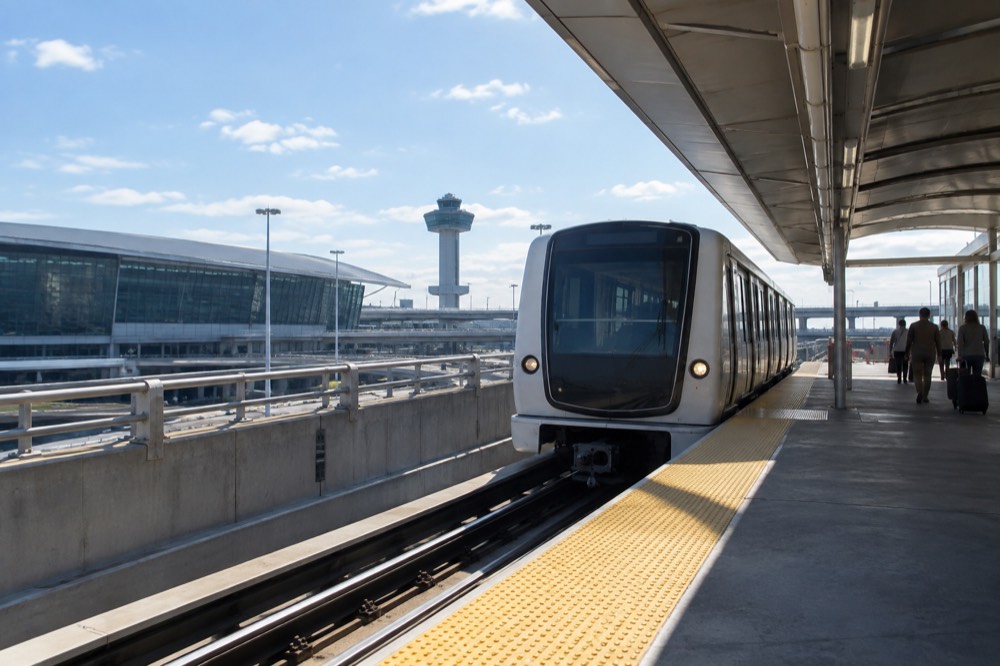
JFK's strength is the AirTrain spine. It serves every terminal with one loop, and from Jamaica you reach the E, J and Z trains or the Long Island Rail Road, and from Howard Beach the A train. The LIRR option is the faster route to Midtown or Downtown Brooklyn, at a higher rail fare than the subway. The trade is money for time, and on a weekday evening it is often worth it.
The reverse question, getting out to the airport, matters too. If your departure is from JFK at 6am, the AirTrain runs early and reliably. If it is from LaGuardia at the same hour, you are in a car, because the Q70's schedule at that hour is thinner than a rail link's. More on the full picture of each airport's routes lives in the site's dedicated pages on getting from JFK to Manhattan and LaGuardia to Manhattan.
For travelers with more bags than patience, or groups of three or more, the private transfer becomes the rational choice at JFK in particular. The driver meets you, tracks your flight, and the fare covers the whole vehicle.
For solo budget travelers the calculation flips hard the other way. One person with a backpack pays $11.75 and rides the AirTrain, full stop. The private option only earns its price when the vehicle fills.
What About Newark Airport? Is It Worth Flying Into?
Newark Liberty is the only one of the three airports in New Jersey, across the Hudson from Manhattan, and it costs $16.80 by NJ Transit train from Penn Station, the most expensive transit transfer of the three. It can still be the right choice, because the train is a single-seat ride from Midtown, but there is a live service change: on weekdays between 5am and 3pm, shuttle buses replace the AirTrain between the terminals and the rail station.
That service change is the thing most guides miss, because it is recent and it is weekday-specific. If your Newark flight lands on a Tuesday morning, the last leg of your journey involves a bus transfer between the train station and your terminal, and you should budget extra time. Inter-terminal AirTrain service within the airport still runs normally. The MTA's own airport guide carries the current wording, and it is worth checking before you book a morning flight out of EWR.
A few Newark specifics that matter:
- The $16.80 fare covers the NJ Transit train and the AirTrain access together, when you buy the airport ticket at the station or machine.
- Buying a ticket on board the train costs a surcharge, and conductors only accept cash.
- The AirTrain within the airport, between terminals, parking and hotels, is free.
- PATH trains from Manhattan to Newark Penn Station are a cheaper option, but Newark Penn is not the airport station; you would need to transfer to a further NJ Transit stop or a bus for the last leg.
The classic Newark mistake is assuming the airport is in New York. It is not, and the cab fare back into Manhattan crosses state lines, which changes the meter rules. For the full picture, see the site's guide to Newark Airport to Manhattan.
Newark's passenger volume tells you something about its role: 47 million in 2025, the region's second-busiest airport, and its third-busiest year ever. It is a real contender, not a consolation prize, and United's hub there means many domestic itineraries route through it whether you like it or not.
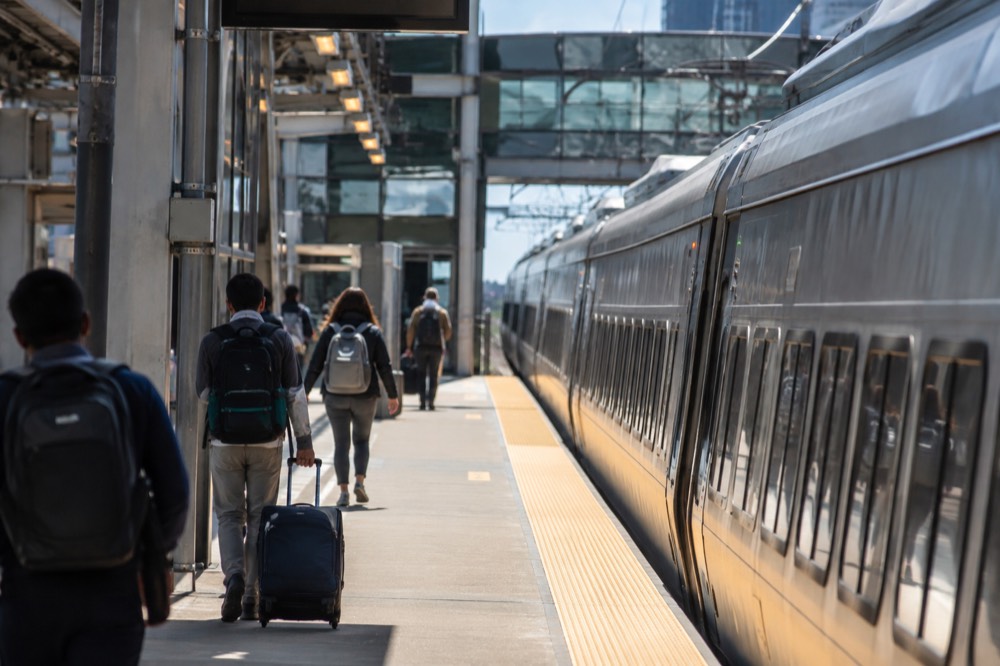
How Do You Pay for the Subway on an Airport Trip?
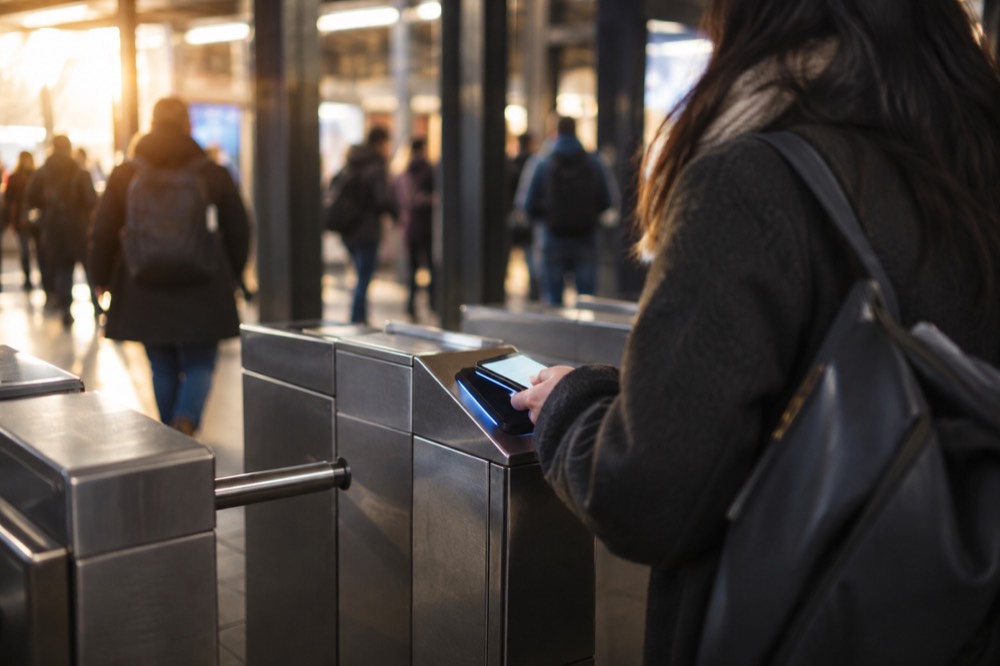
Tap a contactless credit or debit card, a phone or a wearable at the turnstile with OMNY, and the fare is $3.00 per ride. There is no pass to buy any more: the MetroCard was retired on 1 January 2026, and the old 7-day unlimited no longer exists. Instead, OMNY caps your fares automatically at $35 in a rolling 7-day period, so after about 12 paid rides everything else that week is free.
This is the single most out-of-date piece of advice still circulating in New York travel writing. Almost every guide on the web, and plenty of returning visitors, will tell you to buy a 7-day unlimited MetroCard when you land. That product is gone. The MTA stopped selling and refilling MetroCards entirely as of 1 January 2026, and any remaining 7-day or 30-day unlimited passes had to be started by 31 March 2026. A visitor arriving today cannot buy one at any price.
The replacement is automatic. Tap the same card or device for every subway and local bus ride, and once your fares inside a rolling seven-day window hit $35, the rest are free. No pass, no activation, no decision. The rolling window starts with your first tap, whenever that is.
The rules that trip people up:
| Rule | What it means |
|---|---|
| Same card or device every time | Mixing your phone and the plastic card breaks the cap silently |
| Rolling 7-day window | Starts with your first tap, not a calendar week |
| Subway and local bus only | The AirTrain at JFK and Newark is charged separately, outside the cap |
| Groups need separate cards | Each traveler's taps count toward their own cap only |
| Free transfer within 2 hours | Subway to bus, bus to subway, bus to bus, one transfer |
For a typical visitor doing four or five subway rides a day, the cap pays off around day three of a week. For someone in town for two days, it never triggers, and that is fine: you just pay $3.00 a ride. The full mechanics are on the site's OMNY guide, and the history of the old card is covered on the MetroCard page.
One airport-specific note: the free Q70 bus from LaGuardia does not require any tap at all. You board, you ride, you transfer to the subway, and the subway fare includes the transfer because the bus was free to begin with. It is the closest thing New York has to a free airport shuttle.
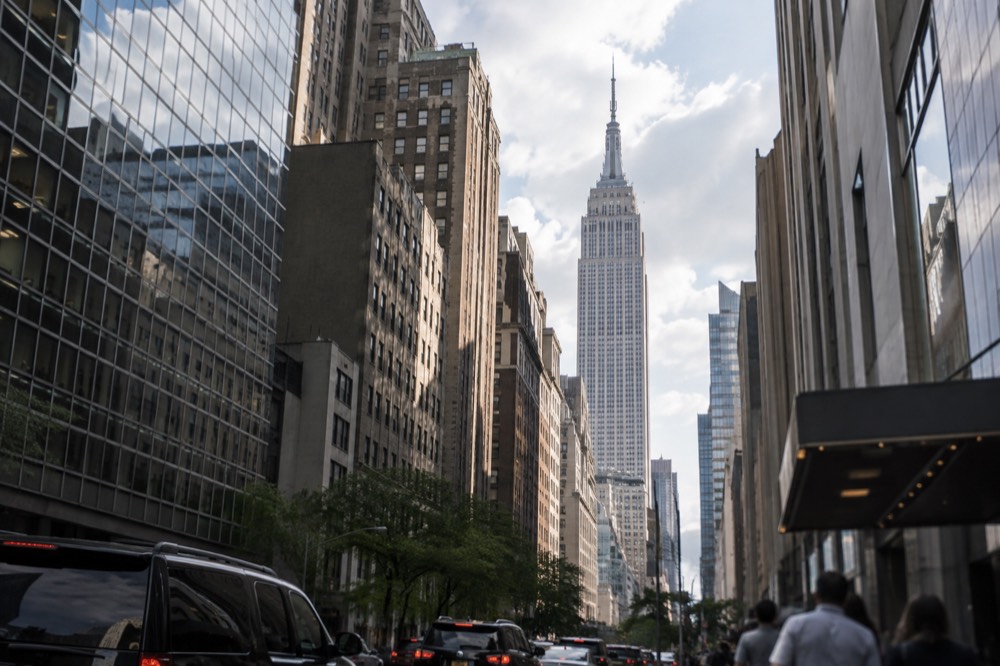
Which Airport Should You Actually Choose for Your Trip?
Choose LaGuardia if your hotel is in Midtown or uptown Manhattan and you value a short, cheap final leg, accepting that domestic flights dominate there. Choose JFK if you are arriving from overseas, since it carries the region's heaviest international traffic, or if you want a rail option to fall back on. Choose Newark when the fare or schedule wins, and avoid its weekday morning rail connection if you are pressed for time.
In practice, most travelers do not choose. The airline chooses, by routing your itinerary through whichever hub it uses. What you can control is the booking trade-off: a $60 saving on a Newark flight against a $16.80 train fare and a possible shuttle bus, or a LaGuardia fare against a taxi queue at midnight when the Q70 has stopped running for the night.
The decision framework in one table:
| Your situation | Best airport | Why |
|---|---|---|
| Staying Midtown or Upper East Side, domestic flight | LaGuardia | Closest, $3.00 transit, short cab |
| International arrival | JFK | Main international gateway, AirTrain rail link |
| Late-night arrival, no rail preference | JFK or LGA | Both in Queens; taxi or car from either |
| Cheapest flight is from Newark | Newark, with caveats | Fine if not a weekday morning, budget for $16.80 train |
| Group of 3-6 with luggage | Any, by private car | Vehicle fare split beats per-person transit |
| Solo traveler on a budget | LaGuardia | $3.00 total transit cost |
Once you are in the city, the airport question fades and the real planning starts. The site's full rundown of things to do in NYC covers the money attractions, and the practical basics of the subway and buses are in how to get around NYC.
If your first day is a jet-lagged one, a short guided walk is a good way to stay upright and get oriented. A food tour through Chinatown and Little Italy starts close to many Midtown hotels' subway lines and doubles as lunch, which is exactly what a arrival day needs.
For a zero-cost orientation, the free walking tours on GuruWalk cover the Financial District, Wall Street and the 9/11 Memorial, and they are tip-based, so you pay what you think the guide earned at the end.

What Is the Fastest Way from Each Airport to Manhattan?
The fastest way from LaGuardia is a taxi or rideshare, because no rail line serves it and the drive is short outside rush hour. From JFK, the fastest transit option is the LIRR from Jamaica to Midtown, or a car when the expressway moves. From Newark, the NJ Transit train from the airport station to Penn Station is the fastest scheduled option, except on weekday mornings when the shuttle-bus replacement adds time to the AirTrain leg.
Time, unlike fare, is not a fixed number, because New York traffic decides a large part of it. A LaGuardia cab at 11pm can reach Midtown in twenty minutes. The same ride at 5:30pm on a Friday can take three times as long. The rail options, by contrast, are roughly constant: the AirTrain and the subway do not care about the Van Wyck Expressway.
What you can control is the structure of the trip. From JFK, the AirTrain-to-Jamaica-to-LIRR chain is the fastest scheduled path into Midtown, and the E train is the budget version of the same shape. From LaGuardia, the Q70-to-subway chain is cheap and reliable but adds a transfer; a car is faster door to door except in peak traffic. From Newark, the train beats driving into Manhattan at almost any hour, with the weekday-morning caveat above.
A few timing rules of thumb that hold up:
- Arrive at any of the three airports two hours before a domestic departure, three for international. Security lines at JFK and Newark are the region's most variable.
- The last legs of transit options thin out after midnight. If you land very late, budget for a car.
- Weekday mornings are the worst window at Newark specifically, because of the AirTrain shuttle replacement between 5am and 3pm.
- Holiday periods set records: the 2025 year-end stretch saw 5.8 million passengers in two weeks. Book transfers ahead for late December.
The private transfer option buys back certainty at exactly the moments when the other options are weakest: late arrivals, group luggage, holiday crush. The driver tracks the flight, so a delay does not strand you at the curb.
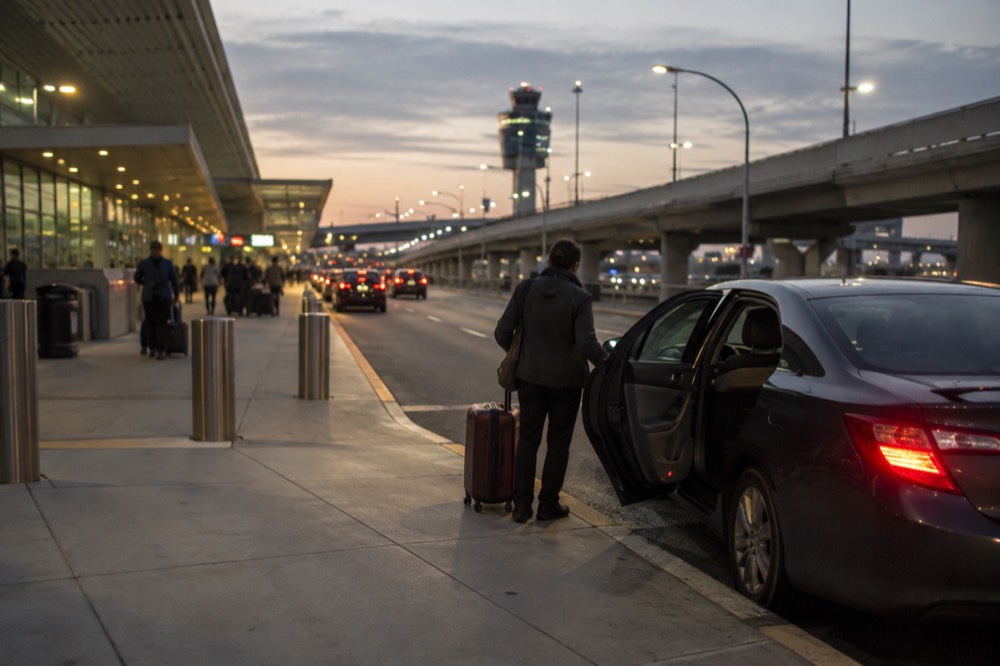
Common Questions About New York Airports and Manhattan
Travelers ask the same handful of questions about New York's three airports, and most of the confusion traces back to two assumptions: that LaGuardia is the only airport worth using because it is closest, and that the MetroCard still exists. Neither holds. LaGuardia wins on distance and transfer cost, JFK wins on rail reliability and international reach, Newark wins on fare and loses on the Hudson, and every transit payment in 2026 runs on OMNY taps.
Which airport is closest to Manhattan?
LaGuardia Airport, in Queens, is the closest of New York's three major airports to Manhattan. It sits across the East River from the Upper East Side. JFK is further east in Queens, and Newark Liberty is in New Jersey, across the Hudson River.
Is LaGuardia or JFK closer to Manhattan?
LaGuardia is closer. It sits in East Elmhurst, Queens, directly across the East River from Manhattan's Upper East Side, while JFK occupies a larger site much further east in Queens, served by the AirTrain rather than a short drive.
What is the cheapest way to get from an airport to Manhattan?
The LaGuardia Link Q70 bus is free, so a subway-plus-bus transfer from LaGuardia costs one $3.00 subway fare in total. JFK costs $11.75 by subway and AirTrain, and Newark costs $16.80 by NJ Transit train from Penn Station.
Can you still buy a MetroCard at the airport?
No. The MTA stopped selling and refilling MetroCards on 1 January 2026. Fares are paid by tapping a contactless card, phone or wearable with OMNY, at $3.00 per ride with an automatic $35 weekly cap.
Is Newark Airport in New York?
No, Newark Liberty International Airport is in Newark, New Jersey, west of Manhattan across the Hudson River. It still serves the New York region and is one of the region's three major airports, but the taxi and state rules on the ride into Manhattan differ from the Queens airports.
Which airport should I fly into for a Times Square hotel?
LaGuardia is closest and cheapest to reach for a Midtown stay, but JFK works nearly as well via the LIRR or E train to Midtown, and it is where most international arrivals land. Choose based on your flight options and arrival time, not distance alone.
The honest summary: the closest airport is a fact, the best airport is a judgment call, and the transfer is where the money and the minutes actually go. For everything that comes after the curb outside your hotel, start with the New York City Travel Guide homepage and plan outward from there.