NYC Neighborhoods: A Visitor's Guide to All Five Boroughs
New York City is five boroughs and hundreds of neighborhoods, and most visitors see only a sliver of it. This guide explains what each area is actually like, which ones reward your limited days, and how the subway ties them together.
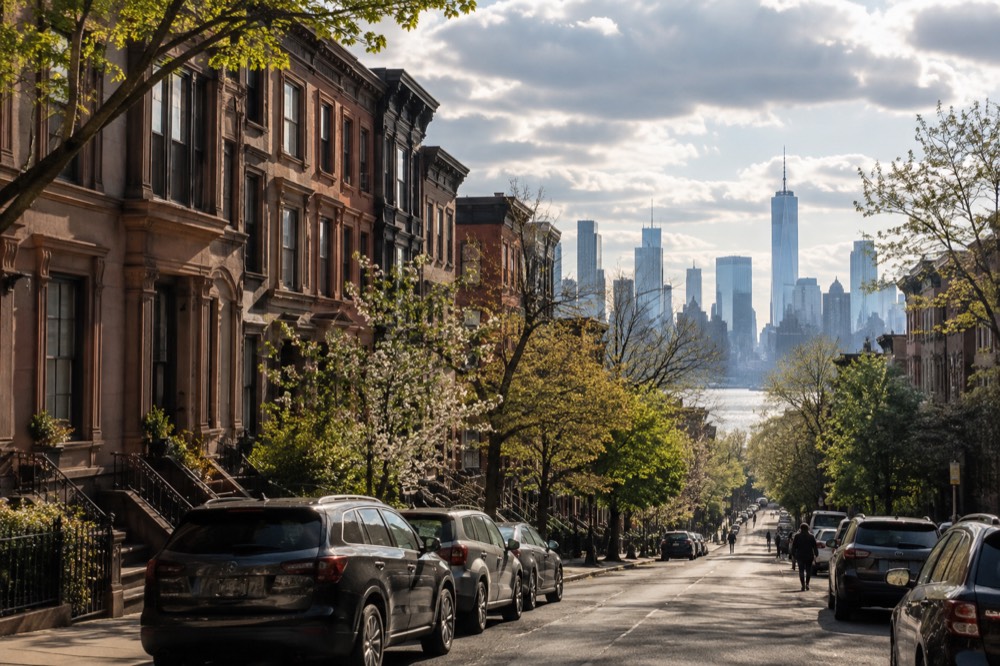
Short answer
New York City has five boroughs: Manhattan, Brooklyn, Queens, the Bronx and Staten Island. Manhattan holds most headline attractions, but Brooklyn and Queens hold the food and neighborhood character many travelers remember longest. Every borough connects by subway, bus or ferry, and a single $3.00 OMNY tap covers the ride.
New York City welcomed 65 million visitors in 2025, and most of them spent the majority of their time inside a stretch of Manhattan barely four miles long. The city they missed is bigger than that: 300 square miles, five boroughs, and dozens of neighborhoods that feel like separate towns stitched together by the subway. Treating Manhattan as the whole of New York is the single most common mistake a visitor makes, and it is the one this guide exists to correct.
What follows is a borough-by-borough, neighborhood-by-neighborhood orientation. It is built on verified figures from official sources: the MTA for transit, the National Park Service for the harbor, and the museums themselves for admission. Where a number is uncertain, it says so rather than guessing. For a full list of sights once you have picked your base, start with the things to do in NYC overview.
What Are the Five Boroughs of New York City?
New York City is made up of five boroughs: Manhattan, Brooklyn, Queens, the Bronx and Staten Island, each a separate county, and only one of them, Manhattan, is an island on its own. Brooklyn would be the country's third-largest city if it were independent, and Queens is the most linguistically diverse urban area in the world. Roughly 8 million people live across the five, and most visitors see well under a tenth of it.
The boroughs were consolidated into one city in 1898, and the seams still show. Each borough has its own downtown, its own character and its own fierce local pride. Manhattan is the dense vertical core where most headlines live. Brooklyn, across the East River, is the borough of brownstones, waterfronts and a food scene that now rivals Manhattan's. Queens is residential, enormous and international, home to two airports and some of the best eating in the city. The Bronx has the Yankees, a famous zoo and the birthplace of hip-hop. Staten Island is the most suburban, reached by a ferry that crosses the harbor past the Statue of Liberty.
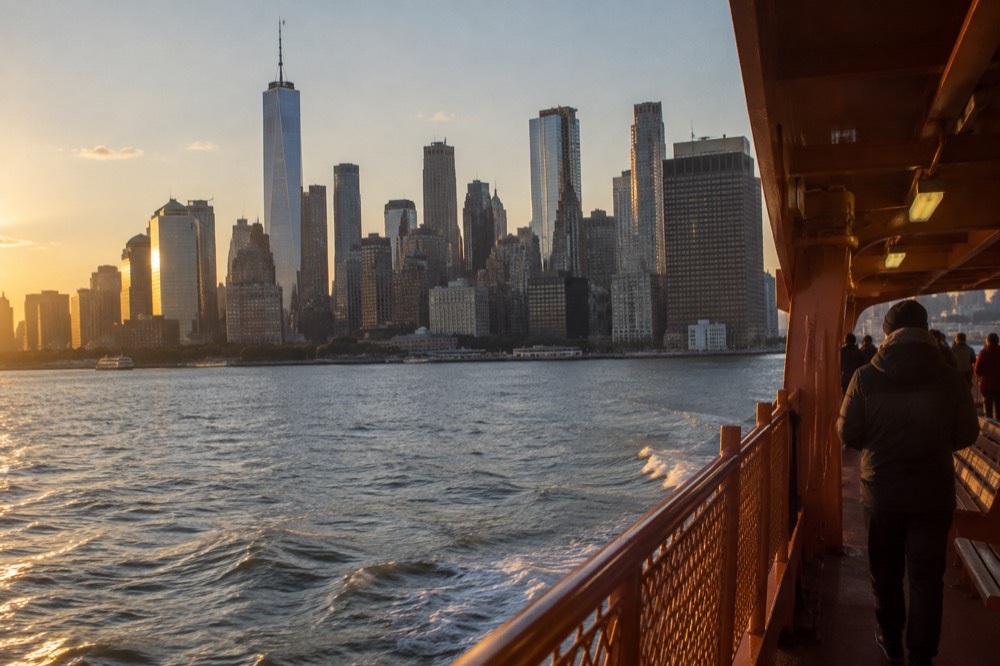
A useful mental model: Manhattan is the stage, and the other four boroughs are where the audience lives. That is not a dismissal of the outer boroughs, it is the reason to visit them. The skyline view is from Brooklyn. The best dumplings are in Queens. The rhythm of actual New York life, the part residents recognize, is mostly happening outside Manhattan.
| Borough | County | Character in one line | Signature stops |
|---|---|---|---|
| Manhattan | New York County | The vertical core: skyscrapers, museums, Theater District | Central Park, MoMA, Times Square |
| Brooklyn | Kings County | Brownstones, waterfronts, a food scene to rival any in the city | Brooklyn Bridge, DUMBO, Williamsburg |
| Queens | Queens County | Huge, residential, the most linguistically diverse urban area on earth | Jackson Heights, Astoria, Flushing |
| The Bronx | Bronx County | Green space, baseball and the birthplace of hip-hop | Yankee Stadium, Bronx Zoo |
| Staten Island | Richmond County | The most suburban borough, a ferry ride from Manhattan | St. George ferry terminal, Snug Harbor |
Which Manhattan Neighborhoods Should First-Time Visitors Know?
First-timers should know six Manhattan areas: Midtown for the spectacle, the Theater District for shows, Lower Manhattan for history and the harbor, the Upper East and Upper West Sides for museums and Central Park, and Greenwich Village and SoHo for walkable, human-scale streets. Each sits in a different part of the island, and the subway connects any two in under half an hour. Trying to see them all in one day is the classic error.
Midtown is where the postcard lives: Times Square, Rockefeller Center, the Empire State Building's spire, Grand Central Terminal. It is loud, crowded and unapologetic about it. The theaters cluster just west of Broadway here, and SUMMIT One Vanderbilt sits beside Grand Central for anyone wanting the skyline from above. For the full rundown of the attractions themselves, the Midtown Manhattan guide covers the walkable core in detail.
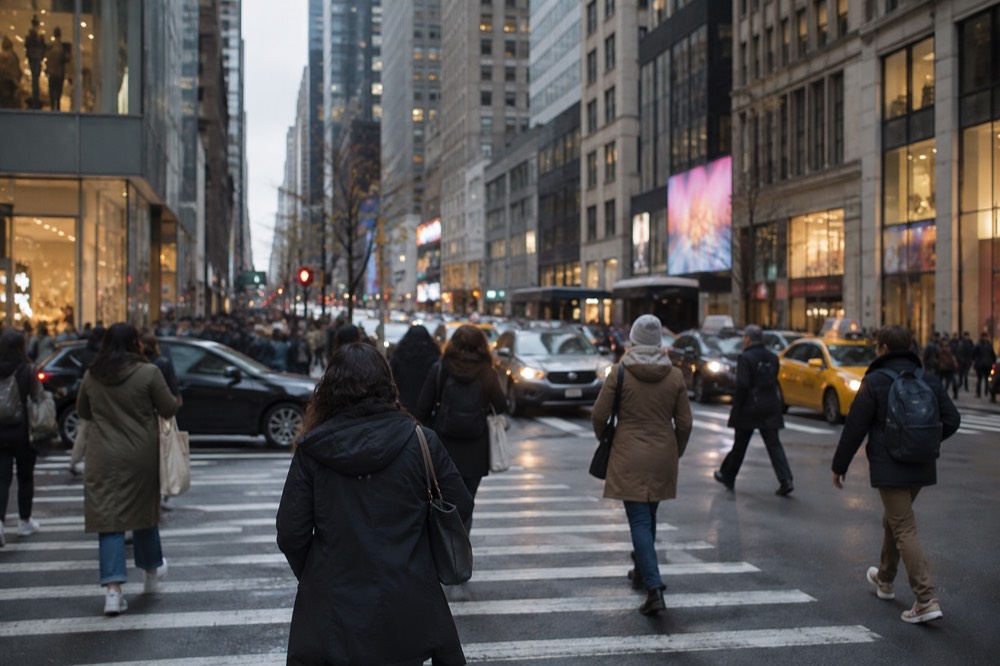
Downtown, the map compresses. The Financial District, Chinatown, Little Italy, SoHo, Tribeca and the Lower East Side all sit within a square mile of each other, which makes lower Manhattan the best part of the island for walking. The Financial District holds Wall Street and the 9/11 Memorial, described elsewhere on this site with the plainness the site deserves. Chinatown and Little Italy sit cheek by jowl, and a guided Chinatown and Little Italy walk is one of the better first-day orientations downtown.
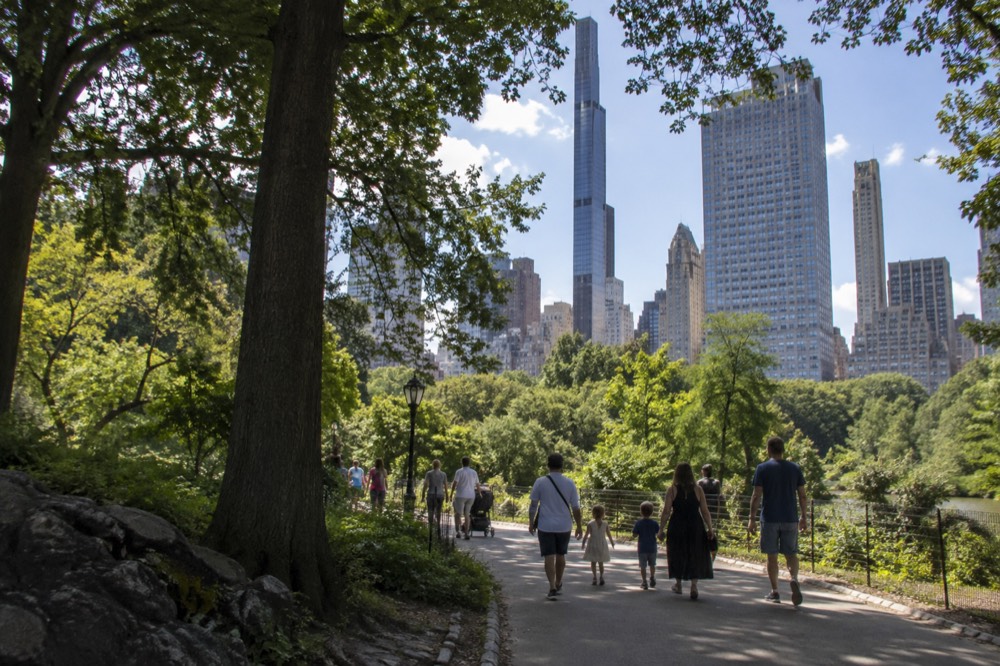
Uptown splits around Central Park. The Upper East Side carries Museum Mile: the Met, the Guggenheim and the Frick along Fifth Avenue. The Upper West Side holds the American Museum of Natural History and a calmer, residential pace. Greenwich Village, SoHo and NoHo sit below 14th Street and above the downtown tangle, offering the cast-iron architecture and crooked streets that predate the grid. Each of these has its own page: start with Greenwich Village or SoHo for the downtown texture.
A note on the Met, because it is the most commonly botched fact in New York travel writing: general admission is a fixed $30 for adults, $22 for seniors and $17 for students, free for children 12 and under. Pay-what-you-wish applies only to New York State residents and students from New York, New Jersey and Connecticut, and even then you must pay something, a minimum of one cent per ticket. Out-of-state and international visitors pay the fixed price. One genuine perk most guides miss: every ticket includes same-day entry to both Met Fifth Avenue and The Met Cloisters.
What Are the Best Neighborhoods in Brooklyn?
Brooklyn's standout neighborhoods for visitors are Brooklyn Heights and DUMBO for the skyline views, Williamsburg for nightlife and shopping, Park Slope for a family pace beside Prospect Park, and Greenpoint and Bushwick for quieter, more local streets. Brooklyn is not a suburb of Manhattan; it is a borough of 2.6 million people with its own downtown, its own museums and a food scene that no longer needs the qualifier.
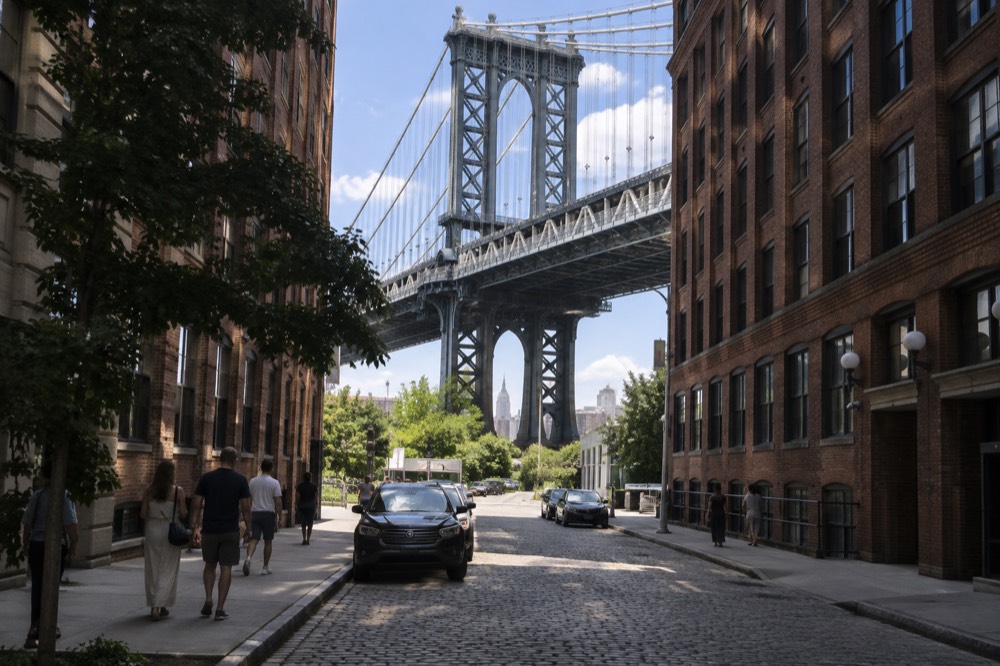
Start with the bridge. Walking from Manhattan into Brooklyn Heights delivers the promenade view of Lower Manhattan that appears on half the postcards sold in Times Square, and DUMBO's cobblestone streets sit directly beneath the Manhattan Bridge. The two sit five minutes apart on foot. For most visitors this is the single most rewarding half-day in the outer boroughs, and the DUMBO guide maps the photo spots honestly.
Williamsburg, one L-train stop into Brooklyn, is the borough's face to the world: rooftop bars, vinyl shops, Hasidic and hipster blocks sharing the same avenues, and a waterfront park with its own skyline angle. Further south, Park Slope runs along Prospect Park, Brooklyn's 585-acre answer to Central Park, and its tree-lined streets suit families and anyone tired of elevator lobbies. Greenpoint, Bushwick and Bed-Stuy reward travelers with extra days and a willingness to walk without an itinerary.
Brooklyn also carries serious eating. The borough's pizza arguments alone could fill a separate guide, and the restaurant scenes in Carroll Gardens, Fort Greene and Sunset Park hold their own against anything in Manhattan. A guided walk is a good way to compress the learning curve: the Brooklyn Bridge and DUMBO walking tour pairs the crossing with the waterfront, and for the full borough picture the things to do in Brooklyn guide goes deeper than this page can.
Queens, the Bronx and Staten Island: What Is Worth the Trip?
Queens rewards food travelers more than any other borough: Jackson Heights, Astoria and Flushing hold some of the best and cheapest eating in the entire city. The Bronx is worth the trip for Yankee Stadium, the Bronx Zoo and the New York Botanical Garden. Staten Island is mostly a ferry decision, a free-to-ride harbor crossing with a statue-and-skyline view, though its north shore has begun drawing day-trippers.
Astoria is the easiest Queens entry point, one subway stop from Manhattan's East Side, known for its Greek restaurants and the Museum of the Moving Image. Jackson Heights is the heart of the borough's diversity, with South Asian and Latin American food along Roosevelt Avenue. Flushing, at the end of the 7 train, is arguably the best Chinese food in New York, and many would argue the best in the country outside California. The 7 train itself, running above ground through Queens, is a sightseeing line that costs nothing extra.
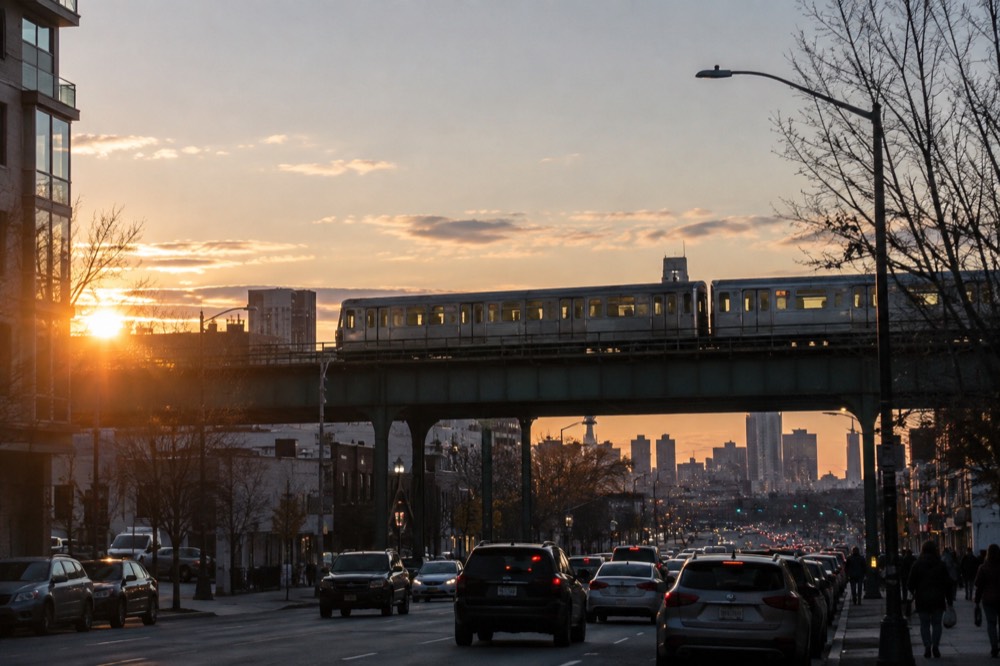
The Bronx is greener than its reputation. Beyond Yankee Stadium, the borough holds one of the largest zoos in the world and the New York Botanical Garden, both reachable by Metro-North or subway from Grand Central in about half an hour. Arthur Avenue, the Bronx's own Little Italy, is widely considered the more authentic Italian shopping street compared with Manhattan's Mulberry Street, though that is a matter of argument rather than measurement.
Staten Island is a fifty-minute ferry round trip. The crossing passes the Statue of Liberty and the harbor forts, and it costs nothing to ride. The island itself is quiet and residential; travelers with more time explore the St. George neighborhood near the terminal or the Snug Harbor cultural center. Most visitors ride the ferry, take the photo, and come straight back, and that is a perfectly good use of two hours.
Which NYC Neighborhood Is Right for Your Trip?
Match the neighborhood to the trip, not to a ranking. First-timers with two or three days should stay in Midtown or Lower Manhattan for proximity. Food travelers get the highest return in Lower Manhattan, Chinatown and Flushing. Families do best near Central Park on either the Upper West or Upper East Side. Budget travelers should look at Long Island City in Queens or parts of Brooklyn, where hotels undercut Manhattan for a one-stop commute.
The honest frame is that there is no best neighborhood in New York, only the best neighborhood for a particular trip. A couple on a weekend with one Broadway show booked should not be in Flushing. A food-obsessed traveler with five days should not eat every meal within walking distance of a Midtown hotel, because Midtown is where the city's most forgettable meals are sold to people who cannot walk further.
| Traveler type | Best-fit area | Why | Typical trade-off |
|---|---|---|---|
| First-timers, 2-3 days | Midtown or Lower Manhattan | Most headline sights within reach | Highest prices, most crowds |
| Food-focused trip | Chinatown, Lower East Side, Flushing | The city's deepest eating scenes | Less skyline, more subway |
| Families with kids | Upper West Side | Natural History Museum, Central Park, calmer streets | Quieter nightlife |
| Nightlife and nightlife-adjacent | Lower East Side, Williamsburg | Bars and music venues till late | Noise, later mornings |
| Budget travelers | Long Island City, Bushwick area | Lower room rates, short commute | Less walkable to sights |
| History and architecture fans | Brooklyn Heights, SoHo, Financial District | The oldest streets and best facades | Fewer big attractions |
Visitors planning to stack several big attractions across multiple neighborhoods should do the pass arithmetic before booking anything individually. New York CityPASS, verified directly from CityPASS, costs $149 for adults and $129 for children, covers your choice of 5 attractions from an 11-attraction menu, and is valid for 9 consecutive days from first use. The menu includes the Empire State Building, Top of the Rock, the official Statue of Liberty ferry, the 9/11 Memorial & Museum and the Edge observation deck, among others. It pays off only if you use all five choices, so count before you buy. The full comparison, including the Go City alternatives, is in the New York CityPASS guide.
How Do You Get Between NYC Neighborhoods?
The subway is the answer, and it costs $3.00 per ride with a tap of a credit card, debit card or phone through OMNY. There is no pass to buy any more: the MetroCard stopped being sold or refilled on 1 January 2026, and fare capping now applies automatically, so after $35 of paid rides in any rolling seven-day period, the rest of that week is free. One tap, one device, no decisions to make at a machine.
That last point deserves emphasis because nearly every competing guide still gets it wrong. The old 7-day unlimited MetroCard no longer exists as a purchasable product. The MTA retired MetroCard sales entirely at the start of 2026, and remaining unlimited passes had to be started by 31 March 2026. The weekly value moved into OMNY itself: tap the same card or device every time, and the system caps your charges at $35 across subway and local bus rides in a seven-day window that starts with your first tap.
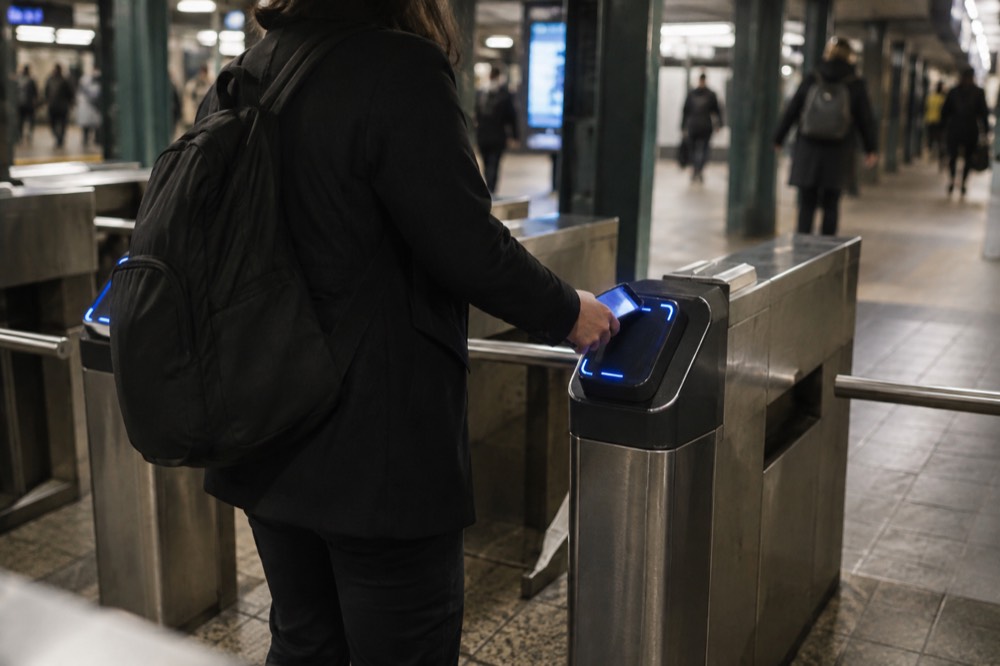
Two mechanical details matter. First, you must tap the same physical card or the same phone every ride; mixing your phone and the plastic card in your pocket breaks the cap silently. Second, each person in a group needs their own card or device, because group taps do not pool toward anyone's cap. Children up to 44 inches tall, up to three per fare-paying adult, ride free on the subway and local buses. The OMNY guide covers the edge cases, and the NYC subway guide handles the network itself.
Between boroughs, the same fare applies. Brooklyn, Queens and the Bronx are all subway territory. Ferries add a scenic alternative on the East River routes, and the Roosevelt Island tram, charging a standard subway fare, is technically a commuter line that doubles as an attraction. Buses accept the same OMNY tap and include a free transfer to or from the subway within two hours. A car is the wrong answer inside the city; parking, traffic and tolls erase any time saved, and renting one makes sense only for day trips beyond the reach of trains.
Which NYC Neighborhoods Have the Best Food?
The strongest food neighborhoods in New York are Chinatown and the Lower East Side in Manhattan, Flushing and Jackson Heights in Queens, and a Brooklyn list running from Carroll Gardens to Sunset Park. Midtown, for all its office-tower expense accounts, is the weakest eating ground relative to its size, and the classic visitor error is eating every meal there because it is where the hotel is.
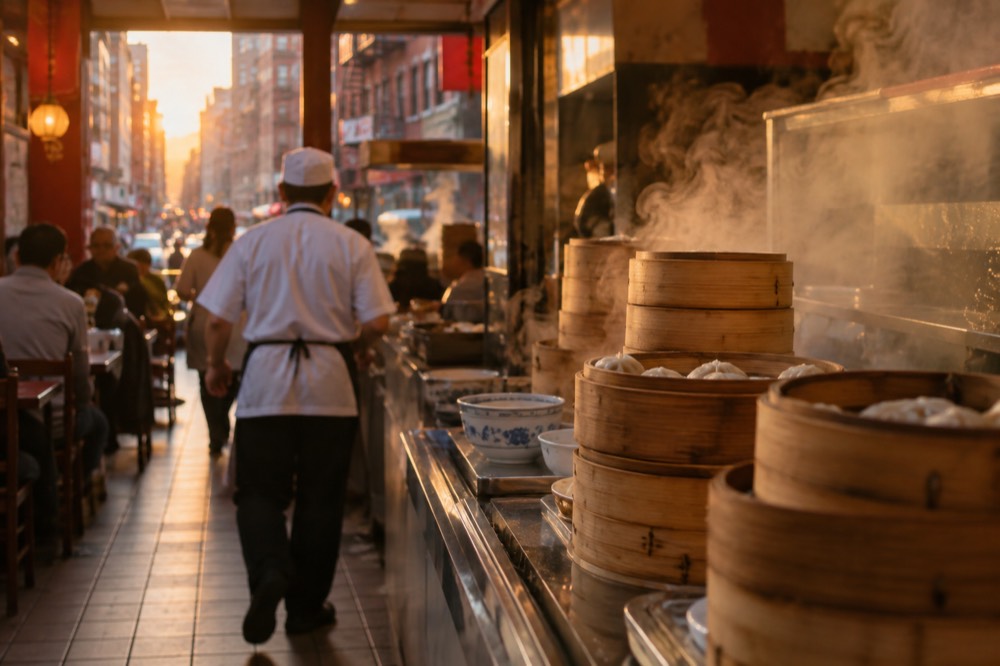
Chinatown alone justifies the subway ride. Its dumpling shops, bakeries and roast-meat counters sit minutes from Little Italy's old Mulberry Street, and the two together make one of the most walkable food corridors in the country. A guided tasting walk compresses the decisions: the Chinatown and Little Italy food tour runs six tastings that add up to a full meal, or the Chinatown neighborhood guide lists the stalls for independent eating.
In Queens, Flushing's Chinese food scene exceeds anything in Manhattan by common consent, and Jackson Heights' Roosevelt Avenue stacks Tibetan, Nepali, Mexican and Colombian kitchens along seven elevated-train stops. In Brooklyn, Sunset Park's Chinatown, Carroll Gardens' Italian block and the restaurant rows of Fort Greene carry the borough's case. Greenwich Village deserves its own mention for pizza-by-the-slice institutions and old bakeries; the best pizza guide settles those arguments with addresses.
| Neighborhood | Borough | Known for | Price feel |
|---|---|---|---|
| Chinatown | Manhattan | Dumplings, roast meats, bakeries | Cheap to moderate |
| Flushing | Queens | Regional Chinese, street food courts | Cheap |
| Jackson Heights | Queens | South Asian, Latin American | Cheap |
| Greenwich Village | Manhattan | Pizza slices, old bakeries, music bars | Moderate |
| Carroll Gardens | Brooklyn | Italian, seasonal restaurants | Moderate |
| Sunset Park | Brooklyn | Chinatown, tacos along 5th Avenue | Cheap |
Common Questions About NYC Neighborhoods
These are the questions travelers ask most about New York's neighborhoods: how many boroughs there are, whether Manhattan is the whole city, which area to stay in, whether the outer boroughs are safe to visit, and how the neighborhoods connect. Each answer below is short and sourced, and the longer versions sit in the sections above. The one-line summary: five boroughs, one subway system, and far more city than any single trip can hold.
How many boroughs does New York City have?
Five: Manhattan, Brooklyn, Queens, the Bronx and Staten Island. Each is also a county of New York State, and each was consolidated into the single city in 1898. Brooklyn alone holds roughly 2.6 million people, which would make it one of the largest cities in the country on its own.
Is Manhattan the same as New York City?
No, and conflating them is the most common mistake in New York travel writing. Manhattan is one of five boroughs. It holds most of the famous skyline and the majority of headline attractions, but the majority of New Yorkers live in the other four boroughs, and some of the city's best food and views are outside Manhattan entirely.
What is the best neighborhood to stay in for a first visit?
Midtown or Lower Manhattan for a short first trip, because they put the most sights within walking and one-stop subway range. Families often do better on the Upper West Side near Central Park and the American Museum of Natural History. Budget travelers should compare Long Island City in Queens, where rates run lower for a single subway stop into Manhattan.
Are Brooklyn and Queens safe for tourists?
Yes, in the areas tourists actually visit. Brooklyn Heights, DUMBO, Williamsburg, Park Slope, Astoria and Jackson Heights are busy, well-trafficked neighborhoods. The honest rule for the whole city applies everywhere: the same street sense you would use in any large city, with no blanket statements about any neighborhood. The Is NYC safe guide covers this with sourced figures.
Do I need a car to visit the outer boroughs?
No. The subway, buses and ferries reach every borough, and a car is usually slower once parking and traffic are counted. The subway costs $3.00 per ride with OMNY capping at $35 per rolling week. A rental car makes sense only for day trips beyond the region's rail network, never for getting around the city itself.
Which borough has the best food?
By reputation and by density of great cheap eating, Queens, particularly Flushing and Jackson Heights. Brooklyn runs a close second with a broader range of price points, and Manhattan's Chinatown and Lower East Side hold their own against anywhere. The weakest eating ground relative to its size is Midtown, which is exactly where many visitors end up eating every meal by accident.
One final planning note, because it changes how the whole trip feels: pick a maximum of two neighborhoods per day. New York rewards depth over coverage, and a day spent properly in the Village or Flushing beats a day spent queuing in four of them. The New York City Travel Guide homepage holds the orientation hub if you want to plan the trip borough by borough from here.