Chinatown NYC: What to Expect, When to Go, and Who It Suits
Chinatown in Manhattan packs more food, street life and commerce into forty square blocks than most cities manage in a whole district, and it rewards visitors who arrive hungry and on foot.
Short answer
Chinatown NYC sits in Lower Manhattan between Canal Street and the Manhattan Bridge approaches, centered on Mott Street and Columbus Park. The subway fare is $3.00 with contactless payment, most of the neighborhood's value is food and street life rather than ticketed sights, and it works best as a half-day or evening visit, not an overnight base.
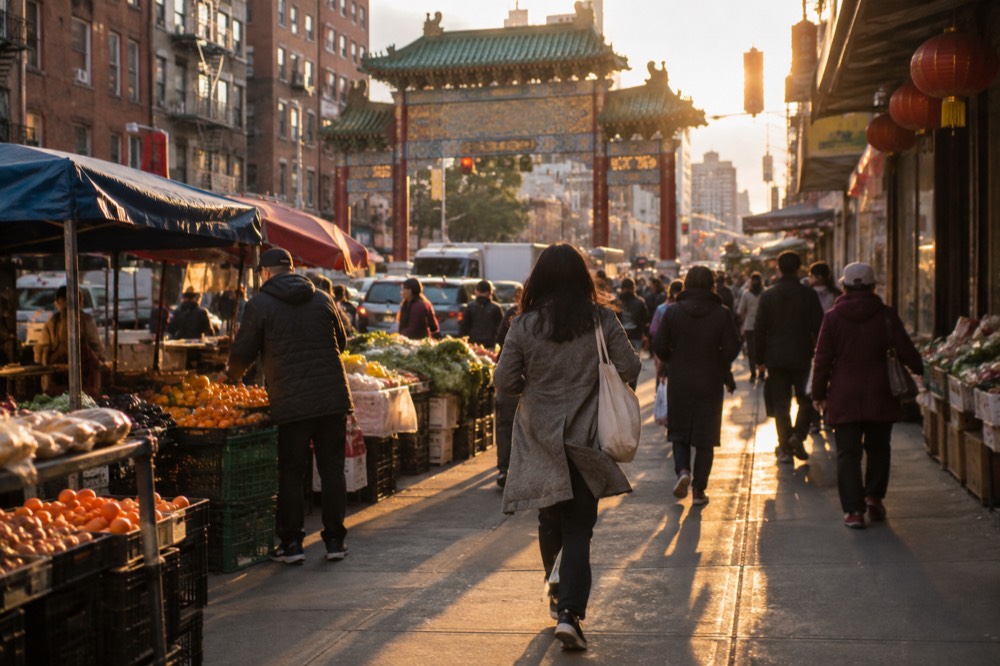
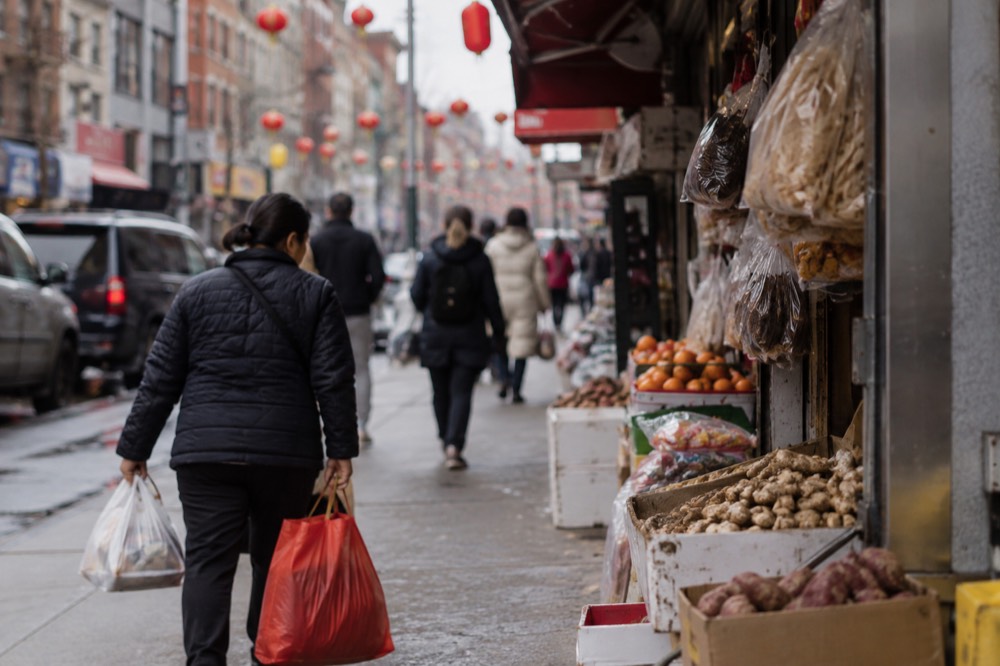
The intersection of Mott Street and Canal Street does not ease you in. Fish on ice, bins of bitter melon, roast ducks hanging in windows, and a stream of foot traffic that does not stop for anyone's photograph: this is the working core of Manhattan's Chinatown, one of the largest Chinese neighborhoods outside Asia, and it runs on a logic of its own. Streets bend where the old grid softens, and a wrong turn off Canal drops you into a lane of funeral parlors or a fish market before you have checked your map.
This guide covers the neighborhood as a destination: what kind of visit it suits, how to get there, what the food actually costs, and where a guided tour earns its money versus walking it yourself. For the wider picture of the city, our things to do in NYC page covers the headline sights, and Chinatown is also within a ten-minute walk of Little Italy and SoHo, which makes it an easy third act in a downtown day.
Where Is Chinatown NYC, Exactly?
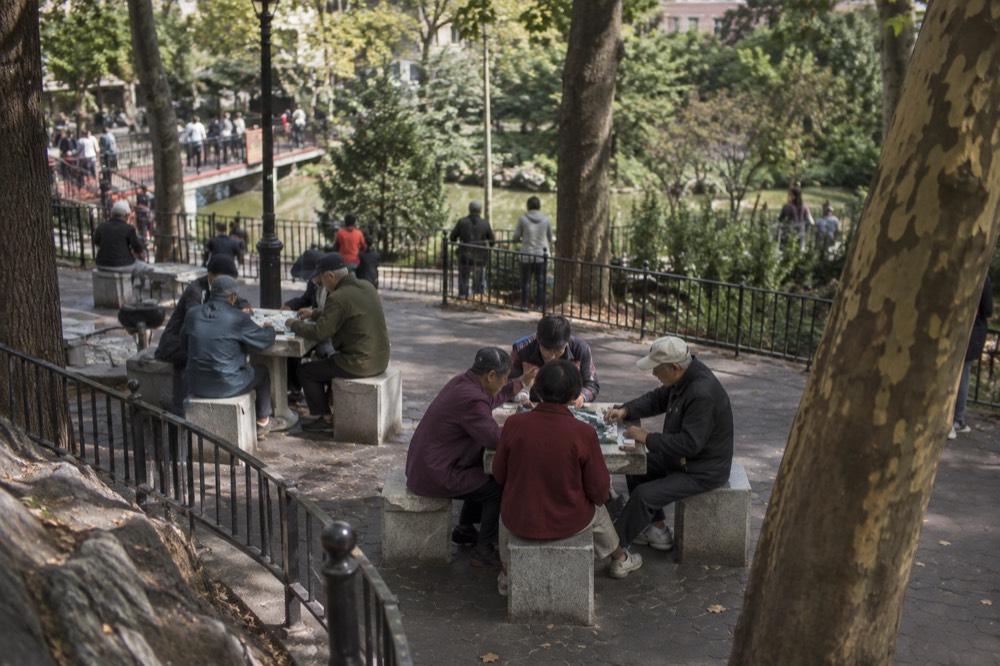
Chinatown occupies the blocks of Lower Manhattan between Canal Street on the north and the bridge approaches on the east, with Mott Street, Mulberry Street and East Broadway as its spine. Columbus Park, at Mulberry and Bayard Street, is the neighborhood's living room: mahjong games, tai chi in the mornings, and opera singers under the pavilion most afternoons. The boundaries are loose, so plan on walking rather than plotting a hard border.
Canal Street is the practical northern edge, and it is also the widest, loudest street in the area, lined with souvenir stands and electronics shops. The Chinatown that visitors come for sits south of it. The East Broadway end, sometimes called the eastern stretch, is less touristy and where more of the neighborhood's own shopping happens. The 6 train stops at Canal Street on the western side, the N, Q, R and W serve Canal Street at Broadway, and the B and D stop at Grand Street, which puts you closer to the food streets without crossing Canal on foot.
How Do You Get to Chinatown NYC?
The cheapest and usually fastest way to Chinatown is the subway: the 6 train to Canal Street, the N, Q, R or W to Canal Street at Broadway, or the B or D to Grand Street, all for a $3.00 fare paid by tapping a contactless card or phone with OMNY. From Midtown, the ride to Canal Street takes roughly fifteen minutes, and from Grand Central the 6 runs directly downtown with no transfer.
The fare system is the part most guides still get wrong. A single subway ride is $3.00, and there is no unlimited pass to buy any more, because the MTA stopped selling MetroCards on 1 January 2026; instead, fares cap automatically at $35 in a rolling seven-day window per card or device. Mixing devices breaks the cap, so pick one card or one phone and stick to it for the whole trip. Our NYC subway guide covers the details, and the OMNY guide explains the capping rules line by line.
| Starting point | Best route | Rough time | Fare |
|---|---|---|---|
| Times Square | N, Q, R or W to Canal St | 15-20 min | $3.00 |
| Grand Central | 6 train to Canal St | 15 min | $3.00 |
| Penn Station | A, C or E to Canal St, or 1/2/3 then transfer | 15-20 min | $3.00 |
| Brooklyn (Williamsburg) | J or M to Delancey-Essex, walk | 20 min | $3.00 |
| Lower Manhattan / FiDi | 6 to Canal St, or walk up from Chatham Square | 10 min or 25 min walk | $3.00 or free |
Taxis and rideshares work but cost more and can crawl on Canal Street itself, which is jammed much of the day. If you are staying in Lower Manhattan, walking is often quicker than any of it: from City Hall or the Financial District, Chinatown is a straightforward fifteen-to-twenty-five minute walk north.
What Kind of Day Out Is Chinatown NYC?
Chinatown works best as a walking-and-eating visit of three to four hours, and it has very few ticketed attractions: the experience is the street life, the food, the park and the shops, almost all free to wander. It suits eaters, photographers and travelers who like neighborhoods over monuments. It does not suit anyone expecting a museum-style, curated version of the area, or visitors who struggle with crowded, narrow sidewalks.
The rhythm of a good visit: arrive before noon if you want lighter crowds, walk Mott Street and Bayard Street, sit in Columbus Park for twenty minutes, eat a proper lunch, then drift east toward East Broadway or north into Little Italy and SoHo. The Chinatown and Little Italy food tour with six tastings packages exactly that shape of afternoon with a guide who handles the choosing, and a food tour is the one category where paying for leadership genuinely changes the outcome, because the stalls are numerous and unmarked in any language a first-time visitor reads fast.
Who it does not suit: visitors with limited mobility should know the sidewalks are narrow, uneven in places, and frequently blocked by displays and deliveries. Wheelchair users can absolutely visit, and our wheelchair-accessible NYC guide covers which routes work best, but the dense core around Mott and Bayard is the hardest part of Lower Manhattan for curb cuts and clearance. Anyone expecting a tidy historic district will also be disappointed. This is a working commercial neighborhood first and a sightseeing area second.
What Should You Eat in Chinatown NYC?
Eat what the room is full of: soup dumplings, roast duck, hand-pulled noodles, congee, egg tarts and bubble tea, ideally spread across three or four small stops rather than one sit-down meal. A generous counter lunch for one can run under $15, while a banquet-style dinner runs considerably more, so the neighborhood spans the whole budget range within a few blocks.
The single best strategy is to eat small, eat often, and skip any place with a tout outside.
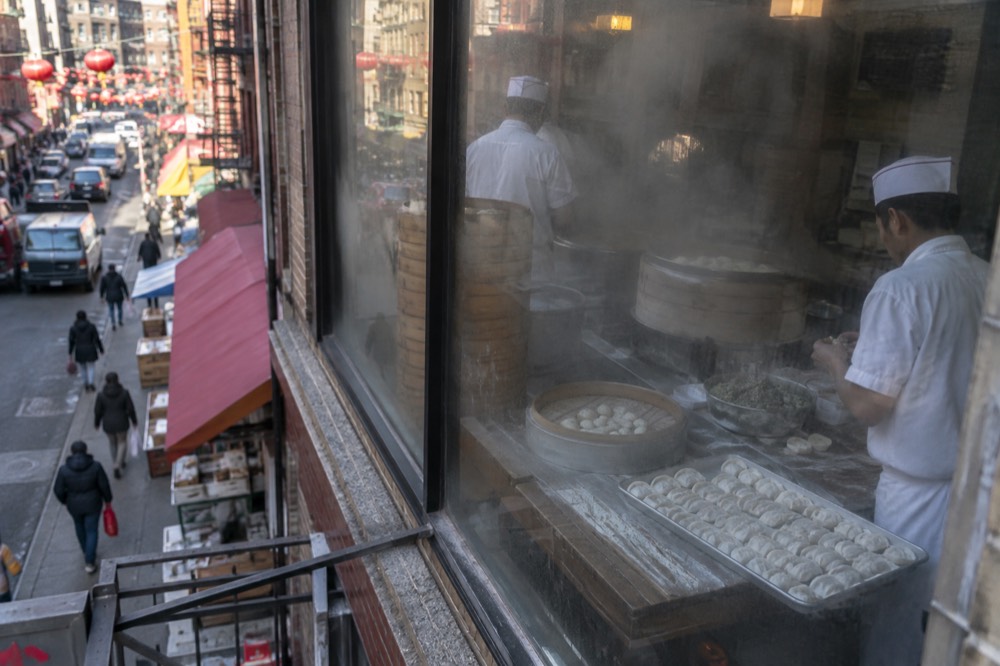
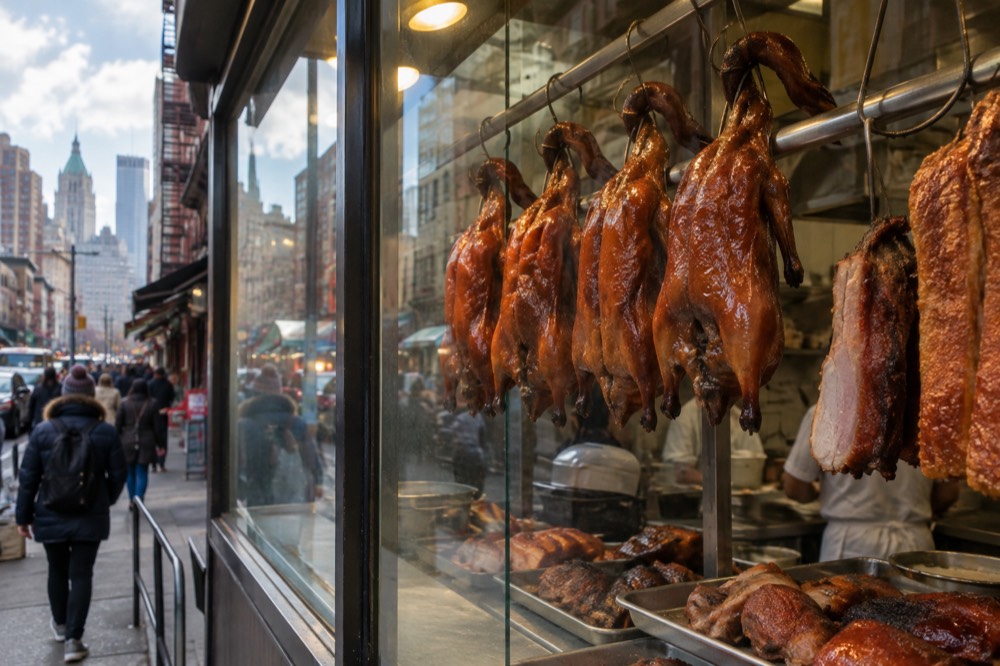
The food landscape divides roughly into four types: the dumpling counters, where an order of dumplings costs a handful of dollars and you share tables with strangers; the roast shops, with ducks and pork hanging in the window, selling by the pound over rice; the sit-down restaurants, ranging from cheap congee halls to banquet rooms on the upper floors; and the bakeries and drink stands, where egg tarts and milk tea fill the gaps. Canal Street's south side and the lanes off it hold most of the tourist-heavy spots; a block east or west usually drops the prices and raises the quality.
| Type of stop | What you get | Typical cost for one | Best for |
|---|---|---|---|
| Dumpling counter | A plate of boiled or pan-fried dumplings, shared tables | Under $10 | The cheapest full meal in the neighborhood |
| Roast shop | Duck, pork or chicken over rice, by the quarter pound | $10-$15 | Maximum flavor, minimum ceremony |
| Congee or noodle hall | A bowl of rice porridge or hand-pulled noodles with soup | $8-$15 | Breakfast and rainy days |
| Bakery | Egg tarts, buns, sponge cakes, milk tea | $2-$6 per item | Grazing between stops |
| Banquet restaurant | Multi-dish shared meals, often upstairs | $25+ per person | Groups and dinners |
Two honest warnings. First, the parts of Chinatown closest to Little Italy carry the highest prices and the most mediocre food; walk one extra block east. Second, cash still matters at the smallest counters, although card acceptance has spread widely. Bring some small bills and you will never have a problem.
Should You Take a Guided Tour of Chinatown or Walk It Yourself?
Walk it yourself if you are confident choosing food off pictures and menus, and take a guided tour if you want context, vetted stops and no risk of an underwhelming lunch. The Chinatown and Little Italy food tour runs about three hours, includes six tastings that add up to a full meal, and costs from $99 per person. A guided walking tour of the three neighborhoods costs from $25. A free, tip-based walk also runs on GuruWalk.
The self-guided version is genuinely good, and pretending otherwise would be dishonest. The neighborhood is compact, the food speaks for itself, and a curious traveler with two hours and a healthy appetite will eat well without help. What a guide adds is the layer you cannot taste: which stall has been run by the same family for decades, what a dish is called in the dialect spoken here, why a building looks the way it does. If that layer matters to you, pay for it. If it does not, spend the money on extra dumplings.
For a first-day orientation that includes Chinatown as one of three neighborhoods, the SoHo, Little Italy and Chinatown walking tour is the efficient pick: two hours, from $25 per person, and it strings together cast-iron SoHo, old Mulberry Street and the Chinatown core with a guide covering the waves of immigration that shaped each area. It is light on food and heavy on context, which makes it a good morning before a food-focused afternoon. Book a slot, meet the group near Canal Street, and let someone else handle the route while you save your appetite.
The budget option is a free, tip-based walk on GuruWalk, running about two hours through the same three neighborhoods. These are not our tours: they are pay-what-you-want walks run by independent guides, and the tip at the end is the guide's entire pay. Note that several of the New York free walks on GuruWalk, including this one, come from a single operator called CityShuffles, so do not expect a wide choice of independent companies here. Reserve a spot through the listing, show up on time, and bring cash for the tip, because that is how the guide gets paid.
When Is the Best Time to Visit Chinatown NYC?
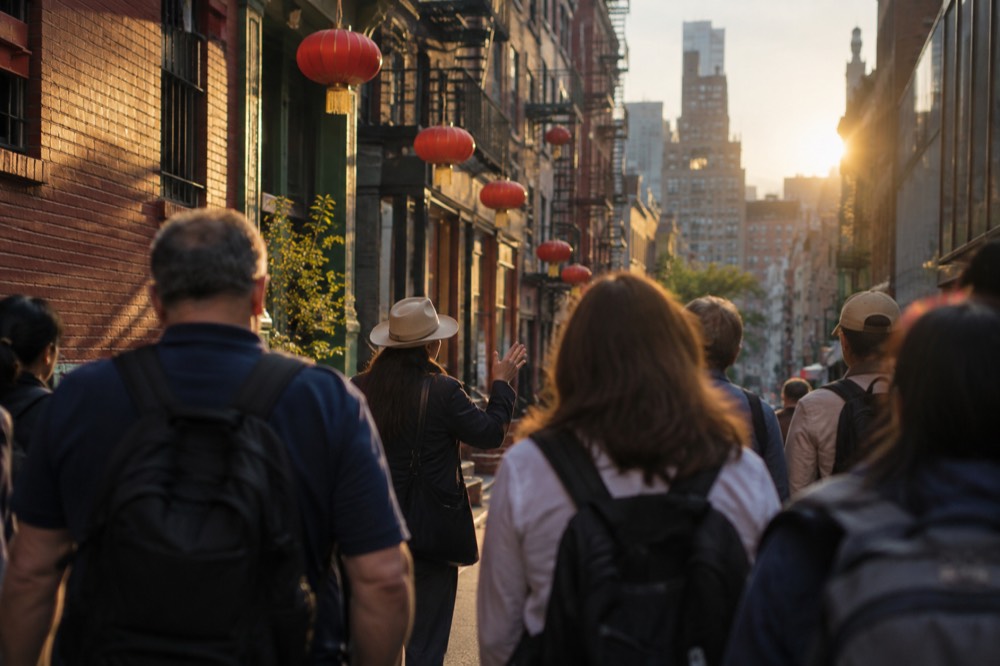
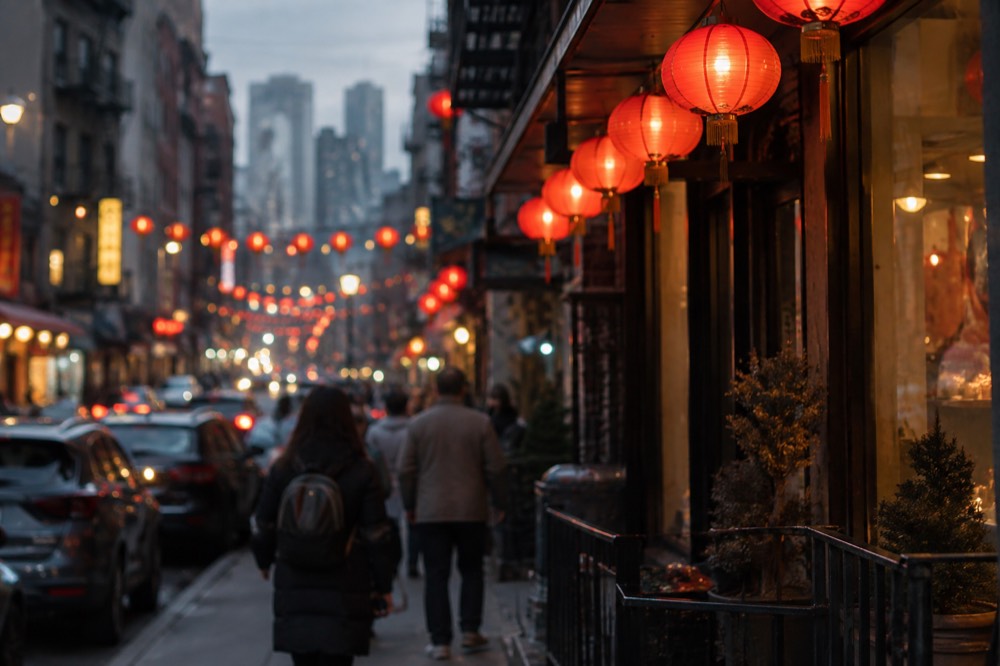
Weekday mornings between 9am and 11am are the calmest window, before the lunch rush fills the counters and the tour groups arrive from Canal Street; early evening is the liveliest, when the restaurants fill and the streets glow with shop signs. Saturday midday is the busiest stretch of the week. Avoid it if dense sidewalks bother you, and go early on weekdays if you want the neighborhood more to yourself.
The morning case is strong. Columbus Park is at its best early, when locals practice tai chi and the mahjong tables set up, and a bowl of congee at 9am is the neighborhood's own breakfast rather than a tourist performance. By 1pm the sidewalks are at their densest, especially on weekends. The Lunar New Year period transforms the whole district with parades and crowds, and it is spectacular, but it is also the one time of year when you should expect shoulder-to-shoulder conditions and longer waits everywhere.
| Time slot | Crowd level | What it is good for |
|---|---|---|
| Weekday 9-11am | Lowest | Congee breakfast, Columbus Park, photography |
| Weekday lunch | Busy | Maximum energy, shortest lines at the best counters before noon |
| Weekday evening | Moderate | Dinner, neon shop signs, less rushed than weekends |
| Saturday midday | Heaviest | Avoid if crowds are a problem for you |
| Lunar New Year period | Extreme | Parade and festival atmosphere; plan and book ahead |
Weather matters more here than in most of the city, because the visit happens outdoors.
The streets of Chinatown offer little shelter, so a summer visit carries more rain risk than most visitors plan for. Our month-by-month breakdown in the NYC weather by month guide covers the full year if you are choosing travel dates.
Is Chinatown NYC a Good Place to Stay?
Chinatown is a mixed base: cheaper than SoHo and Tribeca, extremely well connected by subway, and full of cheap food late into the night, but the hotel supply is thin, the nightlife is quiet, and the streets are loud and crowded from early morning. It suits budget-minded travelers who value location and food over room size, and it suits light sleepers poorly, because market activity starts before dawn.
The honest inventory: the neighborhood has a small number of hotels and hostels compared with Midtown or the Lower East Side, and the buildings that do offer rooms are often older and smaller. What you get in exchange is a location where three subway lines are within a ten-minute walk and dinner can cost less than a coffee in SoHo. Families and travelers who want a full-service hotel experience should look elsewhere; solo travelers and couples on a budget should at least compare it. Most visitors who want this general location actually stay in the Lower East Side or Financial District and walk in. Our where to stay in NYC guide breaks down every district by budget and travel style.
How Much Does a Day in Chinatown NYC Cost?
A bare-bones day, subway fares plus a counter lunch, bakery snacks and dinner, can be done for roughly $30-$40 per person without trying hard, and $50 buys a genuinely indulgent version. The floor is set by the $3.00 subway fare each way and the fact that the streets, the park and the shops cost nothing to enter. The ceiling is set only by how much you eat.
| Budget tier | What it includes | Rough cost per person |
|---|---|---|
| Bare bones | Subway round trip, dumpling lunch, bakery snack | $15-$25 |
| Comfortable | Subway, roast duck lunch, bubble tea, noodle dinner | $35-$50 |
| Guided | The six-tasting food tour, from $99, plus subway and extras | $99 and up |
| Splurge | Food tour plus banquet dinner for two | Well beyond $99 |
For travelers stitching a whole trip together, this is one of the neighborhoods where a budget stretches furthest, which is why our NYC on a budget guide leans on it heavily. Pair it with free sights nearby, City Hall Park, the Brooklyn Bridge promenade, the Staten Island Ferry, and a downtown day can cost almost nothing beyond food and transit.
What Is Near Chinatown NYC?
Little Italy sits immediately north along Mulberry Street, SoHo begins a block west of Lafayette Street, the Brooklyn Bridge promenade is a ten-minute walk south and east, and the Lower East Side runs along the neighborhood's eastern edge toward Essex Street. The 6 train at Canal Street puts the area within one ride of SoHo, the East Village and Grand Central. Few neighborhoods in the city pack as much walkable variety into a half-mile radius.
The standard downtown day chains these together. Start in SoHo among the cast-iron facades, walk east through Little Italy's old Mulberry Street, eat your way through Chinatown, then finish on the Brooklyn Bridge at sunset, crossing into DUMBO for the classic view back at the skyline. The whole chain is under two miles of walking. Our 3 days in NYC itinerary builds exactly this downtown block into a first visit, and the Lower East Side guide covers the district on the other side of Essex Street.
Common Questions About Chinatown NYC
These are the questions visitors ask most about Manhattan's Chinatown: what it costs, when to go, whether a tour is worth it, and how the neighborhood fits into a wider New York trip. Each answer is short enough to act on and honest about the trade-offs, including where the crowds are worst and which budget assumptions hold up. The common thread is that Chinatown rewards planning your meals more than planning your route.
Is Chinatown NYC worth visiting?
Yes, if your interest is food, street life and a working neighborhood rather than ticketed attractions. It is one of the most densely commercial and energetic districts in the city, and lunch there costs a fraction of what the same meal runs two neighborhoods west. Skip it if you want museums or quiet streets; those exist elsewhere in Lower Manhattan.
How much time do you need in Chinatown NYC?
Three to four hours covers a walk through the core, Columbus Park, and a proper meal with grazing stops. A half day lets you add Little Italy and SoHo in the same loop. Only food tour participants and shoppers need longer; the ticketed-sight count is effectively zero.
Is Chinatown NYC expensive?
No, it is one of the cheapest eating districts in Manhattan. A dumpling-counter lunch runs under $10, bakeries sell tarts and buns for a few dollars each, and the streets and park are free. The costs rise only if you book a food tour, from $99 per person, or sit down to a banquet dinner.
What is the best time of day to visit Chinatown NYC?
Weekday mornings between 9am and 11am for calm, tai chi in Columbus Park and a congee breakfast. Early evening for lit shop signs and dinner energy. Saturday midday is the most crowded window of the week and the one to avoid if dense sidewalks bother you.
Can you visit Chinatown and Little Italy in one day?
Easily, they are adjacent along Mulberry Street and the whole combined walk is under a mile. The six-tasting Chinatown and Little Italy food tour does both in about three hours with tastings in each. Add SoHo to the west and you have the classic downtown walking day.
Is Chinatown NYC safe?
Chinatown is a busy, heavily trafficked neighborhood with normal big-city street crime considerations and no reason for special caution. The practical annoyances are pickpocketing risk in dense crowds and street scams rather than anything else. Our general safety guidance applies: keep bags closed and forward in crowds.
The Short Version
Arrive by the 6 train to Canal Street before noon, walk south off Canal into Mott and Bayard, sit in Columbus Park long enough to hear the mahjong tiles, and eat across four small stops instead of one big meal. Pay the $3.00 fare with the same tapped card every time so the $35 weekly cap works in your favor, and walk one block east whenever a street starts feeling staged for visitors.
Bring cash for the smallest counters, and remember there is no unlimited transit pass to buy any more: the fare cap happens on its own. If a guided layer sounds worth it, the food tour is the one that changes the day; the rest you can walk yourself. This site's New York City Travel Guide hub covers everything else on the itinerary from here.