Can I Just Show Up to the Natural History Museum in New York?
A direct, sourced answer to whether you can show up at the American Museum of Natural History without booking, plus ticket options, pay-what-you-wish rules, hours and crowd timing.
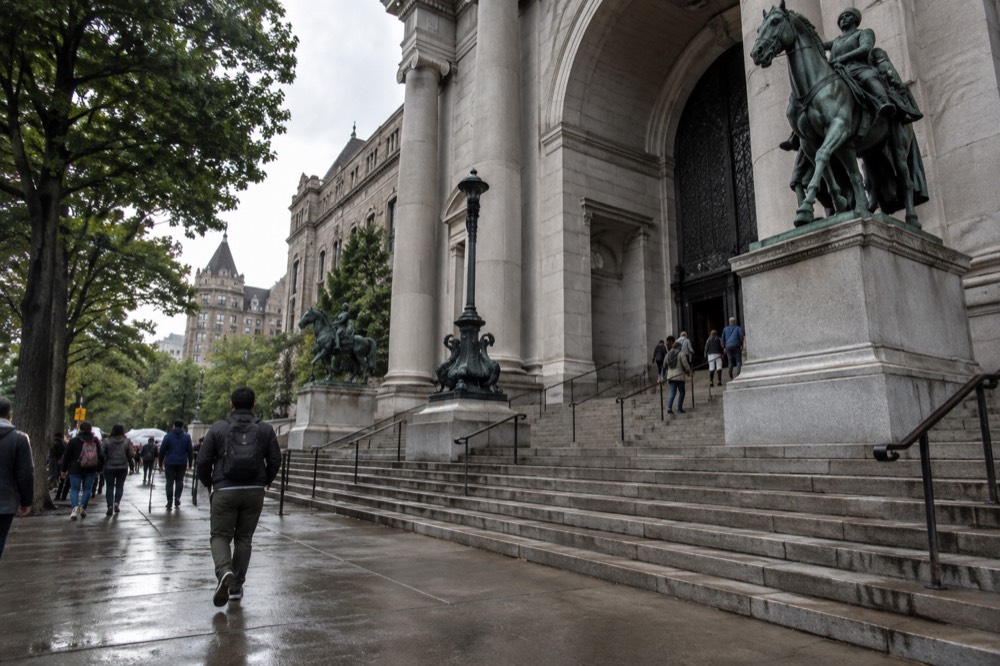
Can I Just Show Up to the Natural History Museum in New York?
The American Museum of Natural History sits on the Upper West Side, across the park from the Metropolitan Museum of Art, and it keeps daily hours from 10:00 to 17:30 with seasonal variation, closing only on Thanksgiving and Christmas. That schedule is the reason the question gets asked so often: unlike the observation decks, which sell timed slots that vanish on busy days, this museum has always behaved like a place you can simply walk toward and enter. Most of the year that instinct is correct.
The complication is the ticket itself. The museum's own ticketing page states the rule plainly: general admission is pay-what-you-wish for New York State residents, who select that option and enter an eligible ZIP code, and everyone else pays a fixed price for the same ticket. A visitor who shows up expecting a donation box and finds a fixed adult rate instead is the single most common surprise at the counter. The rest of this page covers what the door actually costs, when the lines are worst, what the add-on tickets include, and how the Super Saver bundle compares.
Can You Walk Into the American Museum of Natural History Without a Ticket?
Yes, walk-up entry is possible on almost any day the museum is open, and tickets are sold at the door during regular hours, which run 10:00 to 17:30 with seasonal variation. The museum closes only on Thanksgiving and Christmas. Showing up without a booking is not the risk; the risk is queueing at the counter on a crowded day when you could have walked straight in with a pre-purchased ticket.
The museum does not require visitors to reserve a time slot in the way the observation decks do. There is no system in which a sold-out calendar blocks the door. What happens instead is the ordinary arithmetic of a very popular museum: on rainy weekends, school holidays and the December crush, the ticket lines at the entrances get long, and the popular halls inside fill to a shuffle. On a weekday morning in February the same building can feel almost private.
So the honest framing is not "book or be turned away." It is "book and save twenty minutes, or gamble on the line." Families with children, who make up a large share of the museum's visitors and who move slowly through bag check and coatrooms, feel that queue most. Solo adults on a quiet Tuesday often breeze through.
There is also a planning angle that has nothing to do with the door. The museum's ticketed extras, the giant-screen films, the planetarium space shows and the special exhibitions, have their own entry times and their own capacity. A walk-up visitor who wants one of those may find the next showing is hours away. Someone holding a pre-purchased bundle walks in with the schedule already set.
For visitors who want the extras bundled in advance, the listing below covers the full package.
What Does the Natural History Museum Cost at the Door?
General admission at the American Museum of Natural History is pay-what-you-wish only for New York State residents, who must select that option and enter an eligible ZIP code, while visitors from outside New York State pay a fixed price the museum sets. CityPASS publishes a $43.00 adult box-office figure for the museum in its own savings table, which gives a realistic sense of the fixed rate. Children's and concession rates exist below that.
The pricing structure is genuinely unusual, and the museum's own ticketing page words it carefully: "New York State Residents - The amount you pay for General Admission only is up to you," and separately, "This option is for visitors from outside of New York State." Two things follow from that wording. First, the pay-what-you-wish option covers general admission only, never the special exhibitions or the planetarium, which carry their own charges either way. Second, eligibility is checked, not assumed. Online, that means an eligible ZIP code. In person, it means being ready to show something that ties you to New York State.
Out-of-state and international visitors should budget for the fixed rate. CityPASS, in the box-office column of its own New York pricing table, publishes $43.00 as the adult admission for the museum, with $35 for ages 13-17 and $26 for ages 3-12. Those figures are what CityPASS uses for its savings maths, and they bound what a visitor at the counter should expect on a normal day.
The Super Saver ticket is the other number worth knowing before you queue. It stacks general admission together with the ticketed extras, the giant-screen films, the special exhibitions and the Hayden Planetarium space show, all of which cost more when bought separately at the door. For a family planning a full day with a dinosaur-obsessed child and a planetarium showing, the bundle usually wins on arithmetic alone. For a visitor who only wants the dinosaur halls and the great blue whale, plain general admission is the cheaper move.
| Ticket option | Who it is for | What it covers | Notes |
|---|---|---|---|
| General admission, New York State residents | Anyone who can show New York State residency | The permanent halls only | Pay-what-you-wish, select the resident option, eligible ZIP required online |
| General admission, everyone else | Out-of-state and international visitors | The permanent halls only | Fixed price; CityPASS publishes $43.00 adult box office in its savings table |
| Super Saver | Full-day visitors wanting the extras | Permanent halls plus special exhibitions, giant-screen films and the planetarium space show | Add-ons cost more when bought separately at the door |
A visitor deciding at the counter can compare the two on the spot, but the comparison is easier made before the trip, when the day's showtimes are still open rather than half sold.
Who Actually Gets Pay-What-You-Wish at the AMNH?
Only New York State residents get pay-what-you-wish general admission at the American Museum of Natural History, and the museum's ticketing system enforces it with an eligible ZIP code online and residency checks in person. Students, seniors and children from outside New York pay discounted fixed rates rather than choosing their own price. No visitor from outside the state can set their own admission amount.
This is the fact most competing guides get wrong, usually by omission. The phrase "pay-what-you-wish museum" gets attached to the AMNH in dozens of roundups, often next to a claim that tourists can pay a dollar at the door. The museum's own ticketing page says otherwise, and it says it in two separate sentences that leave little room for interpretation. The resident option exists. The non-resident option is a fixed price.
The distinction matters most for budget travellers who planned their whole New York week around free or donation-based museums. If that plan counted the natural history museum as a free morning, the plan is wrong. The genuinely free options in the city are narrower than the folklore suggests, and they are covered properly in the site's guide to free museums in NYC, which separates the real free windows from the resident-only discounts.
There is one honest way for a non-resident to think about the fixed rate. The museum is enormous, the halls are dense, and a full visit eats most of a day. Measured against the price of a Broadway ticket or an observation deck, the fixed general admission is not the item that breaks a New York budget. It is simply not the donation some visitors expect.
When Are the Crowds Worst at the Natural History Museum?
Weekends, school holidays and rainy days bring the heaviest crowds and the longest ticket lines to the American Museum of Natural History, with the period between late morning and mid-afternoon the busiest stretch of a normal day. Weekday mornings right at the 10:00 opening are the quietest reliable window, and the final hour before the 17:30 close is the other thin patch. December is the most crowded month of the year.
The museum's audience skews heavily toward families, and family rhythms drive its crowd calendar. School breaks, both the local New York City calendar and the national one, fill the halls with strollers and school groups. Rain pushes the city's outdoor plans indoors, and a natural history museum absorbs a large share of that displaced traffic, which is why the ticket line on a wet Saturday can wrap around the entrance. Everything else covered here is indexed on New York City Travel Guide.
The practical advice follows directly. Arrive at or just before 10:00 on a weekday if the schedule allows, and go to the most popular halls first, because they fill fastest. If the visit lands on a weekend regardless, buy the ticket in advance and use the time the queue would have eaten inside the building instead. The line to enter is one thing; the line to buy is the part a pre-purchased ticket erases.
Seasonally, February school break, spring holidays and the whole December stretch are the pressure points. Summer is busy but spread across weekdays more evenly, since visiting families are not bound to a school calendar. A quiet visit in December is close to impossible; a quiet visit in late January or September is realistic.
What Does the Super Saver Ticket Add Over General Admission?
The Super Saver ticket at the American Museum of Natural History bundles general admission with the museum's separately priced extras: the special exhibitions, the giant-screen films and the Hayden Planetarium space show. General admission alone covers the permanent halls, including the dinosaur halls and the great blue whale, but none of the ticketed add-ons. A visitor who plans to see a film, a show and a special exhibition comes out ahead on the bundle.
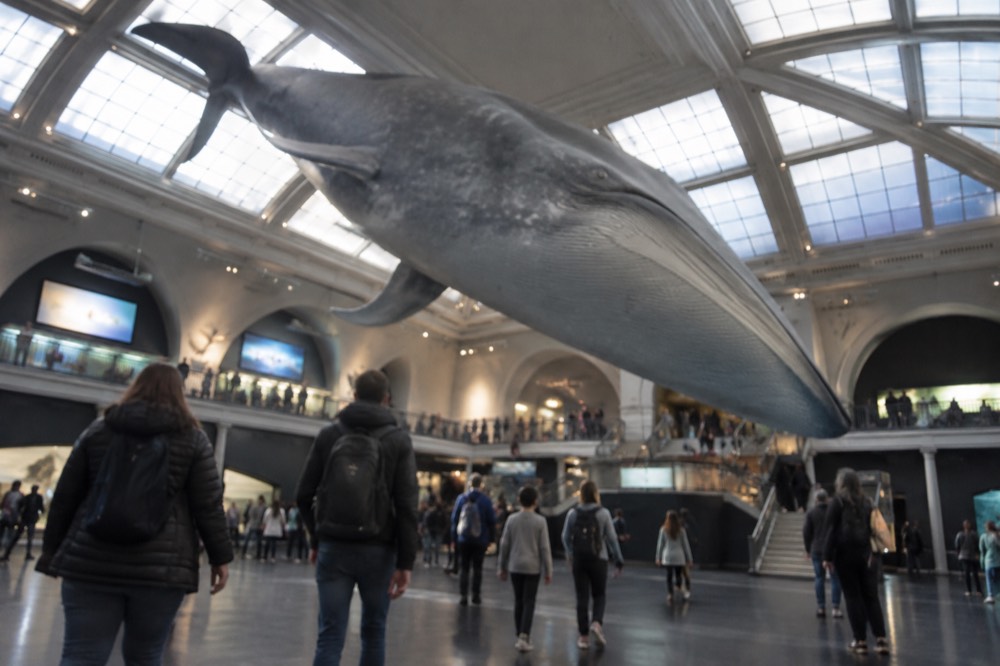
The permanent collection is not a consolation prize. The dinosaur halls, the Milstein Hall of Ocean Life with its suspended whale, the halls of meteorites and gems, and the human origins galleries are all on general admission, and a visitor could spend two full days in the permanent halls without buying a single add-on. Plenty of locals have done exactly that since childhood.
What the Super Saver buys is the programming. Special exhibitions at this museum are built to a scale that justifies their separate pricing, and the giant-screen films and planetarium shows run on fixed schedules with finite seats. That last point is the operational one: shows sell out, and the good seats for a popular afternoon showing go first. A walk-up visitor buying at the counter may find the day's best showtimes already claimed.
The bundle therefore serves two kinds of visitor. The planner, who knows the museum deserves a full day and wants the schedule locked before arrival. And the first-timer who does not yet know which extras exist, and for whom the bundle prevents the classic counter regret of paying general admission, discovering the planetarium an hour later, and paying the higher door price for it piecemeal.
How Do You Get to the Natural History Museum?
The American Museum of Natural History sits on the Upper West Side facing Central Park West, and the subway is the honest way to reach it, with a station a short walk from the entrance. A single subway or local bus ride costs $3.00, and the automatic OMNY weekly cap of $35 replaces the passes visitors used to buy, since the MTA stopped selling MetroCards entirely on 1 January 2026. Tap the same card or device every time.
The fare system is the part that has changed most recently, and it is the part older guides get wrong. The MetroCard is retired. The MTA's own page states it without ambiguity: as of 1 January 2026, MetroCards can no longer be bought or refilled, and anyone still holding an old 7-day or 30-day unlimited pass had to start using it by 31 March 2026. The weekly value now comes from OMNY fare capping, which applies automatically once a card or device has been tapped for $35 worth of subway and local bus rides inside a rolling seven-day window.
For a visitor spending a week in the city and riding the subway daily, the cap does the work the old unlimited pass used to do, with no purchase decision at all. The one rule that breaks it silently: the cap tracks a single card or device. Tapping a phone in the morning and a plastic card in the evening splits the count, and neither reaches the cap. Groups should also note that each traveller needs their own card or device, since the cap is per-person.
The museum's position makes the ride simple from most of Manhattan, and the surrounding neighborhood rewards the walk afterward. The Upper West Side is one of the city's most pleasant residential districts, with bookshops and diners a few blocks from the museum's steps, and the park is directly across the street for anyone combining the visit with a walk through Central Park.
Can I Just Show Up to the Natural History Museum?
Yes, you can show up to the American Museum of Natural History without booking ahead and buy entry at the door on any day it is open, which is nearly every day of the year from 10:00 to 17:30 outside Thanksgiving and Christmas. Booking ahead does not gate entry, it only skips the counter line and locks in showtimes for the planetarium, films and special exhibitions, which sell out independently.
The question, restated as visitors actually type it, deserves the direct answer because the surrounding details pull in two directions. On one side, the museum is genuinely walk-up friendly: no timed-entry calendar, no sold-out door, daily hours. On the other, the fixed non-resident price and the add-on schedules mean a fully unplanned visit costs more in line time and sometimes in money than a ten-minute booking the night before.
The middle path is the one most worth recommending. Show up, but show up having decided two things: whether the day includes a planetarium showing or a special exhibition, and whether the ticket will be bought at the counter or in advance. Those two decisions convert a walk-up visit from a gamble into a plan, and everything else about the door is easy.
Visitors pairing the museum with other Midtown or Upper West Side stops can also compare it against the broader sightseeing menu on the things to do in NYC page, where the museum sits among the city's headline attractions, and this site's own American Museum of Natural History tickets guide covers the ticket types in more depth.
Common Questions About Visiting the Natural History Museum
Visitors ask the same handful of questions about the American Museum of Natural History: whether booking is required, what the door costs, who gets pay-what-you-wish, when to go and how long a visit takes. The short answers are that booking is optional but saves the line, non-residents pay a fixed rate, only New York State residents choose their own price, weekday mornings are quietest, and the permanent halls alone justify half a day or more.
Can I just show up to the natural history museum?
Yes. The American Museum of Natural History sells tickets at the door during regular hours, 10:00 to 17:30 with seasonal variation, and closes only on Thanksgiving and Christmas. No advance booking is required to enter. Booking ahead simply skips the ticket counter line and reserves seats for the planetarium, films and special exhibitions, which run on fixed schedules and can sell out.
Is the Natural History Museum pay-what-you-wish?
Only for New York State residents. The museum's ticketing page states that the amount New York State residents pay for general admission is up to them, selected with an eligible ZIP code, while a separate fixed-price option applies to visitors from outside New York State. Out-of-state and international visitors cannot choose their own price.
Do I need to book the Natural History Museum in advance?
No, entry does not depend on booking. Advance purchase helps on crowded days, when the counter lines run long, and it is the practical way to lock in a Super Saver bundle with showtimes for the planetarium and giant-screen films. On a quiet weekday, walking up is perfectly reasonable.
How long should I spend at the Natural History Museum?
The permanent halls alone, including the dinosaurs, the whale and the planet Earth and space galleries, comfortably fill half a day for most visitors. Adding a giant-screen film, a space show and a special exhibition turns the visit into a full day. Families with young children often move faster through the halls but slower through the building overall.
What is the difference between general admission and the Super Saver ticket?
General admission covers the permanent halls only. The Super Saver adds the ticketed extras: special exhibitions, giant-screen films and the Hayden Planetarium space show, which each cost more when bought separately at the door. If the plan includes any of those, the bundle is usually the better buy.
When is the Natural History Museum least crowded?
Weekday mornings at the 10:00 opening are the most reliable quiet window, followed by the last hour before close. Weekends, school holidays, rainy days and the December holiday season bring the heaviest crowds and the longest ticket lines. Late January and September weekdays are among the easiest visits of the year.
The door at the American Museum of Natural History is one of the friendlier ones in New York: open daily, no timed-entry gate, tickets sold on the spot. What a visitor should arrive knowing is the price structure, the resident-only pay-what-you-wish rule, and the fact that the planetarium and film schedules, not the entrance, are the things that genuinely run out. Decide those in advance, and showing up works exactly as well as it always has.