Is It Safe to Drive Today in New York City?
A direct, sourced answer on whether it is safe to drive today in New York City, plus honest advice on congestion, parking, weather and the transit alternatives that usually beat the car.
Is It Safe to Drive Today in New York City?
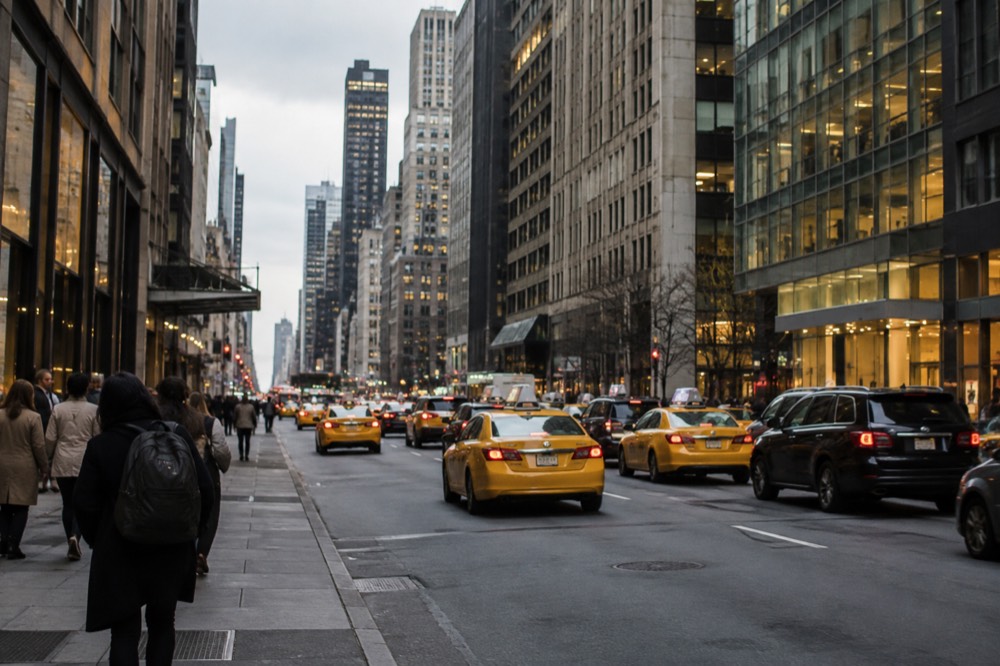
Most days, the answer to this question has less to do with danger than with patience. New York City streets are heavily policed, heavily filmed and heavily jammed, and the accident risk to a careful driver is broadly comparable to any other large American city. What makes people ask the question is not violence or road chaos, it is the sheer unpleasantness of the experience: the double-parked delivery trucks, the honking, the $20-plus midtown parking garages and the taxi that just cut across three lanes. This page answers the safety question directly, then answers the question underneath it, which is whether the car earns its keep here at all. Usually it does not, and the New York City Travel Guide covers why in detail across its transport pages.
Is It Safe to Drive Today in New York City?
Yes, in the ordinary sense of the word. New York City is a heavily enforced, camera-covered, slow-moving driving environment where a patient, insured driver with a legal vehicle faces no unusual threat to personal safety. The real risks are financial and temporal: congestion charges, bridge and tunnel tolls, garage parking, and the near-certainty that the subway will beat you across Manhattan at almost any hour of the day.
The city asks this question of drivers more often than drivers ask it of the city. Speed cameras operate in school zones across the five boroughs, red-light cameras are widespread, and police enforcement of moving violations is routine on the avenues. A visitor driving today will be moving slowly almost everywhere in Manhattan, and slow traffic is safe traffic in the blunt actuarial sense.
Two honest caveats belong here. First, "safe to drive" is not the same as "sensible to drive." A driver who is exhausted after a red-eye flight, or who is trying to read a phone map while merging onto a crosstown street, is the hazard, not the city. Second, winter days change the calculus: a snow day narrows lanes, buries signs and turns the bridges slick, and on those days the answer is to leave the car parked and take the train.
For everything else, the practical safety advice is short. Keep your doors locked at stoplights, do not leave anything visible on the seats, and never leave a phone or a bag in a parked car in any borough. That is not a New York-specific warning, but in a city where cars sit on the street overnight, it matters more. Rental cars with out-of-state plates are not singled out by criminals in any systematic way, but they are singled out by parking enforcement, so read every sign at the curb before you leave the vehicle.
What Makes Driving in New York City So Difficult?
The difficulty is congestion, not danger. Manhattan's street grid moves slowly by design and by volume, crosstown traffic in Midtown can average walking pace for blocks at a stretch, and parking is scarce, expensive and often unavailable at any price near the busiest attractions. The subway covers the same ground faster, for $3.00 a ride, with an automatic $35 weekly cap that no driving setup can approach.
The economics alone disqualify the car for most visitor trips. Beyond fuel, a driver today faces tolls on every tunnel and bridge into Manhattan, commercial garage rates that routinely run well above $20 for a few hours in Midtown, and the standing risk of a parking ticket on top of the garage bill if the driver gambles on the street instead. Add the value of your time spent circling blocks looking for a space, and the arithmetic collapses.
Then there is the counterfactual. A single subway ride is $3.00, and the MTA's OMNY system caps your spending automatically at $35 across a rolling seven-day window, with no pass to buy and nothing to decide in advance. That cap replaced the old 7-day unlimited MetroCard, which the MTA stopped selling entirely on 1 January 2026, so any guide telling you to buy one is out of date. Tap the same card or phone every time and the cap applies itself.
The honest framing is this: driving in New York is safe, and it is also a way to spend more money to arrive later and in a worse mood. For a day built around the classic sights, the money page on things to do in NYC assumes you are on foot and on the train, and that assumption is correct.
If your plans run to the big attractions, a pass can beat the car on value too:
Does Today's Weather Change the Answer?
On a clear or rainy day, no: drive if you must, but the subway still wins. On a snow or ice day, yes: the answer tilts sharply toward not driving, because New York's bridges ice before its roads do, plows narrow the avenues to single tracks, and the subway keeps running on its own rails regardless of what the sky is doing to the asphalt.
The official climate record for Central Park holds a surprise for visitors planning around weather. July, the month people book to dodge winter, is actually the wettest month of the year in New York, averaging 4.60 inches of precipitation against June's 4.54 and August's 4.56. Rain, though, barely changes driving conditions here; the streets are flat, drained and lit, and a rainy day slows traffic further without making it dangerous.
Snow is the different category. February out-snows January in the official 1991-2020 normals, 10.1 inches against 8.8, and February is also the driest month overall at 3.19 inches of total precipitation. What that means for a driver is that the city's snow arrives concentrated in a few heavy events, and on those days the honest advice is to not drive at all: the MTA runs, the plows take hours, and a visitor in a rental car on an unplowed side street in an unfamiliar borough is solving a problem they did not need to have.
| Condition | Driving today | Better option |
|---|---|---|
| Clear, any season | Safe but slow; parking is the pain | Subway, $3.00 per ride |
| Rain (July is the wettest month) | Safe, slower than usual | Subway or bus, free transfers within 2 hours |
| Snow or ice | Not advised, especially on bridges | Subway, which runs on dedicated rails |
| Heavy wind on bridges | Use caution on spans; high-profile vehicles especially | Subway or ferry |
A rainy day is not a driving day or a lost day; it is a museum day, and the city's indoor options are deep enough to fill any weather window.
Is It Better to Park Somewhere and Take the Subway?
For almost every visitor, yes. Parking at your hotel or at an outer-borough park-and-ride and riding the subway into Manhattan converts the worst part of the drive, the last mile, into a $3.00 trip with a free transfer to a bus within two hours. The subway runs 24 hours, the fare is capped automatically at $35 a week, and up to three children under 44 inches tall ride free with a fare-paying adult.
This is the pattern that works: use the car for what cars are good at, the long highway leg, and hand the city leg to the system built for it. A driver arriving from the north or west parks where lodging is cheaper, taps a card at the station, and arrives in Midtown without a single circling loop around a block.
The fare mechanics reward this cleanly. One tap is $3.00 for the subway or a local bus. Tap the same card or phone every time, and after $35 inside seven days the rest of that window is free, with the counter starting on your first tap rather than on a calendar Monday. Break the rule by alternating between your phone and the plastic card in your pocket, and the cap silently stops accumulating, which is the single most common way visitors overpay.
The system is also, on the evidence, where the city is. Times Sq-42 St carried 61,203,303 riders in 2025, 71% more than Grand Central, and the weekend network has recovered to 88% of its pre-pandemic ridership while weekday commuting lags at 73%. The trains a visitor rides are frequent, crowded in the good way, and running closer to full normal service than most returning commuters realize. The site's NYC subway guide covers the lines, and how to get around NYC compares every mode honestly.
For a day of attractions strung along the subway, a pass changes the budget math in your favor:
The New York CityPASS bundles five major attractions, including the Empire State Building and the Statue of Liberty ferry, for $149 adult against a combined box-office price CityPASS itself puts at $307.04, valid over nine consecutive days. It only pays off if you genuinely use all five, so match it to your list before buying.
What About Driving to or from the Airports?
Airport runs are the one place a car feels justified, and the transit numbers say otherwise. The LaGuardia Link Q70 bus is free, making the subway-plus-bus run to Midtown $3.00 total, the cheapest airport transfer in the city, while JFK's AirTrain adds $8.75 on top of the subway fare for an $11.75 trip, and Newark's NJ Transit plus AirTrain combination runs $16.80 from Penn Station.
The counter-intuitive part is which airport is the expensive one. JFK, the airport people assume is the well-connected one, costs more to reach by rail because the AirTrain fare stacks on top of the subway fare. LaGuardia, long the butt of jokes, is the budget champion precisely because its dedicated Q70 bus charges nothing at all. A family of four landing at LaGuardia pays $12.00 to reach Midtown on transit, a figure no taxi or rideshare can touch.
| Airport | Transit cost to Midtown | The route | Notes |
|---|---|---|---|
| LaGuardia | $3.00 | Subway plus free Q70 LaGuardia Link bus | Cheapest transfer in the city |
| JFK | $11.75 | Subway ($3.00) plus AirTrain ($8.75) | Via the E, J or Z to Jamaica, or the A to Howard Beach |
| Newark | $16.80 | NJ Transit plus AirTrain from Penn Station | Weekday shuttle buses replace the AirTrain to the rail station, 05:00-15:00 |
One current service change matters for Newark. AirTrain service between the terminals and the NJ Transit rail station is replaced by shuttle buses on weekdays between 05:00 and 15:00, while the inter-terminal AirTrain keeps running. A driver heading to Newark on a weekday morning should either allow extra time or skip the car question entirely and check the train.
The exception to all of this is the group with luggage. A private transfer from JFK to a Manhattan address makes sense for three or more travelers, families with bags, or anyone landing wrecked at midnight, because the fare covers the whole vehicle door to door. Solo travelers on a budget do better with the AirTrain, every time.
When Does Driving in New York Actually Make Sense?
Three cases: a day trip out of the city, a stay anchored outside Manhattan with a car-friendly base, and group logistics that transit genuinely cannot serve, such as moving a family and their luggage at odd hours. Inside Manhattan itself, almost never; the car loses time, money and temper on nearly every trip a visitor makes, and the subway covers the same ground for $3.00.
Day trips are the real answer. The Hudson Valley, the Hamptons, Woodbury Common, Storm King and the towns along the river are exactly what cars are for, and a visitor who rents one for those legs while leaving it parked during the city days has the balance right. The site's day trips from NYC hub lays out which destinations justify the wheel and which are better reached by train.
The group case is real but narrower than people think. A private airport transfer, as above, is the clean example. Beyond that, a car serves a traveler with mobility needs that the subway's stairs defeat, or a family moving between a hotel and a wedding with gear. Those are legitimate. What is not legitimate is renting a car "to see New York," because seeing New York from a car means seeing parking garages.
For the days you do spend inside the city, the question is not how to drive but what to do once you have stepped off the train. An attraction-heavy day rewards planning:
SUMMIT One Vanderbilt sits beside Grand Central, so it pairs naturally with a transit-first day: tap in, ride the 4, 5, 6 or 7 to Grand Central-42 St, and be standing in the mirror rooms within minutes of leaving the platform. Timed tickets from $47.91 keep the crowd flow moving, and the location means the subway leg is shorter than most parking garage walks.
Common Questions About Driving in New York City
The questions below are the ones drivers actually ask before a New York trip: whether the city is dangerous to drive in, whether parking is worth attempting, what a snow day changes, and whether the rental car should be skipped entirely. The short answers: driving is safe but usually a mistake, parking in Manhattan is expensive and scarce, snow tilts the answer firmly toward the subway, and for a purely in-city visit the car is the weakest tool in the drawer.
Is it safe to drive today in new york city?
Yes. New York City streets are heavily enforced, camera-covered and slow, and a careful, insured driver faces no unusual safety threat. The practical problems are congestion, tolls and parking cost, not danger. On a snow or ice day, the answer changes: leave the car parked and take the subway, which runs on its own rails.
Is parking in Manhattan realistic for a visitor?
Rarely. Street parking near major attractions is scarce and tightly regulated, and Midtown garages routinely cost more than $20 for a few hours, on top of any ticket risk. The workable pattern is to park at your hotel or outside Manhattan and ride the subway in for $3.00 a ride, capped automatically at $35 a week.
Do I need a car to see New York?
No. The subway runs 24 hours, covers all five boroughs, and beats the car across Manhattan at almost any hour. Up to three children under 44 inches tall ride free with a fare-paying adult. A car only earns its keep for day trips out of the city or for moving a group with luggage at odd hours.
What is the cheapest way to reach the airports without driving?
The free LaGuardia Link Q70 bus plus the subway, $3.00 total, is the cheapest airport transfer in the city. JFK costs $11.75 via the AirTrain on top of the subway fare. Newark runs $16.80 from Penn Station on NJ Transit plus the AirTrain, with weekday shuttle buses replacing the airport AirTrain leg between 05:00 and 15:00.
Does bad weather make driving unsafe?
Rain does not; the streets are flat, drained and lit, and July, the wettest month at 4.60 inches of precipitation, mostly means slower traffic. Snow does. February averages 10.1 inches of snow, more than January, and on snow days the bridges ice first, plows narrow the avenues, and the subway is the only mode that keeps its schedule.
Should I still buy a 7-day unlimited MetroCard for the trip?
No, because it no longer exists. The MTA stopped selling and refilling MetroCards on 1 January 2026. The equivalent value now arrives automatically: tap the same card or phone for every subway and local bus ride and OMNY caps your spending at $35 within a rolling seven-day window, with nothing to buy in advance.
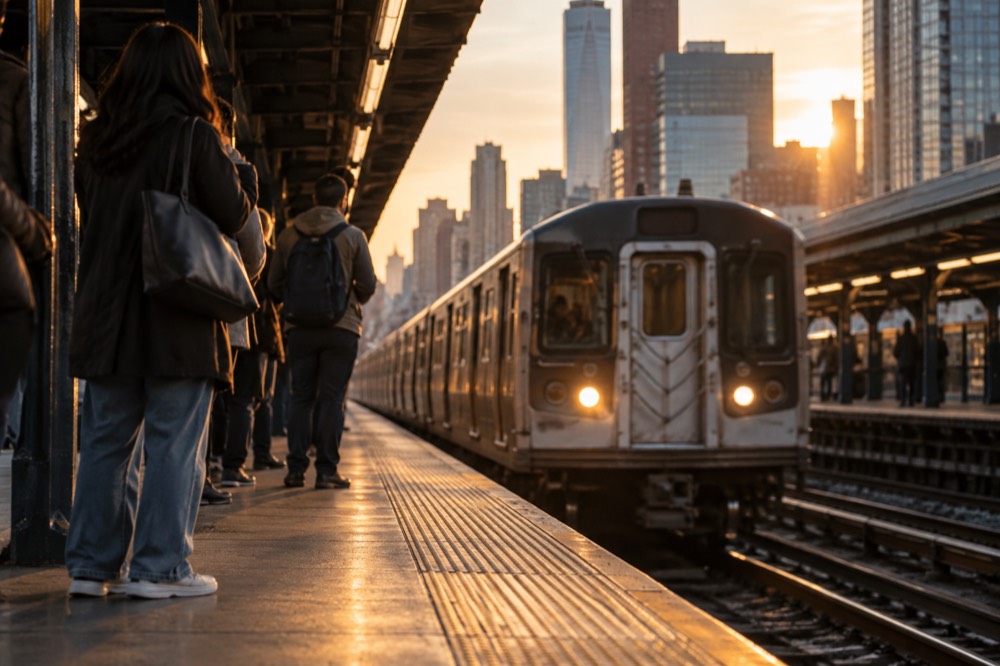
The last word is a practical one. Drive to New York if the distance demands it, park the car when you arrive, and let the 6 train do the rest. The city was built around its tracks, not its roads, and every day you spend above ground on foot is a day better spent than the same day spent hunting a parking space. If the forecast shows snow, the decision has already been made for you.