What Is the Most Beautiful Subway Station in New York City?
The most beautiful subway station in New York City is the old City Hall station, a vaulted tile showpiece on the 6 train loop. Here is what it looks like, how to see it, and which working stations come closest.
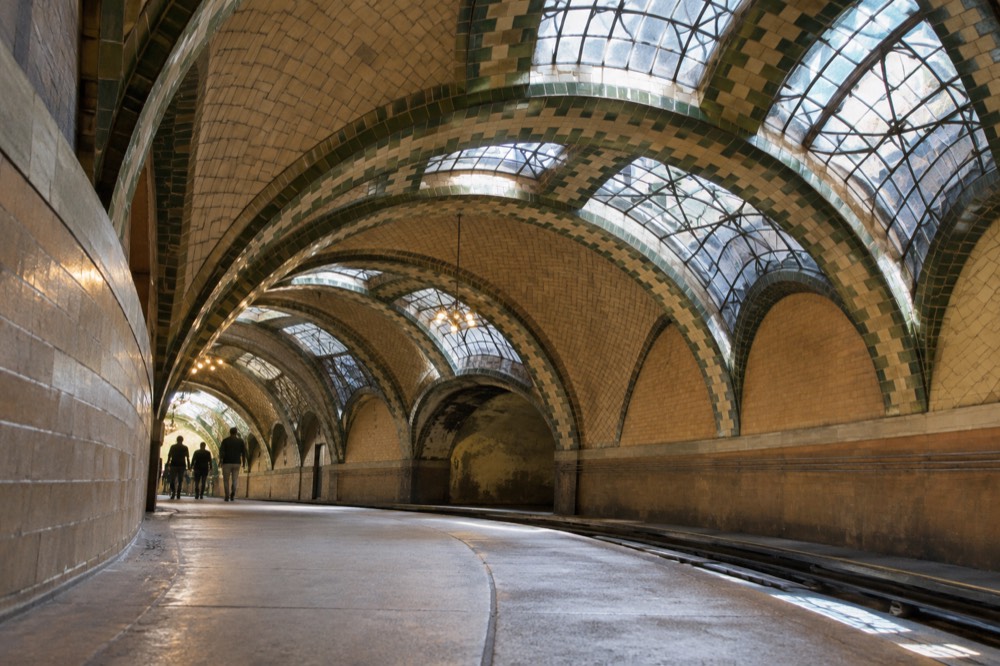
The most beautiful subway station in New York City is not one you can buy a ticket to. It is the old City Hall station, a vaulted, skylit showpiece sitting on the 6 train's loop beneath Lower Manhattan, closed to regular passenger service and visible today only as a slow glide past its arched windows. New York built its first subway line as a civic statement, and City Hall was its ceremonial centerpiece: curved Guastavino tile vaults, brass chandeliers, leaded-glass skylights and a curved platform that follows the loop. Almost every other station in the system was built as infrastructure. This one was built as architecture.
The rest of this page answers the question properly: what the station looks like, how an ordinary visitor can see it, which stations you can actually ride to that carry some of the same DNA, and how the system around them works, including the fare rules that changed recently enough that most guides still get them wrong. If you are planning a wider trip, our New York City Travel Guide hub covers the whole city, and the money page on things to do in NYC lists the attractions worth building a day around.
What Is the Most Beautiful Subway Station in New York City?
The most beautiful subway station in New York City is the former City Hall station on the 6 train loop in Lower Manhattan. It features curved vaulted ceilings of Guastavino terracotta tile, three leaded-glass skylights, brass chandeliers and oak ticket booths, and it was designed as the ceremonial flagship of the city's first subway line. It has not served regular passengers in decades, but riders on the downtown 6 can still see it as the train loops back uptown.
The station was the showpiece of the first subway contract, the stretch of what is now the 6 line that opened Lower Manhattan to the Bronx. The designers wanted a public room, not a corridor, and the result is closer to a European railway vestibule than to anything else in the New York system. The platform is a tight curve, which is part of why it closed: the gap between train and platform grew as rolling stock changed, and the station's shallow ridership never justified the fixes. The trains kept using the loop, though, and they still do.
That is the practical magic of the place. Every downtown 6 train that reaches the end of the line at Brooklyn Bridge-City Hall continues around the loop to head back uptown, and it passes through the old station to get there. Stay on the train, look out the right-hand windows, and the vaults and skylights slide past for a few seconds. It costs nothing beyond the fare you already paid, which since the MetroCard retirement means a $3.00 tap of a card or phone, counted automatically toward the $35 weekly OMNY cap.
For visitors who want more than a glimpse, the New York Transit Museum runs occasional guided tours of the station itself, which let you stand on the platform and take in the vaults properly. Check the museum's own calendar rather than a third-party listing, because dates are limited and they sell out. The tour is the only way to photograph the space without glass in the way.
The honest caveat: this is a preserved relic, not a working station. If your question is really "which station I can actually use is the most beautiful," the answer changes, and the section below covers that. But as a matter of record, the most beautiful subway station in New York City is City Hall, and it is not close.
How Can You See City Hall Station Yourself?
Ride any downtown 6 train to Brooklyn Bridge-City Hall and stay on board as it loops back uptown, and you will pass through the old station through the windows on the right side of the car. It costs nothing beyond your fare. To actually stand on the platform, you need a guided tour run by the New York Transit Museum, which schedules them occasionally and sells them out quickly, so check the museum's calendar directly.
The loop trick is the one locals use. The 6 train's terminal station, Brooklyn Bridge-City Hall, sits a few hundred feet from the old station, and the track curves around beneath City Hall park to reverse direction. The train slows through the loop, so you get a real look, not a blur. Sit on the right side heading downtown. The skylights are the giveaway: glass panels set into the vaults, pouring daylight onto the tilework.
A few practical notes. You cannot get off there, and the doors do not open, so do not plan photography beyond a quick shot through the window. The loop is also the reason the station closed to passengers in the first place: the platform curve does not fit modern trains cleanly, and the station saw few riders compared with its neighbors. The city preserved it rather than gutted it, which is why it survives at all.
The Transit Museum tours are the deeper experience. They walk small groups onto the platform with a guide who covers the tilework, the lighting and the politics of the first subway contract. The museum sits in a decommissioned subway station itself, in Brooklyn Heights, and is worth the trip on its own for anyone who finds this page interesting. Book through the museum, not a reseller, because the dates shift and third-party listings go stale.
Getting to the loop is easy from anywhere on the east side. The 6 runs under Lexington Avenue the length of Manhattan, and the station sits steps from City Hall park, the Brooklyn Bridge approach and the Financial District. Our guide to riding the NYC subway covers the basics of lines, directions and etiquette if this is your first trip, including the uptown/downtown convention that confuses visitors who expect compass directions.
Which Working Subway Stations Are the Most Beautiful in New York City?
Among stations you can actually enter with a fare, the strongest candidates are the ornate showpieces and the dramatic deep ones: the early flagship stations such as Wall Street on the 4/5 line with their vaulted ceilings, the cast-iron and glasswork at Astor Place, and the cavernous, arch-filled station at 191st Street in Washington Heights, the deepest in the system. Grand Central's shuttle passage and the 34th Street Hudson Yards station also draw admirers.
New York's working stations rarely compete with City Hall, but a handful carry real character. Wall Street on the Lexington line keeps heavy vaulted ceilings and brass fittings from the system's early decades. Astor Place has its tiled plaques and the famous carved-lion references to the Astor Library. The Washington Heights station at 191st Street sits so deep under St. Nicholas Avenue that its elevator banks and long tunnel approach feel closer to a mountain railway than a subway.
Grand Central deserves a mention, though with a disambiguation: the subway station beneath Grand Central Terminal is a functional hub, while the terminal above it is the actual architectural landmark. The two get conflated constantly. The terminal's main concourse, celestial ceiling and whispering gallery are among the finest public interiors in the United States, and you pass through them between subway lines. Our Grand Central Terminal guide covers what to see and how the tours work.
The honest framing for visitors: New York's system is enormous, over a hundred years old in parts, and most of its stations were built fast and plain, to move crowds rather than to impress them. The beauty is concentrated in a short list, and the rest of the system's charm is texture: the tile name plaques, the mosaic borders, the odd skylight over a mezzanine. If you enjoy that kind of detail, the free walking tours on GuruWalk, including a Financial District and Wall Street walk, pass several of the oldest stations in the system, and the guides point out things commuters walk past daily.
How Busy Are New York's Most Famous Subway Stations?
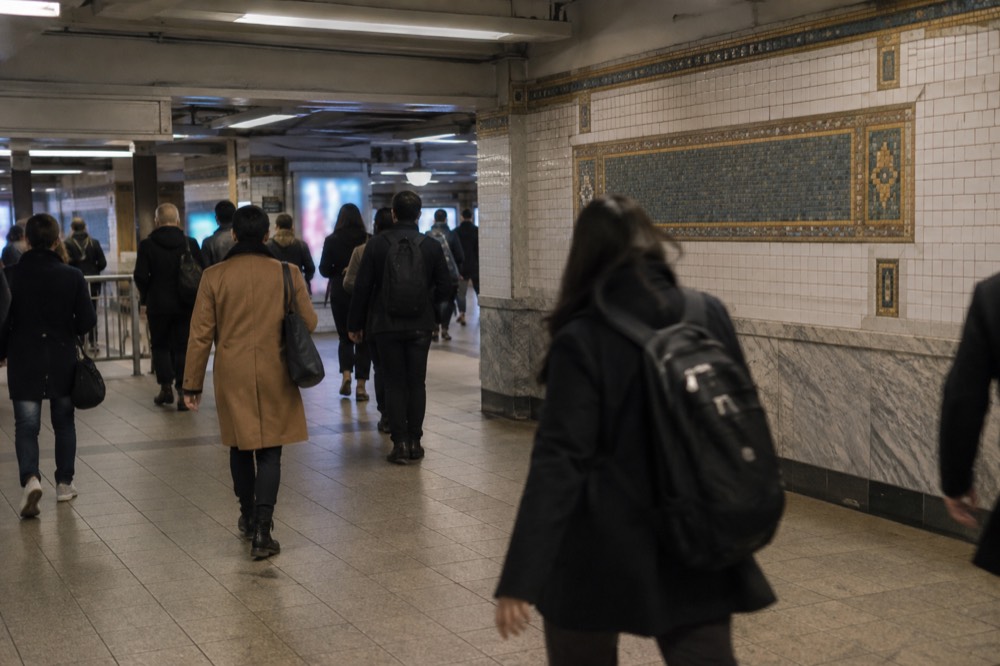
Times Square is the busiest station in the system by a wide margin: it carried 61,203,303 riders in 2025, against 35,764,931 at Grand Central-42 St, roughly 71% more. Penn Station does not even make the top five as a single station, because the MTA counts its two complexes separately, at 19,915,971 and 17,808,404 riders each. Total 2025 subway ridership was about 1.28 billion rides.
Those numbers come from the MTA's own 2025 ridership data, and they invert what most visitors assume. The great commuter terminals, Grand Central and Penn, feel like the center of the transit universe, but the tourist station wins by a distance. If you are riding through Times Square at midday with a suitcase, you are in the busiest station in the Americas-sized system, and it behaves like it.
| Station complex | 2025 ridership | Share of the story |
|---|---|---|
| Times Sq-42 St | 61,203,303 | Busiest in the system, by far |
| Grand Central-42 St | 35,764,931 | Second, but 71% behind Times Square |
| 34 St-Penn Station (A C E) | 19,915,971 | Counted separately from the 1 2 3 complex |
| 34 St-Penn Station (1 2 3) | 17,808,404 | Even combined, only just edges Grand Central |
There is a second surprise in the same dataset. Weekday ridership in 2025 averaged 4,001,735, only about 73% of 2019 levels, while weekend ridership averaged 4,831,140, about 88% of 2019. On buses the recovery actually flips: average weekend bus ridership, 1,598,000, now exceeds average weekday bus ridership, 1,396,000. Hybrid work hollowed out the weekday commute and left the weekend trains relatively fuller. For a visitor, the practical read is that midday weekends are not the quiet window they used to be, and weekday middays often are.
What Has Changed About Paying for the Subway Recently?
You can no longer buy a MetroCard at all: the MTA stopped selling and refilling them on 1 January 2026. The fare is $3.00 per ride, tapped with a contactless card or phone through OMNY, and once you hit $35 in a rolling seven-day period, rides are free for the rest of that window. There is no pass to buy and no decision to make, the cap applies automatically to the same card or device.
This is the fact most competing guides still get wrong, because the 7-day unlimited MetroCard was standard advice for decades. It no longer exists. Existing unlimited passes had to be started by 31 March 2026, and a visitor arriving today simply cannot buy one. The correct advice is: tap the same card or device every time, and the $35 weekly cap does the rest. Mixing your phone and the plastic card in your pocket breaks the cap silently, because the system counts each card or device separately.
| Fare item | Price | Notes |
|---|---|---|
| Single subway or local bus ride | $3.00 | Tap with OMNY, same card or device each time |
| Weekly cap | $35 | Automatic, rolling 7 days from first tap |
| Express bus | $7.25 | Separate $67 cap if you ride express buses |
| Reduced fare (eligible seniors 65+/disabled) | $1.50 | Subway and local bus, any time of day |
| Children | Free | Up to three children under 44 inches with a fare-paying adult |
Out-of-system free transfers exist too, at Lexington Av/59 St to Lexington Av/63 St and between Junius St and Livonia Av, where you tap again at the turnstile and are not charged. Children under 44 inches ride free with an adult, up to three per adult, which matters for families doing a lot of station-hopping to see the mosaic work.
The airport connections have their own quirks. The cheapest airport run in the city is LaGuardia's, because the Q70 LaGuardia Link bus is free and you pay only the $3.00 subway fare. JFK, the airport people assume is the well-connected one, costs $11.75 by subway plus AirTrain, because the AirTrain adds $8.75 on top of the fare. Newark runs $16.80 by NJ Transit train plus AirTrain from Penn Station, with a current service change: weekday shuttle buses replace the AirTrain between the terminals and the rail station from 05:00 to 15:00, so allow extra time on a weekday morning.
For groups of three or more, or families with luggage who want none of the above, a private transfer changes the math, since the fare covers the whole vehicle.
Where Does the City Hall Station Fit in a Day of Walking Lower Manhattan?
City Hall station sits directly beneath City Hall park, a two-minute walk from the Brooklyn Bridge entrance and about ten minutes from Wall Street, which makes it an easy add-on to a classic Lower Manhattan circuit. Ride the 6 to Brooklyn Bridge-City Hall, glimpse the loop, then walk the bridge to Brooklyn Heights and Dumbo. The loop trick costs nothing but a few minutes on a train you would ride anyway.
The geography is generous. Brooklyn Bridge-City Hall station puts you at the foot of the bridge promenade, and the walk across takes most people under an hour with photo stops. On the Brooklyn side you land in Dumbo and Brooklyn Heights, where the promenade gives the classic skyline view back toward the towers you just left. It is one of the best free half-days in the city, and the loop glimpse slots in at the start without changing anything else.
Heading the other way, City Hall park connects through the Financial District: Federal Hall, the Stock Exchange's front steps, the narrow colonial-era lanes that survive between the towers, and eventually the 9/11 Memorial plaza, which is free and open daily. The plaza is a place to describe plainly: it sits at the site of a mass killing, and it deserves a quiet visit rather than a slot on a sightseeing sprint. Our Financial District guide covers the area in detail.
Food is close by in two directions. Chinatown and Little Italy sit a short walk north of City Hall park, and a guided tasting walk through both neighborhoods turns the same corner of the city into lunch. The free, tip-based walking tours on GuruWalk also cover this ground: the Financial District, Wall Street and 9/11 Memorial walk runs through the same blocks, and the guides work for tips, so you pay what you think the walk was worth at the end.
Common Questions About the Most Beautiful Subway Station in New York City
The most common questions about New York's most beautiful subway station are practical ones: whether you can visit the old City Hall station, what it costs, which working stations are worth seeking out, and how the recent fare changes affect a visitor. The short answers: you can glimpse it free from the 6 train loop, tour it occasionally through the Transit Museum, find real beauty at a handful of working stations, and pay $3.00 a ride with an automatic $35 weekly cap.
What is the most beautiful subway station in New York City?
The old City Hall station, on the 6 train loop beneath City Hall park. It has curved Guastavino tile vaults, leaded-glass skylights, brass chandeliers and oak ticket booths, and it was built as the ceremonial flagship of the city's first subway line. It no longer serves passengers, but it is preserved and visible from passing trains.
Can you visit the old City Hall subway station?
Not as a regular passenger. You can see it from the downtown 6 train by staying on board as it loops back uptown, looking out the right-hand windows. To stand on the platform, you need a guided tour from the New York Transit Museum, which runs them on a limited schedule that sells out, so check the museum's own calendar.
Does it cost anything to see City Hall station from the 6 train?
No, beyond your normal fare. A subway ride is $3.00, tapped with a contactless card or phone, and rides count automatically toward the $35 weekly OMNY cap. Staying on the train through the loop is not a separate trip and costs nothing extra.
Which New York subway stations can you actually ride to that are beautiful?
Wall Street on the 4/5 line with its vaulted ceilings, Astor Place with its tiled plaques, the deep cavernous station in Washington Heights, and the interiors of Grand Central Terminal above the subway hub. None match City Hall, but each rewards a deliberate visit, and all cost a single $3.00 fare.
Is the MetroCard still a thing?
No. The MTA stopped selling and refilling MetroCards on 1 January 2026, and the 7-day unlimited pass no longer exists. The replacement is the automatic $35 weekly OMNY cap: tap the same card or device every ride, and once you hit $35 in a rolling seven-day window, further rides are free.
What is the busiest subway station in New York City?
Times Sq-42 St, with 61,203,303 riders in 2025, roughly 71% more than Grand Central-42 St at 35,764,931. Penn Station does not make the top five because the MTA counts its two complexes separately, at 19,915,971 and 17,808,404 riders each.
One last planning note. The old City Hall station is a five-minute detour on a train you will likely ride anyway, which makes it the cheapest sightseeing in a city that charges $30 for a museum and $44 and up for an observation deck. Build your day around the bridge, the Financial District and Chinatown, keep the loop glimpse as the opener, and you will have seen the most beautiful subway station in New York City before lunch.