The NYC Bucket List: The Experiences That Actually Define a Trip to New York
Every NYC bucket list online looks the same, and half of it is priced wrong or closed. This one is built from verified figures: what each experience costs, what it includes, and which ones earn their slot.
Short answer
The core of an honest NYC bucket list is five things: one observation deck, the Statue of Liberty ferry, one major museum, one long walk through real neighborhoods, and one Broadway night. Everything else is a bonus, and most of it costs less than the average guide claims.
The NYC Bucket List: The Experiences That Actually Define a Trip to New York
A bucket list for New York is easy to write and hard to write well. The internet is full of lists that name forty things, price none of them, and quietly include a ferry that never lands on Liberty Island or a museum wing that is currently closed for renovation. This page takes the opposite approach: fewer items, real figures, and a clear verdict on each one.
The short version is that five experiences carry a first trip: one observation deck, the official Statue of Liberty ferry, one major museum, one long walk through neighborhoods rather than attractions, and one night of live performance. Add food and a couple of free classics and you have a complete list. The long version, with prices and planning detail, is below. For the full range of options beyond the essentials, our things to do in NYC page maps the whole city.
What Belongs on an NYC Bucket List?
A real NYC bucket list has five anchors: one observation deck for the skyline, the official ferry to the Statue of Liberty and Ellis Island, one major museum, one long walk through genuine neighborhoods, and one night of live performance, ideally Broadway. Everything else, from food tours to harbor cruises, is an optional layer on top of those five. A list with twenty mandatory items is not a plan, it is a source of guilt.
The reason to keep the list short is arithmetic. Observation decks, ferries and museums each eat two to five hours, and New York punishes over-scheduling more than almost any city in the world because the distances between attractions are longer than they look on a map. A realistic day holds two anchor experiences plus food plus walking, not five.
The second reason is money. The five anchors, booked individually, add up fast, and a list that adds a helicopter flight, a dinner cruise and three more museums stops being a budget and starts being a vacation category of its own. Later in this page there is a full cost table so you can see exactly where the money goes.

Which Observation Deck Deserves the Bucket List Slot?
Only one observation deck belongs on the list, and three of the five price identically from $47.91, so the choice is about the view, not the money. Top of the Rock wins if you want the Empire State Building itself in your photo, SUMMIT One Vanderbilt if you want mirrored rooms and a playful experience, Edge for the glass floor. One World Observatory is the cheapest major deck from $30.49 and suits a downtown day.
All five decks use dynamic timed pricing, which means the number changes by date and slot. The "from" figures are the lowest published adult starting prices, and the box-office rates are higher: CityPASS publishes $75.12 for the Empire State Building's full AM/PM Experience and $71.86 for Top of the Rock, which bounds what walk-up pricing looks like at the top end.
| Deck | Adult from | Notes | Best for |
|---|---|---|---|
| Empire State Building (86th floor) | from $44 + $5 booking charge | Open-air deck, plus the museum experience | The classic, and the only deck open 365 days with late hours |
| Top of the Rock | from $42 | Three levels, timed entry | The Empire State in the frame, Central Park views |
| SUMMIT One Vanderbilt | from $44 | Mirrored rooms, glass ledges | Photos and a modern, playful experience |
| Edge | from $34-$45 + $2 fee | Glass floor, outdoor skywalk | The newest deck, pairs with the High Line |
| One World Observatory | from $39-$44 | 102 floors, skip-the-line options | A downtown day, the cheapest of the majors |
The mistake to avoid is stacking decks. Visitors sometimes book two in one trip, and the second view is never worth the second ticket. Pick the one that matches your itinerary: Midtown visitors get the most from Top of the Rock or SUMMIT, downtown visitors from One World. If the Empire State Building is the emotional choice, book the evening slot, because the deck's same-night re-entry on the full experience lets you see the skyline in daylight and after dark on one ticket.
Is the Statue of Liberty Worth Its Bucket List Reputation?
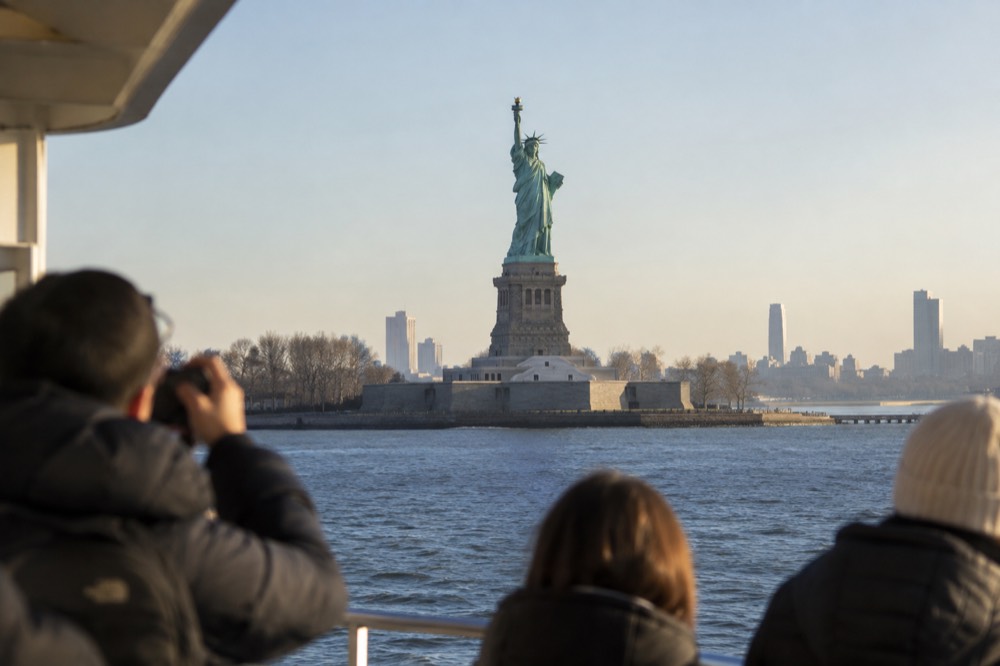
Yes, but only via the official ferry, and this is where most bucket lists quietly mislead people. Statue City Cruises is the only operator authorized by the National Park Service to land at Liberty Island, and the adult ferry ticket costs $26.00 including both islands, both museums and audio tours. Numerous sightseeing boats circle the islands and never land, some charging more than the real ferry.
The ticket tiers are simpler than they look. General admission covers the grounds of both islands plus the Statue of Liberty Museum and the Ellis Island National Museum of Immigration. The crown reserve costs $26.30, thirty cents more than the grounds ticket, which tells you the real barrier is not price but availability: crown tickets are name-bearing, capped at four per household, checked against photo ID, and reported to sell out months ahead. Pedestal access is also capacity-limited and benefits from the same early booking.
| Tier | Adult | Child 4-12 | Senior 62+ |
|---|---|---|---|
| General / Reserve | $26.00 | $17.00 | $23.00 |
| Pedestal Reserve | $26.30 | $17.30 | $23.30 |
| Crown Reserve | $26.30 | $17.30 | $23.30 |
| Ellis Island Hard Hat Tour | +$55 | n/a | n/a |
Under 4 rides free. Ferries depart from Battery Park in Lower Manhattan and from Liberty State Park in Jersey City, and the pricing is identical from both. If the crown matters to you, book as early as your dates allow and check the National Park Service pages before planning, because the release window is the kind of operational detail that changes. Our full Statue of Liberty tickets guide covers the tiers in depth.
Which Museum Should a First-Time Visitor Actually Book?
The Metropolitan Museum of Art is the default answer, and the facts around it are the most botched in NYC travel writing. Adult admission is a fixed, mandatory $30, and pay-what-you-wish applies only to New York State residents and students from New York, New Jersey and Connecticut, who must still pay something, a penny at minimum, with proof. Tourists from elsewhere pay the fixed $30.
That same-day, two-location detail is genuine information most guides omit. A Met ticket includes exhibitions and entry to both Met locations for the date on the ticket, so a morning at Fifth Avenue and an afternoon at The Cloisters in Upper Manhattan is one admission, not two. Hours are 10:00-17:00 Sunday through Tuesday and Thursday, with Friday and Saturday until 21:00, and the museum is closed Wednesdays.
One caveat matters right now: the Met is open, but a long list of galleries is not, including parts of the American Wing, the Costume Institute, the Cantor Roof Garden and stretches of Modern and Contemporary Art. Check the museum's gallery closures page before promising yourself a specific room.
| Museum | Adult admission | The honest note |
|---|---|---|
| The Met | $30 | Pay-what-you-wish is NY State residents and NY/NJ/CT students only, with proof |
| MoMA | $30 | Free Friday evenings are for New York State residents, reserved in advance with proof |
| Guggenheim | $30 standard, $16 during exhibition changeover | Pay-what-you-wish Tuesdays and Sundays 16:00-17:30, $1 minimum |
| Whitney | $30 | Free every day for anyone 25 and under; free Friday nights for everyone |
| Intrepid | $38 | NYC residents get 50% off every day |
| 9/11 Memorial & Museum | $36 | Free admission Mondays, tickets released online at 07:00 ET |
If modern art is your reason for traveling, MoMA at $30 is the alternative anchor, with the same caveat that its famous free Friday window is a New York State resident benefit, not a tourist one. The Whitney is the sleeper pick for anyone already walking the High Line, since it sits at the southern end and admits anyone 25 or under free every day. Our Metropolitan Museum of Art tickets page handles the pay-what-you-wish rules in full detail.
What Walks Belong on the List?
Two walks earn bucket-list status without question: the Brooklyn Bridge into Dumbo, and the High Line down to the Meatpacking District. Both are free, both take under two hours at a wandering pace, and together they deliver the two views New York is actually famous for, the skyline from the water side and the city from an elevated rail line. A guided walk adds context, but the bridges and the park do the heavy lifting on their own.
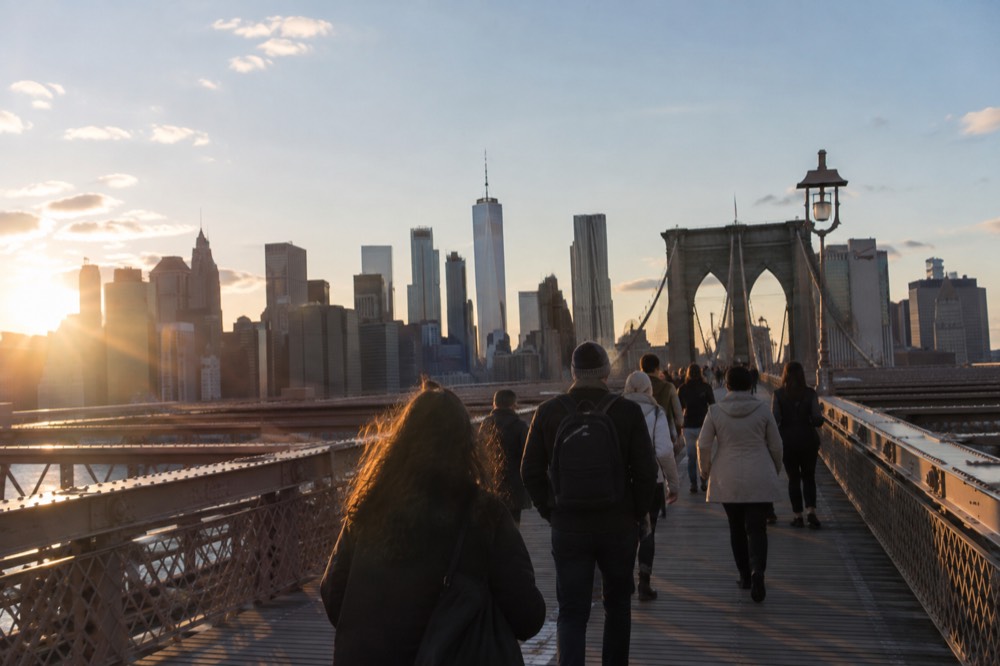
The Brooklyn Bridge walk costs nothing and works in either direction, though walking Manhattan to Brooklyn puts the skyline in front of you the whole way. Once across, the Brooklyn Heights promenade and the cobblestone streets of Dumbo are a short detour, and the Washington Street view of the Manhattan Bridge framed between old warehouse walls is one of the most photographed corners in the city. Budget ninety minutes to two hours and go early or at sunset to dodge the midday crush on the promenade. The full index of guides sits on New York City Travel Guide.
The High Line is a former elevated freight rail line turned park, running down Manhattan's west side, and it costs nothing to walk. Pair it with Chelsea Market at the southern end for food, or the Whitney if you want the museum afterward. The walk is the rare bucket-list item that improves in bad weather planning terms, because the market half of any High Line day is indoors.
Below those two, the honorable mentions: Central Park's Bethesda Terrace and the Mall, Greenwich Village's crooked streets around Washington Square, and SoHo's cast-iron blocks. All free, all walkable, and all better without a schedule. A Central Park loop is the third walk if your list has room, and it is flat enough for kids and grandparents.
| Walk | Cost | Time | What it delivers |
|---|---|---|---|
| Brooklyn Bridge to Dumbo | Free | 90-120 min | The skyline from the water side, the famous Washington Street view |
| The High Line | Free | 60-90 min | Elevated city views, Chelsea Market at the end |
| Central Park loop | Free | 60-120 min | Bethesda Terrace, Bow Bridge, the Ramble |
| Greenwich Village | Free | 60 min | Washington Square, jazz history, brownstones |
What Food Belongs on an NYC Bucket List?
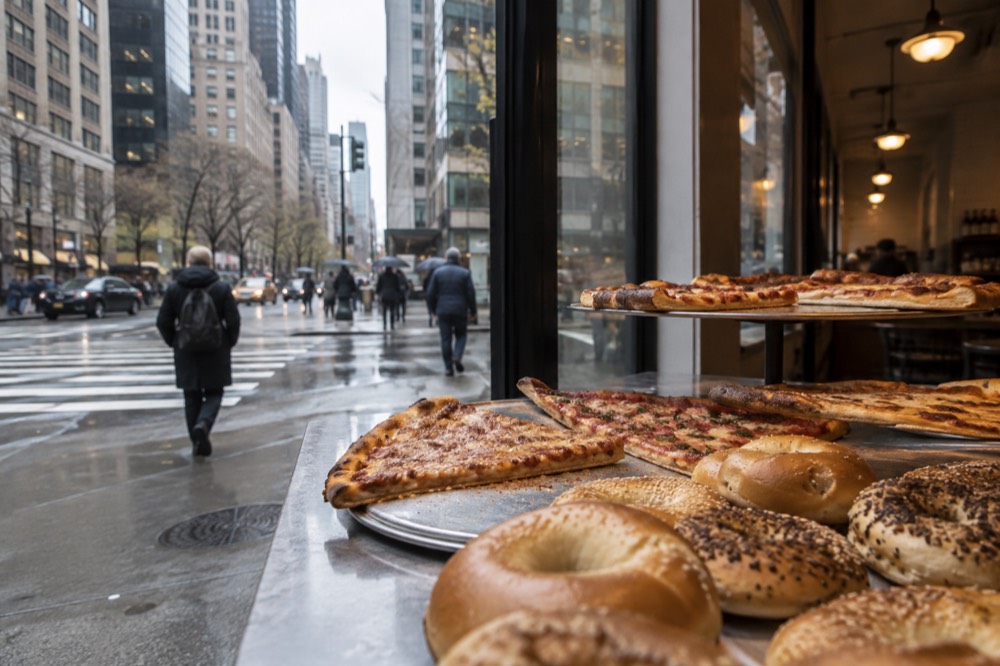
Three food experiences are genuinely defining: a proper bagel, a slice of pizza, and one sit-down meal in a real neighborhood rather than a tourist corridor. Everything above that, from food tours to tasting menus, is an enhancement rather than a requirement. A food tour is the efficient way to convert the food list into one booked experience, since six tastings add up to a full meal and a guide routes you between neighborhoods you would otherwise skip.
The honest food advice is geographic. Eat where the neighborhood eats, which in practice means bagels and slices almost anywhere, but sit-down meals in Chinatown, the East Village, Queens or Brooklyn rather than directly under a major attraction. The difference in both price and quality between a restaurant facing a landmark and one three blocks away is one of the most reliable patterns in the city.
A guided food tour compresses that learning curve into three hours. The Chinatown and Little Italy tour runs six tastings from dumplings to cannoli with the stories of both neighborhoods woven in, and the Greenwich Village version does the same for slices, sweets and the area's bohemian past. Both cost under $100 per person and both end with you full, so they replace a meal rather than adding to one. For planning on your own, our best pizza in NYC and best bagels in NYC guides hold the specifics.
Does Broadway Belong on Every List?
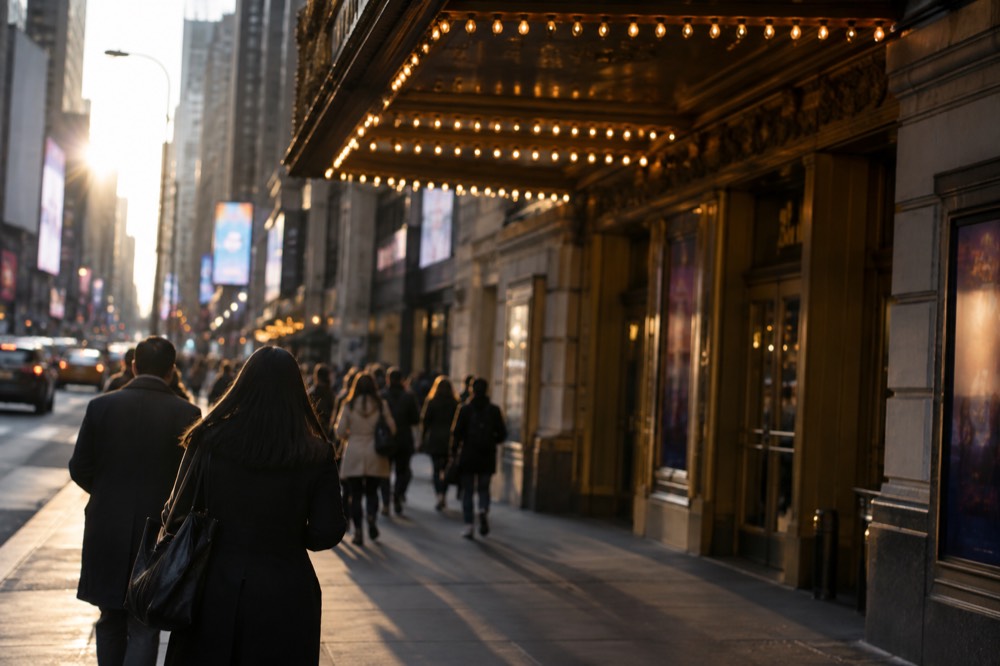
Yes, one live show belongs on the list, and Broadway is the version worth planning for, but the full-price ticket is not the only path. The TKTS booths sell same-day seats at up to 50% off face value with an $8 per-ticket fee, digital lotteries typically award seats in the $30-$50 range, and rush tickets per show sit in the same bracket.
A visitor who walks to the Times Square booth on the day has a real shot at a discounted major show.
The mechanics matter. TKTS operates from Duffy Square in Times Square and from Lincoln Center, and there is currently no downtown or Brooklyn booth, despite what older guides say. Inventory covers same-day performances plus next-day matinees, and the live inventory appears in the TKTS app and at tdf.org. Lotteries run mainly through Broadway Direct and Lucky Seat, entered online ahead of the performance.
If you would rather guarantee a specific show on a specific night, book ahead and treat it as the splurge it is. The long-running family titles are the safe picks for first-timers, and weekend seats in the good tiers go first. Our cheap Broadway tickets guide walks every discount path in detail, and the best Broadway shows page helps you pick the title.
What Can You Do on the List for Free?
More than in any comparable city: the Staten Island Ferry, the 9/11 Memorial plaza, Central Park, the High Line, the Brooklyn Bridge, Grand Central's main concourse and Washington Square Park are all free, and several museums hold free windows genuinely open to everyone. The Whitney's Friday nights, the 9/11 Museum's Monday release and the Guggenheim's pay-what-you-wish windows are real, but many other famous free hours are resident-only.
The distinction that trips people up is residency. MoMA's free Friday nights, the Met's pay-what-you-wish and the Intrepid's half-price are New York resident benefits requiring proof. The genuinely open-to-all free windows are narrower: the Whitney's Friday evenings and second Sundays, the 9/11 Museum's Monday free-admission tickets released at 07:00 ET, and the Guggenheim's Tuesday and Sunday late afternoons.
The outdoor list needs no asterisks. The Staten Island Ferry crosses the harbor past the Statue of Liberty and costs nothing, which makes it the budget answer to the harbor cruise question. The 9/11 Memorial plaza, the two reflecting pools, is free and open daily, and it deserves unhurried time; the museum beneath it is the paid, ticketed part. Grand Central is worth a visit purely as a room, celestial ceiling included, whether or not a train is involved.
How Much Does the Whole Bucket List Cost?
The five-anchor list breaks down to about $45 for a deck, $26.00 for the official ferry, $30 for the Met, and whatever your Broadway seat costs, with the walks free. A pass changes that arithmetic when the list matches its inventory, and CityPASS at $149 adult covers five attractions from an eleven-attraction menu over nine consecutive days, saving money only if you genuinely use all five.
| Bucket-list item | Individual cost | Pass note |
|---|---|---|
| Observation deck (one) | from $42-$47.91 | Empire State, Top of the Rock and Edge are all on the CityPASS menu |
| Statue of Liberty and Ellis Island ferry | $26.00 | On the CityPASS menu |
| The Met | $30 | Not on the CityPASS menu |
| Broadway show | varies by show and seat; TKTS discounts up to 50% off face value | Not pass-covered |
| Brooklyn Bridge, High Line, Central Park | Free | n/a |
| Food tour (optional) | $83-$99 | Not pass-covered |
The pass math is simple: CityPASS lists its adult attractions at a combined $307.04 box-office value against its $149 price, a 51% saving on its own numbers, but only if your list matches five of its eleven options. A visitor whose list is deck plus ferry plus the Met plus Broadway uses only two pass slots and loses money. A visitor doing the Empire State Building, Top of the Rock, the ferry, the Intrepid and the Edge comes out far ahead. Our New York CityPASS comparison pages run the numbers for several itinerary shapes.
One pass warning: The Sightseeing Pass ceased trading in 2025 and no page should recommend it. Any guide still listing it as one of your options is telling you how fresh its research is.
Transport barely dents the budget. A subway ride is $3.00, and the $35 weekly OMNY cap applies automatically after twelve paid rides in seven days on the same card or device, with no pass to buy. Tap the same physical card every time; mixing a phone and a plastic card breaks the cap silently.
How Do You Sequence the List Across Your Days?
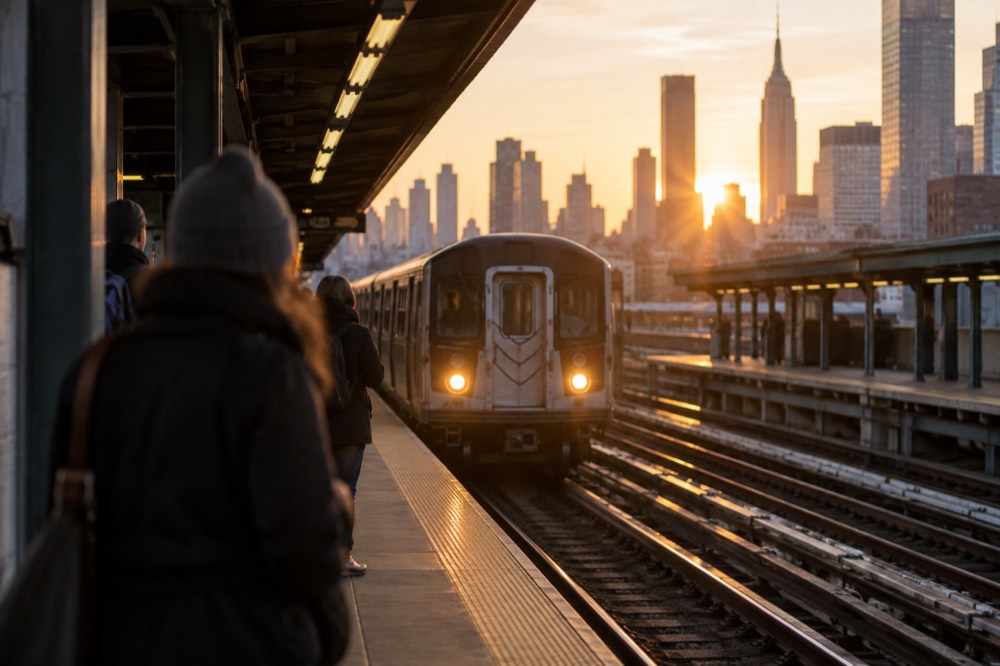
Group by geography, not by fame: put the ferry, the 9/11 Memorial and One World Observatory on one downtown day, the Met and Central Park on one Upper East Side day, and a deck plus Midtown on a third, with the Brooklyn Bridge walk and Broadway on separate evenings. The single most common planning failure in New York is a list sequenced by prestige rather than by neighborhood, which wastes hours crossing and recrossing the island.
A three-day shape looks like this. Day one, downtown: the official ferry in the morning, the memorial plaza after, One World Observatory if the downtown view is your pick. Day two, uptown: the Met in the morning when the galleries are quietest, Central Park after, and the evening free. Day three, Midtown and Brooklyn: a deck at golden hour, then the Brooklyn Bridge walk at sunset on a different day, and Broadway on whichever evening has the seats you want.
Book the time-sensitive things first: crown tickets months ahead if they matter, Broadway seats for the specific night, and the deck slot for the specific sunset. The walks and the food need no booking at all, which is exactly why they make reliable anchors on the days around the booked items.
Common Questions About the NYC Bucket List
The questions below are the ones that decide whether the list works: how many items fit in a day, whether the pass pays off, which deck to pick, how to handle the Statue of Liberty, and what to do when the weather turns. Each answer is short because the underlying decisions are short. The one principle behind all of them is that a bucket list is a plan for a specific number of days, not an infinite scroll of suggestions.
How many bucket-list items can you realistically do in one day in NYC?
Two anchor experiences per day, plus food and walking. Observation decks, ferries and major museums each consume two to five hours, and travel between neighborhoods adds real time. A day with three booked items is a day you will remember as a commute.
Is the New York CityPASS worth it for a bucket-list trip?
Only if your list matches at least four of its five chosen attractions from its eleven-option menu. At $149 adult against a $307.04 published box-office value, the math works for the classic sightseeing circuit, deck plus ferry plus Intrepid plus a second deck. It fails for lists built around the Met, Broadway or food, which the pass does not cover.
Which observation deck should you pick if you only do one?
Top of the Rock if you want the Empire State Building in your photo and Central Park in the frame, SUMMIT One Vanderbilt if you want the modern mirrored experience, One World Observatory if your day is downtown and your budget is tighter, since it starts from $30.49 against $47.91 for three of the others.
Can you go up inside the Statue of Liberty?
Yes, with the right ticket. The crown reserve costs $26.30, thirty cents more than the grounds ticket, but supply is severely limited, name-bearing, capped at four per household and checked against photo ID, and it reportedly sells out months ahead. The pedestal is also capacity-limited. Book as early as your dates allow.
What happens to the bucket list when it rains?
Swap the outdoor items for indoor anchors: the Met, MoMA, the Chelsea Market half of a High Line day, and the Museum of Broadway all work in weather. Note that July is statistically New York's wettest month at 4.60 inches of precipitation in Central Park, ahead of both August and June, so summer visitors should hold indoor backups regardless of the forecast.
The list, at its final size, is deliberately short: one deck, one ferry, one museum, two walks, one show, and food in between. Everything on it is verified as open and priced from real sources at the time of writing, and everything off it can wait for a second trip, which is the best possible reason to plan one.