NYC Christmas Lights: Where to See the Best Holiday Displays in New York
Dyker Heights in Brooklyn is the loudest Christmas lights display in New York City, but it is not the only one. This guide covers the blocks worth crossing the boroughs for, what a visit costs, and how December weather shapes the trip.
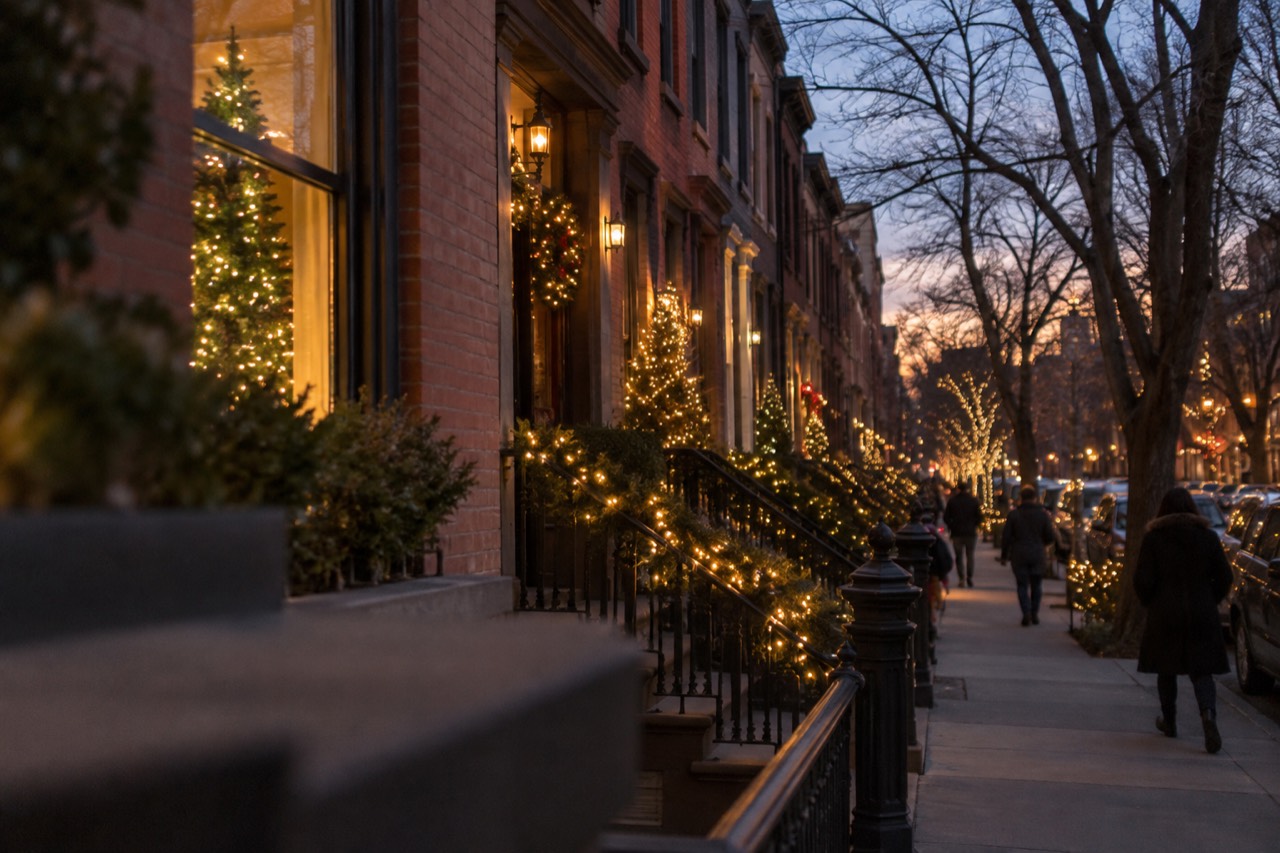
Short answer
The best Christmas lights in NYC are in Dyker Heights, Brooklyn, where dozens of houses between 11th and 13th Avenues near 83rd and 84th Streets go all out every December. Midtown's Fifth Avenue windows, Rockefeller Center and Bryant Park carry Manhattan's share.
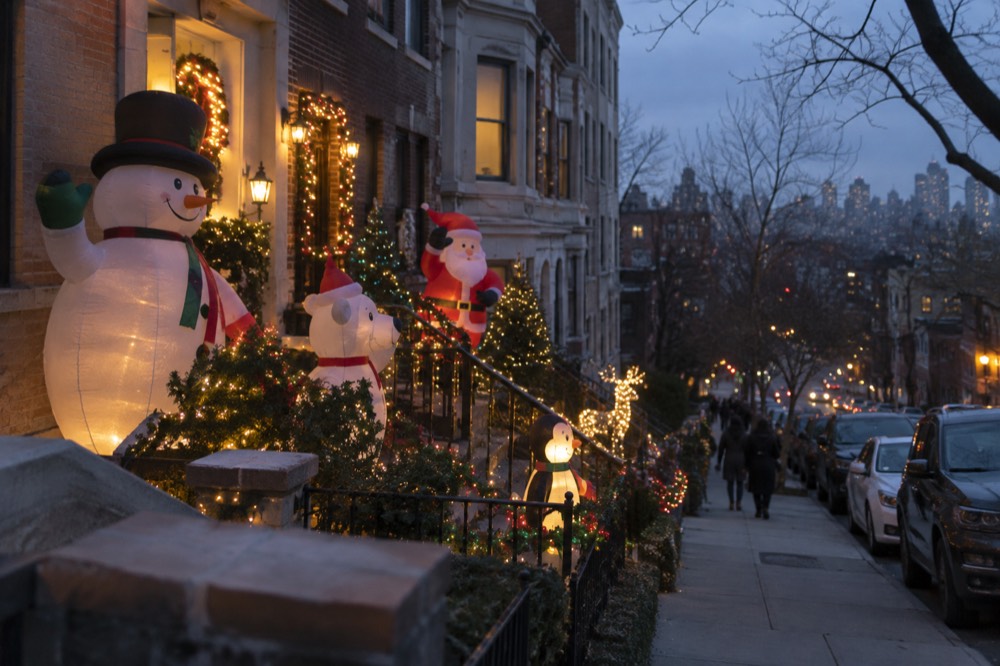
Every December, a quiet corner of southern Brooklyn turns into the brightest place in New York City. Dyker Heights, a neighborhood of one- and two-family houses far from any hotel strip, is where residents spend real money on lights, inflatables and oversized holiday figures, and where the resulting crowds have become an institution. Manhattan does its part too: the department store windows on Fifth Avenue, the tree at Rockefeller Center and the markets around Bryant Park hold up the Midtown end.
This guide covers the displays worth planning around, the honest costs of a guided tour versus riding the subway yourself, and what December weather in Central Park actually looks like according to the official climate record. The short version: the lights are mostly free to look at, the hard part is the getting there, and the cold is real but predictable.
Where Are the Best Christmas Lights in NYC?
The best Christmas lights in New York City are in Dyker Heights, Brooklyn, where the blocks between 11th and 13th Avenues around 83rd and 84th Streets fill with decorated houses every December. Midtown Manhattan holds second place with the Fifth Avenue store windows, the Rockefeller Center tree and the holiday markets. Both are free to walk, though a Dyker Heights visit means crossing into a residential neighborhood with no other tourist infrastructure.
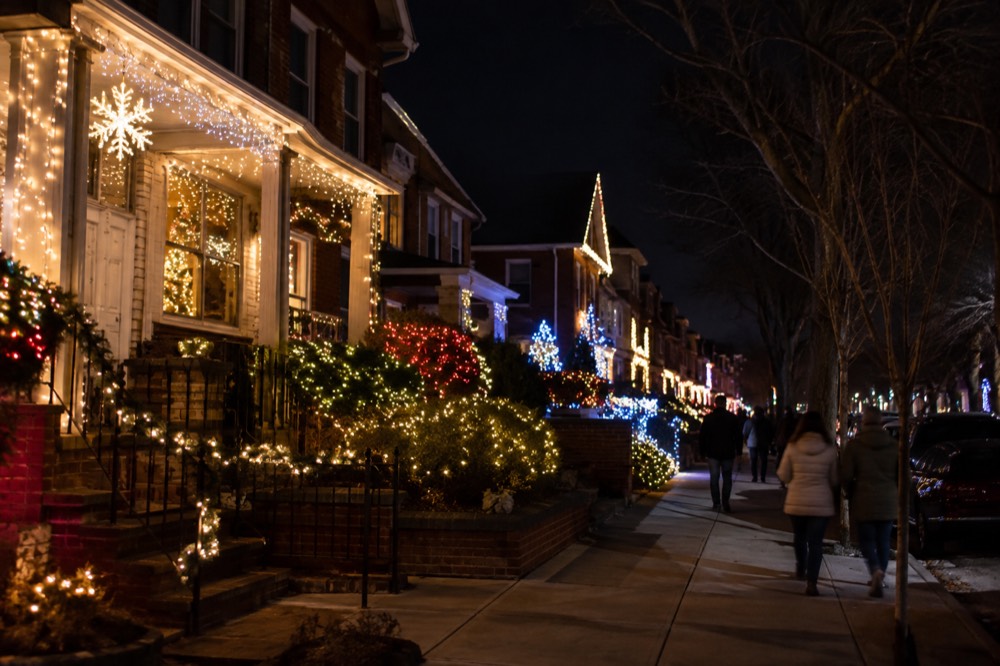
Dyker Heights is the headline act. It is not a single attraction with a gate and a ticket, it is a neighborhood where a critical mass of homeowners decorate hard enough that the streets themselves became the draw. The displays run from tasteful string lights to full productions with inflatables, motorized figures and sound. Because it is residential, everything is on public streets: you can walk it freely, at any hour the lights are on, without paying anyone.
Midtown works differently. The lights there are commercial and architectural: store windows on Fifth Avenue, the tree and angels at Rockefeller Center, the market stalls at Bryant Park. It is all within a walkable cluster, which makes it the efficient choice for a cold evening. Our Christmas in New York guide maps the full Midtown circuit, and the Rockefeller Center Christmas tree page covers the tree itself in detail.
How Do You Get to Dyker Heights for the Christmas Lights?
Dyker Heights sits in southern Brooklyn, roughly an hour from Midtown by subway, and the D train to the 18 Av station is the standard approach, followed by a walk of several blocks to the decorated streets around 83rd and 84th Streets. A single subway ride costs $3.00 with OMNY, and the $35 weekly fare cap applies automatically if you tap the same card or device all week. There is no parking strategy worth recommending in December.
The subway is the honest answer. The ride is long but simple, and the fare system now works entirely in your favor: tap a contactless card or phone at the turnstile, pay $3.00 per ride, and if you take enough subway and local bus trips in a rolling seven-day window, the MTA caps your charges at $35 with no pass to buy. That matters here because a Dyker Heights trip is one of the few tourist runs where you genuinely ride the train out and back late at night.
The walk from the station to the lights is part of the experience and part of the problem. The decorated blocks are residential streets, dark between houses, and December temperatures after sunset sit well below the daytime average. Wear more layers than you think you need, plan the return train time in advance, and do not count on restaurants or coffee staying open in the residential blocks when you finish.
Going with a guide removes both the navigation and the timing problem. The Dyker Heights Christmas Lights guided tour runs about 3 hours 45 minutes, handles the ride and the route, and costs from $63 per person. Check availability
Is a Guided Dyker Heights Tour Worth It Compared to Going Alone?
Going alone costs one subway fare each way, roughly $6.00 round trip per person, and gives you total freedom over timing. The guided tour costs from $63 per person, runs about 3 hours 45 minutes, and buys you the transportation, a set route through the best blocks and a guide who knows which houses matter. Families and first-time visitors tend to get the most from the tour; confident subway riders save the money.
The real comparison is not dollars, it is friction. The DIY version requires you to find the right exit from the station, walk the right blocks, know when to turn around and time the return train. None of that is hard, but all of it happens in the cold, in the dark, with tired children or elderly relatives in tow. The tour compresses the entire evening into one decision: board near your hotel, look at lights, come back.
The tour also solves a problem that solo walkers underestimate: the return. Standing on a dark residential platform in Brooklyn at 9pm in December, with a long ride back to Midtown ahead of you, is the moment when the $63 starts looking reasonable. The guided version drops you back where you started, which means no platform wait, no transfer calculation and no cold walk on the Manhattan end either.
What Other Neighborhoods in NYC Have Christmas Lights?
Beyond Dyker Heights and Midtown, the main Christmas lights in New York are at the holiday markets around Bryant Park and Union Square, the decorated storefronts of SoHo and Fifth Avenue, and scattered residential blocks in Brooklyn and Queens where individual streets go all out. None of these match Dyker Heights in density, but several are easier to reach and pair well with dinner or a show.
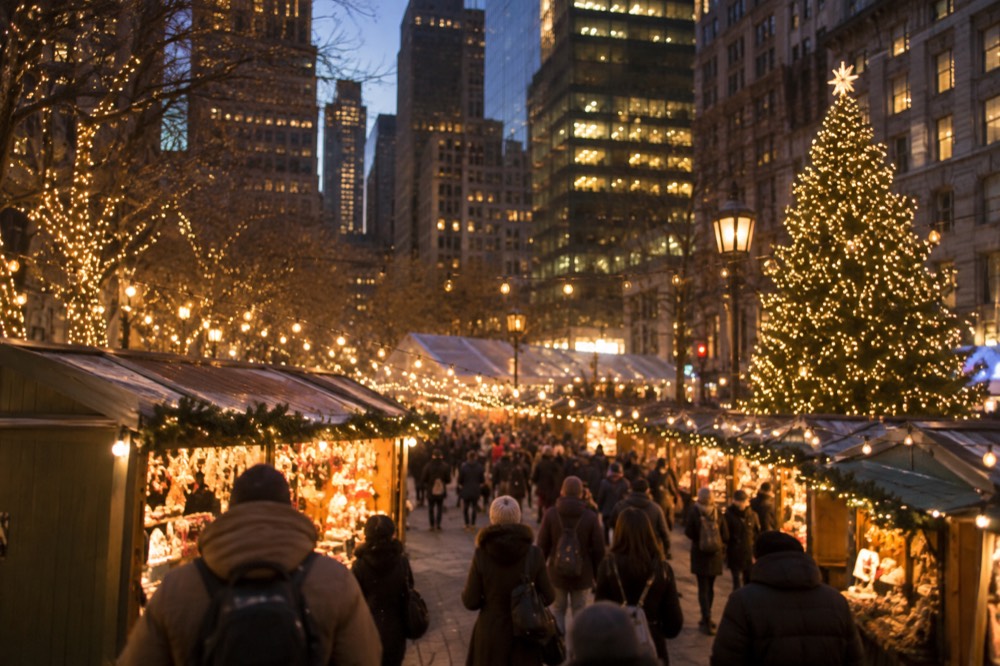
The market circuit is the underrated one. Union Square and Bryant Park host holiday markets each winter, and the stall lighting plus the surrounding tree and street decorations make for a warm, compact loop that ends near food and transit. SoHo's blocks and the lower Fifth Avenue stretch deliver the store-window version without the Midtown crush. For a broader view of the season's options, our things to do in NYC roundup includes the winter entries.
Here is how the main options compare on cost and effort:
| Display | Where | Cost to view | Effort to reach | Best pairing |
|---|---|---|---|---|
| Dyker Heights houses | Southern Brooklyn | Free on public streets | Long subway ride plus walking | Guided tour or an early start |
| Rockefeller Center tree | Midtown Manhattan | Free | Easy, most trains stop nearby | Store windows and skating |
| Fifth Avenue windows | Midtown Manhattan | Free | Easy walk between stops | Evening walk after dark |
| Holiday markets | Bryant Park, Union Square | Free entry, food and gifts cost | Easy | Dinner nearby |
| SoHo storefronts | SoHo | Free | Easy | Shopping and a food stop |
A word on the outer-borough blocks beyond Dyker Heights: several Brooklyn and Queens neighborhoods have individual streets with strong displays, and locals will tell you about them with pride. The honest editorial position is that none of them are destinations in the Dyker Heights sense. They reward you if you are already in the neighborhood for dinner or visiting family, and disappoint if you ride forty minutes specifically for them. Plan around the two anchors, Midtown and Dyker Heights, and treat anything else as a bonus.
What Does December Weather Mean for Viewing Christmas Lights in NYC?
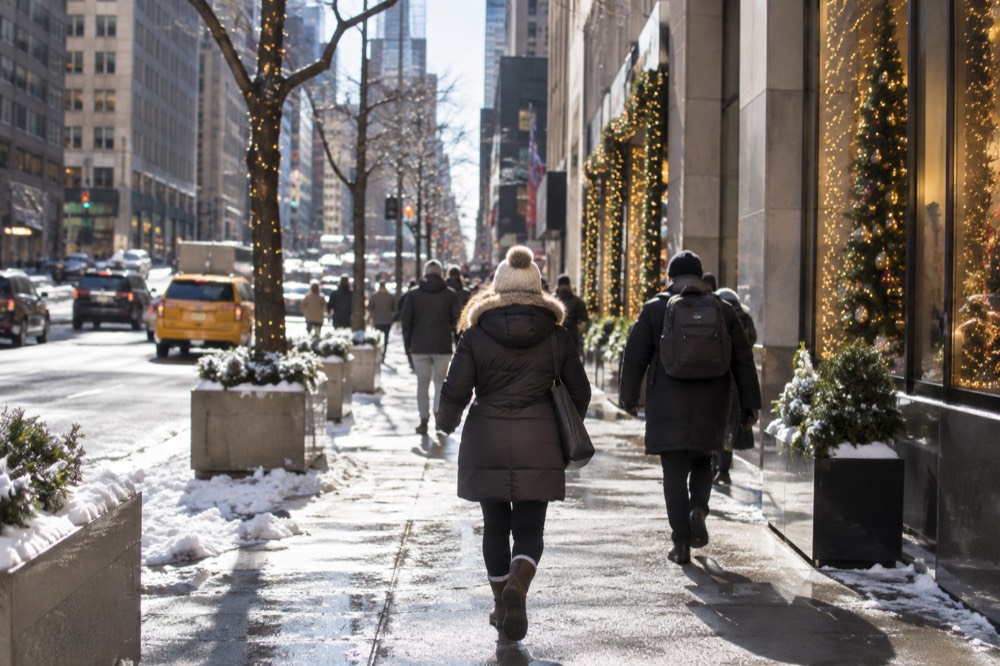
December in Central Park averages a high of 44.3°F and a low of 33.8°F, with 4.9 inches of snow and 4.38 inches of total precipitation across the month, according to the official NOAA 1991-2020 climate normals. That means the lights are best viewed right after sunset, around the early evening, before the temperature drops toward the overnight low, and a waterproof layer matters more than a parka.
The official record is more useful than most people expect. December is not New York's snowiest month: February is, at 10.1 inches against December's 4.9. December's threat is cold rain, since 4.38 inches of precipitation falls across the month and most of it will not arrive as snow. Wet sidewalks plus near-freezing evenings is the realistic worst case for standing around looking at houses.
Timing follows from the numbers. Sunset in late December falls in the late afternoon, and the lights look best in the first two hours after dark, when the sky still holds some blue in photographs and the temperature has not yet reached its overnight floor. Weeknights are quieter than weekends at Dyker Heights, and the displays run through the month rather than only around the holidays themselves.
The monthly normals also tell you what to pack against, month by month, if your trip spans late November into January:
| Month | Avg high °F | Avg low °F | Precipitation (in) | Snowfall (in) |
|---|---|---|---|---|
| November | 54.0 | 42.0 | 3.58 | 0.5 |
| December | 44.3 | 33.8 | 4.38 | 4.9 |
| January | 39.5 | 27.9 | 3.64 | 8.8 |
| February | 42.2 | 29.5 | 3.19 | 10.1 |
Read that table as a packing instruction. A late-November visit needs a real coat but tolerates long outdoor evenings. January and February demand the serious layers, and February pairs its coldest-feeling nights with the heaviest snow of the year. December, the lights month, sits in the middle: cold enough that you will feel the wind between blocks, mild enough that a hat and gloves plus a waterproof shell carry you through.
How Much Does a Christmas Lights Trip to NYC Cost?
The lights themselves are free everywhere worth going, so the budget is really transportation and what you wrap around it: about $6.00 per person in subway fares for a DIY Dyker Heights evening, from $63 per person for the guided tour, and whatever you spend on food, a show or a deck. A modest lights-focused evening can stay under $30 per person; a full holiday night with a musical or an observation deck runs well past $100.
A realistic planning range, using the prices on this site's tour listings:
| Item | From (per person) | Notes |
|---|---|---|
| Subway round trip to Dyker Heights | $6.00 | Two rides at $3.00 each, capped at $35 per week |
| Dyker Heights guided tour | $63 | About 3 hours 45 minutes, transport included |
| Sunset harbor lights cruise | $45 | Two hours on the water, skyline after dark |
| MJ the Musical ticket | $71.27 | Roughly 2 hours 30 minutes with intermission |
| SUMMIT One Vanderbilt ticket | $47.91 | Timed entry, book a slot |
| Holiday market snacks and gifts | varies | The flexible part of any budget |
The pairing logic matters more than any single line. Dyker Heights is an evening commitment in one corner of Brooklyn, so it fills a night on its own. Midtown lights, a market and a Broadway show stack naturally into a single evening, and the Theater District sits within walking distance of the Fifth Avenue windows. If you are building a full holiday itinerary rather than a lights-only one, the show ticket is the piece that needs booking furthest ahead.
Can You Pair the Lights with Other Holiday Plans in One Evening?
Yes, and the geography cooperates: the Midtown lights, the Rockefeller Center tree, Bryant Park's market and the Theater District all sit within a walkable cluster, so a single evening can cover windows, a market and a show. Dyker Heights is the exception, since it sits an hour away in Brooklyn and works best as a standalone outing, either as a guided tour or an early-evening DIY run.
The Midtown cluster is the efficient move. Start at the Fifth Avenue windows while there is still some daylight left for photos, walk to Rockefeller Center as the sky goes fully dark, loop through Bryant Park's market for food, and finish at a theater if you have tickets. Everything in that sentence happens within roughly a mile. Our Bryant Park guide covers the market side of that loop.
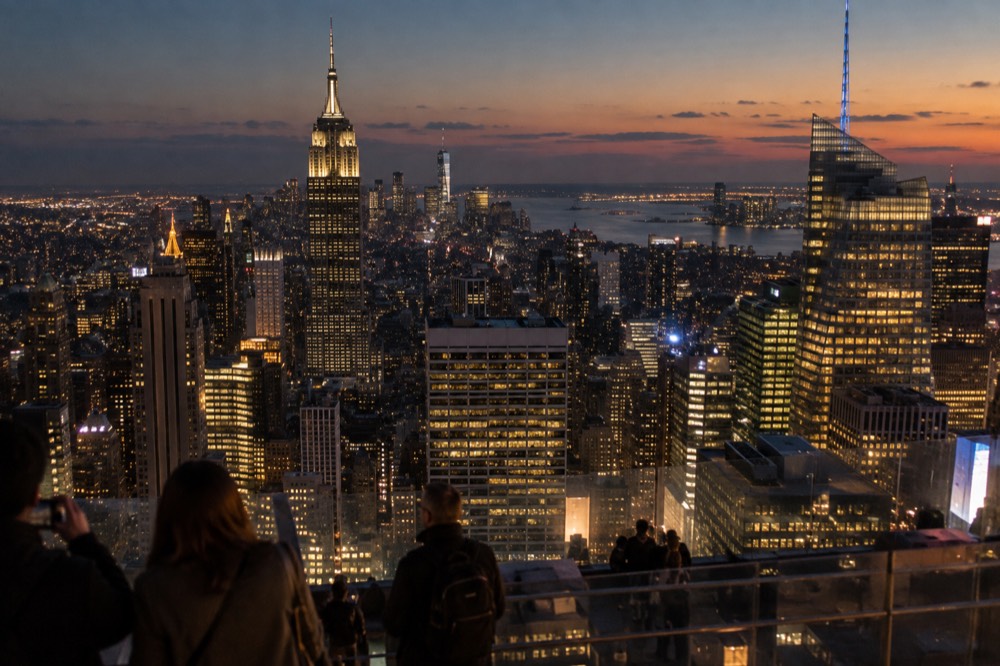
An observation deck slots into the same evening if you time it right. SUMMIT One Vanderbilt sits next to Grand Central, minutes from the Midtown lights, and its timed-entry system means you can book a slot that lands between your window walk and your show curtain. The mirrored rooms and glass ledges give a version of the city at night that photographs very differently from street level.
A sample Midtown evening, sequenced around the December sunset:
| Time | Stop | Why this order |
|---|---|---|
| Late afternoon | Fifth Avenue windows | Photos work best with some daylight left |
| Just after sunset | Rockefeller Center tree | The lights read best against a darkening sky |
| Early evening | Bryant Park holiday market | Food and warmth between the outdoor stretches |
| Mid-evening | SUMMIT One Vanderbilt or a Broadway show | Timed entry and curtain times both reward booking ahead |
What Should You Know Before Going to Dyker Heights?
Dyker Heights is a residential neighborhood, not a festival site: the displays are on private houses viewed from public streets, there are no public restrooms or food vendors on the decorated blocks, and the crowds on December weekends are heavy enough that local residents have asked visitors to be respectful. Go on a weeknight if you can, keep to the sidewalks, and treat the houses as homes, not a theme park.
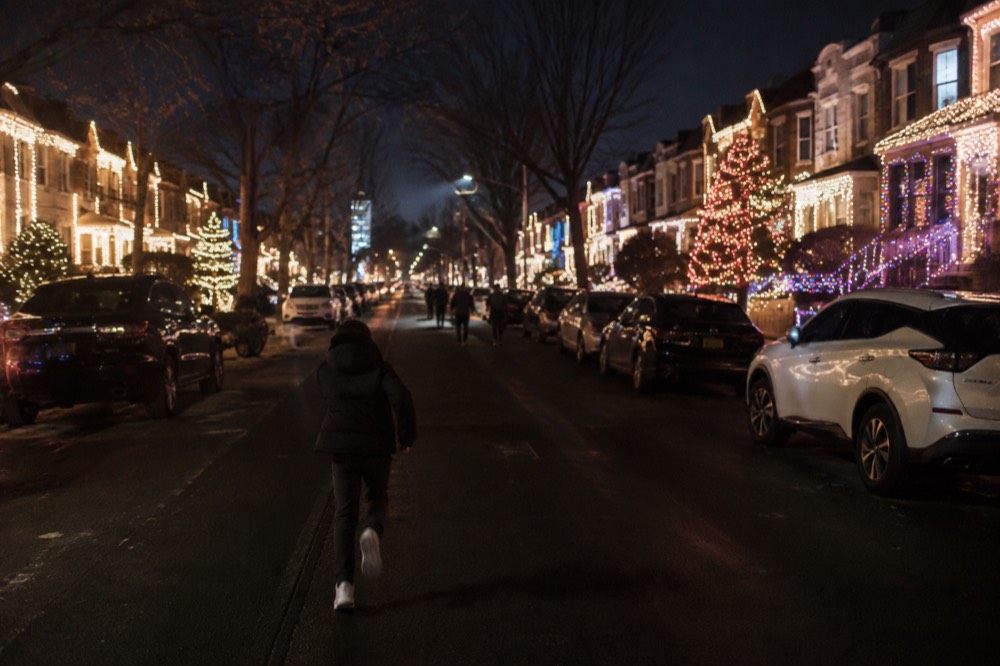
The etiquette point is not decoration. The display exists because residents choose to keep doing it, and the volume of visitors has grown year over year. Buses and guided groups arrive nightly in December. The streets stay open to residents' cars, so expect headlights and slow traffic between photo stops. The blocks between 11th and 13th Avenues around 83rd and 84th Streets are the densest stretch, and the lights typically run through the month.
Practical preparation: charge your phone, since cold drains batteries fast; wear shoes that handle wet pavement; and set a turnaround time before the cold makes the decision for you. If any of that sounds like friction you would rather pay to avoid, the guided tour exists exactly for that trade.
Common Questions About NYC Christmas Lights
The questions visitors ask most cluster around four things: whether Dyker Heights is free, how to reach it without a car, whether December is too cold to enjoy it, and whether a tour is necessary. The short answers: the lights are free to view, the subway is the only sensible way in, the cold is manageable with real layers, and a tour is optional but genuinely convenient for families and anyone unfamiliar with Brooklyn.
Is Dyker Heights free to visit?
Yes. The displays are on private houses viewed from public streets, and there is no gate, ticket or entry fee. The costs are your subway fare, about $6.00 round trip per person, or a guided tour from $63 per person if you want the transportation and route handled.
When do the NYC Christmas lights turn on?
The Midtown commercial displays and the Rockefeller Center tree light up in late November and run through the holiday season. Dyker Heights houses light up through December, with the densest activity in the two weeks around Christmas. Evenings after sunset are the viewing window everywhere.
How cold is New York in December for walking around outside?
Central Park averages a December high of 44.3°F and a low of 33.8°F, per the official NOAA 1991-2020 normals. Plan for temperatures near the low after sunset, and expect cold rain as much as snow: December averages 4.38 inches of precipitation.
Can you see Christmas lights without leaving Manhattan?
Yes. The Fifth Avenue store windows, the Rockefeller Center tree, Bryant Park's holiday market and the decorated storefronts of SoHo form a walkable circuit. Dyker Heights is the only major display that requires a long subway ride into another borough.
Is a guided Christmas lights tour worth it?
It depends on your comfort with the subway. The guided Dyker Heights tour, from $63 per person and about 3 hours 45 minutes, covers the ride and the route. Confident riders can do the same blocks for two subway fares, but they take on the navigation, the timing and the cold-walk-back themselves.
One last planning note that most guides skip: the lights are an evening activity in a month with early sunsets, so your days stay free for museums and your nights belong to the lights. Build the trip that way, with the subway's $35 weekly cap quietly absorbing the cost of all that riding, and December in New York starts to feel less like endurance and more like a schedule that was designed to work. That is the honest pitch of this New York City Travel Guide: the city in winter is cold, and it is also at its most decorated.