Rockefeller Center Christmas Tree: What to Know Before You Go
The Rockefeller Center Christmas Tree is free to see, sits in a public plaza that never closes to walkers, and draws its biggest crowds in the two hours after dusk. Here is how to plan a visit that actually works: when to go, where to stand, what the views cost, and what to pair it with.
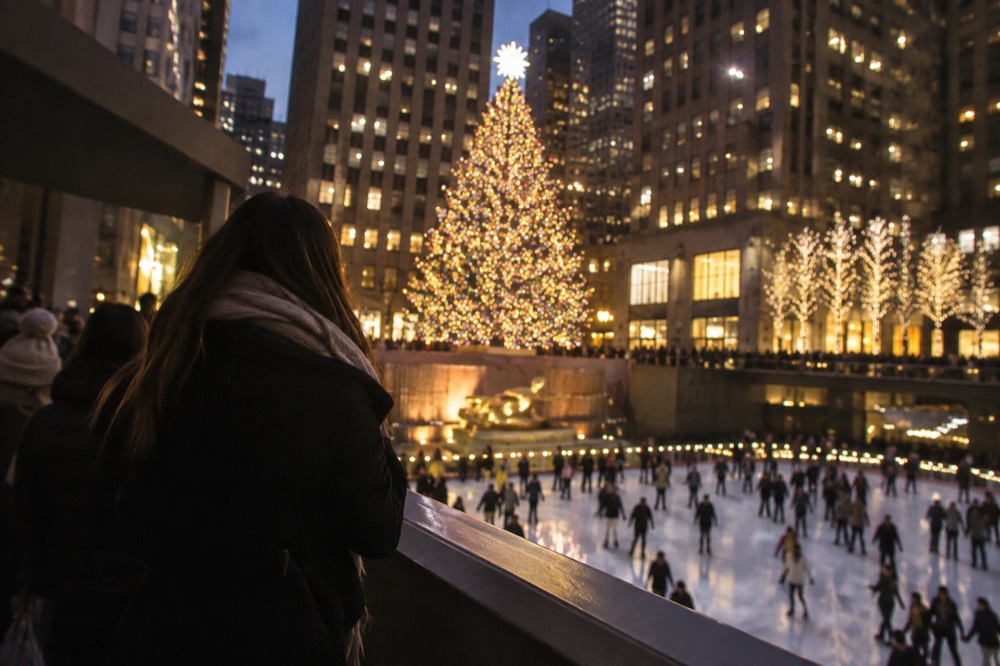
Short answer
The Rockefeller Center Christmas Tree is free to visit, no ticket required, and typically stays lit from the lighting ceremony in early December through early January. The best strategy is to arrive before dusk on a weekday, view the tree from the plaza or from Top of the Rock above it, and check Rockefeller Center's official site for this year's exact lighting date and daily hours.
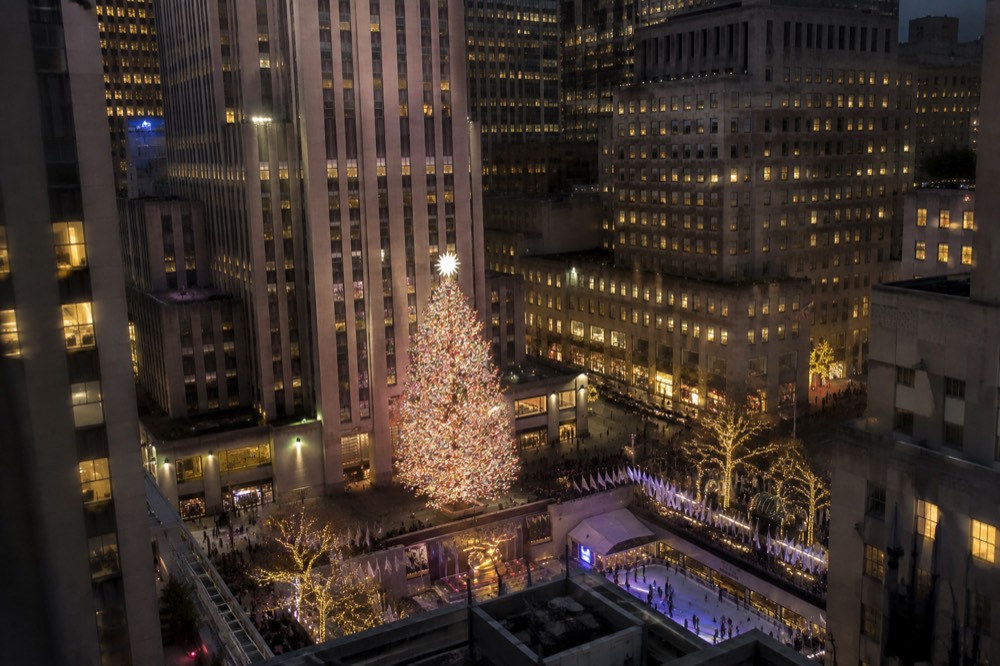
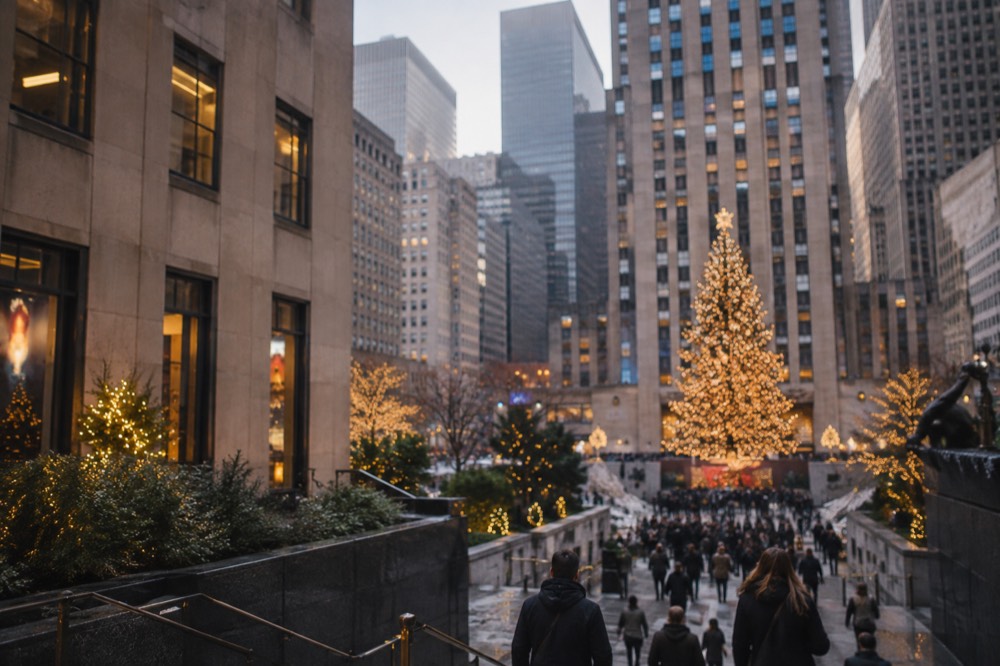
The Rockefeller Center Christmas Tree stands roughly level with the sixth floor of 30 Rockefeller Plaza, which is the single most useful fact about photographing it. From the plaza below you are looking up at a lit spruce framed by limestone; from the Top of the Rock observation deck, three levels up at 30 Rockefeller Plaza, you are looking at it sideways, with the tree's crown and the skyline in one frame. Those are two different photographs, and the second one costs money while the first is free.
The tree is also one of the few headline New York attractions that charges nothing. The plaza is public space, walkers can approach it at any hour, and the only real costs are the things you choose to add: the rink, the deck, the show, the shopping. This guide, from the New York City Travel Guide editorial desk, lays out what is free, what is not, and how to sequence an evening around the tree without spending it in a crowd you cannot see over.
One honesty note up front: the lighting date, the tree's height and its origin change every year, and Rockefeller Center announces them on its own site each season. Rather than print a date that will be wrong by the time you read this, this guide points you to the official announcement and sticks to what stays true every December.
When Is the Rockefeller Center Christmas Tree Lit?
The tree is typically lit in early December and stays up through early January, but the exact lighting date changes every year and is announced by Rockefeller Center on its official site. The ceremony is televised and the plaza is at its absolute fullest that evening, so unless attending it is the point of your trip, plan around it. Once lit, the tree glows every evening, and the plaza remains free and open to walk through.
The lighting ceremony is a ticketed broadcast event for the area directly in front of the tree, and the surrounding plaza fills hours early. For most visitors it is the one evening to avoid. The nights immediately after it are busy too, since the tree is new and everyone wants to see it first.
The practical window is mid-December through the days before Christmas: the tree is fully lit, the holiday market in the surrounding promenade is running, and the crowds, while real, are predictable. Weeknights after 8pm thin out noticeably. The week between Christmas and New Year's Eve is the densest of the season, and New Year's Eve in Times Square, a short walk north, adds barrier-and-checkpoint chaos to the whole neighborhood. If your dates are flexible, the first two weeks of December trade slightly thinner crowds for the best odds of a calm visit.
The tree comes down in early January, and the removal is faster than most visitors expect, the giant spruce is dismantled and milled for lumber within days. Do not plan a mid-January visit around it.
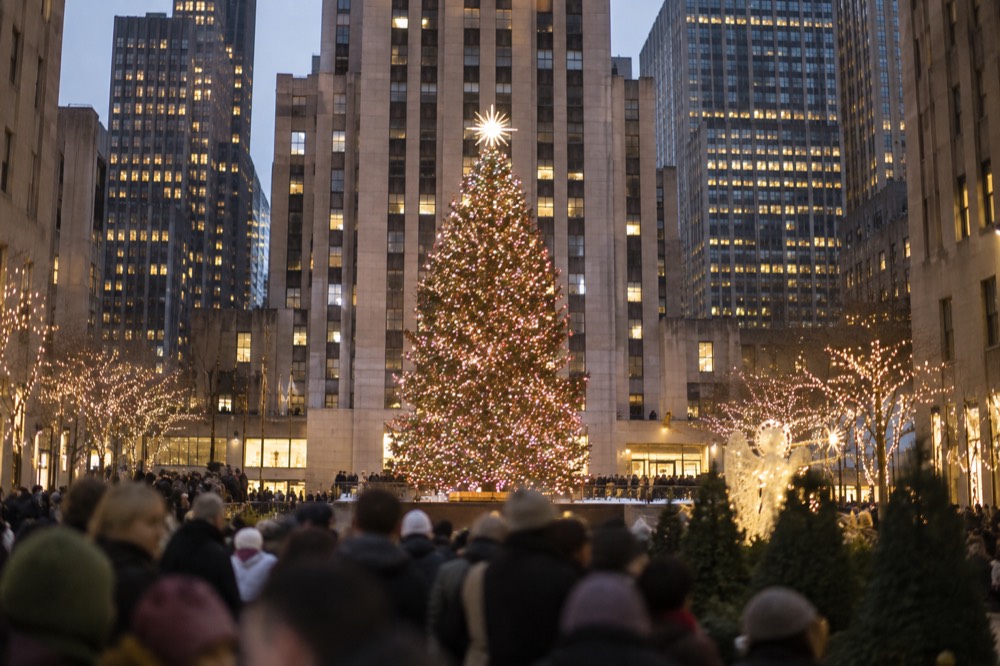
Where Is the Tree and How Do You Get There?
The tree stands in the plaza in front of 30 Rockefeller Plaza, between 5th Avenue and 6th Avenue, entered from West 49th Street or West 50th Street. The closest subway stop is 47-50 St Rockefeller on the B, D, F and M trains, directly beneath the complex. A single subway ride costs $3.00, and there is no MetroCard to buy any more.
Getting there is the easy part. The B, D, F and M trains stop literally underneath Rockefeller Center at 47-50 St Rockefeller, and the exit dumps you a block from the plaza. The E and M lines also stop two blocks away, and the 6 train at 51 St is close enough in cold weather to matter.
The fare system changed recently and older guides have not caught up. As of 1 January 2026 the MTA no longer sells or refills MetroCards at all, and the old 7-day unlimited pass is gone. You tap instead: OMNY takes any contactless credit card, debit card or phone wallet at the turnstile, and a weekly cap of $35 applies automatically once you have taken enough rides, with no pass to buy and nothing to decide in advance. Just tap the same card or the same phone every time, because mixing devices breaks the cap silently. The single ride is $3.00, and children under 44 inches tall ride free with a paying adult, up to three per adult.
Arriving by subway rather than car is not a stylistic preference here. Midtown street traffic in December moves at walking speed much of the evening, parking around Rockefeller Center is scarce and expensive, and the tree is a five-minute walk from a station that serves four subway lines. The subway guide covers the system in depth if this is your first trip.
For orientation beyond the tree itself, the Rockefeller Center guide maps the whole complex, including the rink, the promenade shops and the deck entrances, and the broader things to do in NYC roundup places the season in context.
What Are the Best Views of the Rockefeller Center Christmas Tree?
The best free view is from the plaza level, facing the tree from the Channel Gardens approach, which frames it between the building facades; the best paid view is from Top of the Rock, the observation deck at 30 Rockefeller Plaza, which puts you at the tree's own height with the skyline behind it. The deck is open daily 08:00-24:00, and adult admission starts from $42 with timed entry slots.
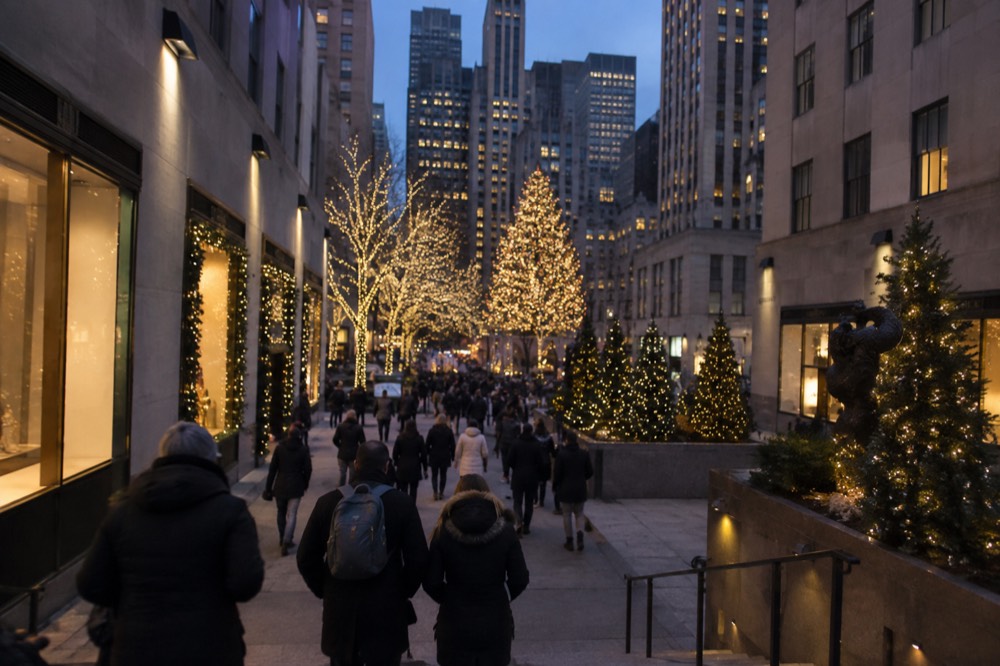
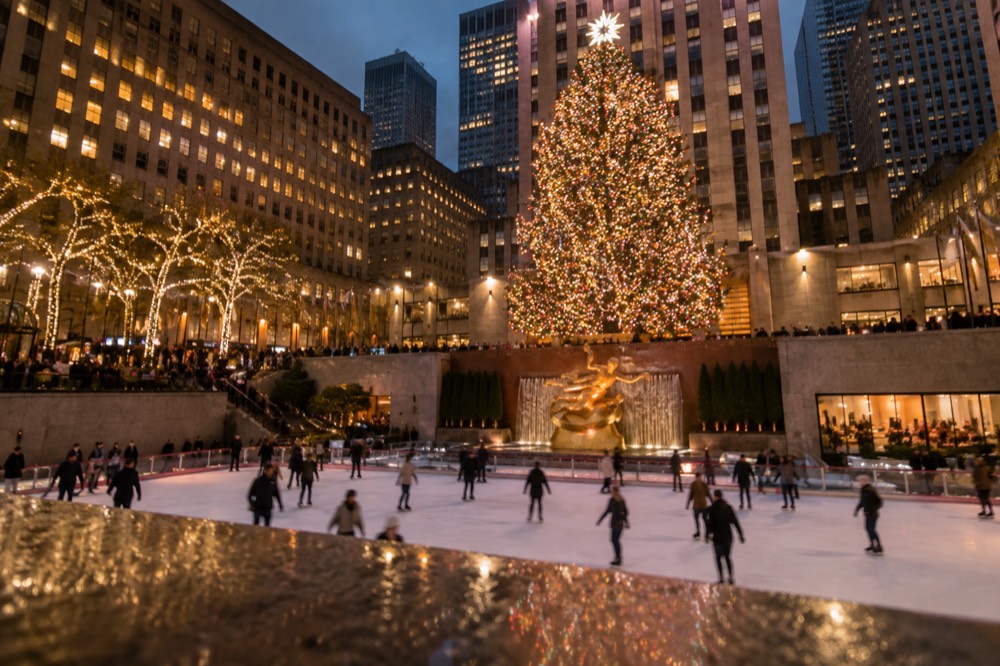
The plaza view costs nothing and is the one most visitors want anyway: you stand among the crowds, the angels and the rink, and the tree fills your field of vision from below. The Channel Gardens, the planted walkway running up from 5th Avenue toward the plaza, gives you a framed approach shot that straight-on plaza angles do not. Go before dusk and you can watch the lights come on, which is a better experience than arriving after dark into a fully lit scene.
The deck view is a different thing entirely. Top of the Rock sits atop 30 Rockefeller Plaza, the same building the tree stands in front of, and its three observation levels look down the plaza and out over Midtown. From there the tree is not a vertical object above you but a lit shape in a grid of streets, with the Empire State Building in the same frame to the south. The deck is the only major observation point that puts the Empire State Building itself in the picture, which is why photographers keep choosing it. Adult admission starts from $42 with timed entry, and CityPASS lists the box-office price at $71.86, so booking ahead rather than walking up is the cheaper route.
Sunset slots are the ones that sell out first, and for good reason: you get the tree, the skyline and the light changing in one visit. If a sunset slot is gone, a late-evening slot after 9pm is the sleeper pick, the deck runs to midnight with last entry at 23:10, and the crowds thin while the tree stays lit.
How Much Does a Rockefeller Center Christmas Tree Visit Cost?
Seeing the tree itself is free, always, because it stands in a public plaza. The costs around it are optional and vary widely: skating on the rink, riding to Top of the Rock, shopping the holiday market, and eating in the area can run from nothing to several hundred dollars per person. A CityPASS at $149 adult covers five major attractions including Top of the Rock, which can undercut buying the deck separately if your itinerary matches its list.
Here is the honest breakdown of what a tree visit can cost, from the free floor upward:
| Item | Typical cost | Notes |
|---|---|---|
| Viewing the tree from the plaza | Free | Public space, no ticket, no time limit |
| Subway ride to Rockefeller Center | $3.00 | OMNY tap, capped at $35 per 7 days automatically |
| Top of the Rock observation deck | From $42 adult | Timed entry; CityPASS lists box office at $71.86 |
| The Rink at Rockefeller Center | Varies by session and date | Skate rental extra; book sessions on the rink's official site |
| Holiday market stalls | Free to browse | Food and crafts priced per item |
| CityPASS (5 attractions) | $149 adult, $129 child | Valid 9 consecutive days; includes Top of the Rock |
The CityPASS math deserves a sentence of explanation. At $149 for adults it bundles five attractions from a list of eleven, and Top of the Rock, the Empire State Building and the Statue of Liberty ferry anchor it. CityPASS's own published comparison prices the five heavy hitters at $307.04 bought separately, which is where its savings claim comes from. The pass only pays off if you genuinely use all five tickets inside its nine consecutive days, so check the New York CityPASS guide against your itinerary before committing. If your December plan is tree, one deck, one museum and a cruise, it probably wins; if the tree is a one-evening stop on a loose trip, it probably does not.
The rink is the classic upsell and the honest advice is that it is more fun to watch than to skate if you are on a schedule. Sessions are timed, rental lines are long in December, and the ice is small enough that you will spend as much time queueing as skating. The Christmas in NYC guide covers rink alternatives across the city, several of which are cheaper and less crowded.
Rockefeller Center Tree or Dyker Heights Lights: Which Should You See?
See both if your trip allows, because they are different experiences: the Rockefeller Center tree is a single monumental spruce in a dense Midtown plaza, while Dyker Heights in Brooklyn is a residential neighborhood where whole blocks of houses are decorated in lights and inflatables. The tree costs nothing and takes an hour; Dyker Heights is a three-to-four-hour excursion into a corner of Brooklyn most visitors never reach.
Dyker Heights is the answer to the question the tree cannot answer: after twenty minutes at the plaza you have seen the tree, and after an hour you have seen the rink and the market too. Dyker Heights is an evening. The Brooklyn neighborhood's homeowners spend weeks on displays, and the result is less a single attraction than a decorated district you walk or drive through, house after house.
Getting there independently means a long subway ride to Brooklyn followed by a walk through residential streets in December cold, which is part of the charm for some visitors and a dealbreaker for others. A guided tour solves the transport: the Dyker Heights Christmas Lights tour runs about 3 hours 45 minutes, is rated 4.5 from 922 reviews, and starts from $63 per person, with the bus handling the ride from Manhattan. Families tend to do especially well on it, since the bus beats hauling children across the borough on the D train at night.
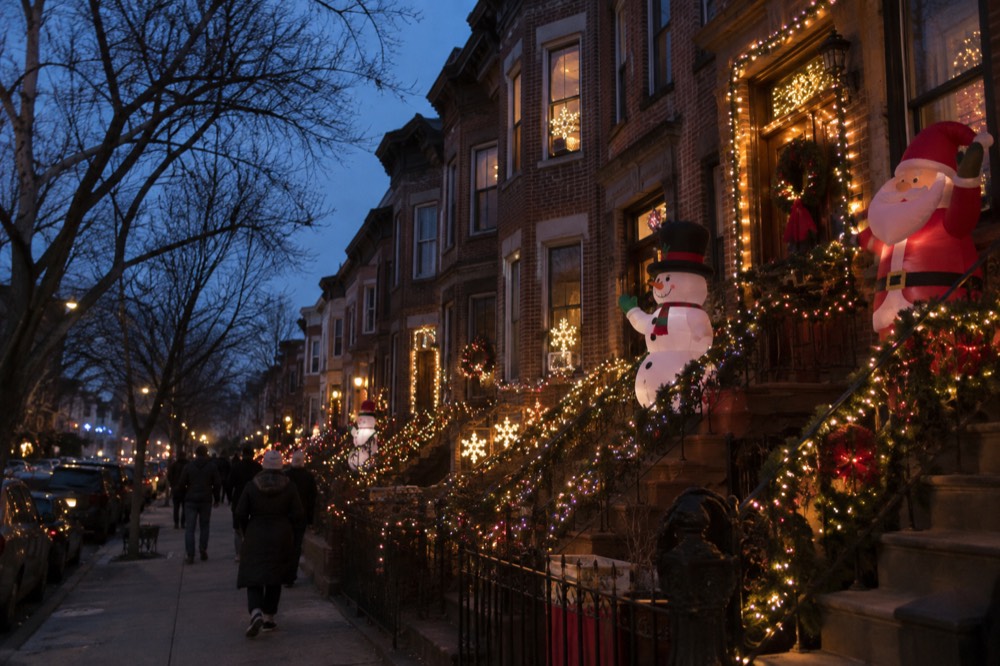
The pairing that works best is tree first, Dyker second, on different evenings. The tree is a Midtown stop you can fold into any day; Dyker Heights deserves its own night, ideally a weekday when the sidewalks around the displays are thinner. The nyc-christmas-lights roundup collects the full set of decorated neighborhoods and displays across the five boroughs if you want more than one.
Can You Pair the Tree with a Broadway Show the Same Night?
Yes, and it is one of the best natural pairings in the city, because Rockefeller Center sits a ten-minute walk from most Broadway theaters and the tree looks best after dark, which is exactly when shows let out. A typical plan is tree at dusk, dinner in Midtown, curtain at 8pm, and the lit tree again on the walk back to your train.
The geography does the work here. The Theater District starts around 45th Street and Broadway, and Rockefeller Center's plaza is between 49th and 50th. Walking from the tree to a theater takes ten minutes at a December pace, and the blocks between are full of restaurants built for exactly this pre-show traffic. The where to eat before a Broadway show piece covers the practical options.
For tickets, the honest mechanics are these. TKTS, the discount booth run by TDF, sells same-day seats at up to 50% off face value, with a $8 per-ticket service fee, from two booths: the classic one in Times Square at Duffy Square and a second at Lincoln Center. There is no downtown or Brooklyn booth any more, despite what older guides say. The TKTS app shows live booth inventory but only for that same-day and next-day-matinee window. If you would rather gamble, digital lotteries through Broadway Direct and Lucky Seat typically price wins around $30-$50, varying by show.
If you want a guaranteed big night rather than a lottery gamble, booking a specific show ahead is the reliable route. MJ the Musical, the Michael Jackson jukebox show, plays in the Theater District, runs about two and a half hours, and holds a 4.8 rating from 2,786 reviews, with tickets from $71.27. It is a loud, polished, choreography-heavy night that lands well with groups and solo travelers alike, though very young children may find the volume a lot. The best Broadway shows guide compares the full slate if MJ is not your sound.
What Is December Weather Really Like Around the Tree?
December in Central Park averages a high of 44.3°F and a low of 33.8°F with 4.38 inches of precipitation and 4.9 inches of snow, per the NOAA 1991-2020 climate normals, which means standing at the plaza is genuinely cold and occasionally wet but rarely extreme. The practical plan is layers, a real coat, and shoes that handle slush, because the cold that ends a tree visit is the one you dressed badly for.
The official climate normals for Central Park, the station that governs this forecast area, give December an average high of 44.3 and an average low of 33.8. That average low sits right at the freezing line, which is why the plaza feels different at 5pm than it does at 9pm on the same evening. Snow averages 4.9 inches across the month, so a white-Christmas visit is possible but not the default.
| Month | Avg high °F | Avg low °F | Precipitation (in) | Snowfall (in) |
|---|---|---|---|---|
| November | 54.0 | 42.0 | 3.58 | 0.5 |
| December | 44.3 | 33.8 | 4.38 | 4.9 |
| January | 39.5 | 27.9 | 3.64 | 8.8 |
| February | 42.2 | 29.5 | 3.19 | 10.1 |
Two counterintuitive facts from the same dataset are worth knowing before you book any winter trip. July, not a winter month, is actually New York's wettest month at 4.60 inches of precipitation, and February out-snows January, 10.1 inches against 8.8, while also being the driest month of the year. December sits in the middle of everything: cold enough to need a coat, not the snowiest month, and reliably dark by 4:30pm, which is precisely why the tree works.
The wind is the detail that surprises people. The plaza sits in a canyon of tall buildings, and the blocks around Rockefeller Center channel cold air along 49th and 50th. A calm evening in the West Village can be a bitter one at the tree. Plan your indoor stops, the market, the shops, the deck's indoor queue, as wind breaks rather than destinations.
How Do You Beat the Crowds at the Rockefeller Center Christmas Tree?
The crowd peaks in the two hours after dusk and on every night between Christmas and New Year's, so the reliable quiet windows are weekday evenings before 5pm, weekday nights after 9pm, and the first week of December before schools break. Arriving before the lights come on lets you claim a viewing spot in daylight, and the plaza never requires a ticket.
Crowd behavior at the tree follows the light. Once the sky goes dark, the plaza fills, and it stays full until the late-evening cold thins it. The counter-strategy is to use the calendar and the clock against the crowd: early December weekdays are the calmest lit-tree evenings of the season, and even in peak weeks, a 9pm arrival is a different experience from a 6pm one.
The rink and the deck are the two things with real queues. The rink's sessions are timed and booked ahead; the deck's timed entry spreads arrivals, but sunset slots concentrate demand. Book the deck online rather than walking up, both for the slot and because the walk-up box-office price, which CityPASS lists at $71.86, sits well above the from-$42 advance pricing.
If you are photographing rather than just viewing, the honest advice is that the plaza's best angles are taken by tripods and phone-holders within an hour of dusk, and that the Channel Gardens approach, the walkway from 5th Avenue, gives a framed shot that the head-on angles do not. The nyc-photo-spots guide covers the rest of Midtown if the tree is one stop on a photography day.
What Else Is Within Walking Distance of the Tree?
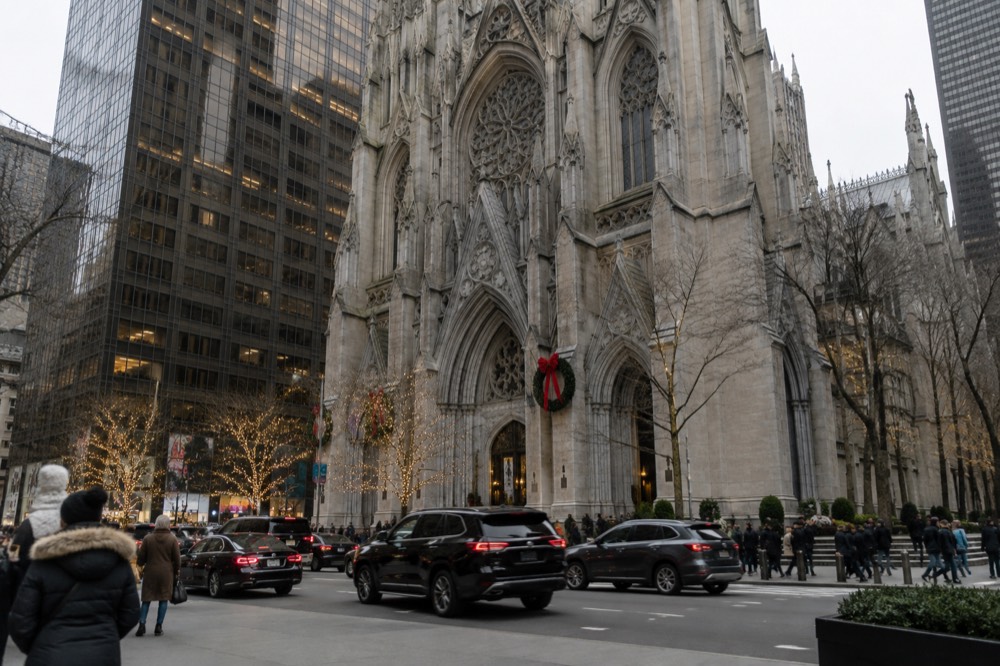
Within ten minutes' walk of the tree you have St Patrick's Cathedral on 5th Avenue, the holiday market stalls of the Rockefeller Center promenade, the rink itself, the Museum of Modern Art three blocks north, and the southern edge of Central Park about a fifteen-minute walk up 5th Avenue. This density is the real argument for basing a December evening here: one neighborhood holds a cathedral, a museum, a deck, a rink and the tree.
St Patrick's Cathedral faces the complex from 5th Avenue and is free to enter, a warm, quiet stop that resets you between the plaza's noise and whatever comes next. The St Patrick's Cathedral guide covers hours and visiting etiquette, which matter more during the holiday crush.
MoMA sits three blocks north, holds a 4.6 rating from 14,142 reviews on its skip-the-line ticket, and costs $30 adult admission with free entry for anyone 16 and under. Its free Friday evenings, 17:30-20:30, are reserved for New York State residents with proof, so visitors should not plan around them. In December, an afternoon museum hour followed by a dusk tree visit is a sequence that works, and the MoMA tickets guide has the details.
| Stop | Walk from the tree | Cost | Best time |
|---|---|---|---|
| St Patrick's Cathedral | 3 min | Free | Weekday mornings |
| The Rink | On site | Session price varies | Book ahead, avoid dusk |
| Top of the Rock | On site | From $42 adult | Sunset or after 9pm |
| MoMA | 3 blocks north | $30 adult | Afternoon, before dusk |
| Central Park south end | 15 min | Free | Daylight hours |
| Times Square / TKTS booth | 10 min | Free to walk; tickets 20-50% off | Before 6pm for shorter lines |
Common Questions About the Rockefeller Center Christmas Tree
The questions visitors ask most are about cost, timing and crowds: the tree is free and needs no ticket, the lighting happens in early December with the exact date announced each season by Rockefeller Center, the best quiet windows are weekday nights after 9pm, and the deck above it, Top of the Rock, is the one paid view that changes what you see. The answers below cover the rest, from subway fares to whether the ceremony is worth attending.
Is the Rockefeller Center Christmas Tree free to visit?
Yes. The tree stands in a public plaza, no ticket is required, and there is no time limit on how long you stay. The costs around it, the rink, the observation deck, the market food, are all optional.
When is the Rockefeller Center Christmas Tree lit?
Typically in early December, with the tree staying lit nightly through early January. The exact lighting date changes every year and is announced by Rockefeller Center on its official site, so check there rather than relying on a date printed in a guide, including this one.
What is the best time of day to see the tree?
Weekday nights after 9pm for thin crowds, or arrival before dusk if you want to watch the lights come on and claim a good viewing spot in daylight. Avoid the two hours right after sunset in the week between Christmas and New Year's, which is the densest window of the season.
How do I get to Rockefeller Center by subway?
Take the B, D, F or M to 47-50 St Rockefeller, which exits directly beneath the complex. The E and M lines also stop two blocks away. A ride costs $3.00 with an OMNY tap of any contactless card or phone, and a $35 weekly cap applies automatically. MetroCards are no longer sold.
Is Top of the Rock worth it for seeing the tree?
It is the only view that puts you at the tree's own height with the skyline behind it, including the Empire State Building in the same frame. Admission starts from $42 with timed entry, the deck is open daily 08:00-24:00, and sunset slots sell first. If your budget allows one paid view in December, this is the one that photographs the tree differently.
Is the lighting ceremony worth attending in person?
Only if attending the ceremony is the specific point of your trip. The plaza fills hours early, the immediate tree area is a ticketed broadcast zone, and the surrounding streets are at their most congested all season. Every other lit evening gives you the same tree with a fraction of the crowd.
One last planning note that ties the whole evening together: the tree, the deck, the cathedral and the theaters all sit inside a ten-minute walk of a single subway station, which means the difference between a good December night and a stressful one is mostly sequencing. Tree before dusk, deck at sunset, dinner after, curtain at eight, train home from underneath the complex. The city does the rest.