Wheelchair Accessible NYC: Getting Around and What to Visit
New York is more navigable by wheelchair than its reputation suggests, but the accessibility is uneven: elevators exist at most major attractions and many subway stations, while gaps between stations and older sidewalks still catch visitors out. This guide covers what the city actually offers, with verified fares and honest limits.

Short answer
NYC is broadly wheelchair accessible at major attractions, ferries and museums, and every city bus is accessible with ramps, but only a portion of subway stations have working elevators, so plan routes around the stations that do. A single subway or local bus ride costs $3.00, and OMNY caps a week of rides at $35 automatically.
Wheelchair Accessible NYC: Getting Around and What to Visit
New York answers the accessibility question unevenly, and any honest guide has to say so up front. The parts of the city built for crowds, the ferries, the museums, the observation decks, the modern plazas, are largely step-free and well equipped. The parts built in the 19th and early 20th centuries, the subway system above all, are where a wheelchair user needs to plan rather than wander. Every MTA city bus has a ramp or lift and kneels at the curb. A large share of subway stations do not have an elevator at all, and among those that do, elevators break down often enough that the MTA publishes live status for every one of them.
The good news is that the planning burden is front-loaded. Once you know which stations, attractions and neighborhoods work, New York rewards that preparation more than almost any other American city, because so much of what people come for is either at street level or reached by systems that were retrofitted decades ago. This guide lays out the verified fares, the accessible attractions worth booking, the neighborhoods that are flat and pleasant to roll through, and the places where the honest answer is "harder than it looks."
Is New York City Wheelchair Accessible?
New York is wheelchair accessible at the attraction level and partially accessible at the street-transit level. Every MTA bus is accessible, the Staten Island Ferry is accessible, the Statue of Liberty ferries are accessible, and the major museums and observation decks offer step-free entry. The subway is the weak point: only a portion of stations have elevators, and elevator outages are common enough that the MTA publishes real-time status for every elevator in the system.
The practical takeaway is that a wheelchair user can do nearly everything a walking tourist does in New York, but with route planning that a walking tourist never has to think about. The MTA maintains an elevator and escalator status feed covering the whole subway system, and checking it before each journey is the single habit that makes the subway usable. That feed is live at mta.info's elevator and escalator status page, and it lists every out-of-service elevator before you commit to a station.
Two structural facts shape everything else. First, Manhattan's street grid is mostly flat and wide, with curb cuts at the vast majority of corners, so surface travel by bus, taxi or simply rolling is genuinely practical in a way it is not in many older cities. Second, the attractions that dominate itineraries, the decks, the museums, the ferry landmarks, were retrofitted for accessibility years ago because federal law and sheer visitor volume demanded it. The gap between reputation and reality is mostly a subway problem, and the subway problem is mostly solvable with the status feed and a little patience.
What Does Accessible Transit Cost in NYC?
A single subway or local bus ride costs $3.00, and there is no pass to buy any more: the MetroCard was retired on 1 January 2026, and the weekly value now comes from OMNY, which automatically caps a rolling seven-day period at $35 per card or device. Every MTA city bus is wheelchair accessible with ramps, and it costs the same $3.00 fare.
The fare mechanics matter for a wheelchair user more than for most visitors, because accessible trips often involve buses, and the transfer rules are generous. One free transfer within two hours applies between subway and bus in either direction, and bus-to-bus transfers are free too. Tap the same card or phone every time: the $35 weekly cap only counts rides on one card or one device, and mixing a phone with a plastic card breaks the cap silently. Each traveler in a group needs their own card or device to earn their own cap.
The reduced-fare program deserves a specific mention. Eligible riders, which includes people with qualifying disabilities, pay $1.50 on the subway and local buses at all times of day, and the reduced weekly cap is $17.50. Applying ahead of a trip through the MTA's reduced-fare program is worth doing if your stay is longer than a few days, though for a short visit the standard $35 cap is rarely the difference between an affordable trip and an expensive one.
| Transit item | Standard fare | Reduced fare (eligible seniors/disabled) |
|---|---|---|
| Subway or local bus, single ride | $3.00 | $1.50 |
| Express bus, single ride | $7.25 | $3.60 (off-peak only) |
| Weekly cap, subway + local bus (automatic via OMNY) | $35.00 | $17.50 |
| Weekly cap including express buses | $67.00 | - |
| Free transfer window | 2 hours, subway↔bus or bus↔bus | same |
| Children under 44 inches | Free with paying adult, up to 3 | - |
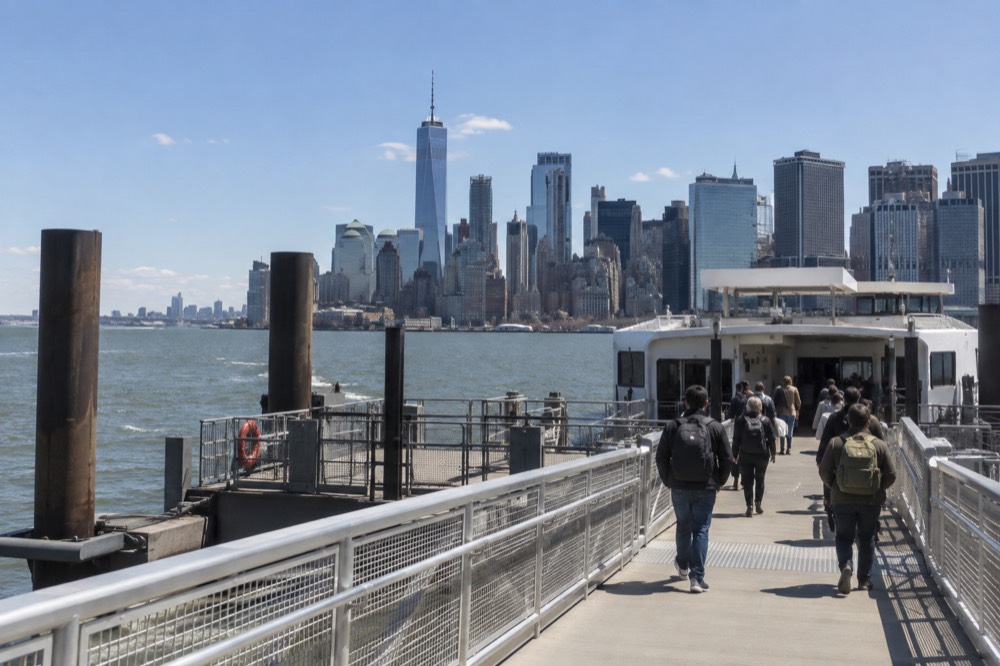
For trips the subway cannot serve, two more options are accessible. Every yellow taxi in the modern fleet is not wheelchair-accessible, but the city operates a dedicated wheelchair-accessible taxi fleet bookable through the standard cab apps and by phone, and all ride-hail platforms offer accessible vehicle options that should be requested in the app settings before you need them. The Staten Island Ferry, which runs around the clock, is fully accessible with ramps at both terminals and boarding assistance available, and it is free, though this guide recommends confirming current details on the NYC DOT ferry page before relying on any specific boarding procedure.
If you are building a full itinerary around the accessible highlights, the things to do in NYC page is the site's master list, and most entries there note which experiences are step-free.
Which Observation Decks Are Accessible?
All five major Manhattan observation decks, the Empire State Building, Top of the Rock, SUMMIT One Vanderbilt, Edge and One World Observatory, are wheelchair accessible, with elevator access to the viewing levels and step-free decks. The differences that matter are price and queueing: One World Observatory is the cheapest adult entry from $30.49, while several Midtown decks price from $47.91 on the booking pages.
Timed entry is the friend of any visitor who wants to avoid standing in line, and all five decks use it, so book a slot rather than walking up. The Empire State Building's box-office adult price is $75.12 for the full AM/PM experience, and Top of the Rock's is $71.86, both figures published by the pass operators as the comparison price against their bundles. If you plan to visit several decks plus other paid attractions, a pass can beat individual tickets, and the New York CityPASS guide runs the arithmetic.
One practical note on deck choice: Edge at Hudson Yards has a glass floor section, and its outdoor skywalk is stepped in places, so check the layout on the listing if a fully level outdoor deck matters to you. SUMMIT One Vanderbilt is largely an indoor, mirrored experience reached by elevator, which makes it one of the easier decks for a chair user, and it sits directly next to Grand Central, itself an accessible terminal with elevators to its platforms.
| Observation deck | Nearest accessible transit anchor | Adult price from (booking page) | CityPASS-published box office |
|---|---|---|---|
| Empire State Building | 34 St-Penn Station area | $47.91 | $75.12 |
| Top of the Rock | 47-50 St Rockefeller Center area | $45.73 | $71.86 |
| SUMMIT One Vanderbilt | Grand Central Terminal | $47.91 | not on CityPASS |
| Edge | Hudson Yards, 7 train to 34 St-Hudson Yards | $47.91 | $62.06 |
| One World Observatory | WTC area, E train to World Trade Center | $30.49 | not on CityPASS |
Are NYC Museums Wheelchair Accessible?
The major New York museums, including the Metropolitan Museum of Art, MoMA, the American Museum of Natural History, the Guggenheim, the Whitney and the 9/11 Memorial & Museum, are wheelchair accessible, with step-free entrances, accessible restrooms and loaner wheelchairs at the main sites. Admission varies most: the Met charges a fixed $30 for adult visitors, MoMA is $30, and the 9/11 Memorial & Museum timed ticket starts from $25 on the booking page.
The Met deserves the clearest possible framing, because it is the most misquoted museum in American travel writing. Admission is $30 for adults, $22 for seniors and $17 for students, and children 12 and under enter free. Pay-what-you-wish applies only to New York State residents and to students from New York, New Jersey and Connecticut, and even then you must pay something, with online pay-what-you-wish requiring a New York State billing address. Out-of-state and international visitors pay the fixed $30. One genuinely useful fact most guides omit: every Met ticket covers same-day entry to both Met Fifth Avenue and The Met Cloisters, so a single admission buys two accessible buildings.
The Met is also mid-renovation, which matters if a specific wing is your reason for going. The American Wing, the Costume Institute, the Cantor Roof Garden, the Modern and Contemporary galleries and several other ranges are closed in whole or in part, and the museum publishes the full list at its gallery closures page. Check it before booking rather than discovering a closed wing on arrival.
MoMA offers free entry on Friday evenings from 17:30 to 20:30, but only for New York State residents with proof, so visitors should not plan around it. The Whitney is more generous: free entry every day for anyone 25 and under, free Friday nights for everyone, and free all day on the second Sunday of each month. The 9/11 Memorial & Museum runs Free Admission Mondays, with tickets released on its website each Monday at 07:00 ET, first come first served. The memorial plaza itself, the outdoor reflecting pools, is free and always open, daily 08:00 to 20:00, and the plaza is level and step-free.
| Museum | Adult admission | Free or discounted windows that apply to visitors |
|---|---|---|
| Metropolitan Museum of Art | $30 ($22 seniors, $17 students) | Pay-what-you-wish only for NY State residents and NY/NJ/CT students, minimum $0.01 |
| MoMA | $30 | Free Friday nights 17:30-20:30, NY State residents only, proof required |
| 9/11 Memorial & Museum | $36 box office, timed tickets from $25 | Free Admission Mondays, released 07:00 ET; memorial plaza always free |
| Whitney Museum | $30 | Free daily for 25 and under; free Friday nights 17:00-22:00; free second Sundays |
| Guggenheim | $30 standard, $16 during exhibition changeover | Pay-what-you-wish Tuesdays and Sundays 16:00-17:30, minimum $1 |
| Intrepid Museum | $38 | 50% off every day for NYC residents; free for US military and veterans |
For a broader museum itinerary, the museums in NYC guide covers the full landscape, and the free museums in NYC page lists every genuinely free or pay-what-you-wish window with its conditions.
Is the Statue of Liberty Ferry Accessible?
Yes. The official Statue City Cruises ferries from Battery Park and Liberty State Park are wheelchair accessible, and both Liberty Island and Ellis Island have accessible routes, museums and restrooms. An adult general ferry ticket, covering both islands and both museums, costs $26.00, and the same ticket includes self-guided audio tours on both islands. The one hard limit is the statue's crown, which is reached by a narrow spiral staircase and is not wheelchair accessible.
The National Park Service is explicit that Statue City Cruises is the only ferry operator authorized to land at the islands, and that matters for accessibility as much as price: lookalike cruise operators circle the islands without landing, and a visitor who buys one of those cannot set foot on Liberty Island at all. The Park Service publishes detailed accessibility information for both islands, including which routes and facilities are step-free, at its Liberty Island accessibility page, and reading it before booking answers every layout question this guide would otherwise have to hedge.
The pedestal, unlike the crown, has elevator access part of the way up, and pedestal reserve tickets cost $26.30 for adults, thirty cents more than the grounds ticket. The crown reserve ticket is also $26.30, but the crown itself involves a narrow double-helix staircase with no elevator, so it is off the itinerary for wheelchair users regardless of ticket. Crown tickets sell out around 90 days and often several months ahead, are limited to four per household and require photo ID at check-in, so if a companion in your party wants the crown while you stay below, book early. The full index of guides sits on New York City Travel Guide.
| Ferry ticket tier | Adult | Child 4-12 | Senior 62+ | Wheelchair access |
|---|---|---|---|---|
| General / Reserve (both islands, both museums) | $26.00 | $17.00 | $23.00 | Ferries and island grounds accessible |
| Pedestal Reserve | $26.30 | $17.30 | $23.30 | Elevator serves part of the pedestal |
| Crown Reserve | $26.30 | $17.30 | $23.30 | Not accessible, stairs only, no elevator |
| Ellis Island Hard Hat Tour (13+) | +$55 | n/a | n/a | Check the listing, the hospital complex has limits |
If a half-day on the islands is more than your schedule allows, a non-landing harbor cruise is a fully accessible alternative that still delivers the statue and the skyline from the water, with boarding ramps at the pier.
Which NYC Neighborhoods Are Easiest to Roll Through?
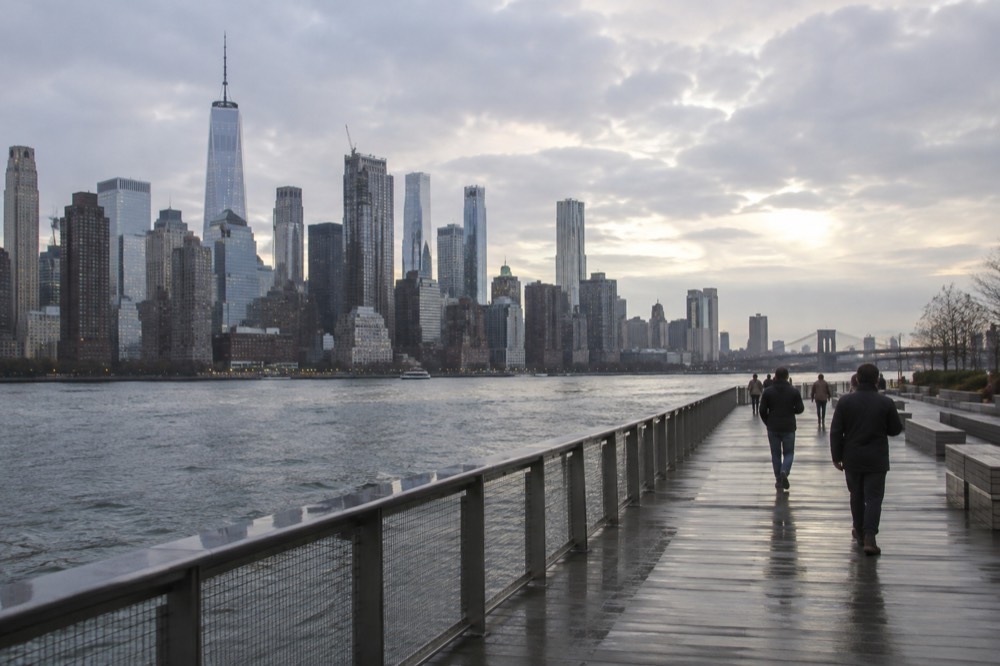
Flat, wide and recently rebuilt neighborhoods are the easiest for wheelchair travel: the Financial District and Battery Park City at the island's southern tip, the Hudson River waterfront including the High Line and Little Island, Chelsea and the Meatpacking District, and the modern plazas of Hudson Yards. Greenwich Village and SoHo are level but their sidewalks are narrower and older, while DUMBO in Brooklyn combines cobblestones with excellent waterfront paths, so route around the cobbled blocks.
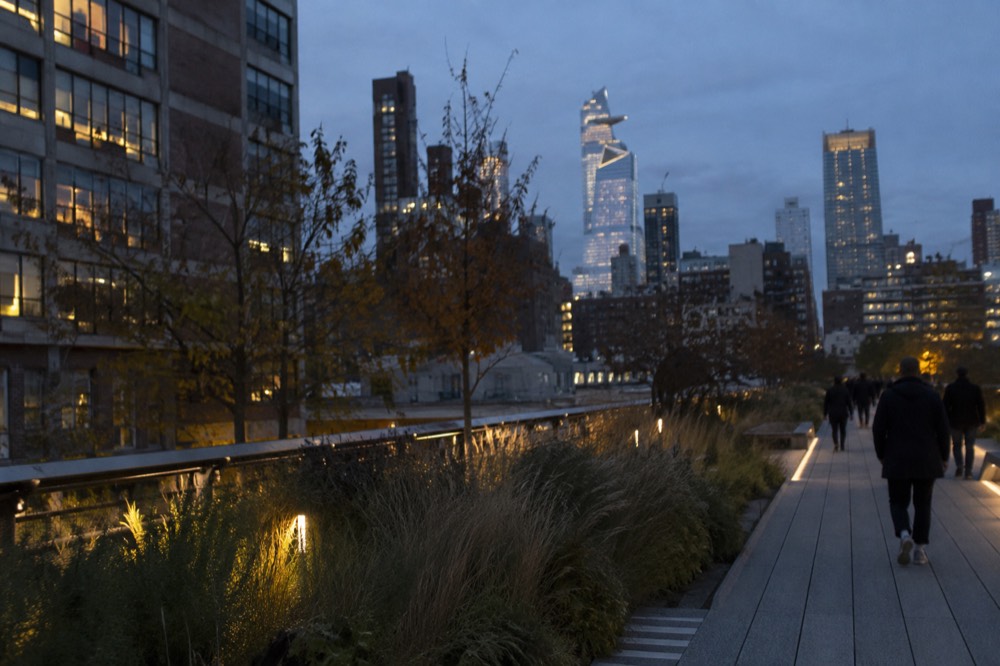
The waterfront is the city's best accessible corridor, and it is almost continuous. The High Line is fully wheelchair accessible with elevators at its main entrances along its length, level walkways and accessible restrooms, and it connects at its southern end to the Meatpacking District and at its northern end toward Hudson Yards, both rebuilt in the last two decades with generous, step-free sidewalks. Little Island, the park on stilts at 15th Street, was designed from scratch with accessible routes throughout. You can string together a full day, High Line, Chelsea Market, Little Island, Hudson Yards, without ever needing a subway elevator.
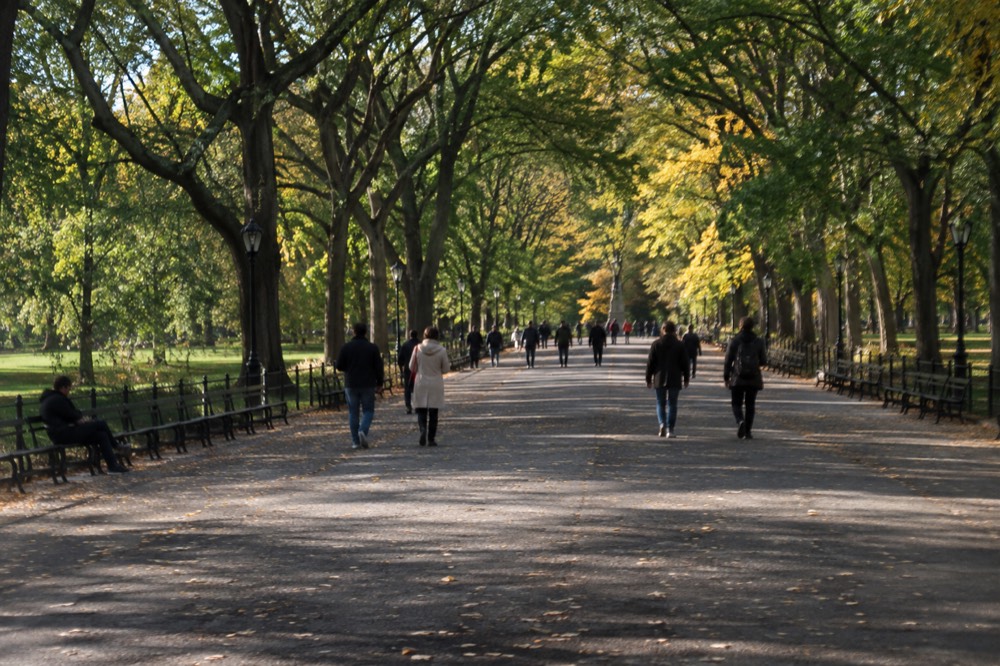
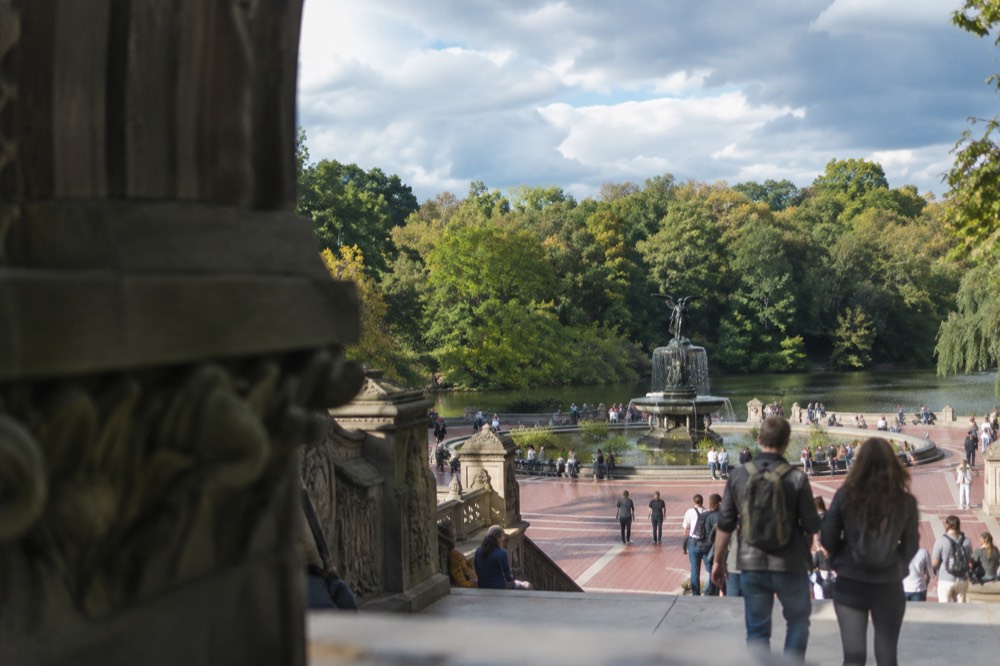
Central Park is the other great accessible expanse. The park's main drives are level, wide and closed to cars for most of the day, and Bethesda Terrace, the Mall and the lakeside paths are all reachable without stairs. The park's official map marks accessible entrances and restrooms, and the loop roads make orientation simple. For first-time visitors, the Central Park guide covers the layout, and a free things to do in NYC itinerary pairs the park with other no-cost, step-free stops.
Two honest warnings. SoHo's famous cast-iron blocks are beautiful but its sidewalks are among the older and more crowded in Manhattan, and crowds, not architecture, are usually the real obstacle. And in the historic downtown streets of the Financial District, some colonial-era lanes have vaulted sidewalks and grating that merit care, though the district's main arteries, Broadway, Water Street and the Battery Park City esplanade, are modern and level.
Where Should a Wheelchair User Stay in NYC?
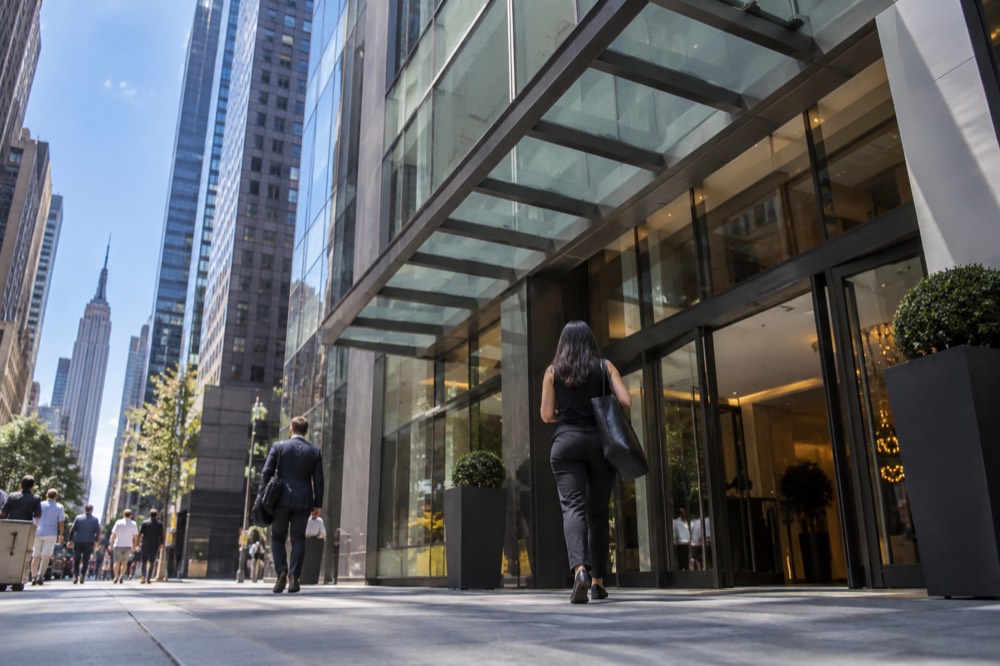
Midtown and the modern hotel districts are the practical choices, because they sit on the accessible subway spine and put step-free attractions within rolling distance. Midtown East around Grand Central offers level sidewalks and elevator-served stations, Chelsea and Hudson Yards offer the newest accessible hotel stock, and Lower Manhattan around the World Trade Center is rebuilt, flat and transit-rich. Avoid choosing a hotel by price alone.
Book the accessible room type explicitly rather than assuming, because hotels hold very few of them and they sell out first. Call the property after booking to confirm the room is genuinely step-free with a roll-in shower, not merely "accessible adjacent," and confirm the hotel's own entrance is step-free, since some older properties meet the letter of the rules with a portable ramp at a side door. The where to stay in NYC guide breaks the neighborhoods down by trip type, and the accessibility overlay on top of it is simple: prefer buildings built or renovated in the last three decades.
Can You Do Accessible Food Tours and Walking Tours in NYC?
Yes, with the right picks. The major food-tour routes through Chelsea Market, Greenwich Village, Chinatown and Little Italy run through flat, compact neighborhoods, and Chelsea Market in particular is fully indoors and step-free, making it a strong all-weather, accessible choice. Standard walking tours move at a set pace over two to three hours, so contact the operator before booking to confirm the route suits your equipment and speed.
Chelsea Market is the easiest sell: the whole building is level, the High Line's southern entrance is a short roll away, and the market half of a food tour there is entirely indoors, which makes it the best rainy-day option on this site's roster. Chinatown and Little Italy tours cover flat, dense blocks where the walking is easy but sidewalks are busy, so peak-hour crowds are the main friction rather than terrain. Greenwich Village tours wind through narrow, level streets and past Washington Square, which is step-free throughout.

The honest caveat is that "walking tour" operators vary enormously in their accessibility experience, and New York's tour industry has no standard. Email the operator through the listing with two questions: does the route involve stairs or subway platforms, and can the pace accommodate a chair? Operators that answer both questions directly are the ones worth booking. The NYC food tours page lists the main routes with durations and areas.
What Should a Wheelchair User Budget for an Accessible NYC Trip?
Count the same costs any visitor faces, fares, attractions, food, lodging, then add the accessibility-specific line items: accessible taxis where the subway fails, and possibly a folding chair or scooter rental for long days. Transit is cheap, $3.00 a ride capped at $35 a week, the big attractions run $25 to $75 per adult, and a five-attraction CityPASS at $149 adult beats buying the top sights individually if you will genuinely use all five.
The pass question is worth real attention for a first visit, because the classic accessible circuit, a deck, the ferry to Liberty and Ellis Islands, a major museum, the 9/11 Memorial & Museum, is exactly the set of heavy hitters the CityPASS bundles. At $149 for adults and $129 for children 6-17, valid over nine consecutive days, it covers your choice of five attractions from a menu of eleven, and CityPASS's own comparison prices the included box-office total at $307.04 for the full set. The arithmetic only works if you use all five, so match the menu to your actual plans before buying. The is the New York CityPASS worth it analysis runs the numbers trip-type by trip-type.
| Budget item | Typical cost | Notes for accessible travel |
|---|---|---|
| Transit, one week | up to $35 per person | Automatic OMNY cap, no pass to buy, buses included |
| Observation deck | from $30.49 to $47.91 adult | One World Observatory cheapest; box-office rates much higher |
| Statue of Liberty and Ellis Island ferry | $26.00 adult | Both islands and museums included, ferries accessible |
| Major museum | $25 to $38 adult | Met $30, 9/11 Museum timed from $25, Intrepid $38 |
| Five-attraction CityPASS | $149 adult, $129 child | 9 consecutive days, choice of 5 from 11 |
| Accessible taxi, where needed | metered fare | Book WAV vehicles in the app or by phone |
One cost trap worth naming: do not budget for a rental car. New York's honest answer for getting around is the subway and bus network plus your feet or wheels, parking is expensive and scarce, and a car adds nothing an accessible taxi cannot do better. If a day trip up the Hudson Valley or out to the outlets is on your list, that is the one case where car hire makes sense, and even there, organized coach tours with accessible boarding, booked through their listings, are usually the simpler route.
Common Questions About Wheelchair Accessible NYC
The questions wheelchair users ask most concern the subway's real coverage, whether the landmark attractions are step-free, and what a week of accessible sightseeing costs. The short answers: buses are fully accessible, the subway is elevator-dependent and needs live status checking, every major deck, museum and ferry landmark is accessible, and a week of transit costs at most $35 per person in fares plus attraction tickets running roughly $25 to $75 each. The details below expand each answer with the verified figures.
Is the NYC subway wheelchair accessible?
Partially. Every MTA city bus is wheelchair accessible, but only a portion of subway stations have elevators, and elevator outages are frequent. The MTA publishes live elevator and escalator status for the entire system, and checking it before each trip is the habit that makes the subway workable. The fare is $3.00 a ride, capped automatically at $35 per rolling week through OMNY.
Is the Statue of Liberty wheelchair accessible?
The official Statue City Cruises ferries are accessible, and both Liberty Island and Ellis Island have accessible grounds, museums and restrooms. A general adult ticket costs $26.00 and covers both islands. The statue's crown is not accessible, it is reached by a narrow staircase with no elevator, but the pedestal has elevator access part of the way up.
Are the observation decks in NYC wheelchair accessible?
Yes, all five major decks, the Empire State Building, Top of the Rock, SUMMIT One Vanderbilt, Edge and One World Observatory, offer elevator access to their viewing levels. Adult prices start from $30.49 at One World Observatory up to $47.91 at several Midtown decks, with box-office rates considerably higher. Book timed entry in advance to skip the lines.
Is the High Line wheelchair accessible?
Yes. The High Line has elevators at its main entrances, level walkways along its length and accessible restrooms, and it connects step-free neighborhoods at both ends. It links naturally to Chelsea Market, which is fully indoors and level, and to Little Island, a purpose-built accessible park at 15th Street.
Can I still buy a 7-day unlimited MetroCard in NYC?
No. The MTA stopped selling and refilling MetroCards on 1 January 2026, and the 7-day unlimited no longer exists. Its replacement is automatic: tap a contactless card, phone or OMNY card and your rides cap at $35 across a rolling seven-day period, with nothing to buy in advance. Any guide quoting a 7-day unlimited price is out of date.
Is the Metropolitan Museum of Art accessible, and is it free?
The Met is wheelchair accessible, with step-free entrances and loaner chairs, but it is not free for visitors. Adult admission is a fixed $30, and pay-what-you-wish applies only to New York State residents and NY/NJ/CT students, who must still pay something. One ticket covers same-day entry to both the Fifth Avenue museum and The Met Cloisters, and the museum's gallery closures page should be checked before a visit, since several wings are closed for renovation.
The last word of planning advice is the one this site gives for a reason: New York's accessibility rewards preparation and punishes improvisation less than you might fear, but more than a walking visitor ever notices. Build each day around one elevator-served subway anchor or one flat neighborhood, keep the MTA's live elevator status bookmarked, and book the timed-entry attractions ahead. Do that, and the city that seems, from a distance, like a grid of stairs and broken elevators turns out to be a city you can genuinely take in from a chair.