Museums in NYC: Every Major Museum, Ticket Prices and Free Days
New York has more world-class museums than any other American city, and the ticket rules are stranger than most guides admit. Here is what each major museum actually costs, who genuinely gets in free, and how to plan a museum day without queuing for an hour.
Short answer
The best museums in NYC are the Metropolitan Museum of Art, MoMA, the American Museum of Natural History, the 9/11 Memorial and Museum, the Guggenheim and the Whitney. Most charge $30-$43 for adults, but nearly every one has a real free or pay-what-you-wish window, and several have residency rules that decide whether you pay full price.
New York City holds more major museums per square mile than anywhere else in the country, and the numbers behind them are routinely misreported. The Metropolitan Museum of Art is not pay-what-you-wish for tourists, a fact that has been wrong in print for nearly a decade. The Whitney Museum of American Art lets anyone under 25 in free, every single day. The 9/11 Memorial and Museum releases free tickets every Monday morning at 07:00 ET, and they go fast.
This guide lays out what each major museum actually charges, who qualifies for reduced or free entry, and how to structure museum days so you are not standing in a ticket line at noon. Every figure below comes from the museums' own ticketing pages and published box-office prices, and where a number is genuinely in dispute, it says so. For the wider sightseeing picture, start with our things to do in NYC overview.
What Are the Best Museums in NYC?
The best museums in NYC are the Metropolitan Museum of Art for world art and history, MoMA for modern art, the American Museum of Natural History for dinosaurs and the planetarium, the 9/11 Memorial and Museum for its documented history, the Guggenheim for its spiral building, and the Whitney for American art with Hudson views. A second tier, including the Intrepid and the Tenement Museum, suits specific interests rather than general itineraries.
The honest answer to "which museum should I visit" depends on what you want from the visit. The Met is the encyclopedic heavyweight: Egyptian temples, European painting, arms and armor, and enough depth that a full day barely scratches it. MoMA is the tighter, more modern counterpoint, home to Van Gogh's Starry Night and a design collection that rewards an hour even if painting is not your thing.
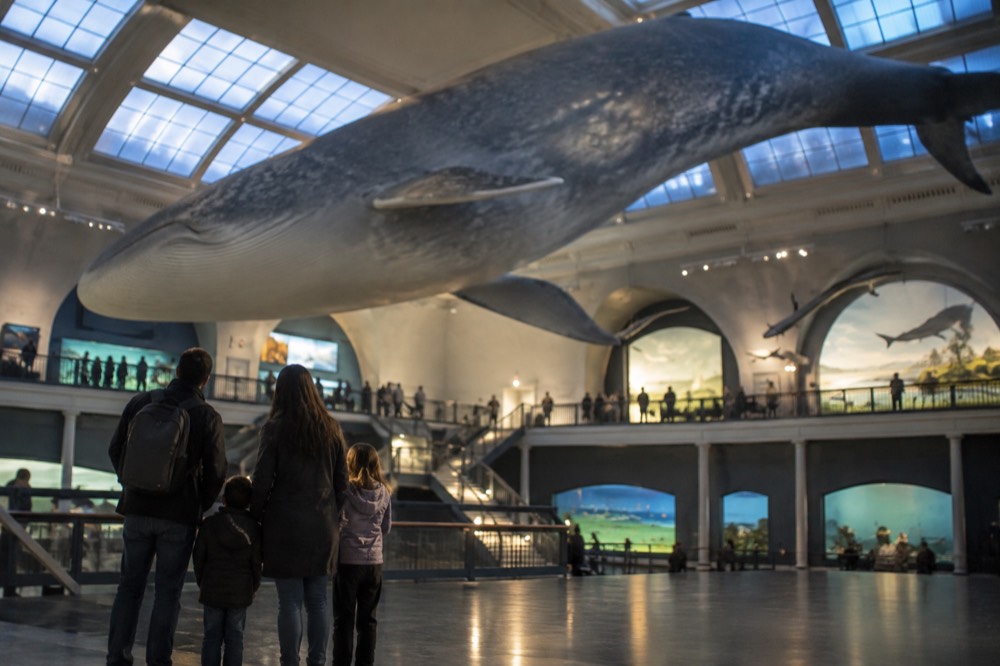
The American Museum of Natural History is the family pick, with dinosaur halls, the great blue whale, and the Hayden Planetarium. It sits directly across Central Park from the Met, which makes an Upper East Side and Upper West Side pairing possible on a single day, though an exhausting one.
The 9/11 Memorial and Museum is a different kind of institution. The outdoor memorial pools in the plaza are free and open to all, daily. The museum beneath them is a documented exhibition of the attacks and the lives lost, and it deserves time and attention rather than a slot squeezed between shopping stops. Our 9/11 Memorial and Museum guide covers the plaza, the museum and the ticket options in detail.
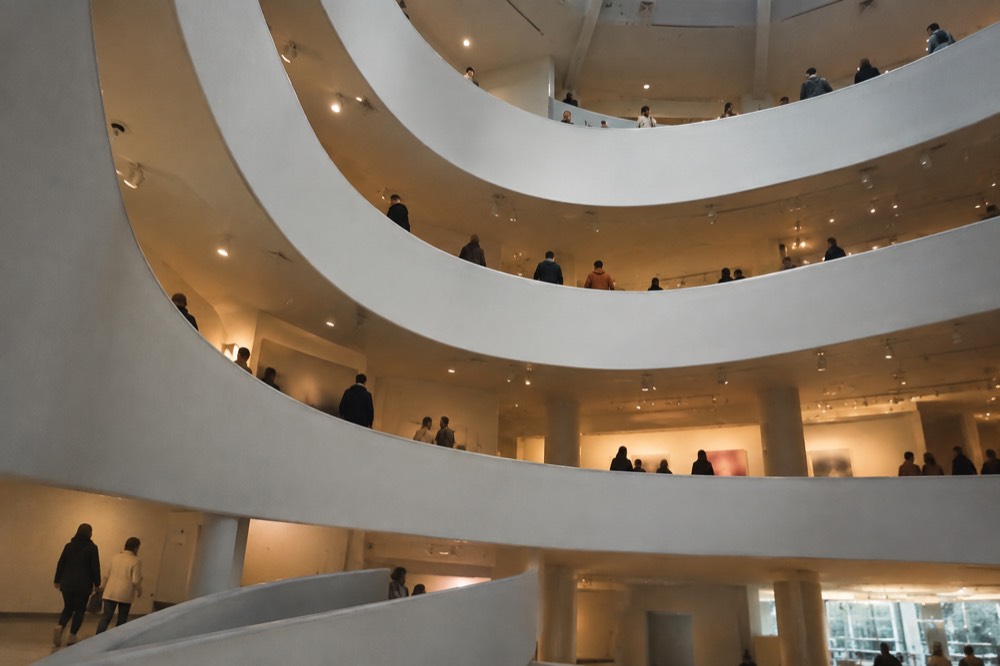
For architecture alone, the Guggenheim is worth the trip: Frank Lloyd Wright's spiral ramp means you ride up and walk down through the collection. The Whitney, down in the Meatpacking District, sits at the southern end of the High Line and frames its American art against the Hudson River from a stack of outdoor terraces.
One museum that surprises first-time visitors is the Empire State Building's own. The ticket that covers the 86th floor observation deck also includes a museum experience on the building's second floor, which walks through the construction and the history of the tower. It pairs naturally with a Midtown museum day.
How Much Do NYC Museum Tickets Cost?
Adult admission at NYC's major museums runs from $25 to $43: the Met charges $30, MoMA charges $30, the Guggenheim charges $30 standard, the Whitney charges $30, the Intrepid charges $38, and the 9/11 Memorial and Museum charges $36. The American Museum of Natural History's exact headline price is in flux between sources, but its policy is confirmed: New York State residents pay what they wish for general admission, and everyone else pays a fixed price.
Those are the fixed, mandatory prices for out-of-state visitors. What complicates the picture, and what most guides compress into a misleading sentence, is that nearly every museum has a residency or age condition attached to its discounts. The table below shows the headline adult price at each museum plus who genuinely qualifies for less.
| Museum | Adult price | Children | The discount most guides miss |
|---|---|---|---|
| Metropolitan Museum of Art | $30 | 12 and under free | Pay-what-you-wish for NY State residents and NY/NJ/CT students only, with proof |
| MoMA | $30 | 16 and under free | Free Friday evenings 17:30-20:30, NY State residents only, proof required |
| Guggenheim | $30 standard, $16 during exhibition changeover | Under 12 free | Pay-what-you-wish Tuesdays and Sundays 16:00-17:30 |
| Whitney Museum | $30 | 25 and under free, every day | Free Friday nights 17:00-22:00, open to everyone |
| Intrepid Museum | $38 | 4 and under free | NYC residents get 50% off every day |
| 9/11 Memorial and Museum | $36 | 6 and under free | Free Monday tickets released each Monday at 07:00 ET |
| American Museum of Natural History | Fixed price for non-NY residents | Pay-what-you-wish general admission for NY State residents with ID |
Two notes on that table. The Guggenheim's $16 rate is real but only applies during exhibition changeover periods, so check which state the pricing is in before you budget. And the American Museum of Natural History's flat adult price is the one number in this guide that could not be pinned to a single verified figure: the museum's policy, read directly from its own ticketing page, is that New York State residents pay what they wish for general admission and everyone else pays a fixed price, but the exact figure conflicts between sources and should be confirmed on the museum's site before you visit.
The Met deserves its own paragraph because it is the most commonly botched fact in New York travel writing. Admission is $30 for adults, $22 for seniors and $17 for students, fixed and mandatory for anyone who is not a New York State resident or a student from New York, New Jersey or Connecticut. Pay-what-you-wish exists, but it means you must still pay something, minimum one cent per ticket, and online pay-what-you-wish purchases require a New York State billing address. New Jersey and Connecticut students must buy in person with valid student ID. If a guide tells you the Met is free or pay-what-you-wish for everyone, close the tab.
There is a genuine bonus built into that $30 that almost no guide mentions: every Met ticket includes same-day entry to both Met locations, Fifth Avenue and The Met Cloisters, for the date on your ticket. The Cloisters in Upper Manhattan hold the medieval collection in a building assembled from European cloisters, and it is one of the quietest major museums in the city. One ticket, two museums, if you plan the day around it.
If you plan to hit several museums plus observation decks, a pass changes the arithmetic. The New York CityPASS costs $149 for adults and covers your choice of five attractions from an eleven-attraction list, valid for nine consecutive days. The list includes the American Museum of Natural History, the Guggenheim, the Whitney, the Intrepid and the 9/11 Memorial and Museum, alongside the Empire State Building and the Statue of Liberty ferry. Our is the New York CityPASS worth it breakdown runs the numbers against real itineraries.
Which NYC Museums Are Free or Pay-What-You-Wish?
Free entry in NYC museums is mostly conditional: the Whitney is free every day for anyone 25 or under and free Friday nights for everyone, the 9/11 Museum releases free Monday tickets at 07:00 ET, the Guggenheim runs pay-what-you-wish Tuesday and Sunday late afternoons, and MoMA runs free Friday evenings for NY State residents only. There is no unconditional free day at the Met, MoMA or the Intrepid.
The pattern to understand is that New York museums shifted the free-entry burden onto residency verification. A tourist from out of state does not qualify for the Met's or MoMA's pay-what-you-wish schemes, and showing up expecting one produces an awkward moment at the desk. What a tourist can plan around is the genuinely open windows.
| Museum | Free window | Who qualifies | How to get it |
|---|---|---|---|
| Whitney | Free Friday nights 17:00-22:00 | Everyone | Advance tickets recommended, capacity limited |
| Whitney | Free Second Sundays, all day | Everyone | Timed tickets required, released monthly |
| 9/11 Memorial and Museum | Free Mondays | Everyone | Released on the website each Monday at 07:00 ET, first come first served |
| 9/11 Memorial and Museum | First Sunday monthly 16:00-19:00 | People who live, work or study in the New York area | ID required |
| 9/11 Memorial and Museum | Museums for All | EBT cardholders, limit four | At the box office |
| Guggenheim | Pay-what-you-wish Tue and Sun 16:00-17:30 | Everyone | Advance reservation strongly recommended, sells out |
| MoMA | Free Fridays 17:30-20:30 | NY State residents only | Reserve in advance, proof of residency required |
| Met and AMNH | Pay-what-you-wish general admission | NY State residents, and NY/NJ/CT students at the Met | Proof required, online purchase needs a NY State billing address |
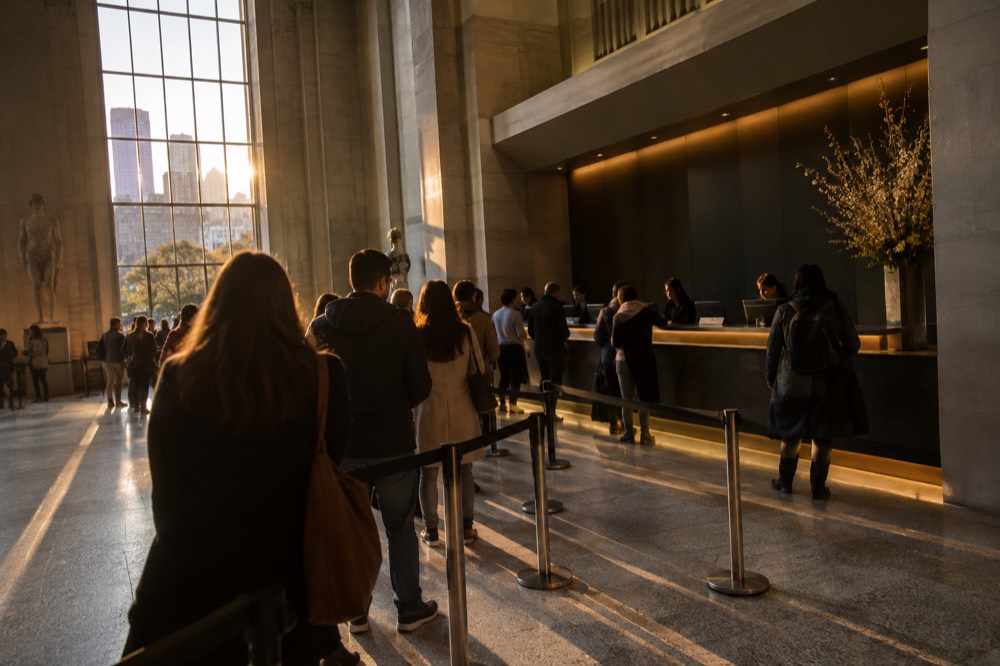
The Whitney's under-25 policy is the most generous age rule among the major museums: free every day, with a timed ticket or an Anytime Pass. If you are traveling with college-age children, that single rule can save more than any pass.
The 9/11 Museum's free Monday release deserves planning. Tickets appear each Monday at 07:00 ET and are first come first served, so it works best for travelers whose dates are already fixed and who can be online at that moment. The museum's own discounts page is the authoritative source for the current rules.
Which NYC Museum Should You Pick for Your Interests?
Match the museum to the interest, not the ranking: the Met for pre-modern art and world history, MoMA for modern and contemporary art, the Guggenheim for architecture and modern painting, the Whitney for American art, AMNH for dinosaurs, space and kids, the Intrepid for military and aviation, the Tenement Museum for immigration history, and the Museum of the City of New York for the city itself. Rankings mislead because the top three serve completely different visitors.
| If your interest is... | Go to | Why |
|---|---|---|
| European painting, Egypt, antiquities | The Met | Depth no other NYC museum matches, plus same-day Cloisters entry |
| Modern art icons | MoMA | Starry Night, the design galleries, a compact Midtown footprint |
| Photography and contemporary American art | The Whitney | Living artists, Hudson terraces, High Line adjacency |
| Architecture as the exhibit | The Guggenheim | Wright's spiral is the main event, the collection rides along |
| Dinosaurs, whales, planets | AMNH | Dinosaur halls, the blue whale, the Hayden Planetarium |
| Military and aviation history | The Intrepid | An aircraft carrier, a space shuttle prototype, a missile submarine |
| Immigration and family history | The Tenement Museum and Ellis Island | Restored apartments and the immigration records, told plainly |
| The city itself | Museum of the City of New York | How New York became New York |
The Tenement Museum and Ellis Island deserve a note on tone: both are migration-history institutions, and both are at their best when approached as history rather than entertainment. Ellis Island's National Museum of Immigration is included in every official Statue of Liberty ferry ticket, which makes it one of the easiest major museums to add to a Lower Manhattan day. Our Ellis Island guide covers what the immigration museum holds and how the ferry timing works.

For families, the practical pairing is AMNH in the morning and Central Park after, since the museum sits on the park's western edge. The Super Saver ticket bundles general admission with the ticketed extras, the giant-screen films and special exhibitions, which makes sense for a full day with a planetarium show and less sense if you only want the dinosaur halls.
How Do You Skip the Lines at NYC Museums?
You skip NYC museum lines by buying timed tickets in advance, which is mandatory or near-mandatory at the Guggenheim's pay-what-you-wish windows and the Whitney's free nights, and simply sensible everywhere else. The Met, MoMA and AMNH all move prepaid ticket holders past the desk queue. A guided tour with skip-the-line access is the other reliable route, and at the Met a guide also solves the problem of not knowing where to start.
The line-skipping question is really a timing question. The Met's queues build mid-morning and around lunch; arriving at the 10:00 opening or later in the afternoon shortens them dramatically. MoMA's entry moves quickly for prepaid holders at any hour, but its free Friday evenings draw crowds precisely because they are free, so a paid morning visit is the calmer experience.
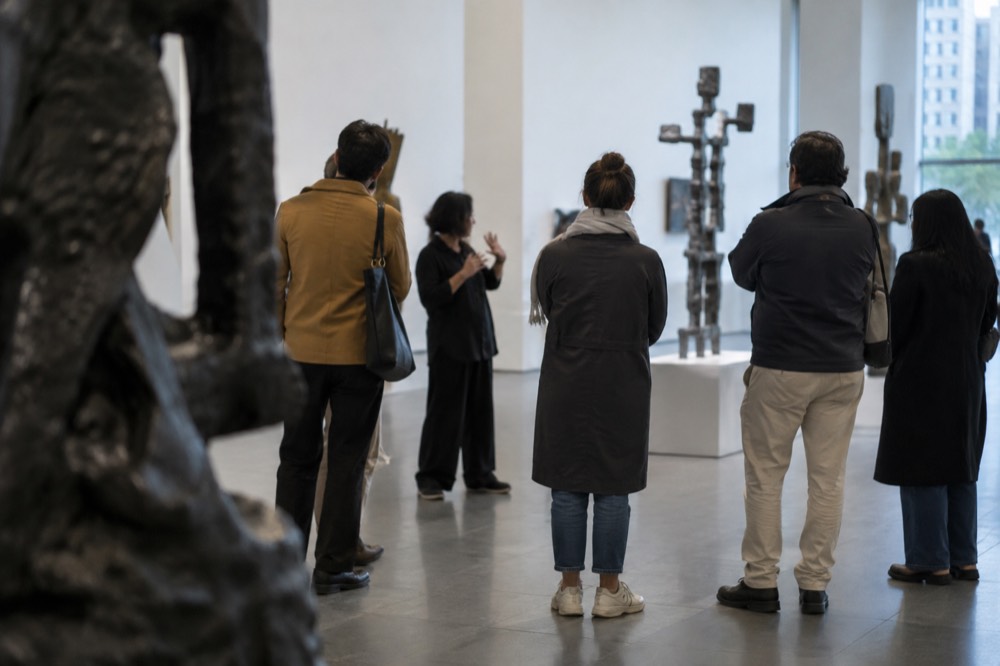
One warning that matters for the Met specifically: the museum is open, but a long list of galleries is currently closed for renovation, in whole or in part. The affected list includes parts of the American Wing, Asian Art, the Costume Institute, European Paintings 1250-1800, European Sculpture and Decorative Arts, Greek and Roman Art, the Cantor Roof Garden, Modern and Contemporary Art, and the Robert Lehman Collection. If you are going for the roof garden or the modern galleries in particular, check the museum's own gallery closures page before you plan the day, because those are exactly the spaces people go for.
The 9/11 Museum is the other one where advance booking changes the visit. Walk-up lines on Fulton Street stretch long on busy days, and a timed slot locks your entry window. The museum is open Wednesday through Monday plus many Tuesdays, with last entrance at 17:30, so an afternoon slot works if a morning is already spoken for.
Where Are the Best Museum Neighborhoods in NYC?
NYC's museums cluster into four zones: Museum Mile on Fifth Avenue holds the Met, the Guggenheim and the Museum of the City of New York; Midtown holds MoMA and the Museum of Broadway; the Upper West Side holds AMNH across the park; and Lower Manhattan holds the 9/11 Museum, the Tenement Museum and Ellis Island. Grouping by neighborhood saves an hour of transit a day.
| Zone | Museums | Best pairing |
|---|---|---|
| Museum Mile, Upper East Side | The Met, the Guggenheim, the Museum of the City of New York | Two museums plus a Central Park walk between them |
| Midtown | MoMA, the Museum of Broadway, the Empire State Building museum | MoMA morning, deck or show after |
| Upper West Side | AMNH | Museum morning, park afternoon |
| Lower Manhattan | The 9/11 Memorial and Museum, the Tenement Museum, Ellis Island | Ferry morning, memorial plaza after |
| Meatpacking and Chelsea | The Whitney, Chelsea Market galleries | High Line walk with the Whitney at its southern end |
Museum Mile is the classic play: the Guggenheim and the Met sit eleven blocks apart on the same avenue, and the walk between them runs along the park. Doing both in one day is possible but heavy; the honest recommendation is one per day with the park in between.
The Meatpacking District pairing is the underrated one. The Whitney sits at the southern end of the High Line, so the natural route is the elevated park walk followed by the museum's terraces, with Chelsea Market's food stalls in between. Our High Line guide maps the access points.
When Is the Best Time to Visit NYC Museums?
The best time to visit NYC museums is weekday mornings at opening, when crowds are thinnest, and the worst is weekend afternoons around 13:00-15:00. The Met is closed Wednesdays, the Whitney is closed Tuesdays, and MoMA runs late on Fridays until 20:30, which makes Friday evening the one reliable after-work museum window in Midtown. Check each museum's closed day before building an itinerary.
The closed days are the detail that breaks itineraries. A Wednesday plan that includes the Met fails; a Tuesday plan that includes the Whitney fails. Both museums are otherwise open daily, so the fix is simply sequencing.
Seasonally, museum attendance tracks the weather in reverse: the hottest and coldest weekends push people indoors, so a January Saturday at AMNH is a scrum while a May weekday morning at the Guggenheim is calm. There is no verified month-by-month museum attendance dataset for the city, so treat any guide claiming one with suspicion.
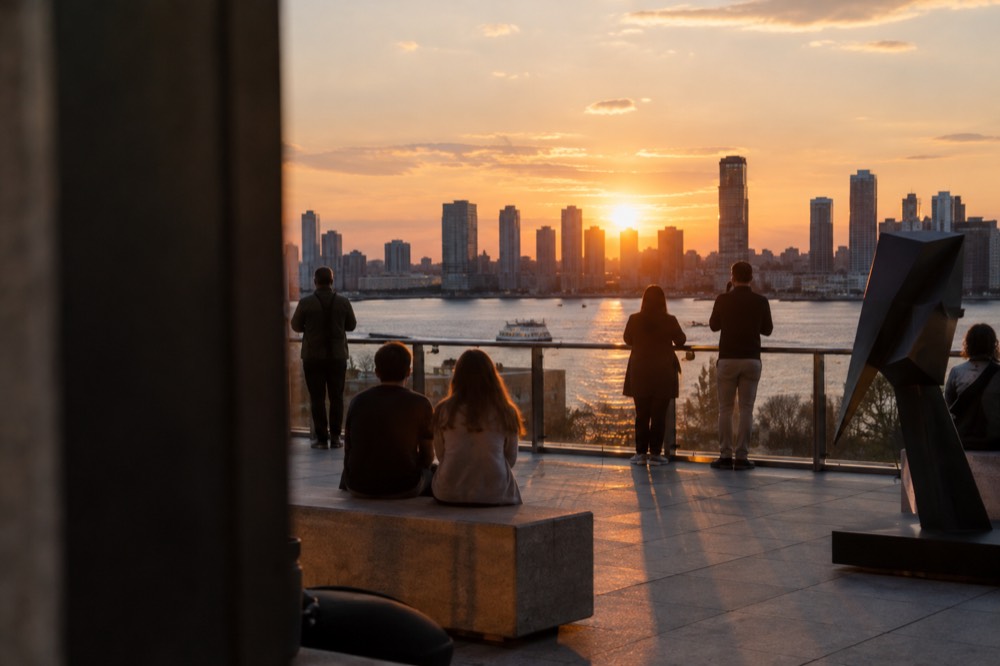
If you are deciding between a museum day and a sightseeing day, the honest framing is that New York rewards both, and the city's best museum experiences, the Met's Temple of Dendur at opening, the Whitney's terraces at dusk, the 9/11 Museum in the late afternoon quiet, are not interchangeable with any deck or cruise. More planning help lives in our New York City Travel Guide hub, including our Metropolitan Museum of Art tickets guide and MoMA tickets guide.
Common Questions About Museums in NYC
The questions below cover the details that trip up the most museum visits in New York: residency rules, the difference between the Met's two locations, what a pass actually covers, and which museums are worth a detour versus a full day. Each answer is drawn from the museums' own published ticketing rules.
Is the Met pay-what-you-wish?
Only for New York State residents and students from New York, New Jersey and Connecticut, with proof. Everyone else pays the fixed $30 adult admission. Pay-what-you-wish still means paying something, minimum one cent per ticket, and online pay-what-you-wish purchases require a New York State billing address.
Which NYC museums are free?
The Whitney is free every day for anyone 25 or under, and free Friday nights 17:00-22:00 for everyone. The 9/11 Museum releases free Monday tickets each week at 07:00 ET. The Guggenheim runs pay-what-you-wish Tuesday and Sunday 16:00-17:30. The 9/11 Memorial plaza itself, the outdoor pools, is always free with no ticket.
Can one Met ticket cover The Cloisters too?
Yes. Every Met ticket includes same-day entry to both locations, Fifth Avenue and The Met Cloisters, for the date on the ticket. The Cloisters hold the medieval collection in Upper Manhattan and are usually the quieter of the two.
Do I need to book NYC museums in advance?
Timed booking is strongly recommended at the Guggenheim's pay-what-you-wish windows and the Whitney's free nights, both of which sell out, and it shortens every other queue. The Met, MoMA and AMNH accept walk-ups but move prepaid holders through faster.
Is the Museum of Modern Art worth it for non-art people?
Usually, yes. The collection includes Starry Night and a design gallery that appeals to people indifferent to painting, the building is navigable in two hours, and it sits in Midtown within walking distance of Rockefeller Center, so it pairs easily with a deck visit or a show.
Does the New York CityPASS cover museums?
Yes, several. The CityPASS covers your choice of five attractions from a list that includes the American Museum of Natural History, the Guggenheim, the Whitney, the Intrepid and the 9/11 Memorial and Museum, alongside decks and the Statue of Liberty ferry. It pays off only if you use all five choices.