Is New York Worth Visiting with Kids?
A direct, sourced answer on whether New York is worth visiting with kids, covering costs, transit, the attractions that genuinely work for families, and the ones that do not.
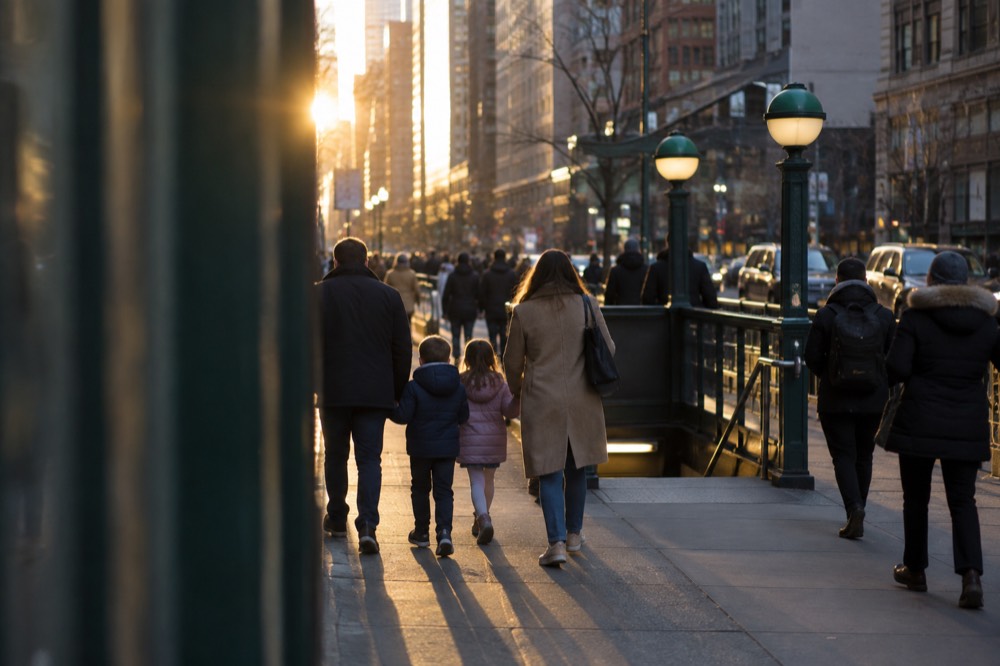
The subway fare rule is the place to start, because it shapes every family itinerary in New York: up to three children under 44 inches tall ride free with a fare-paying adult on the subway and local buses. That is the MTA's own policy, read directly from mta.info, and it means a family of four with young kids pays two fares, not four. Stack that on a city where the American Museum of Natural History, the Staten Island Ferry's free harbor crossing and Central Park cost nothing at the door, and the arithmetic of a family trip stops looking punishing.
This page answers the question directly, then gets into the parts that actually decide whether the trip works: which attractions hold a child's attention past the first twenty minutes, what the transit system does for you now that the MetroCard is retired, and where the money goes. The short version, sourced throughout, is that New York is one of the better big-city destinations for children precisely because so much of it is walkable, free at the point of entry, and reachable by train.
Is New York Worth Visiting with Kids?
Yes, New York is worth visiting with kids for most families, and the case rests on three verifiable facts: children under 44 inches ride the subway and local buses free, kids 12 and under enter the Metropolitan Museum of Art free, and a nine-day New York CityPASS at $149 adult and $129 child covers five major attractions. The real obstacles are cost and stamina, not kid-friendliness, and both respond to planning.
The honest counter-argument deserves airtime. New York is expensive for adults, loud, crowded in exactly the spots the guidebooks send you, and it punishes over-scheduling. A day that stacks four attractions will end in tears, usually around 3pm in the middle of Times Square. The families who have a good time here are the ones who plan two anchors a day, one indoor and one outdoor, and treat the gaps as the trip: the ferry ride, the playground stop, the slice of pizza eaten standing up.
What tips the balance decisively is density. The American Museum of Natural History sits directly across Central Park from the Metropolitan Museum of Art. The Brooklyn Bridge walk ends in Dumbo, where the carousel and the waterfront lawn finish the afternoon. The Staten Island Ferry is free and passes the Statue of Liberty. Very few cities let a child see this much without a car seat, a highway or a two-hour drive between stops.
For a first family visit, the classic circuit holds up: the natural history museum's dinosaur halls, the Central Park Zoo and its neighbors, the harbor, and one observation deck. The full menu of family options lives on our things to do in NYC overview, which is organized by borough and by the kind of day you want.
What Makes New York Work for Families
New York works for families because its headline attractions are genuinely built for children rather than merely tolerating them: the American Museum of Natural History has dinosaur halls and a planetarium, Central Park has playgrounds and a zoo, the Staten Island Ferry is a free boat ride past the Statue of Liberty, and the Intrepid Museum parks an aircraft carrier, a space shuttle and a walk-through submarine on the Hudson.
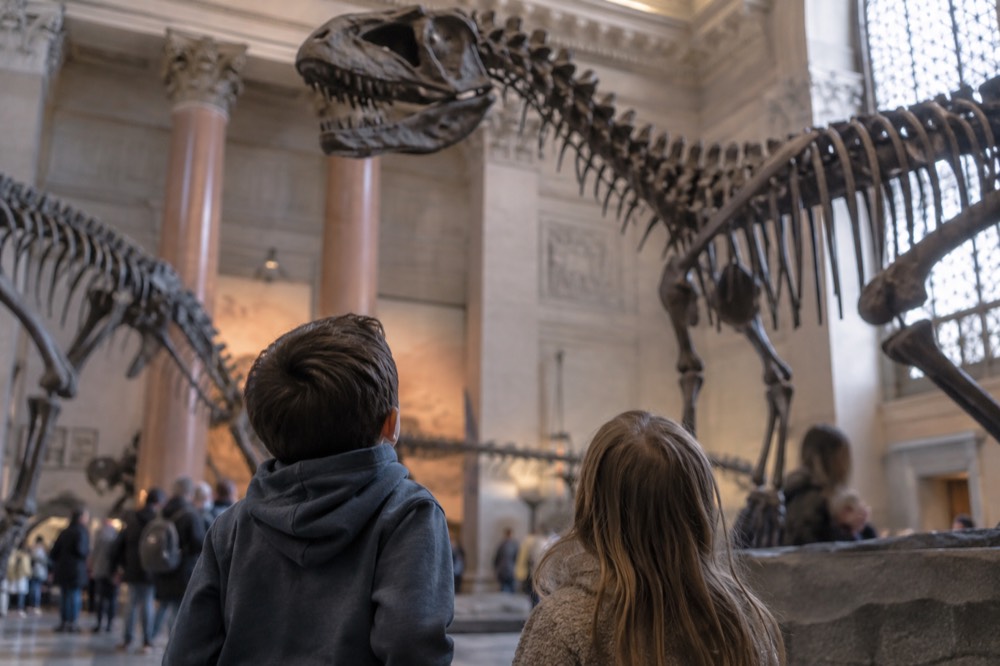
The natural history museum is the anchor. Dinosaur halls, the great blue whale, and the Hayden Planetarium hold kids for a full day, and the Super Saver ticket that bundles the giant-screen films and special exhibitions is the version worth buying if you plan to stay long. Across the park, the Met's armor collection and the Temple of Dendur do the same work for a different age group, and children 12 and under enter free. One Met ticket also covers The Met Cloisters on the same day, which is a longer haul with kids but a real option for a Fort Tryon Park afternoon.
The harbor is the second pillar. The official Statue City Cruises ferry lands on Liberty Island and Ellis Island, with both island museums and audio tours included in the ticket, and ranger programmes are free when running. Families who only want the view, not the islands, can take the Staten Island Ferry instead: it is free, it passes the statue, and a round trip takes about an hour, which is roughly a child's full attention span for a boat.
| Attraction | What it does for kids | Adult entry | Kids |
|---|---|---|---|
| American Museum of Natural History | Dinosaur halls, whale, planetarium | $43.00 per the CityPASS box-office table | 3-12 $26.00 |
| Central Park | Zoo, playgrounds, carousel, rowboats | Free grounds | Free |
| Staten Island Ferry | Free harbor ride past the Statue of Liberty | Free | Free |
| Intrepid Museum | Aircraft carrier, space shuttle, submarine | $38.00 | 5-12 $28.00 |
| Metropolitan Museum of Art | Armor, temples, the roof when open | $30.00 | 12 and under free |
| 9/11 Memorial plaza | The outdoor pools, open and quiet | Free | Free |
One note on the last row: the memorial plaza is free and open daily, and it is a calm, plain space that older children can engage with seriously. The museum beneath it is a different matter and families should decide for themselves whether their children are ready. It is described plainly, without ranking or urgency, in our 9/11 Memorial and Museum guide.
Observation decks are the one category where kids' taste and adults' taste diverge. SUMMIT One Vanderbilt, next to Grand Central, is the most playful of the decks: mirrored rooms, glass ledges and levitating floors that turn the visit into a game rather than a view. It suits children far better than a quiet sunset deck, and the timed-entry system keeps the mirror rooms from turning into a scrum. Our SUMMIT One Vanderbilt guide covers what the ticket includes and how to pick a slot.
How Much Does a Family Trip to New York Cost?
Attraction entry is the biggest line a family controls, and the New York CityPASS is the lever: $149 adult and $129 child covers your choice of five attractions over nine consecutive days, and CityPASS's own maths prices the adult bundle at a $158.04 saving against box-office rates. The subway costs $3.00 per adult ride with children under 44 inches free, and the $35 OMNY weekly cap applies automatically. Food is the wildcard, from dollar pizza slices upward.
The CityPASS is the lever most families should pull first. It bundles your choice of five attractions from a list of eleven, and the list reads like a family itinerary someone wrote for you: the Empire State Building, Top of the Rock, the Statue of Liberty ferry, the natural history museum, the Intrepid, Edge, the Guggenheim, the Whitney, the 9/11 Memorial & Museum, the Circle Line cruise. Valid for nine consecutive days from first use, it removes the per-ticket decision fatigue that ruins family trips. Everything else covered here is indexed on New York City Travel Guide.
The pass earns its keep only if you use all five. A family doing the Empire State Building, the ferry, the natural history museum, Top of the Rock and the Intrepid is buying exactly the box-office column CityPASS prices against, and the child pass at $129 against a $295.51 box-office total is the better deal of the two, per CityPASS's own published savings claim of 56% for children. A family staying three days and planning two attractions should skip it and buy singles.
The free tier is bigger than most guides admit. The Whitney is free every day for anyone 25 and under, which covers teenagers, and free for everyone on Friday evenings and the second Sunday of each month. The 9/11 Memorial & Museum releases free-admission tickets every Monday at 07:00 ET, first come first served. MoMA's free Friday nights are New York State residents only, so visitors should not plan around them. The Intrepid gives NYC residents half off every day, which helps local families, not yours.
| Pass or route | Adult | Child 6-17 | What it covers | Validity |
|---|---|---|---|---|
| New York CityPASS | $149.00 | $129.00 | Choice of 5 from 11 attractions | 9 consecutive days |
| Go City Explorer | from $89 | from $89 | Choose your number of visits, 30 days from first use | 30 days, non-consecutive |
| Go City All-Inclusive | from $169 | from $169 | Unlimited attractions on consecutive days | Consecutive days |
| Single attraction, average | $30-$75 | $0-$43 | One sight | Day of visit |
A note on what not to buy: The Sightseeing Pass ceased trading in 2025 and no page on this site recommends it. If an older guide you are reading lists it as a fourth option, that guide is out of date. The New York Pass now sits inside Go City as the All-Inclusive product, so treat those as one option, not two.
Getting Around New York with Children
The subway is the family transit answer, and the fare rules are unusually generous: a single ride is $3.00, up to three children under 44 inches tall ride free with a fare-paying adult, and OMNY capping means each adult pays at most $35 in any seven-day period with no pass to buy. The MetroCard is retired, so any guide telling you to buy a 7-day unlimited is selling a product that no longer exists.
That MetroCard point matters enough to repeat, because almost every competing NYC guide still opens with "buy a 7-day unlimited when you land." The MTA stopped selling and refilling MetroCards on 1 January 2026. The weekly value now arrives automatically: tap a contactless card or phone at the turnstile, and once an adult hits $35 in a rolling seven-day window, the rest of that period is free. There is nothing to buy in advance and nothing to lose in a taxi.
Each adult in the group needs their own card or device. The cap is per person, per card, and it does not pool across a family. If you and your partner swap cards between yourselves, or one of you taps a phone sometimes and a plastic card other times, the system counts those as separate travellers and neither earns the free rides. Pick one payment method per adult on day one and never switch.
| Airport | Rail route to Manhattan | Cost per adult | Notes for families |
|---|---|---|---|
| LaGuardia | Free Q70 LaGuardia Link bus + subway | $3.00 | Cheapest airport run in the city, children under 44 inches free |
| JFK | AirTrain + subway (E, J, Z or A) | $11.75 | AirTrain adds $8.75 on top of the subway fare |
| Newark | NJ Transit train + AirTrain from Penn Station | $16.80 | Weekday shuttle buses replace the station AirTrain, 05:00-15:00 |
Strollers are manageable but not frictionless. The system has elevators at most major stations and the MTA publishes an accessible-station map, but expect to carry a stroller up a flight of stairs somewhere. Fold it before the turnstile. Taxis do not require car seats by law, though many families prefer the subway precisely because it avoids the question. For a deeper treatment, our NYC subway guide covers the OMNY cap, transfers and the station layouts that matter most.
Rainy Days, Winter and the Practical Realities
July is actually New York's wettest month at 4.60 inches of precipitation on the 1991-2020 Central Park normals, and February out-snows January, 10.1 inches against 8.8, so there is no dry season to aim for. The practical family answer is to always hold one indoor anchor in reserve, and the city obliges with more museums per square mile than any comparable destination. Pack layers and let the rain fall on the ferry.
The museum bench is deep enough to absorb any weather. Beyond the natural history museum and the Met, the Intrepid's hangar deck, the Museum of Broadway's costume galleries and the Children's Museum circuit give a family three or four full rainy-day options without repeating. The Guggenheim's spiral ramp is a surprisingly good building for a child, because the walk is the exhibit: one gentle slope, no galleries to get lost in, and under-12s enter free.
Timing beats weather for crowd avoidance. The observation decks and the ferry are at their worst between late morning and mid-afternoon; the first ferry of the day and the first entry slots are calmer with children. One World Observatory opens at 12:00 rather than 09:00 on September 11, a detail worth knowing if your trip overlaps the date. And the Met closes on Wednesdays, plus Thanksgiving, 25 December and 1 January, which has caught out many a Wednesday itinerary.
Budget one anchor per half-day. The pattern that works: a morning museum or deck while everyone is fresh, lunch at a real sit-down place rather than street food on the move, then a park, a ferry or a neighborhood wander in the afternoon with nothing booked. New York's neighborhoods are the free second attraction; walking SoHo's cast-iron blocks or the Brooklyn Heights promenade costs nothing and is the part of the trip children remember as often as the ticketed sights.
The full family itinerary, day by day with distances and stroller notes, is laid out in our NYC with kids guide, and the free-options list lives in free things to do in NYC. Between those two pages and this one, the planning problem is mostly solved.
Common Questions About Visiting New York with Kids
The questions families ask most are about age fit, cost and stamina: whether toddlers can handle the subway, whether teenagers will be bored, and whether the trip justifies the price. The sourced answers are encouraging on all three, since children under 44 inches ride free, the Whitney is free for anyone 25 and under, and the CityPASS child rate undercuts the adult box-office total by 56%. New York is a city that scales down for young kids and up for teens better than almost any rival.
Is New York worth visiting with kids?
Yes. Children under 44 inches ride the subway and local buses free, major museums including the Met admit kids 12 and under free, and the CityPASS child rate saves 56% against box-office prices. The city's density means short hops between sights, which is the single biggest factor in whether children enjoy a trip.
What age is best for a first New York trip with children?
Roughly 6 to 12 is the sweet spot: old enough for the subway, the ferry and a museum hall, young enough to still be dazzled by the deck views and the dinosaurs. Under 5 works too, with the free-ride rule cutting transit costs, but plan one anchor per day and use Central Park as the second.
Do kids pay on the New York subway?
Up to three children under 44 inches tall ride free with a fare-paying adult on the subway and local buses. Above that height they pay the $3.00 single ride like everyone else, tapped with their own card or device so they can earn their own fare-cap savings.
Is the Statue of Liberty worth it with kids?
The official ferry is: it lands on both islands, includes both island museums and audio tours, and adult tickets are $26.00 with children 4-12 at $17.00. The crown costs thirty cents more than the grounds ticket but sells out months ahead, so book early if you want it.
How many days does a family need in New York?
Four to five full days covers the classic family circuit without rushing: two museums, the harbor, one deck, Central Park and one borough walk. The CityPASS's nine-day validity means a week-long family can spread the five attractions comfortably.
Is New York safe for a family trip?
Yes, by the standards of large cities, with the usual big-city care around traffic and crowds. Subway fare evasion fell from 12.7% to 10.2% between 2024 and 2025, ridership has recovered strongly, and the family areas around Central Park, the museums and the harbor are busy and well-policed. Our detailed treatment is on the is NYC safe page.
The verdict, plainly: New York earns the family trip. It is not the cheapest city to visit with children, but it is one of the few where the transit is cheaper for a family of four than for two adults, where the flagship museums let the youngest visitors in for nothing, and where a free boat ride past the Statue of Liberty is standing policy. Plan two anchors a day, tap the same card every time, and buy the pass only if the five-attraction list matches your plans.