What Is the Best Way to Get from Manhattan to JFK Airport?
A direct, sourced answer on the best way to get from Manhattan to JFK Airport: subway plus AirTrain for $11.75, the faster LIRR option, and when a private transfer wins.
Roughly 62.6 million passengers passed through JFK in 2025, and a large share of them started or ended the journey in Manhattan. The airport sits in Queens, about 15 miles from Midtown as the plane flies and considerably farther by road, and the honest answer to which route is best depends on three things: your budget, your luggage, and the time of day. The cheapest rail option costs $11.75 end to end. A private car costs more but removes every transfer. This page lays out the real numbers, all of them sourced from the MTA's own fare and airport guides, so you can pick with confidence.
What Is the Best Way to Get from Manhattan to JFK Airport?
For most travelers, the best way from Manhattan to JFK is the subway to Jamaica or Howard Beach, then the AirTrain, for $11.75 total and roughly 60 to 75 minutes from most of Manhattan. If you are carrying heavy bags or traveling in a group of three or more, a private transfer often wins on comfort per dollar. If you are in a hurry, the LIRR to Jamaica is the fastest scheduled option.
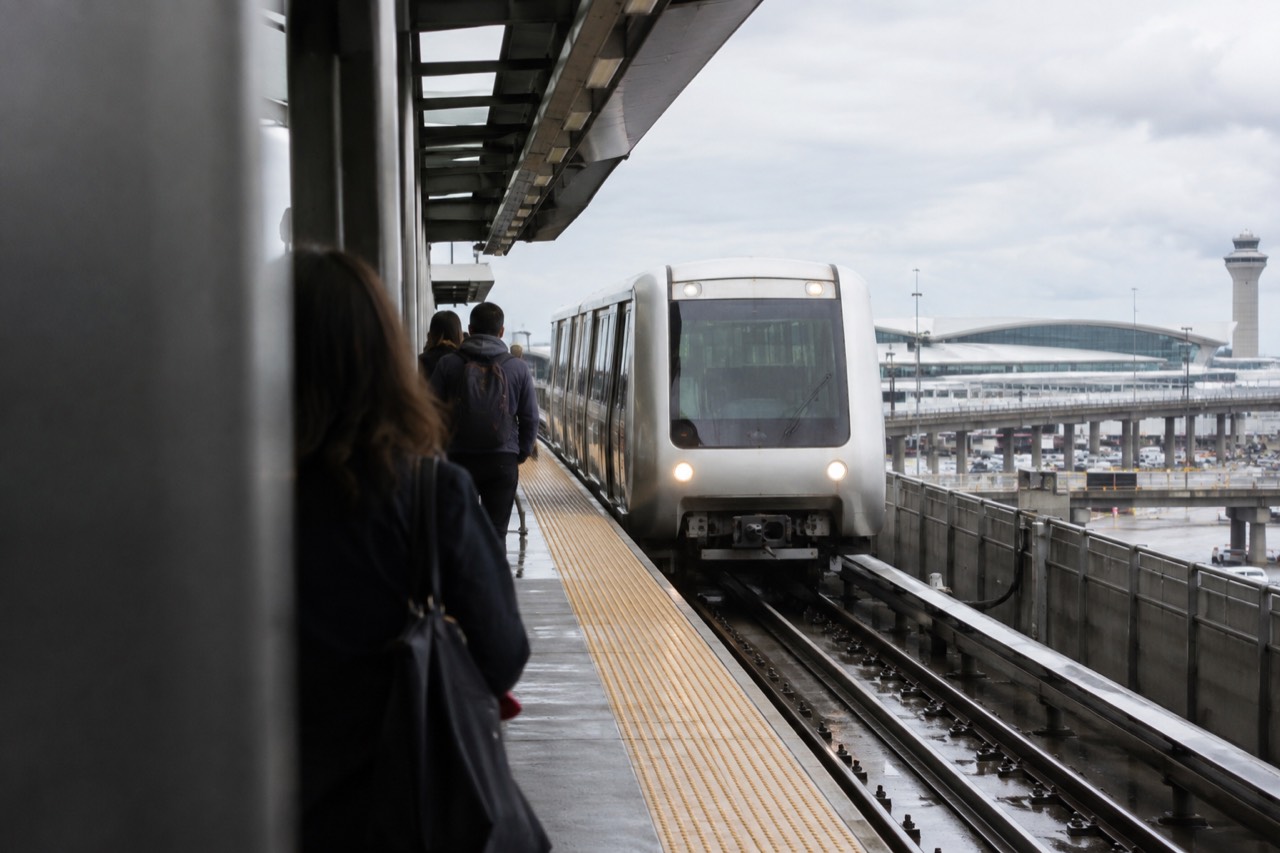
The rail route is the one the MTA itself recommends, and it is the one that behaves predictably regardless of Manhattan traffic. The AirTrain is the airport's dedicated people mover: it loops every terminal, the parking lots and the rental car centers, and it connects to both the subway and the LIRR at Jamaica and to the A train at Howard Beach-JFK. You cannot walk into a JFK terminal from the AirTrain for free, though. The AirTrain charges its own fare, $8.75, on top of whatever your train into Queens cost.
That fare structure is the single most misunderstood part of the trip. People read "AirTrain" and assume it is part of the subway fare. It is not, and unlimited-ride passes, where they still exist in any form, cannot be used on it. Children under 5 ride the AirTrain free, which softens the math for families a little.
There is also a planning question that sits before all of this: where in Manhattan you are starting from. The island is long, and a hotel near Battery Park adds twenty minutes of subway riding to any route that begins at Penn Station. Before you compare options, work out your walking distance to the nearest trunk line eastward, because that first leg is the one you control least on the day.
For a fuller rundown of everything at the airport end, see our JFK to Manhattan transport guide, which covers the same routes in the arrival direction.
How Much Does the Subway and AirTrain Cost from Manhattan to JFK?
The subway plus the AirTrain costs $11.75 from anywhere in Manhattan to any JFK terminal: $3.00 for the subway ride and $8.75 for the AirTrain. There is no cheaper scheduled way to reach the airport from Manhattan, and the price is identical whether you ride the E, J or Z to Jamaica or the A to Howard Beach-JFK. Children under 5 ride the AirTrain free.
The $3.00 subway fare is the standard single ride, paid by tapping a contactless credit or debit card, a mobile device or an OMNY Card at the turnstile. The $8.75 AirTrain fare is charged when you exit at the airport, and you pay it with the same tap. Two charges, one trip, $11.75 total.
Here is the comparison that matters:
| Route from Manhattan to JFK | Cost per adult | Transfers | Notes |
|---|---|---|---|
| Subway (E, J, Z or A) + AirTrain | $11.75 | 1 | Cheapest scheduled option; $3.00 subway + $8.75 AirTrain |
| LIRR from Penn Station or Grand Central + AirTrain | LIRR fare ($5.25-$7.25 from zone 1) + $8.75 AirTrain | 1 | Faster than the subway to Jamaica; LIRR fare varies by time of day |
| Private transfer, vehicle up to 6 passengers | From $10.01 per person when the vehicle is full | 0 | Door to door; price covers the whole vehicle, so groups split it |
| Taxi or rideshare | Meter or app fare, varies with traffic | 0 | No fixed published figure; check the app before you ride |
One point worth knowing before you tap: the old advice about buying a 7-day unlimited MetroCard before your trip is dead. The MTA stopped selling and refilling MetroCards entirely on 1 January 2026. The weekly value now comes from OMNY fare capping at $35 over a rolling seven-day window, which applies automatically when you tap the same card or device for every ride. If your JFK ride lands inside a week of heavy sightseeing by subway, the $3.00 leg may already be covered by the cap. The $8.75 AirTrain charge is separate and never counts toward it. Our OMNY explainer covers the cap rules in detail.
A practical note on the tap itself: pick one payment method at the start of your trip and stay with it. The cap only counts rides on the same card or device, and travelers who alternate between a phone and a plastic card silently break their own capping without any warning at the turnstile. Each person in a group needs their own card or device as well, since group trips do not pool toward a single cap.
Which Subway Lines Go to JFK from Manhattan?
Take the E train from Midtown to Sutphin Blvd-Archer Av-JFK Airport and transfer there to the AirTrain, or take the A train to Howard Beach-JFK and transfer at that station. From Lower Manhattan, the J or Z to Jamaica also connects to the AirTrain. All three routes end at the same AirTrain fare gate, and the AirTrain serves every JFK terminal from both connection points.
The E train is the workhorse for most visitors because it runs crosstown through the heart of Midtown, with connections to most of the system's major trunk lines along the way, and it runs express in Queens. Sutphin Blvd-Archer Av is the stop; the name includes the words JFK Airport because the AirTrain station is inside the same complex. You walk upstairs, tap out through the AirTrain fare gate, and the train circles the terminals in about 8 to 12 minutes.
The A train to Howard Beach-JFK is the better pick from the West Side or Lower Manhattan, but the A is a long local ride through Queens once it leaves Fulton Street. The J and Z out of Lower Manhattan serve Jamaica, the same complex as the E, with a slightly slower ride but the same AirTrain connection.
A note on direction, because it trips people up: trains toward Jamaica and Howard Beach are marked by their destination on the front and the platform signs, not by "JFK." Look for "Jamaica" on the E, J and Z, or "Howard Beach" on the A. Uptown and downtown matter in Manhattan; once you are headed east into Queens, follow the destination name.
Luggage is the other thing that shapes the choice. The E train and the Jamaica complex both involve elevators and escalators at the transfer, which is why the route is manageable with a roll-aboard but genuinely unpleasant with two checked-size suitcases per person. If that is your situation, skip ahead to the private transfer section, because the fare gates at Jamaica are the point where most rail journeys to JFK stop being fun.
Is the LIRR a Faster Way to JFK from Manhattan?
Yes, the LIRR is the fastest scheduled way to JFK from Manhattan. From either Penn Station or Grand Central, the LIRR to Jamaica takes roughly 20 minutes against 35 to 40 on the E train, and the same AirTrain connection finishes the trip. The tradeoff is price: the LIRR fare from zone 1 runs $5.25 or $7.25 depending on time of day, on top of the $8.75 AirTrain charge.
The time saving is real but concentrated in the rail leg. Once you are at Jamaica, everyone is on the same AirTrain regardless of how they arrived. Where the LIRR earns its keep is the worst-case scenario: a weekday evening departure, a tight connection at Jamaica, or simply the reassurance of a train that skips every intermediate stop the E train makes in Queens.
The LIRR also gives you two Manhattan boarding points. Trains from Grand Central Madison serve Jamaica directly, as do trains from Penn Station. If your hotel is on the East Side, Grand Central may be the shorter walk; if you are near Herald Square or Chelsea, Penn Station wins. Both stations feed the same Jamaica platform.
Frequency matters as much as speed here. LIRR trains to Jamaica run often through the day, but the schedule thins late at night, and a long wait on a platform can erase the twenty minutes the train saves. Check the departure boards before you commit, especially for a flight after 10pm, when the subway's round-the-clock service becomes the safer bet despite the longer ride.
For a wider look at rail options across the city, our guide to getting around New York compares the subway, the LIRR, the PATH and the ferry system.
When Is a Private Transfer the Best Way to JFK?
A private transfer is the best choice for groups of three or more, families with luggage, and anyone landing or departing at an awkward hour who wants door-to-door service with no transfers. The fare covers the whole vehicle for up to six passengers, so a full car can work out close to the cost of four rail tickets, with bags riding in the trunk instead of on your lap.
The arithmetic is what makes it interesting. The rail route costs $11.75 per person, so a party of four pays $47 to reach JFK that way, plus whatever effort it takes to haul four suitcases through two fare gates and a transfer. A private vehicle priced from $10.01 per person when full carries six people and all their bags for one door-to-door ride of about an hour, traffic permitting. Solo travelers on a budget still do better on the train.
The other argument for a car is timing. The AirTrain and the subway run around the clock, but so does road traffic, and a private driver tracks your flight, which matters more for departures than arrivals: if you leave Manhattan with two hours to spare and the Van Wyck Expressway seizes up, a scheduled train would have been immune. The reverse is equally true. On a rainy Friday evening, the road route can double. Neither option dominates; they trade reliability against comfort.
How Early Should You Leave Manhattan for a JFK Flight?
Leave Manhattan at least three hours before a domestic departure and four hours before an international one, which gives you 60 to 90 minutes for the rail or road journey, plus the AirTrain loop, plus check-in and security. From Midtown by subway and AirTrain, budget the full 90 minutes at rush hour; the LIRR version usually lands closer to 60.
The AirTrain adds a fixed cost people forget to plan for. Once you tap through the fare gate at Jamaica or Howard Beach, the loop around the terminals takes another 8 to 12 minutes, and if your airline departs from Terminal 1 rather than Terminal 4, you are riding nearly the full circle. Add a wait of up to a few minutes for the AirTrain itself and the walk from your Manhattan hotel to the subway platform, and the "60 minutes on the train" becomes 90 minutes door to terminal.
Traffic-based options carry the opposite risk. The drive from Midtown to JFK is about an hour in normal conditions and can stretch well beyond that at peak times or in bad weather, which is New York's default from November through March. If you book a car, the operator's pickup suggestion usually accounts for this, and it is worth taking seriously rather than trimming.
One scheduling quirk worth knowing: JFK's busiest stretch in the records is the year-end holiday period. The Port Authority recorded 5.8 million passengers across the three airports between 22 December 2025 and 4 January 2026, the single busiest holiday window ever measured. If you are flying in that window, add an hour to every estimate above.
A final habit worth adopting: check the MTA's service alerts the night before you travel. Weekend track work reroutes trains and can add a transfer you did not plan for, and the difference between an E train running express and one running local is the difference between a calm check-in and a sprint through the departures hall.
What About Taxis and Rideshares from Manhattan to JFK?
Taxis and rideshares are the most flexible option from Manhattan to JFK, with zero transfers and door-to-terminal service, but they carry no fixed published fare you can plan around, and their travel time is hostage to traffic. Check the meter rules or the app's fare estimate before you ride, and expect the trip to cost meaningfully more than the $11.75 rail route.
The case for a cab is simplicity. Someone collects you at your hotel, the bags go in the trunk, and you are deposited at your terminal's kerb. For a traveler with two large suitcases and a 5am flight, that is worth real money. For a solo backpacker, it rarely is.
The case against is variability. Every rail option on this page has a fare fixed by the MTA and a travel time that varies only modestly. A car's price and duration both float with congestion, tolls and surge pricing, and none of those figures is published in a form we can responsibly quote. What we can say from the MTA's own data is that the rail alternative costs $11.75 and takes about as long as a typical midday drive, so the premium you pay for a car is a premium for comfort and certainty of effort, not for speed.
Weather is the tiebreaker in this comparison. The MTA's own climate record for Central Park shows July as the wettest month of the year, with an average of 4.60 inches of rain, and winter storms close the region's roads far more often than they close its rails. On a day with snow in the forecast, the train is not just cheaper, it is the option that still arrives.
Which Option Should You Pick? A Quick Decision Table
Choose the subway plus AirTrain if you are traveling light and want the cheapest fixed price. Choose the LIRR plus AirTrain if speed matters. Choose a private transfer for groups, families with bags, or awkward hours. Choose a taxi or rideshare only when the convenience is worth an unpredictable fare.
| Your situation | Best option | Why |
|---|---|---|
| Solo or couple, backpacks or roll-aboards | Subway + AirTrain, $11.75 | Cheapest fixed fare, runs 24 hours |
| Tight connection, weekday peak travel | LIRR + AirTrain | Skips local Queens stops; roughly 20 minutes to Jamaica |
| Family of four or more with checked bags | Private transfer | One vehicle, no fare gates, cost per person drops as the car fills |
| 5am or late-night departure | Private transfer or taxi | Fewer transfer moments with luggage in the dark |
| Heavy rain or snow forecast | Rail | Immune to road congestion, which is when the drive doubles |
| Staying near Penn Station or Grand Central | LIRR + AirTrain | The station is already at your door |
If your trip is bigger than one airport run, the wider things to do in NYC page collects the sightseeing, museum and tour options in one place, and the New York City Travel Guide homepage is the orientation hub for the whole site.
Common Questions About Getting from Manhattan to JFK Airport
The subway plus the AirTrain, at $11.75 total, is the best combination of price and reliability. Take the E, J or Z to Jamaica or the A to Howard Beach-JFK, then the AirTrain ($8.75, no unlimited-ride passes, children under 5 free). The LIRR to Jamaica is faster. Groups and heavy luggage suit private transfers. MetroCards stopped 1 January 2026; use contactless cards, mobile devices or OMNY Cards.
What is the best way to get from manhattan to jfk airport?
For most travelers the subway plus the AirTrain, at $11.75 total, is the best combination of price and reliability. Take the E, J or Z to Jamaica or the A to Howard Beach-JFK and transfer to the AirTrain. If speed matters, the LIRR to Jamaica is faster. Groups and travelers with heavy luggage often do better with a private transfer.
How much is the AirTrain at JFK?
The AirTrain costs $8.75, charged on top of your subway or LIRR fare when you exit at the airport. Children under 5 ride free. The fare cannot be paid with any unlimited-ride pass.
Can you still use a MetroCard to get to JFK?
No. The MTA stopped selling and refilling MetroCards on 1 January 2026. Tap a contactless card, a mobile device or an OMNY Card instead. Fares cap automatically at $35 for subway and local bus rides over a rolling seven-day window, though the AirTrain's $8.75 charge sits outside that cap.
Is the LIRR or the subway faster to JFK?
The LIRR is faster. From Penn Station or Grand Central it reaches Jamaica in roughly 20 minutes, against 35 to 40 minutes on the E train. Both connect to the same AirTrain at Jamaica, so the airport leg is identical.
How long does it take to get from Manhattan to JFK by train?
Plan on 60 to 75 minutes from most of Manhattan using the subway and AirTrain, or closer to 60 minutes using the LIRR. Add buffer for the walk to your starting platform, the AirTrain wait and the terminal loop, which adds another 10 to 15 minutes after the fare gate.
Is a private transfer to JFK worth it?
It depends on your party size and luggage. The fare covers a whole vehicle for up to six passengers, so a full car can approach the per-person cost of rail tickets while removing every transfer. Solo budget travelers are better served by the $11.75 rail route.
The rail route wins on price, the LIRR wins on speed, and the car wins on comfort. Whichever you choose, leave earlier than feels necessary: the AirTrain fare gate at Jamaica is the last place you want to be watching the clock.