Wall Street NYC: What a Visit Actually Involves
Wall Street is eight blocks of working financial infrastructure, most of it closed to the public, surrounded by some of the oldest streets in New York City. Here is what a visit actually gets you.
Short answer
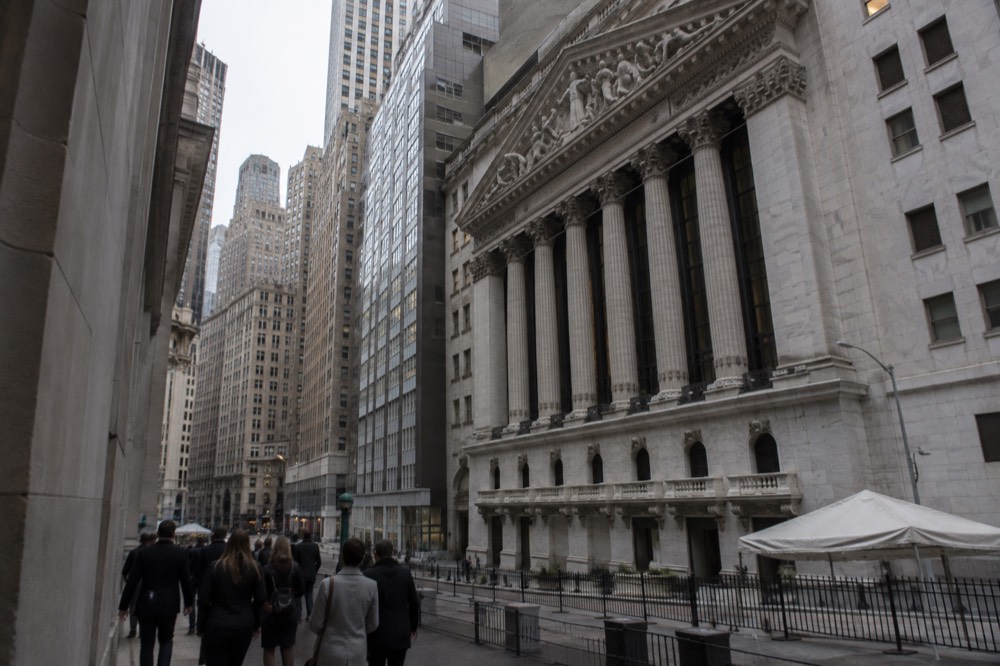
Wall Street itself is a public street you can walk for free at any hour. The New York Stock Exchange trading floor is closed to visitors, but the Charging Bull, Fearless Girl, Federal Hall and the 9/11 Memorial are all free and within a few minutes' walk.
Wall Street is eight blocks long, runs downhill from Broadway toward the East River, and carries more weight in the popular imagination than almost any other street in America. It is also, in practical terms, a narrow canyon of office towers in the Financial District of Lower Manhattan, closed to vehicle traffic at its Broadway end, patrolled by police barricades, and largely made of buildings the public cannot enter.
That gap between the idea and the physical street is the thing most visitors are not prepared for. People arrive expecting a spectacle and find a working district. The spectacle is nearby, though: the bronze bull, the girl staring it down, the classical facade of the Stock Exchange, the churchyard at Trinity, and the 9/11 Memorial a short walk west. This guide, from the New York City Travel Guide desk, covers what a Wall Street visit actually involves, what it costs, what you can and cannot walk into, and how to spend a morning there well.
What Is Wall Street in NYC, Exactly?
Wall Street is a physical street in the Financial District of Lower Manhattan, roughly eight blocks between Broadway and the East River, and the term also stands for the American financial industry as a whole. The street gave its name to the industry because the New York Stock Exchange sits on it. For a visitor, "Wall Street" in practice means the few blocks around the exchange, where the Charging Bull, Fearless Girl, Federal Hall and Trinity Church all sit within a ten-minute walk of one another. It is a public street, open at any hour, and nobody charges you a fee to stand on it or photograph what stands along it.**
The street's name is older than the financial industry it now represents. The name refers to a defensive wall from the Dutch colonial period, and the Financial District still follows that early street plan, which is why lanes here run at odd angles compared with the grid uptown. The Dutch colonial layout survives in the crooked lanes between the towers, something a guide on a free Financial District walk will point out while the crowd looks up at the glass.
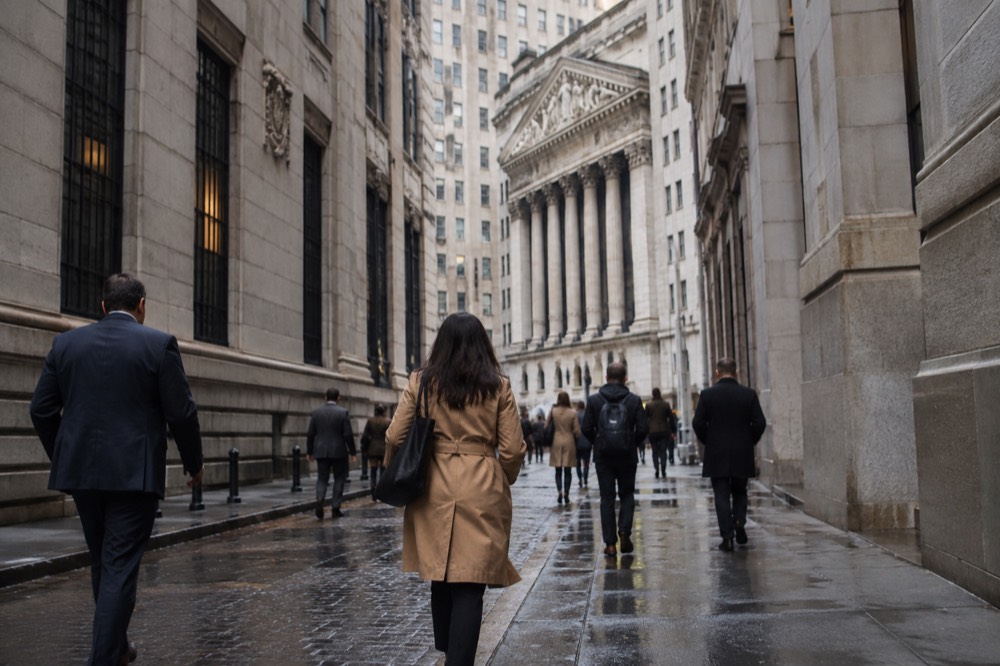
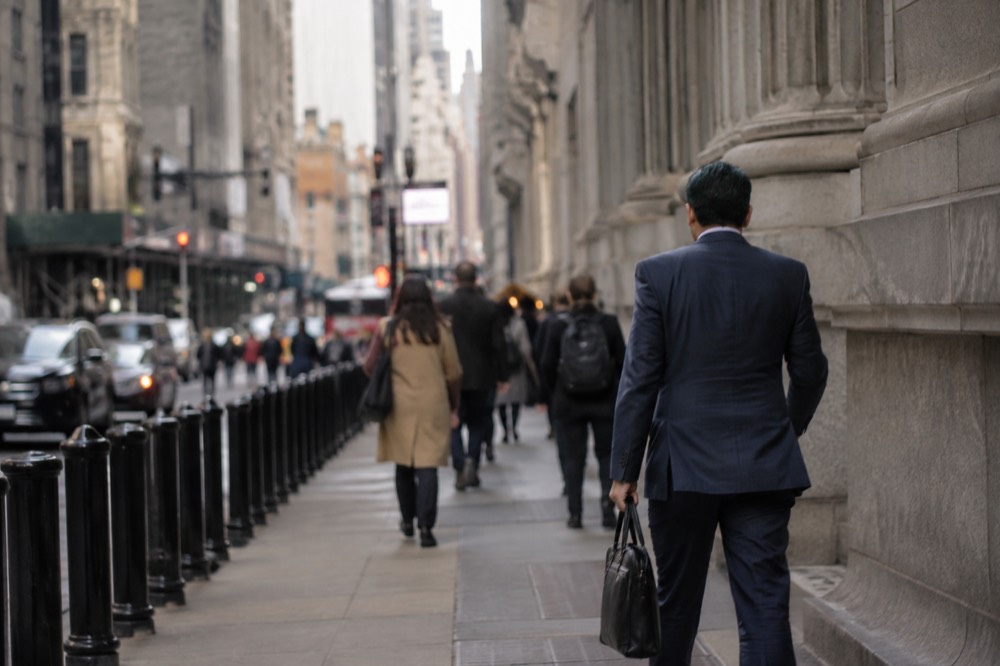
What surprises most first-time visitors is the scale. The street is narrow, the sidewalks are crowded at lunchtime on weekdays, and the district empties dramatically on weekends, when office towers close and the neighborhood belongs to tourists and residents. Wall Street is not a theme park of finance. It is a place where an enormous amount of work happens behind doors that do not open to the public, and the sights that are accessible are almost all outdoors and almost all free.
For a broader sense of how the district fits into a wider downtown plan, see our Financial District area guide.
How Much Does It Cost to Visit Wall Street in NYC?
Walking Wall Street itself costs nothing at all. The street, the Charging Bull, Fearless Girl, the exterior of the New York Stock Exchange, Trinity Church and the 9/11 Memorial plaza are all free and open to the public with no ticket required. The costs only begin when you go inside somewhere: the 9/11 Memorial & Museum is $36 for an adult at the box office, a guided walk runs from free-and-tip-based to a paid insider tour, and food in the Financial District is priced for office workers rather than bargain hunters. A realistic budget for a half-day is a coffee, a snack and possibly one paid attraction.**
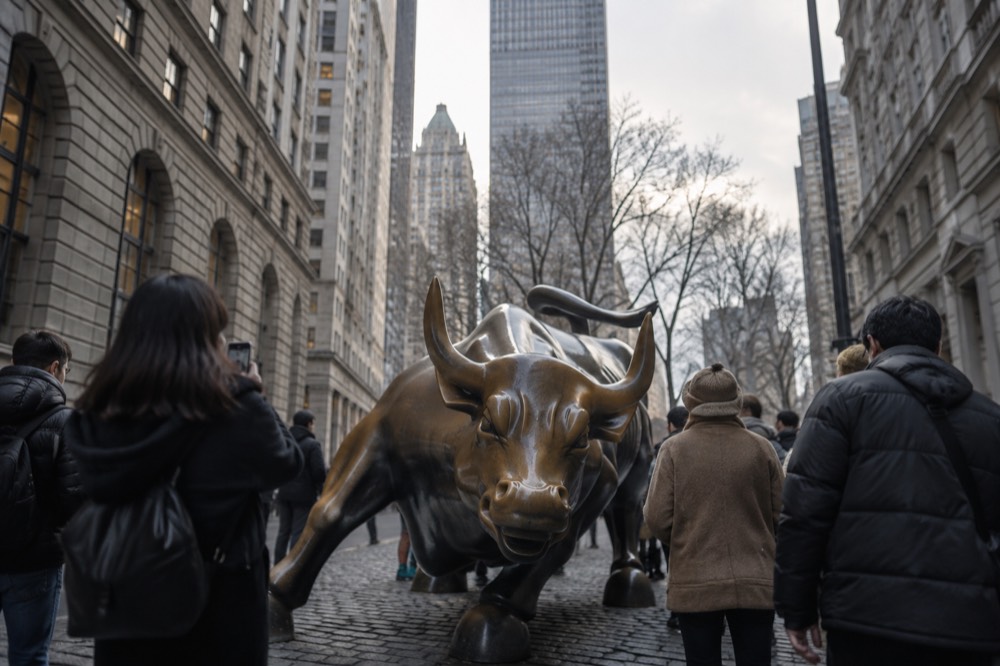
The free list is genuinely generous. The memorial pools at the World Trade Center sit on public plaza space, open daily, no ticket. The bull and the girl are street statues with no fence and no fee. Federal Hall, the historic site where George Washington took the presidential oath, is a national memorial with free entry. Add all of that up and the core Wall Street experience, the part people photograph, costs zero dollars.
The paid items break down like this:
| Item | Cost | Notes |
|---|---|---|
| Walking Wall Street and the outdoor sights | Free | Public street, open around the clock |
| Charging Bull and Fearless Girl | Free | Street statues, expect crowds midday |
| Federal Hall National Memorial | Free | Historic site, check operating hours before you go |
| 9/11 Memorial plaza | Free | Open daily, no ticket needed |
| 9/11 Memorial & Museum | $36 adult at the box office | Free Admission Mondays, tickets released online at 07:00 ET, first come first served |
| Guided walking tours | Free (tip-based) or paid | Free walks on GuruWalk; paid insider tours bookable ahead |
One worth-knowing detail on the museum: the 9/11 Memorial & Museum runs Free Admission Mondays for everyone, with a limited number of tickets released on its website each Monday at 07:00 ET, first come first served, with last entrance at 17:30. If your dates are flexible and you are awake early, that is a real saving on a $36 ticket.
Can You Go Inside the New York Stock Exchange?
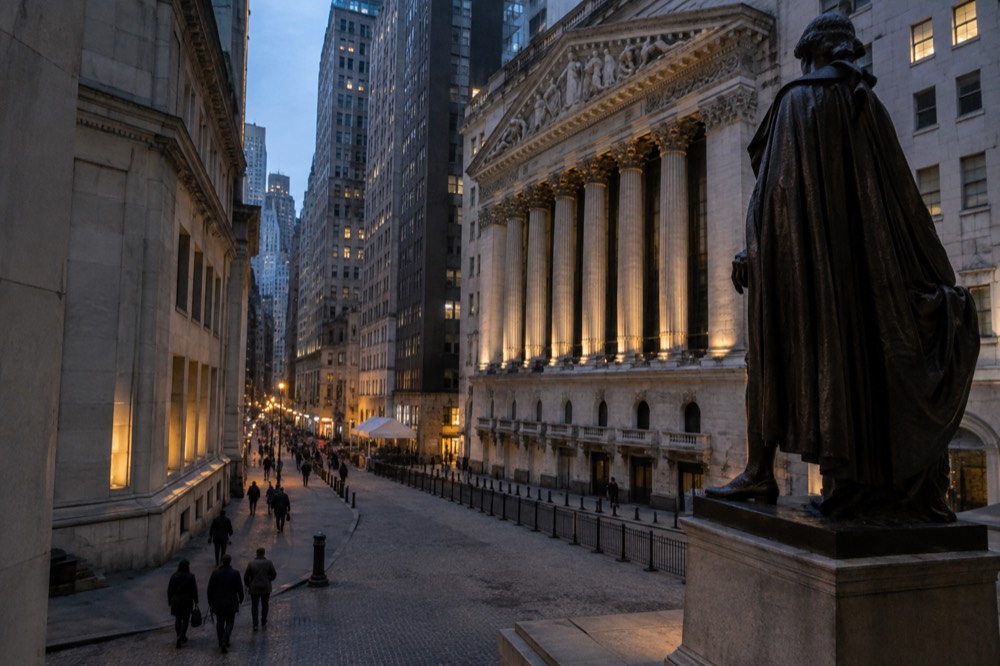
No. The New York Stock Exchange trading floor is closed to the public, and the building does not run a visitor program of any kind. The exchange ended general public tours long ago, and since then its security posture has only tightened. What a visitor can do is stand on Wall Street itself, in the vehicle-free block in front of the exchange's columned facade, and view the exterior, including the sculpture of George Washington on the steps and the enormous flag above the entrance. The building is photographed from outside, and that is the whole of the access that exists for a member of the general public.**
That answer disappoints people, so it is worth being blunt about it early rather than letting a reader plan a morning around a floor visit that cannot happen. The NYSE is not alone in this. The Federal Reserve's gold vault, another Financial District item visitors often assume is visitable, is likewise not an open attraction. The district's marquee interiors are working financial infrastructure.
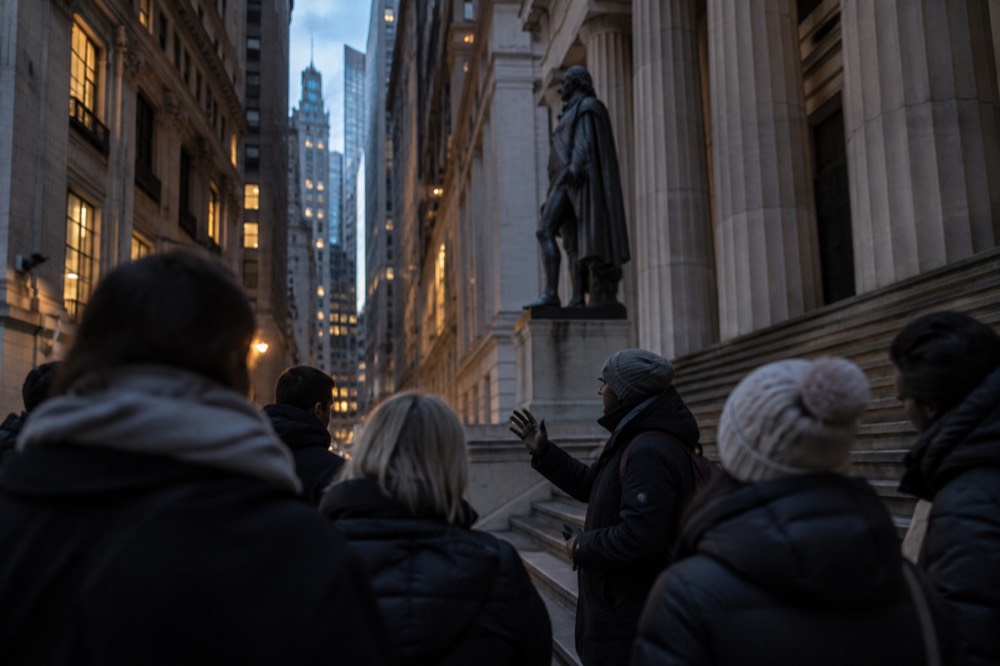
What replaces the interior access is context, and that is where the guided walks earn their keep. A guide who has worked in the industry can explain what actually happens inside those walls, the mechanics behind the ticker tape, the exchanges and the market history, while standing you in front of the buildings where it happens. Our Wall Street Insider Tour with a Finance Professional pairs you with exactly that: a working-finance guide covering the exchanges, the Federal Hall area and how the money actually moves. You can also Check availability on the live listing.
There are also free, tip-based walks that cover the same ground with a general history focus. These run on GuruWalk, a platform for free or pay-what-you-want walks led by independent guides, and you pay the guide what you think the walk was worth at the end. The two most relevant here are the Financial District, Wall Street and 9/11 Memorial walk, and the Wall Street FiDi walk, both described in detail further down this page.
What to See on a Wall Street Walk in NYC
The essential Wall Street sights are the New York Stock Exchange facade, the Charging Bull, Fearless Girl, Federal Hall and Trinity Church, all free, all outdoors, and all inside a walkable ten-minute radius of one another. Add the 9/11 Memorial plaza to the west and the harbor views at the Battery to the south and you have a full morning, roughly two to three hours at a comfortable walking pace. The district rewards an early start, because the bull draws its biggest crowds by late morning and the narrow sidewalks fill with office workers at weekday lunchtime.**
Here is the core set, in an order that works on foot from Broadway:
| Sight | What it is | Cost | Realistic time |
|---|---|---|---|
| New York Stock Exchange | Columned facade on Wall Street, seen from the street only | Free | 10 minutes |
| Federal Hall | National memorial on Wall Street, free entry | Free | 30-45 minutes |
| Trinity Church | Historic church and churchyard at Broadway and Wall Street | Free (check visiting hours) | 20 minutes |
| Charging Bull | Bronze bull statue, the district's most photographed object | Free | 15 minutes, longer in line |
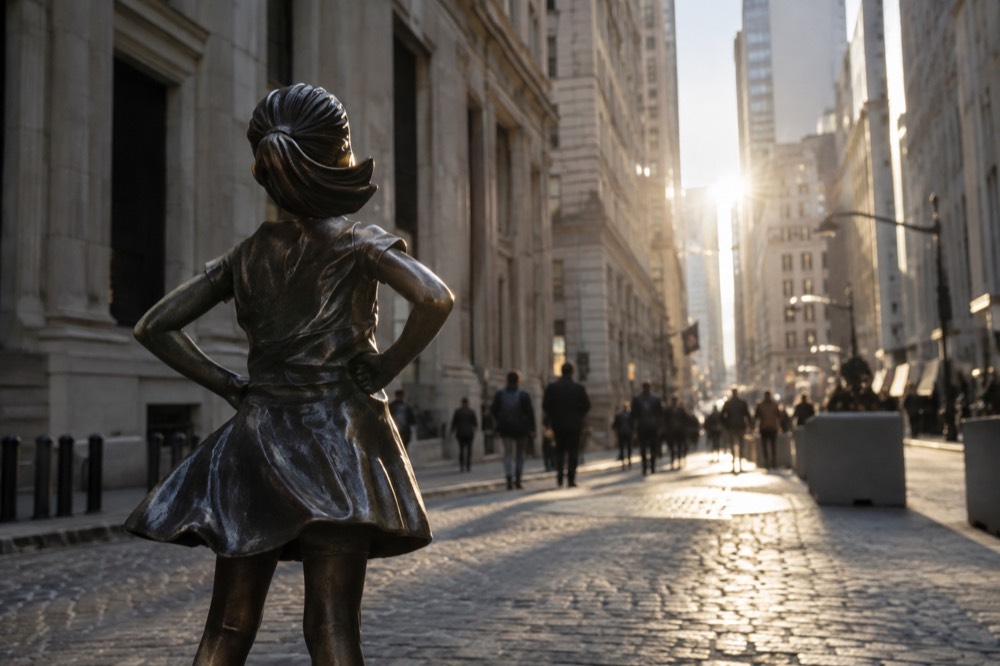
| Fearless Girl | Bronze girl statue facing the exchange | Free | 5 minutes |
| 9/11 Memorial plaza | The two reflecting pools at the World Trade Center | Free | 30 minutes |
| Battery and harbor | Waterfront park with Statue of Liberty views | Free | As long as you like |
Two practical notes. First, the Charging Bull and Fearless Girl no longer stand facing each other. The girl was moved to a position facing the exchange, so plan your photos accordingly rather than expecting the confrontation composition that made the pair famous. Second, the bull is not on Wall Street itself; it sits at the Broadway end of the block, and crowds form a semicircle around it from mid-morning onward. If a clean photo matters to you, be there before 9am.
From the Wall Street core, the natural extension is west toward the World Trade Center site. Our 9/11 Memorial and Museum guide covers that visit in full, including the free Monday admission window and how timed entry works. The memorial pools sit in open plaza space, and the museum entrance is on Fulton Street. This is a site of a mass killing, so plan it as a solemn stop, not a photo stop, and give it the time it deserves.
The other natural extension is east over the Brooklyn Bridge, whose promenade entrance is a manageable walk up from the Financial District. Our Brooklyn Bridge guide covers the crossing, the pedestrian route and the DUMBO side, and a bridge walk is one of the best ways to end a Financial District morning, with the skyline behind you the whole way.
What Are the Best Wall Street Tours in NYC?
The best Wall Street tours split into two honest categories: paid insider walks led by guides who have worked in finance, and free tip-based walks on GuruWalk led by independent local guides. The paid option suits visitors who want market mechanics explained by someone who has actually worked in them, with real detail rather than photo-stop commentary. The free walks suit budget travelers who want the history and the route covered by a guide who works for tips and sets no fixed price. Both deliver more than a self-guided wander, because the stories behind these buildings are not written on their facades.**
The paid pick is straightforward. The Wall Street Insider Tour runs about an hour and fifteen minutes, is led by a finance professional, and covers the exchanges, the Federal Hall area and the mechanics behind the money that moves through the district. Expect real explanations of trading and market history rather than photo-stop commentary. It suits anyone curious how the industry actually works, and it is short enough to slot into a morning before a museum or a bridge walk.
The free options both run on GuruWalk, and naming the platform here is the honesty requirement: these are free or pay-what-you-want walks run by independent guides, not our tours, and the model is that you tip the guide what you think the walk was worth at the end. The Financial District, Wall Street & 9/11 Memorial walk, run by TERRADVENTOURS, covers Wall Street, the New York Stock Exchange and the 9/11 Memorial, ending near the waterfront, and runs about two and a half hours. The Wall Street FiDi walk, run by CityShuffles, centers on Wall Street itself, the exchange, the banks and the colonial-era lanes that survive between them.
| Walk | Operator | Duration | Model | Focus |
|---|---|---|---|---|
| Financial District, Wall Street & 9/11 Memorial | TERRADVENTOURS | 2 hours 30 minutes | Free, tip-based, on GuruWalk | Wall Street, the exchange, the memorial |
| Wall Street FiDi | CityShuffles | 2 hours 30 minutes | Free, tip-based, on GuruWalk | Wall Street, banks, colonial street plan |
| Wall Street Insider Tour | Finance professional guide | 1 hour 15 minutes | Paid, book ahead | Market mechanics, exchanges, trading history |
A scheduling note: Sunday morning is the classic slot for Harlem gospel visits, but downtown, the calculus is the opposite. Weekday mornings give you the Financial District in its working state, crowds and all; weekends give you quieter streets and closed shopfronts. Neither is wrong, but they are different experiences, and a free walk that runs daily will feel very different on a Tuesday than on a Saturday.
For a wider look at guided walks across the city, our NYC walking tours overview compares the formats and the neighborhoods they cover best.
How to Get to Wall Street in NYC
Take the subway to Wall St station on the 2 or 3 train, or to Broad St on the J or Z, both of which put you a block from the Stock Exchange; the 4 and 5 trains stop at Wall St as well from the Lexington Avenue line. A single ride costs $3.00 whether you pay by tapping a card, a phone or an OMNY Card, and there is no ticket to buy in advance. From Midtown the ride takes roughly twenty to twenty-five minutes on the express trains, making Wall Street one of the easiest major sights in the city to reach without a car, which you should not have in Manhattan anyway.**
Here is the transit reality in one table:
| Option | Cost | Notes |
|---|---|---|
| Subway, 2 or 3 to Wall St | $3.00 | Express from Midtown, closest stop to the exchange |
| Subway, 4 or 5 to Wall St | $3.00 | Express Lexington Avenue line, east side of the platform |
| Subway, J or Z to Broad St | $3.00 | From downtown Brooklyn or Lower Manhattan |
| Free transfer | Included | One free transfer within 2 hours between subway and bus |
| Weekly cap | $35 | Automatic OMNY fare cap, no pass to buy |
Driving to Wall Street is not a sensible plan. Street parking in the Financial District is scarce and expensive, garages charge downtown-Manhattan rates, and the neighborhood's colonial-era streets were laid out for a city that never imagined cars. The subway is faster, cheaper and calmer. For the full picture, our NYC subway guide covers lines, fares and the OMNY system in detail.
When Is the Best Time to Visit Wall Street in NYC?
Weekday mornings, between roughly 8am and 10am, are the best time to visit Wall Street: the bull's crowds have not peaked, the light is good for photographs, and the district is in its working state, with commuters filling the streets. Early weekday evenings and weekend mornings are the quiet alternatives if you would rather have space than atmosphere, though on weekends many shops and food options close and the canyon feels emptied out. Avoid weekday lunchtime if crowds bother you, when the sidewalks fill with office workers.**
The seasonal layer matters less than the daily one, but it still matters. Summer in New York is hot and humid, with July averaging 4.60 inches of precipitation, the wettest month of the year in the official Central Park normals, so a summer visit to an outdoor attraction means a rain plan. Winter is quieter and colder, with February averaging 10.1 inches of snow, more than January. Shoulder seasons, spring and fall, give you the most comfortable walking weather for a neighborhood you experience entirely on foot.
If the 9/11 Memorial & Museum is part of your plan, timing it against the Free Admission Mondays release matters more than weather: tickets go at 07:00 ET each Monday, first come first served. Otherwise, book a timed slot for a weekday afternoon and do the outdoor Wall Street sights in the morning while the light is still on the buildings.
Is Wall Street in NYC Worth Visiting?
Yes, with the right expectations. Wall Street is worth visiting as a free, walkable cluster of icons, the exchange facade, the bull, Federal Hall, Trinity Church and the harbor, backed by guided walks that supply the story the buildings will not tell you themselves. It is not worth visiting if you expect to enter the Stock Exchange or watch trading happen; that door is closed, permanently, for the general public. As a two-to-three-hour morning in the Financial District, paired with the memorial plaza and a bridge walk, it earns its place on any first itinerary.**
The honest framing is this: Wall Street is a symbol you walk through, not a venue you enter. What makes the visit worthwhile is the layer of explanation. Standing on Wall Street knowing nothing, you see a pretty street with a famous name. Standing there after an hour with a guide who explains what happens behind those facades and how the district's colonial lanes became the center of American money, you see the machinery. That difference is what the walks sell, and it is why we recommend one, free or paid, over going alone.
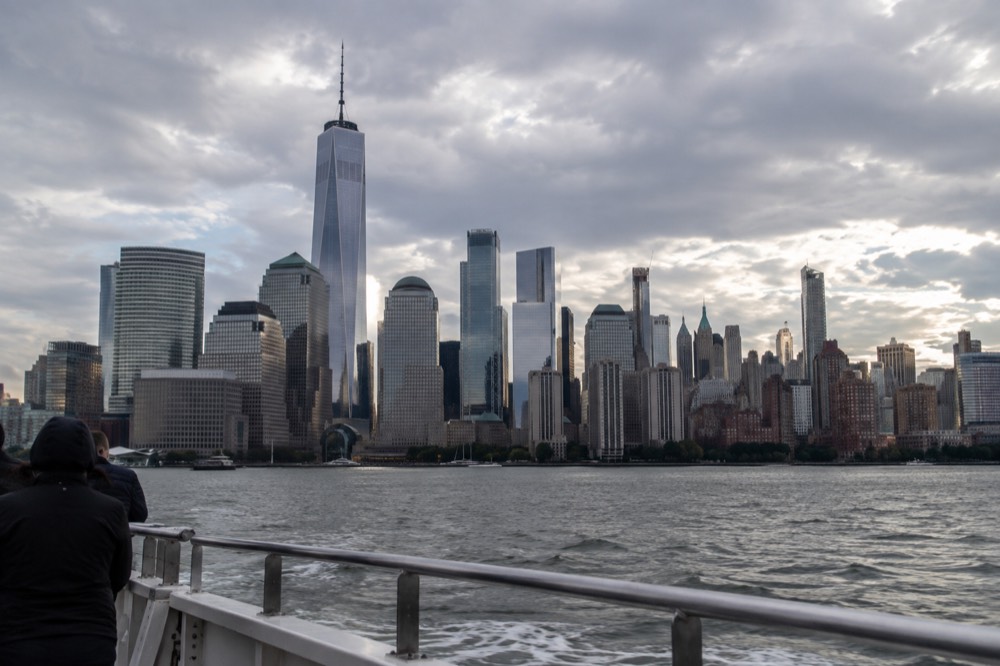
For fitting Wall Street into a bigger plan, our things to do in NYC page places the Financial District in the full city itinerary, and our one day in NYC guide shows how a downtown morning combines with Midtown sights when time is short. If your stay runs longer, a free downtown morning pairs naturally with a ferry ride, a museum afternoon and an evening in another borough.
Common Questions About Wall Street in NYC
These are the questions visitors most often ask about Wall Street in NYC, answered directly: access to the Stock Exchange, the cost of a visit, the best stops, timing and transport. Each answer is short and self-contained, so if you only need one fact, you can lift it from here without reading the full guide. Where a figure matters, like the museum's admission price or the subway fare, it is stated plainly, and every answer holds on its own without the surrounding text.**
Can you go inside the New York Stock Exchange?
No. The NYSE trading floor is closed to the public and there is no general visitor program. You can view the building's columned facade from the vehicle-free block of Wall Street in front of it, which is where everyone photographs it.
Is Wall Street free to visit?
Yes. The street itself is public, and the core sights, the Charging Bull, Fearless Girl, Federal Hall, Trinity Church and the 9/11 Memorial plaza, are all free. The 9/11 Memorial & Museum at $36 adult box office admission is the main paid item in the district.
Where is the Charging Bull?
The bronze bull stands at the Broadway end of the block near Wall Street, not on Wall Street itself. Fearless Girl was moved to a position facing the New York Stock Exchange, so the two statues no longer face each other. Crowds are heaviest from late morning onward.
Which subway goes to Wall Street?
The 2 and 3 trains stop at Wall St, the 4 and 5 also stop at Wall St, and the J and Z stop at Broad St, all within a block or two of the exchange. A ride costs $3.00, and the $35 weekly OMNY cap applies automatically when you tap the same card or device.
How long should I spend at Wall Street?
Plan two to three hours for the core walk: the exchange facade, Federal Hall, Trinity Church, the bull and Fearless Girl, ending at the 9/11 Memorial plaza. Add an hour or two if you are entering the 9/11 Memorial & Museum, and more if you continue over the Brooklyn Bridge.
What is the best free thing to do near Wall Street?
A free, tip-based walking tour on GuruWalk covers Wall Street, the Stock Exchange and the 9/11 Memorial with a local guide, and you pay what you think the walk was worth. Combined with the free memorial plaza and the harbor views at the Battery, you can fill a full morning for the price of a tip and a coffee.