Uber in NYC: What It Costs, When It Wins, and When the Subway Beats It
New York is the one American city where the honest answer to 'should I take an Uber?' is usually no. Here is the math, the fare rules, and the exceptions.
Short answer
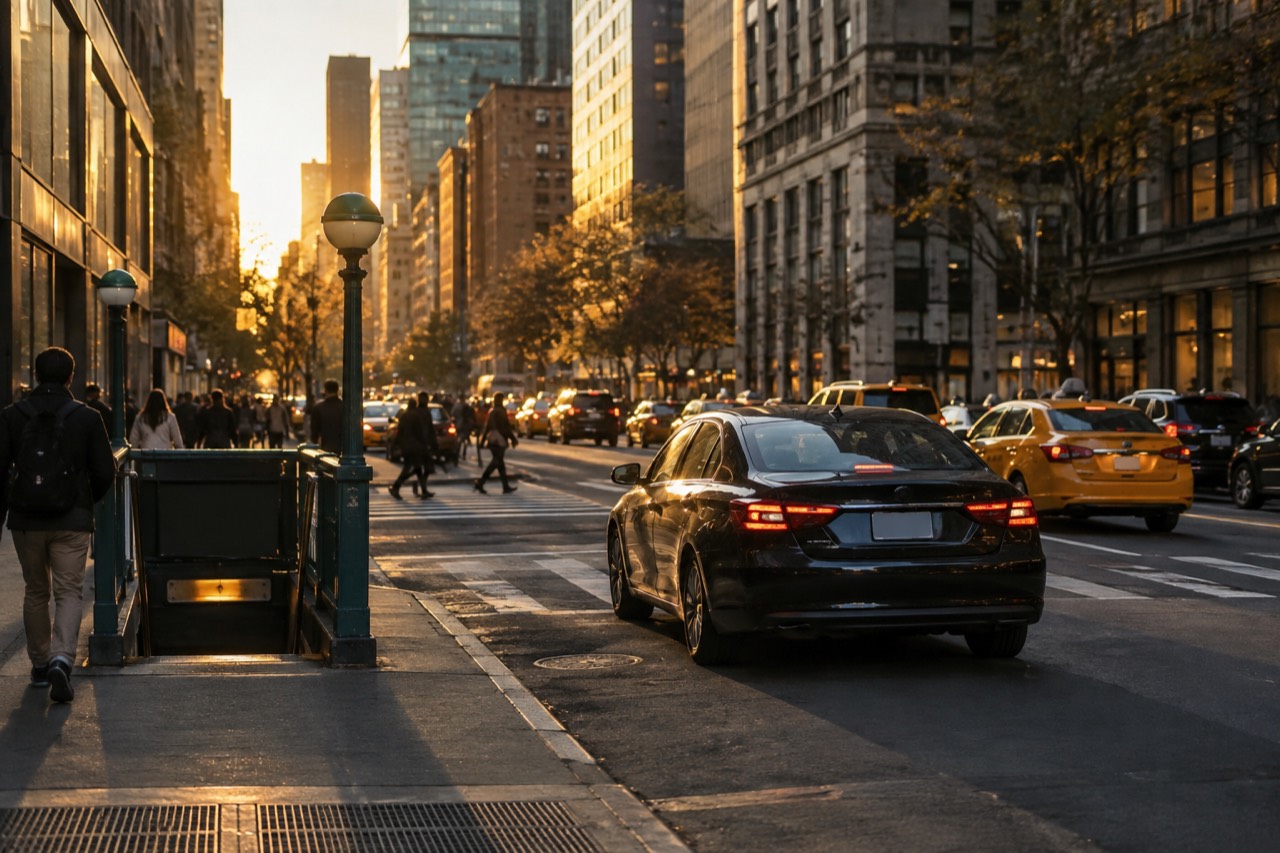
Uber operates legally throughout all five boroughs, but with a $3.00 subway ride and a $35 automatic weekly OMNY cap, a car only wins for airport runs with luggage, late-night trips in outer boroughs, and groups of three or more splitting the fare.
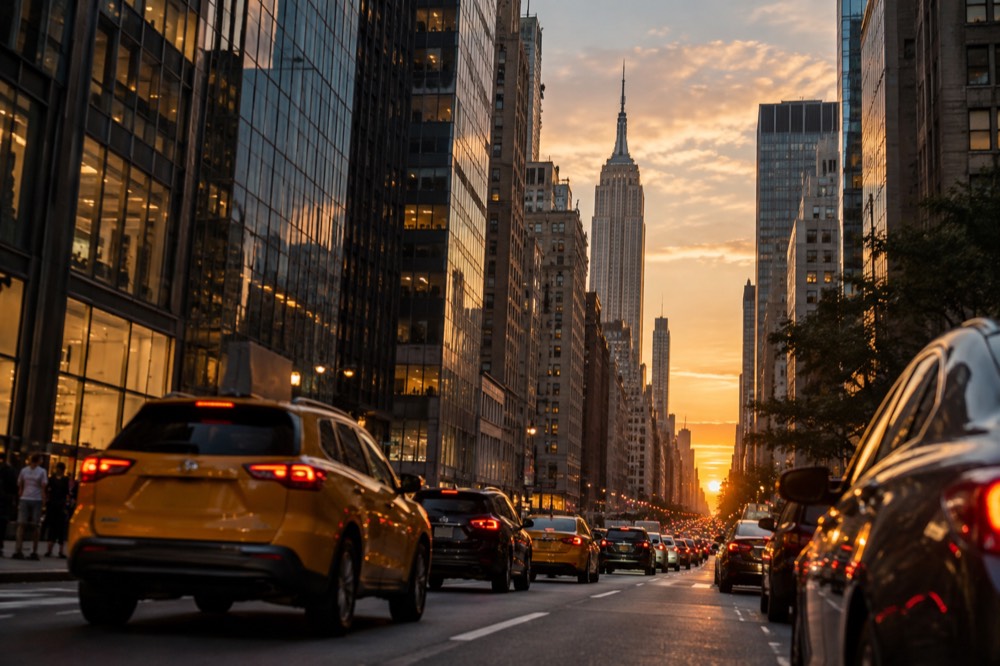
New York ran 1,281,883,362 subway rides in 2025. No car network, rideshare or otherwise, moves people through this city at that scale, and none tries to. Uber operates legally in all five boroughs, and for certain trips, an airport run with four suitcases at 6am, a midnight ride from deep Brooklyn, a group splitting a fare three ways, it is a genuinely good tool. For everything else, the subway at $3.00 a ride with an automatic $35 weekly cap makes the car a luxury rather than a necessity.
This guide lays out where a car wins, where the train wins, and what the airports actually cost from each of them. The fare figures below come from the MTA's own published fare pages, and the rideshare guidance sticks to what can be said honestly: Uber prices in New York are dynamic, they move with demand, and any fixed dollar figure printed in a guide would be fiction by the time you read it.
Is Uber Available in New York City?
Yes, Uber operates legally and widely across all five boroughs of New York City, licensed through the city's Taxi and Limousine Commission. You can request a car in Manhattan, Brooklyn, Queens, the Bronx and Staten Island, at JFK, LaGuardia and Newark, and to destinations outside the city such as the Hudson Valley or the Hamptons. Availability is strongest in Manhattan and the inner Brooklyn and Queens neighborhoods, and pickup spots at airports follow designated rideshare zones rather than curbside.
The practical wrinkle is where the car can collect you. At the major airports, rideshare pickups happen at designated levels or lots, a short walk from baggage claim, and the app walks you to the right spot. In Manhattan, some streets and bridge approaches confuse the mapping, so walking half a block to a clear corner often saves several minutes of the driver circling the block.
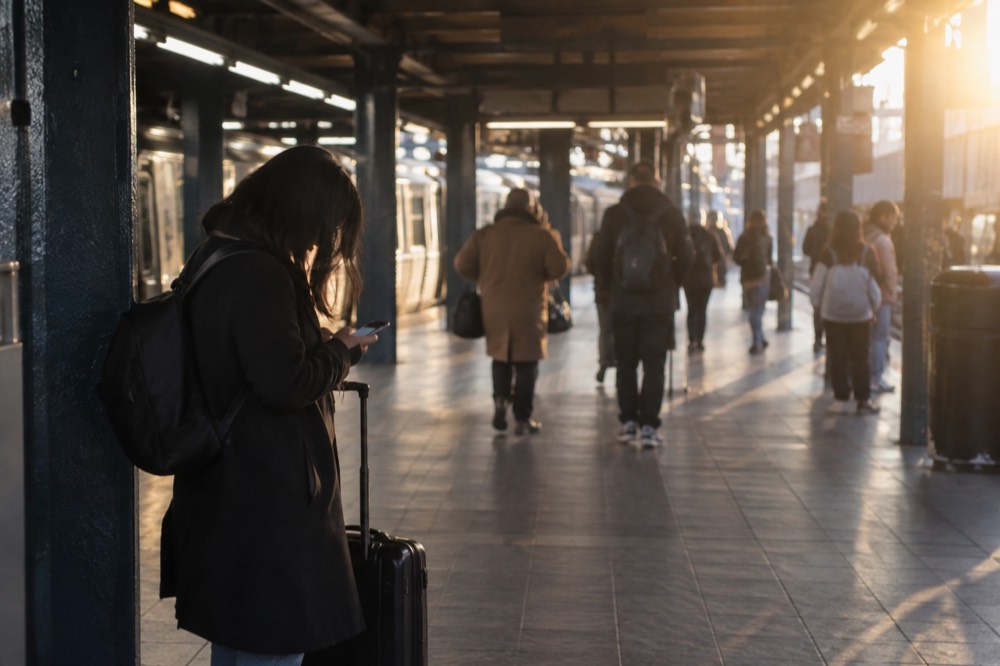
What Uber does not do is beat the city's own transit on price for a solo traveler making normal trips around Manhattan. A single subway or local bus ride is $3.00, and the system runs 24 hours a day. Between those two facts sits almost every sightseeing decision you will make in New York. For the full spread of what fills a day here, see things to do across NYC.
Uber or the Subway: Which Actually Wins in New York?
For a solo traveler moving between Manhattan neighborhoods, the subway wins almost every time: $3.00 per ride, trains every few minutes, and an automatic weekly cap of $35 after twelve paid rides. Uber wins on comfort, door-to-door convenience and late-night trips in the outer boroughs, but its price moves with demand while the fare for the 6 train does not. Groups of three or more change the math, since one car splits three ways.
The subway's numbers are worth knowing precisely, because they are fixed and published. A single ride on the subway or any local, limited, rush or Select Bus Service route costs $3.00. An express bus costs $7.25. Riders aged 65 and over and riders with qualifying disabilities pay $1.50 on the subway and local buses at any time of day, and $3.60 on express buses outside weekday peaks. Up to three children under 44 inches tall ride free with a fare-paying adult.
| MTA fare item | Price | Notes |
|---|---|---|
| Subway or local bus, single ride | $3.00 | Tap with OMNY, no ticket needed |
| Express bus, single ride | $7.25 | Premium commuter routes |
| Reduced fare, subway and local bus | $1.50 | Seniors 65+ and eligible disabled riders, all day |
| OMNY weekly cap, subway and local bus | $35 | Automatic, rolling 7-day window |
| OMNY weekly cap including express buses | $67 | Covers subway, local and express |
| Reduced-fare weekly cap | $17.50 | Same automatic mechanics |
| Paper Single-Ride OMNY ticket | $3.50 | Valid 2 hours, no subway-to-bus transfer |
The cap deserves a sentence of explanation, because it changed how a week in New York costs. You tap the same credit card, debit card, phone or OMNY card at every turnstile. After twelve paid rides inside a rolling seven-day window, or once your taps total $35, whichever comes first, every further subway and local bus ride that week is free. There is no pass to buy and nothing to activate. The seven days start with your first tap, not with a calendar week.
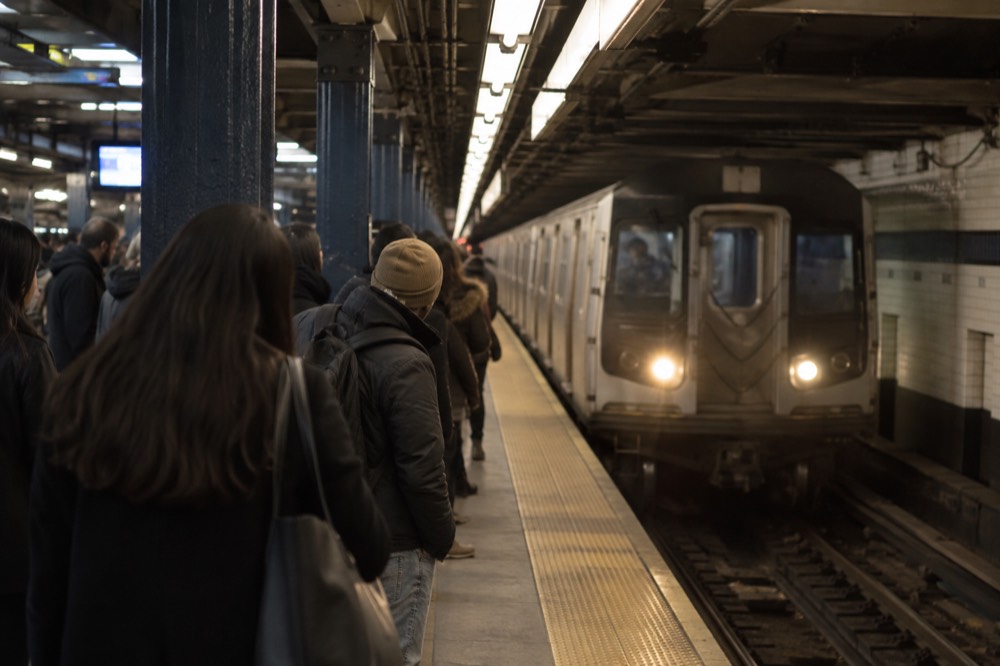
Against that, a car costs whatever surge pricing says it costs at that moment. A midtown-to-downtown Uber at 5:30pm moves through the worst surface traffic in the United States and can take longer than the train as well as costing more. The honest rule: inside Manhattan, between roughly 7am and 8pm, the subway is faster, cheaper, and more predictable. Save the car for the edges of the day and the edges of the city.
If your trip leans toward walking the downtown neighborhoods instead, a guided option beats both modes for orientation value:
Uber to and from JFK, LaGuardia and Newark
From JFK, the subway plus AirTrain costs $11.75 per person; from LaGuardia, the free Q70 bus plus the subway costs $3.00, the cheapest airport run in the city; from Newark, NJ Transit plus the AirTrain costs $16.80. Uber beats all of those for a group with luggage, since one car carries everyone, but a solo traveler with a carry-on wins on transit every time. Pickups happen at designated airport zones, not the curb.
The airport numbers are the clearest comparison in this whole guide, because every transit figure is fixed and published by the MTA.
| Airport | Transit route and cost per person | What it involves |
|---|---|---|
| JFK | $11.75 | $3.00 subway plus $8.75 AirTrain, via the E, J or Z to Jamaica or the A to Howard Beach |
| LaGuardia | $3.00 | Free LaGuardia Link Q70 bus, then one subway fare; the M60-SBS from uptown Manhattan is also $3.00 and stops at every terminal |
| Newark EWR | $16.80 | NJ Transit train from Penn Station plus AirTrain, ticket includes the AirTrain fare |
Two warnings that matter. At Newark, AirTrain service between the terminals and the rail station is currently replaced by shuttle buses on weekdays between 5am and 3pm, so a weekday morning departure needs extra time. And unlimited passes cannot be used on the AirTrain at JFK; it is a separate $8.75 charge on top of the subway fare, always.
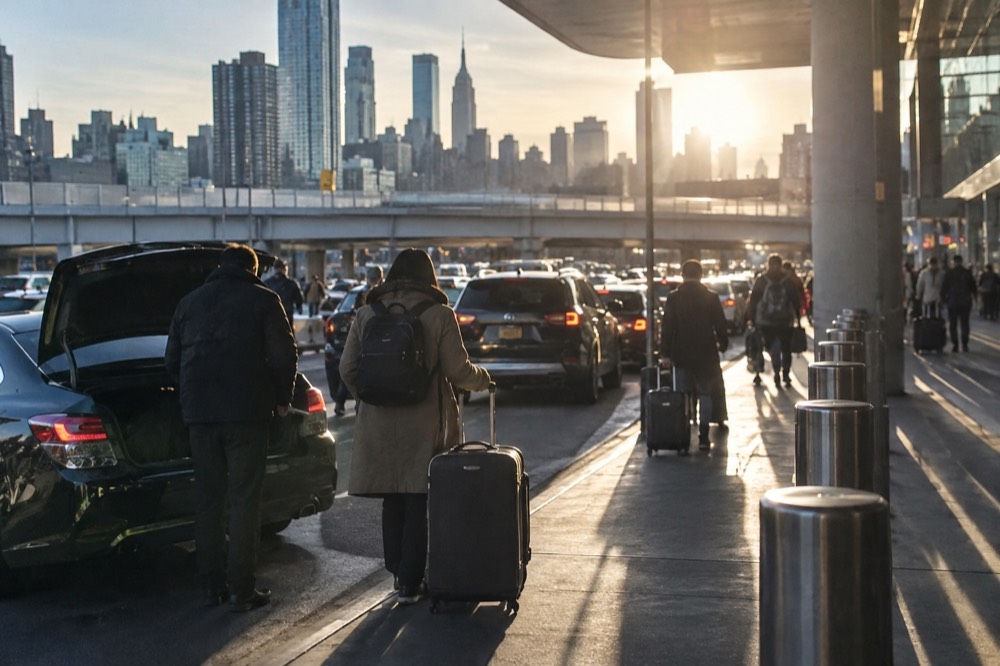
Where a car genuinely wins is the group case. Four people with four checked bags face four AirTrain fares plus the misery of hauling luggage through turnstiles, against one door-to-door car that takes everyone. A private transfer is the same idea with the driver tracking your flight, and it is the pick worth comparing against the app:
The transfer also removes the two failure modes that ruin an arrival: the driver who cannot find the pickup zone, and the surge price that spikes exactly when a planeload of tired travelers all open the app at once. With a booked vehicle the price is fixed before you board, and the waiting driver has your flight number.
For solo travelers landing at LaGuardia, nothing competes with the Q70: it is free, it connects to the subway, and the whole run to Midtown costs a single $3.00 fare. Details for each airport are laid out in the dedicated guides to JFK to Manhattan, LaGuardia to Manhattan and Newark Airport to Manhattan.
When Uber Actually Makes Sense in New York
Uber earns its fare in four situations: airport runs with luggage for groups of two or more, late-night trips in the outer boroughs where train waits stretch long, travel with small children or limited mobility when stairs are the obstacle, and bad-weather dashes where walking to a station is the worst part of the trip. Outside those cases, a $3.00 ride on a train that comes every few minutes is the better product.
The outer-borough case is real. A Friday at 1am in Far Rockaway or Bay Ridge is not a Friday at 1am in Midtown; headways stretch, and a car saves twenty or thirty minutes of waiting plus a transfer. That is a fair purchase. The Manhattan case is weaker than visitors expect: a crosstown Uber in theater traffic can average walking pace, and the driver still has to find you.
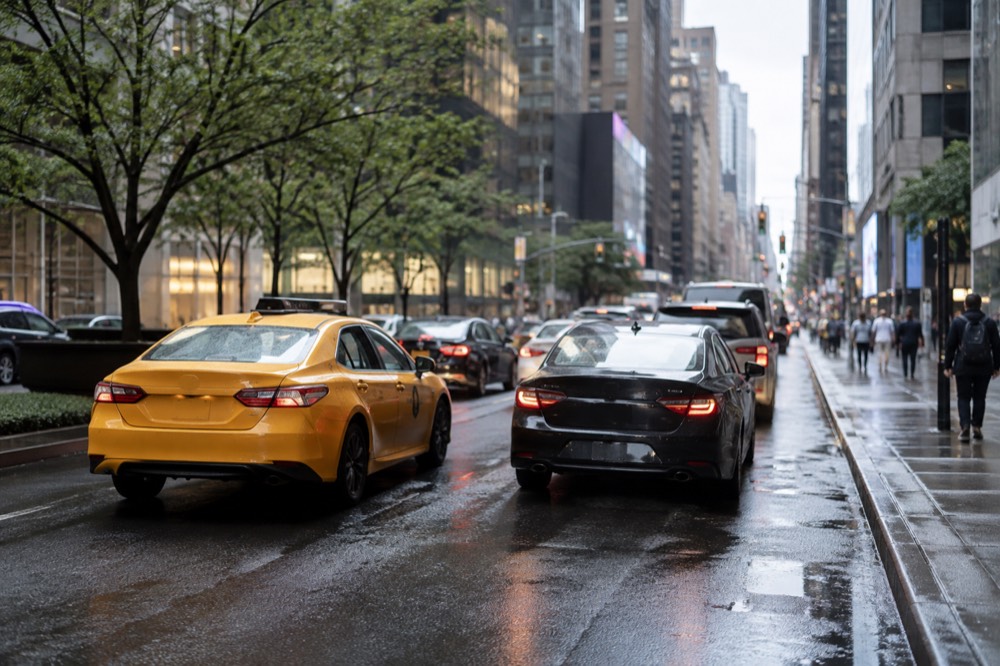
Taxis belong in this comparison too. New York's yellow cabs take the same card payments, are subject to the same TLC rules, and at JFK operate on a flat fare to Manhattan that is set by the TLC rather than by demand. Hailing one is often faster than waiting for an Uber in Midtown, since the supply is physically driving past you. On pricing, the honest statement is that neither mode is reliably cheaper in general; both price by time and distance, taxis on a regulated meter and Uber on dynamic rates, and the winner varies block by block and hour by hour.
The one trip where the answer is unambiguous is the airport group run, and that is the decision moment where booking ahead beats standing at the curb:
What OMNY Changed, and Why Old Subway Advice Is Wrong
As of 1 January 2026 the MTA no longer sells or refills MetroCards at all, and the 7-day unlimited pass that every older New York guide still quotes no longer exists. Its replacement is automatic: tap the same card or phone at every turnstile and the system stops charging you at $35 in a rolling seven-day window. There is nothing to buy in advance, nothing to activate, and no decision to make at a machine.
This is the single most out-of-date piece of advice in New York travel writing. Guides that tell you to buy a 7-day unlimited when you land are sending you to a product that was retired. The mechanics now:
| OMNY rule | What it means |
|---|---|
| Tap the same card or device every time | Mixing your phone and the plastic card in your pocket breaks the cap silently |
| Rolling 7-day window | The period starts with your first tap, not on a Monday |
| $35 cap, subway and local bus | Twelve paid rides inside seven days, then free |
| $67 cap with express buses | Subway, local and express combined |
| Group trips do not pool | Each traveler needs their own card or device to earn their own cap |
| Free transfer | One free transfer within 2 hours, subway to bus, bus to subway, or bus to bus |
The group rule matters for rideshare comparisons. A family of four sharing one contactless card never earns a cap, because the system counts a card, not a person. Four travelers tapping four cards each reach their own $35 ceiling. Budget accordingly.
The weekend figure is quietly useful for planning cars versus trains: the weekend system is the fuller, more recovered one relative to normal, so a Saturday subway trip is a normal New York experience, not a reduced service. The full mechanics are laid out in how to get around NYC and the NYC subway guide.
Alternatives to Uber: Ferries, Free Walks and Your Own Feet
Beyond cars and the subway, New York gives you the Staten Island Ferry for a free harbor crossing, free tip-based walking tours on GuruWalk, and a street grid that rewards walking more than any other American city. The ferry and the free walks cost nothing up front, which makes them the only categories in this guide where the rideshare comparison is not even close.
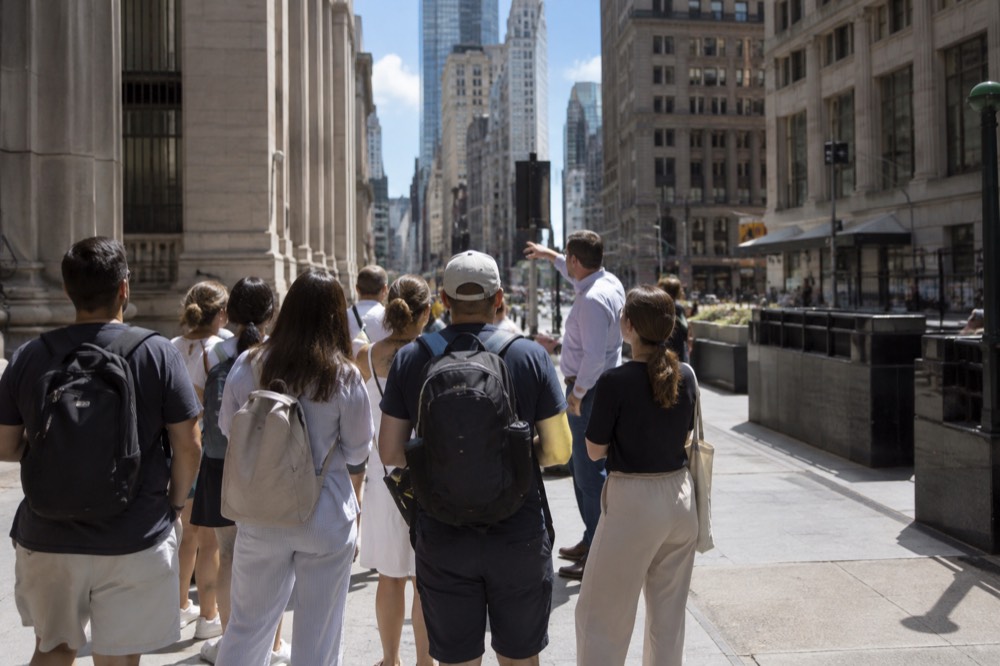
The walking option deserves more respect than it gets. Downtown Manhattan's neighborhoods sit close together, and a guided walk turns transit time into the actual activity. The free-walk scene here runs on GuruWalk, where guides work for tips and you set the price at the end. One honesty note: six of the ten New York walks on GuruWalk belong to a single operator, CityShuffles, so the choice of routes is narrower than the listing count suggests. The Financial District walk below is run by a different operator and is a strong downtown orientation:
On the water, the Staten Island Ferry is free and the sightseeing cruises charge. A 50-minute express harbor loop is the cheap way to see the Statue of Liberty and the skyline from the deck without giving up half a day, and it pairs with a car-free afternoon:

The pattern across all of these: New York's best cheap experiences are not car experiences. The car is a tool for the edges of the day. The middle of the day belongs to the train, the ferry, and the sidewalk. If your plans lean toward the classic sightseeing circuit, the options in this trio cover the airport run, the food walk and the free downtown orientation:

Common Questions About Uber in NYC
People ask the same five things about Uber in New York: whether it works at the airports, whether it is cheaper than a taxi, whether it is safe, whether it serves Brooklyn and Queens, and whether it is worth using at all given the subway. The short answers: yes at all three airports with designated pickup zones, neither mode is reliably cheaper, safety is comparable to any large city with normal precautions, all five boroughs are covered, and for solo Manhattan trips the $3.00 subway ride wins on both price and speed.
Is Uber cheaper than a taxi in NYC?
Neither is reliably cheaper. Taxis run on a TLC-regulated meter, Uber on dynamic pricing, and which one wins varies by route, hour and demand. The JFK flat taxi fare to Manhattan is set by the TLC, so compare the app against it at the airport specifically. For short Manhattan hops, hailing a passing yellow cab is often faster than waiting for an Uber to circle the block.
Can I take Uber from JFK, LaGuardia or Newark?
Yes, at all three, with pickups at designated rideshare zones rather than the arrivals curb. Follow the app's walking directions from baggage claim. At Newark on a weekday morning, remember the AirTrain to the rail station is currently replaced by shuttle buses between 5am and 3pm, which adds time to the transit alternative and makes a car more attractive if you are pressed.
Is Uber safe in New York City?
Rideshare in New York operates under Taxi and Limousine Commission licensing, with driver background checks and vehicle requirements. As with any large city, verify the plate and driver before entering, share your trip in the app, and sit in the back. For the broader safety picture, read the site's guide to whether New York is safe, which covers neighborhood-level figures honestly.
Does Uber work in Brooklyn, Queens, the Bronx and Staten Island?
Yes, all five boroughs are served. Availability is thinnest at the geographic edges, notably eastern Queens and the southern half of Staten Island, where waits run longer. That is also exactly where a car makes the most sense, since subway coverage in those areas is sparser and late-night headways stretch.
Do I need Uber at all if I have a week in New York?
Probably not for sightseeing. The $35 OMNY weekly cap covers a full week of subway and local bus riding, applied automatically when you tap the same card or device. Budget for cars only at the edges: airport runs with luggage, late nights far from a station, and group trips where splitting one fare beats buying four transit fares.
Can I use Uber to leave the city, for day trips?
Yes, cars will take you to the Hudson Valley, the Hamptons or Philadelphia, but for long one-way trips the price scales with distance and the return leg needs a car where supply may be thin. Coach day tours and trains are usually the better product for day trips from NYC, and this site's day-trips guide covers the options.
One last planning note: this site's New York City Travel Guide hub lays out the money page, the sightseeing guides and the transport pages in one place, and it is the right next stop once the airport question is settled.