Layover in NYC: Realistic Plans by Layover Length
A layover in NYC can genuinely be worth leaving the airport for, but only if you match the plan to the hours you actually have. Here is what works at four hours, eight hours and overnight, priced with real MTA numbers.
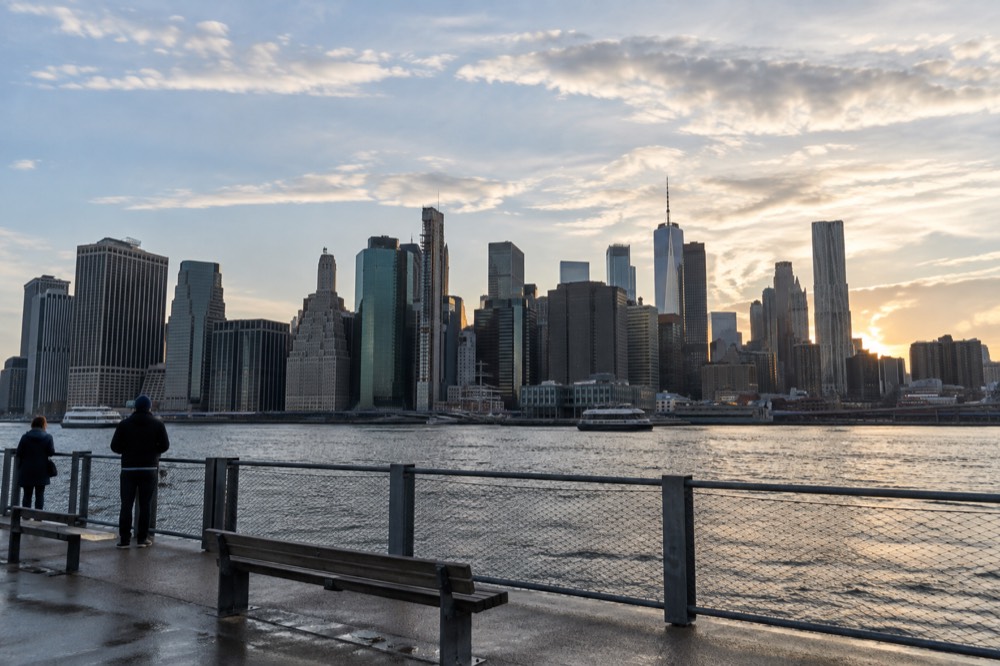
Short answer
Leave the airport if you have at least five hours between flights and your bags are checked through. The subway fare is $3, the weekly OMNY cap is $35, and a Manhattan round trip from JFK costs $11.75 per person. With four hours or less, stay airside.
Roughly 142.7 million passengers moved through New York's three commercial airports in 2025, and a large share of them connected here rather than arrived. That is a lot of people staring at a departure board in Jamaica, Queens, wondering whether Manhattan is close enough to matter. Sometimes it is. Sometimes the honest answer is that a four-hour connection at JFK gives you a view of a runway and nothing else.
This guide is paced to the clock, not to ambition. The single biggest mistake layover travelers make is planning a full sightseeing day inside a window that barely covers transit. The second biggest is budgeting for a taxi without knowing what the train actually costs, which at JFK is $11.75 per person each way and at LaGuardia is $3. Everything below uses real, current MTA figures, and it assumes you have done the one thing that decides everything: confirmed whether your bags are checked through and whether you need a visa or ESTA-equivalent to leave the transit area.
Is a Layover in NYC Actually Worth Leaving the Airport For?
Leave the airport only if you have five hours or more between flights, your luggage is checked through, and you can legally exit the transit area and re-enter through security. Below five hours, the arithmetic fails: security re-clearance alone can eat an hour, and a Manhattan round trip from JFK is roughly two hours of transit. A four-hour layover is an airport layover. Accept it early and enjoy the terminal.
The five-hour floor is not a guess. It is built from three fixed costs: transit time each way, the security line on re-entry, and the walk time inside a terminal the size of a small city. JFK to Midtown on the AirTrain and the E train runs about 60 to 75 minutes door to door. LaGuardia to Midtown on the free Q70 bus and the subway runs 40 to 50 minutes. Newark on NJ Transit from Penn Station runs about 30 to 40 minutes on the train itself, plus the AirTrain or its current shuttle replacement.
Add the re-entry buffer. Airlines want international connectors back at the gate 60 minutes before departure on many routes, and TSA lines at JFK and Newark have bad hours like anywhere else. If you cannot check your bags through, the floor rises to six or seven hours, because dragging a roller bag through the Times Square subway station is its own punishment. Luggage storage exists in Manhattan, but it costs money and adds a detour, so it belongs in the longer plans only.
One more gate before you plan anything: leaving the airport means formally entering the United States. Travelers on visa-waiver programs need a valid authorization, and some connecting passengers hold documents that only cover the transit area. Check this before you build an itinerary, not at the immigration counter.
What Can You Do in a 4-Hour Layover in NYC?
With four hours or less at JFK, LaGuardia or Newark, you cannot reach Manhattan and return in time, so the honest plan is to stay put. A four-hour layover is best spent on food, lounges and window seats, not on a doomed dash to a skyline. If you are at JFK, a licensed taxi or rideshare to a nearby neighborhood for a real meal is possible but tight; anything Manhattan-shaped is not. The numbers do not support optimism.
Run the arithmetic once and it settles the argument. Two hours of round-trip transit plus one hour of re-entry buffer leaves you one hour, which is not enough to be anywhere interesting, only enough to be somewhere risky. The flight you are connecting to does not care that the subway was fast.
What four hours is good for: eating properly. JFK's terminals have genuinely good options, and LaGuardia's rebuilt terminals are a different airport from the one older guides remember. Newark has slower terminals and a current weekday service change: AirTrain service between the terminals and the NJ Transit rail station is replaced by shuttle buses on weekdays from 5am to 3pm, so allow extra time if you are connecting onward. Walk the terminal, find the quiet gate area, and treat the layover as rest rather than a compressed vacation.
If you have exactly four and a half to five hours and your bags are checked through, there is one narrow exception: a taxi from LaGuardia to a close-in Manhattan stop, like the Upper East Side or the edge of Midtown, for 45 minutes of actual city time. It is expensive and it depends entirely on traffic, which in New York is a coin flip at any hour. Most travelers who try this spend the last hour anxious. The five-hour plans below are where the fun starts.
The 6-to-8-Hour NYC Layover: The Sweet Spot
A six-to-eight-hour layover is the best-case scenario: enough time for one real neighborhood, one landmark view or one harbor look at the Statue of Liberty, and a meal that is not airport food. Pick a single anchor, place it within reach of one subway line, and refuse everything else. The discipline is the plan. One anchor, one neighborhood, one route back. Travelers who add a second anchor are the ones who miss flights.
Here is the shape that works. Pick your anchor based on what you want to say you did, then build backwards from the return train.
The Midtown anchor (6 hours). LaGuardia or JFK to Midtown, one observation deck, a walk. SUMMIT One Vanderbilt sits directly above Grand Central, which makes it almost unfairly convenient for a layover: you exit the train, you are in the building, and the mirrored rooms and glass ledges deliver the skyline in about 90 minutes including ticketing and the elevator queues. From there, Bryant Park and the New York Public Library's main branch are a short walk, and both are free. Midtown's density means you see an enormous amount of New York per minute of walking, which is exactly what a layover needs.

The Lower Manhattan anchor (7 to 8 hours). If your must-see is the Statue of Liberty, do it properly but briefly: the official Statue City Cruises ferry from Battery Park is the only operator authorized to land on Liberty Island and Ellis Island, the adult general ticket is $26.00 with fees included, and it covers both islands, both museums and the audio tours. A fast visit with one island focus runs about two and a half hours. The Brooklyn Bridge promenade and the 9/11 Memorial plaza, which is free and needs no ticket, are within the same walkable corner of Lower Manhattan. Describe the memorial plainly: it is a place of remembrance at the site of a mass killing, and it belongs on a layover only if you have the time and the temperament for it, not as a photo stop on a sprint.
The downtown neighborhoods anchor (6 hours). SoHo, Little Italy and Chinatown compress three distinct neighborhoods into a few walkable streets, and a two-hour guided walk through all three costs from $25 per person with a licensed operator, which buys you orientation and stories you would never extract alone. Finish with a slice and a cannoli, then take the train back. This is the lowest-effort, highest-density option, and it works well if this is your first taste of New York rather than your last.

The table below compresses the decision. Match your hours to the anchor, not the reverse.
| Layover window | Realistic plan | Anchor | Time in Manhattan |
|---|---|---|---|
| 4 to 5 hours | Stay at the airport, or a taxi meal run from LGA only | None | 0 to 1 hour |
| 6 hours | One observation deck and a walk | SUMMIT One Vanderbilt or Top of the Rock | About 2 hours |
| 7 to 8 hours | One landmark visit plus a neighborhood walk | Statue of Liberty ferry, or SoHo to Chinatown | 3 to 4 hours |
| 9 to 12 hours | Two anchors, a real meal, a park | Deck plus harbor ferry, or downtown plus Brooklyn Bridge | 5 to 7 hours |
| Overnight | A hotel room, dinner, one evening sight | Anything, paced | The evening and next morning |
How to Get Between the Airports and Manhattan Fast
The fastest airport-to-Manhattan runs are: from Newark, NJ Transit from Penn Station at $16.80 per person one way; from JFK, the AirTrain plus the E, J, Z or A trains at $11.75 per person; and from LaGuardia, the free Q70 bus plus the subway at $3.00 per person, the cheapest airport run in the city. A taxi or rideshare from JFK runs far more and can be slower in traffic. The trains win on predictability.
These are the current, published MTA and Port Authority figures, and they upend the usual assumption that the airport with the dedicated rail link is the cheap one. It is not. The AirTrain at JFK costs $8.75 on top of your subway fare, which is how a "cheap" train ride becomes $11.75. LaGuardia, the airport people write off, has a free bus.
| Airport | Cheapest route to Manhattan | Cost per person, one way | Typical time to Midtown |
|---|---|---|---|
| JFK | AirTrain ($8.75) plus subway ($3.00), via E, J, Z or A | $11.75 | 60 to 75 min |
| LaGuardia | Free Q70 LaGuardia Link bus plus subway | $3.00 | 40 to 50 min |
| Newark | NJ Transit from Penn Station, AirTrain fare included in the ticket | $16.80 | 40 to 55 min |
| Any airport | Taxi or rideshare | Far more, varies | 30 to 90 min, traffic-dependent |
Two warnings that matter for connections. First, the Newark AirTrain weekday shuttle replacement described above: on weekday mornings, the rail-station link runs as buses between 5am and 3pm, so pad your return to EWR by 20 to 30 minutes. Second, buying NJ Transit tickets on board costs extra, conductors only accept cash, and the AirTrain fare is not included in an onboard purchase, so buy at the machine or in the app before boarding.
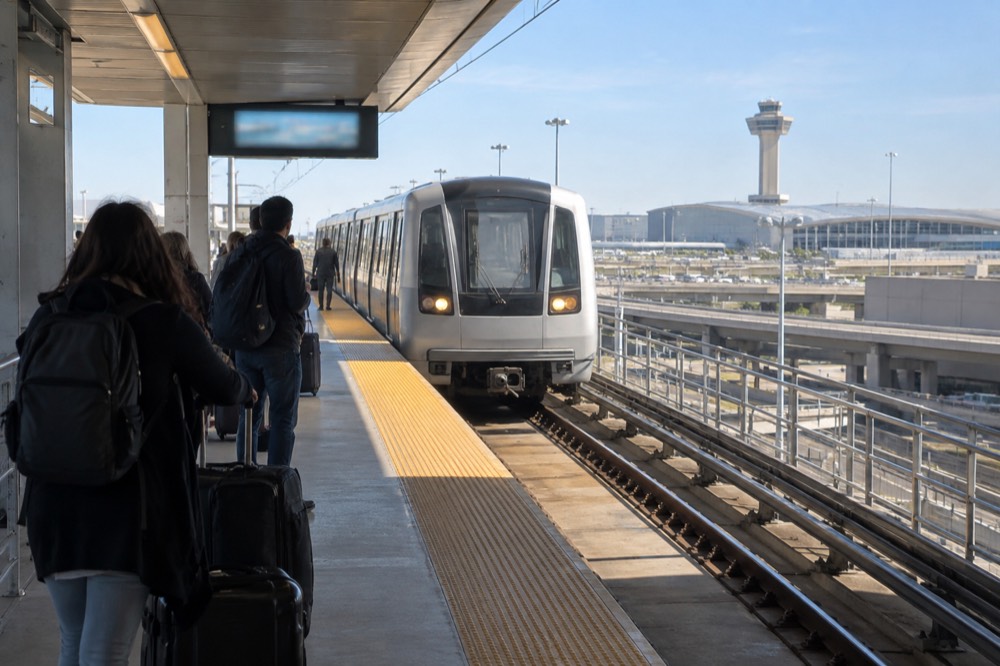
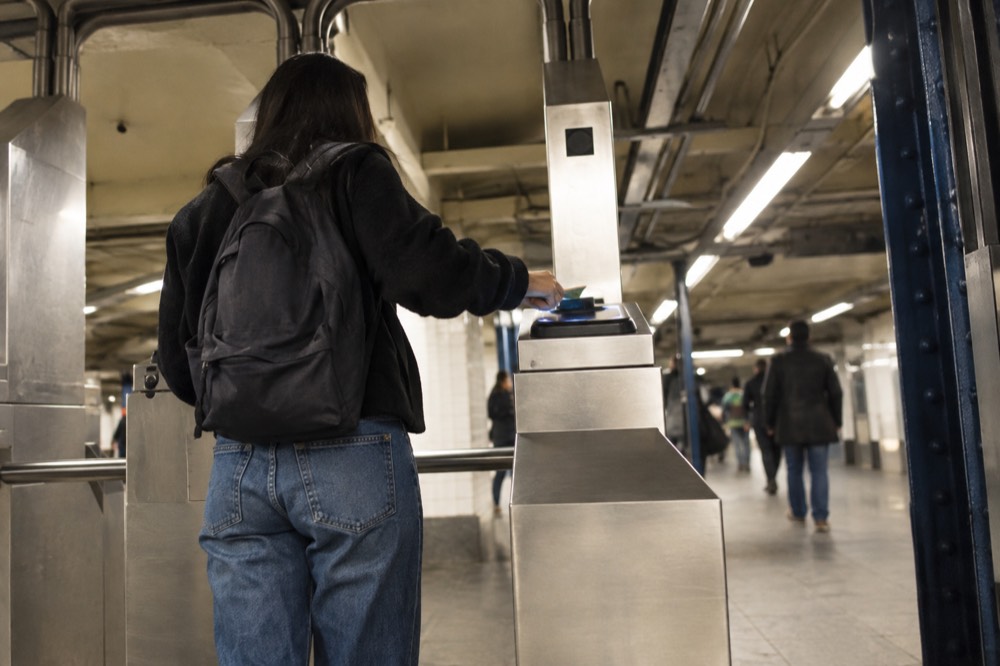
For the subway itself, do not waste a minute hunting for the ticket product that every older guide still recommends. The MetroCard is retired: as of 1 January 2026 the MTA no longer sells or refills them, and the old 7-day unlimited pass does not exist. You tap in with OMNY, a contactless credit or debit card or a phone wallet, at $3.00 a ride, and if you tap enough times in a rolling seven-day window the fare caps automatically at $35. For a layover of one to six rides, you simply tap and go, and the single fare is the whole story. One rider per card: a couple must tap two different cards, because group taps do not count toward any cap.
Full route and airport detail lives in the site's airport transfer guides, including JFK to Manhattan, LaGuardia to Manhattan and Newark Airport to Manhattan, and the wider options are covered in the master list of things to do in NYC.
Luggage, Timing and the Rules That Decide Everything
Three logistics decide whether a layover plan survives contact with reality: whether your bags are checked through, what time your connection departs, and whether your layover hours fall in daylight. Bags checked through means you travel light and fast; bags in your hands means you need storage, which adds cost and a detour. A layover that ends at 4pm wants a daylight anchor. One that ends at midnight wants a lit skyline. Plan to the constraint, not against it.
Baggage first. If your airline checks luggage through to the final destination, you exit with a personal item and nothing else, which is the difference between gliding through a subway turnstile and hauling a suitcase up the Times Square stairs. If not, Manhattan has luggage storage services, but they cost money, they are a separate stop on your route, and on a tight window they can consume 40 minutes round trip. On a six-hour layover with unchecked bags, either budget for storage or stay at the airport.
Timing second. Re-clearing security is the non-negotiable tax on every layover plan. For a domestic connection, be back at the terminal 90 minutes before departure at JFK or Newark and 75 at LaGuardia, minimum. For international, 120 minutes, because you may hit document check and a longer queue. From those deadlines, work backwards: transit time, anchor time, transit out. If the arithmetic leaves you less than 90 minutes of actual city time, cut the anchor down or drop it.
Daylight third. An observation deck at night is a different product from one at noon, and a harbor ferry after dark is mostly cold air. If your layover spans midday, put the deck or the ferry in the brightest hours and the walk in the evening. If it is all evening, flip it: walk a lit-up neighborhood like Times Square or the Brooklyn Bridge promenade, and skip the deck, because a dark deck ticket buys you a view of lights, which is fine, but know what you are paying for.
What a Layover in NYC Costs, in Real Numbers
A six-hour layover done on the subway costs roughly $25 to $50 per person: $11.75 each way from JFK or $3.00 each way from LaGuardia, a $26.00 Statue of Liberty ferry ticket or an observation deck ticket from the mid-$40s, and food at whatever level you choose. An eight-hour layover with a deck, a ferry and a sit-down meal pushes well past $100 per person before shopping.
Taxis multiply the transit line several times over.
Here is the honest budget table, built from the verified figures above. Observation decks use dynamic timed pricing, so treat deck prices as "from" numbers that move by date and slot.
| Item | Cost per person | Notes |
|---|---|---|
| Subway fare | $3.00 per ride | Tap with OMNY, contactless card or phone |
| JFK to Manhattan by train | $11.75 each way | AirTrain ($8.75) plus subway ($3.00), via E, J, Z or A |
| LaGuardia to Manhattan by bus and subway | $3.00 each way | Q70 bus is free, one subway fare |
| Newark to Manhattan by train | $16.80 each way | NJ Transit, AirTrain included in ticket |
| Statue of Liberty and Ellis Island ferry | $26.00 adult | Official Statue City Cruises, both islands, both museums, audio tours included |
| Observation deck (SUMMIT One Vanderbilt tier) | From the mid-$40s | Dynamic timed pricing, changes by date and slot |
| SoHo, Little Italy, Chinatown guided walk | From $25 | About 2 hours, three neighborhoods |
| New York CityPASS | $149.00 adult | 5 attractions from a list of 11, valid 9 consecutive days |
The CityPASS line deserves a note, because it is the one line item that can beat the arithmetic. A pass makes sense on a layover only if you can genuinely use several of its attractions inside your window, and its 9-day validity is wasted on a single afternoon. On an overnight or full-day layover, where you might stack the Empire State Building, a Circle Line cruise and the 9/11 Museum, the maths can work. On a six-hour dash, buy single tickets and keep moving. The details are laid out in the site's layover-to-day-trip planning pages if you want the full budget breakdown.
A 12-Hour or Overnight Layover in NYC
A layover of 12 hours or more stops being a layover and becomes a short trip, and it deserves a short-trip plan: a hotel or at least a shower, a real dinner, one evening sight and one morning anchor before the return to the airport. The classic overnight sequence is a sunset observation deck or harbor cruise, dinner in a neighborhood rather than Midtown, and a morning walk before a stress-free departure. Pacing beats quantity at every step.

The evening belongs to the water or the sky. A 2-hour sunset and harbor lights cruise loops past the Statue of Liberty, the Brooklyn Bridge and the Lower Manhattan skyline as the city switches on, from $45 per person, with a bar on board. It is the single highest-return evening purchase in the city for a first-time visitor, because it bundles five landmarks into one seated, no-walking block. If you would rather be up high than out on the water, an evening deck ticket does the same job with elevator queues instead of a rail spot.
Dinner: leave Midtown. A 15-minute subway ride puts you in Greenwich Village or the East Village, where the food is better and the streets are the point. A guided food tour through Greenwich Village, six tastings, about 3 hours, from $97 per person, doubles as dinner and a neighborhood tour in one, which on a one-night visit is efficient rather than extravagant.
Sleep: you do not need an expensive room for six hours. Airport-adjacent hotels at JFK and Newark exist for exactly this, or take a modest Midtown room and cut your morning transit to 20 minutes. If you skip the hotel entirely, plan a late dinner, a night walk and an early morning anchor, and be honest about how you function the next day.
The morning anchor, if you have one: Central Park at opening, or the Brooklyn Bridge promenade at dawn, both free, both at their best before the crowds. Then the train, then the airport, then the flight, with a genuine New York day behind you instead of a terminal nap.

Common Questions About a Layover in NYC
A layover in New York works when the hours match the plan: five as the floor for leaving the airport, six for one anchor, eight for an anchor plus a neighborhood, twelve for an evening and a morning. The questions below cover the decisions travelers actually face at the gate, from baggage to budget to whether a pass pays off on a short window.
Can you leave the airport during a layover in NYC?
Yes, if you have the legal right to enter the United States and your airline's connection rules allow it. Leaving means clearing immigration, and returning means clearing TSA security again. Travelers whose documents cover only the transit area, or whose tickets prohibit leaving, must stay airside. Check both before you plan anything.
How long does a layover in NYC need to be to see Manhattan?
Five hours is the practical floor, six is comfortable. That assumes bags checked through and a plan built around a single anchor within reach of one train line. From JFK, budget 60 to 75 minutes each way to Midtown plus a 90-minute re-entry buffer, which is why four hours does not work.
What is the cheapest way to get from JFK to Manhattan on a layover?
The AirTrain plus the subway, at $11.75 per person each way. Take the AirTrain to Jamaica for the E, J or Z, or to Howard Beach for the A. It is slower than a taxi in light traffic but far more predictable in heavy traffic, and it is a fraction of the fare.
Do you need to buy a subway pass for a NYC layover?
No, and the old 7-day unlimited MetroCard no longer exists. Since 1 January 2026 MetroCards are no longer sold or refilled. Tap a contactless card or phone with OMNY at $3.00 per ride, and if you tap twelve paid rides in a rolling seven-day window the fare caps automatically at $35. Most layovers never reach the cap.
Is the New York CityPASS worth it on a layover?
Only on a long one. The pass costs $149.00 adult, covers five attractions chosen from a list of eleven, and is valid for 9 consecutive days, so it pays off only if you use several attractions inside your window. On a six-hour dash, single tickets win. On an overnight layover stacking a deck, a cruise and a museum, run the maths against single box-office prices first.
What should you do with luggage on a NYC layover?
Best case, your airline checks it through and you carry only a personal item. If not, Manhattan luggage storage services exist but add cost and a detour of roughly 40 minutes round trip. On a tight window with unchecked bags, the honest plan is to stay at the airport.
One final rule that outranks every itinerary above: the return flight outranks the anchor. Set two alarms, one for leaving the anchor and one for leaving the island, and treat the second as immovable. New York will still be here for a proper trip, planned with the help of New York City Travel Guide, and the layover version of the city, done at the right length, is a genuinely good preview rather than a missed connection. Choose the plan that fits the hours, not the hours you wish you had, and even six hours in this city beats a full day in most terminals on earth.